Tag Archives: poetry

IN A FOG

IMG_2347


But traces in quiet fog:
ridgeline of the barn roof,
cold parts of the corral

float in and out of gray
closing in upon our fire—
forms of horses look

for hazy movement
in this fuzzy moment
shut away from hills

and towns beyond, the world
and its miseries. All
we have accomplished near

at hand, close to fading
into nothingness
and I am relieved

of the weight of urgency—
perfectly helpless
to change a thing.


LEAVING WITH STAFFORD


I imagine that the young men
I went to school with have retired
by now, given up their desks
for free-wheeling possibilities

to coast downhill grades, collecting
their rewards and all the promises made
to themselves, over and over again.
I truly wish them all the best.

And I suspect the girls have become
wise grandmothers with practical advice,
keeping secrets in ceramic cookie jars
with noisy lids like I remember.

Leaving with Stafford, I retire
from a world too large to digest,
and go to that far place for the familiar
sign, those recognizable tracks

where wild makes sense of circumstance.
We are collecting short stories
like mushrooms in wicker baskets
before they fade and melt into the ground,

discussing how we’ll sauté them over fire
in butter and garlic to melt in our mouths
instead. Already we can feel their wild
flavor rage in our veins, like venison,

as we shed the old flesh, find keen eyes.
All the ghosts will rise beneath the stars
to gather at our fire, faces flickering
in the darkness to share the light.


FINDING ORDINARY


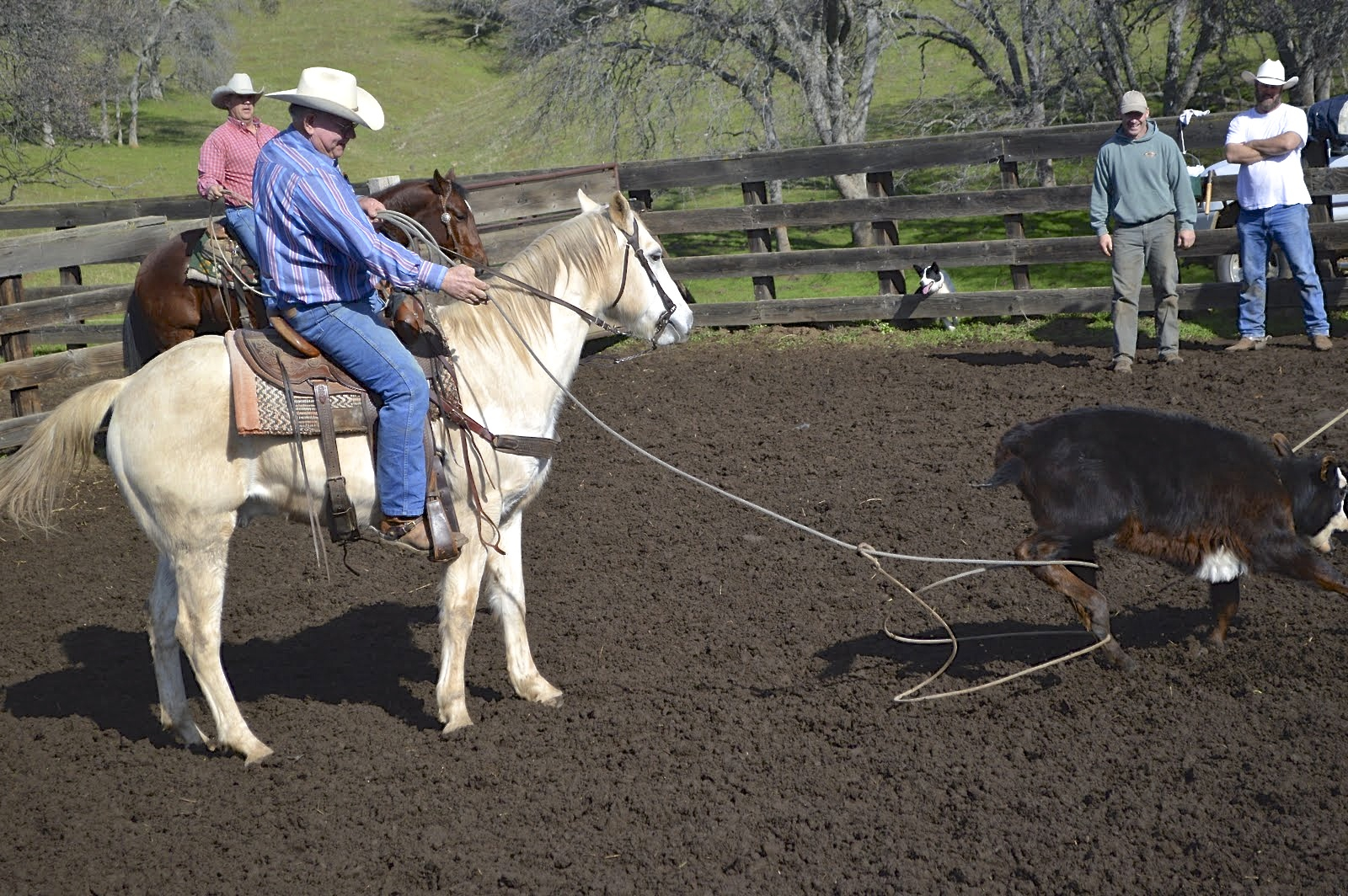
© 2013 Earl McKee Photo

© 2013 Earl McKee Photo


Old men in the branding pen
hope for grace

to find the feel of singing loop
slide between their fingers—

of hoof dance timed and shaped
to catch two feet, slack to dally horn

come tight, as if it were nothing
out of the ordinary.


ECHINOPSIS AT DAWN


IMG_8282


Not a shadow without light,
brief morning flowers
from the blackest night.


WPC(2) — “Shadowed”


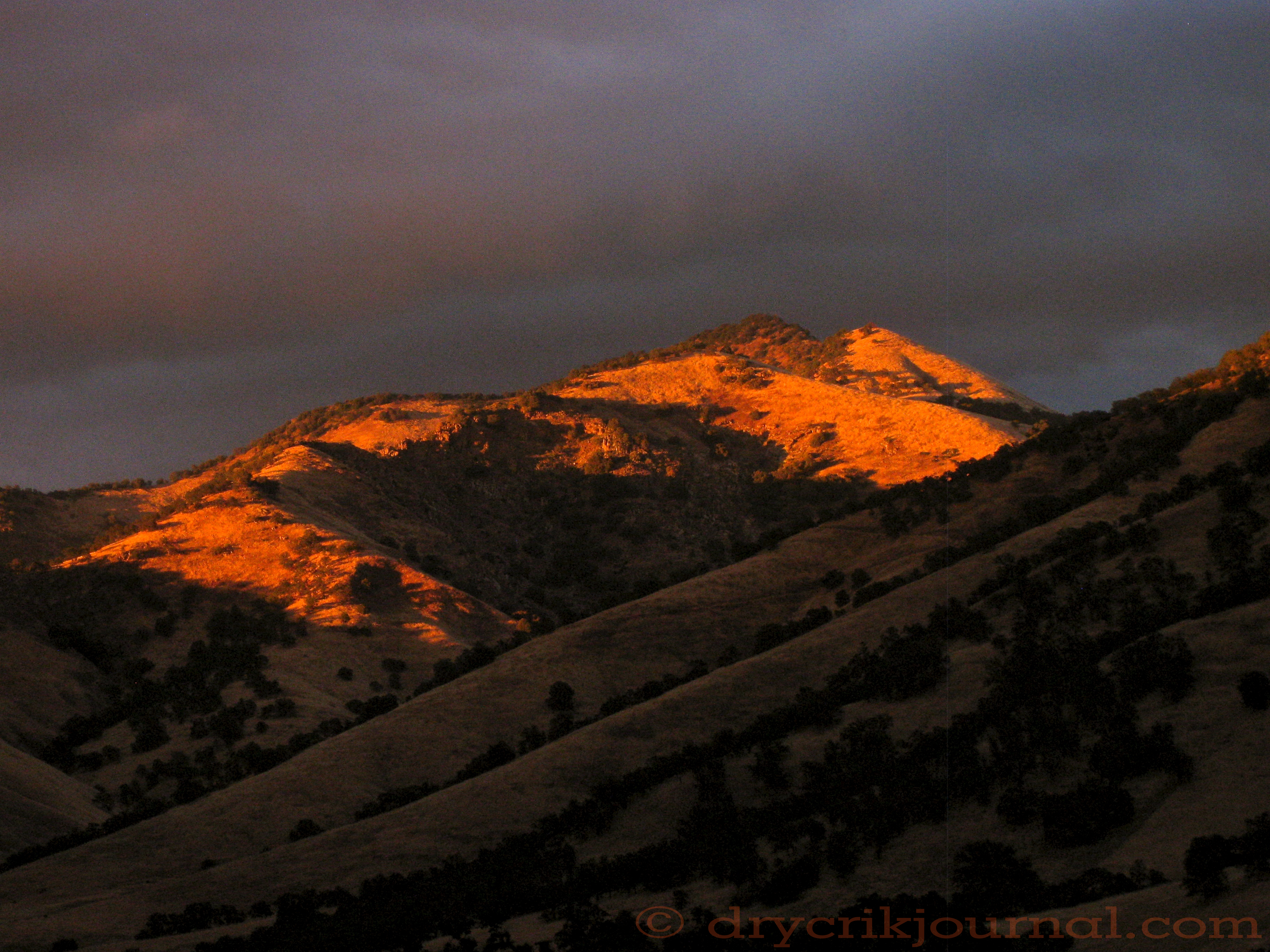
GLOAMING


IMG_0313


Lifting our eyes to Sulphur Peak,
long days hurry
into poetry.


WPC(1) — “Shadowed”


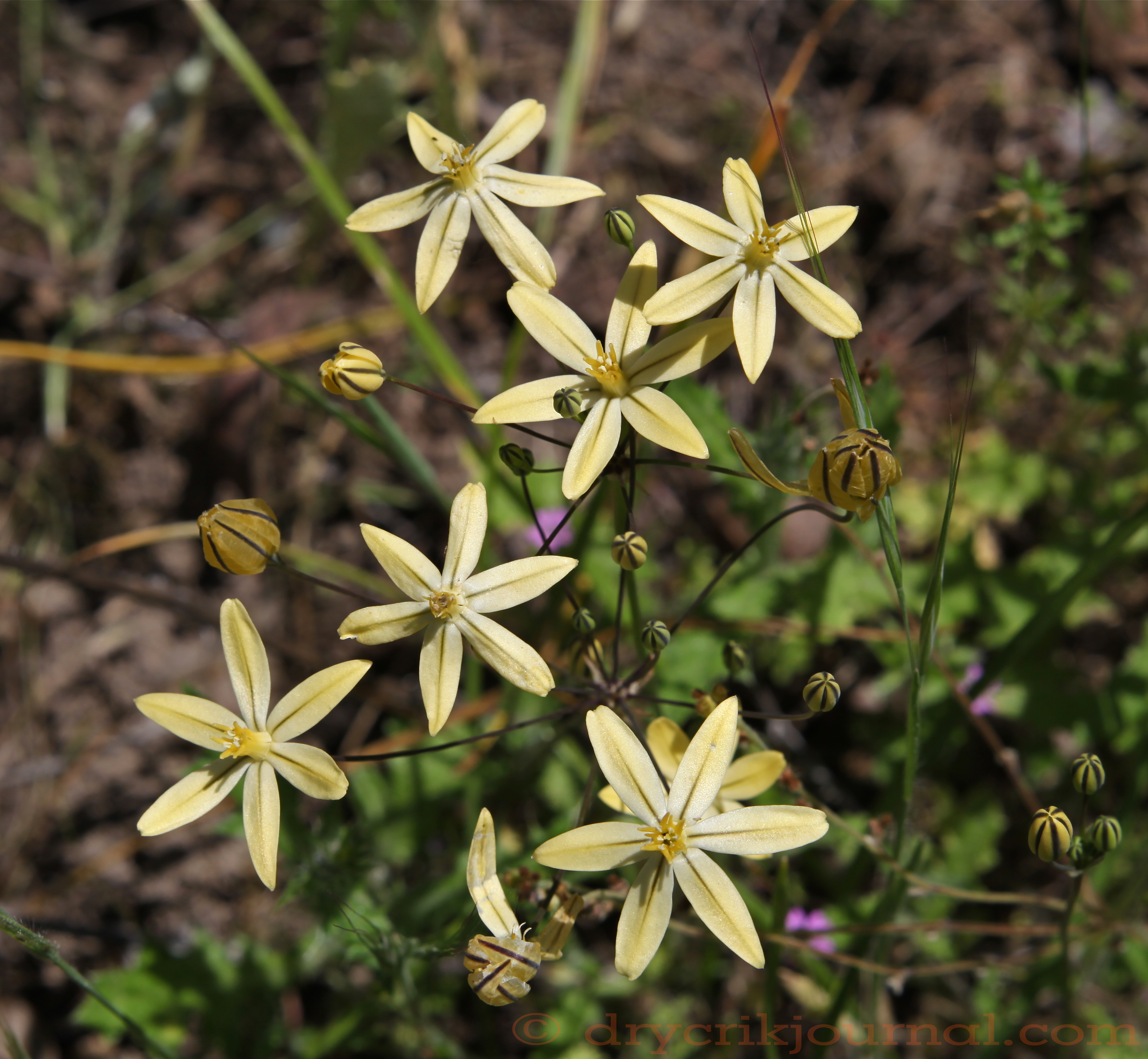
Pretty Face (Golden Brodiaea) Triteleia ixioides


May 2, 2012

May 2, 2012


Arms open—
none happier in May
to flower, fold and fade away.


RANCH JOURNAL: JANUARY 9, 2015


1.
In the shallow ground and clay,
mats of filaree cling like crimson moss
after frost as if holding their breath for rain.
Yet warm enough for mustard bloom
in ungrazed traps for cattle, bits of yellow
at the tender tips of leafy greens—
all of the same seed that natives came
from Badger to gather when I was young.
White heads of Shepherd’s Purse nod
in bloom above the short-cropped blades
of lusher grass as if already spring.
Steep south slopes struggle, more mottled
brown than green—we beg and wait for rain:
busy fixing fences, branding calves, feeding hay
to bloating cows after years of drought
as high-pressure herds a warm jet stream north
to feed Alberta Clippers East with unwanted snow.

2.
We crave some sort of normal
that has become a hazy dream:
of cattle fat and happy, of time
to idly wile and waste
that old men will never see again.
Yet full of trust, trailing tidbits
from the gods, we chase it
like the feed truck still believing—
and that is normal despite extremes.


PILLOWED CLOUDS

IMG_3395


I used to think that inside the deep heart
of the world gone wild, that we all wanted,
craved, needed, or would acquiesce to,

                         a yet to be identified
                         common soul:
                         a ‘peace and love’ tranquility
                         where we all got along
                         with our dreams—

a musical, moaning chorus of ‘oohs’ and ‘ahs’
that kept us busy feeling fine as frog hair,
trying harder to make life better for everyone.

But how could heaven’s everlasting light
be so great without a dark side, without the moon
rising in new places dressed in different phases
behind the skeletons of oak and tops of pine?

                         Rain and storm for free.
                         Life from dust, the miracle
                         of green reaching up
                         to seed itself
                         against adversity

should be enough to brave the skullduggery
of all the power-hungry opportunists that slink
and lurk in the shadows. And what of poetry
rooted in the illusion of pillowed clouds?


BATTLEGROUND


                        Then the man noticed that he didn’t
                        have any shadow. He went out and
                        looked around: nothing had any shadow.
                        He began to squint up his eyes, it was
                        all so bright. And wherever he looked
                        there were sharp little knives.

                              – William Stafford (“Stories To Live In The World With”)

1.
We were but shadows on this ground,
young bulls bellowing into space
hoping for an answer in an echo—
not rivals down canyon pawing dirt.

We cast more shade now as we go
remembering the bluff and bluster
of manifest destiny—the arrogance
of greed blest by God—feeble-legged,

stumbling in cobbles along the creek.
If left alone for a century or two,
time will heal the tracks, erase mistakes
we might have better learned by.
 

2.
It did not begin or end there. Three
hundred shadows passing in this canyon
when Sir Francis Drake stabbed
California sand for Queen Elizabeth I

leaving little sign of how their minds
worked grinding, making palatable
what was at hand until—you know
the rest—like echoes in these hills.
 

3.
Pages welded together in dark corners,
transcripts in generational stacks
only attorneys dream of designing,
hold both petty and valuable details.

How it shook the old house, my father
overwhelming his in a thunderous
shouting match, a sparring over nothing
to hone a keen edge for the Corps.

Or the luxury of divergent dreams
of royalties instead of rent, in-laws
and family divided and divorced with
land—and from the tracks cut deep.
 

4.
We are but shadows on this ground
passing beneath us as always, immigrants
in old space that cannot stay the same
in the new world that swirls around us,

an invisible adversary invading our air,
our flesh, this dirt we shall return to—
however gladly or reluctantly, to cast
no more shadows—at home at last.


= = = = = = = = = =

Stories To Live In The World With (Someday Maybe, 1973)

A long rope of gray smoke was
coming out of the ground. I went
nearer and looked at it sideways.
I think there was a cave, and some people
were in a room by a fire in the earth.
One of them thought of a person like me
coming near but never quite coming in
to know them.

Once a man killed another, to rob him,
but found nothing, except that lying
there by a rock was a very sharp,
glittering little knife. The murderer
took the knife home and put it beside
his bed, and in the night he woke
and the knife was gone. But there was
no way for a person to get in to take the knife.

The man went to a wise old woman.
When she heard the story, she began to laugh.
The man got mad. He yelled at the woman
to tell why she was laughing. She looked
at him carefully with her eyes squinted
as if she looked at the sun. “Can’t you
guess what happened?” she asked.

The man didn’t want to be dumb, so
he thought and thought. “Maybe the knife
was so sharp that it fell on the ground
and just cut its way deeper and deeper and
got away.” The woman squinted some more.
She shook her head. “You learned that from
a story. No, I will tell you why you
thought the knife was gone and why
you came here to ask me about it:
you are dead.”

Then the man noticed that he didn’t
have any shadow. He went out and
looked around: nothing had any shadow.
He began to squint up his eyes, it was
all so bright. And wherever he looked
there were sharp little knives.

This is a true story. He really was dead.
My mother told us about it. She told us
never to kill or rob.
At a little pond in the woods
I decided: this is the center of my life.
I threw a big stick far out, to be
all the burdens from earlier years.
Ever since, I have been walking
lightly, looking around, out of the woods.

                                                            – William Stafford

Courtesy of


LIKE THE COYOTE


We, like the coyote, think
we know the habits of this world:
death and taxes with certain diversions

that make predictable politics
like foreplay for Wall Street
eager to screw the future

into submission. Coyotes
make their living on the details
overlooked and discarded,

keeping to the periphery
and singing into darkness
while everyone’s asleep.