Tag Archives: weather

Ranch Journal: February 6, 2015

IMG_2597


The wildflowers were trying to bloom before we left for Elko on January 24th, primarily the ubiquitous Fiddleneck and Shepherd’s Purse, but yesterday as Robbin and I went to the Paregien Ranch, we could add Foothill Poppies, Purple Lupine, White-veined Mallow, Popcorn Flowers, Scorpionweed among others—all 30 days earlier than normal that may indicate an early, and perhaps short, spring, especially with record breaking temperatures in the high-70s the past two days.

As we enter what appears to be our fourth drought year with only 5.47” of rain to date, it could be worse. Last year at this time we had only accumulated 1.6”, a year in which we had to feed hay from August through March with a total rainfall for the season of 7.78”. Our 9-year average, including the last three dry years, is 14.36”.

Fortunately, some rain is predicted for this evening and Saturday that may linger into Sunday. Our south slopes have been stressed for the past three years, showing mostly brown with no cover of old feed to hold moisture or offer protection for the new grasses.

Additionally, there is little snow in the Sierras to supply surface water demands from Valley farmers. Water storage in flood control and irrigation facilities is at an all-time low. Half-way through our rainy season, it’s too late for any snow the Sierras might receive to freeze, thus we have lost any time-released benefits farmers might ordinarily enjoy, leaving us more susceptible to spring floods if the Sierras get any amount of snow for the remainder of the season.

No matter how you look at it, it doesn’t look good.
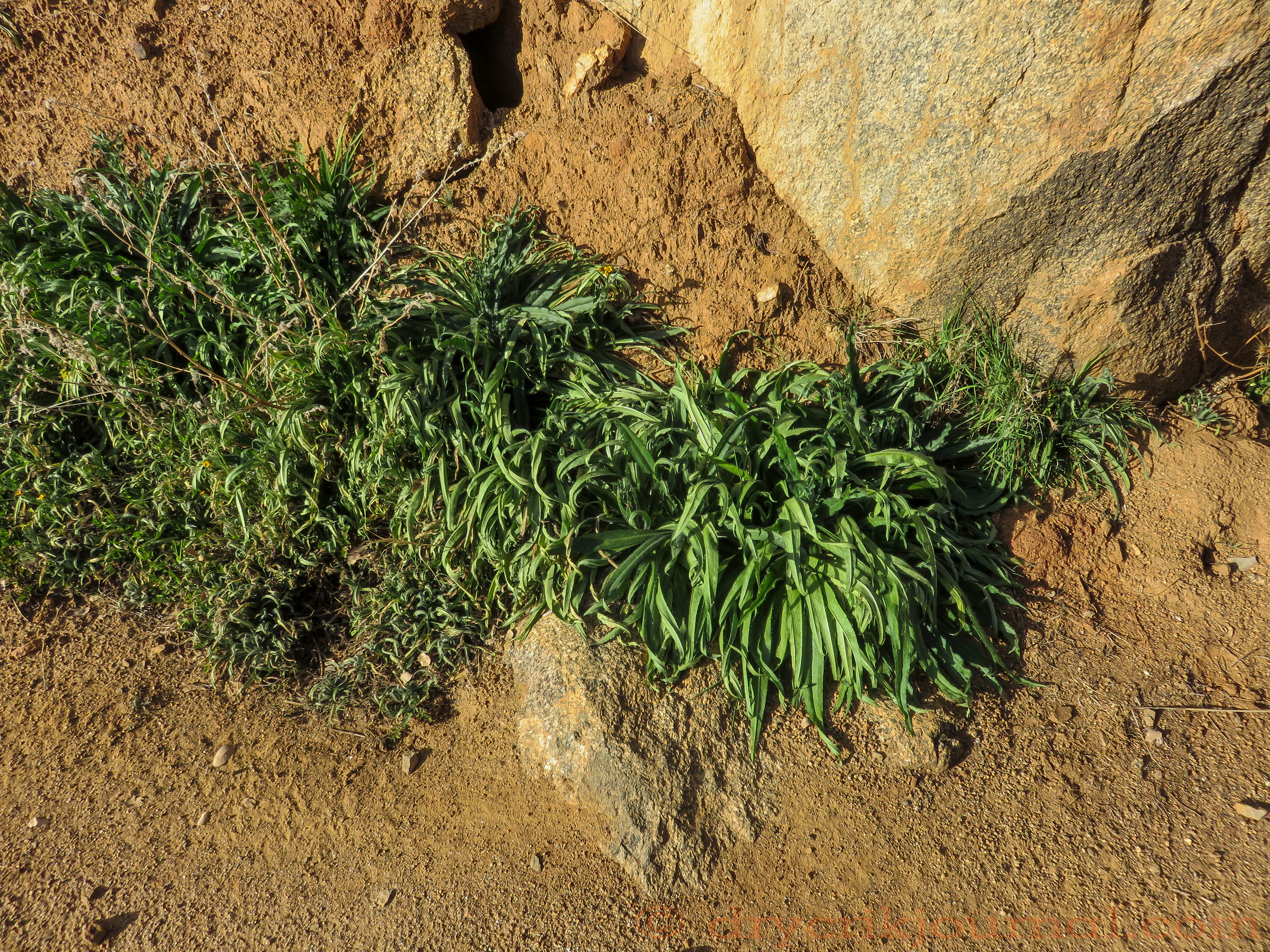
 

Fiddleneck wilting - 2/5/2015

Fiddleneck wilting – 2/5/2015

 

KESTRELS COURTING SPRING


Nothing sudden, poor dry hills
like thin cows show too much bone,
I look away for a spot of green

in shadows of trees, on north slopes
to weigh our hopes: how many days    left
before it rains? Bankrupt with years

of debt, of dirt exposed, of dust released,
the old oaks have given-up to start over—
to become earth again, and we

make plans to brand another bunch
like Kestrels courting spring, falling
in a flutter before me yesterday:

fourth of February, seventy-seven degrees.
Nothing sudden, we plod against the obvious
knowing nothing stays the same.


RAINDROPS

IMG_2496


Following fifty tons
through light showers
across Nevada,

big alfalfa bales
towards our dry
California home,

we focus on raindrops
streaking reality
after a week of poetry

and song, to feel
our poor possibilities
grow by the truckload—

heavy with an endless
emptiness in our bellies
beneath the straps

of seat belts
before another wreck.
We hang on.


Six Pix: Great Basin Home


IMG_2429

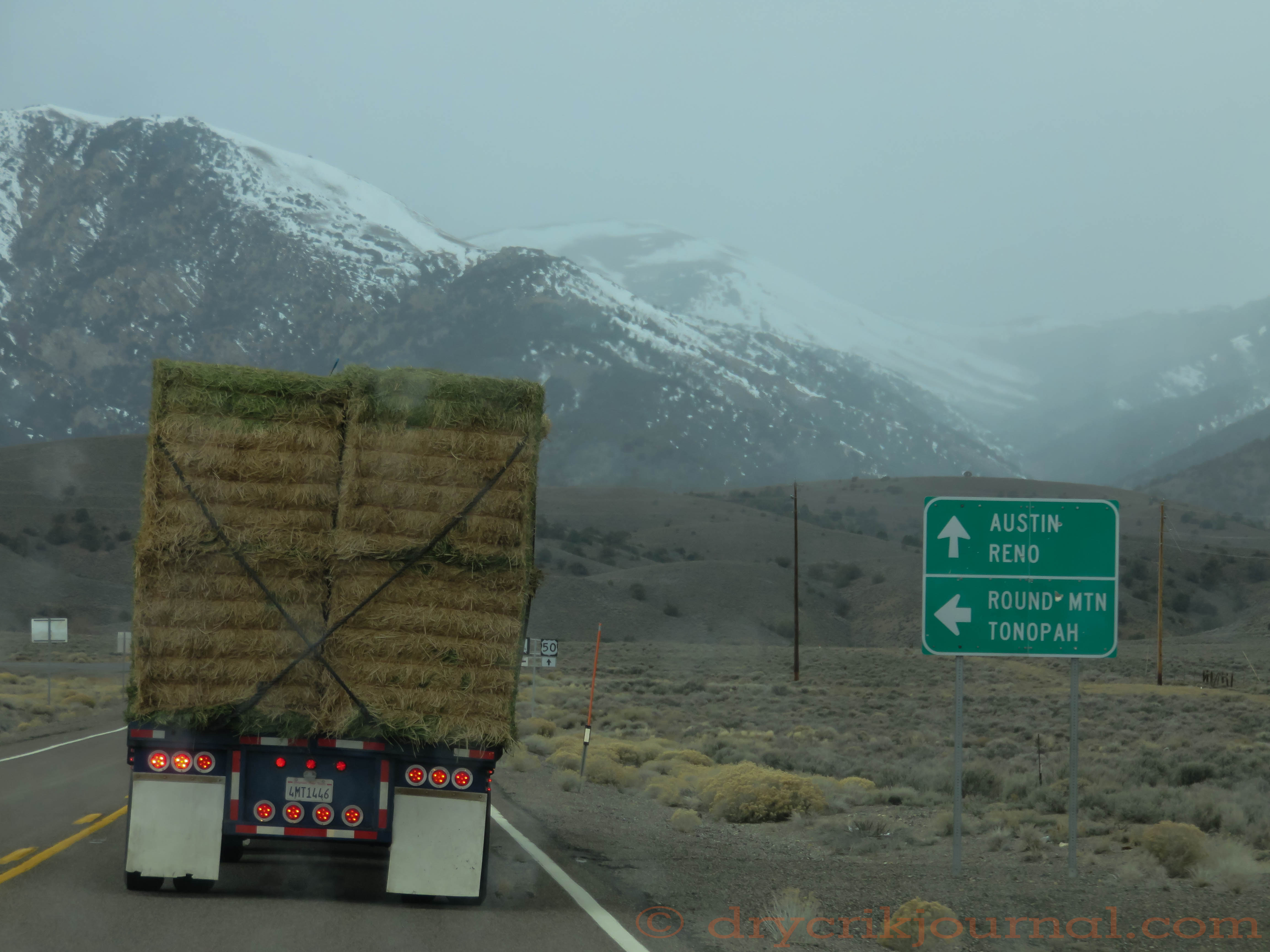
With a leisurely, late start from Elko, we encountered a few midday showers Monday, crossing Nevada’s Great Basin between Carlin and Tonopah, making for some interesting high-speed photos with the point and shoot.


IMG_2432

Under a dark cloud outside Eureka, a blurry foreground beneath a crisp Lone Mountain on the ‘Lonliest Road in America’ (US 50).


IMG_2495

Hay headed to dry California.


IMG_2517-2

We stopped for a bowl of soup at the refurbished and reopened Mizpah in Tonopah,


IMG_2526

then headed into to the sunset towards Bishop.


IMG_2549


It’s Not All in a Hat

image


I was so happy to see Ramblin’ Jack Elliott last night after the full house, Baja California show concluded that I rather rudely interrupted his conversation with a young lady to shake his hand for a quick hello. I caught up with her later to apologize, only to learn that she was a reporter for Reuters looking for a real cowboy poet.

The Poetry Gathering won’t officially begin until Thursday, and few of us are here yet, but Robbin and I come early to acclimate and set up camp in our motel room. Looking at my Giants hat, she didn’t believe me when I told her I was one.

Try as I might to break free of the urban stereotype, the ensuing interview and conversation confirmed so many misconceptions about our livestock culture that I was somewhat dismayed, even frustrated at times trying to explain that we’re not all Republicans, not all isolated from the rest of the world in a mythical West — that there is a difference between dairy and beef cattle.

The interview concluded where it should have begun, that we, just like the livestock culture of the Baja Californians, are land based, our physical and mental health dependent upon the health of the land and our cattle. We are not looking to blame the current drought in the American Southwest on Global Warming or the tsunami in Japan, nor are we looking to US politics for drought relief. As a self-reliant bunch, we try to solve problems, working with the current drought the best we can.

I probably didn’t change her mind much, but that’s what the National Cowboy Poetry Gathering is all about, offering varied perspectives to help bridge the gap between the range livestock culture and the urban majority — it’s not all in a hat.

ON THE SEMI-ARID EDGE


The big dogs are drilling deeper,
pumping the last of a million years
of underground water, each river

dammed into furrows to farm
the empty Laguna de Tache.
Sixty years ago, when red lights

stopped in every railroad town,
colorful cornucopias spilled
from billboards onto Highway 99

bragging fruit or vegetable capitals
of another world, and huge Big Oranges
squeezed juice every ten miles.

On the semi-arid edge of change,
we beg for rain and dream of floods
to take this Valley back in time.


                    *     *     *


1876 Tulare County Map

Wiki: Laguna de Tache, Tulare Lake


HIS HERONS


Easter 2014

Easter 2014


After rain in spring, I see my father
standing among a half-dozen others
atop fresh mounds of dirt, hear him

praise the Great Blue Heron as the best
‘gopher-getter around’. As the creek
warms, he glides up canyon early,

spends his days wading shallows,
coasting home in the gloaming.
Punctual, you could set your watch

by his circles to work each day,
depending on season and crop.
When it all mattered too much,

he’d slip up the road to check
the feed and fences, the condition
of my cows grazing with his herons.


EMPTY PROMISES


March 10, 2014

March 10, 2014


Riding rafts of red above
clouds of dust,
we could breathe for a moment.


LIKE OWLS

IMG_2356


of this dirt
we burrow deeper into our shells
waiting for a rain.


Wagyu X Branding 2015

IMG_2372


Maggie Loverin checks her pork loins adorned with grapefruit and oranges after we branded our Wagyu X calves yesterday, while the sun tried to break through the bad-air haze and remnants of Valley fog.

Noticeably quicker and more unpredictable to rope than our Angus calves, the Wagyu are a challenge to head and heel, real work for everyone. But we had a great day and ate well!

Well into our branding season now, we’re beginning to wear down a little, especially with the extra weight of wondering and worrying when it’s going to rain, repercussions of the drought still raw. One topic of conversation in the branding pen included the different kinds of bloat, fairly rare to most of us, but taking casualties in Antelope Valley, half-mile west of here.

All that methane gas that can’t escape inflates the cow and kills her usually leaving an orphan calf—a slurry of foamy gas in the cow’s rumen that can’t be released with an external needle or tube down her throat was news to us, that has come from our lush and washy feed in certain places on the flat ground, mostly filaree. We’ve had several of our cows blow up and subside on their own with a regular supplement of dry hay. There are also commercial free-choice products to prevent bloat that take time to incorporate into the cow’s system, but without assurance that everyone gets some.

How long this situation will last is unknown, but we know a rain would change things. With no likelihood for the rest of the month from any weather-predicting source, we get the work done in love with what we do.