Tag Archives: water

EQUINOX 2014

IMG_3871


The air smells damp at first light
beyond the jagged silhouette of ridges
that frame my mind—no straight lines,
no ‘only’ connections between heaven
and earth as I glance up in disbelief
inhaling dark moisture around me.

First dew after a drought confounds
the senses armed for more hot and dry
and I want out—out of summer
and into pastures with the heifers
nursing their first calves. I follow
fresh coyote tracks in last night’s dust

to an isolated draw for yesterday’s newborn,
watching for motion among the boulders
and Blue Oaks that haven’t moved
in my lifetime, where the spring went dry
two weeks after we drilled our well
deep into the hardrock to artesian

a half-mile away. We had to trench
a pipeline back to the trough
from the pump—no straight lines
above or under this old ground
holding us together best it can—
and there I find them: fine.

We are tough enough to submit
to long days beneath a blazing sun,
wear mental armor, gnash our teeth
into lockjawed grins to get by, but
searching, ever-searching for new sign:
fresh proof that nothing stays the same.



WPC(2) — “Endurance”

Feeding Again

IMG_0234

Psychologically, it’s not been difficult to get back into the feeding routine again, having fed continuously from August to April last season with little rain and less grass. And physically, I’m still in fair shape, but after forty-five years of bucking bales, I tend to roll them, rather than muscle them into place on the feed truck. And due to two years of drought, there’s 40% less cows to feed now.

As they begin to calve and have two mouths to feed, it’s essential that the cows are in good shape so that they will be cycling when we put the bulls out on the 1st of December. We ended last season with more dry feed in our upper granite country than in the clay, but still not enough to sustain a cow with a calf very long without hay. If a cow gets thin going into winter when she burns more calories, it takes more hay to get her to cycle than if we had fed her earlier.

Nobody’s starving, but after the last two years, just the sound of the diesel engine brings them to the feed truck. It was a little cooler yesterday, about 85° when we headed up into Greasy Creek, feeding the girls in Belle Point along the way. By the time we got to Greasy Cove the cows were shaded-up on the edge of a near-empty Lake Kaweah, about the only water they have to drink. We can’t take the hay to them, so they have to chug up the hill out of lake bottom to get hay. We didn’t have all the cattle, but left enough on the ground that the rest will get some.

Despite cooler nights and shorter days, stockwater is still an issue as the pond at Ragle Springs is now dry, though the spring is running enough to support a few head. We’re watching the weather hopefully, knowing that we will need near-perfect conditions get a decent feed year: early slow rains to get the grass started well-enough to hold moisture and keep our dry slopes from washing away.

AT DAWN

IMG_0212


The earth is hard and dry—
but when it comes to dreams
we look to the sky.


FIRST

December 28, 2013

December 28, 2013


Shedding a few leaves early, the sycamores
have begun to turn, quit taking water,
teasing me with peeks of more alabaster flesh

at a distance—first moves before the sway
of winter’s naked dance along the creek—
sandy cobbles like rafts of human skulls now.

On my morning circle of first-calf mothers,
I check the spots where water rises first
behind the granite dikes beneath damp sand

and short-cropped green as if I might
hurry time, escape into the future cool and wet
and wait like a rabbit for tortoise to catch up.


CREDENTIALS

A downcanyon mile,
the hay barn yawns at dusk,
an empty hole,
its hungry mouth
in the middle of the stack.

Breaking down the bales
by steps is an old man’s game,
an engineering feat to keep
lifts to a minimum
loading a feed truck—

one proposed prerequisite
before any academic degree:
to fill and empty a hay barn—
the other, spend a summer
running water down a furrow.


Resilience

IMG_0082

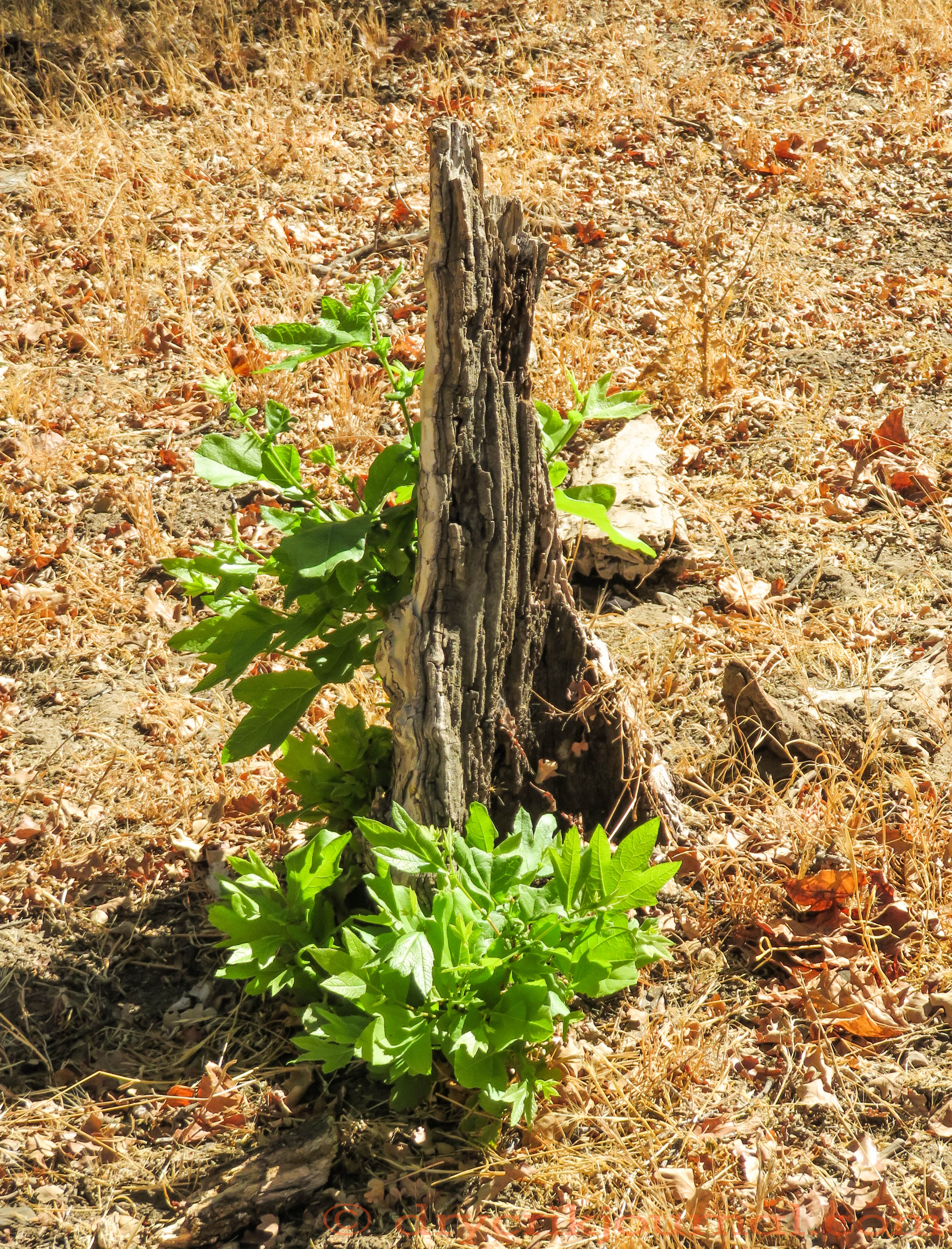
The Sycamore Alluvial Woodland (Platanus racemosa) on Dry Creek is one of 17 stands over 10 acres remaining in the world and the largest in the Sierra Nevada ecoregion despite the downstream impacts due to gravel mining. Other impacts from reservoirs, recreation and stream channelization have substantially reduced the population of this plant community statewide. Despite a century of grazing and the current drought, new growth from the remains of an old sycamore stump in this photo demonstrates the amazing resilience of this species. Photo: August 31, 2014

WITHOUT WATER

I had to tell her
about the gardeners
out of work, looking
for roses to prune,
green lawns to mow—

the fallow fields of dust
without crops to pick,
pack and haul to town
by truck, about how lean
the San Joaquin’s become.

Moonlighting, someone’s
hooking-up to hydrants
in Lemoore—a new market
for semi short-hauls
anywhere you want to go.

In the deep powder, shotgun
barrels at each trough
waiting for dove, all
signs of the hunt erased
by the wild at dawn.

I had to tell her
we’re OK, better off
than most—just to have
her think of more
than herself for a change.


AUGUST 2014

IMG_0004


Stepping back from our routines of irrigating, checking stockwater and increased feeding, August has been a delightful month, cooler overall than average. It feels like an early fall. Our cows are bred to start calving next month, and more than ever we’re excited to get on with the next phase of this business, another beginning of a new cycle as we approach our rainy season, described by an early California historian as that time when it might rain.

Two years of drought has forced us to reduce our cowherd by 40%, leaving less cows to supplement with hay, less four-wheel drive excursions into our upper country with expensive alfalfa. As a result, we have reduced the average age of our cows, focusing on the maternal traits of our most recent genetics as the core of our herd. We’re excited to get started and see the calves.

As always, we head into calving blind, not knowing what circumstances the weather will create, and not even knowing whether our reduced calf crop will generate enough to cover our future expenses—a true gamble, daily investing ourselves and all we have for an unknown payday—not exactly what I was taught in business school!

But it’s what we do, it seems, year in and year out, trying to make ranch improvements as we go just to make life easier as we get older. We’re ready for the calves and ready for some October rain to put this drought behind us.


IN SIGHT

P7050094


The day unfolds in the black:

another circle of hay and water,
cows and bulls, a dusty track
on worn terrain now dreaming

on a cool, downcanyon draft
of bluster and damp—of drinking
dark clouds until the dust is mud.

Out of the shadows, the wild steps
lightly, all sharing the same dream
rising from the dry, dry earth.


Eagle at the Windmill Spring

IMG_8916

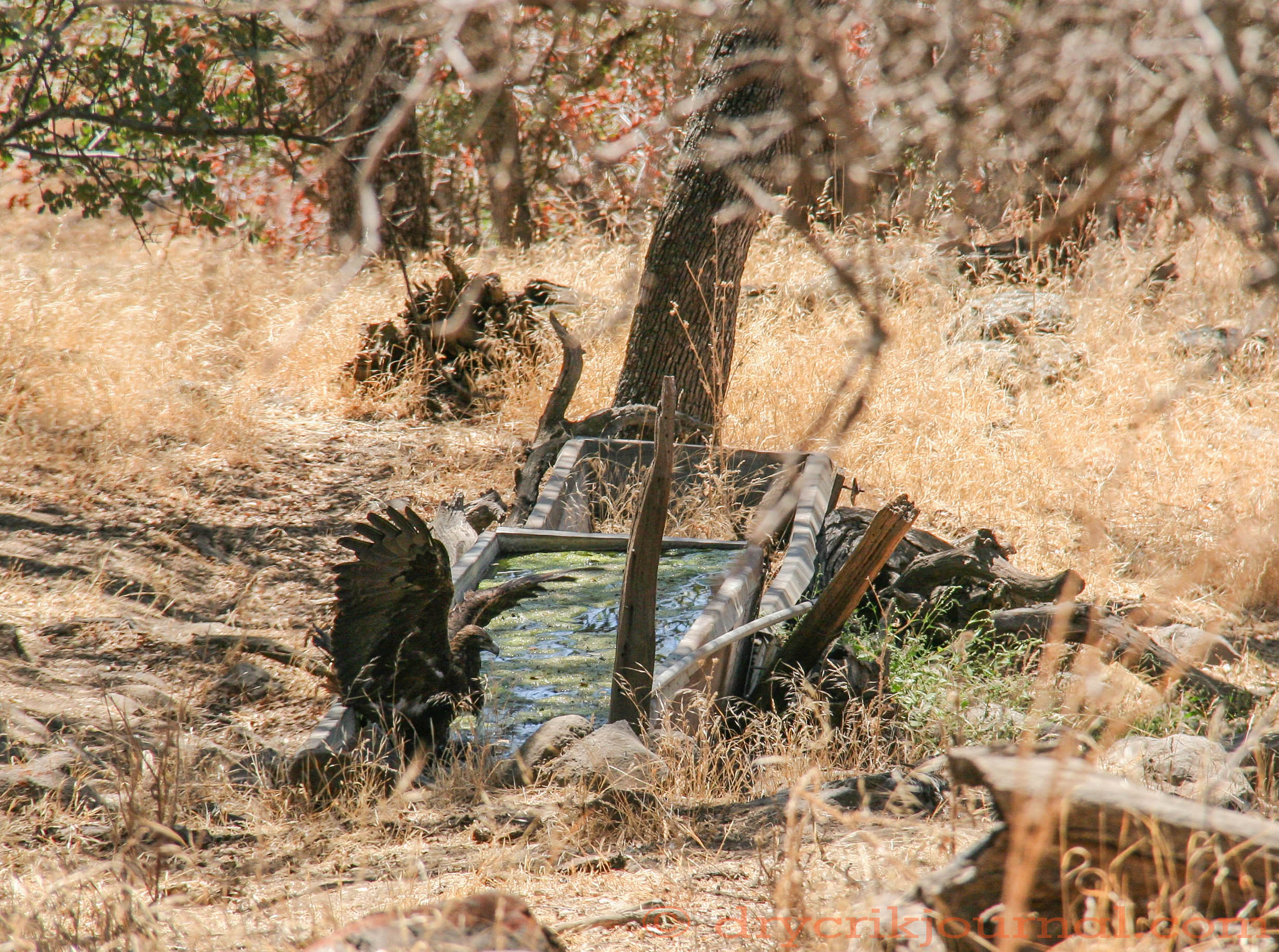
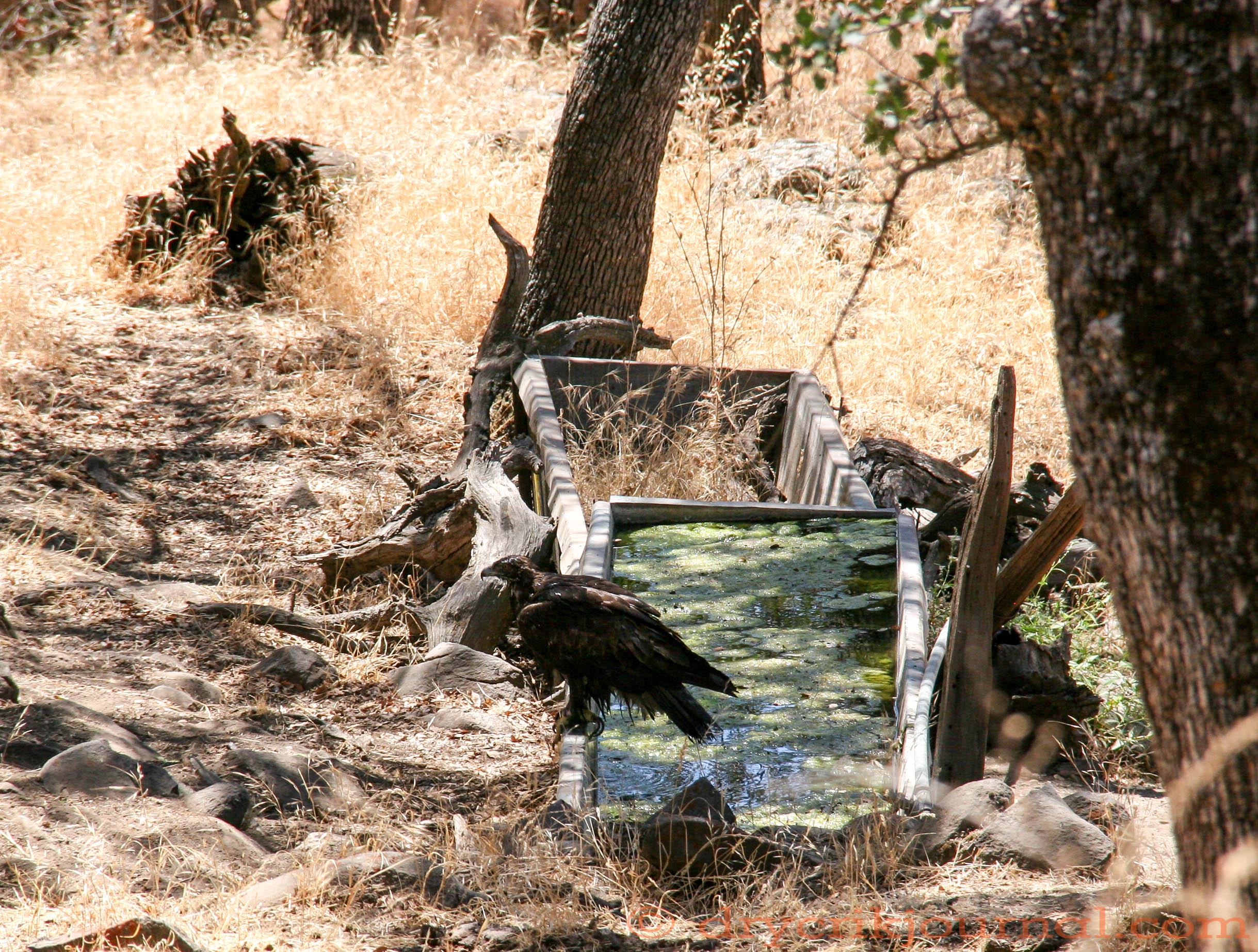
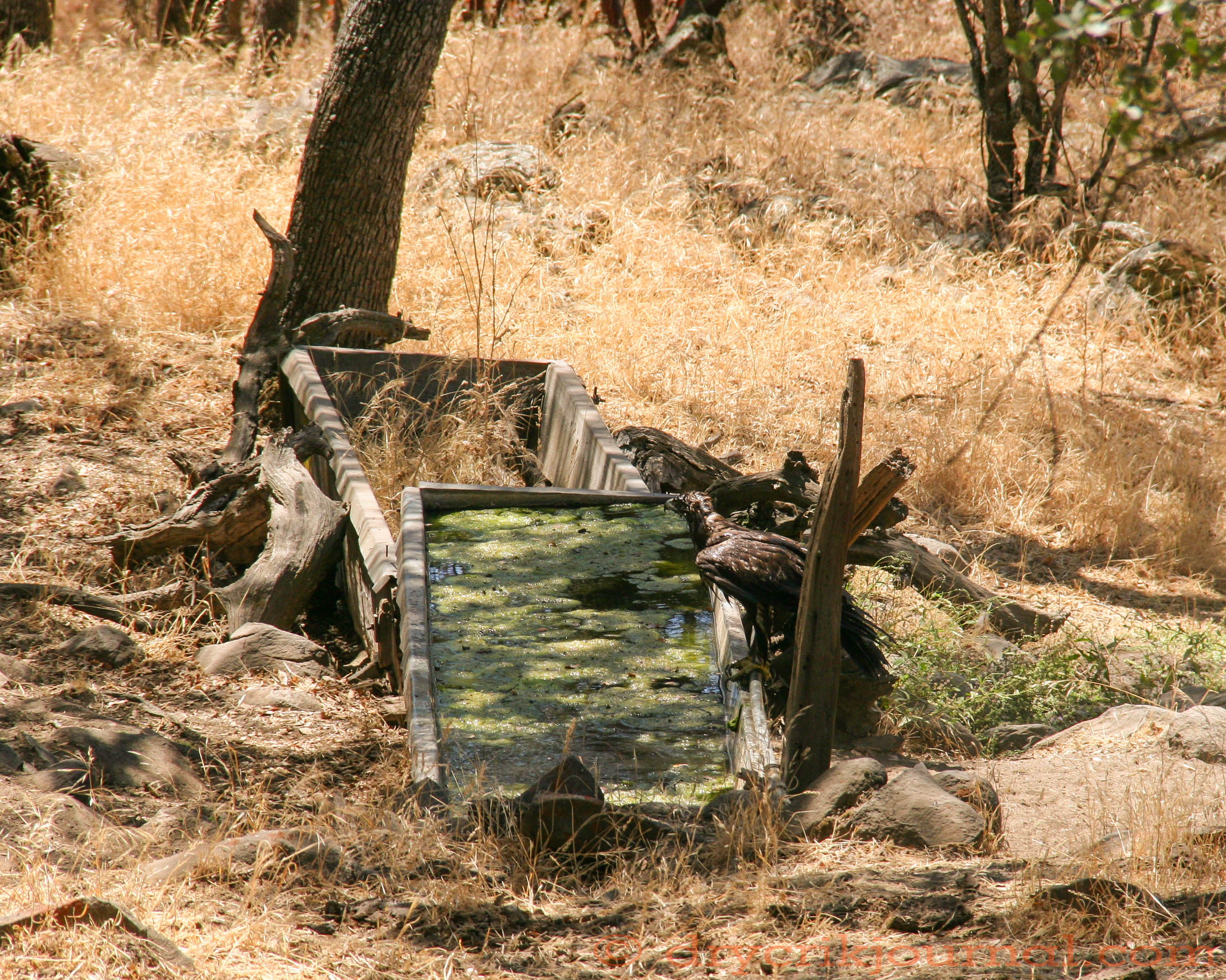
All tracks lead to water on a dry year like this one when good springs and stockwater may be miles apart. Checking the Windmill Spring yesterday, after feeding the cows on the Paregien Ranch, a young adult Golden Eagle I had seen a few weeks ago at the bottom water trough, was back for a bath.

IMG_8928

The first time, it had been getting a drink while I spent fifteen minutes or so unplugging a pipe before I noticed it sitting on the edge of the old redwood trough in the oak trees about 150 feet below me. Yesterday, I could see its dark shape from the pickup when I arrived. Like the cattle, the wildlife becomes accustomed to the few humans they see, so I meandered closer snapping photos as I went.

IMG_8945

I stopped at about 100 feet and it decided to continue its bath despite my presence.

IMG_8947

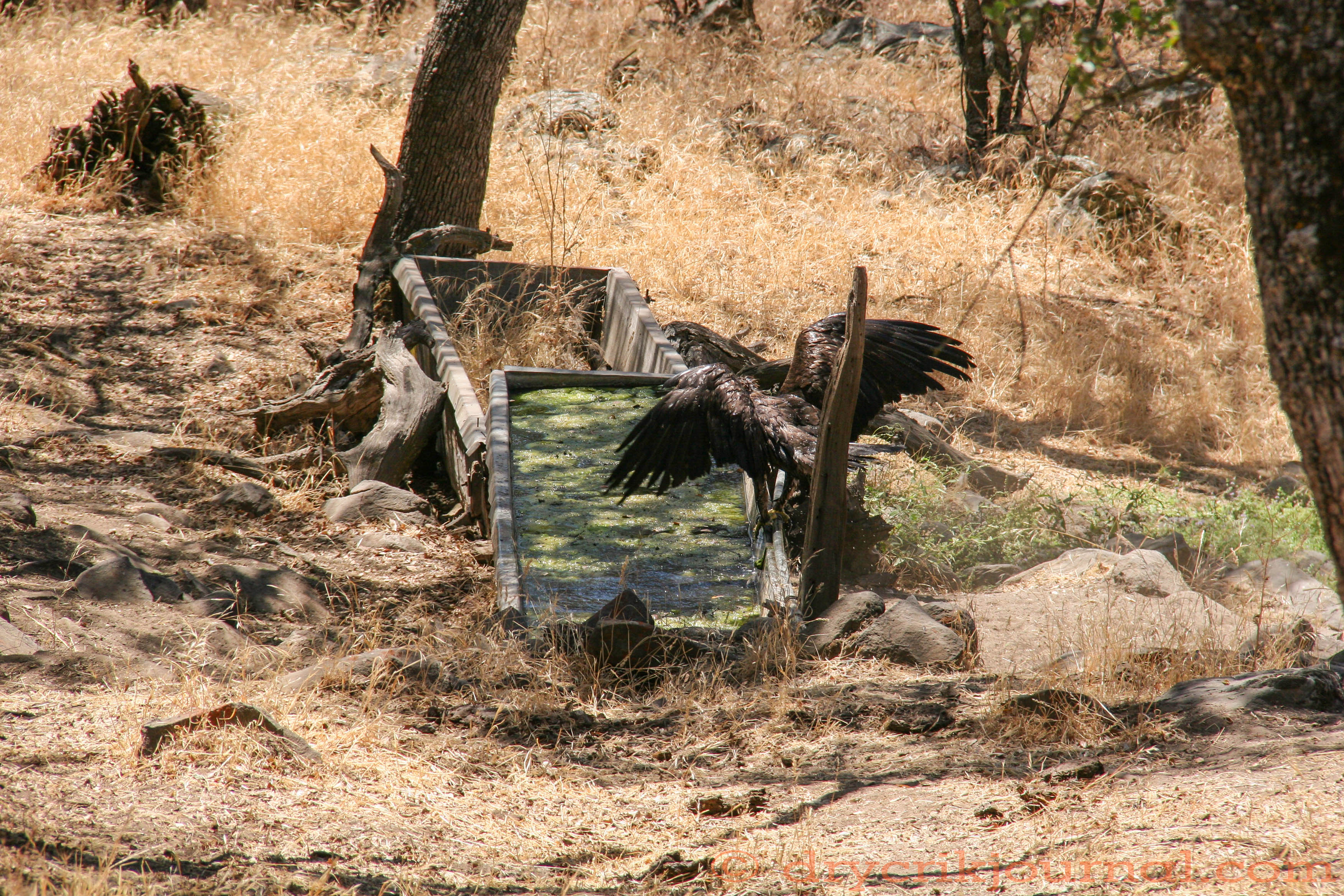
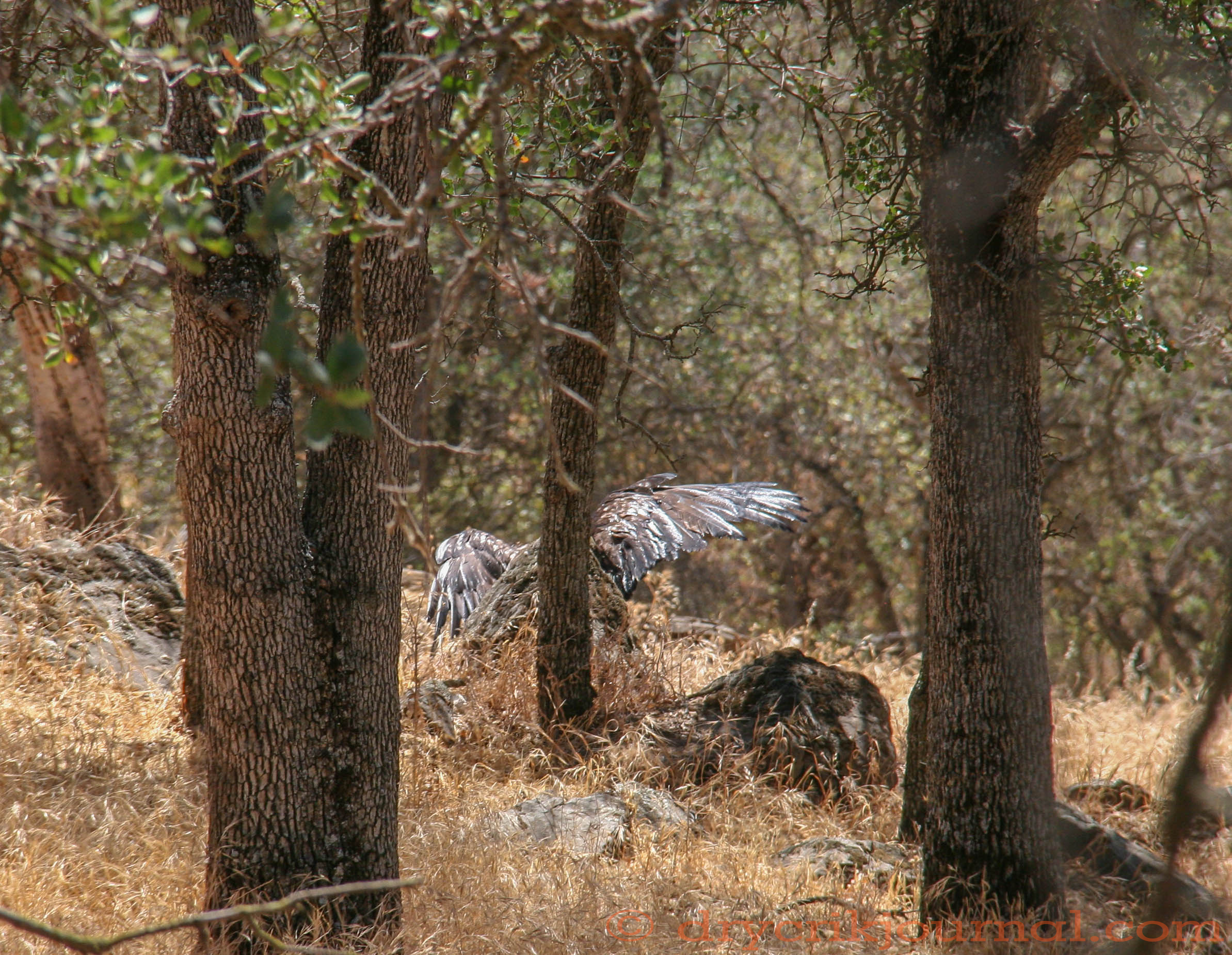
After splashing and literally rolling in the water for several minutes, it was too wet to fly…

IMG_8948

IMG_8949

…and ran up the hill beating wings to dry its feathers.

IMG_8952