Tag Archives: water

Weaning


IMG_3764


We began weaning our first bunch of calves last week, three weeks earlier than normal, due to the lack of rain in March and April. From second-calf heifers sired by Vintage Angus bills, all of these calves are headed to Visalia Livestock Market on Tuesday. The whole bunch averages 600 lbs.

Though lighter than normal, there are some heifers we would have liked to keep for replacements, but our continuing drought conditions and uncertain feed and water resources make that option impractical. Whether Climate Change or other weather phenomenon, we have come to consider our circumstances to be the new normal for Sierra Nevada foothill ranches in California where cow numbers have been reduced by 40%.

After three years of drought, our springs which are dependent on the Sierra snowpack, and our stockwater ponds which are dependent on rain, are severely impacted, some dry already before summer’s begun. Each operation continues to adapt to diminishing resources as we try to hold our cow herds intact, having already culled deeply in 2013 and 2014.

As we head into our fourth year of drought, we’ve had to change our perspective, hoping to offset our smaller numbers with a good cattle market.


GOOD RAIN


Dry grasses, weeds and wildflower leaves
turned brittle, blond and hollow-stemmed,
past help or hoping for a storm as we,

when the sky went gray for days: clouds
stacked, thunder clapped in the backcountry,
spilling little drops erasing tracks in dust

with damp, new air to breathe. Every creature
prayed—out of habit more than necessity,
to all our different gods—a great wanting

on the breeze, just to see it rain. Like true
love at the core of things, it came in sheets
of ecstasy—that full feeling of feeling good.


NEW FRONTIERS


We are farming just beyond
your city’s limits to sustain growth
by building houses, irrigating fields

to feed you. We are drilling deeper
wells all around your sufficient
neighborhood mapped on asphalt.

Either side of the fuzzy border,
we get old, get tired of adapting
to mistakes—unlike bugs, we live

too long to develop genetics
our children’s children will need
in an unimaginable future.

History will say our families farmed
the San Joaquin for 200 years
before running out of water

fifty years from now—our thin dust
upon dry layers of earth stacked above
a depleting Pleistocene sea.


Drought: Blue Oaks


March 24, 2015

March 24, 2015


The impact of three years of drought on the Blue Oaks shows up well as the trees that have survived begin to leaf out. (Click to enlarge) These Blue Oaks are across the creek from our house, on a north slope at the 1,200-foot elevation. No rain in sight, the grass has turned 30 days earlier than normal as we prepare to head into an early summer.


ON THE OTHER SIDE OF THE DOOR


IMG_4047


Hollow pipe songs at first light
pierce the darkness, own the dawn
with answered calls from oak trees

and granite piles of fractured rock
balanced on the edge of time
frozen around me. Early morning

solos grow into a chorus of chants
on the other side of the door,
a primitive awakening to greet me,

to ignore my circle of chores.
We’ve become part of the landscape
they return to, generations born

near cattle, horses and water troughs.
After these dry years, a colony—
a reunion of Roadrunners nesting.


RAISONS D’ÊTRE


                                       Now in the quiet I stand
                                       and look at her a long time, glad
                                       to have recovered what is lost
                                       in the exchange of something for money.

                                            – Wendell Berry (“The Sorrel Filly”)

Looming closer, a swirling darkness just beyond
the thought of summer’s water that is not
frozen deep in the Sierras to feed our rivers

and canyon leaks—of brittle fall and cattle
gathered at an empty trough. The creek dries back
and sinks in March, lifted to new canopies

of sycamores dressing. Skeletons of old oaks
stand out between greening survivors, some
wearing only clumps of yellow mistletoe

hanging like reasons, raisons—like raisins
clinging to a leafless vine. Each season
spins the same dry song, yet we find our place,

harmonize and sing along, lifted like precious
moisture to tender leaves, a basic ascension not
available in the big box stores, unrecorded

in the history of our presence. This may be
the new normal for old people—that daze
of amazement we have been working towards.


RAIN IN THE GROUND


IMG_9029


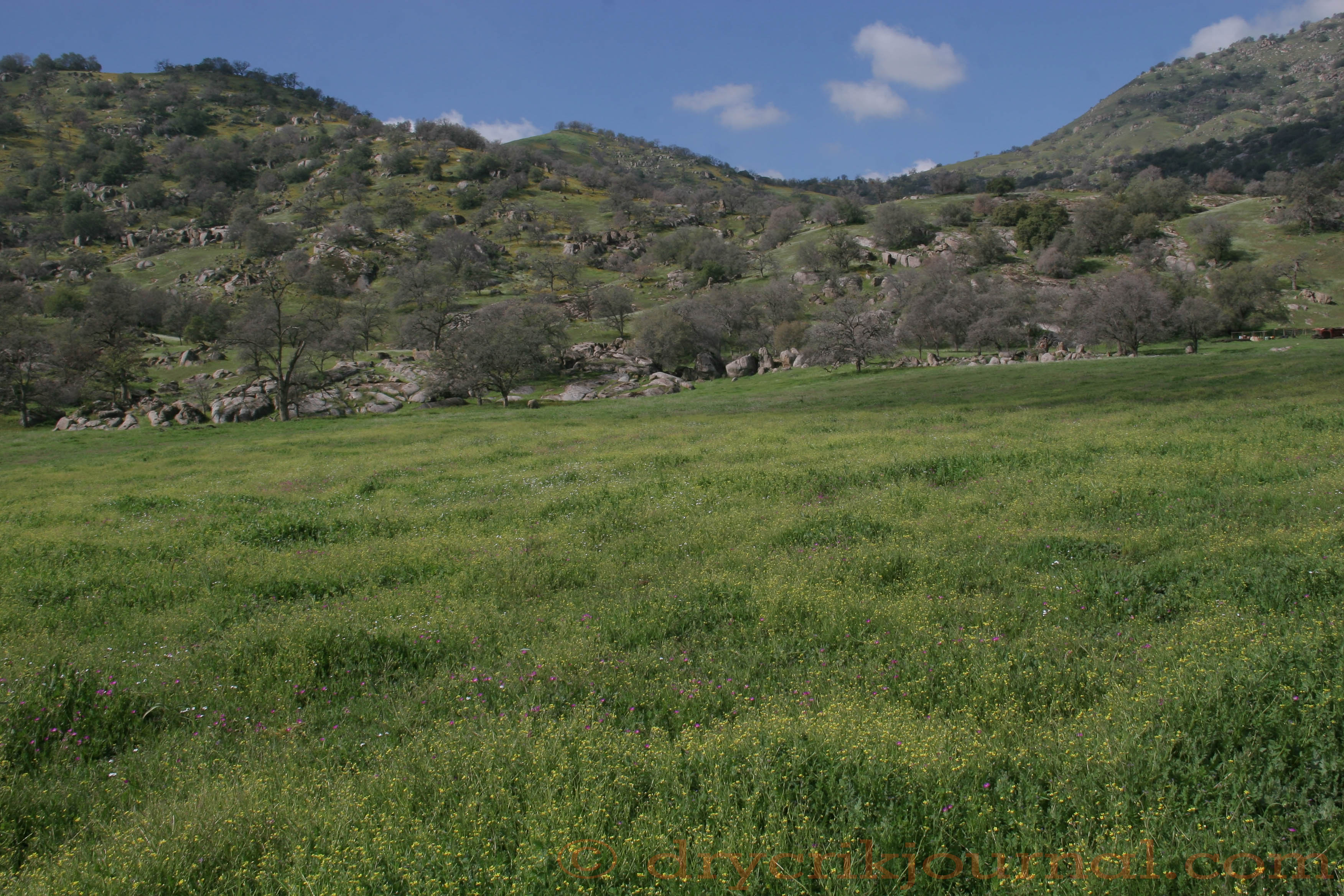
Perfect for early bloomers,
Fiddleneck, White-veined Mallow,
London Rockets pale the pasture.

Rain in the ground, thick Filaree
overreaches like loose-fringed
lettuce for more—more of the same.

Grass ahead of the cattle, it’s war—
every seed battling for real estate,
real dirt damp, for sun and rain,

green hills puddled with spilt paint.
Everything perfect on it’s own, yet
I fret with the brittle momentum

of lean, dry years—months of dust
and hay—a hard pace that interferes
with becoming forgiving as this ground

exploding in all the colors of rain.
Desperately, I reach through
early morning black for light.


COWGIRLS AT WORK


IMG_2987


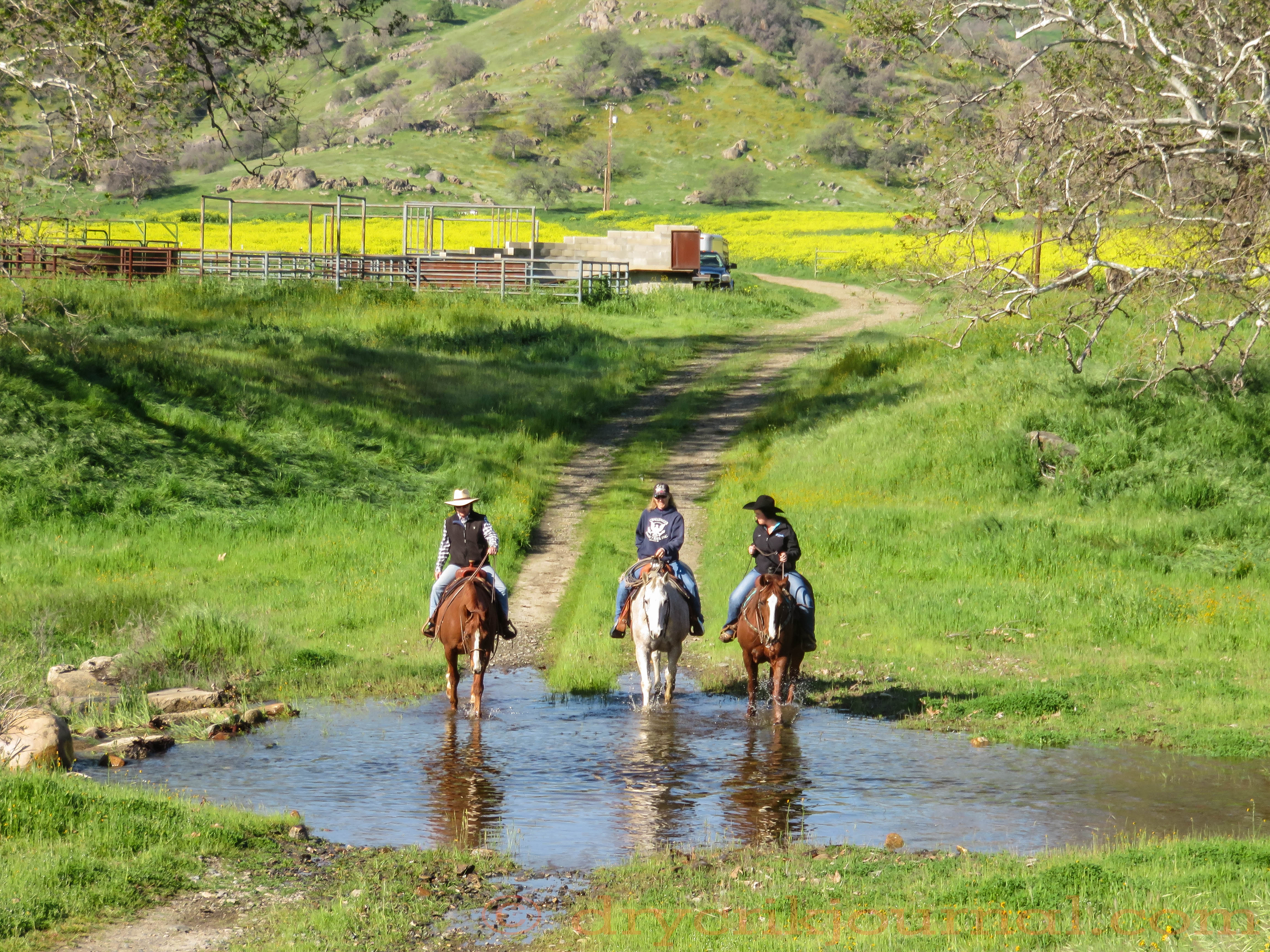
Crossing into spring
to move the low cattle up
to let the grass grow.


HOMECOMING


IMG_2963


On the low, rocky ridge,
a Roadrunner moans for a mate
in declining octaves—first awake

February mornings, ever hopeful
for a better day of circumnavigating
barn and garden. Then returns

to hear his song carry to the creek
that has found the river now
for the first time in years, tying

dry ground, this canyon together—
breathing easier, whole again,
it spreads coolly through us

as Wood Ducks skip upstream
to feed beneath the canopies
of old oaks and sycamores.

We have learned the call,
draw him closer with an answer
only more rain can bring.


NEVER ALONE


Easter 2013

Easter 2013


I made a joke of it:
attending funerals
as the price of survival—

saying goodbye, adios
as their souls ascended
to meet eternity, look

down occasionally
on our plight
of being human

and whisper in our ears.
With no wants,
they must envy

the depth of our passion
and its sensitive
entanglements, our pride

erected and dedicated
for their inspection.
We are never alone.


WPC(3) — “Rule of Thirds”