We shipped our last load of Wagyu X calves to Snake River Farms on Tuesday as we continue to gather and wean our Angus calves. Both cows and calves have done well despite the extremely dry spring, in part because of our heavy culling that cut our cow herd by a third after only six inches of rain the year before. With drought across the Western US, cow numbers are down everywhere resulting in a stronger market than we’ve seen in years. With unpredictable weather, higher costs for grain and inflation, we may be raising beef we can’t afford to eat.
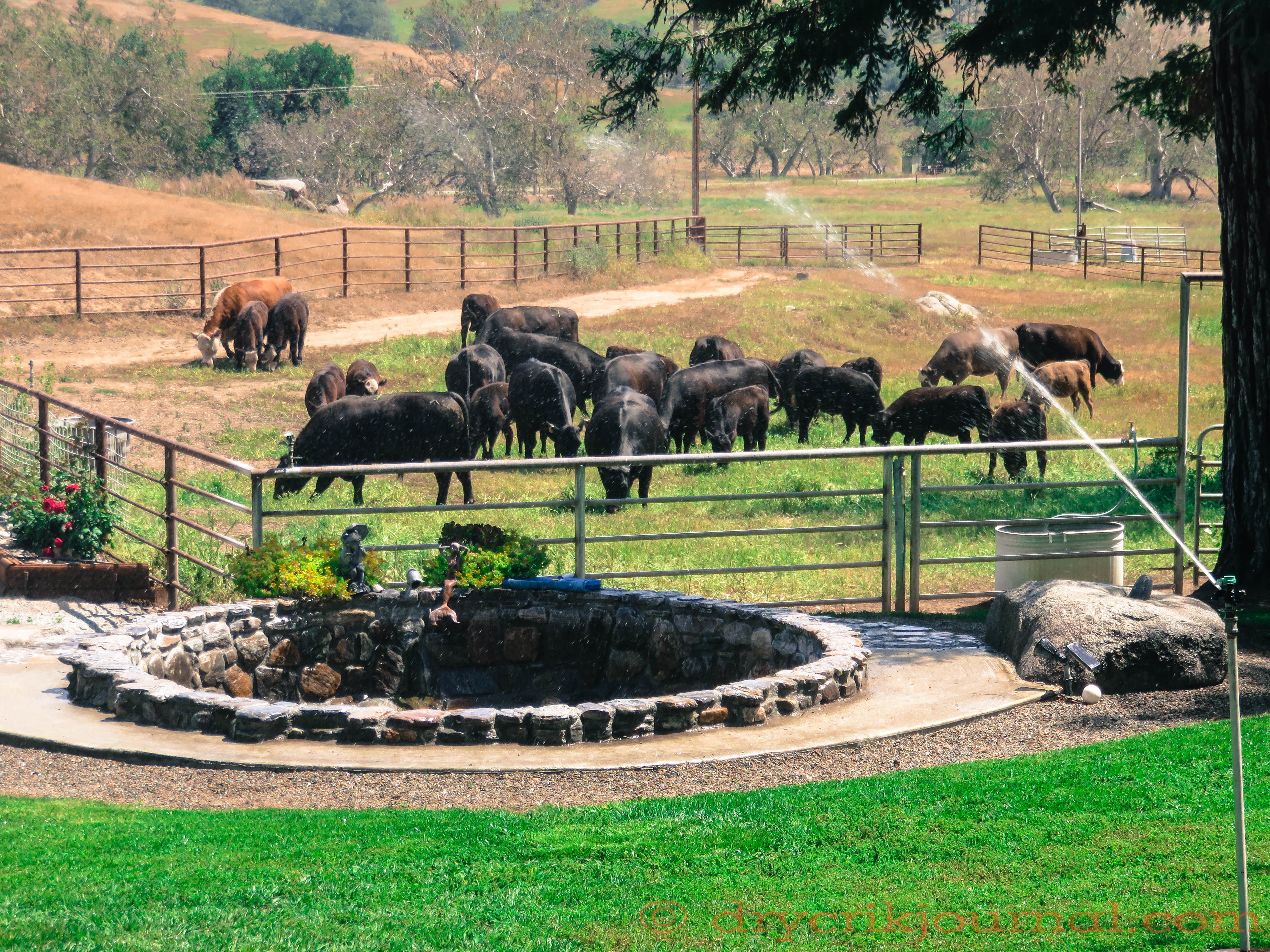
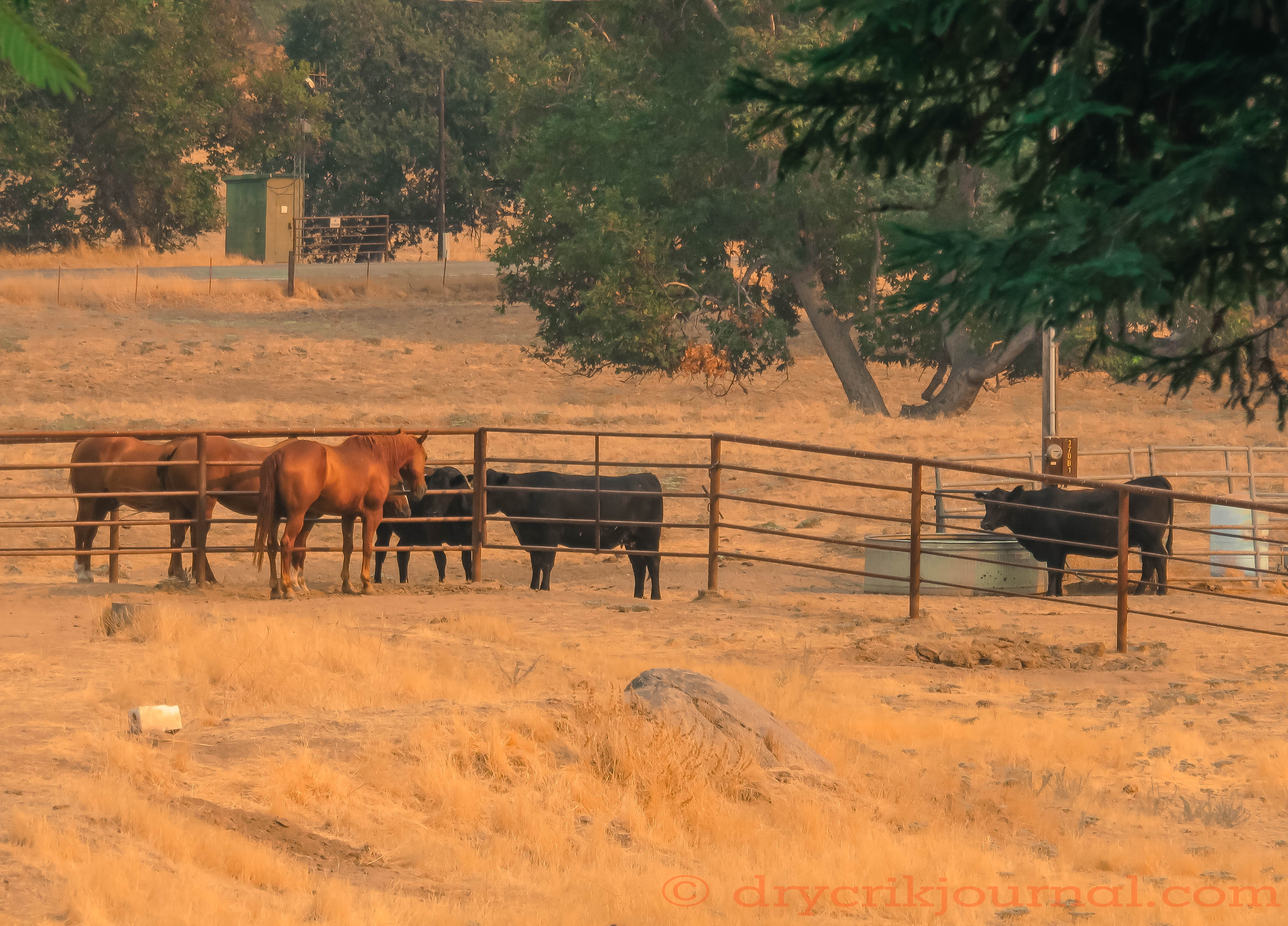
After I mowed the lawn, I opened the gate for the cows and their Wagyu X calves to the horse pasture to eat the grass and weeds horses don’t like to lessen the fire danger and make it easier to spot a rattlesnake at a distance. A treat for the cattle as we wait to process their calves on Tuesday and a treat for us to see them in the evenings.
We let our big dog Buster, a Great Pyrenees/German Shepard X that was part of the litter dumped on Dry Creek Road several years ago, loose to work at night keeping the coyotes, feral pigs, raccoons, skunks, etc. out of the yard. We don’t want him to make a mistake while we’re sleeping, so we move the cattle out before dark.
Last night, Robbin walked and worked our Border Collie Tessa on commands to gently ease them toward and out the open gate—a great exercise and confidence builder for them both. Tessa has been with us enough around the cows to know how we work them (old people slow) and plenty of herd in her breeding. I’m guessing they’ll do it again tonight, it’s been good watching.
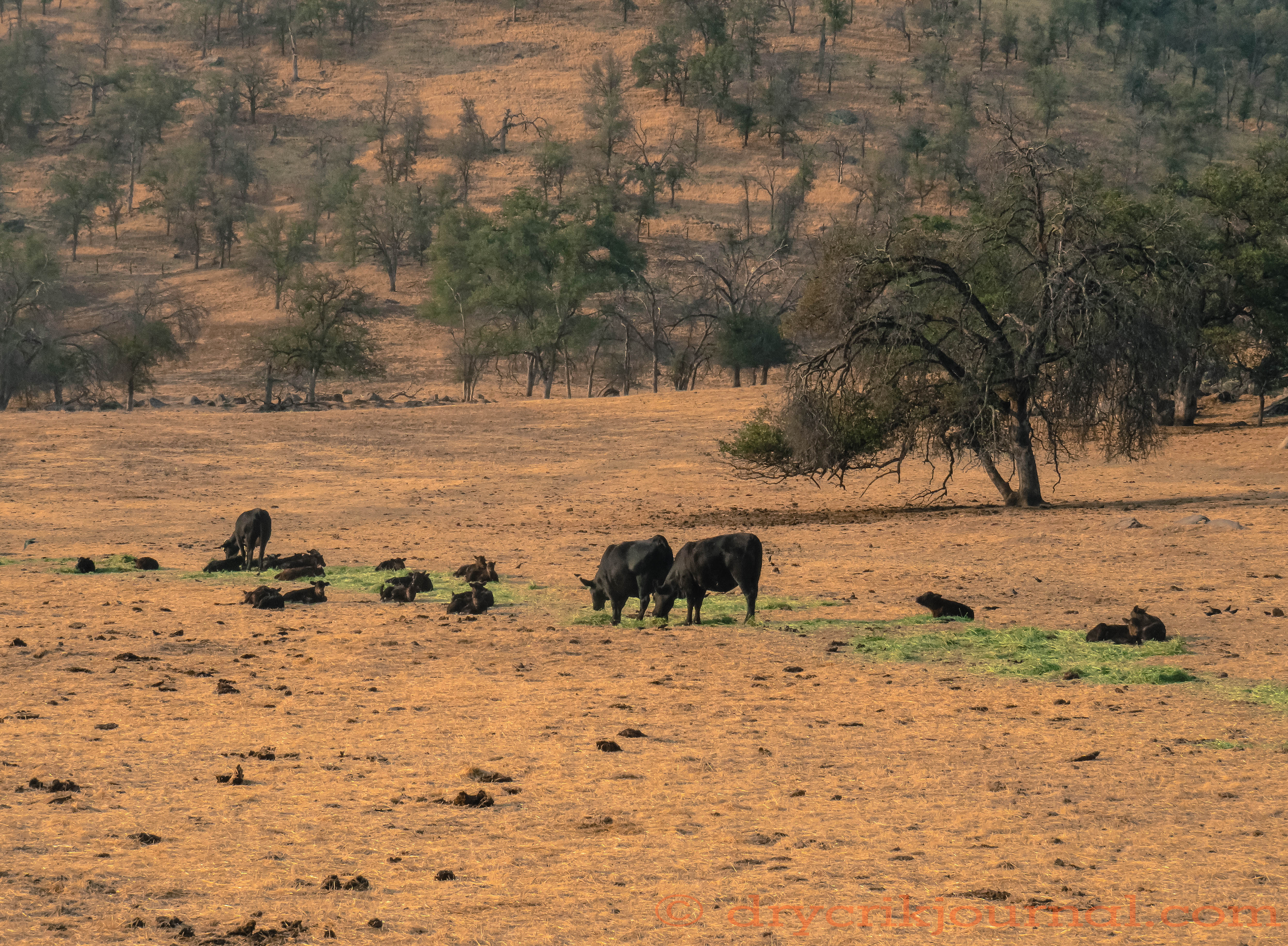
We’ve begun processing our Wagyu calves with a second round of vaccinations for Snake River Farms that we plan to ship in the first week of May. Each calf gets an Electronic Identification (EID) button and a tag to match at the same time. These calves are from our first-calf heifers that we poured the hay to from last July into December because of the short feed and to keep our first-calf heifers in shape to cycle and breed back. We don’t have to run the numbers to know that these calves won’t bring enough to pay for the hay we fed.
Every feed season is different, even in a drought. The Christmas rains saved our bacon, over 3 inches or nearly a third of our rainfall to date. And again, in the nick of time, two storm at the end of February and beginning of March that offered nearly 1 ½ inches. The three events made pretty decent feed in the corrals above and elsewhere as we approach the end our rainy season—nothing forecast for the next two weeks—proving once again that it’s not the quantity of rain, but the timing that’s most important in the cattle business.
With a shortage of water to irrigate alfalfa in California, hay will be expensive. Having cut our herd by a third last year (6 inches total), we hope there will be enough old feed to carry us through until November without feeding much hay in our upper country. However, we’ll have to help our younger cows in our lower country where the south and west slopes have already turned brown. How many will be the question.
We couldn’t keep any replacement heifers last year, and may not this year as the market gets stronger. We’ll be making lots of decisions in the coming thirty days as we begin to harvest this year’s crop and plan for the next.
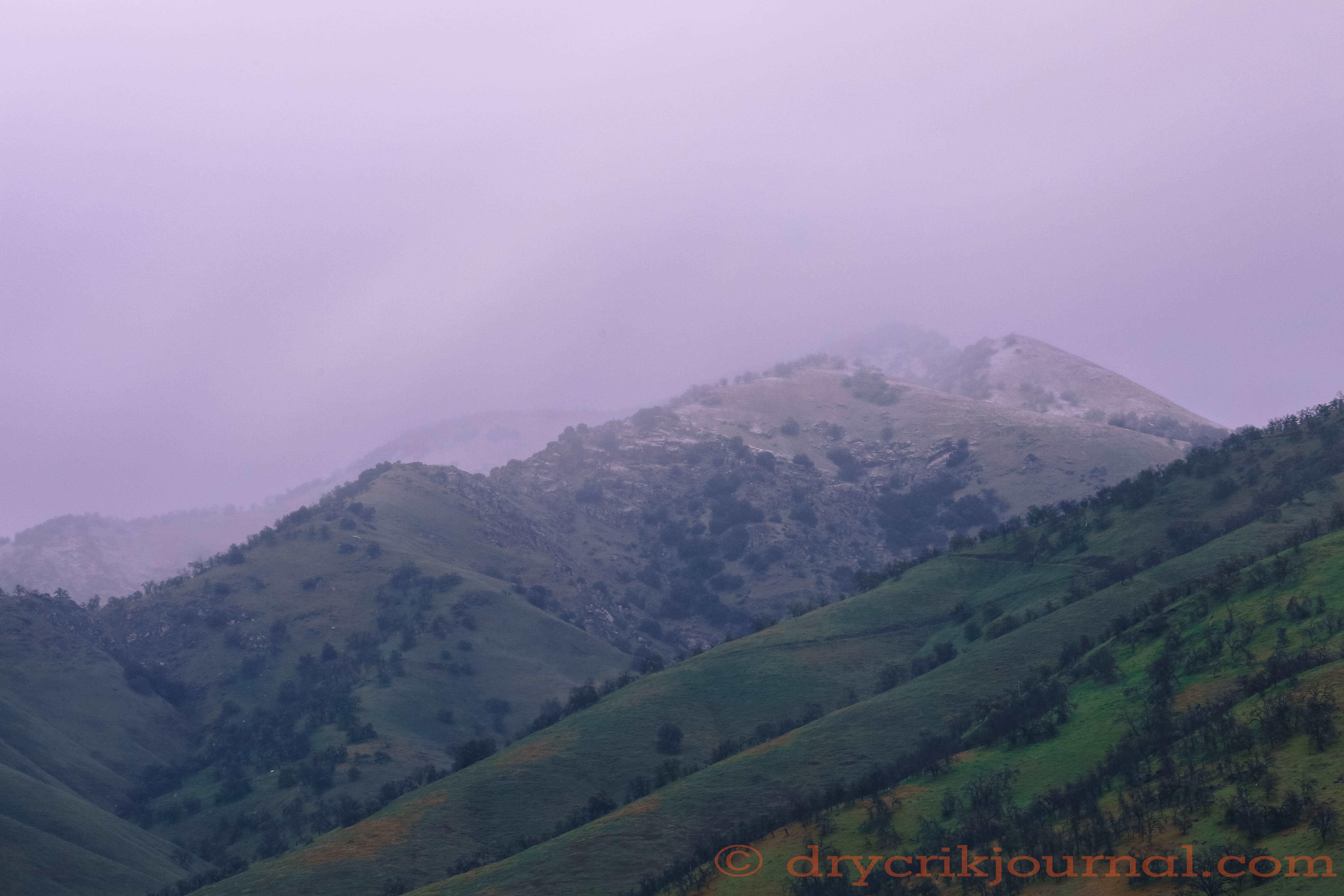
Misting, light snow on Sulphur Peak (3,400’) this morning, we ‘ve enjoyed 1.02” received thus far from the last two days of this season-saving rain—a little more scheduled for today.
But it was the 0.48” we received on the 23rd of February that truly saved our grass after 3 months of nothing but a few heavy dews. The ground was so dry that it sucked all the moisture up by the next day to the extent the mud grips on the feed truck left no tracks. The grass, that has been so thin in the Flat where we’ve been feeding our first-calf heifers since last July, finally filled in, and now is beginning to grow. Add this inch and we’ll be good to go for three weeks or so, depending on temperatures.
Robbin and I, with the help of Allie, Terri and our neighbors, got our last bunch of calves branded on Wednesday before this rain. Due to last year’s heavy culling because of the drought, our bunches were small this year, but the cows and calves looked great. Whether or not we can make ends meet on so few numbers remains to be seen in the marketplace, now that the weather seems to want to cooperate—we have hope.
The third variable to survival in the cattle business has always been politics. With the world in turmoil because of the invasion of Ukraine and its subsequent impacts, anything can happen to disrupt the marketplace, inflation and the pandemic yet still in the wings. Unresolved issues regarding the implementation of the Sustainable Groundwater Management Act (SGMA), passed by the urban majority in 2014, adds to an uncertain future for all agriculture in California, one that will undoubtedly include foreclosures and lots of litigation for years to come. Meanwhile, imposed fines and the cost of water may be too great to farm in California if the State has its way, once the richest agricultural region in the world.
Dark rain in waves,
an oscillation of applause upon the roof
that soothes and insulates the senses

from the distant discord of mankind,
the lucid transparency of public figures
that saddens the soul—

this narrow canyon lit across in gold,
blind flashes of humility,
the roll of thunder close.

The short-cropped green hangs on
to naked clay hoping for heaven’s basket
of spilt miracles to soften hillsides

for roots—and cloven hooves
reaching for the ridgetops ripe
for more level grazing.

Dark rain in waves
punctuated by the light—
relief for what we know.
It’s an art
countin’ cattle,
‘specially calves—
it takes concentration
to keep a mind closed
to everything else
and get the same answer
twice.

Dad maintained
that the simpler the mind
the more dependable
the count—
the only excuse
I’ve got.
With recent temperatures peaking around 105°, we left the house with headlights early yesterday to Bangs vaccinate 99 head of this year’s heifer calves after making the sort last week. While we waited for yesterday’s 7:00 a.m. appointment with our veterinarian, we decided to keep them on the irrigated pasture close to the corrals, knowing we risked a mix-up with their older sisters, separated only by a barbed wire fence. Something spooked the 99 in a corner under the shade of the Valley Oak on Saturday and they laid the fence down. So we had two bunches to gather and sort before the vet showed.
The vaccination named for Danish veterinarian Bernhard Bangs is to protect against Brucellosis that also infects Bison and Elk, where the greatest concentration of the disease is in the Yellowstone area. Furthermore, female cattle cannot be shipped out of California without proof of a Bangs vaccination that includes a tattoo and metal ear tag that needs to be administered by a vet before the calf is a year old.
But it went smoothly. Bob had most of the 99 baited into the corrals before we arrived and was working on the second bunch of 50 bred heifers as the girls unloaded their horses. Our heifers are gentle. The sort and processing were trouble free—a booster round of calf vaccinations plus the Bangs, injectable wormer and mineral supplement. All done by 8:30 a.m. without hurrying—a great day!
Aiming to keep 50 replacement heifers from the 99, we will make another sort in 4-6 weeks.