We kids would perch upon the shingle shed roof where my grandfather would dry his few errant Tompson Seedless for raisins from his Emperor vineyard outside Exeter, California, careful not to snag our swim trunks on the nails to watch the July 4th fireworks show in town—a perfect ending to family picnics celebrating Independence Day after World War II, a time when our nation’s history was rich with common sense. The lack of it today cannot be blamed on Climate Change.
The majority of California has been identified as a High Risk Fire Area while insurance companies have raised premiums to offset theirs, and PG&E’s, losses in Northern California during 2018’s continuous conflagrations. Today, fire insurance is either cost prohibitive or unavailable to homeowners and businesses that has impacted home loans and values, and subsequently the State’s economy. While fire fighters risk their lives to keep wildfires contained to protect these interests, we’re still selling fireworks even though the State’s population has more than tripled since 1955 to a more urban population that has little hands-on experience. The Emergency Rooms are proof enough.
California has many problems as people and businesses leave the State—new taxation annually and a Governor who can’t decide what he stands for as he heads to Washington to bolster Biden’s nomination, and should he fail, make himself visible and available.
It’s time for the non-profit service organizations, churches, Boy Scouts, etc. to stop selling fireworks as fund raisers, stop adding to the costs of our communities and look into drone shows or other means to celebrate Independence Day, it’s time to outlaw fireworks.
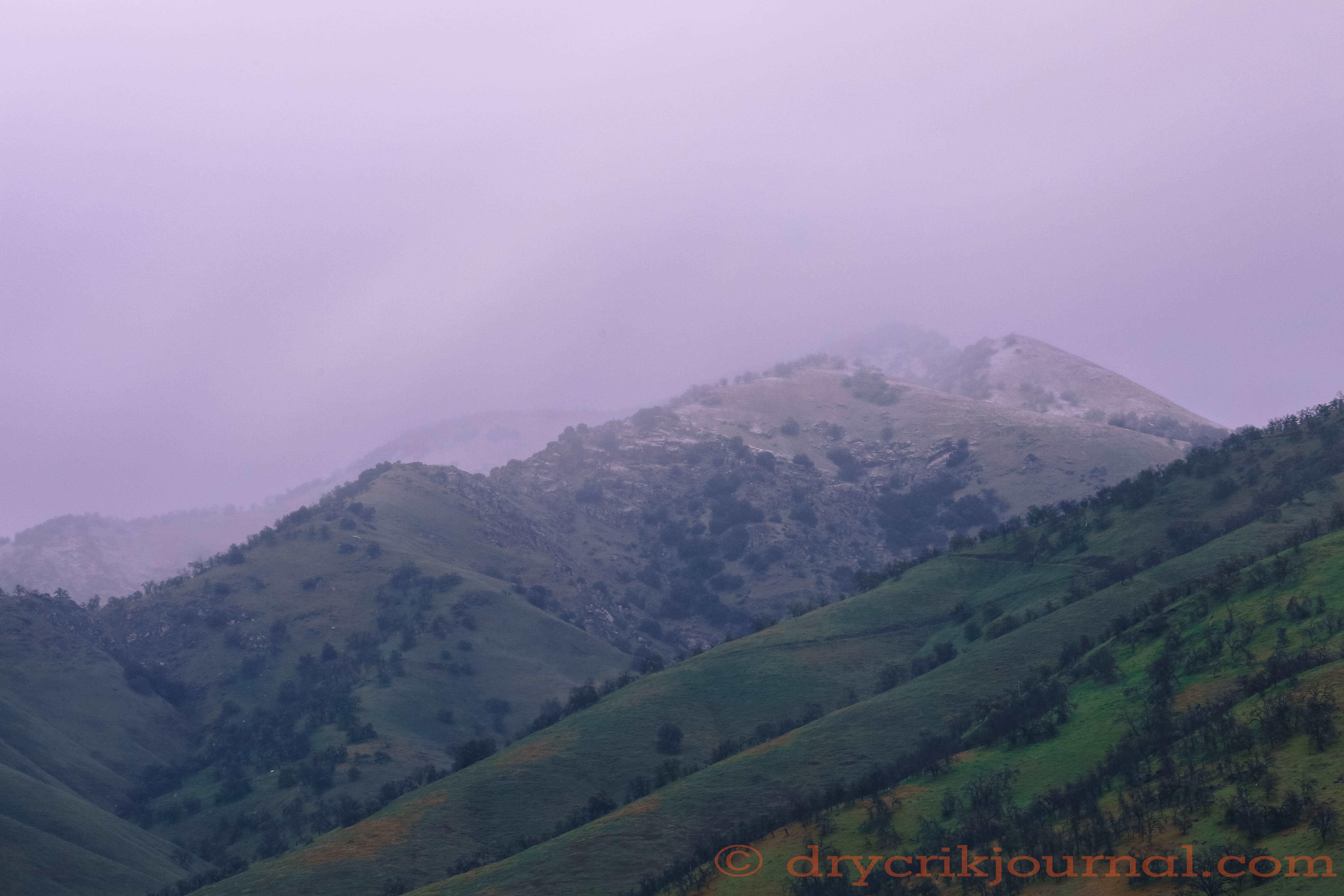
Misting, light snow on Sulphur Peak (3,400’) this morning, we ‘ve enjoyed 1.02” received thus far from the last two days of this season-saving rain—a little more scheduled for today.
But it was the 0.48” we received on the 23rd of February that truly saved our grass after 3 months of nothing but a few heavy dews. The ground was so dry that it sucked all the moisture up by the next day to the extent the mud grips on the feed truck left no tracks. The grass, that has been so thin in the Flat where we’ve been feeding our first-calf heifers since last July, finally filled in, and now is beginning to grow. Add this inch and we’ll be good to go for three weeks or so, depending on temperatures.
Robbin and I, with the help of Allie, Terri and our neighbors, got our last bunch of calves branded on Wednesday before this rain. Due to last year’s heavy culling because of the drought, our bunches were small this year, but the cows and calves looked great. Whether or not we can make ends meet on so few numbers remains to be seen in the marketplace, now that the weather seems to want to cooperate—we have hope.
The third variable to survival in the cattle business has always been politics. With the world in turmoil because of the invasion of Ukraine and its subsequent impacts, anything can happen to disrupt the marketplace, inflation and the pandemic yet still in the wings. Unresolved issues regarding the implementation of the Sustainable Groundwater Management Act (SGMA), passed by the urban majority in 2014, adds to an uncertain future for all agriculture in California, one that will undoubtedly include foreclosures and lots of litigation for years to come. Meanwhile, imposed fines and the cost of water may be too great to farm in California if the State has its way, once the richest agricultural region in the world.