Tag Archives: weather

Feeding Again

IMG_0234

Psychologically, it’s not been difficult to get back into the feeding routine again, having fed continuously from August to April last season with little rain and less grass. And physically, I’m still in fair shape, but after forty-five years of bucking bales, I tend to roll them, rather than muscle them into place on the feed truck. And due to two years of drought, there’s 40% less cows to feed now.

As they begin to calve and have two mouths to feed, it’s essential that the cows are in good shape so that they will be cycling when we put the bulls out on the 1st of December. We ended last season with more dry feed in our upper granite country than in the clay, but still not enough to sustain a cow with a calf very long without hay. If a cow gets thin going into winter when she burns more calories, it takes more hay to get her to cycle than if we had fed her earlier.

Nobody’s starving, but after the last two years, just the sound of the diesel engine brings them to the feed truck. It was a little cooler yesterday, about 85° when we headed up into Greasy Creek, feeding the girls in Belle Point along the way. By the time we got to Greasy Cove the cows were shaded-up on the edge of a near-empty Lake Kaweah, about the only water they have to drink. We can’t take the hay to them, so they have to chug up the hill out of lake bottom to get hay. We didn’t have all the cattle, but left enough on the ground that the rest will get some.

Despite cooler nights and shorter days, stockwater is still an issue as the pond at Ragle Springs is now dry, though the spring is running enough to support a few head. We’re watching the weather hopefully, knowing that we will need near-perfect conditions get a decent feed year: early slow rains to get the grass started well-enough to hold moisture and keep our dry slopes from washing away.

WEEDS

IMG_5483


A place to hide in weeds
with rain—a closer look
at one another.


AT DAWN

IMG_0212


The earth is hard and dry—
but when it comes to dreams
we look to the sky.


FIRST

December 28, 2013

December 28, 2013


Shedding a few leaves early, the sycamores
have begun to turn, quit taking water,
teasing me with peeks of more alabaster flesh

at a distance—first moves before the sway
of winter’s naked dance along the creek—
sandy cobbles like rafts of human skulls now.

On my morning circle of first-calf mothers,
I check the spots where water rises first
behind the granite dikes beneath damp sand

and short-cropped green as if I might
hurry time, escape into the future cool and wet
and wait like a rabbit for tortoise to catch up.


THE OLD SAW

IMG_4465


We are not sure anymore,
the sound and smell of it lost
to matters at hand without it,

so busy and mindful
of filling the void
best we can. The old saw

about not missing water
until the well goes dry
doesn’t cut the dust

settling nightly in my lungs,
in the corners of my eyes
and ears. I am not sure

of anything anymore
except that we would
welcome a change.


FOREPLAY

IMG_0014


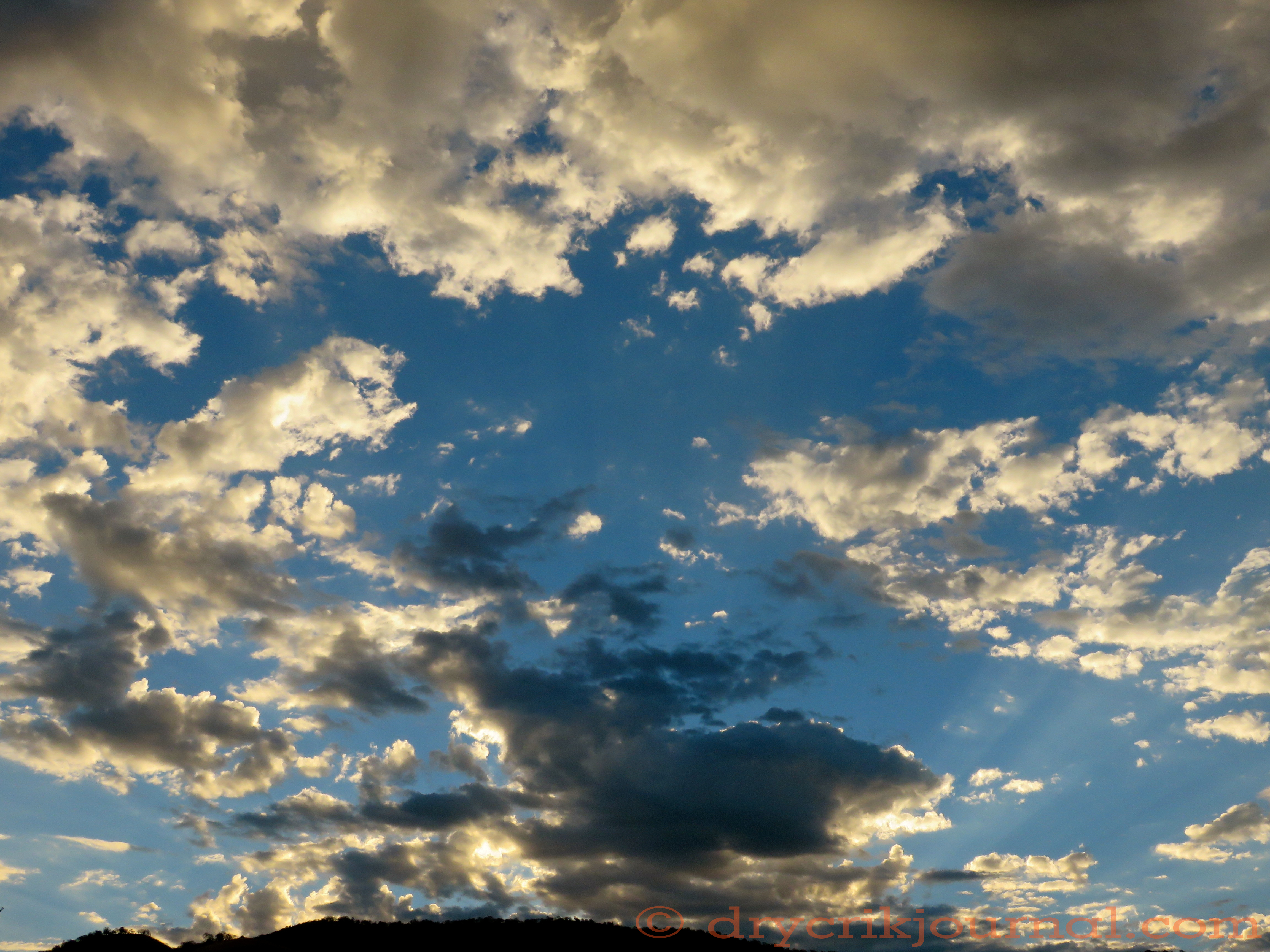
Looking out beneath black clouds at dawn
from a daze, it smells like rain too early
to do much good, yet I am cheery—

old friends returned, dark remnants
of a Mexican hurricane, precursors
perhaps to storms waiting in the wings

rehearsing lines, emphasizing pauses
and diction between thunder and lightening—
old flesh revived beneath a blanket.


WPC(2) — “Adventure”

Resilience

IMG_0082

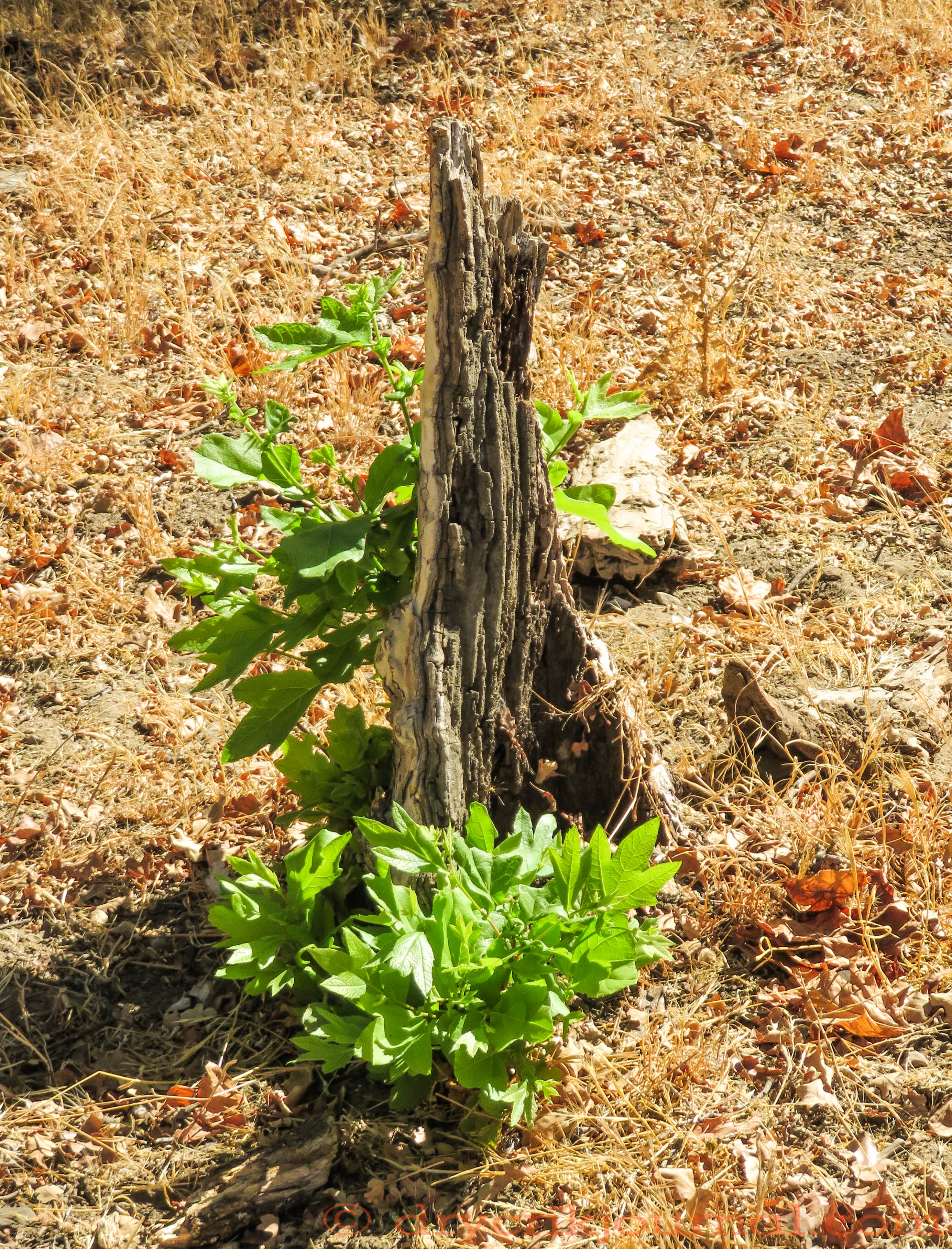
The Sycamore Alluvial Woodland (Platanus racemosa) on Dry Creek is one of 17 stands over 10 acres remaining in the world and the largest in the Sierra Nevada ecoregion despite the downstream impacts due to gravel mining. Other impacts from reservoirs, recreation and stream channelization have substantially reduced the population of this plant community statewide. Despite a century of grazing and the current drought, new growth from the remains of an old sycamore stump in this photo demonstrates the amazing resilience of this species. Photo: August 31, 2014

AUGUST 2014

IMG_0004


Stepping back from our routines of irrigating, checking stockwater and increased feeding, August has been a delightful month, cooler overall than average. It feels like an early fall. Our cows are bred to start calving next month, and more than ever we’re excited to get on with the next phase of this business, another beginning of a new cycle as we approach our rainy season, described by an early California historian as that time when it might rain.

Two years of drought has forced us to reduce our cowherd by 40%, leaving less cows to supplement with hay, less four-wheel drive excursions into our upper country with expensive alfalfa. As a result, we have reduced the average age of our cows, focusing on the maternal traits of our most recent genetics as the core of our herd. We’re excited to get started and see the calves.

As always, we head into calving blind, not knowing what circumstances the weather will create, and not even knowing whether our reduced calf crop will generate enough to cover our future expenses—a true gamble, daily investing ourselves and all we have for an unknown payday—not exactly what I was taught in business school!

But it’s what we do, it seems, year in and year out, trying to make ranch improvements as we go just to make life easier as we get older. We’re ready for the calves and ready for some October rain to put this drought behind us.


RECENT HISTORY

At the gate the dust is deep.
A feral hog at dawn returning
to his lair along the creek

atop a raccoon aiming
for the water trough, powder
soft between their toes

atop several head of cows
upon my own boot track
fading with yesterday’s breeze.

The time is now
to think about
the sign we leave.

IN SIGHT

P7050094


The day unfolds in the black:

another circle of hay and water,
cows and bulls, a dusty track
on worn terrain now dreaming

on a cool, downcanyon draft
of bluster and damp—of drinking
dark clouds until the dust is mud.

Out of the shadows, the wild steps
lightly, all sharing the same dream
rising from the dry, dry earth.