Major wind event continues at noon today originating from a cut off low off the coast of Southern California, a pre-monsoonal surge of subtropical moisture bringing lightning and thunderstorms to the Southern Sierra and Central Valley into tomorrow. Little moisture. A.M. wind blew the top of a sycamore across our electrical service line to our pump at the corrals. We’ll have to haul water to our cattle.
Meanwhile we have cows and calves gathered in Greasy awaiting weaning planned for today if a tree hasn’t fallen across a fence up there. We’ll have to take some hay and check the damage tomorrow. We’re not done with the wind gusts.
We shipped our last load of Wagyu X calves to Snake River Farms on Tuesday as we continue to gather and wean our Angus calves. Both cows and calves have done well despite the extremely dry spring, in part because of our heavy culling that cut our cow herd by a third after only six inches of rain the year before. With drought across the Western US, cow numbers are down everywhere resulting in a stronger market than we’ve seen in years. With unpredictable weather, higher costs for grain and inflation, we may be raising beef we can’t afford to eat.
We’ve begun processing our Wagyu calves with a second round of vaccinations for Snake River Farms that we plan to ship in the first week of May. Each calf gets an Electronic Identification (EID) button and a tag to match at the same time. These calves are from our first-calf heifers that we poured the hay to from last July into December because of the short feed and to keep our first-calf heifers in shape to cycle and breed back. We don’t have to run the numbers to know that these calves won’t bring enough to pay for the hay we fed.
Every feed season is different, even in a drought. The Christmas rains saved our bacon, over 3 inches or nearly a third of our rainfall to date. And again, in the nick of time, two storm at the end of February and beginning of March that offered nearly 1 ½ inches. The three events made pretty decent feed in the corrals above and elsewhere as we approach the end our rainy season—nothing forecast for the next two weeks—proving once again that it’s not the quantity of rain, but the timing that’s most important in the cattle business.
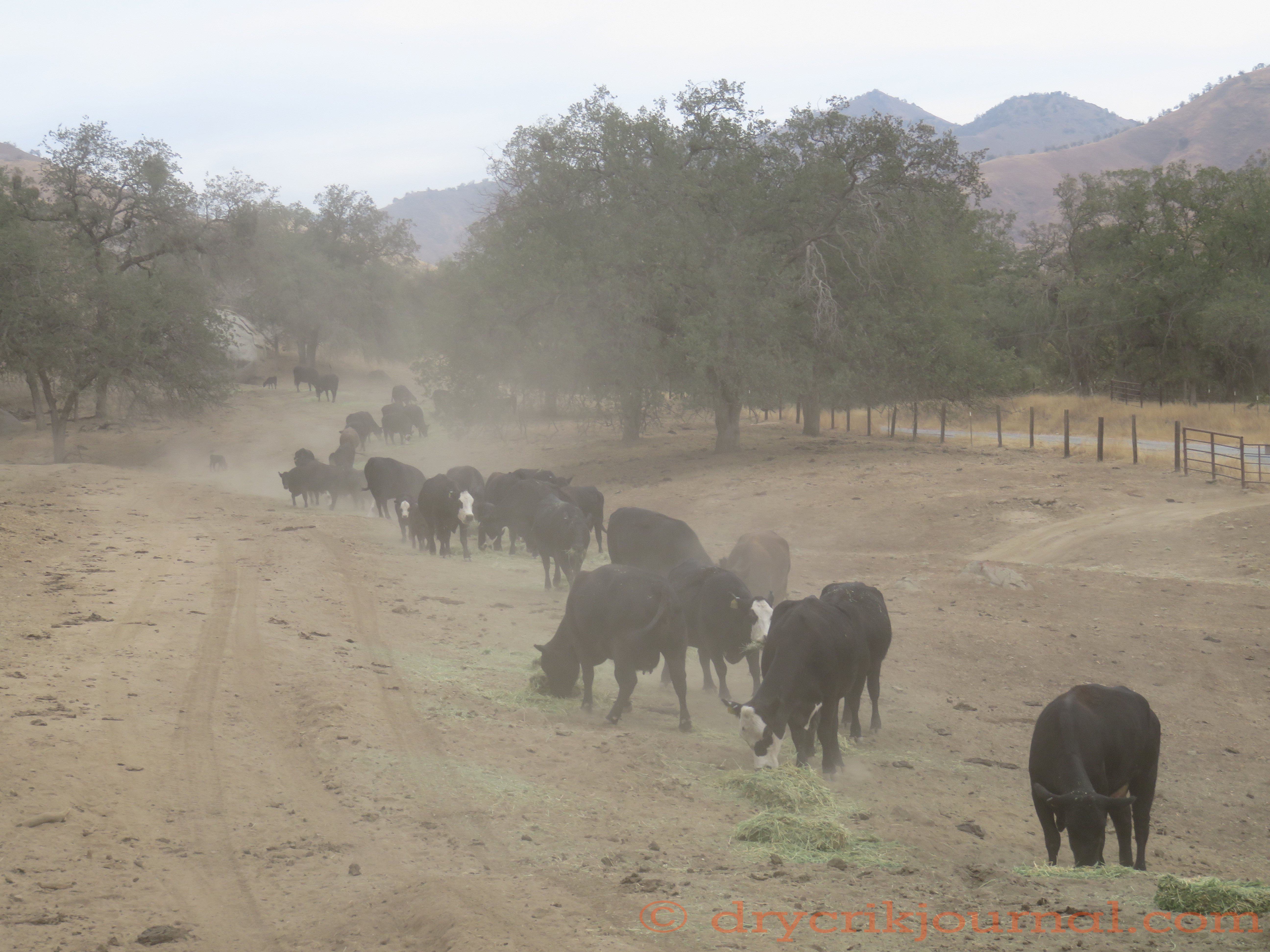
With a shortage of water to irrigate alfalfa in California, hay will be expensive. Having cut our herd by a third last year (6 inches total), we hope there will be enough old feed to carry us through until November without feeding much hay in our upper country. However, we’ll have to help our younger cows in our lower country where the south and west slopes have already turned brown. How many will be the question.
We couldn’t keep any replacement heifers last year, and may not this year as the market gets stronger. We’ll be making lots of decisions in the coming thirty days as we begin to harvest this year’s crop and plan for the next.
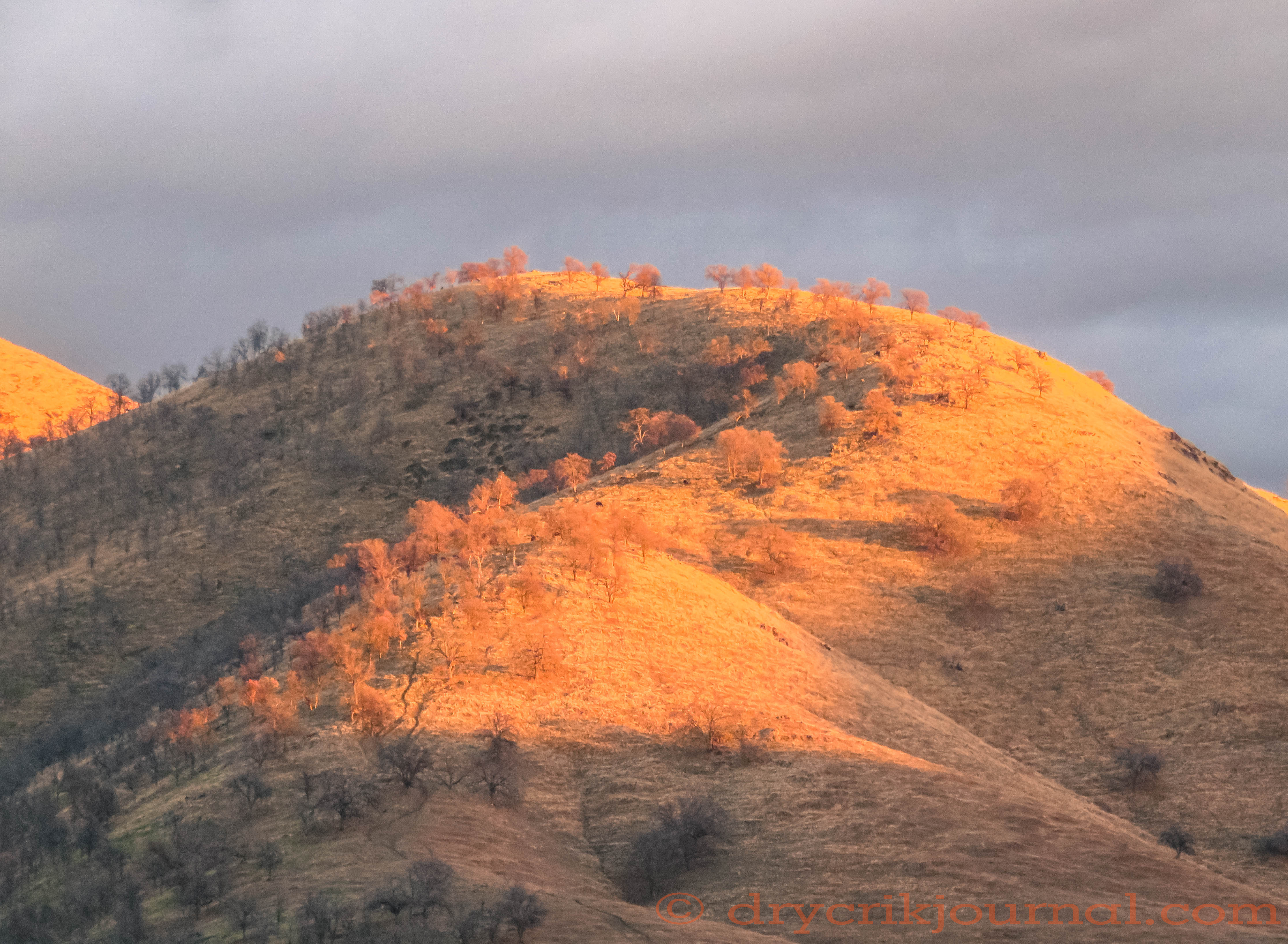
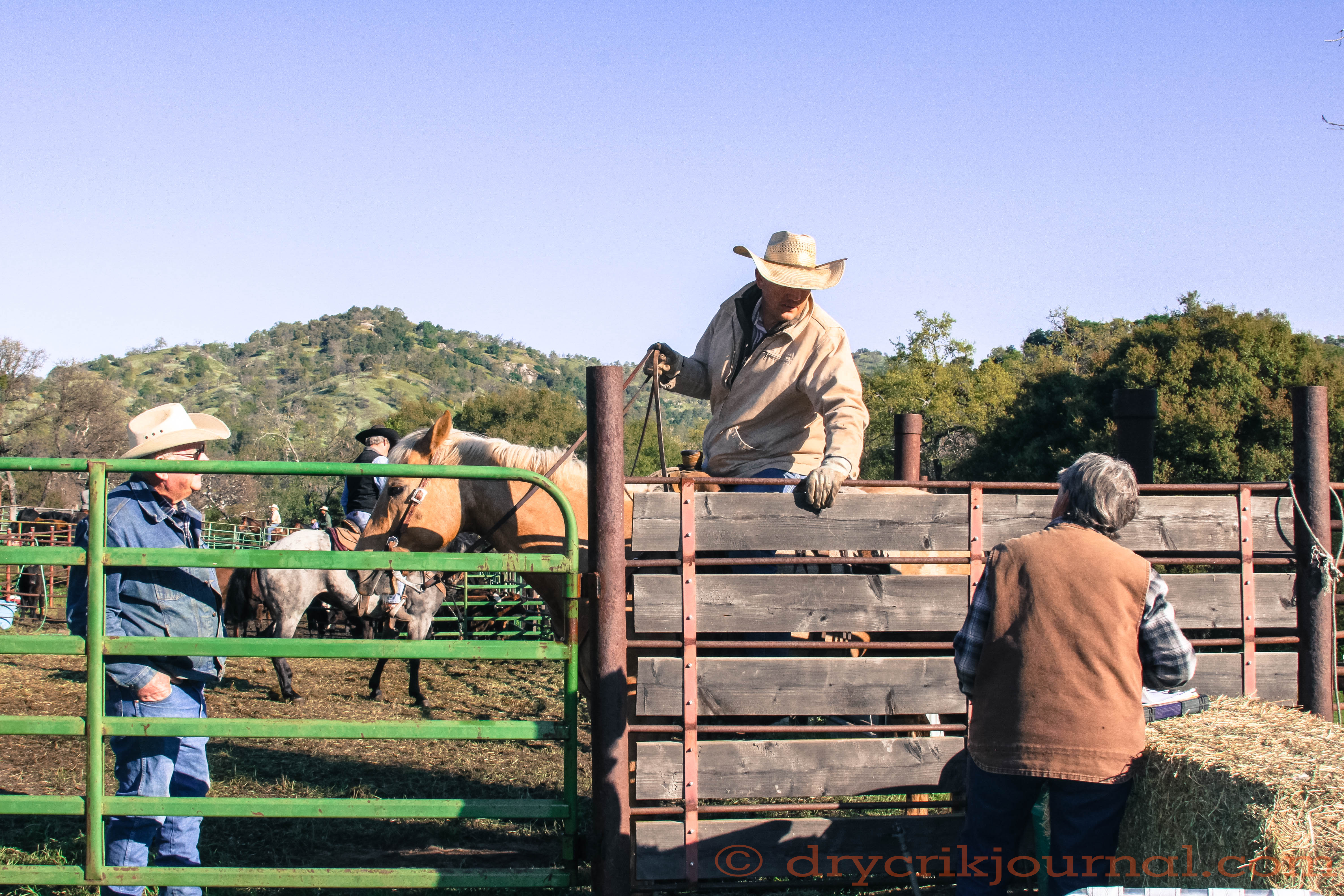
Once again, the south slopes fade, begging for moisture. We’ve been following yesterday’s forecast rain for well over a week, watched it vacillate from 3/4s to ¼-inch daily, while hoping to get Kenny and Virginia McKee’s calves branded in Woolley Canyon at the same time—a four-day gather in wild country. On cue, a light shower began as we finished up, but unfortunately the trailing storm evaporated by late afternoon. But it was a delightful branding, an efficient dance of ropers and ground crew that was almost mechanical, yet seasoned with quips and joviality, reminding me that the center of our culture and community has always been the branding pen.
Two years of Covid and the recent Russian invasion of Ukraine has upset the equilibrium of the planet, injected fear with the hopeless horrors of war into nearly every soul. The meatpackers’ conspiracy that has defrauded both producers and consumers has added to the instability along with our ‘megadrought’, new terminology from the scientists denoting two decades of drought not seen since 800 AD—all in all, the impacts of which have created an overwhelming mess.
Kids—recounting the branding at home, Robbin and I tallied at least 10 little kids in and around the corrals, another generation exposed to this lifestyle, caring families who treasure the opportunity to teach their children how to get the work done. We are not helpless, it is a luxury to still have a place to ignore the outside world where we can pour our attention to what’s important, to the things we can do something about.