
Not satisfied with the poem that I was working on, I went to work this morning sans post. But while changing my irrigation water on the Kubota, I came upon this fellow more intent on breakfast than nervous about me, about thirty feet away.
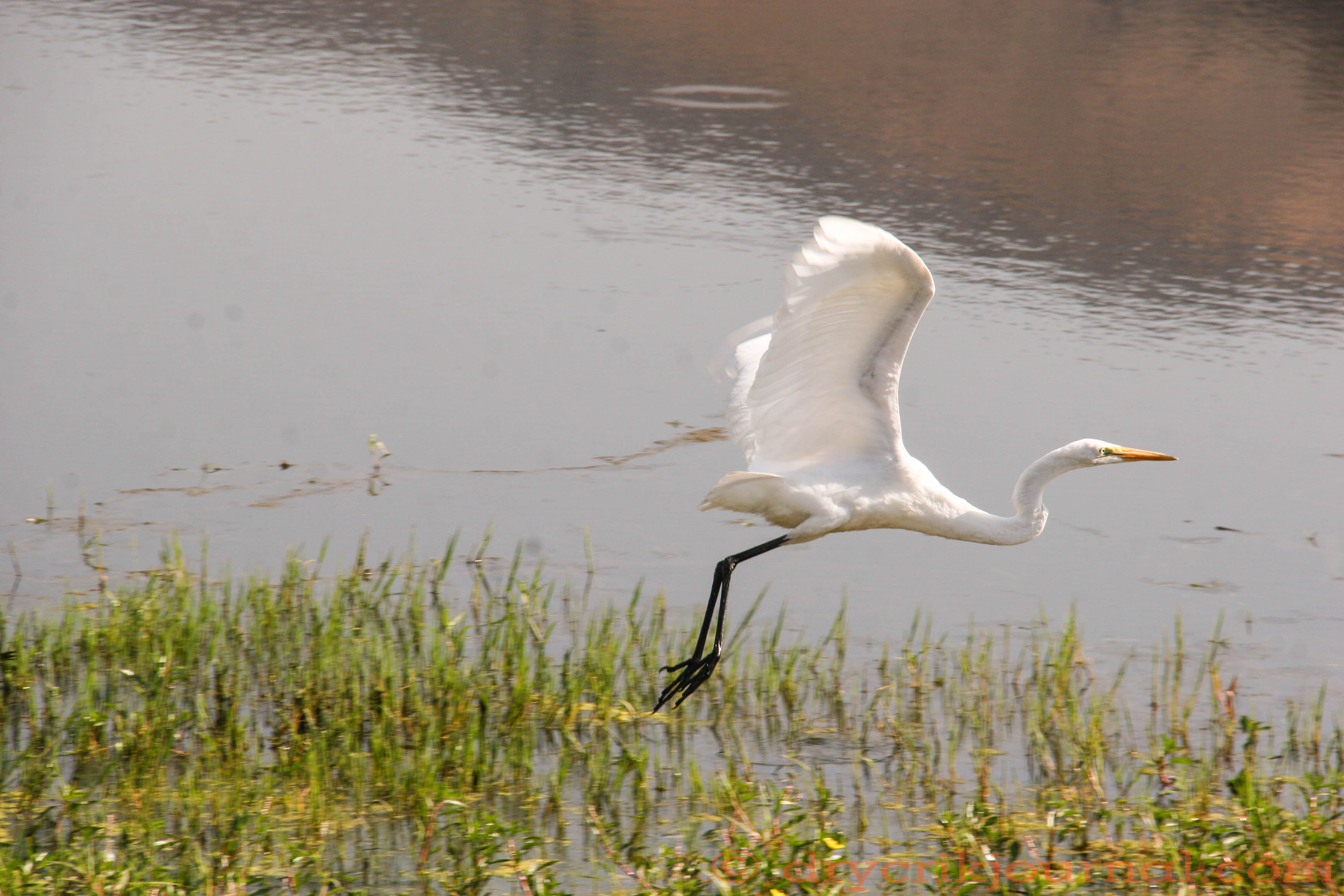

Not satisfied with the poem that I was working on, I went to work this morning sans post. But while changing my irrigation water on the Kubota, I came upon this fellow more intent on breakfast than nervous about me, about thirty feet away.
Posted in Photographs, Ranch Journal
Tagged birds, Dry Creek, Great Egret, photographs, water, wildlife

what was done in blindness,
loving what I cannot save.
– Wendell Berry (“To My Children, Fearing For Them”)
No bluecoats, no cavalry trumpeting,
no loping long line of sabers flashing
to rescue what was commonplace before
we put ourselves first, drank the water,
pumped the earth dry, our children
abandoned to a new order in time
of scrutiny and enforcement. We believed
in magic, but their emptiness is mine—
a greater void than I can fill with poetry.
Posted in Poems 2014
Tagged photographs, poetry, water, weekly-photo-challenge, Wendell Berry
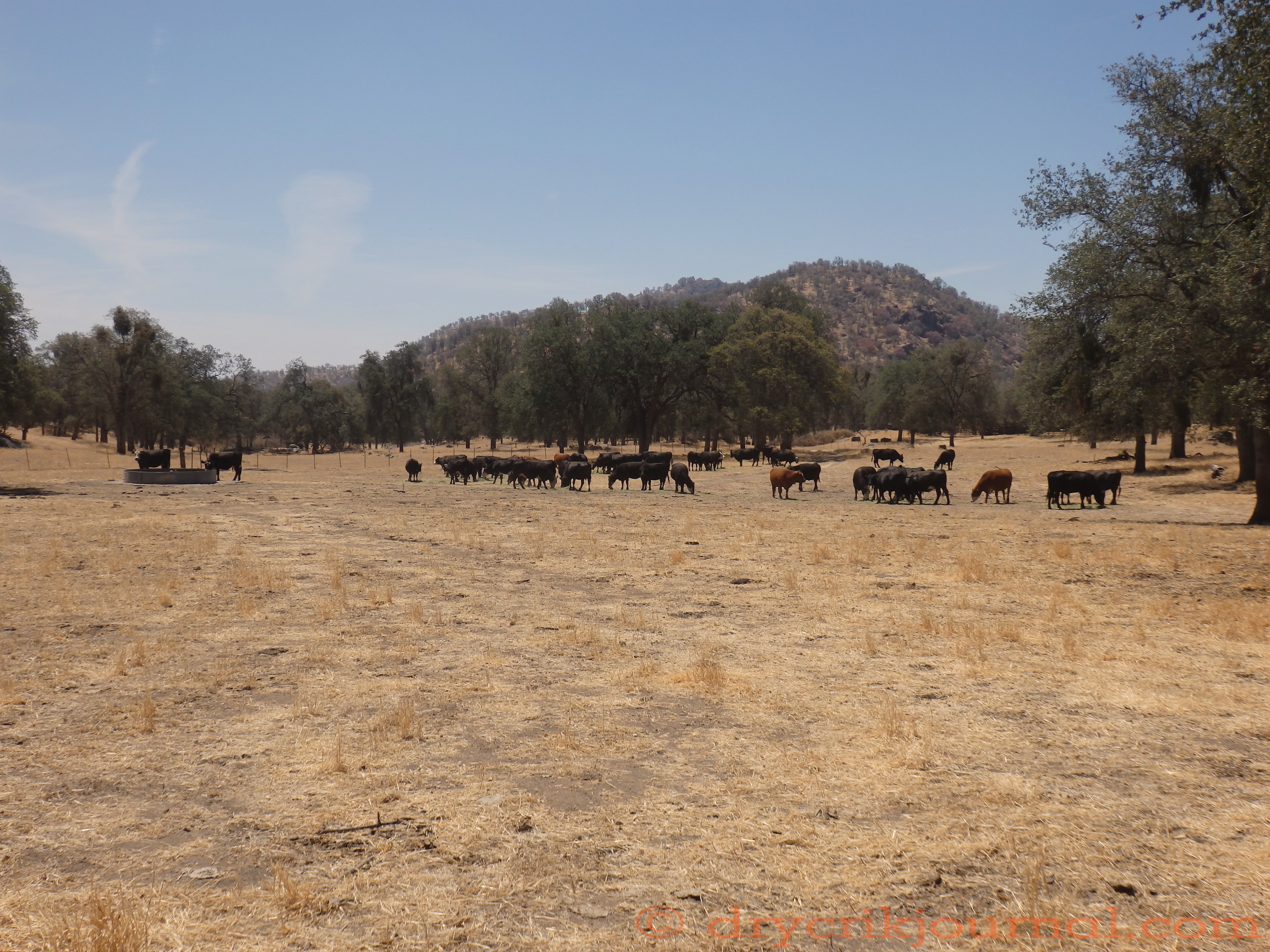
These girls are two weeks away from calving as we begin a new season with little feed and less water, but we’re optimistic nonetheless, looking forward to a little rain and green grass.
Posted in Photographs
Tagged cows, Drought, Paregien Ranch, photographs, rain, water, weather

Though we don’t leave the canyon often, it’s always fun to speculate about moving to another place, like Victoria where summer temperatures are 25°F cooler than the San Joaquin Valley, where the urban pace is not as urgent as California, where the air is clean and clear. It’s been over a year since we’ve left the ranch on Dry Creek, the dust and drought, the cattle, but in Victoria our daydreams broke free enough to take on details, like trying on new clothes for a decent fit.
Concurrently, I was reading Wendell Berry’s “Imagination in Place”, a collection of essays that exemplify the concept of how belonging to a place can offer a more sustainable vision for it, our community, and ourselves. Reading from Victoria, it was clear that I had not exhausted what was possible on Dry Creek, despite a lifetime of observations, improvements and reams of poetry.
Unbeknownst to us, my daughter Jessica For the Archives who lives on the island of Kauai, was visiting Galiano Island with her husband and son. We’re lucky to see them once a year, so to have them near as the band rehearsed for their show on Salt Spring Island, to pick up where we last left off so effortlessly in a place that was not home to either of us (though Jessica had spent a year on Salt Spring Island) was an interesting mix of exhilarating emotions. We loved it.
Arriving home to the Islands just ahead of hurricanes Iselle and Julio, they were thrown into hurricane prep mode, boarding windows and stowing stuff. But living on a Noni farm with access to well water and a solar pump increased their sense of security, the whole experience enhancing their confidence to ride out most disasters—part of learning to live in a place.
She emails: “Curious how it’s been for you coming home. Sometimes it’s hard to return, other times it feels so good. Sometimes, it’s a little of both.”
It has not been an effort to fall back into the mundane routine of feeding and irrigating, checking stockwater and cows that will begin calving in a couple of weeks. The long shadows of August promise change, the monsoonal thunderheads in the high mountains and the gusts they bring to the canyon excite us to feel young and alive as summer begins its retreat into what we hope will be a normal year of grass and rain. We start over again in a place we know and trust.
Posted in Photographs
Tagged Drought, Dry Creek, Galiano Island, Iselle, Julio, Kauai, photographs, place, rain, Salt Spring Island, Victoria, water, weather, Wendell Berry
Posted in Photographs, Poems 2014
Tagged Canadian Geese, Canadian Honkers, Dry Creek, haiku, photographs, poetry, water, weekly-photo-challenge, wildlife
During the past decade, the Great Blue Herons have become less tolerant of our presence, it seems, quicker to fly as we go about our normal routines of feeding and gathering cattle, or irrigating. In the 1950s, their rookery was in a stand of sycamores along Dry Creek, located a mile south of where we now live. It was not uncommon to ride beneath their rookery and not have them fly. The closest residence was three miles away.
Sometime in the 70s, they moved downstream two miles to another stand of sycamores along the creek between our irrigated pastures and closer to the recently abandoned gravel pits below Terminus Dam and Lake Kaweah. At that time, the Great Egrets began to appear on the ranch, but maintained their rookery elsewhere.
The Great Blues moved again in the mid-2000s to somewhere within the abandoned gravel pit area, about 100 acres of thick riparian at the confluence of Dry Creek and the Kaweah River, a ‘no-man’s land’ and home to deer and feral pigs, diverse raptors including Osprey, among other things.
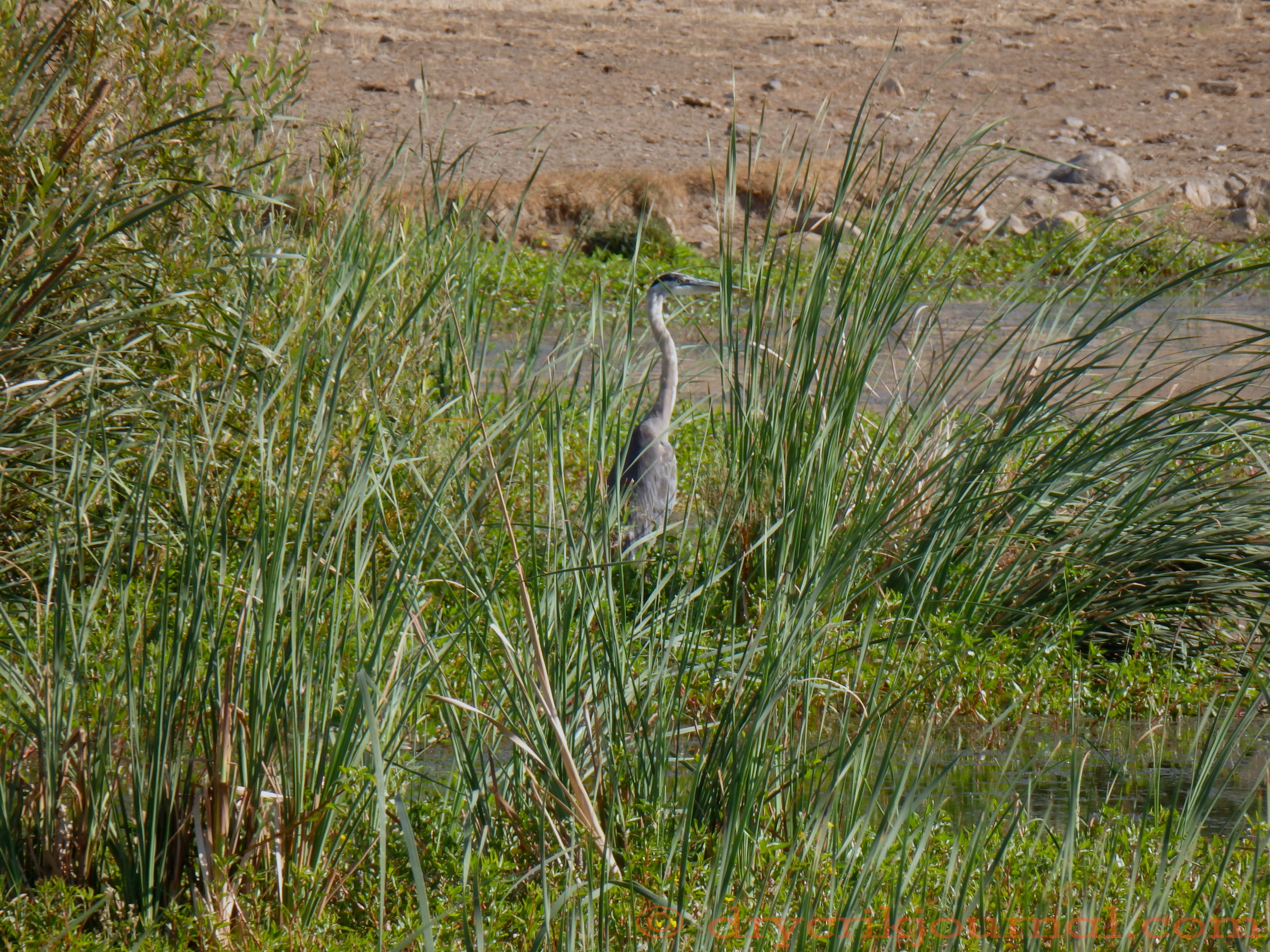
I have encountered the heron above two or three times a week along the shore of our irrigation pond since spring. The comfortable space between us has decreased to about 100 yards now, down from 400 when our irrigating began. Whether thinking it was hidden in the cattails or getting used to me, this photograph with my Olympus point & shoot was closer longer.
Posted in Photographs
Tagged Dry Creek, Great Blue Heron, Kaweah River, photographs, water, White Egret
Paramount on our minds these past two weeks has been the installation of three solar pumps to help keep our water troughs full. Each well is different, and subsequently each pump and solar panel is a little different, though the principle of utilizing the sun’s ultra violet rays to pump water is the same.

The old well at the Red Corrals was severely impacted by a rock and gravel operation upstream about 12 years ago. Only 26 feet deep, we have pumped 30 gpm with a gas driven centrifugal pump since I was a boy. As a shallow well, it has been supported by the Dry Creek acquifer where bedrock ranges between 10 and 30 feet. However, Dry Creek never got that far downstream this year while a pit in the abandoned rock and gravel operation collects most of the underground flow. We had to install a low volume solar pump and small panel to produce about 1.5 gpm or 90 gallons/hour or about 1,000 gallons/day. On a normal year, we ought to produce 3 gpm.

An inholding we lease near the Paregien Ranch already had a solar setup, though the pump had gone bad. When the hard rock well was drilled, the static water level stood at 55 feet in 400’ hole. When we pulled the pump, the static water level was about 90 feet and the pump set at around 125 feet. In the past, it produced 6 gpm, more than we necessary to keep the trough full, the excess went into a pond. With no tank to fill or float to shut the solar power off, it ran every daylight hour that probably contributed to the pump’s short life. Until a tank and float can be installed, I’ve reduced the voltage to where it is only producing about 2 gpm.

The abandoned hard rock well on the Top of the Paregien Ranch is 220 feet deep and when drilled ran 6 gpm over the wellhead. The tenant who preceded us over-pumped the well for his horticultural activities to the extent it no longer produced. In recent years, it has begun to artesian again, but only drops. We set the first pump at 30 feet, but could not maintain 3 gpm for more than 30 minutes. The second, low volume pump we set at 110 feet. Yesterday morning the pump had shut off when it ran out of water at 3 gpm. According to our calculations, it would take 5 hours to pump the volume of water in the well above the pump if nothing came into the well. Allowing 24 hour recovery time, I’m going back this morning to reduce the voltage to produce 2 gpm to see if the pump can maintain the storage tank and trough. Failing that, we’ll add more pipe, as the pump is designed for low volume at a greater depth.

With the extra water we have produced, the troughs at the Windmill Spring were all full at midday. To revisit past posts about the Windmill Spring see: June 29, 2014 and July 5, 2014
Posted in Photographs
Tagged Drought, Paregien Ranch, photographs, solar panels, Solar pump, water, weather, weekly-photo-challenge
Posted in Photographs, Poems 2014
Tagged Drought, Greasy Creek, haiku, photographs, poetry, rain, water, weather, weekly-photo-challenge

After early rounds, we retreat, you and I,
to outside shade as the sun bakes
the earth white, drink hot breaths
of monsoonal air as finches pant on the beam—
and then again to the inside of the house
until the canyon’s shadow is complete.
We retreat, you and I, from the outside
world of wars and treachery, the frenzied
feeding of a fire of fears out there—
an eternal flame to keep from being
afraid of the dark—an instant enlightenment
designed for growth and commerce.
We retreat, you and I, knowing seasons
change—and we endure the heat reaching
into the fuzzy edges of our delirium
watering cattle and garden. We retreat
to one another and wait for the fire
to burn itself out—start over again.
Posted in Photographs, Poems 2014
Tagged Drought, Paregien Ranch, photographs, poetry, water, weather, world

I went back up into Greasy yesterday to check the water situation in Section 17 and Sulphur, pastures we felt less critical when Robbin and I went up earlier in the week. We have left them open to one another to make what water we have available to the cattle from both.
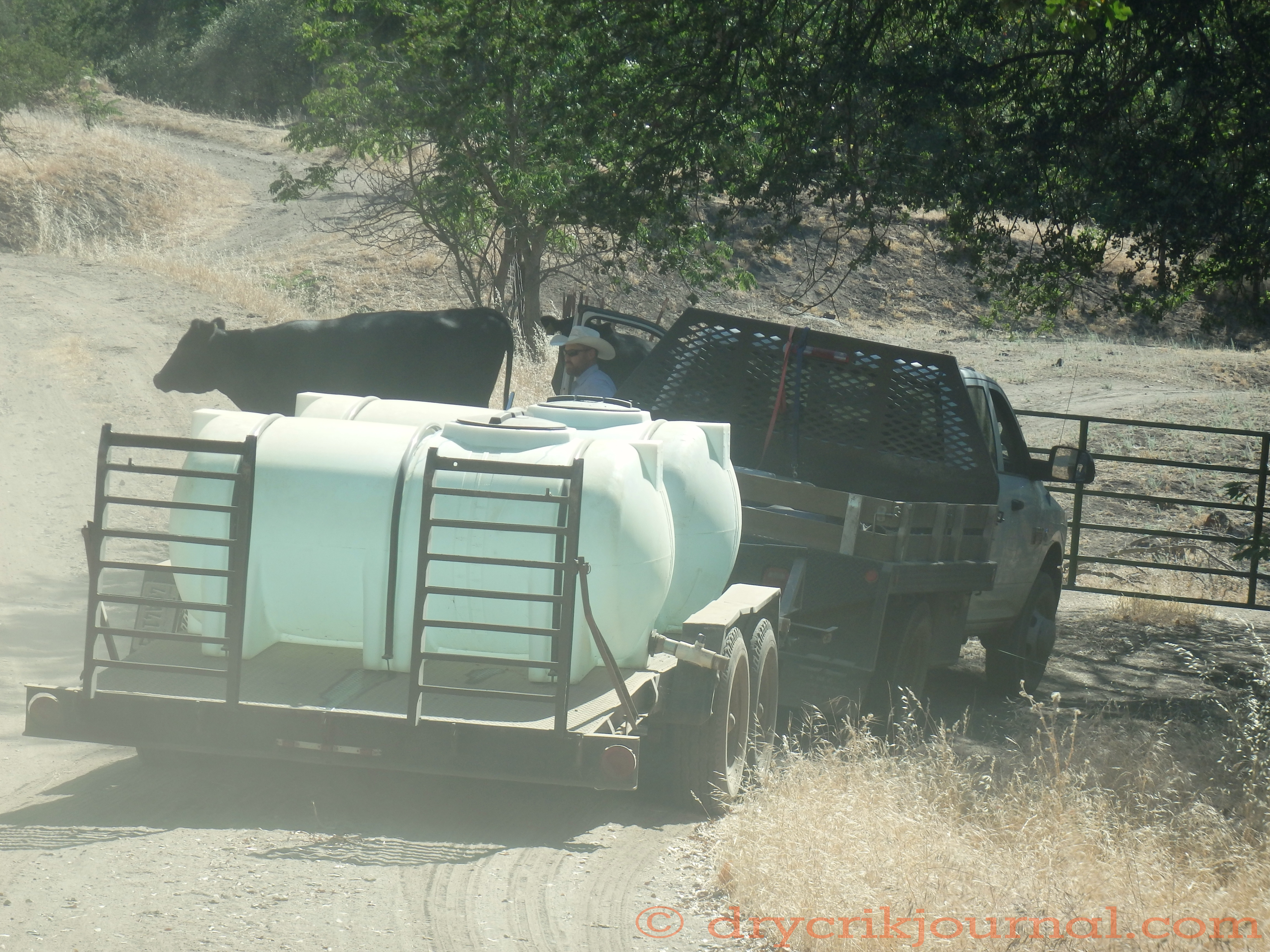
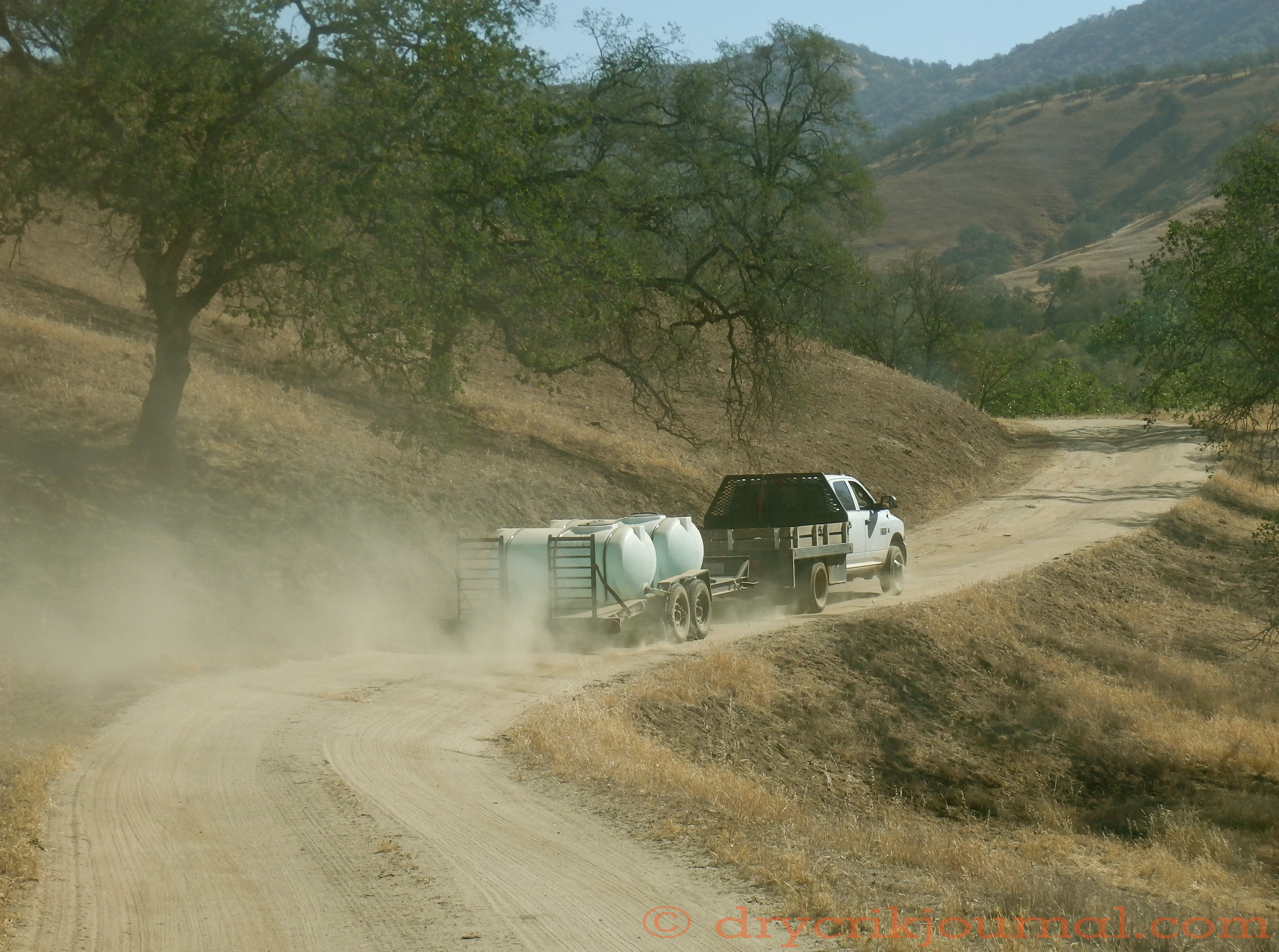
I followed my neighbor Caleb Pennebaker up the hill, hauling water to his cattle. Each ranch has its unique attributes and deficiencies, and what works for one ranch doesn’t necessarily work for others. Furthermore, each cattleman develops his own unique perspective, and more often than not, shaped by the ranch he operates. Caleb’s cattle are not in dire straights, though his water is drying back, but he wants to stay ahead of real trouble and deal with the lack of water on his terms by augmenting his cattle early.

In Section 17, the shaded pool of water in Greasy Creek is holding remarkably well, water currently running at 1-2 gallons/minute for a couple of hundred feet to just above the fig trees.
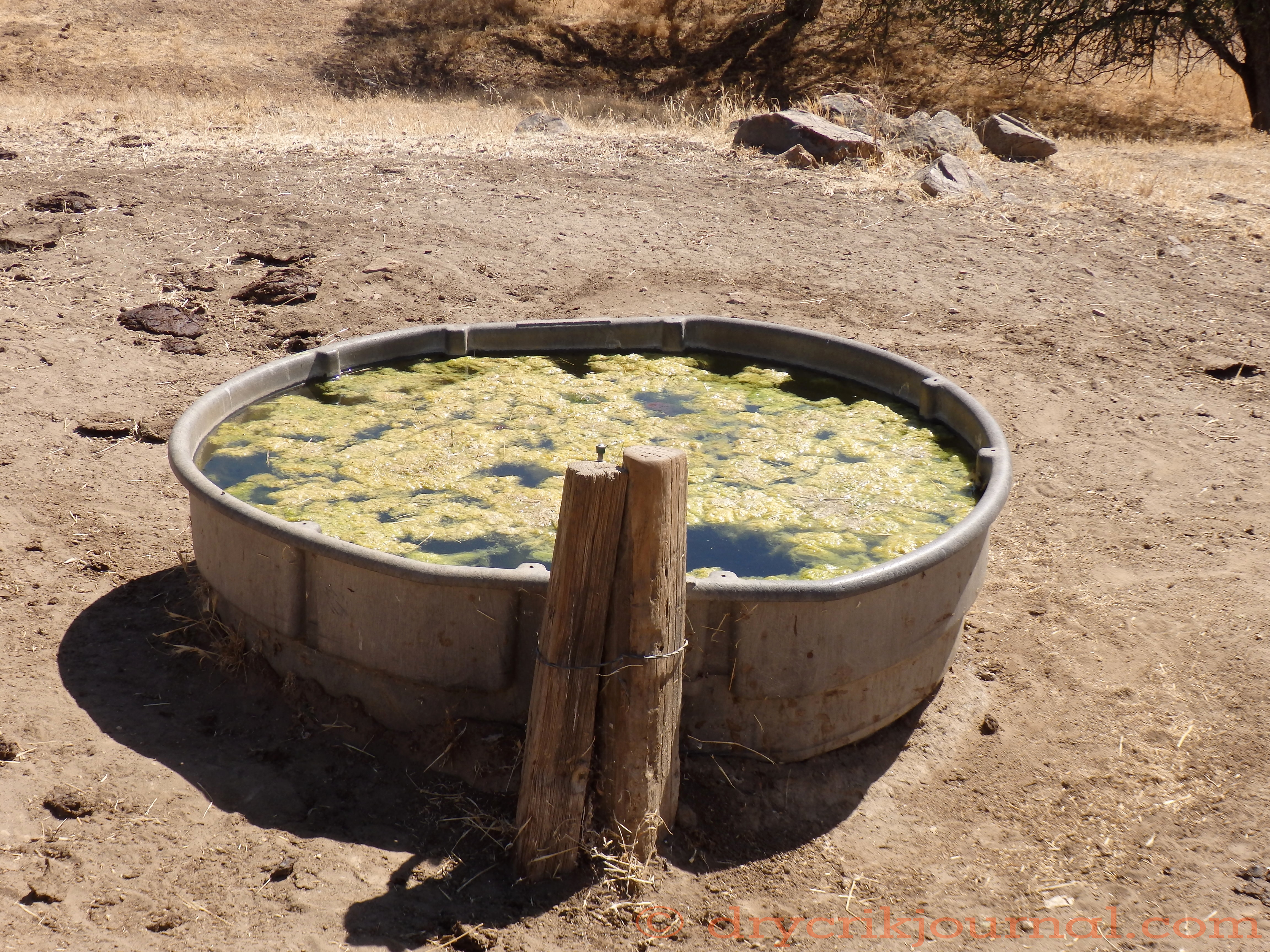
And the water trough piped from Sulphur Spring near the corrals is full and not leaking
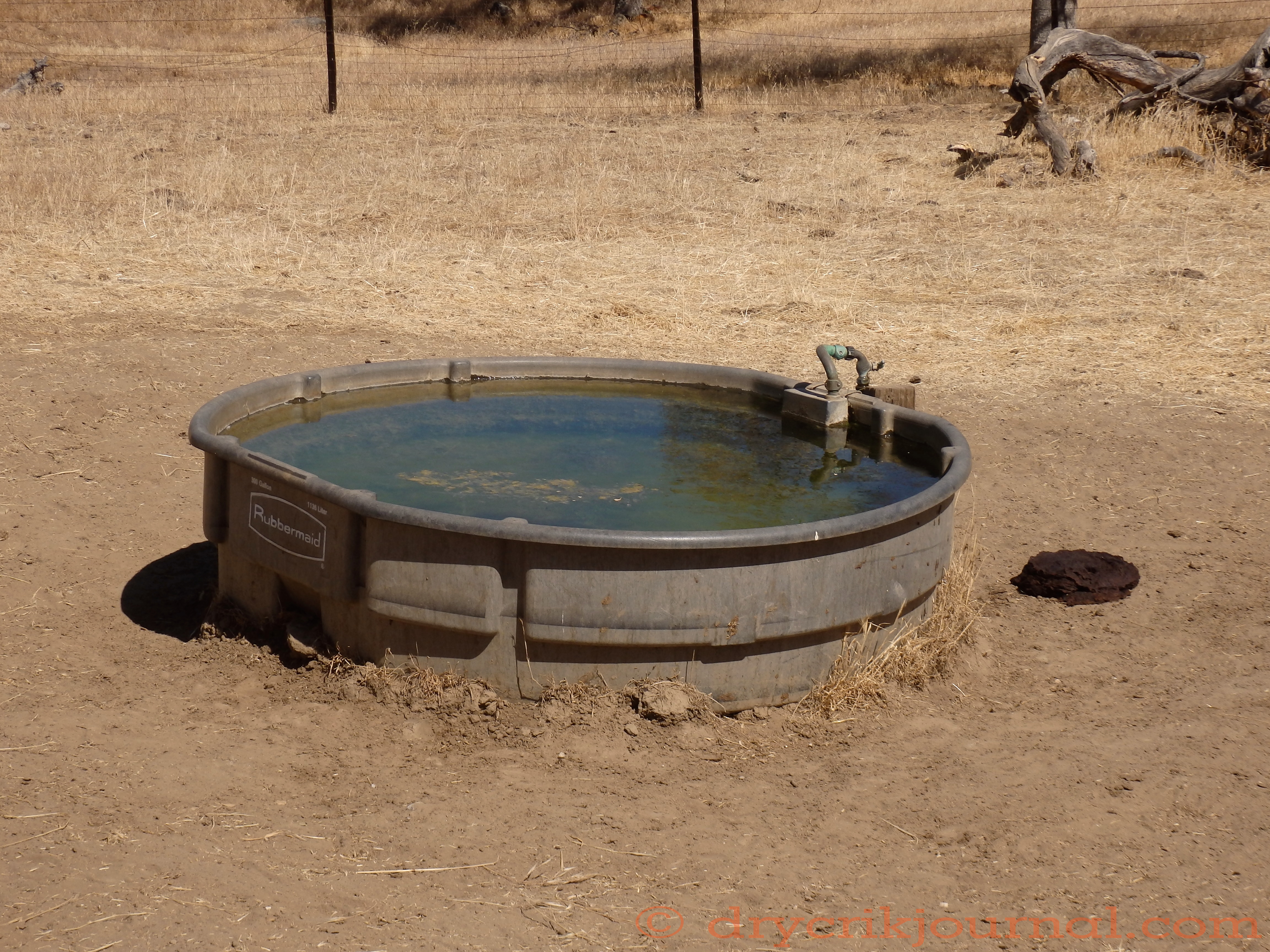
as is the trough in the Gathering Field that Robbin and I opened up to the cows in the Lower Field, about half of which have come through the gate.

In Sulphur, the Chimney Pond has been dry for three weeks, but
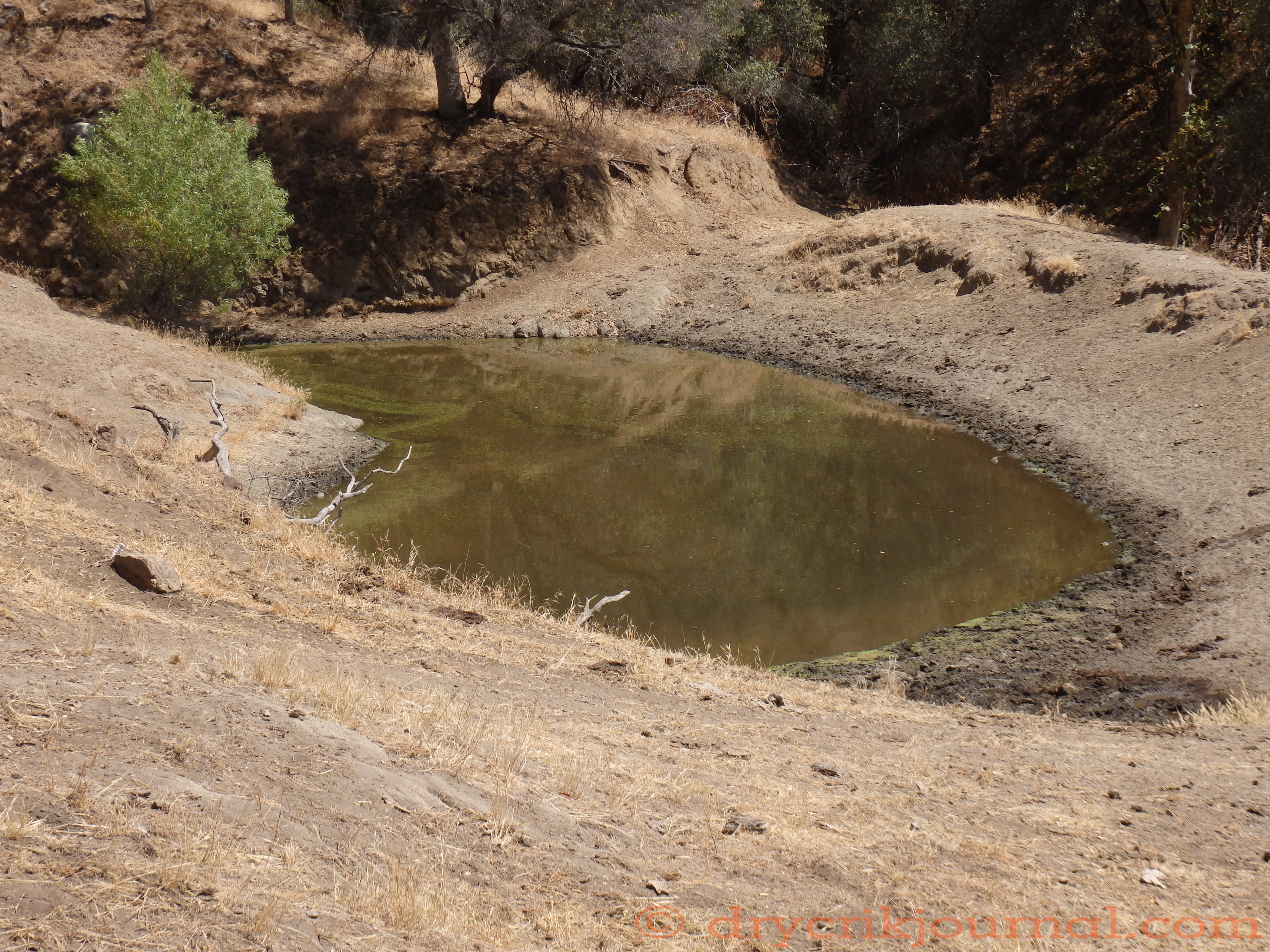
the pond at Ragle Springs is currently holding a few cows in the middle of the pasture. The cows have redistributed themselves through the open gate from 17 to Sulphur in the past couple of weeks, utilizing the Sycamore Spring that is keeping two troughs full, the overflow of which keeping another neighbor’s trough full.

We’ve had a long string of days over 100°, not unusual for this time of year, that’s impacting our stockwater already. With the balance of July, August and September to get through, we’ll use these photos as benchmarks as we go. Typically, our springs begin to recover by mid-September with shorter days and cooler nights, but as the second dry year in a row, there is no guarantee of that. This information may be valuable for those who follow us, like which springs held up and which ones didn’t in a drought, and though no two years are the same, help them make more informed decisions.
Posted in Photographs
Tagged Caleb Pennebaker, Drought, Greasy Creek, photographs, Section 17, Sulphur, water, weather





 drycrikjournal