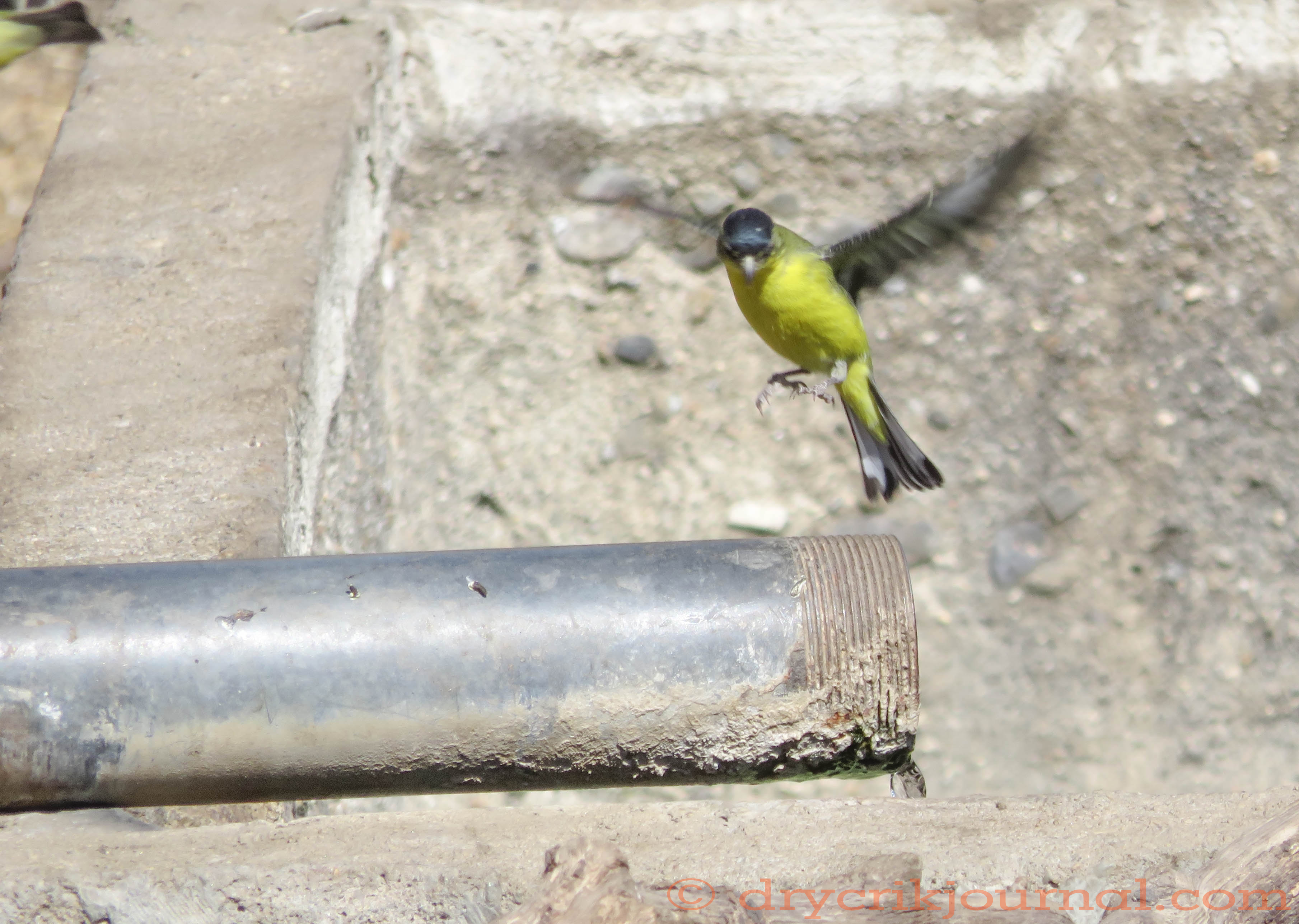
The wild flocks
to spring water, to man’s sweat
and galvanized intrusions.

The wild flocks
to spring water, to man’s sweat
and galvanized intrusions.
Posted in Photographs, Poems 2014, Ranch Journal
Tagged American Goldfinch, birds, Drought, Greasy Creek, haiku, photographs, poetry, Ragle Springs, water, wildlife
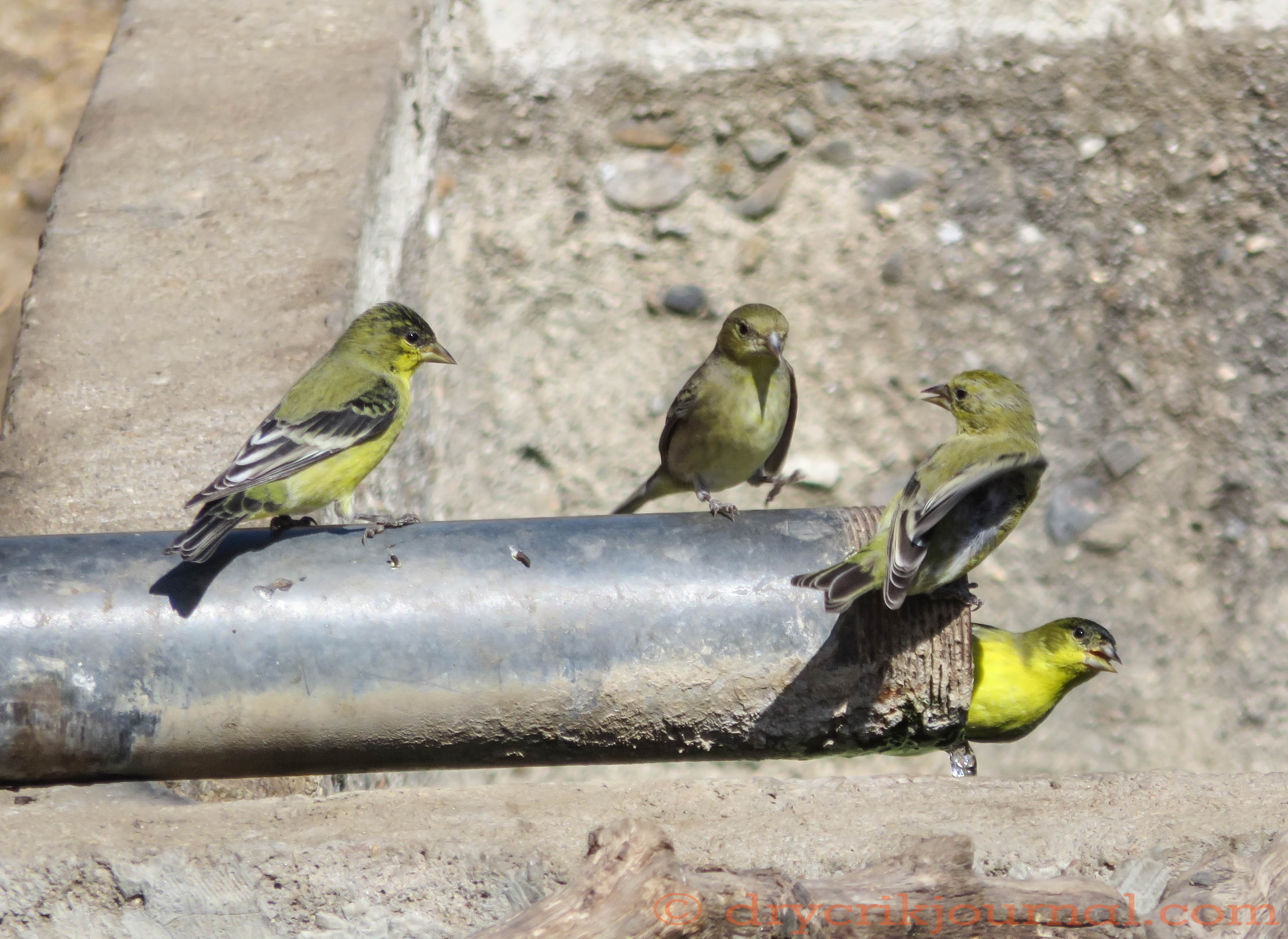

Yesterday, I finished reclaiming our water resources at Ragle Springs, after cementing a galvanized pipe in one of the holes of the concrete tank, constructed, I believe, by Earl Mckee and Lee Maloy who packed cement and sand by mule from the Kaweah River in the 1940s, some 2,500 feet and four miles below. The stock water pond constructed by Earl McKee, Jr. in the 1980s collected the overflow, but has been dry for several weeks and the leaky tank has been running into a quagmire where our cattle have had to drink, hock high, from cow tracks. Fortunately, they have had access to other springs and troughs elsewhere in the pasture.

When Terri and I fed last Wednesday, she asked about the yellow birds flying out of the tank that I missed seeing. But when I looked into the tank, a pair of Pine Siskins (Goldfinches in camouflage) flew off a floating board. With the board removed Saturday, the birds have had to improvise. The first and last photos are Goldfinches in winter plumage, Pine Siskins and an unknown in between, but I defer to Avian 101 or other authority to verify the identity of both species.
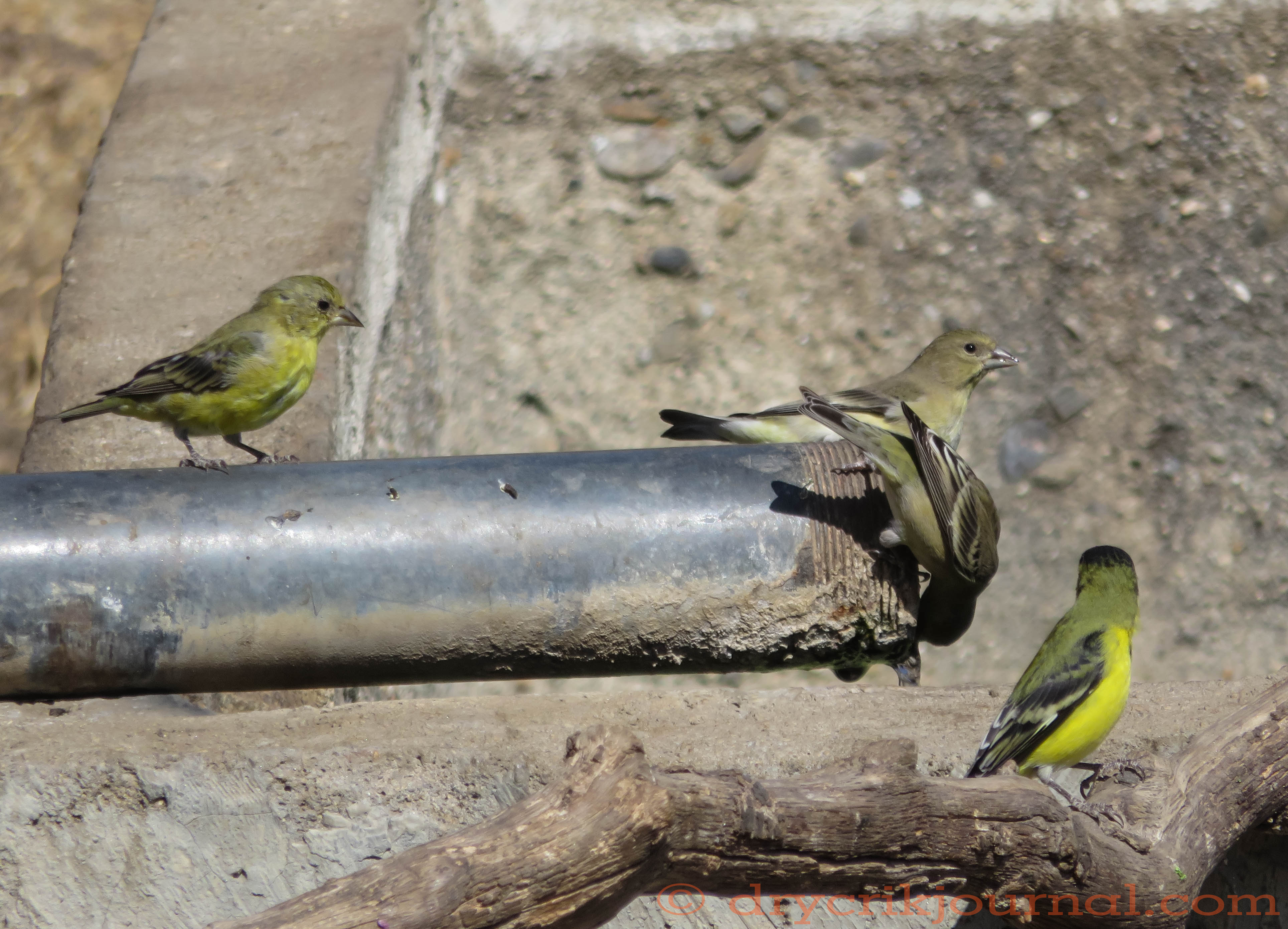
Whether domestic or wild, every drop counts.
In response to this link sent to Earl McKee, Jr. for verification, he sent this additional information:
Hello again John,
My father Earl A McKee Sr. started packing the material to build a series of concrete water storage tanks and troughs up into Greasy Cove in 1938, to this old “Greasy Ranch” he had purchased in 1937. At that time he had been in the mule packing business since 1910 and had quite a herd of mules and horses to pack dudes and gear into the Sierras.
Lee Maloy, Jim Kindred, Loren Finch and my Dad did the work moving all the sand material, form lumber and the sacks of cement to each site. There were 5 different sites. The first was Sulphur Spring at the old “Huntley House”. 2 more in the Sulphur Mountain pasture, Ragle Spring and one other up on the south west side of Sulphur Creek Section. The next one was built up on the Oat Ridge field’s North West corner, about a quarter mile North of the Eagle Rock. The last one was built on the East side of Section 9. This watershed was Manikin Creek falling off to the North Fork of the Kaweah River.
When packing the material, sand was the biggest item, because of the volume needed. And because my Dad owned the numbers of mules and outfits, he would use about 20 to 25 head of mules each trip. Most of these spring improvement jobs would load up the mules in a sand bar at Belle Point above Terminus Beach on the Kaweah River. And used the old Greasy Creek to Manikin Flat wagon Road that passed by Spoon Rock.
An interesting side of loading each mule with sand was, as the mules were saddled, first came the mule blanket and pad. Next came a mantie that covered the mule’s body, then came the pack saddle and after he was cinched up the kayaks or rag ends or leather ends were hung on the saddle with card board or wood boxes inside. The mule was then led down into the sand bar and a man on each side tossed sand into the boxes while counting the shovel loads to balance the load till it weighed about 90 lbs. on each side and was tied off and turned loose to wait till they were all loaded. As you can imagine the mantie being placed above the mule blankets allowed for misjudged shovel loads of sand could roll off the mule without getting sand under the saddle blanket and keep it from sore backing the mule.
As the form lumber was packed in, a mortar box with handles on each end and tapered ends to pour, was packed on top of one of the loads to mix the concrete with shovels and a hoe and water buckets. The spring box on the east side of Section 9 was packed in from a sand bar at Ken (Skinny) Savages Ranch on the North Fork of the Kaweah River. And packed by trail up through the Old Craig Thorn Sr. Ranch.
The date of each of these should still have the date of completion marked in the concrete with the three brands of the three registered brands at that time. The year, 1938 the brands were LEE (Lee Maloy); T Triangle (Jim Kindred): Bar O (Earl McKee Sr).
This is about the way it all happened, a long time ago.
All The Best, Earl
Posted in Photographs, Ranch Journal
Tagged American Goldfinch, birds, cows, Drought, Earl McKee, Greasy Creek, Kaweah River, photographs, Pine Siskin, Ragle Springs, water, wildlife
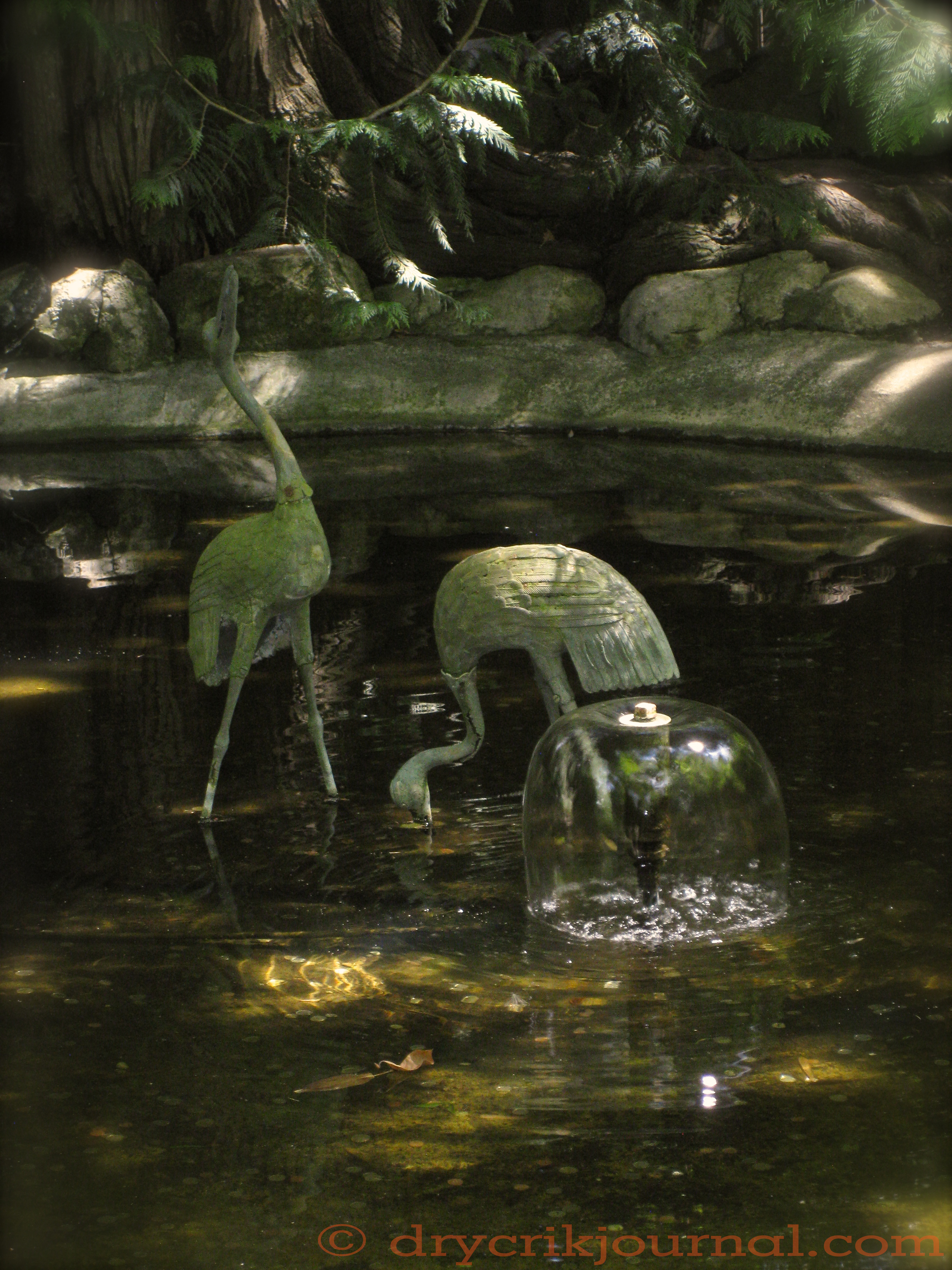
Posted in Photographs, Poems 2014
Tagged birds, Butchart Gardens, haiku, photographs, poetry, water, weekly-photo-challenge

You ask me now,
in this moment, waited
for my full attention
which I have refused,
too preoccupied with each rich
moment-at-hand.
My patient other voice,
ever-reasonable and calm,
ready for a pause
to pose the obvious, weigh
the load and look
at the short end of my string.
But I am busy listening
to my call carry across Greasy,
to cows bailing off the far ridge
leaving dust trails in trees,
to the diesel’s purr
beside me, promising hay.
To their slow plod up—
they trust that we
will do as we say.
Posted in Photographs, Poems 2014, Ranch Journal
Tagged cows, Drought, dust, Greasy Creek, photographs, poetry, water, weather

7:40 p.m. PDT, September 23, 2014
A little hair here and there
burns across the canyon,
a darkening charred shadow
rising in a wake of even light,
summer days and nights
behind us, behind the ridge
that stands between us
and Antelope Valley, Wuknaw
spilling into the fringed
and frayed urgency beyond.
We have a glass, of course,
discussing cattle—instead of
people—measure likelihoods
for feed and water ready
with another plan, if need be.
Light a cigarette, fill another
glass reflecting decades
of canyons worn upon our faces.
Posted in Photographs, Poems 2014
Tagged Calves, cows, Drought, Dry Creek, photographs, poetry, water, weather, Wuknaw
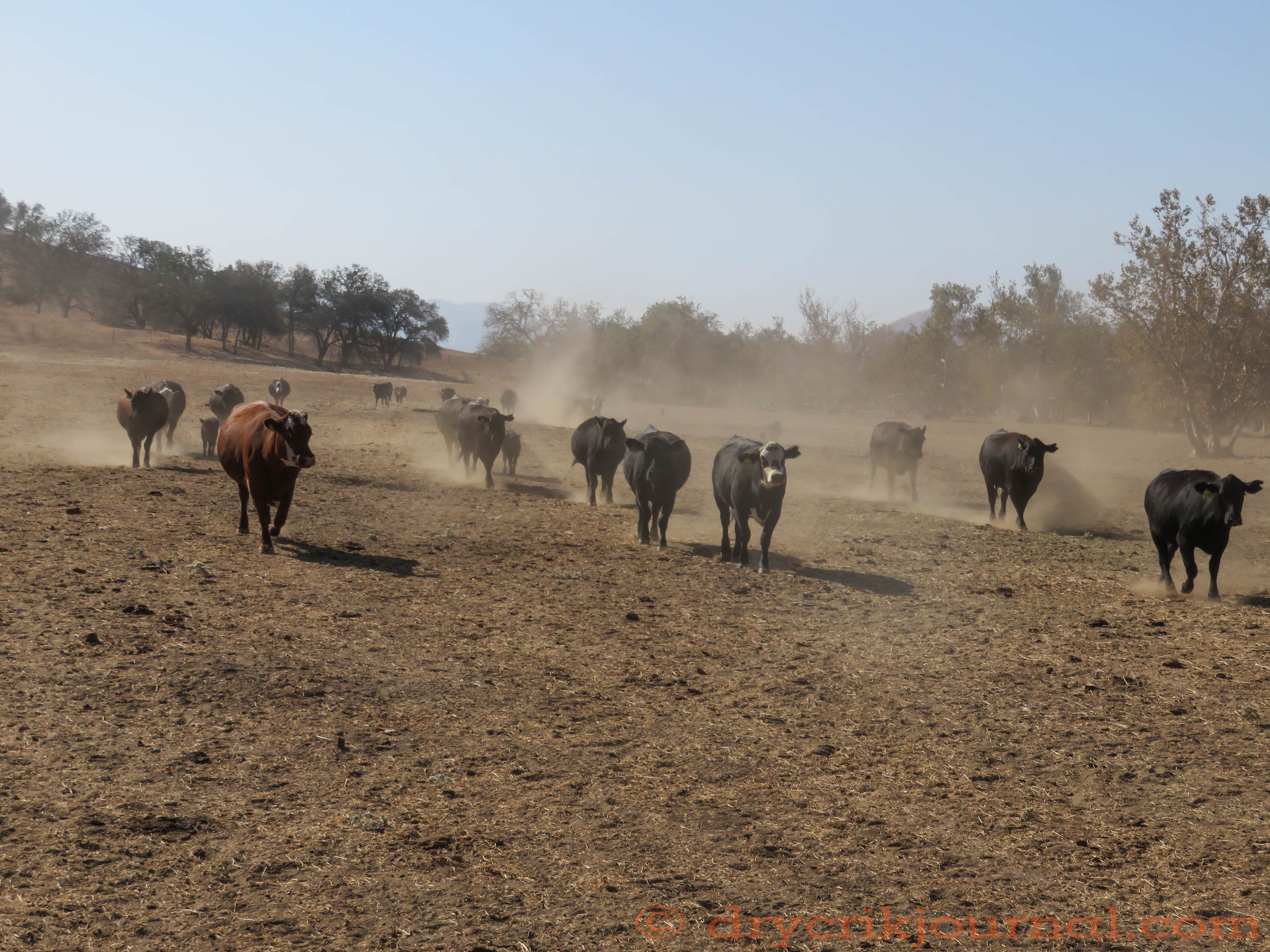
Robbin and I made the rounds with hay yesterday, photographically documenting feed and water conditions as we went—both in short supply from Dry Creek to Greasy Creek. Fed three times a week, the first calf heifers plodding through the dust above is a common sight.

Miraculously, the stock water pond at Spanish Flats is holding.
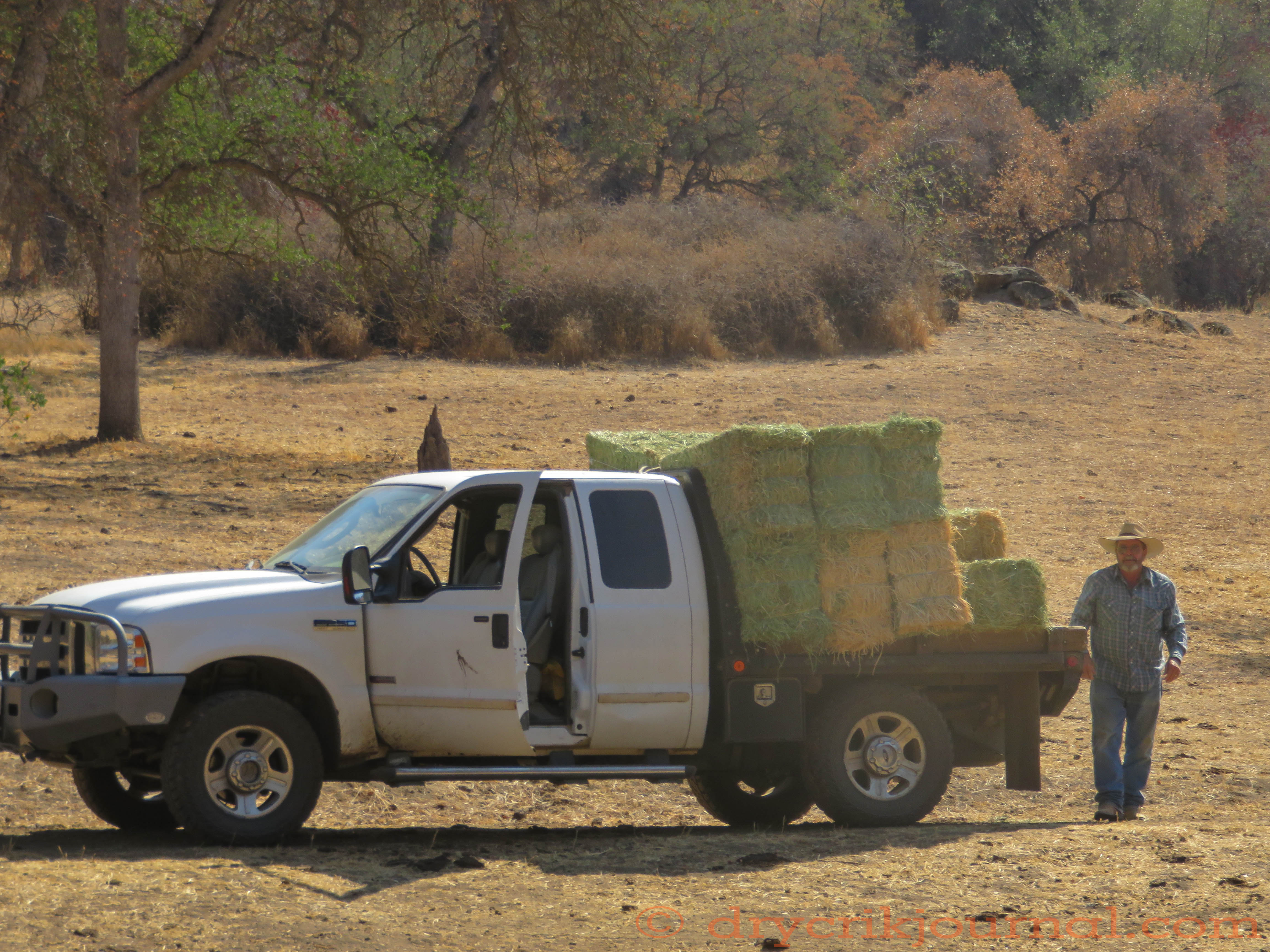
With reduced numbers in Greasy, we’ve been feeding about 20 lbs./cow once a week for past six weeks.

The cows have been calving for the past thirty days on bare ground everywhere.

In the past, I’ve critically referred to the pond at Railroad Spring as my one extravagance because of its size, but much smaller, it would be dry this year. Full, it looks like this.

The cows look good, calves healthy, but we could use a rain anytime.
Posted in Photographs, Ranch Journal
Tagged Calves, cows, Drought, Dry Creek, Greasy Creek, photographs, rain, water, weather
In the dark, waiting once again
with calves for dry green hay,
listening for the diesel engine
climbing at an idle in the canyon
far below, they dream of grass,
tall thick blades caressing legs,
briskets and bellies, udders
full, the sweet scent of cuds
swirling in waves of plenty—
but we can’t see beyond
the dry and dusty moment:
down limbs beneath skeletons
of oak trees given up
their last leaves with rising
dust trails of quail, families
leaving in a cloud for thin cover.
Cut deep and soft, cow track
highways all lead to water,
meander on efficient grades up
and over short-cropped ridges—
naked waves in shades of brown.
Posted in Poems 2014, Ranch Journal
Tagged Calves, cows, Drought, Greasy Creek, poetry, water, weather, wildlife
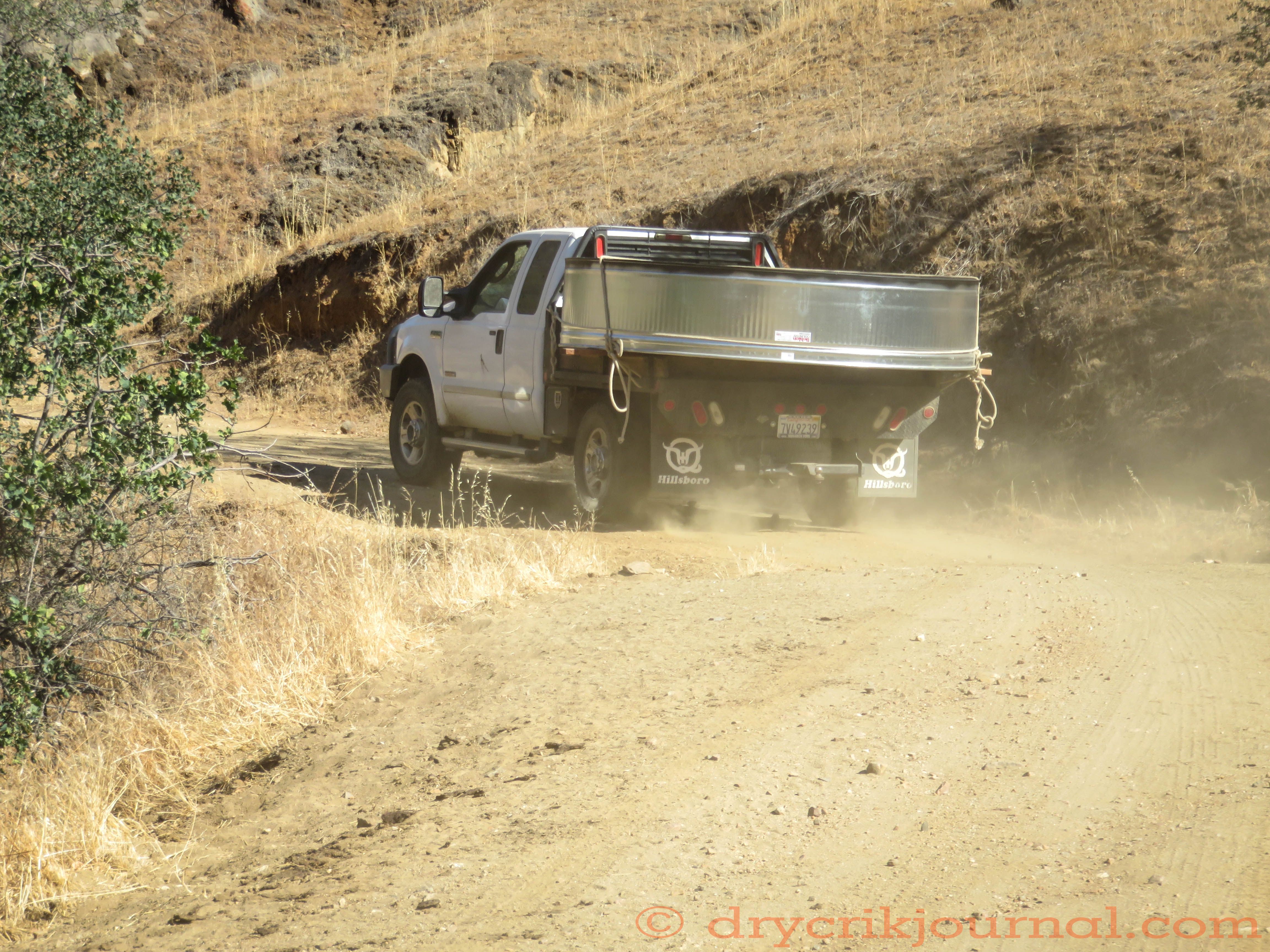
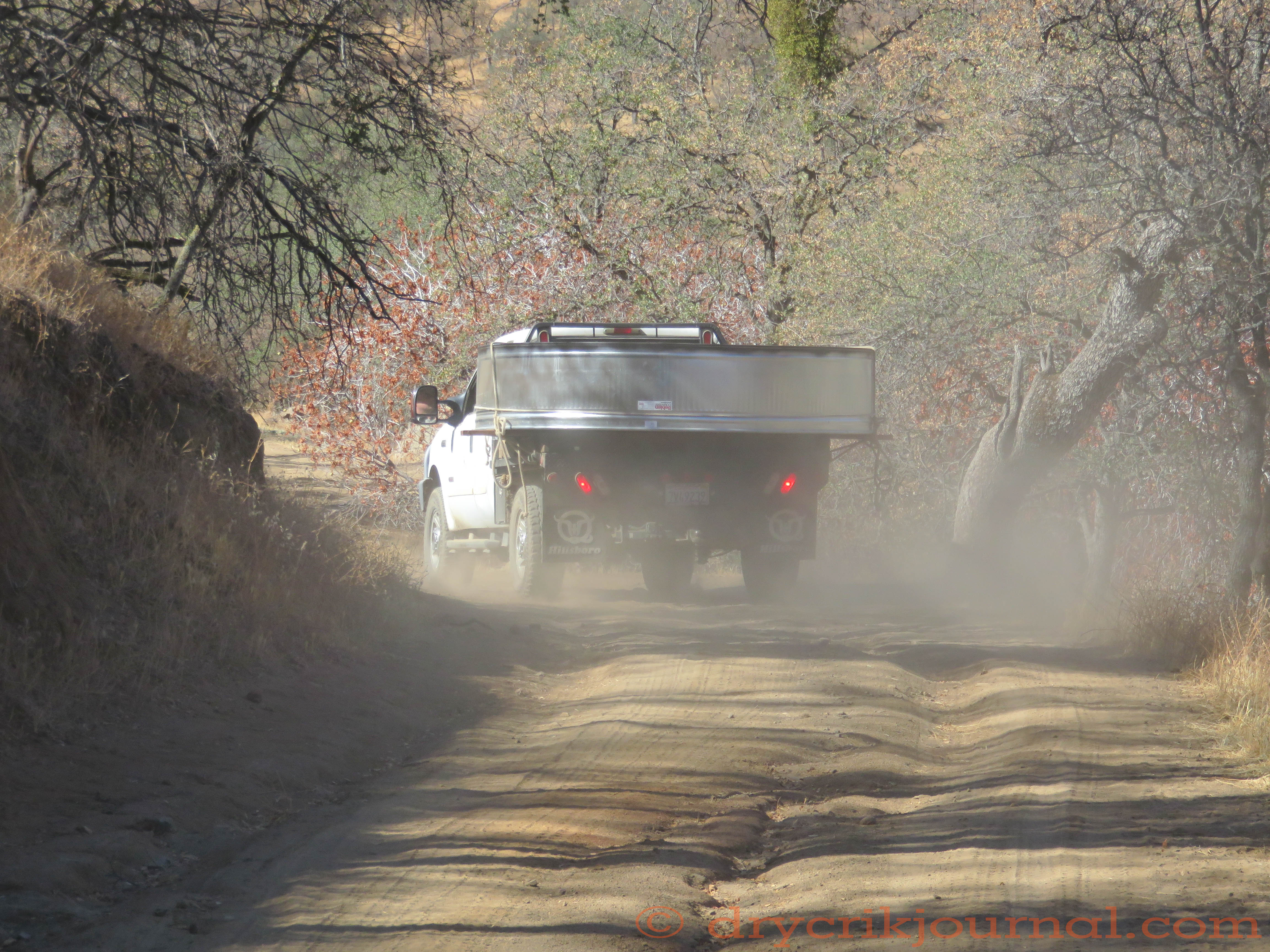
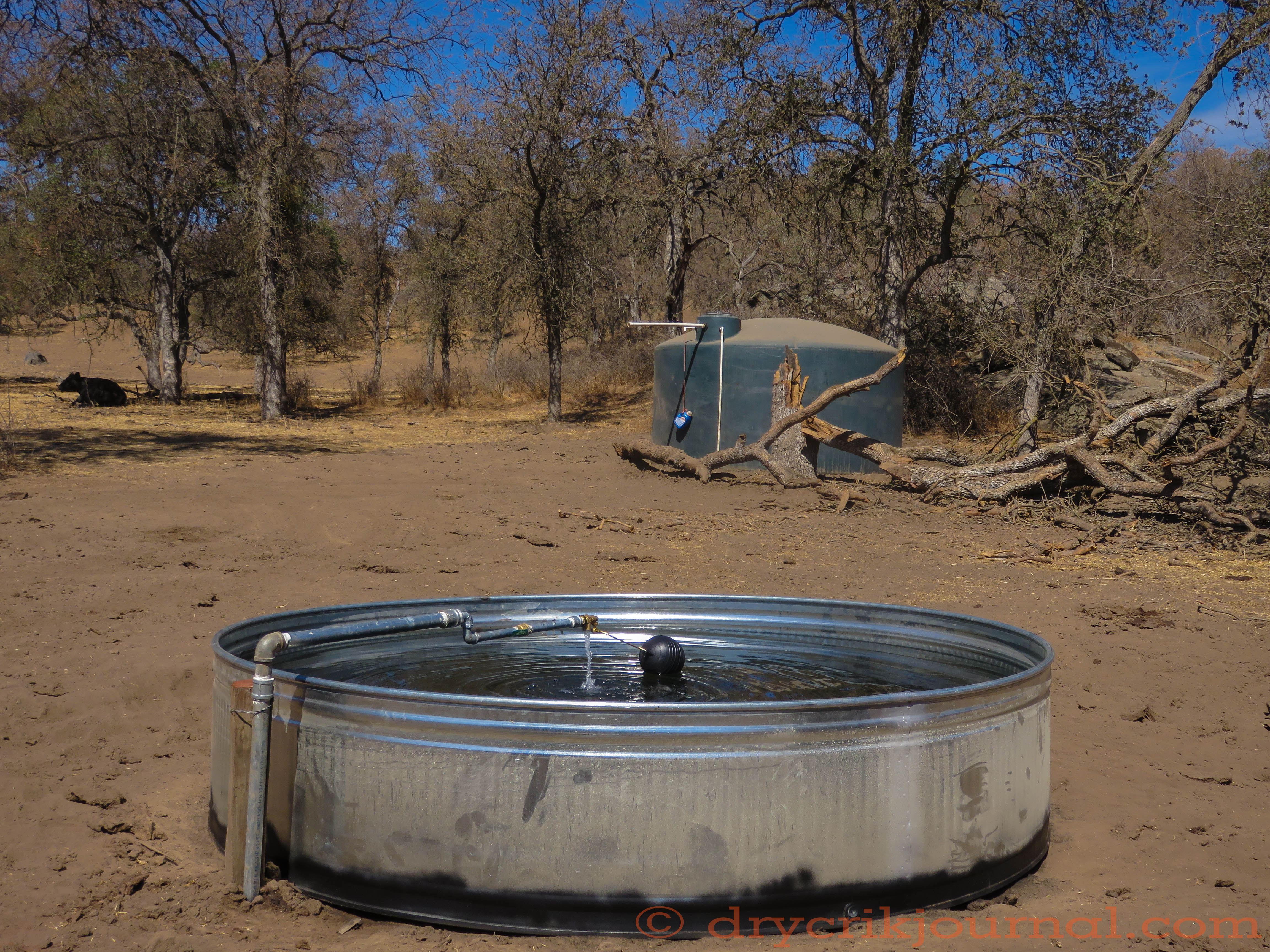
We’ve accomplished much this week with son Bob spending some of his vacation time on the ranch, yesterday helping me install a new water trough on the Paregien Ranch to utilize our new solar pump. Ever optimistic, we anticipate some fence work for the gathering field it will serve when it rains enough to soften the ground to dig and drive posts.
Posted in Photographs, Ranch Journal
Tagged Drought, Paregien Ranch, photographs, rain, water
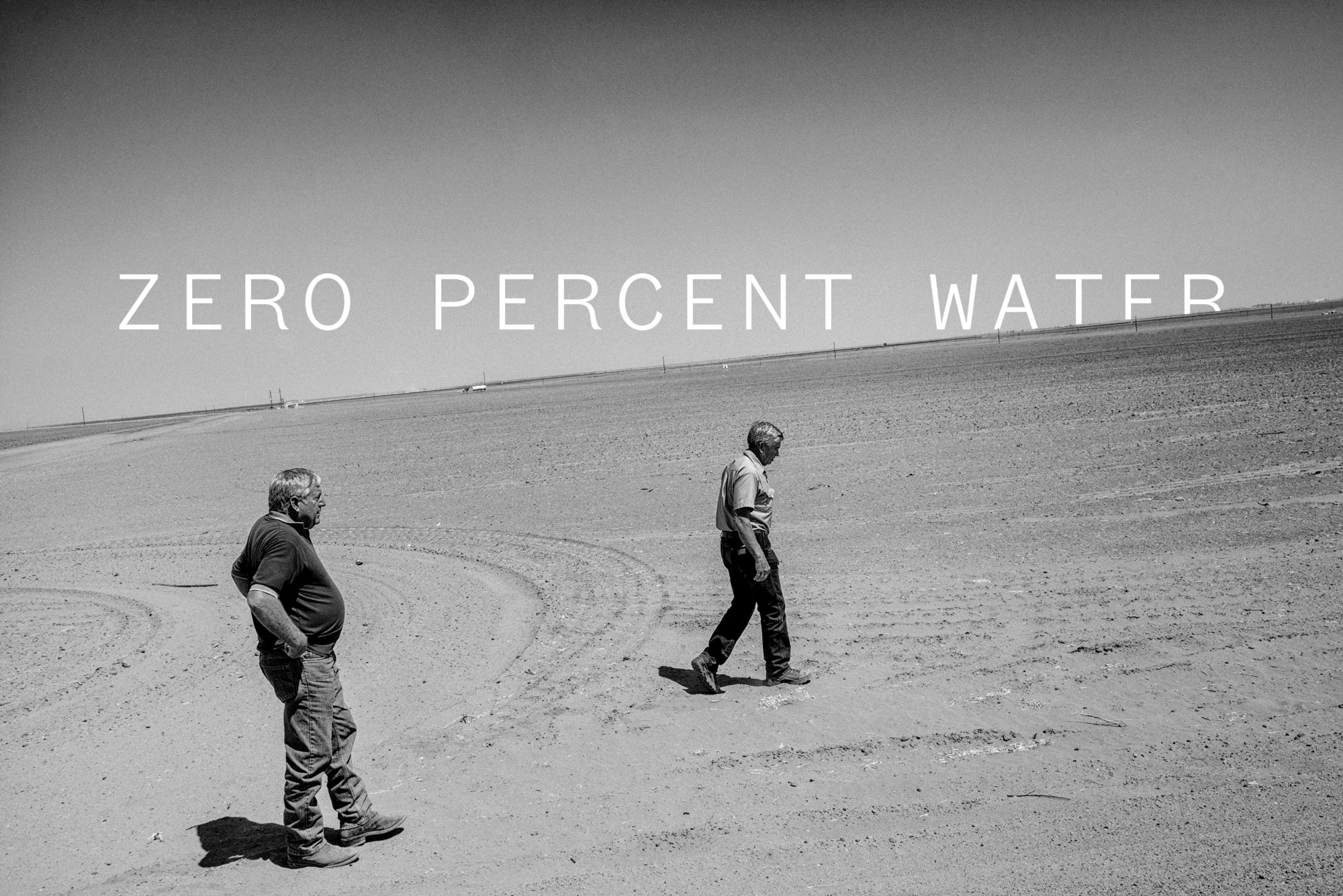
This story was written by Alan Heathcock. It was edited by Mike Benoist, fact-checked by Ben Phelan, and copy-edited by Lawrence Levi. Photographs by Matt Black for Matter.
This is an exceptional read about the water problems in the Central Valley of California. Though we’ve seen little else but dust for the past eighteen months, though we’ve had to reduce our cowherd by 40%, the impact of the drought on us pales alongside the water problems west of US 99.

Down the Sierra’s spine,
they sneak-in and loom,
cumulus over the ridgeline.
No storm clouds, but friendly.
We know now we’ll never be
the same, never assume
green feed and water
always. We will pray
in our own way, kneel
before the cotyledons
breaking through the clay,
stare rain in the eyes.
And when the chant of pagans
sing, we will make love within
soft petals of wildflowers.
Posted in Photographs, Poems 2014
Tagged Drought, Dry Creek, photographs, poetry, rain, water, weather, wet seep monkeyflower, wildflowers




 drycrikjournal