
Held in high regard,
we let the dead lean until
we lay down to rest.

Held in high regard,
we let the dead lean until
we lay down to rest.

It was a 104° at 10:00 a.m. after gathering some of our upper country to collect this year’s calves to be weaned, too hot to pursue the remnants we missed. We’ll be leaving in the dark to give it a go tomorrow and hopefully haul some calves off the hill. Forecast 98°.

I’m not sure I noticed
the grand old oak on the ridge
when it was alive with so many
green others before the drought.
Crushed today, it wrapped
its brittle branches around me.
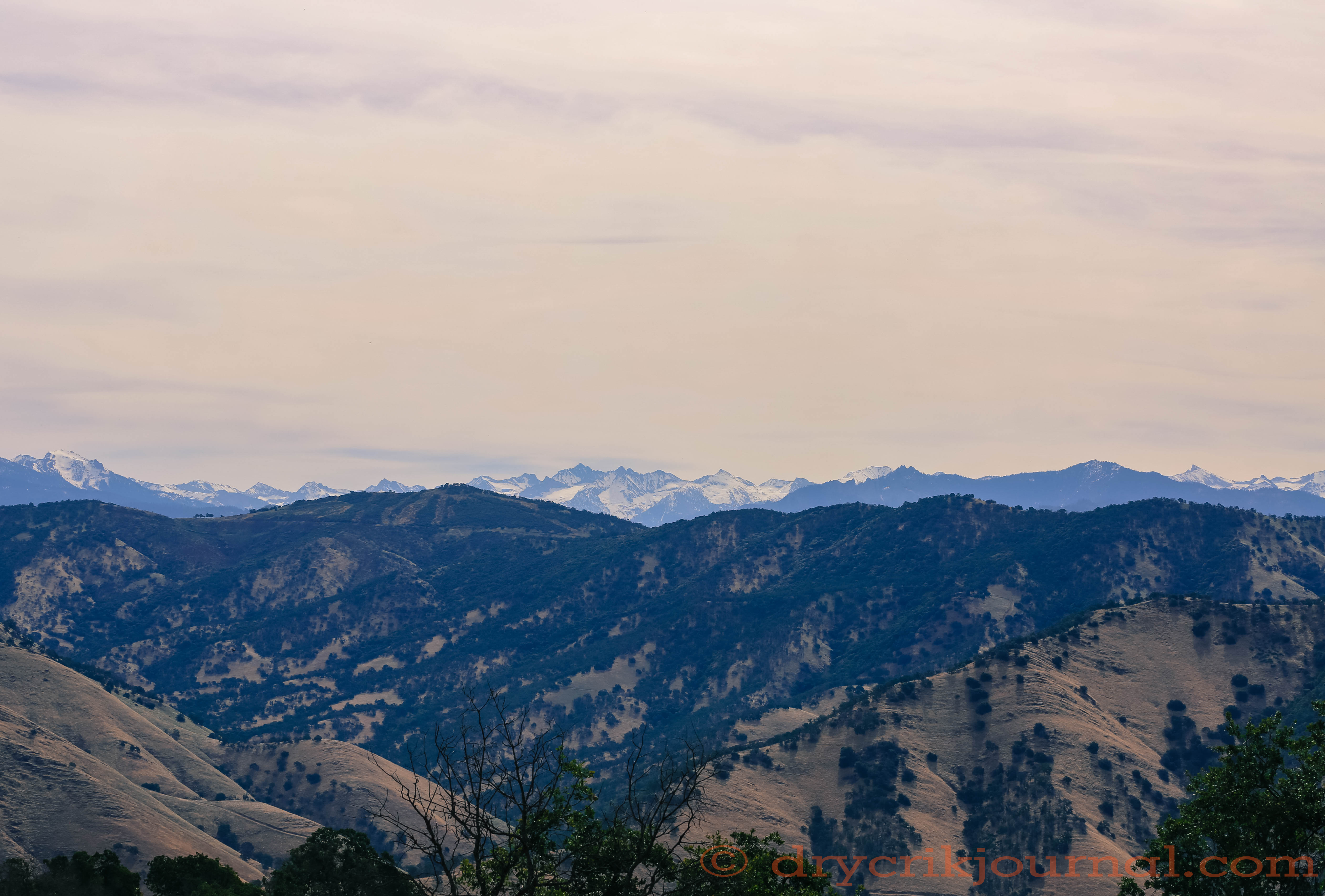
We’ve enjoyed an unusually cool May with over 2 inches of rain on Dry Creek, enough to bring summer weeds and some green annual grasses back to our grazing ground. Between rains, it’s been overcast, keeping temperatures down, but adding to our humidity—extended weather conditions that have bled into the first week of June to begin our snowmelt in earnest.
On June 6th, temperatures rose to 106° for a short time, then yesterday temperatures rose to 102° as the Kaweah River peaked at 6,662 cfs at 2:00 a.m. to retreat to 2,124 cfs by 11:00 p.m.
Still overcast this morning when the this photo was taken of the Kaweah River Watershed, from Alta Peak to Sawtooth, there is still quite a bit of snow on the Great Western Divide. Outflow at Terminus Dam has been held steady at 2,596 cfs as the high water at Lake Kaweah creeps up, gaining about 2,000 acre feet in the past 24 hours.
The capacity of Lake Kaweah is 185,000 acre feet. Water behind the dam as calculated by U.S. Army Corps of Engineers is 155,535 acre feet, with room enough for almost another 30,000 acre feet.
Estimating the water content of the snow remaining and the increasing rate of snowmelt becomes a numbers game for the USACE. Lake Kaweah is beautiful lake and my guess is that it will be full by the 4th of July holidays for water skiers, houseboats and other recreationists. Unfortunately, we worry about fire as the high water mark reaches the dry native feed.
PLEASE BE CAREFUL!!
Posted in Photographs, Ranch Journal
Tagged Great Western Divide, Kaweah River, photography, water

At first light, a hole in the clouds
up canyon, a fresh and fiery moment
approaching the wonder of all things—
especially the egrets, herons, and hawks
out early stalking gophers and squirrels
as the night sky catches fire.
But I’ve given-up collecting signs
of what’s to come—or of the consequences
of all we’ve done.

Canyon quiet,
calves weaned and gone,
girls pre-checked bred
for the shorter days
of fall—wait in the breezy
shade of blue oaks,
graze early and late
for ninety-five days
over a hundred degrees.

The cattle are really enjoying this new greenery that has come as a result of the late May rains. Unable to identify from the Calflora website, but looks a lot like the Two-flowered Pea that is limited to Humboldt County, rare and endangered, so I suspect it’s not. Three leaves like clover and a clover-like flower that I don’t remember seeing before.
I am pleased and proud to have some of my poetry as a part of this moving and powerful documentary from the American Angus Association.

Farmers and ranchers across the country are dealing with increasing urbanization of rural America. With that urbanization brings challenges and opportunities. Hear from five Angus farm and ranch families, including: Lovin family, Lexington, Georgia; Marsh family, Huntley, Illinois, Stabler family, Brookeville, Maryland; and the Cropp family, Damascus, Maryland, about how urban sprawl has impacted them and American Farmland Trust CEO John Piotti about the issue as a whole. The American Angus Association® is proud to present the first film to expose the impact of urban sprawl on American Agriculture – “Losing Ground”—an I Am Angus production.
-Rachel Robinson
Posted in Photographs, Ranch Journal, Video
Tagged American Angus Association, photography, poetry, urban sprawl
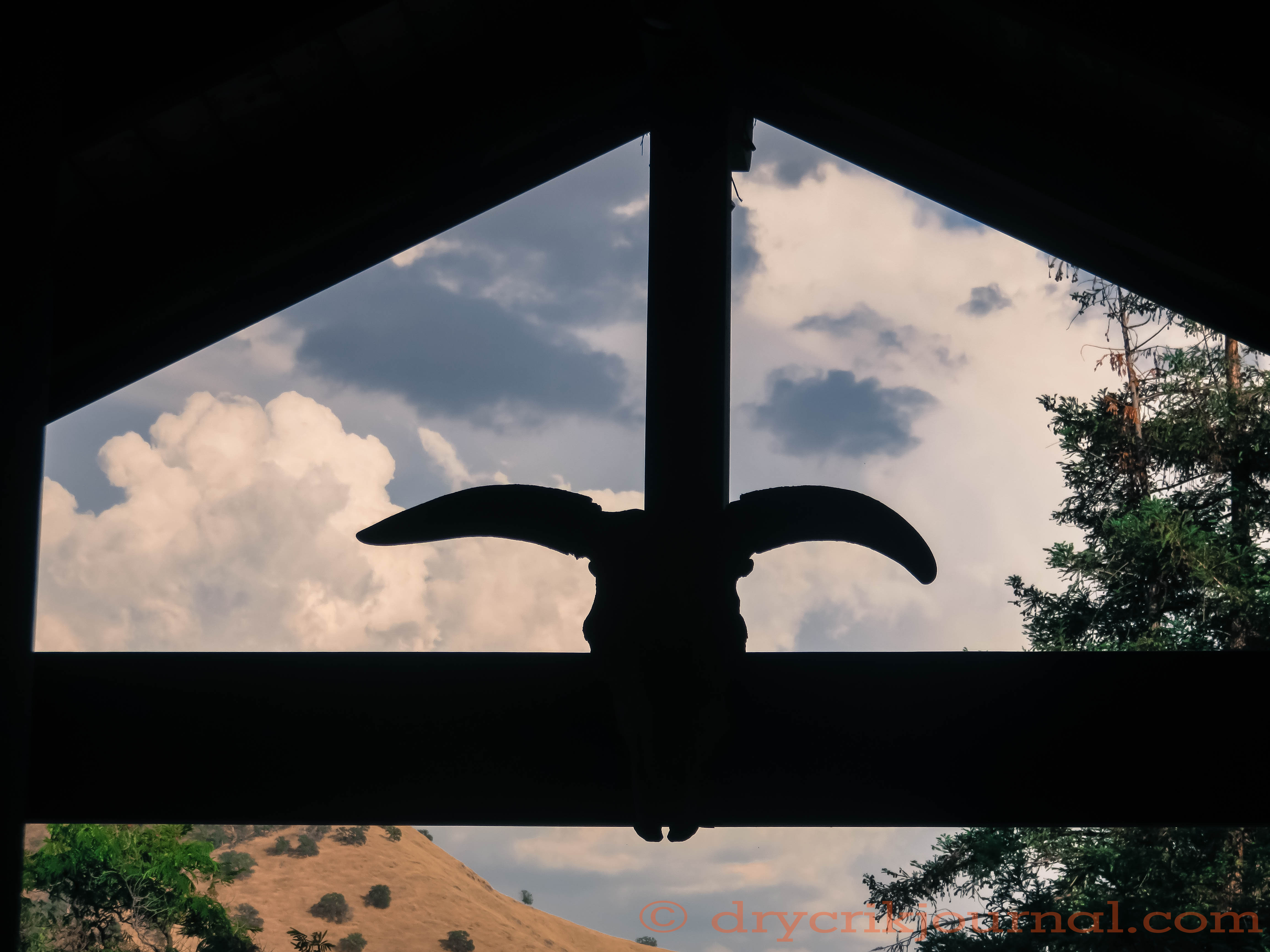
Old friends pass on clouds,
slide up the canyon,
bring rain and thunder.
We cry and ache beneath
our cage of ribs, remember
each dear one by name.
for JAT
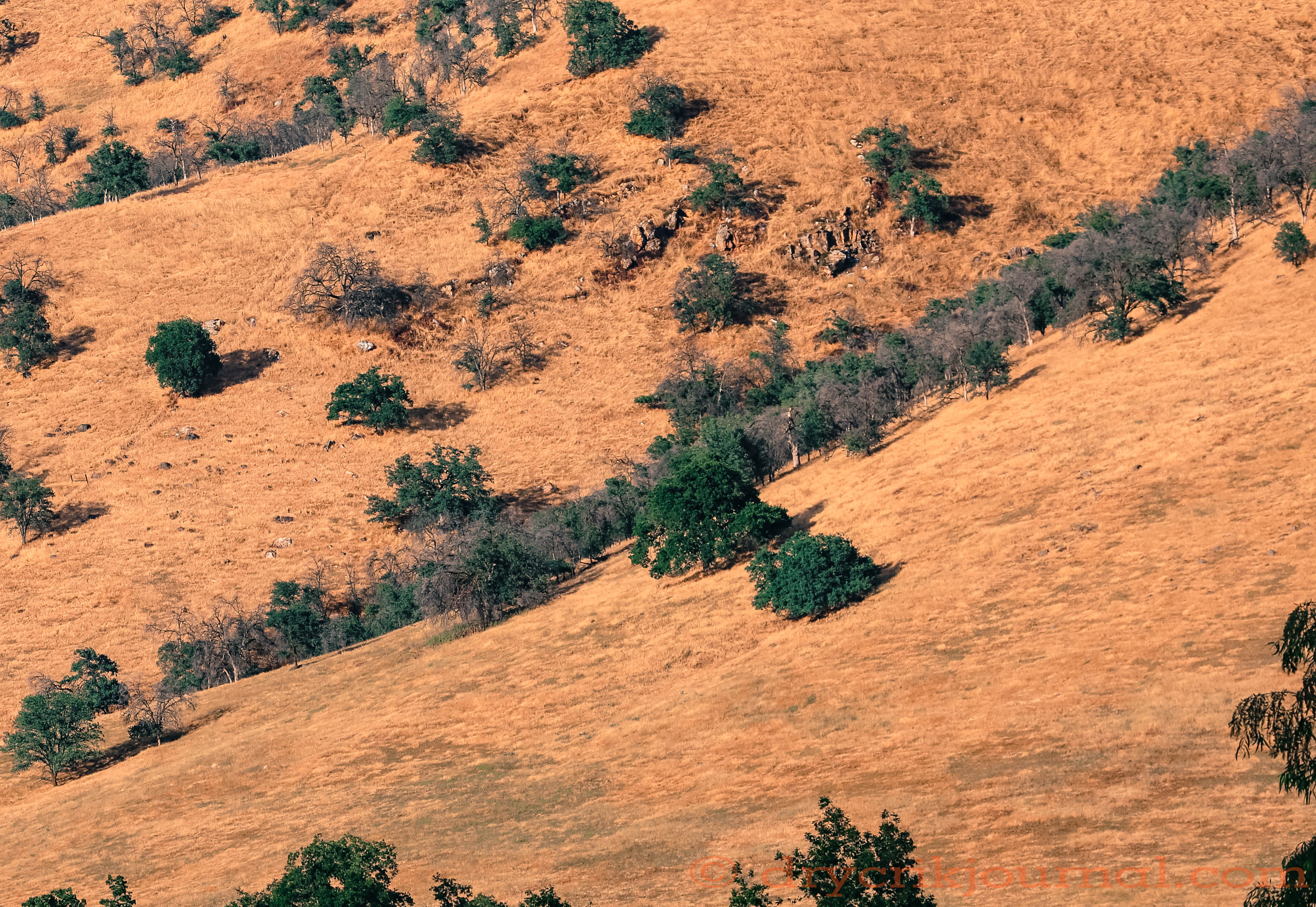
Noteworthy are the nine days of measurable rainfall in May, over 2 inches
here on Dry Creek. Typically, we don’t get any rain in May, but when we do it’s usually limited to the first week. Our series of storms this year have been the predecessors of the nasty weather that has plagued the mid-West and the rest of the nation.
Our rainfall total for the season is just under 21 inches to date. Our average for the past fourteen years here is 16.22″. Interestingly, we’ve received over 20 inches in five of the last fourteen years including this 2018-19 season.
What’s it all mean? Places on the hillsides and in the flats are turning green. Quite a trick for annual grasses, one I’ve never seen before.




 drycrikjournal