Tag Archives: cattle

Cowgirls


It was 63 degrees when we started in the dark yesterday to gather our replacement heifer candidates for processing, to meet the vet (Ken Fiser) for their Bangs vaccinations at 6:30 a.m. Cattle work goes smoother when it’s cool, but I can’t ignore the feminine influence of our cowgirls on our cattle.

I was raised in this business with a pretty good dose of testosterone, loud and wild, the camaraderie of men at a high lope in the brush and granite, tension and challenge, it seems, with every tick of a useless clock. It’s not surprising that our cattle were on the shy side. We didn’t know any better.

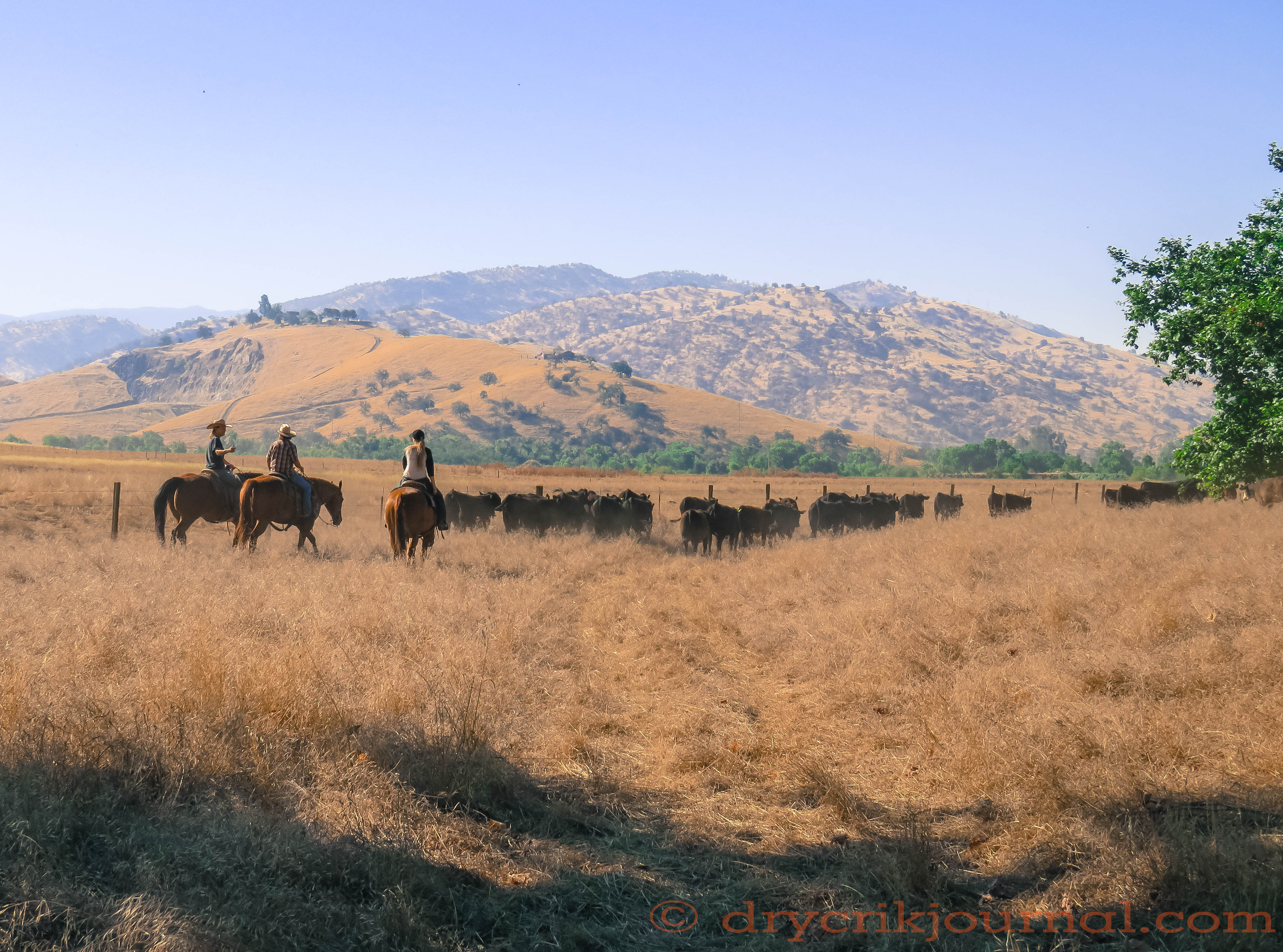
This photo says it all to me. Done with processing by 8:30 a.m., Robbin, Terri Drewry and Allie Fry are taking the cattle back to their pasture, just following really, as the girls spin their own brand of yarns. Most of these heifers have been away from their mothers for a month or less, yet they are relaxed because we treat every gather, every time we’re around them, as a positive training day. A pace that has slowed to one of cooperation, and I like it.

Always moments, nonetheless, when convincing with a little loud testosterone may be called for.
 

EARLY MORNING GATHER


The days of busting brush
but polished stories, faded glories
washed by time upon this ground—

one-time mothers, the girls
remember, find their place
at feeders in the corral

where they were weaned,
to catch a ride uphill
to make homes for fall calves.

We have spoiled them, trained
for yet another moment
to work together. Too hot

to touch, the days blaze
soon after the shade of night
retreats in streaks of heat.


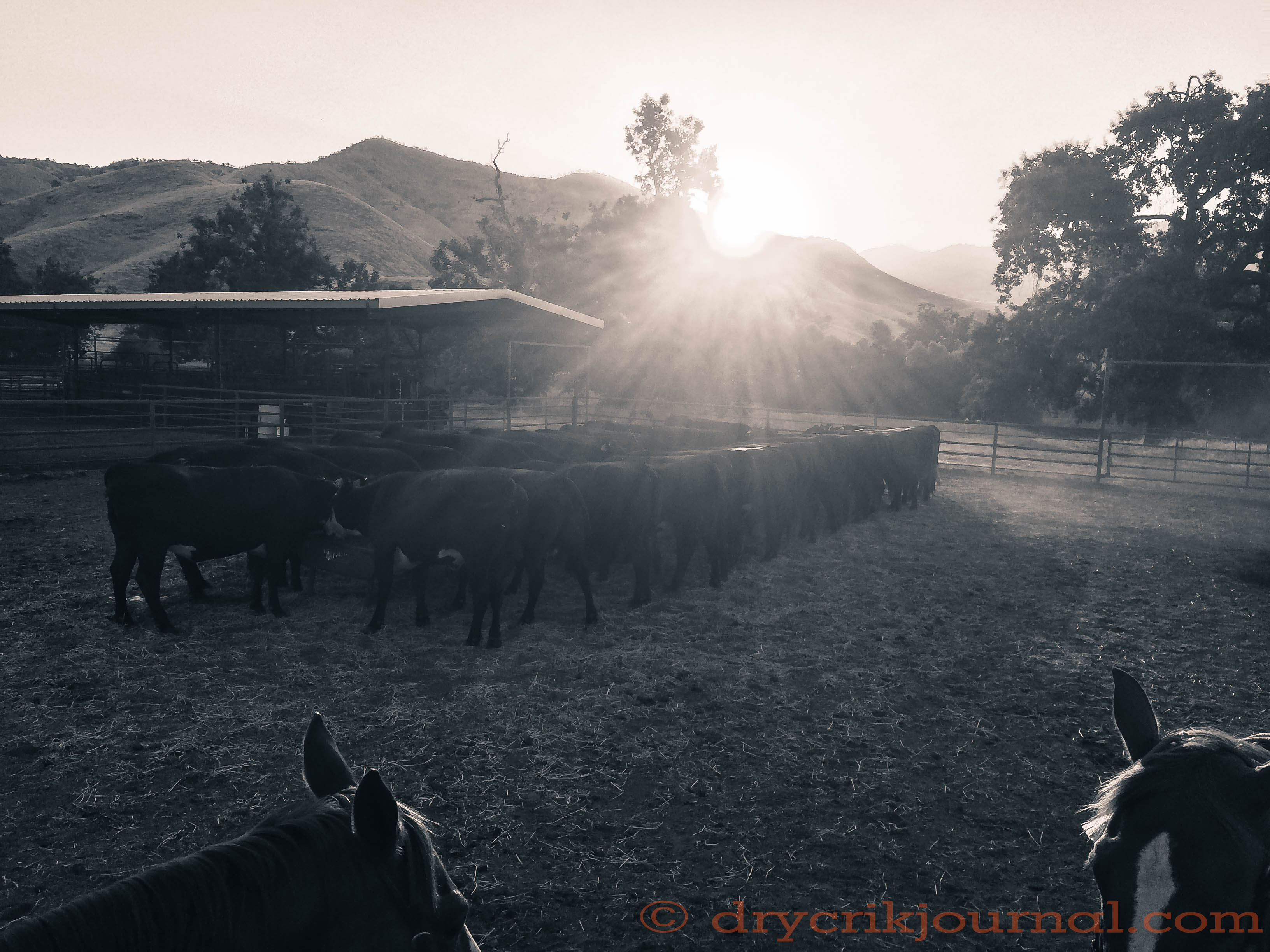
Robbin’s iPhone photo after following the girls into the corral. It’s been a warm week with temperatures over 110 degrees as we’ve weaned, processed and shipped our last load of bull calves to town. Polite and cooperative, these second-calf heifers hauled easily to Greasy while it was still cool. A smooth day—done before ten.


MOVING COWS 3


We dream of coasting
into a ripe green pasture
that wants for nothing.


Easter Sunday contined…


My sister and I circled the mountain pasture behind the house in the Kubota after opening the gates to the flat below for the first-calf heifers and their Wagyu X calves before we drive the bunch to our scales and processing corrals next week. The calves need to be revaccinated before we ship them in May to Snake River Farms to be finished as American Kobe Beef. Not quite the same as gathering a horseback, she managed to see a lot of country where the cattle had been before we finally found them—a steep, rough ride nonetheless.

Gentle and Kubota-broke, our cows spend their first three years in our low country before graduating up the hill, and managing to gather them all was not a surprise, but offered an up-close look at the cows and calves for my city sister to see. Also, part of our purpose for gathering them a little early was to begin grazing the tall ripe feed around the house that will become a fire hazard this summer, despite the firebreak I’ve bladed with the skid steer.

Within a couple of hours, as if invited to Easter dinner, some of the cattle had gathered below our ‘sip ‘n’ dip’ for a visit.


FUTURE TRAILS


We spoil them, I say—
give them everything they need
to breed, to become mothers

to their first calf—a chance
to prolong life facing nature
together, year after year

like us, and our neighbors—
like good maternal families
our future trails behind us.


BATHING IN MILK


20151107-img_5275


I watch cows for affirmation
of living simply well without

                                               you know,

those self-centered addictions
like bathing in milk, all the mirrored
poses dressed in wet white film

                                               completely

pure, all the grass or chopped alfalfa
rivers dripping tears of pearls
on the carpet, on the floor

                                               wasted

in front of the hungry—without
that arrogance we are famous for
flaunting—as if the devil cared
about another soul crowded into hell.

Right after a rain, they know the grass
grows taller and stronger at the top
of these steep hills, pausing long to graze
between each step of their calm ascent.


FOR GOOD


20161211-a40a2594


Warm green December, grass ahead
of fewer cattle, young bulls work
at making friends in a perfect world
of tight fences and swinging gates
everyone respects for a little while.

On the uneasy edge of drought,
we will imitate fat calves lazing,
content to watch the show unfold
into the ordinary—nothing remarkable,
but with any luck a change for good.


AFTER THANKSGIVING


20160319-img_5308


I stumble out of an old dream panicked
about cattle I haven’t checked in months
on a hidden ranch I can’t place, connect
except they were not grazing vineyard rows
with no fences, not loose in town this time,
but on some hard-to-gather rolling ground
you can’t see from the pocked asphalt road
snaking through blond summer foothills.

Last time, they were OK, bull calves
too big to brand breeding sisters, but alive
on good feed and water. It may have been
the turkey dressing drenched in juices,
or the cranberries fermenting fear familiar
that I recognize more than this imagined place
to wait before saddling a horse, loading-up
asleep to tilt at impossible windmills.

I’ve been here before, rusty wire on redwood
posts askew, exploring canyons, finding old
rough-haired families too weak to be wild—
all the guilt and disappointment I need
to torture my subconscious. Too old for that,
I roll over to let my weak knees hang before
testing with a first step towards reality:
cigarette, coffee and a poem for Black Friday.


VIRGINS


20141129-img_1234


Unloaded into a new world
from the soupy end of a semi,
three clean, black and fat young bulls

spend their first night bewildered
away from home with alfalfa
to rest before I brand and turn them

into families of cows and calves
strung in a line on hay waiting
for their awkward inspection.

It takes time to learn the language
of making love, a prolonged foreplay
of mistakes and miscalculations

as I remember shadows in the 60s,
a fractured bravado ready
for reconstruction any time of day.

An old man worries nonetheless—
checks their progress before dark
confirming they’ve been to water.

Still working on their approach
to young mothers, no seed planted yet,
nothing banked into our future.


Turning Green


20161105-a40a2383


As recollections fade, I’m careful not to claim the recent as the biggest or the best of anything, but this past week’s germination of grass is as thick as any I can recall. How well it will endure the above-average temperatures predicted to push 80 degrees for the next ten days remains to be seen—no rain in sight.

Yesterday, Robbin and I made the Kubota trip to the Paregien Ranch with salt, mineral and the last protein lick until next summer while checking the cows, calves, and the rain gauge: 1.44”. More like spring than fall, our new green grass, even at a higher elevation of 2,200 feet, has begun to usurp our ample old feed. Cow numbers light due to the heavy culling during the drought, we haven’t had to supplement these cows with alfalfa yet this year—a good thing. It will take two or three ‘normal’ seasons before we get our cow numbers close to a sustainable capacity again, unwilling to buy non-native cows that take at least two years to finally acclimate to this ranch and cycle regularly.

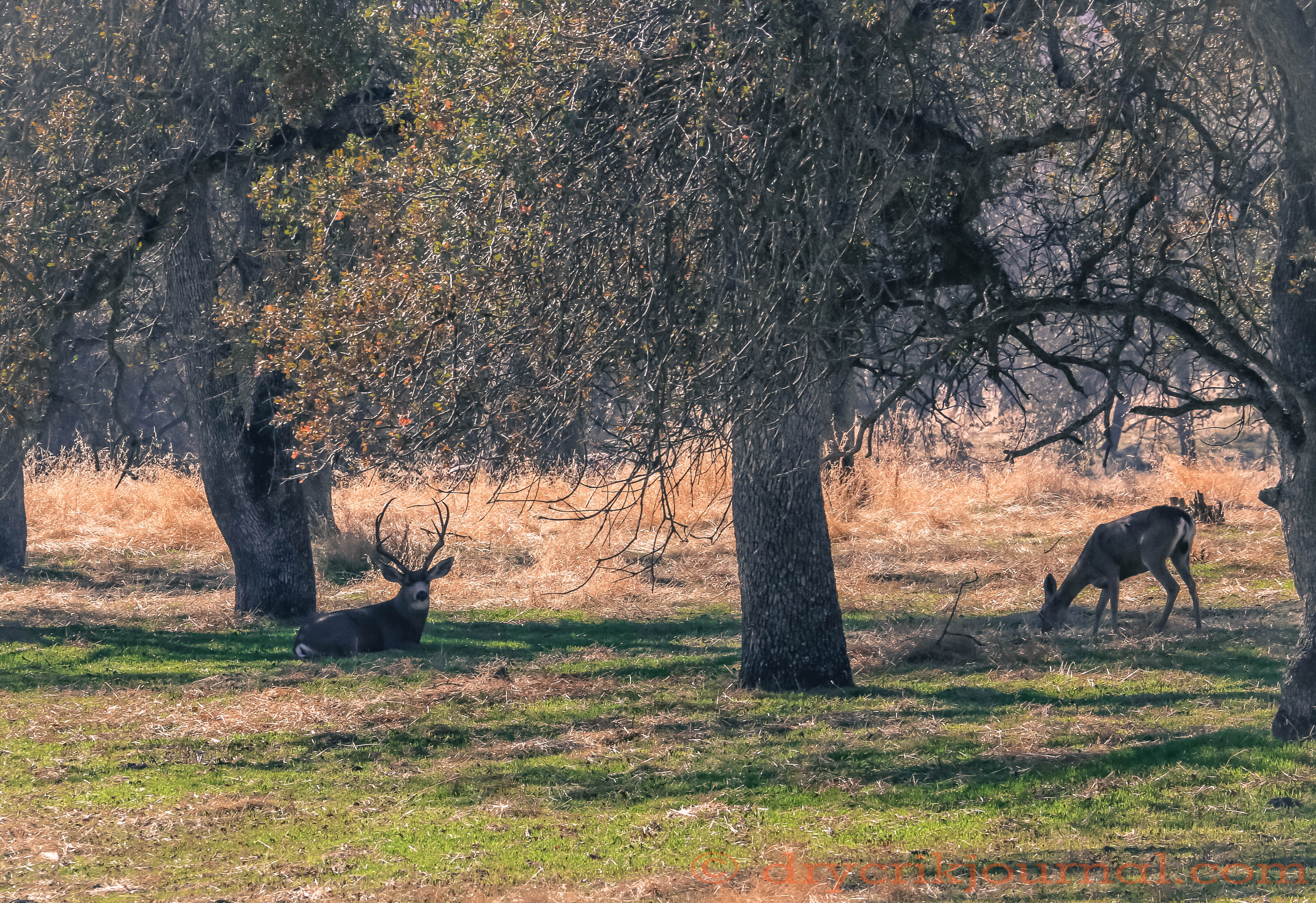
Checking cattle once a week, the Kubota has become so familiar on the Paregien Ranch that wildlife are seldom startled. With tall feed and cover, we haven’t seen many deer in the past six months. It was reassuring to see that the Blacktail buck above had survived hunting season, now in rut and somewhat oblivious to our presence. With a doe and fawn grazing acorns, he was more content to rest in the shade than leave.

Early mornings cool and talking firewood earlier in the week, we came off the hill with a load of dry Manzanita.