Tag Archives: cattle

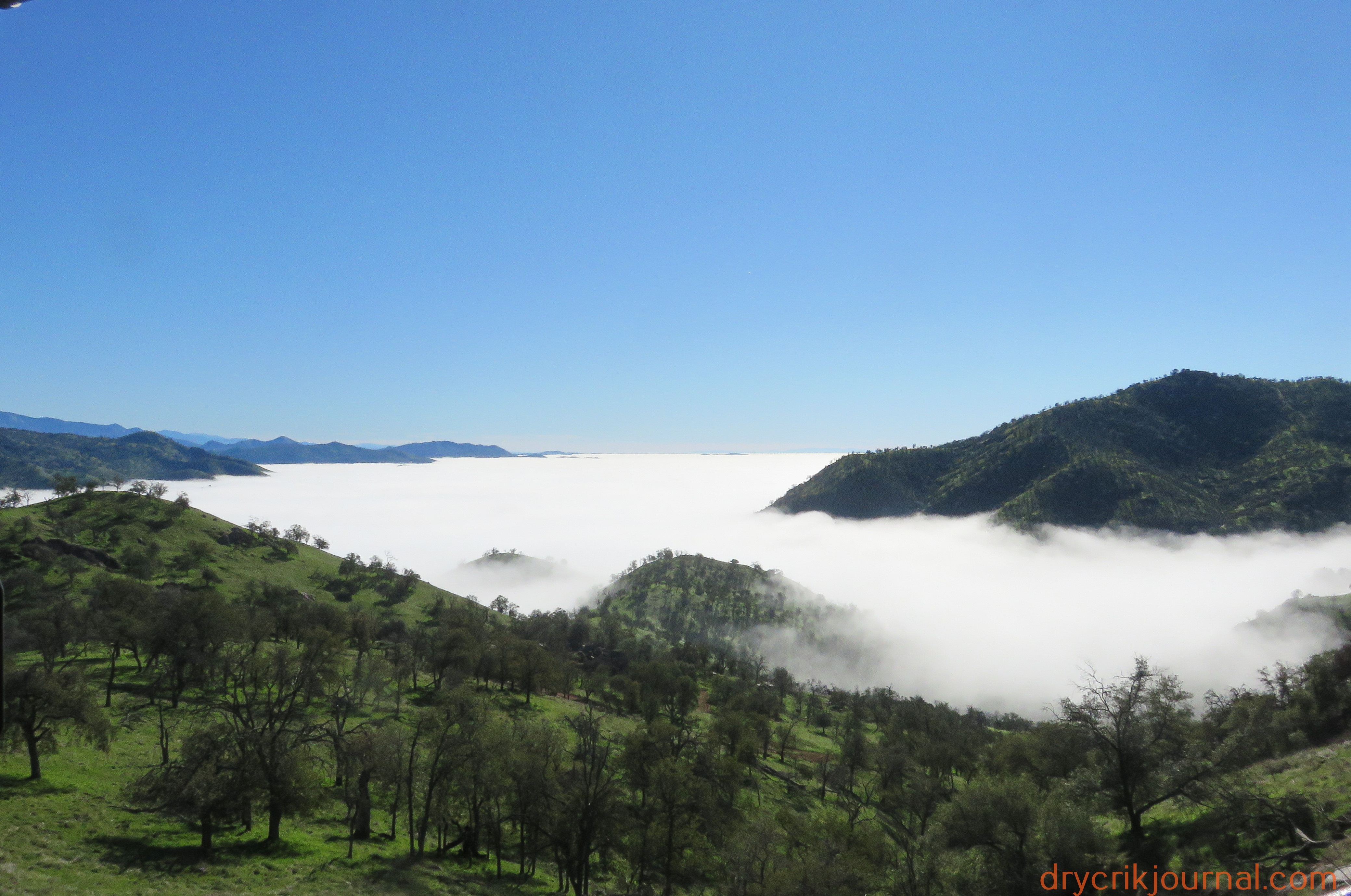
ISLANDS OF GREEN

Cold and damp, we wake to add split oak
to coals banked in the woodstove
and wait for dawn’s dim light to see

how thick the fog that has consumed us
for weeks—and the cows and calves
we must gather before we brand,

before the rains leave dirt tracks
too slick to travel up the mountain—
bull calves to sell instead of steers for less.

An ocean of fog with islands of green,
a world below where commerce
and consumption carry-on conveniently,

where pundits and politicians spar
for the last word, and the weathermen
guess what Nature has left to teach us.

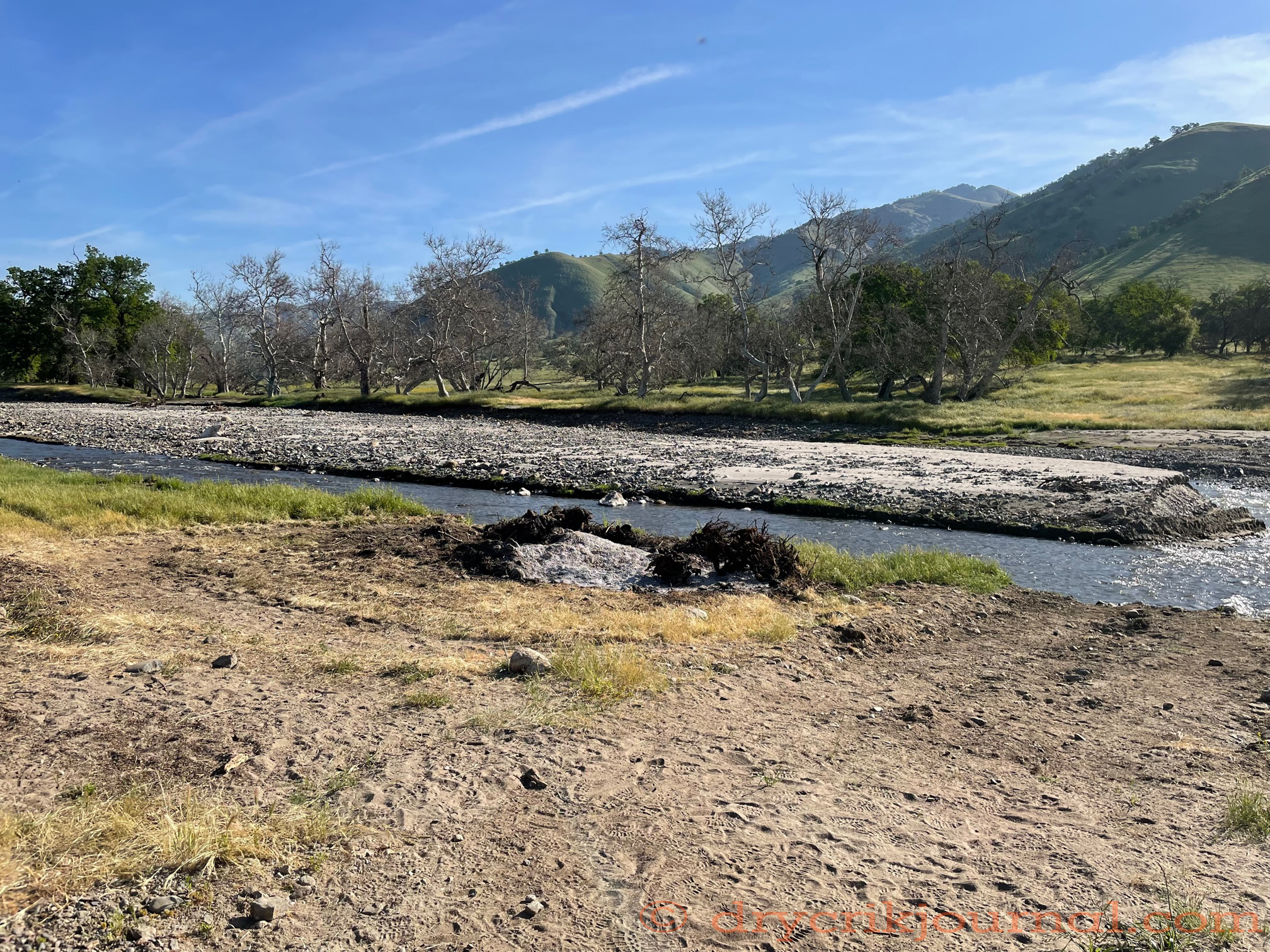
Crossing the Creek

We haven’t been able to cross Dry Creek for three months due to the series of Atmospheric Rivers that began last December. Subsequently, Robbin and I haven’t seen the cattle for three months.

Fortunately, we had a dozer nearby to spread the cobble and sand bar evenly across the channel.

Salt hungry, they’ve been doing fine without us.  We were quite pleased with both cows and calves.

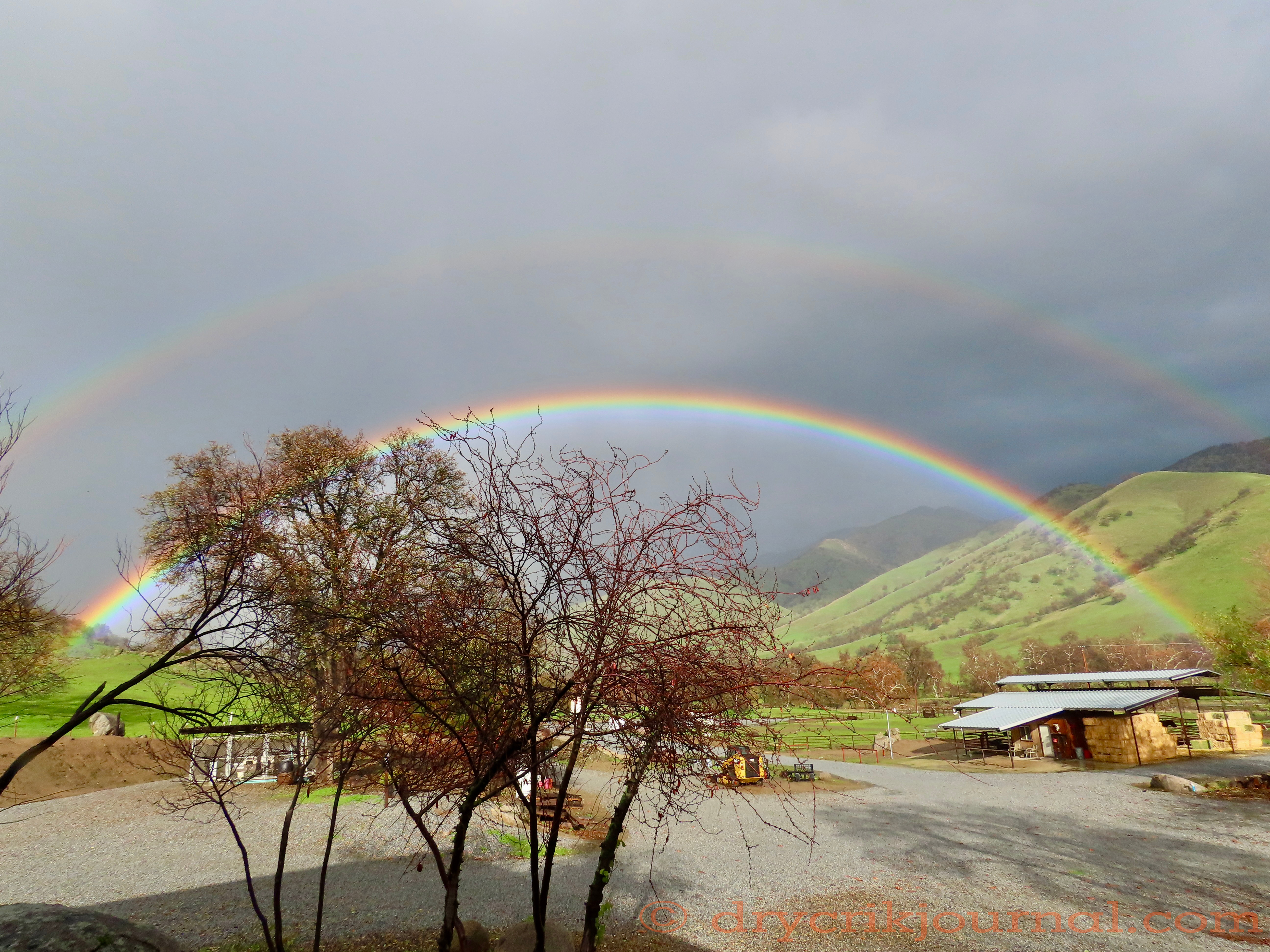
RAINBOW


No word of the whereabouts

of La Niña 3, one more dry year

waiting in the wings to sell cows


and feed more hay—instead,

8 days rain out of 9 and more

to come, bare canyon green.


We are helpless, flood or drought,

her fickle Nature always serving

what she wants, anywhere, anytime.


WINTER FIRES


Color comes with cold and wet

within the canyon, even before

the creek flows or sycamores burn


leather brown to shed their clothes—

white bodies tangled in a pagan dance

to gods unknown.  Orioles return


as sparks in the brush, levity

in the pink overcast of dawn.

We glean the fallen skeletons


of oak and brittle manzanita

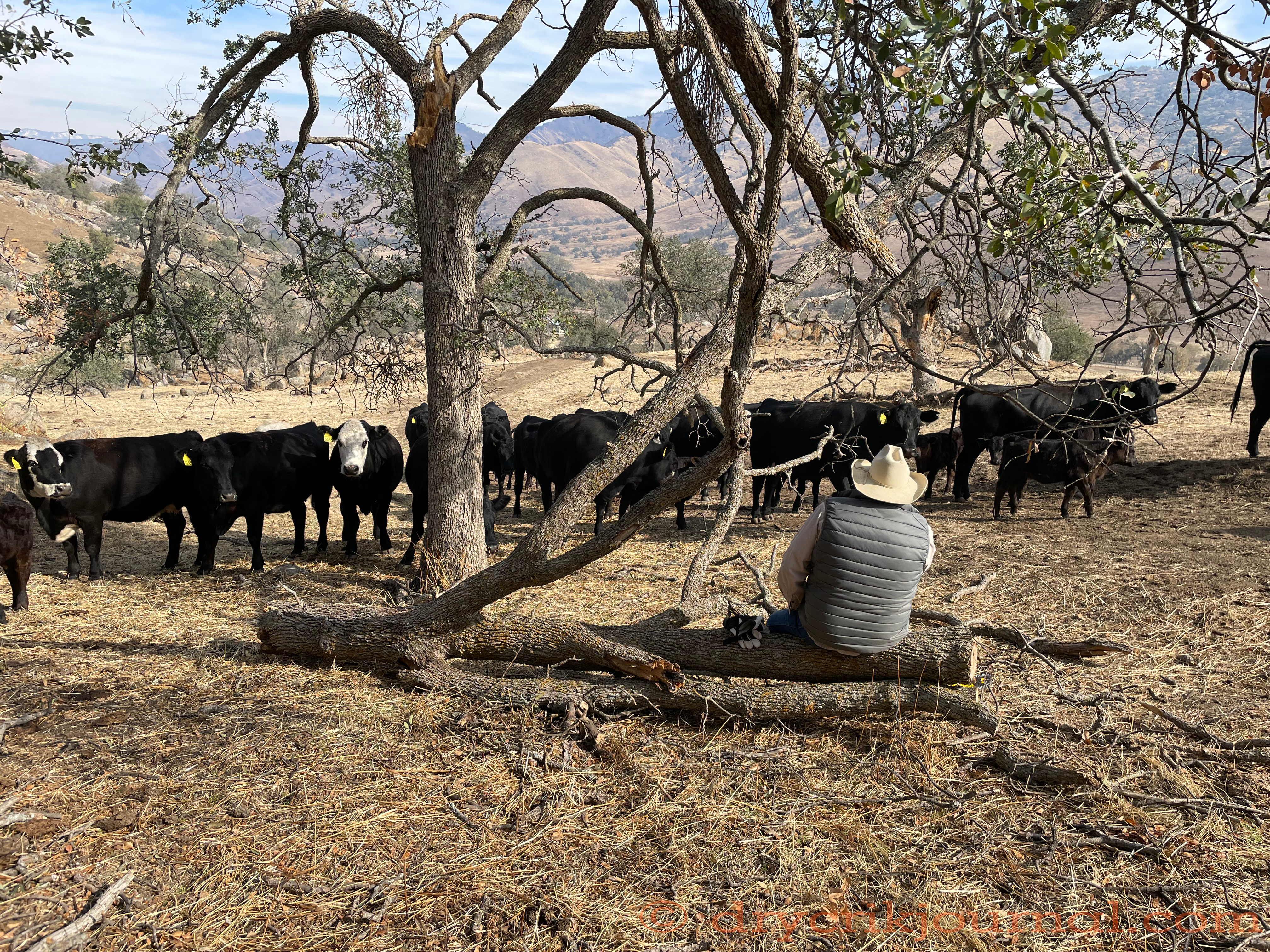
to fill the woodstove. Curious cattle

come to wonder what we’re about.


LATE OCTOBER


They’ve taken Saturday’s rain away

with future promises

like plastic magic debt

no one intends to pay.


We’ve been here before,

crooning to godesses

not to forget us

like the hopeless homeless.


We are this ground

rooted into the future

like the plodding lives of cattle,

trusting, trusting, trusting….


DEJA VU HAIKU


1.

Gray dust clouds rising

behind cows down powdered trails

off these bare mountains.


2.

The diesel feed truck

awakes a bawling chorus

to claim the canyon.


3.

All imperative

and hungry, it twists our guts—

La Niña pending.


BENEATH THE EAVES


We’re talking cattle

with a rising moon in June,

making plans for cows and calves—


the gather and sort to town,

where old friends shuffle

across the sale barn’s catwalk,


boot soles sliding, glad

to be moving among the living

when so many are not.


No one cares about our conversations,

the moon eavesdrops when it wants

just to measure our progress.


LAST LOAD TO IDAHO

Photo by Terri Blanke


Say good-bye to your mothers

for the long ride

all you children—

the truck is clean

shavings on the floor.

Driver said it snowed

before he left,

needed chains on Donner

rolling empty here in May.


We shake our heads

about the weather,

damn little rain,

the creek’s gone dry.

With a week of winds

the oaks have come alive,

tree limbs dancing

like separate tongues

trying to lick the sky.


We shipped our last load of Wagyu X calves to Snake River Farms on Tuesday as we continue to gather and wean our Angus calves.  Both cows and calves have done well despite the extremely dry spring, in part because of our heavy culling that cut our cow herd by a third after only six inches of rain the year before. With drought across the Western US, cow numbers are down everywhere resulting in a stronger market than we’ve seen in years. With unpredictable weather, higher costs for grain and inflation, we may be raising beef we can’t afford to eat.

MOWING


After I mowed the lawn, I opened the gate for the cows and their Wagyu X calves to the horse pasture to eat the grass and weeds horses don’t like to lessen the fire danger and make it easier to spot a rattlesnake at a distance.  A treat for the cattle as we wait to process their calves on Tuesday and a treat for us to see them in the evenings. 


We let our big dog Buster, a Great Pyrenees/German Shepard X that was part of the litter dumped on Dry Creek Road several years ago, loose to work at night keeping the coyotes, feral pigs, raccoons, skunks, etc. out of the yard.  We don’t want him to make a mistake while we’re sleeping, so we move the cattle out before dark.


Last night, Robbin walked and worked our Border Collie Tessa on commands to gently ease them toward and out the open gate—a great exercise and confidence builder for them both.  Tessa has been with us enough around the cows to know how we work them (old people slow) and plenty of herd in her breeding.  I’m guessing they’ll do it again tonight, it’s been good watching.


READY FOR PROCESSING

iPhone Photo by Terri Blanke


We’ve begun processing our Wagyu calves with a second round of vaccinations for Snake River Farms that we plan to ship in the first week of May. Each calf gets an Electronic Identification (EID) button and a tag to match at the same time. These calves are from our first-calf heifers that we poured the hay to from last July into December because of the short feed and to keep our first-calf heifers in shape to cycle and breed back. We don’t have to run the numbers to know that these calves won’t bring enough to pay for the hay we fed.


Every feed season is different, even in a drought.  The Christmas rains saved our bacon, over 3 inches or nearly a third of our rainfall to date. And again, in the nick of time, two storm at the end of February and beginning of March that offered nearly 1 ½ inches.  The three events made pretty decent feed in the corrals above and elsewhere as we approach the end our rainy season—nothing forecast for the next two weeks—proving once again that it’s not the quantity of rain, but the timing that’s most important in the cattle business. 


With a shortage of water to irrigate alfalfa in California, hay will be expensive.  Having cut our herd by a third last year (6 inches total), we hope there will be enough old feed to carry us through until November without feeding much hay in our upper country. However, we’ll have to help our younger cows in our lower country where the south and west slopes have already turned brown.  How many will be the question. 


We couldn’t keep any replacement heifers last year, and may not this year as the market gets stronger.  We’ll be making lots of decisions in the coming thirty days as we begin to harvest this year’s crop and plan for the next.