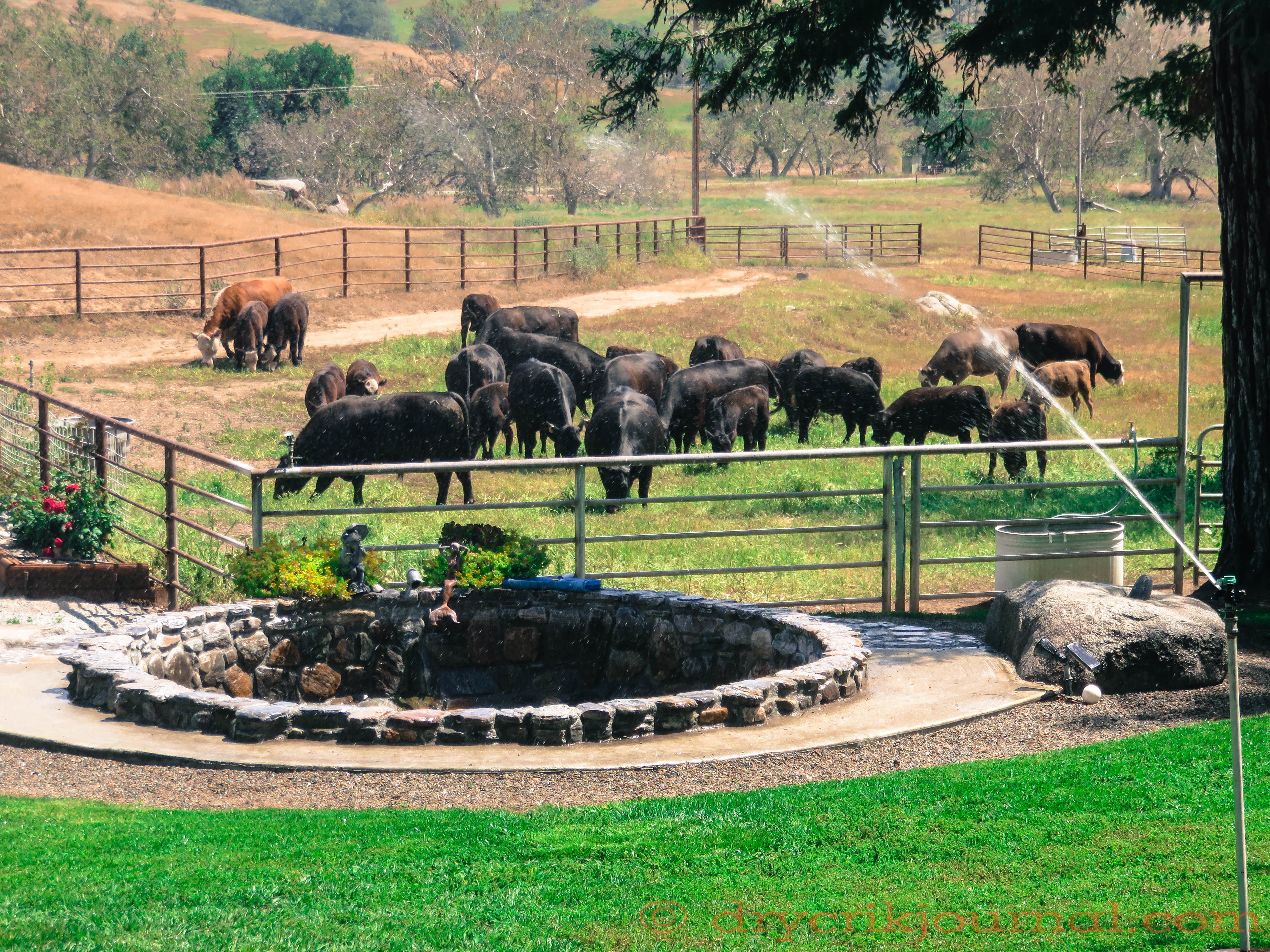
MOWING


After I mowed the lawn, I opened the gate for the cows and their Wagyu X calves to the horse pasture to eat the grass and weeds horses don’t like to lessen the fire danger and make it easier to spot a rattlesnake at a distance.  A treat for the cattle as we wait to process their calves on Tuesday and a treat for us to see them in the evenings. 


We let our big dog Buster, a Great Pyrenees/German Shepard X that was part of the litter dumped on Dry Creek Road several years ago, loose to work at night keeping the coyotes, feral pigs, raccoons, skunks, etc. out of the yard.  We don’t want him to make a mistake while we’re sleeping, so we move the cattle out before dark.


Last night, Robbin walked and worked our Border Collie Tessa on commands to gently ease them toward and out the open gate—a great exercise and confidence builder for them both.  Tessa has been with us enough around the cows to know how we work them (old people slow) and plenty of herd in her breeding.  I’m guessing they’ll do it again tonight, it’s been good watching.


BECKONING


Yesteryear calls out of the blue

in these piebald canyons turning brown

yawning across a shrinking creek


to leave a confidential message—

not in words, but deeds.  Faces,

always faces.  Big George Hubble


in grade school who loaned me a dime

for a lemon bar popsicle

I never paid back. Some call


from out of the ground

that I never knew had gone on

to find their relief.


Some faces leave no names,

or none I can remember,

to console me as I did them


during the paisley days of a jungle war

I missed for a football knee

trying to be a hero.


OUT OF HIBERNATION


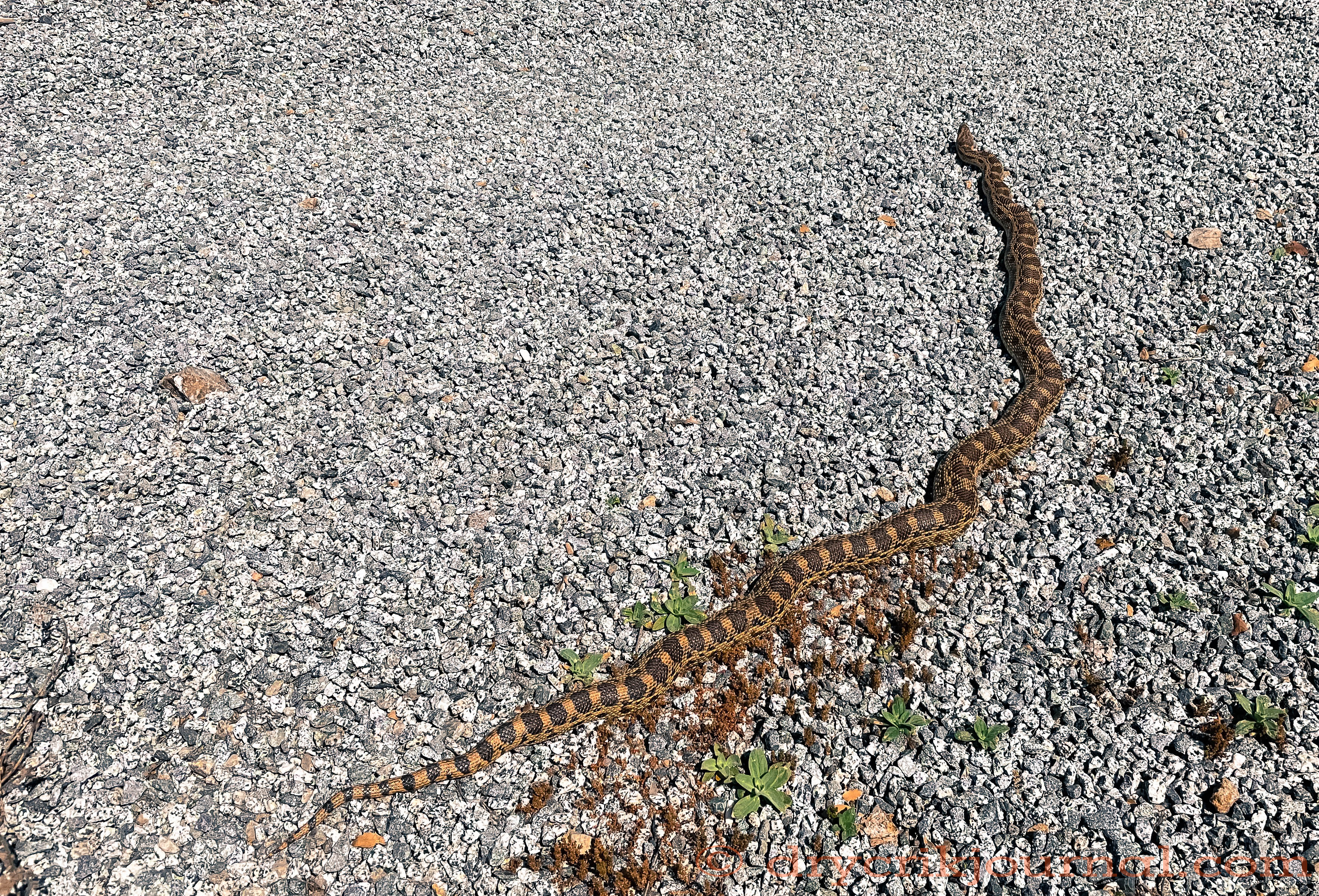
Stealing the warmth of gravel

an inch at a time, famished

after winter’s long dream


of what’s on the menu:

blind hatch appetizers

or a full-grown squeeze.


https://drycrikjournal.com/2021/09/04/tight-squeeze/


READY FOR PROCESSING

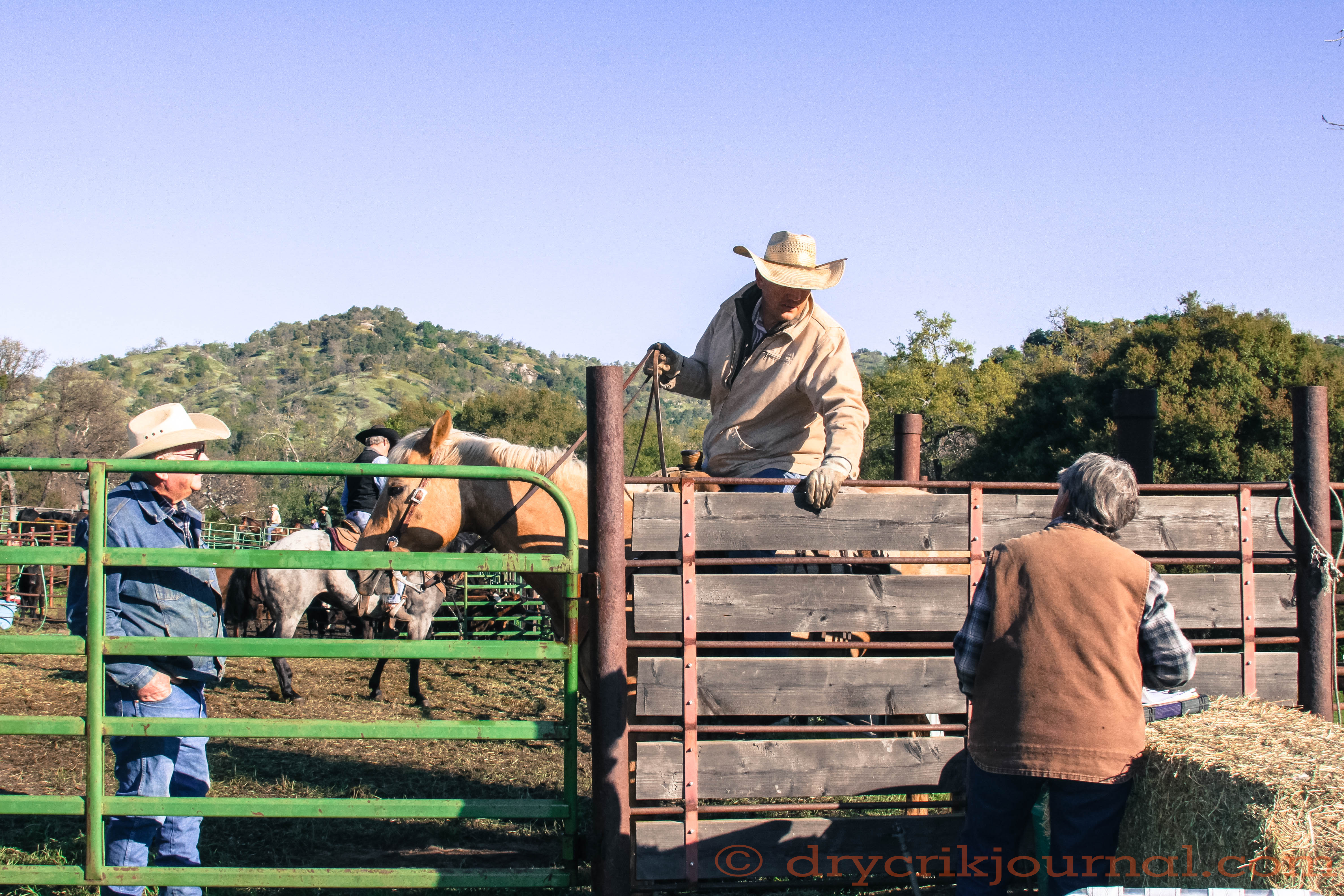
iPhone Photo by Terri Blanke


We’ve begun processing our Wagyu calves with a second round of vaccinations for Snake River Farms that we plan to ship in the first week of May. Each calf gets an Electronic Identification (EID) button and a tag to match at the same time. These calves are from our first-calf heifers that we poured the hay to from last July into December because of the short feed and to keep our first-calf heifers in shape to cycle and breed back. We don’t have to run the numbers to know that these calves won’t bring enough to pay for the hay we fed.


Every feed season is different, even in a drought.  The Christmas rains saved our bacon, over 3 inches or nearly a third of our rainfall to date. And again, in the nick of time, two storm at the end of February and beginning of March that offered nearly 1 ½ inches.  The three events made pretty decent feed in the corrals above and elsewhere as we approach the end our rainy season—nothing forecast for the next two weeks—proving once again that it’s not the quantity of rain, but the timing that’s most important in the cattle business. 


With a shortage of water to irrigate alfalfa in California, hay will be expensive.  Having cut our herd by a third last year (6 inches total), we hope there will be enough old feed to carry us through until November without feeding much hay in our upper country. However, we’ll have to help our younger cows in our lower country where the south and west slopes have already turned brown.  How many will be the question. 


We couldn’t keep any replacement heifers last year, and may not this year as the market gets stronger.  We’ll be making lots of decisions in the coming thirty days as we begin to harvest this year’s crop and plan for the next.


LANDMARKS

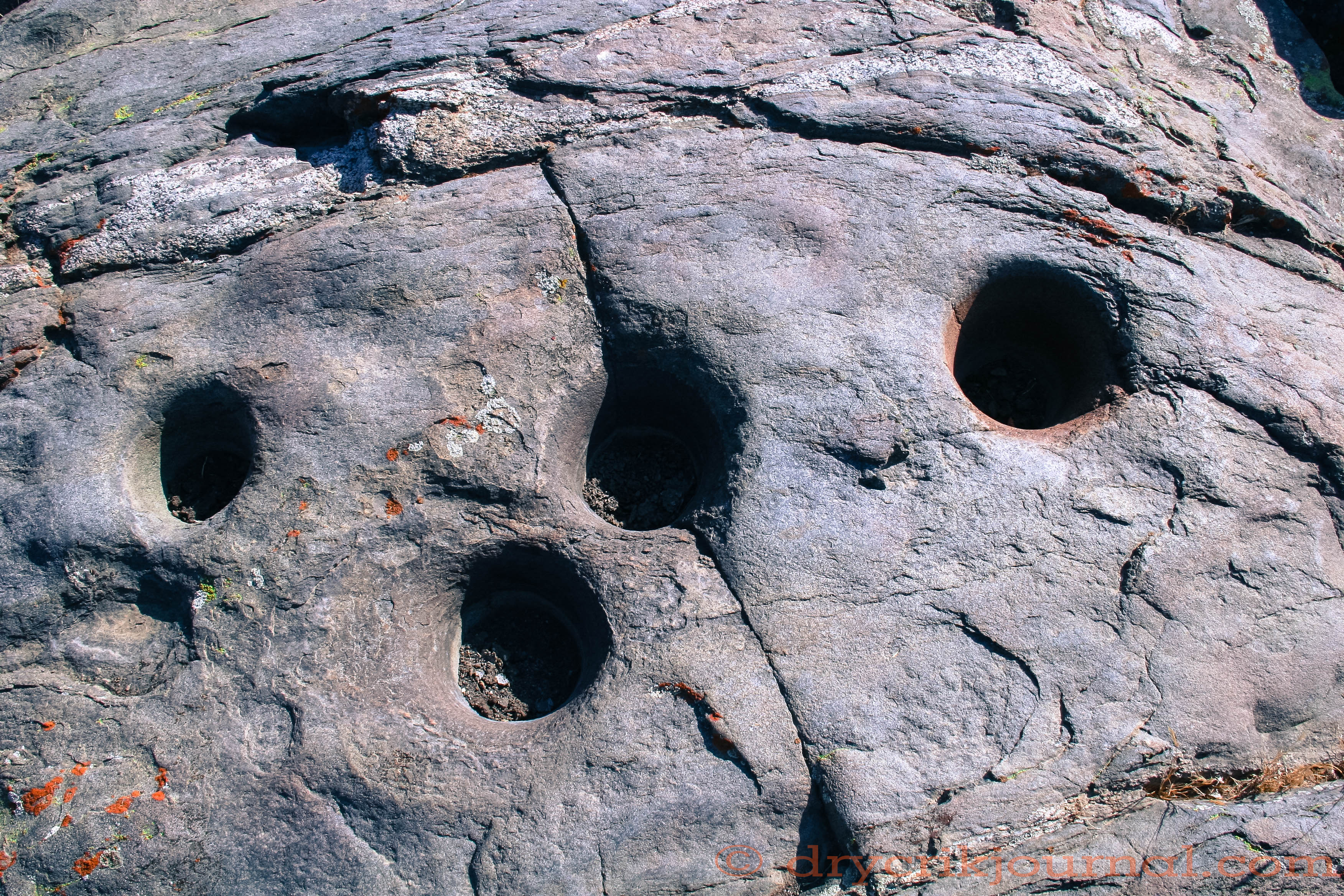
Wuknaw, Yokuts Creation Place


As children in the mountains

we learned to walk in the dark

on the uneven ground we knew

sometimes shadowed by starlight

or an occasional moon.


It was a wonder watching it rise

behind the far pines

as we lay on our backs

supposing excitedly about something

long since resolved,


but such a luxury to feel the hair

on familiar cedars, puzzle

over the sap of sugar pines,

fish the river for adventure

in the old days.


Time has simplified my map

to safe and basic trails

with many landmarks,

each with a story

to remind me where I am.


AWAKENING


The hollow sounds before daylight,

hillside Roadrunners awakening in the black,

their plaintive solos, reverberating notes


awaiting an answer, a location, a place

to be filled in the future, a pile of twigs

within the spines of cactus


beneath this soft comforter of clouds,

days trailing a meager rain to shield us

and the dew upon the grass.


The day is yet empty, moments awaiting

purpose and order. In my mind, I see

the tools I’ll need to be useful.


BATTLE LINES


Always a hole in the law,

in the black sky where the March moon

bores into your mind,


along the borders

between you and Nature

tirelessly encroaching.


She lives in town, the nurse

taking my blood pressure,

wants to know about the moths


driving her inside the house

with her kids

on the block of last night’s shooting.


I can’t imagine trying to sleep in a city.

First 80-degree day,

surrounded by colorful pastures


of wildflowers, thigh-high,

we can feel the snakes

crawling out of hibernation—


even the dogs are cautious,

as they check last year’s beds

dug in the shade of the deck.


The ebb and flow of skirmishes,

prey and predator, man and beast

until the end of time.


WOBBLY WORLD


I wake to a full moonlit room,

a cyclops train bearing down on me

from over the black ridge—


            clackity-clack,

            there is no going back

            to find my dreams.


Still steady at a distance

killing things, I would have been

a good soldier, gorilla-style—


I know the place to go

to lift the pain away, to become

an instrument of peace


for the suffering, for the enemy

forever an ugly man

obsessed with efficiency.


The madman’s war and refugees—

what peace has he

within his hollow bunker


extinguishing what he wants

just to flaunt his power

for a wobbly world to see?


THE BRANDING PEN


Once again, the south slopes fade, begging for moisture. We’ve been following yesterday’s forecast rain for well over a week, watched it vacillate from 3/4s to ¼-inch daily, while hoping to get Kenny and Virginia McKee’s calves branded in Woolley Canyon at the same time—a four-day gather in wild country. On cue, a light shower began as we finished up, but unfortunately the trailing storm evaporated by late afternoon.  But it was a delightful branding, an efficient dance of ropers and ground crew that was almost mechanical, yet seasoned with quips and joviality, reminding me that the center of our culture and community has always been the branding pen.


Two years of Covid and the recent Russian invasion of Ukraine has upset the equilibrium of the planet, injected fear with the hopeless horrors of war into nearly every soul. The meatpackers’ conspiracy that has defrauded both producers and consumers has added to the instability along with our ‘megadrought’, new terminology from the scientists denoting two decades of drought not seen since 800 AD—all in all, the impacts of which have created an overwhelming mess.


Kids—recounting the branding at home, Robbin and I tallied at least 10 little kids in and around the corrals, another generation exposed to this lifestyle, caring families who treasure the opportunity to teach their children how to get the work done. We are not helpless, it is a luxury to still have a place to ignore the outside world where we can pour our attention to what’s important, to the things we can do something about.


March 5, 2022


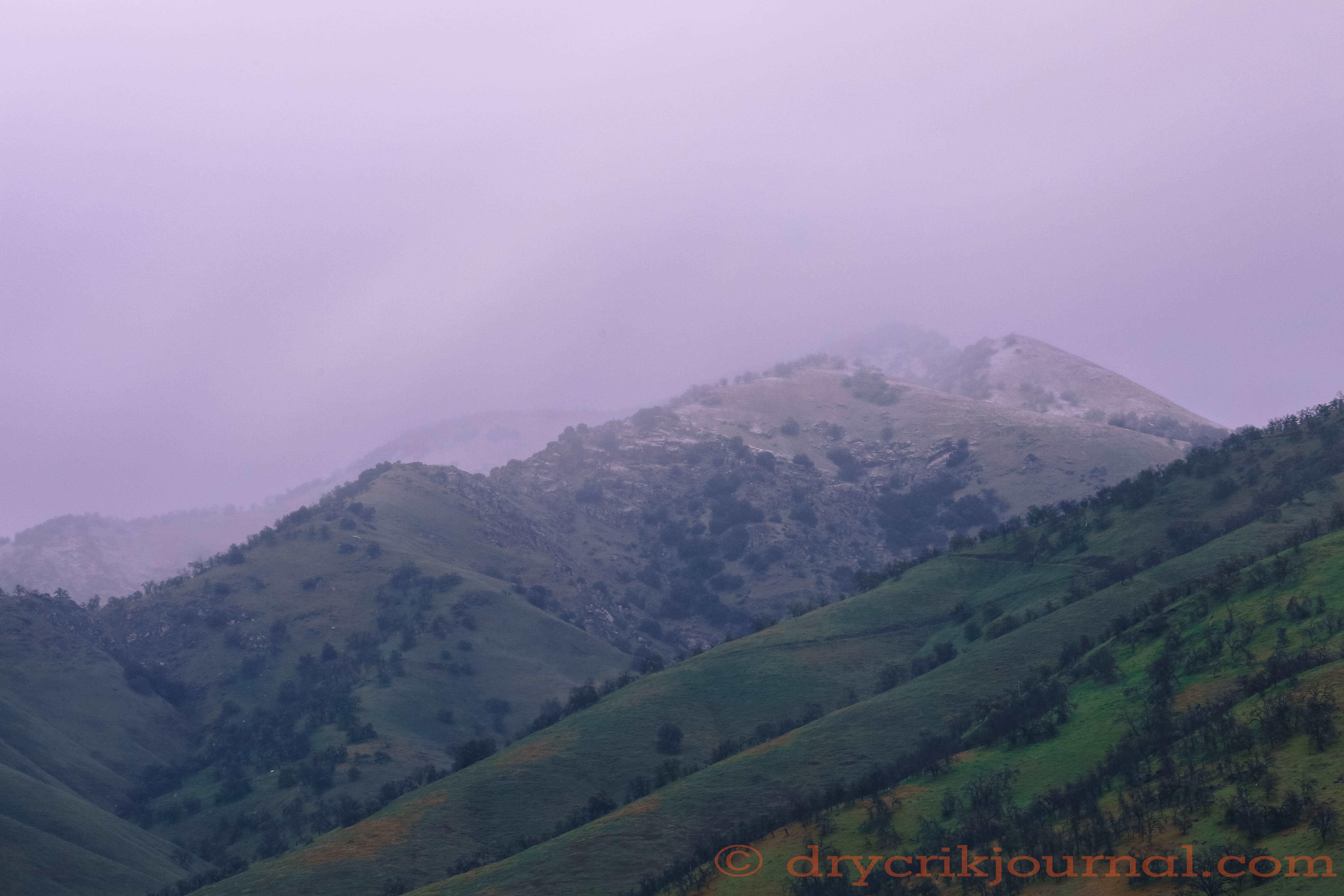
Misting, light snow on Sulphur Peak (3,400’) this morning, we ‘ve enjoyed 1.02” received thus far from the last two days of this season-saving rain—a little more scheduled for today.


But it was the 0.48” we received on the 23rd of February that truly saved our grass after 3 months of nothing but a few heavy dews.  The ground was so dry that it sucked all the moisture up by the next day to the extent the mud grips on the feed truck left no tracks.  The grass, that has been so thin in the Flat where we’ve been feeding our first-calf heifers since last July, finally filled in, and now is beginning to grow. Add this inch and we’ll be good to go for three weeks or so, depending on temperatures.


Robbin and I, with the help of Allie, Terri and our neighbors, got our last bunch of calves branded on Wednesday before this rain. Due to last year’s heavy culling because of the drought, our bunches were small this year, but the cows and calves looked great.  Whether or not we can make ends meet on so few numbers remains to be seen in the marketplace, now that the weather seems to want to cooperate—we have hope.


The third variable to survival in the cattle business has always been politics.  With the world in turmoil because of the invasion of Ukraine and its subsequent impacts, anything can happen to disrupt the marketplace, inflation and the pandemic yet still in the wings. Unresolved issues regarding the implementation of the Sustainable Groundwater Management Act (SGMA), passed by the urban majority in 2014, adds to an uncertain future for all agriculture in California, one that will undoubtedly include foreclosures and lots of litigation for years to come.  Meanwhile, imposed fines and the cost of water may be too great to farm in California if the State has its way, once the richest agricultural region in the world.


Nothing stays the same.

Only nothing is normal.