The clichés rained
when I was young
like hollow outlines
I was destined to fill
with real details—
sayings tested with
practice dodging
bullets with agility
and dumb luck
to get old enough
to speak at funerals
of a few good friends
who rode with me,
or saw it all
from a distance:
no straight track
ricocheting minefields
heavily invested
in the senses. But
no longer hackneyed
hints for youth,
they become fresh,
reborn with answers
at our fingertips.
We found the Roadrunners’ nest on March 29th and have known the eggs had hatched for a couple of weeks, but the chicks have been too small to photograph until now. In the cactus along the driveway, I caught the pair off the nest this morning.
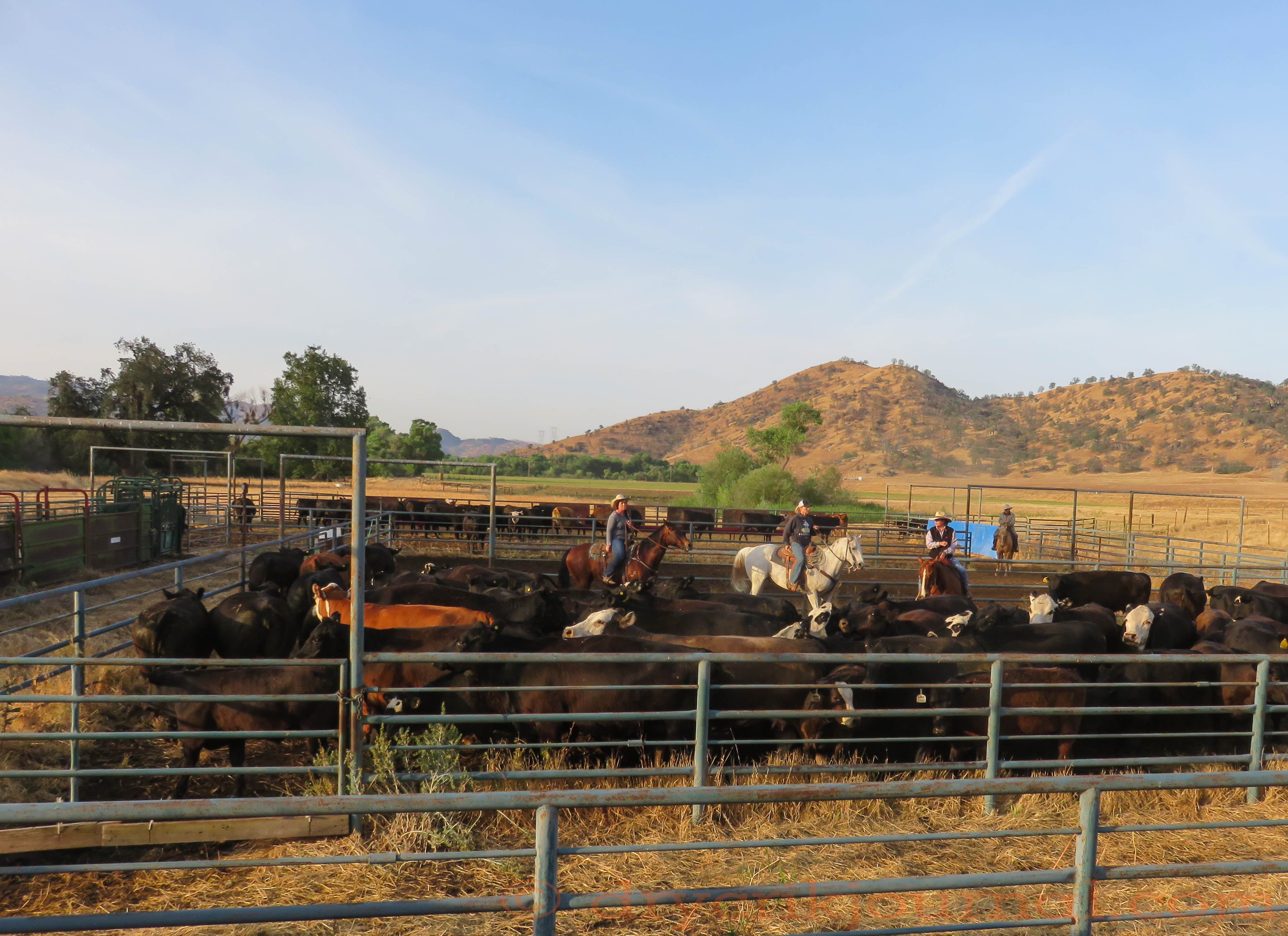
In the branding pen,
the steady dance of old hands
celebrating spring.
Weekly Photo Challenge: Motion
Posted in Haiku 2015, Photographs, Poems 2015, Ranch Journal
Tagged branding, Greasy Creek, weekly-photo-challenge
Dry grasses, weeds and wildflower leaves
turned brittle, blond and hollow-stemmed,
past help or hoping for a storm as we,
when the sky went gray for days: clouds
stacked, thunder clapped in the backcountry,
spilling little drops erasing tracks in dust
with damp, new air to breathe. Every creature
prayed—out of habit more than necessity,
to all our different gods—a great wanting
on the breeze, just to see it rain. Like true
love at the core of things, it came in sheets
of ecstasy—that full feeling of feeling good.
Posted in Haiku 2015, Photographs, Poems 2015, Ranch Journal
Tagged Wild Cucumber, wildflowers
Posted in Haiku 2015, Photographs, Poems 2015, Ranch Journal
Tagged Echinopsis oxygona, flower-friday
We are farming just beyond
your city’s limits to sustain growth
by building houses, irrigating fields
to feed you. We are drilling deeper
wells all around your sufficient
neighborhood mapped on asphalt.
Either side of the fuzzy border,
we get old, get tired of adapting
to mistakes—unlike bugs, we live
too long to develop genetics
our children’s children will need
in an unimaginable future.
History will say our families farmed
the San Joaquin for 200 years
before running out of water
fifty years from now—our thin dust
upon dry layers of earth stacked above
a depleting Pleistocene sea.
A fluttering of other lives
busy nesting out of reach—
dry thatches stashed on beams
under eaves like apartments
with squabbling, feathers floating,
on and on—as we lumber
beneath them, intertwined.
Crows claim the tops
of power poles on 65
through rolling hills of oats,
stacks of sticks close to roadkill—
adapting quickly to our urgencies,
to these forgotten outposts
of railroad towns
growing closer together.