Tag Archives: photography

FADED POLAROID


20170111-f56c1a42ab218377da905b231eee1dd8


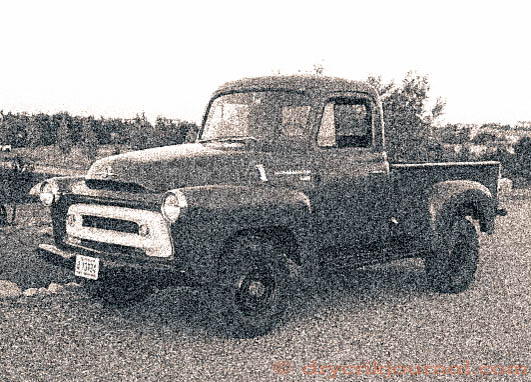
The ’56 International
was almost indestructible
when the straight-six fired
and the six-volt starter
got beyond slow groans
to ignite a spark,
explode the vapor
in the piston chamber
to run on her own.

She was temperamental
with smooth hood up,
heavy round fenders
and running boards—
a tough country woman
easy to personify
wanting procedures
                                        in order
you had to remember
or become superstitious
with only juice enough
for two chances
to start over.

I never locked her up
when I left,
but always a toss-up
which way to go:
take the longer asphalt mile
and hope for a ride
or wade the creek
straight cross-country
in my wet boots home.

                            for Tim Loverin & Richard Barkley


Video

Dry Creek Brush Catchers #2


Too wet for us to get off the road or cross the creek, but Kaweah Delta was back on Dry Creek cleaning the lower brush catchers this morning before the next storm starts about 4 p.m., forecast to bring 1.5 – 2” of rain through Thursday. Dry Creek: 236 cfs. Operator: Erik Avila.


AFTER SO LONG DRY


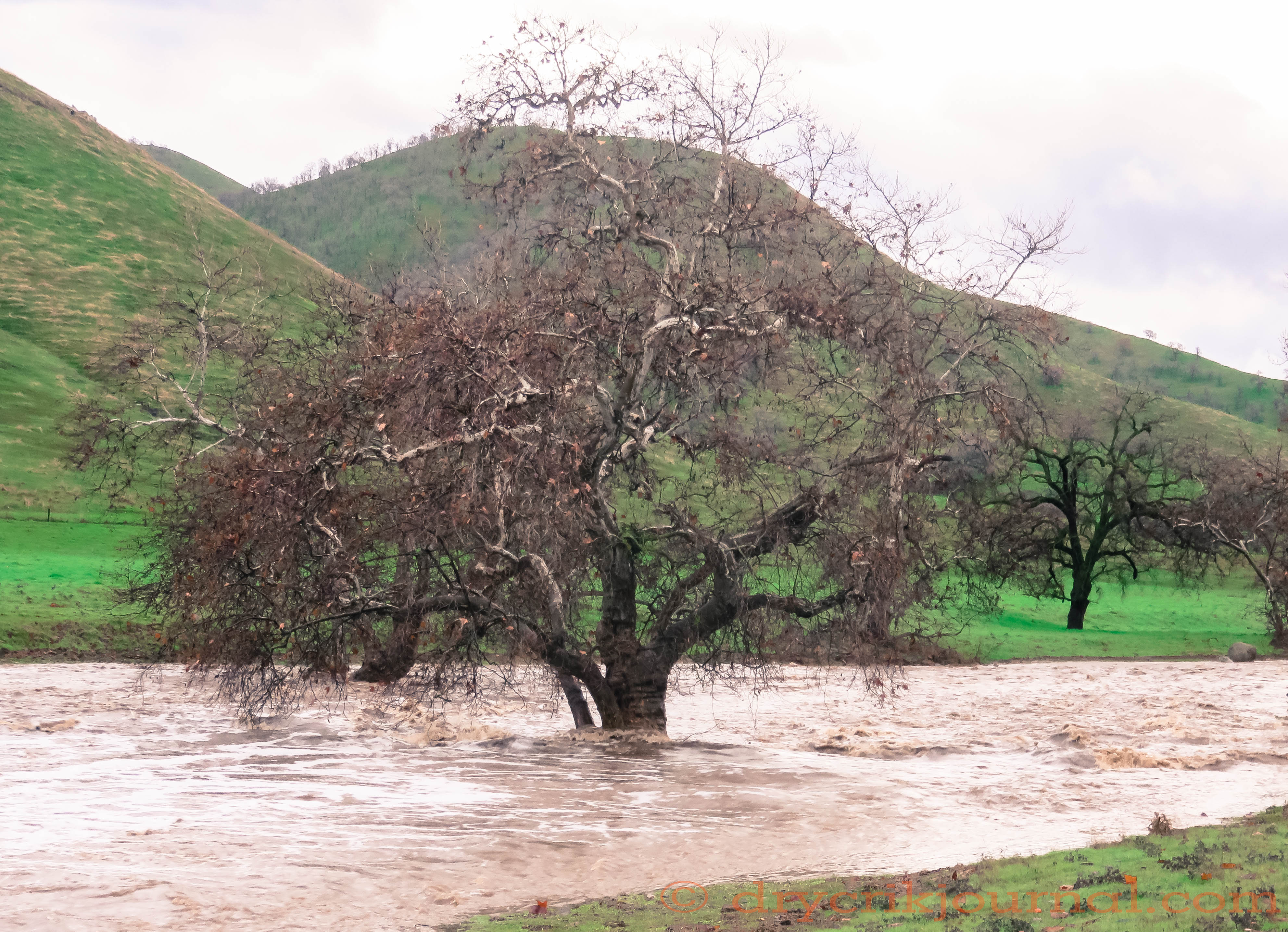
20170109-img_5926


No other love song, only
the comforting sound of fury
rumbling, rolling, churning

upstream like an old lover
returning to hold and stay
awhile with sycamores,

waist-deep, remembering
the boy with single-shot .410
reaching from the far bank

for dove in the top limbs
before the floods of ’67 & ’69
enveloped them, before

our high-water kisses in ’97
shared tears with rain—pure
ecstasy after so long dry.


Lifeblood


10:00 a.m., January 8, 2017: 629 cfs

10:00 a.m., January 8, 2017: 629 cfs


Not quite the storm of the decade, Dry Creek peaked at 1,390 cfs early yesterday morning. As of this morning, accumulated rainfall since the first of the year on lower Dry Creek has been a little over 4 inches, with yet another storm forecast to bring about 1.5″ due midday tomorrow—all welcome.

The continual gray clouds and rain of late seems miraculous when contrasted with the bare hills and dust of the past four years that have been permanently imprinted in our minds as more normal than not. The drought changed our thought processes and how we operate the ranch. And despite the ample availability of water streaming in nearly every canyon, I have often caught myself still worrying about stockwater. It’s how we lived, day to day, for a long time.

It’s good to see the creek running, the literal lifeblood of the canyon, a psychological lift as we inhale the moist air and relax a little before addressing the work that waits ahead of us. We have calves to brand and watergaps to fix as soon as we can physically get to them, when the roads dry out and creek goes down, which probably won’t be until next week if tomorrow’s storm materializes.


Gesundheit!!


20161231-img_1695


Living where we work, our exposure and resistance to ever-evolving, human contagions is limited. And though our immune systems may be naïve, we’re seldom sick. But since a busy Christmas here with family, kids and grandkids, Robbin and I remained sequestered at home to ring in the New Year by counting our blessings after each barrage of consecutive sneezes.


NEW YEAR’S EVE 2017

Self-medicating between bouts
of consecutive sneezes
and my repeated gesundheits,

your eyes raised to invisible lines
of poetry you’ve been writing
in the kitchen that you squint

to read, and then erase,
edit with a fingertip:
family gifts at Christmas

multiplied as germs exchanged
from big box malls to stockings full
all-across America—and more

you couldn’t decipher
or I can’t remember, trying
anything to get better.


CLOUD OF SMOKE


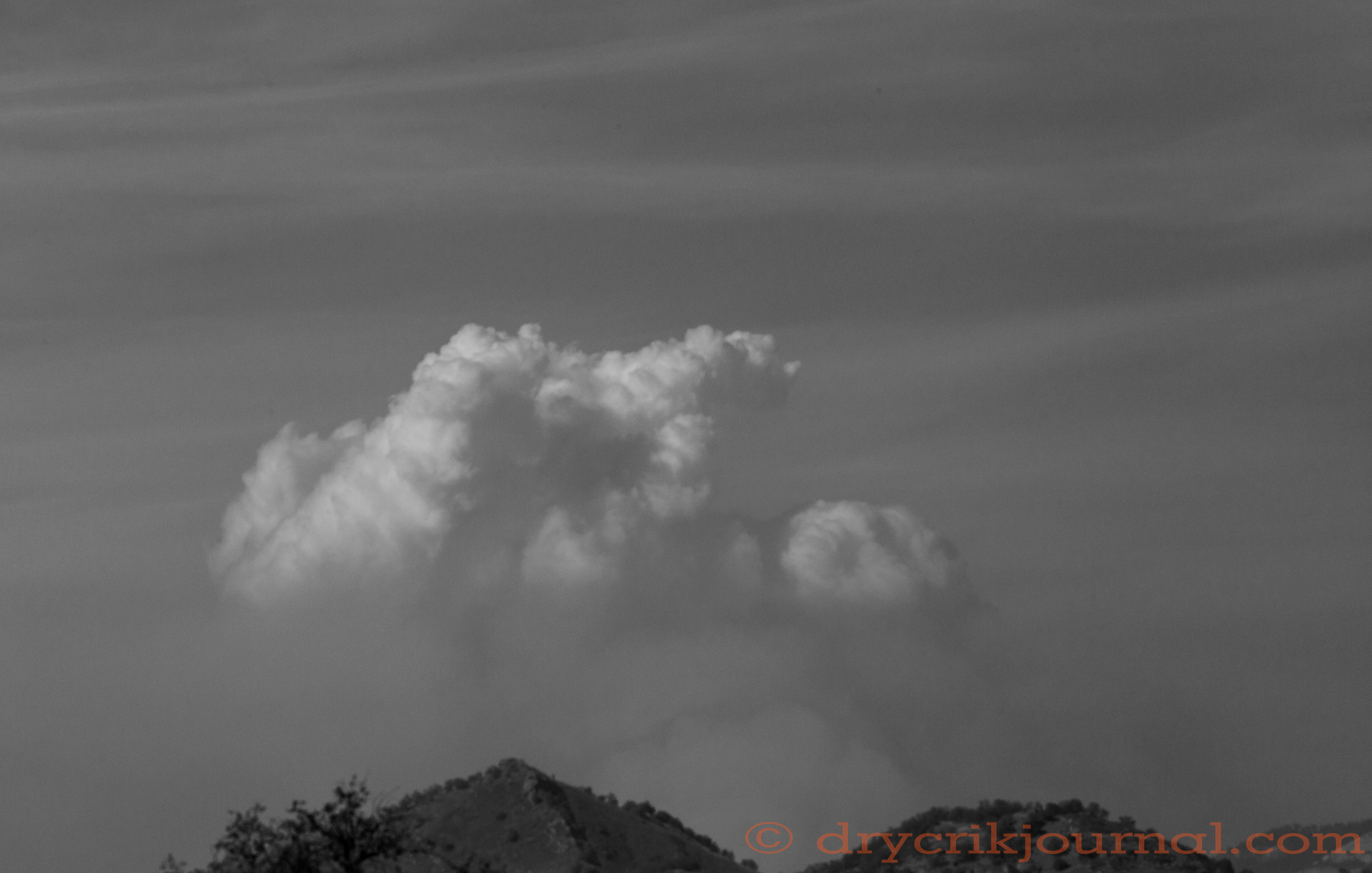
Rough Fire - July 28, 2015

Rough Fire – July 28, 2015


                    The beauty of things—the beauty of transhuman things
                    Without which we are lost.

                         – Robinson Jeffers (“Granddaughter”)

I claim the disheveled refuge of age
addled by magic devices beyond
the amalgamation of basic elements,

the dirt and water, the living foundation
from which we spring and are akin,
intriguing as a relative to trees that dance

and rocks that talk about the past,
solid and lasting. A balancing act:
my slow retreat just short of the attic

I am promised, mercifully sequestered
‘Someday Soon’ with Ian’s tune.
I want blaring sing-alongs to leave upon!

                    I’d be down that road in a cloud of smoke
                    For some land that I ain’t bought bought bought

                         – Guy Clark (“L.A. Freeways”)


WAKE-UP CALL


photo: Jaro Spichalova

photo: Jaro Spichal


I steal a look into the blurry morning mirror
after a second cup of coffee: a gray Medusa-do
replacing decades of darker curiosities

that recollect the Brylcreem coifs, the forelock
dip, loose strands dangling like my connection
to rock and roll—to the replaceable, double-A hearts

of Ricky and Elvis inside my Zenith transistor
a long ways from town—from the here and now
before I turn away from the worn-out look

that chuckles back at me. But this is the way
to wake up to reality, like Perseus, with only
quick glances into Athena’s shiny shield.


CHRISTMAS 2016


photo: Jaro Spichalova

photo: Jaro Spichal


                    Wherever the mind dwells apart is itself
                    a distant place.

                         – T’ao Ch’ien (“Drinking Wine”)

We have been there, idling across pastures
like cattle to ridgetops with focused eye
turned blurry with the mind’s appeal to wander—

an easy trek in open space, we gravitate
to isolated places where granite rocks
take the shape of animals, where oak trees

dance with sweeping boughs and speak
a language without words we comprehend.
When we come home to flesh, to the clatter

and complicated clutter of more mortal busyness,
our senses shocked and fogged with dismay,
we become the aliens for a moment on this planet

returning with translations, with fresh offerings
of peace and poetry—we nod to all the animals,
leaving little gifts of good-will along the way.


ZEITGEIST or TOMATO SOUP SKY


photo: Bodhi Rouse

photo: Bodhi Rouse


Never figured on a sunset,
children, grandchildren around
a smoky Live Oak fire,
the SoCal storm bleeding north

                    above a frost-bitten garden—
                    dry stem tomatoes
                    and peppers hanging
                    like ornamental gifts
                    for Christmas.

I thought I escaped California in 1970
to ride back through time, didn’t think
I’d camp in one place this long.

Never figured on iPhone photos,
satellite dish for shade—
or planning for a future
that depends on water
and obsolescence.


Winter Solstice 2016


20161220-a40a2801


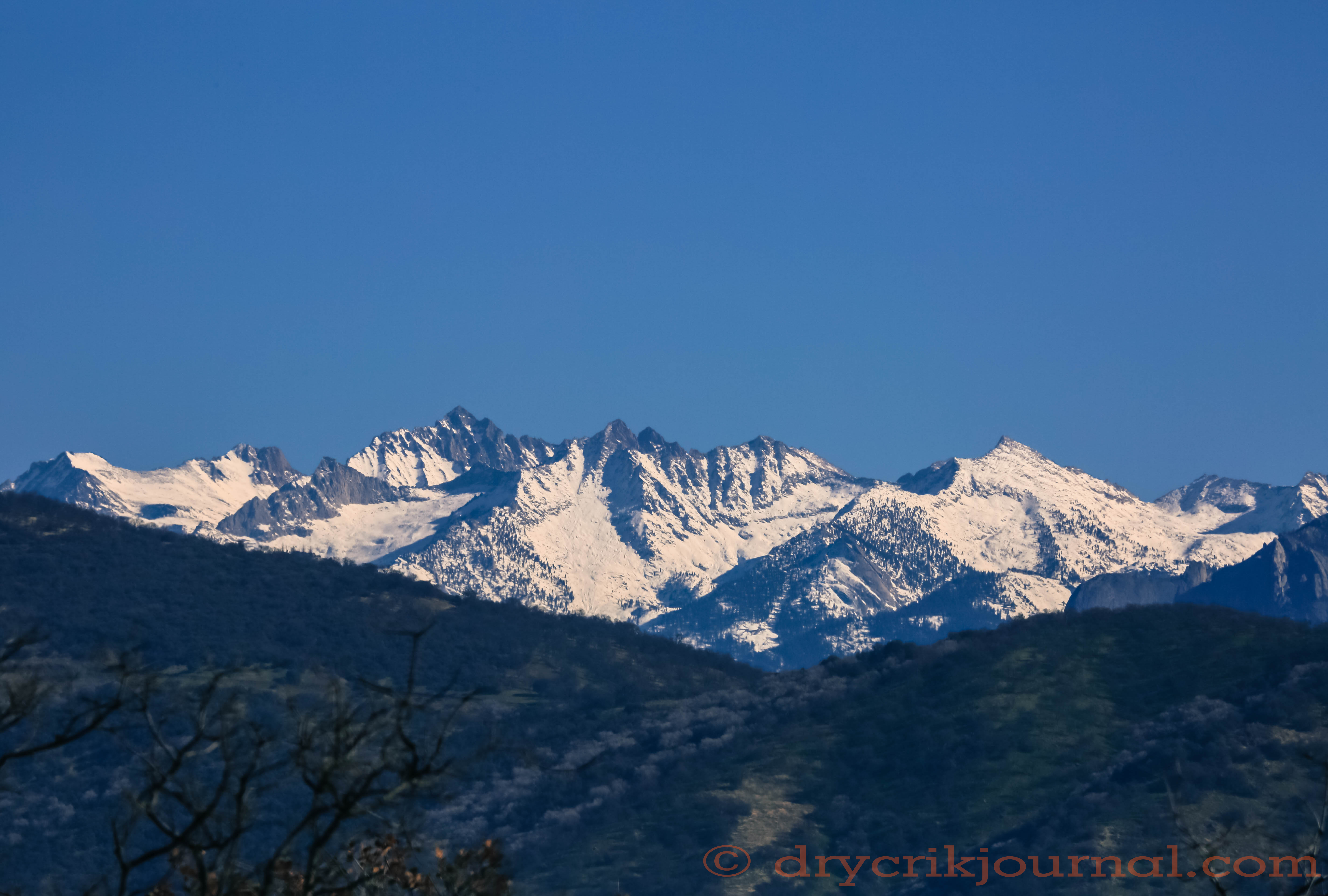
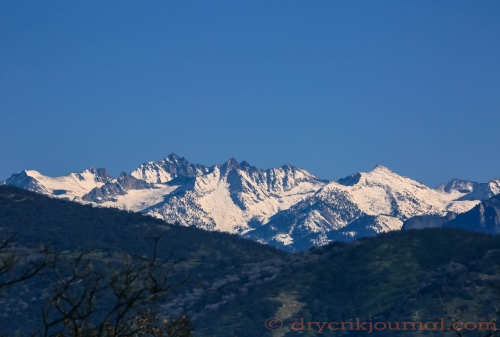
It’s habitual, looking to the mountains for our future, the Kaweah Peaks over Remy Gap in the southern Sierra Nevada above, not completely dressed in snow from the last storm on December 16th— another forecast for the 23rd. Ideally, the snow is laid in while it’s cold enough to freeze before mid-January, then slow melt to feed our rivers and replenish the groundwater in the San Joaquin Valley, once the most productive agricultural region in the world, or so I was told in college.

Much has changed since the 60s when Visalia was a town of 16,000. Now a city populated by 124,000 people drawing on groundwater resources year-round. The growth of Valley towns has also displaced some of our best agricultural ground in a short span of fifty years. The implementation of flood control structures on nearly every river on the west slope of the Sierras since, regulating surface water flows, have also had a severe impact to groundwater levels in the Valley. Add the wild cards of drought and more deep wells, less low snow as the climate changes, ours is not a hand to bet on long.

Well-meaning, but onerous, water legislation will not create more water. Nor will the monies set aside to build more dams, especially since we haven’t filled the ones we have in years. But for us, and most foothill livestock producers, we look to the Sierra snowpack this time of year for our future summer stockwater, the small leaks in granite cracks that feed our springs providing water for cattle and wildlife.