Tag Archives: photographs

BASIC STUFF

IMG_3953


Writing poetry in the dark
before moving cows
and fresh calves
to better pasture,
I ask about the weather
on TV I’ve missed
over a weekend of
making more from less water
while you’ve planted seeds
for a fall garden—more
hopeful than ever before.

You say, ‘More of the same
for the next few days, cooler.’
Two years of dust and drought
have worn us down to basic stuff—
and we like what we see
in one another.


Image

Floral Friday

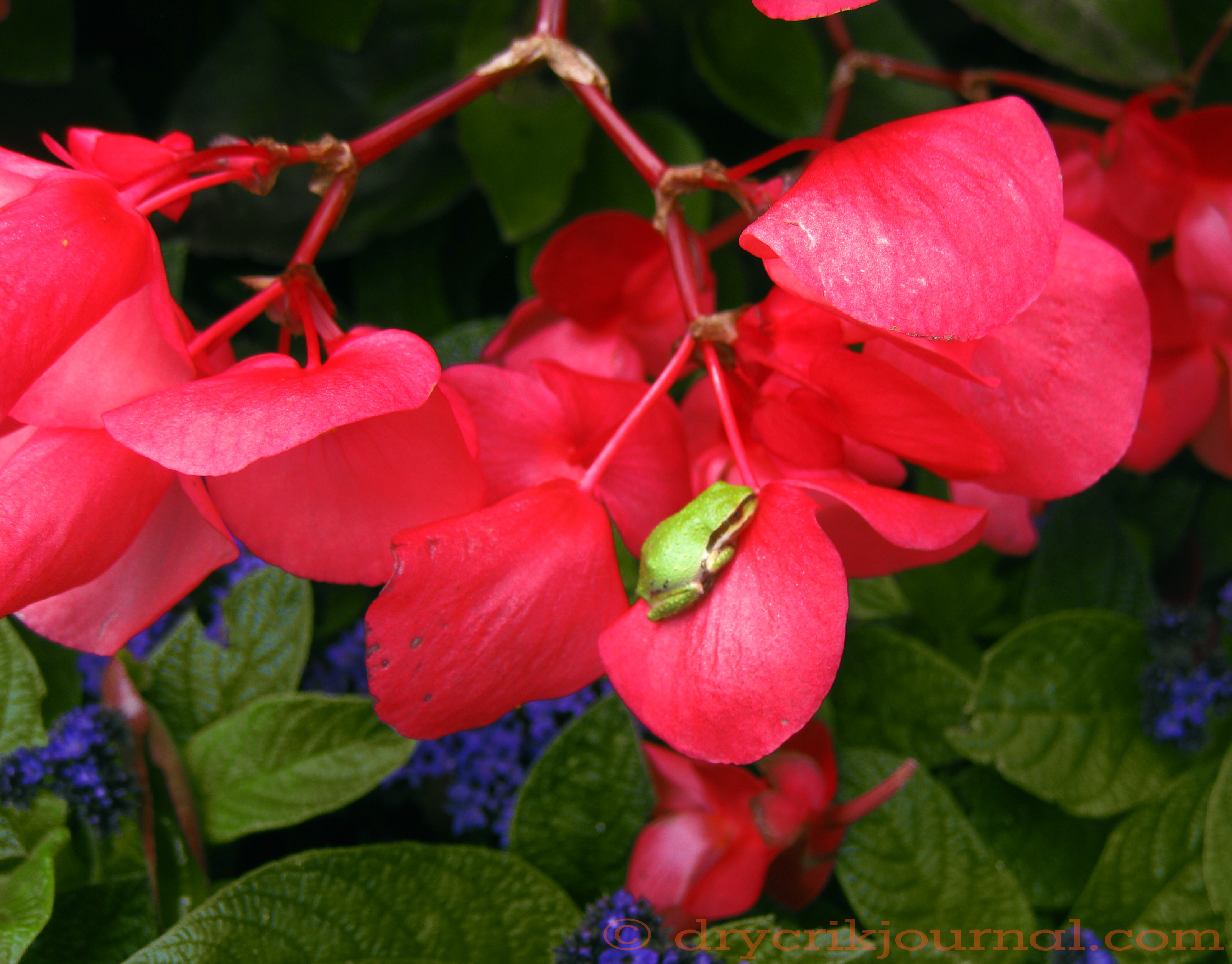
IMG_3707


Despite all the bad news,
let’s live life richly,
one petal at a time.


COLOR WITHOUT DETAIL

 
Under split nails and ground into our hides,
we wear our work—we carry it in our lungs
without shame or regret like grazing beasts

of the field, harvesting hillsides, plodding
from water to shade—ever-trusting in change:
the miracle of clouds packing oceans of rain.

Circles with hay, ruts of dust deep in tracks
up mountains and through brittle canyons—
it boils, rising behind us in trailing clouds,

each particle prepared for a new beginning.
We leave the gates open to any water, any
collection seeping from the cracked granite

heart of these hills, our flesh, for a drink.
The unabashed, dusty gazette of soft trails
leading to each distant water trough

prints last night’s news, distributed far
and wide, but much the same—yet we cling
to fuzzy dreams of green without detail.


IMG_4313


WPC(3) — “Dreamy”


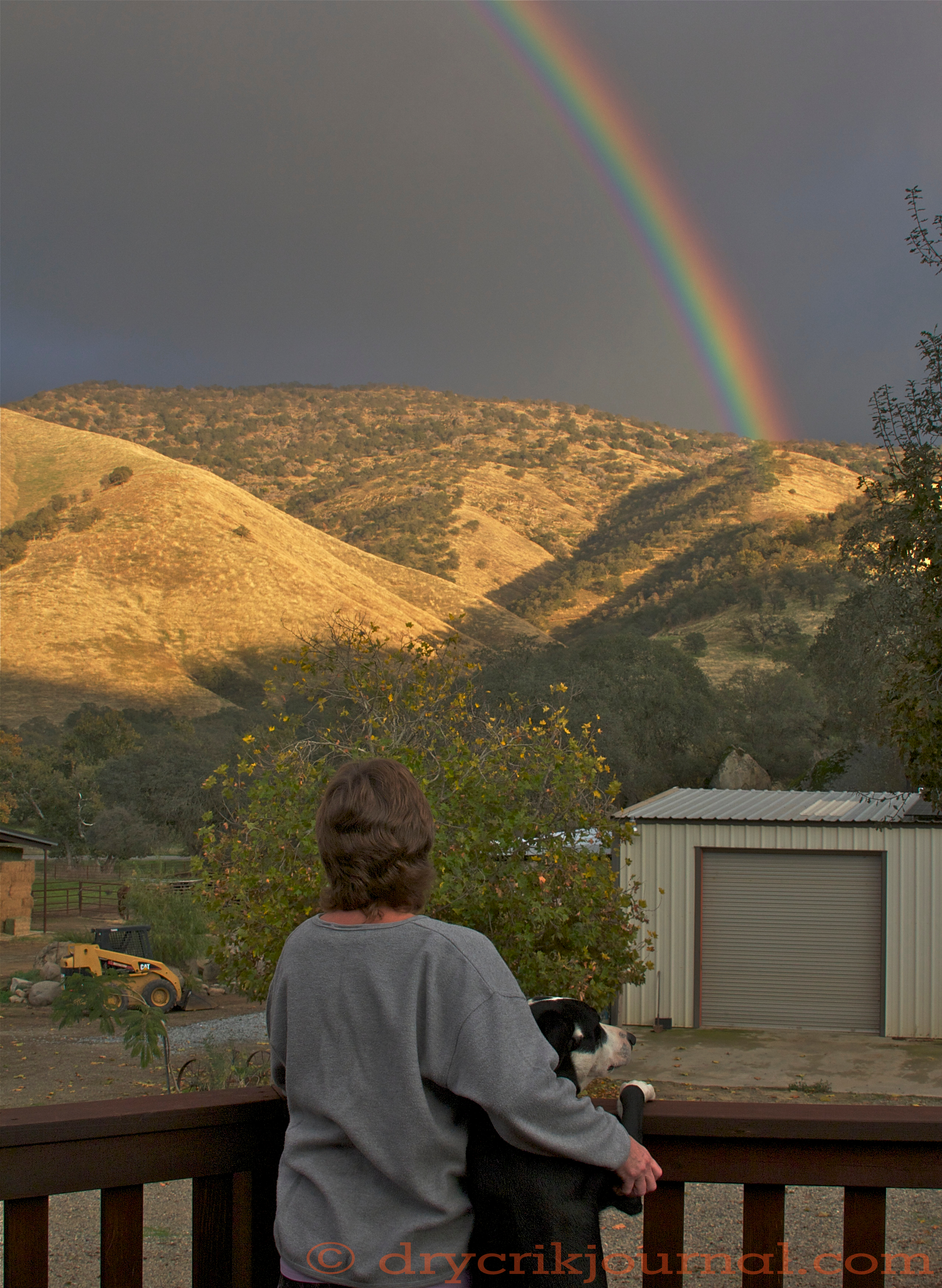
SOMEDAY,

IMG_3817_2


tears of joy
no USACE dam can
constrict, nor EIR

predict as if
acronyms save breath
and litigation.

The heavens in my mind
will open up
to consume me

like a leaf rising
upon wild waters come
to cleanup the mess.


WPC(2) — “Dreamy”

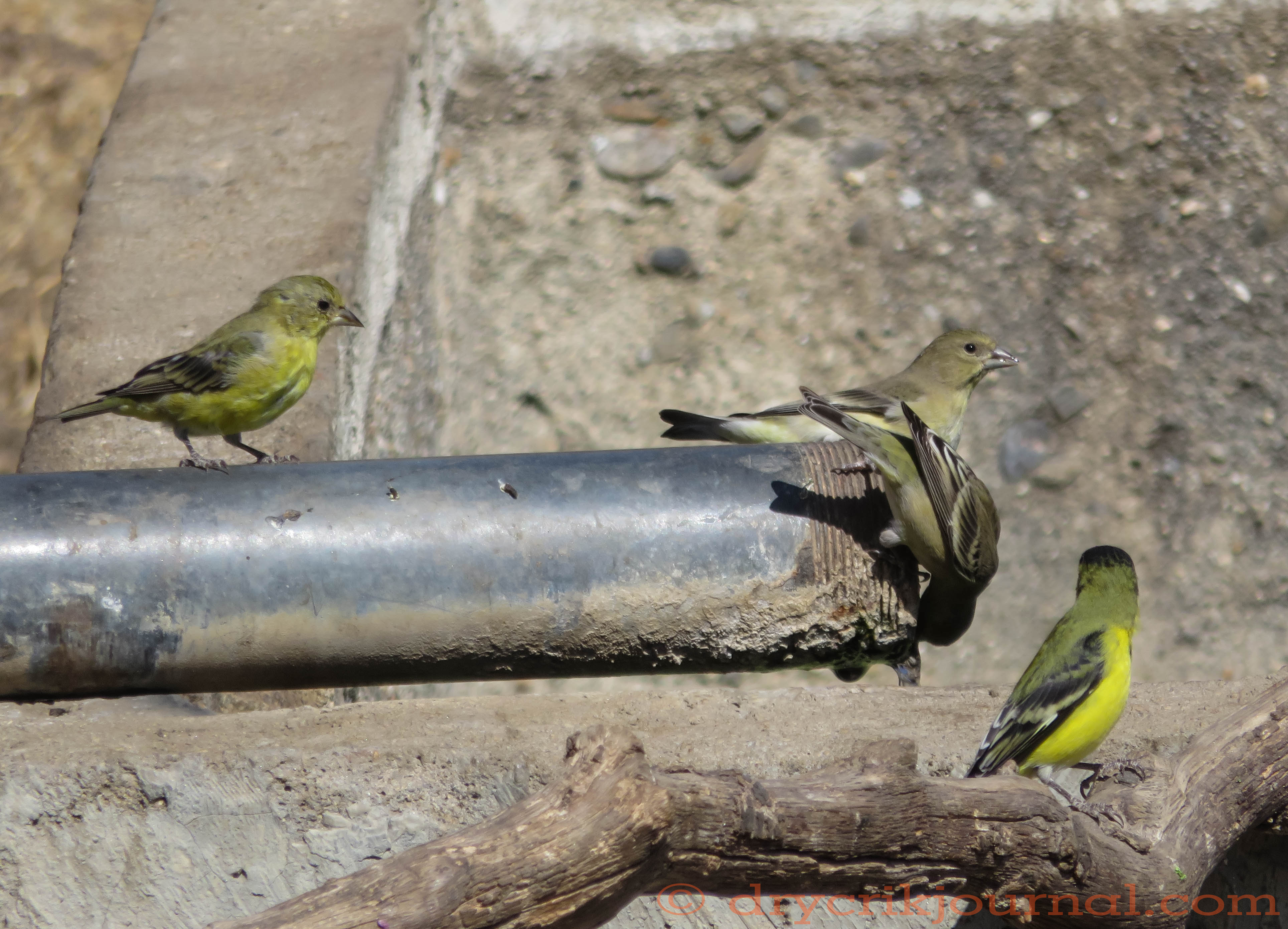
AMERICAN GOLDFINCH, RAGLE SPRINGS

IMG_0661


The wild flocks
to spring water, to man’s sweat
and galvanized intrusions.


Drinking At Ragle Springs

IMG_0644

IMG_0637

Yesterday, I finished reclaiming our water resources at Ragle Springs, after cementing a galvanized pipe in one of the holes of the concrete tank, constructed, I believe, by Earl Mckee and Lee Maloy who packed cement and sand by mule from the Kaweah River in the 1940s, some 2,500 feet and four miles below. The stock water pond constructed by Earl McKee, Jr. in the 1980s collected the overflow, but has been dry for several weeks and the leaky tank has been running into a quagmire where our cattle have had to drink, hock high, from cow tracks. Fortunately, they have had access to other springs and troughs elsewhere in the pasture.

IMG_0673

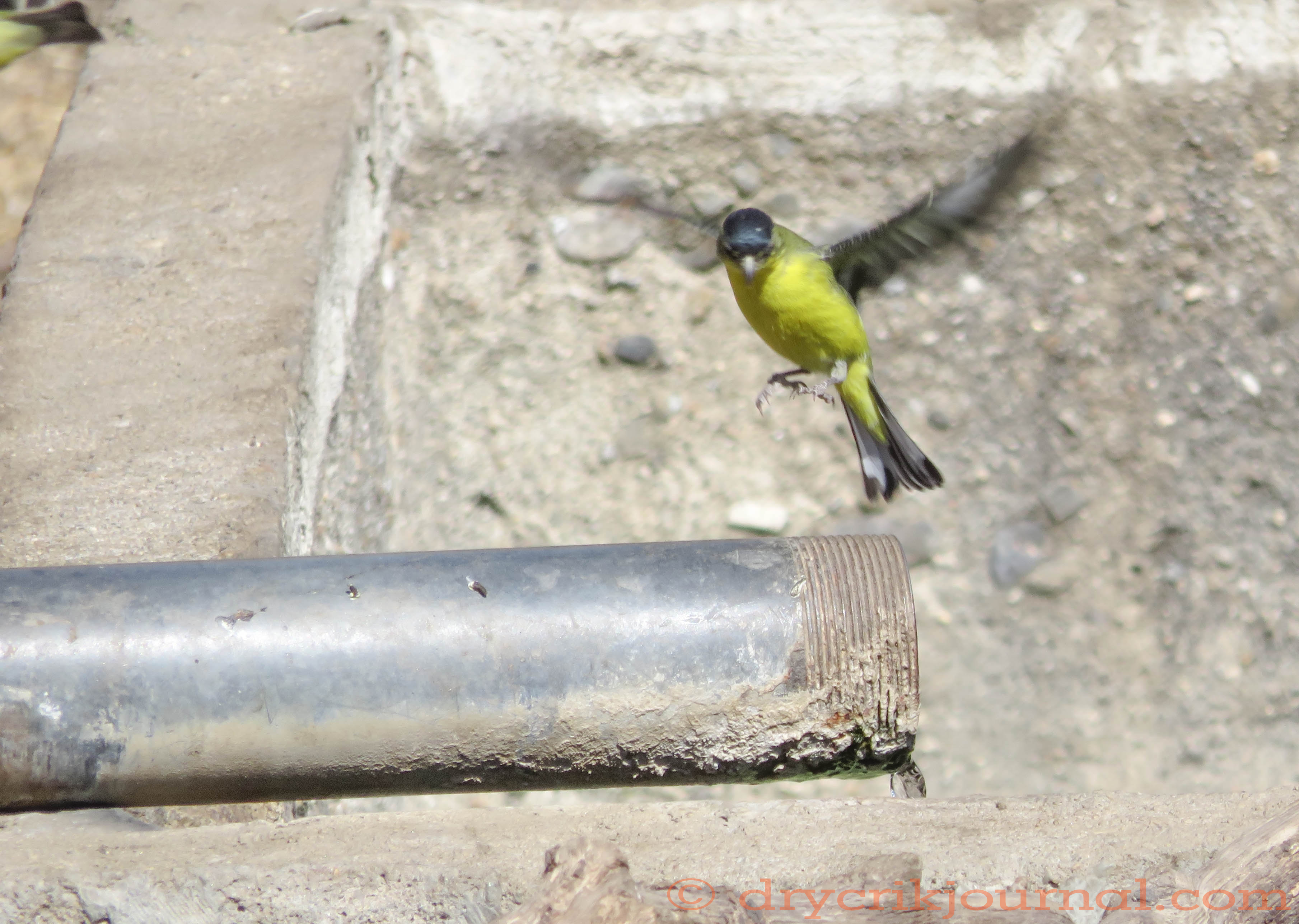
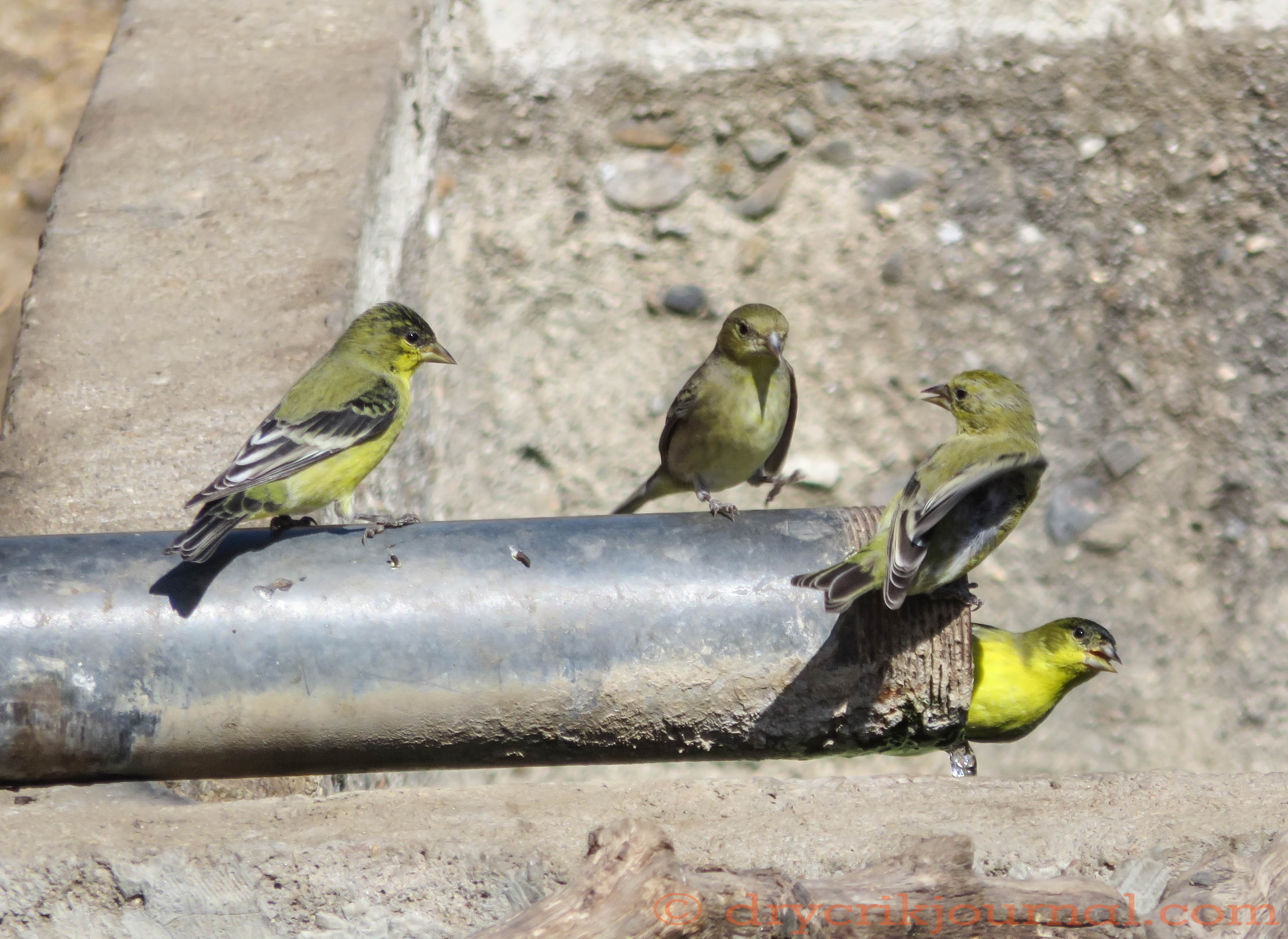
When Terri and I fed last Wednesday, she asked about the yellow birds flying out of the tank that I missed seeing. But when I looked into the tank, a pair of Pine Siskins (Goldfinches in camouflage) flew off a floating board. With the board removed Saturday, the birds have had to improvise. The first and last photos are Goldfinches in winter plumage, Pine Siskins and an unknown in between, but I defer to Avian 101 or other authority to verify the identity of both species.
IMG_0653

Whether domestic or wild, every drop counts.


In response to this link sent to Earl McKee, Jr. for verification, he sent this additional information:

Hello again John,
My father Earl A McKee Sr. started packing the material to build a series of concrete water storage tanks and troughs up into Greasy Cove in 1938, to this old “Greasy Ranch” he had purchased in 1937. At that time he had been in the mule packing business since 1910 and had quite a herd of mules and horses to pack dudes and gear into the Sierras.

Lee Maloy, Jim Kindred, Loren Finch and my Dad did the work moving all the sand material, form lumber and the sacks of cement to each site. There were 5 different sites. The first was Sulphur Spring at the old “Huntley House”. 2 more in the Sulphur Mountain pasture, Ragle Spring and one other up on the south west side of Sulphur Creek Section. The next one was built up on the Oat Ridge field’s North West corner, about a quarter mile North of the Eagle Rock. The last one was built on the East side of Section 9. This watershed was Manikin Creek falling off to the North Fork of the Kaweah River.

When packing the material, sand was the biggest item, because of the volume needed. And because my Dad owned the numbers of mules and outfits, he would use about 20 to 25 head of mules each trip. Most of these spring improvement jobs would load up the mules in a sand bar at Belle Point above Terminus Beach on the Kaweah River. And used the old Greasy Creek to Manikin Flat wagon Road that passed by Spoon Rock.

An interesting side of loading each mule with sand was, as the mules were saddled, first came the mule blanket and pad. Next came a mantie that covered the mule’s body, then came the pack saddle and after he was cinched up the kayaks or rag ends or leather ends were hung on the saddle with card board or wood boxes inside. The mule was then led down into the sand bar and a man on each side tossed sand into the boxes while counting the shovel loads to balance the load till it weighed about 90 lbs. on each side and was tied off and turned loose to wait till they were all loaded. As you can imagine the mantie being placed above the mule blankets allowed for misjudged shovel loads of sand could roll off the mule without getting sand under the saddle blanket and keep it from sore backing the mule.

As the form lumber was packed in, a mortar box with handles on each end and tapered ends to pour, was packed on top of one of the loads to mix the concrete with shovels and a hoe and water buckets. The spring box on the east side of Section 9 was packed in from a sand bar at Ken (Skinny) Savages Ranch on the North Fork of the Kaweah River. And packed by trail up through the Old Craig Thorn Sr. Ranch.

The date of each of these should still have the date of completion marked in the concrete with the three brands of the three registered brands at that time. The year, 1938 the brands were LEE (Lee Maloy); T Triangle (Jim Kindred): Bar O (Earl McKee Sr).

This is about the way it all happened, a long time ago.

All The Best, Earl

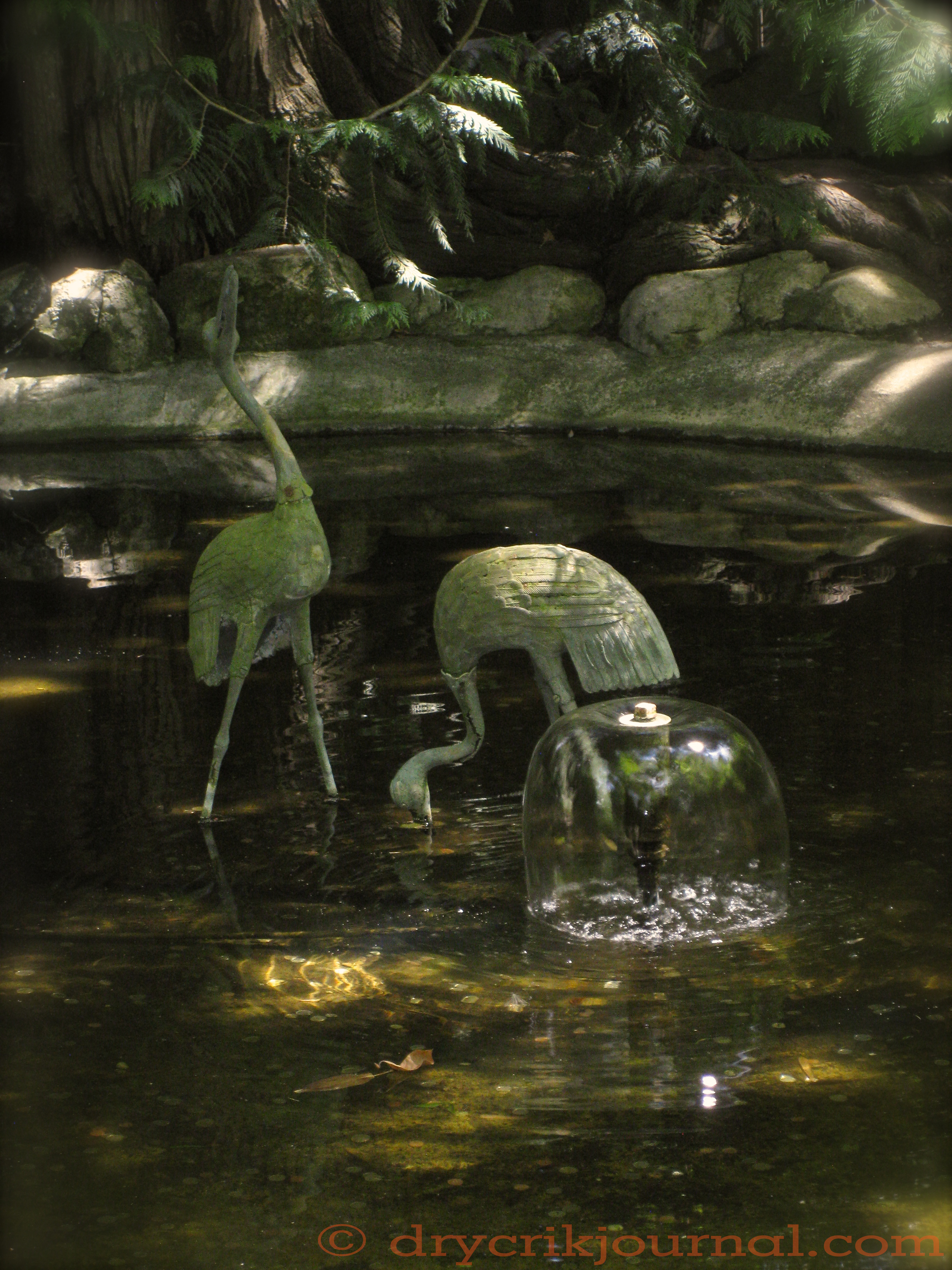
BIRDS IN BRONZE

IMG_3776


An endless dream: art
awakening in mottled light,
coin at its feet.


WPC — “Dreamy”

Calving

IMG_0618


Newborn calves are vulnerable to a variety of predators, so cows instinctively consume the afterbirth after cleaning up the calf as it struggles to stand and nurse. After resting briefly, the calf above (middle) is finding its wobbly legs to nurse again as its concerned mother (2110) looks on. This second-calf mother finds little privacy near our irrigated pasture, as two other curious calves become part of the drama in the Valley Oak shade.

We are extremely pleased with so many early calves on the ground after two dry years of little feed. Calving forty days now, about 60% of our younger cows and 50% of our older cows have calves at their sides. The calves seem bigger and healthier this year that we attribute to all the loads of hay, fed last August through April, while the cows raised last year’s calf. Additionally, when we weaned those calves last May, we sent the marginal and late calving cows to town, reducing our cowherd substantially. In this respect, our cowherd as a whole has benefitted from the drought. Whether or not we can make the reduced numbers work economically remains to be seen, dependent mostly on the weather and our coming grass year.

Clouds and a slight chance of rain are predicted for the middle of next week, but probably not enough to start the grass. Our own thirty-day forecast indicates that we have a fair chance of rain on the 19th and a better chance of rain on the 28th.

Meanwhile, we’re still feeding somewhere everyday, trying to keep the cows in shape to raise their calves and cycle when we put the bulls out in December, hopefully on some green grass that we can’t quite imagine anymore.


WILD GOD

IMG_0547


                         By division we speak, out of wonder.
                              – Wendell Berry (“To Gary Snyder”)

Alone and small within
the Sierra granite, day or night,
I ached for more

than horses and mules
to share the deep
disarming awe at each turn

of the trail, pure snowmelt
reflections of heaven
rippling beneath me,

the infinite blackness,
as I lay down to sleep,
perforated with galaxies

that surrounded me
like lantern light twinkling
off mica-flecked rock.

Perhaps it was that Sabbath
when greenheads rose from the cattails,
drops of water trailing their ascension

and my father’s long pause
to speak beyond religions
that drew me to the wild.


Babysitter

iPhone photo: Teri Drewry

iPhone photo: Terri Drewry

Calving since the 1st of September, we’re always pleased, and relieved, to see our first-calf heifers forming nurseries rather than hiding their calves singly as easier prey to coyotes. I find the babysitter selection process interesting. Oftentimes it seems that the cow with the youngest calf gets the duty because her calf needs the most attention, so while she’s at it, she just as well take care of the other calves at the same time while the other mothers graze. Yesterday, while feeding the heifers with Wagyu X calves, 1038 was under a sycamore tree with a few calves while the others were lined-out on the alfalfa. For whatever reason, she was off her feed and subsequently got the call. Sympathetically, her calf is licking her head.