Tag Archives: feeding

AFTER RAIN

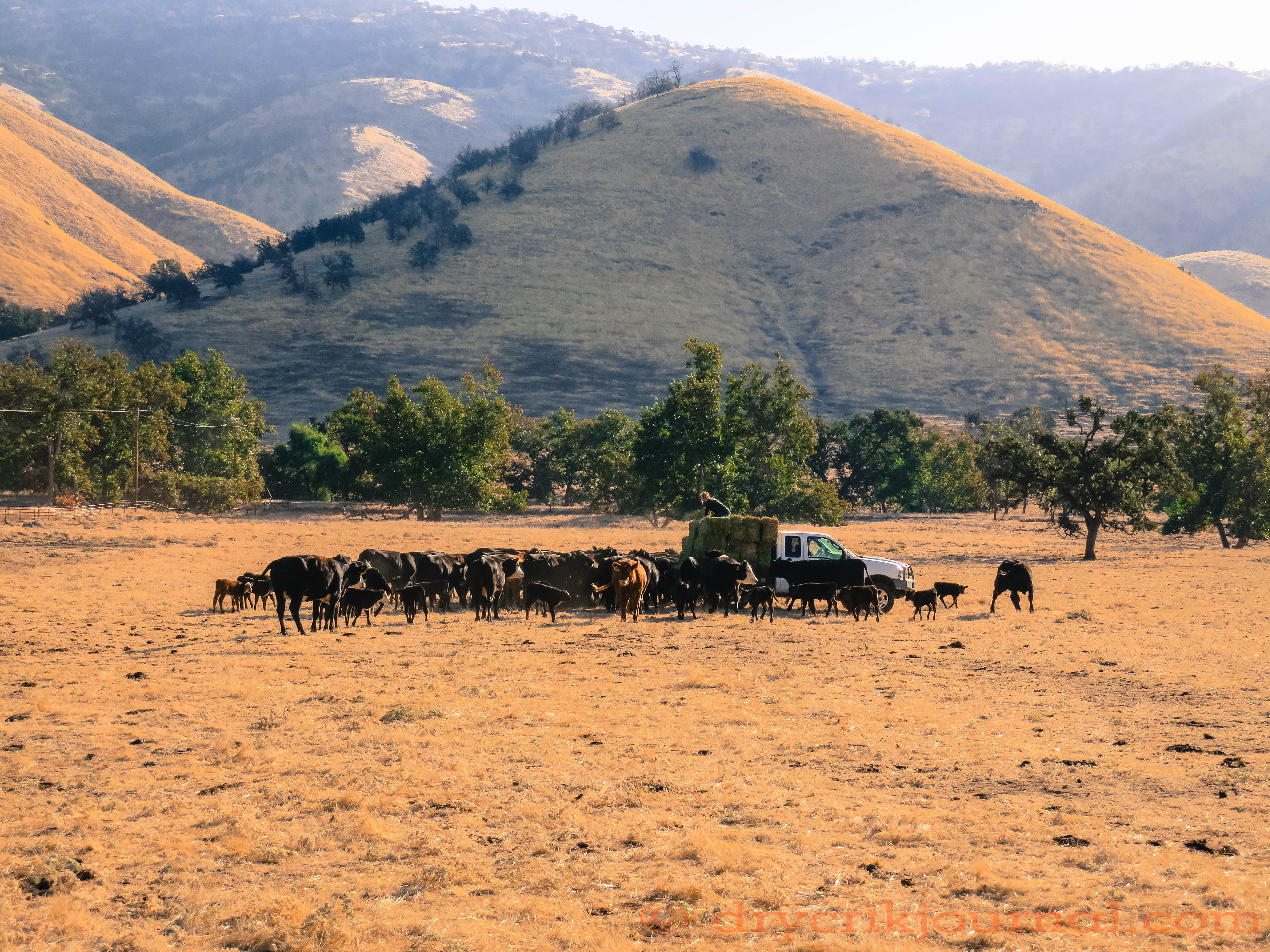
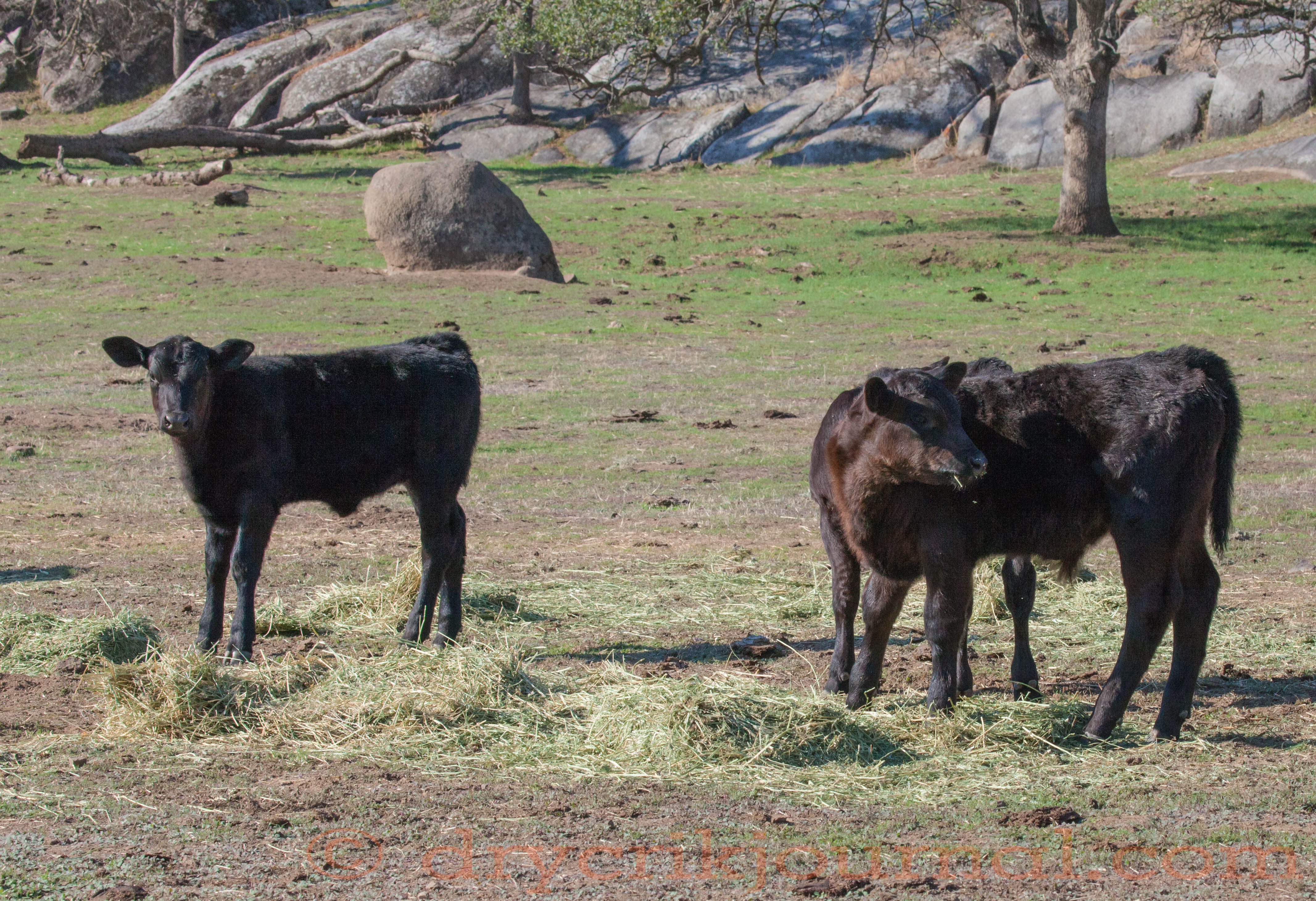
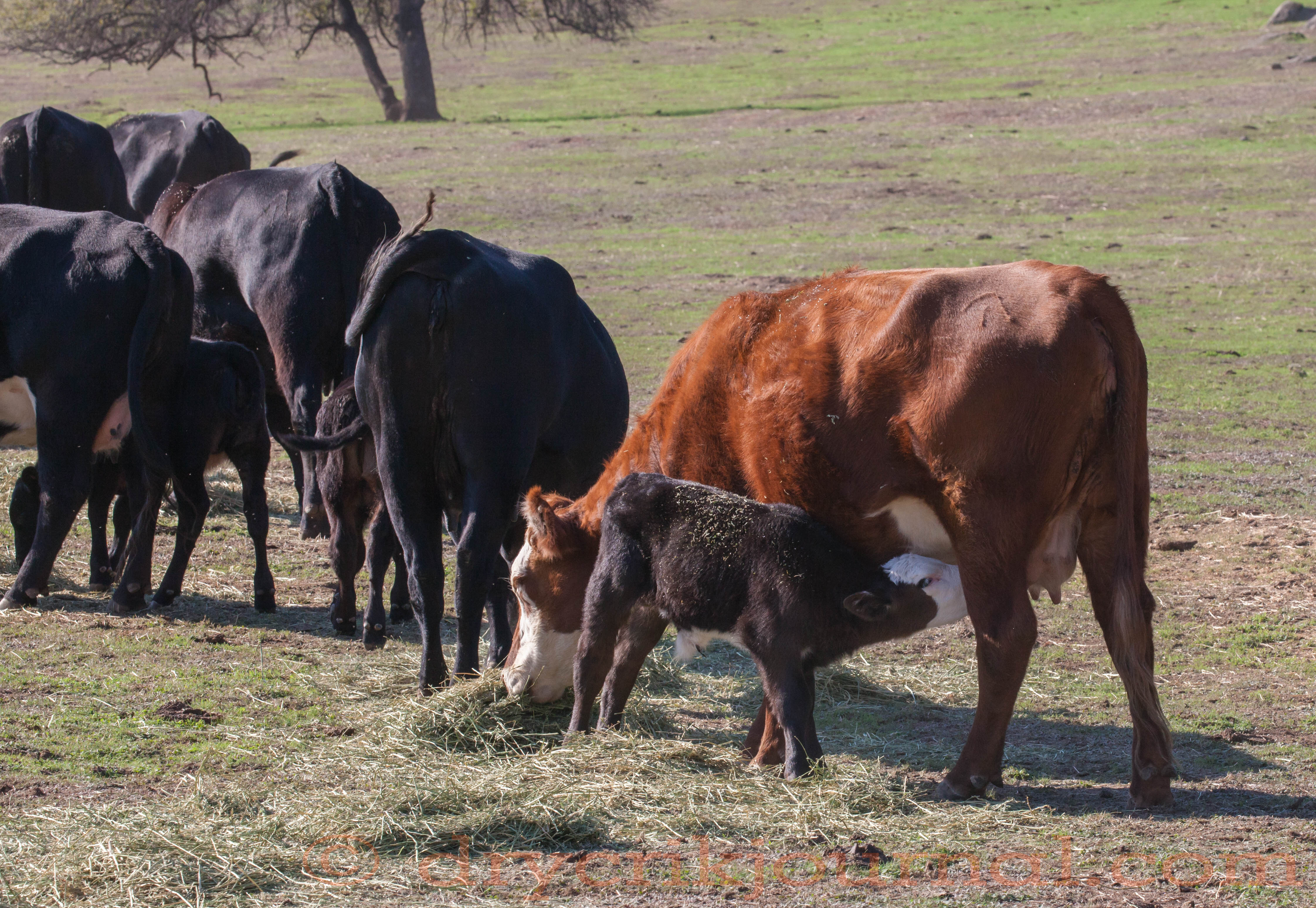
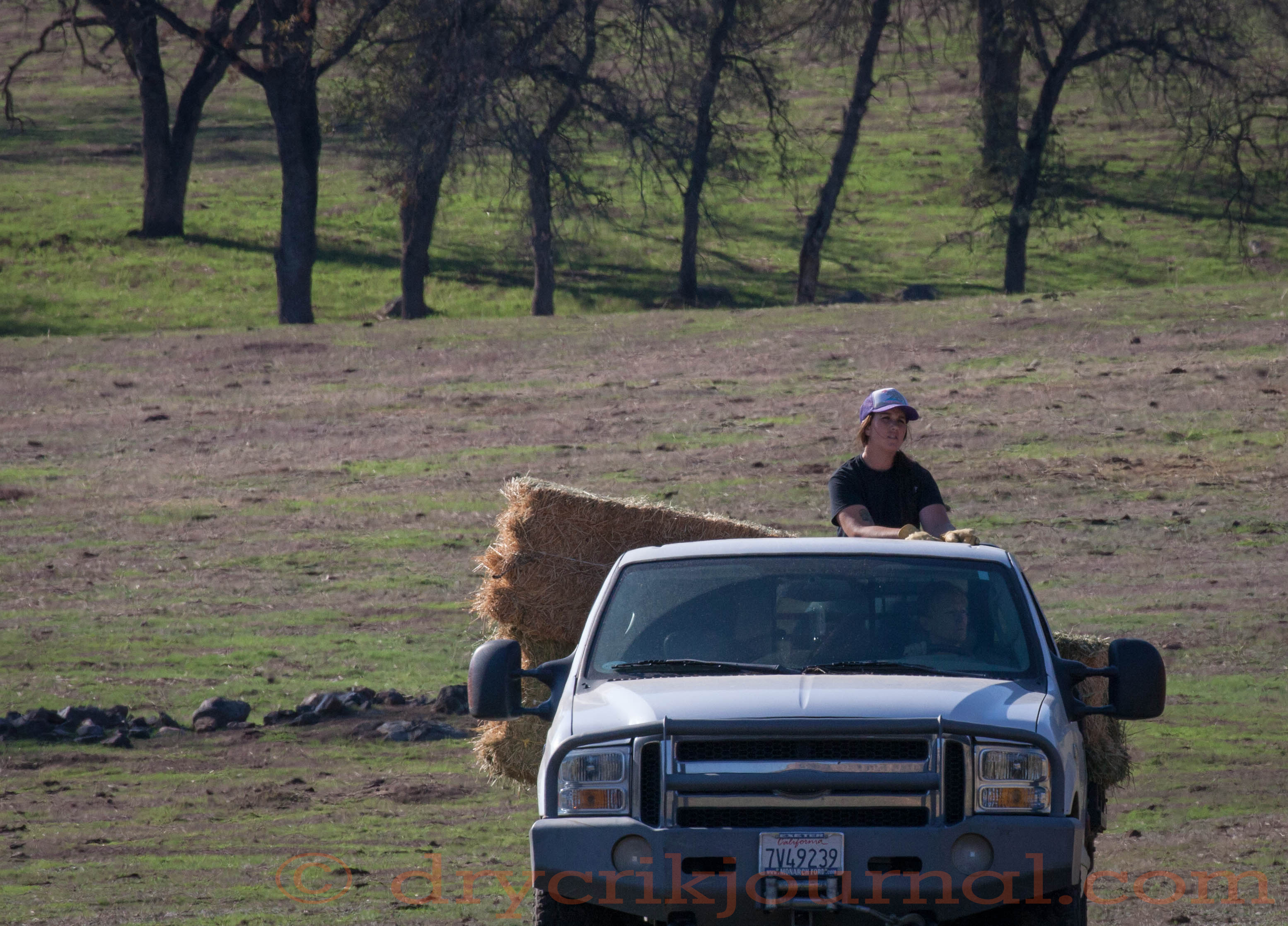
Short of a half-inch of rain, on the cusp of our first northern storm, we’ve been calving for 30 days now and feeding these first and second-calf heifers until the green grass comes. The cows leave their calves in nurseries, though some are old enough to eat hay.

But like children of any age bunched-up and left alone, they look like they’re headed for trouble. Robbin caught their hillarious high jinks while mama’s not looking in the following video.

A great time of year!

ODD PERSPECTIVE

Photo: Allie Fox

It’s that time of year when the cows begin calving, and these two girls were in the bottom of a Ridenhour Canyon when Allie, her sister Katie and the two 1 year-old boys, Asher and Hayes, passed by on the way to check water in Paregien’s. Robbin and I have been checking the first and second calf heifers after they’re fed… and yes, we’re feeding hay too, having just increased the amount to keep up their strength before they calve. We have a few on the ground already, coyotes thick as fleas on a ground squirrel. It’s always exciting, and sometimes disappointing when you lose one.

Naturally, we love this time of year, especially now that the temperature is running in the 90s. It’s our beginning of the year.

Bulls to Water

Our country is dry and short.  We’ve pulled the bulls off the irrigated pasture to make room for our bred heifers due to begin calving by the middle of September.  We will have to feed the bulls in this pasture where Allie and Terri were driving a few to water last week.  Even though we’ve sold 25% of our cows, we continue to step up the amount of hay we’re feeding with no idea of when it will end or whether it will pay for itself in the long run.  But if we have to sell more cows, we just don’t want them to be thin.    

Drought of 2020-21

Even though I haven’t been in the mood to post anything, I would be remiss not to journal one of the worst drought years in my lifetime, less rainfall (6.19”) than we received in 2013-14 (7.78”) during our 4-year drought of 2012-2016.  After feeding hay all summer long into the fall in 2013, we finally had to sell half of our cowherd in 2015.

Currently, all that our steep hillsides have to offer is a short blond fuzz of dry grass that will soon be dust.  I remember the drought of ’77 when the cows licked the grass seed to augment what hay we fed them.  Knowing what’s ahead, we’ve begun gathering to wean early and have already sent a bunch of good cows to the kill plant, many of which had calves in their bellies. Due to the lack of snow in the Sierras, there’s little irrigation water to grow hay and the price is high, while cows aren’t bringing much money. Furthermore, stockwater from our natural springs in the upper country will be in short supply by fall——a perfect storm.

As we cull our cowherd, we’re focusing on a young nucleus as we realize that we’ll not get the money we’ll spend on hay this year with next year’s calf crop. Nevertheless, we’re plodding ahead: leaning forward as we take another step and praying for early rains this fall.

DINNER


No rare, sixteen-ounce
Chile Verde Rib Eye
leftovers to box for home,
 
no Iceberg Old School
wedge with Blue Cheese 
crumbles, no red wine
 
bottle at twice the price
to finish before leaving
town—no spoiling us
these Covid days,
 
though we tire
of our own cooking,
of feeding hay without rain.
 
Bare acres, not a spear 
of feed half-way 
up the mountain,
 
these good cows wait 
with their calves
at the gate for dinner.

November


I’ll not forget the dust clouds boiling out of the canyons when the cattle came to hay in November of 2012 through 2016, while we fed and begged for rain, then had to sell half the cows. Nor will I forget last year’s too much rain, more disruptive to our operation than the four years of drought, unable to get to the bulk of our cattle in the high ground to brand our calves. Then sometime late last spring when the slick calves were approaching 600 pounds, exclaiming to anyone who might listen, ‘all we want is something close to normal’.

Though we’ve made significant advances in the cattle business in the past four decades with bigger and better quality calves and broodstock, the ground stays the same and has endured the ever-present variables of the weather and most of our mistakes. Glacial evidence in the canyon helps reinforce its permanence and durability, the one element in this enterprise that we can depend on.

We normally feed the young cows in the fall when the calves come, concurrently scanning the long-range forecasts for rain to start the grass and give us and the feed truck some relief. And after watching recent promises of an inch or more disintegrate before our eyes with nothing forecast into the future, and while seriously considering petitioning the gods for a little moisture, it’s beginning to feel normal, or close to normal, or so we hope and carry on just the same.


LATE OCTOBER


20151029-IMG_5165


Dry green for breakfast
among Halloween shadows—
who comes and who goes?


Present and Accounted For


20151029-IMG_5162


It’s been hard for me to accept that I’ve worn my body out, always able to do any job on the ranch, feeling secure with the strength of my arms, back and legs. I’ve been lucky, but my knees, among other things, are gone. In the past 45 years, I’ve probably handled, loaded and fed, 15,000 tons of hay with Robbin’s help, but looking back, it was the 500 tons in 2013 that did the real damage.

It’s been a blessing having Lee Loverin and Terri Blanke feed for the past two seasons, as well as fix and build fence, help gather and work our cattle. They know the ranch and our routine and take it seriously.

Cropped and shot with a Canon 100-400mm zoom, I should have known the girls were separately counting cows and calves to make sure everyone was present and accounted for—it’s part of our job when we feed. But at 300 yards away, I took the photo for a different aesthetic. With the photo enlarged, imagine my pride, and my relief, knowing the girls are getting the job done right, and that the ranch can get along fine without me being a part of every single thing. Now that’s a treat.


Weekly Photo Challenge (2): “Treat”


A Real Treat


20151029-IMG_5180


Enough rain to give the grass a good start in most places, we’re still feeding hay, a treat for these second calvers close to the house. We were especially glad to see this calf on the ground, its mother spending most of the month of August uncomfortably in pain, having difficulty walking with slow, short strides to hay and the water trough. A week or two before it was born, the calf must have shifted within her, as she began getting around again as if nothing was ever wrong.

Ambushed by her calf while on the alfalfa yesterday, this mottled-face Hereford is becoming a little rough-haired, showing the effects of raising a calf. If the calf were thin, we might be concerned and increase the hay, but right now she’s giving all to her calf, taking better care of it than herself—the kind of mothers we want.

The bare south and west slopes struggle as they have dried out since our first good rain on the 18th, but all the weathermen promise another good storm for Monday and Tuesday. With a little luck, we’re near the end of feeding hay as the cows move up into the hills for fresh green grass—a real treat for everyone.


Weekly Photo Challenge (1): “Treat”


ATTAGIRLS!


20150929-IMG_4348


It looks like Terri and Lee were having too much fun yesterday loading the hay truck before heading up into Greasy to check the cattle and stockwater. We’re feeding somewhere everyday as the calves come, giving the cows a little extra as they raise new calves, while also trying to keep the cows in shape so they’ll cycle and breed back in December. Hopefully we’ll get some rain and green grass before then.

Rather than let the cows get thin before starting to feed, we feel it’s easier to keep the flesh on and more economic to start feeding early. While making our circles to monitor our stockwater, we began taking hay in early August, gradually increasing the amount to where we’re feeding full time now until the grass comes.

With more dry feed and less cows in our upper country, we make the 4-wheel drive trek to Greasy and the Paregien Ranch once a week, while feeding our younger cows down low three times a week. Stockwater in our upper country is more tentative and needs to be checked regularly.

Robbin and I were waiting to load the Kubota to feed another bunch as the girls were tossing 130 pound bales around. We followed behind them later and managed to see all the cows, calves and replacement heifers on the east side of Dry Creek, very pleased with all we saw.