Tag Archives: cows

FIRST WAGYU X


20160917-a40a1921


One would think that after 46 years of calving first-calf heifers, we’d be more relaxed about such a natural process where maternal instincts usually insure a successful calf crop. But I confess our anxiety is high this time of year, perhaps in part because we’ve seen all different kinds of failures from coyote kill to breach births to heifers more social than maternal who leave their calves alone too long to gossip with the other girls.

This morning before checking the first-calf heifers bred to Wagyu bulls, I drove up the road to see two coyotes taking turns trying to hamstring a brand new Angus calf belonging to one of the third-calf cows who was nowhere around. My shot that missed sent them off in different directions, but they’ll be back. While checking the calf, its mother showed up, looking to take me as I rolled it over to make sure it was OK.

Not far away, a first-calf heifer across the fence was down in labor, two feet showing when she stood up. I left her to check the rest of the first-calf heifers. About an hour later I returned as 5176 was licking off our first Wagyu X calf of the season.

 

THIRD CALF


20160904-a40a1837


She knows now,
how to be a mother—
shield innocence

with shadow
and sharp eye,
give meaning

to the soft talk
that reverberates
with familiarity

upon each breath,
the language of cows:
the umbilical stretched

from the warm womb
to grow and graze
a dry and brittle world.

Born in a drought,
she can be a mother
in any kind of weather.


GIRLS ON GREEN


20160821-a40a1673


Heads down, our future grazes green
on the edge of time, on ground
the river met with Dry Creek—

all the round cobbles mined
to build the county seat gone wild
with willows and cottonwoods,

natives claiming space we named
between the Kaweah and Wutchumna
Hill. Nothing is the same for us

or them as they mature to become cows.
Heads down, it is easy to forget
to look up at where we’ve come from.


Weekly Photo Challenge: ‘Edge’


Our Future


20160717-IMG_2577


According to my records, we’ve only had two days since the Solstice under 100°, but the mornings have been fairly cool from first light until 9:00 a.m. This morning was no exception, simply a beautiful Sabbath.

We’ve kept our replacement heifers close to the corrals since they were weaned in May and June, waiting for their Bangs vaccination for Brucellosis and second round of shots, deworming and fly control that has entailed pumping water daily. We’ve had a lot of eye problems due to foxtails and some foot rot due to bacteria encouraged by the wet spring. Having them close by has helped us gather for doctoring.

We think this year’s heifers are exceptional, both in genetics and temperament. They have gotten to know the Kubota since they were calves, and then again when it brought hay everyday to the weaning pen. So we utilize the Kubota when we gather—they come to it naturally.

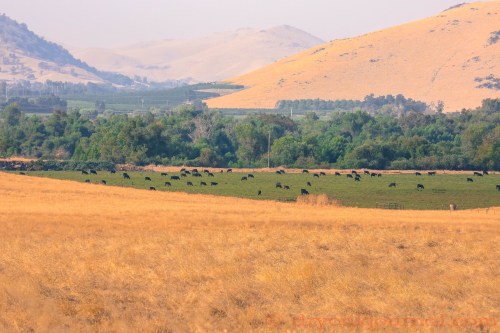
Saturday, after Friday’s processing, I led the bunch off the dry feed and irrigated pasture, fed some hay, ready to open them to 300 more acres of dry feed and another source of water, our irrigation pond. By this morning, they were exploring the shore of the pond when I arrived to see how they were doing. Naturally, they all gravitated to the Kubota to discover tall, untouched green feed in the spillway of the pond where excess water flows back into the Kaweah River.

Followers of this blog know it’s all about the girls, our prejudice for females—after all we are a cow/calf outfit. Though we were quite pleased with our steers, it’s not about bragging rights as to how big or nice they were in the sales ring—just an annual dividend, they pay our bills. It’s about the girls, two-thirds of which, with a little luck, will be with us for ten years. They become our future.

A40A1286-2


IN A STORM


Four dry cows: two old,
one young and one
whose calf came too early

run together
apart from nurseries
and nosey calves—

four girls content
to be not seen or found
on vacation

in a far corner
of a thousand acres
with water and grass—

hear the diesel purr
and goosenecks rumble
with horses pass

and pretend to be
invisibly still within
an army of oak trees.

They have no calves
to brand, no reason
to be included

and refuse to go easily—
split and make the girls
cowboy-up, leap

brush and rock
and cuss like sailors
in a storm.

                         for Robbin and Terri


GRAZING AND CUD


20151107-IMG_5268


The old cows know
grazing and cud,
how to a hold a thought

in the shade, how to
let it linger and settle
beneath certain trees,

earth stirred into beds
of moldy leaves.
The scent left

floats to revisit
when grazing’s done.
No secret place,

no special remedy
but time—time
among the grasses.


Ranch Journal: November 8, 2015


20151107-IMG_5275

A crisp and beautiful Sunday ahead of a storm, Robbin and I checked the cows and calves in Greasy, as well as the condition of our grass and water after the 1.5” of rain last week. We hauled a Kubota-load of extra hay up the hill for the cows in Section 17, most all with early calves.


20151107-IMG_5252

Not all came in to hay: 6 cows choosing to stay atop the ridge, telling us what we came to find out. A few cows with larger calves show normal stress, but it’s a great start to a new season.

Though numbers are down substantially, cows were scattered everywhere we went, our stockwater ponds all holding some water now. With over 4 inches of rain to date, almost half of the rainfall we got during the whole of the 2013-14 season, and over a third of last season by the first week in November, we’re in disbelief, happy and relived.


20151108-IMG_5279


A Real Treat


20151029-IMG_5180


Enough rain to give the grass a good start in most places, we’re still feeding hay, a treat for these second calvers close to the house. We were especially glad to see this calf on the ground, its mother spending most of the month of August uncomfortably in pain, having difficulty walking with slow, short strides to hay and the water trough. A week or two before it was born, the calf must have shifted within her, as she began getting around again as if nothing was ever wrong.

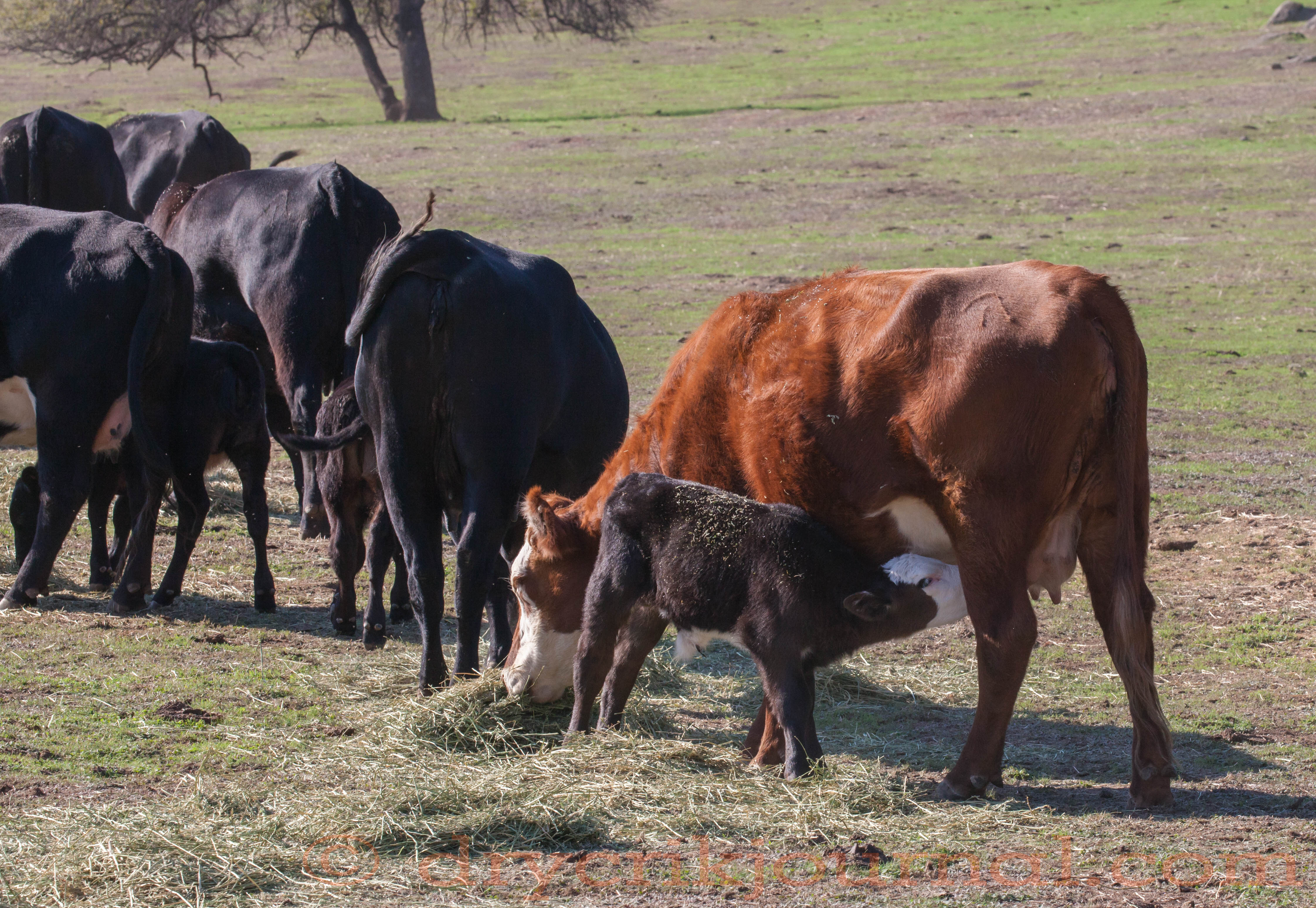
Ambushed by her calf while on the alfalfa yesterday, this mottled-face Hereford is becoming a little rough-haired, showing the effects of raising a calf. If the calf were thin, we might be concerned and increase the hay, but right now she’s giving all to her calf, taking better care of it than herself—the kind of mothers we want.

The bare south and west slopes struggle as they have dried out since our first good rain on the 18th, but all the weathermen promise another good storm for Monday and Tuesday. With a little luck, we’re near the end of feeding hay as the cows move up into the hills for fresh green grass—a real treat for everyone.


Weekly Photo Challenge (1): “Treat”


Changes


20151025-IMG_5139
 

We are savoring the seasonal changes since the spectacular light show and rain on the 18th. The grass grows quickly in places with temperatures in the low 80s during the day and 50s at night. With softer ground and cooler weather, the cows have moved up the hill and to the ridges for fresh green grass, leaving their calves behind in the flats where we’ve been feeding hay since they were born.

Expecting dinner, there was quite a bit of confusion among the calves Sunday evening when the cows weren’t home on time, still high on the hill filling up before dark. Despite their instinctual training to stay where they last sucked, the calves went looking for their mothers in the only geography they knew. Robbin and I couldn’t contain our laughter as the chorus of plaintive bawls on either side of the house became overly urgent and dramatic—and just as humorous when the worried cows returned to finally find and chastise their offspring in strident tones.

Now a month or so old and growing, the calves have become more independent, running and bucking ahead of the plodding cows to the water trough at dawn, butting heads as they emulate their mothers, some of whom have begun to cycle. A sign of good health, it will be six weeks yet before we put the bulls out.

After four years of drought and a long hot summer, we welcome the changes, and as always this time of year, we wait for a little moisture to freshen-up the new grass on our bare west and south slopes as the clay dries out without the protection of old feed. I had to cut a load of dead Manzanita yesterday to celebrate all these welcome changes.


BEARS


20150929-IMG_4938


While calving, our cows are well aware of the recent influx of bears, displaced in part by the 150,000 acre Rough Fire in Kings Canyon, but primarily due to the drought and the lack of anything to eat at the higher elevations. Furthermore, there’s not much here to eat either, as only one in three or four hundred oak trees has any acorns and the percentage of oak trees that have died because of the lack of rainfall the past four years continues to increase and probably approaches 40% now. The remainder have lost most of their leaves, but there’s bear sign everywhere we go.

On Monday on my way to pump water at the Paregien Ranch, I found the mothers of these two calves high in Ridenhour Canyon, taking turns going to water while the other babysat. Though I didn’t see the calves on the way up, I knew the cows had been sucked. When I came down a few hours later, I found the cows and calves had moved to the top of a ridge. Both were well hidden and only a day or so old.

Most cows sort themselves before calving, as the ones close to calving begin running together apart from the bunch as they prepare their nurseries ahead of time. We’ve lost calves to bears in the past, but usually those of first-calf mothers. Older cows, or cows together, can bluff most bears, but with so little to eat in the middle of calving there are no guarantees. Bears will eat anything, and older bears unable to rummage for food begin to acquire a taste for veal.

Yesterday, on my way up to work on a trough, I found the same two cows together higher yet in the pasture, making their steep round trip to water to close to a mile. Once again, I didn’t see the two calves until I came off the mountain.