On the way to water, she’s learned
to like mustard seed in August,
lives up the dry creek bed alone.

On the way to water, she’s learned
to like mustard seed in August,
lives up the dry creek bed alone.

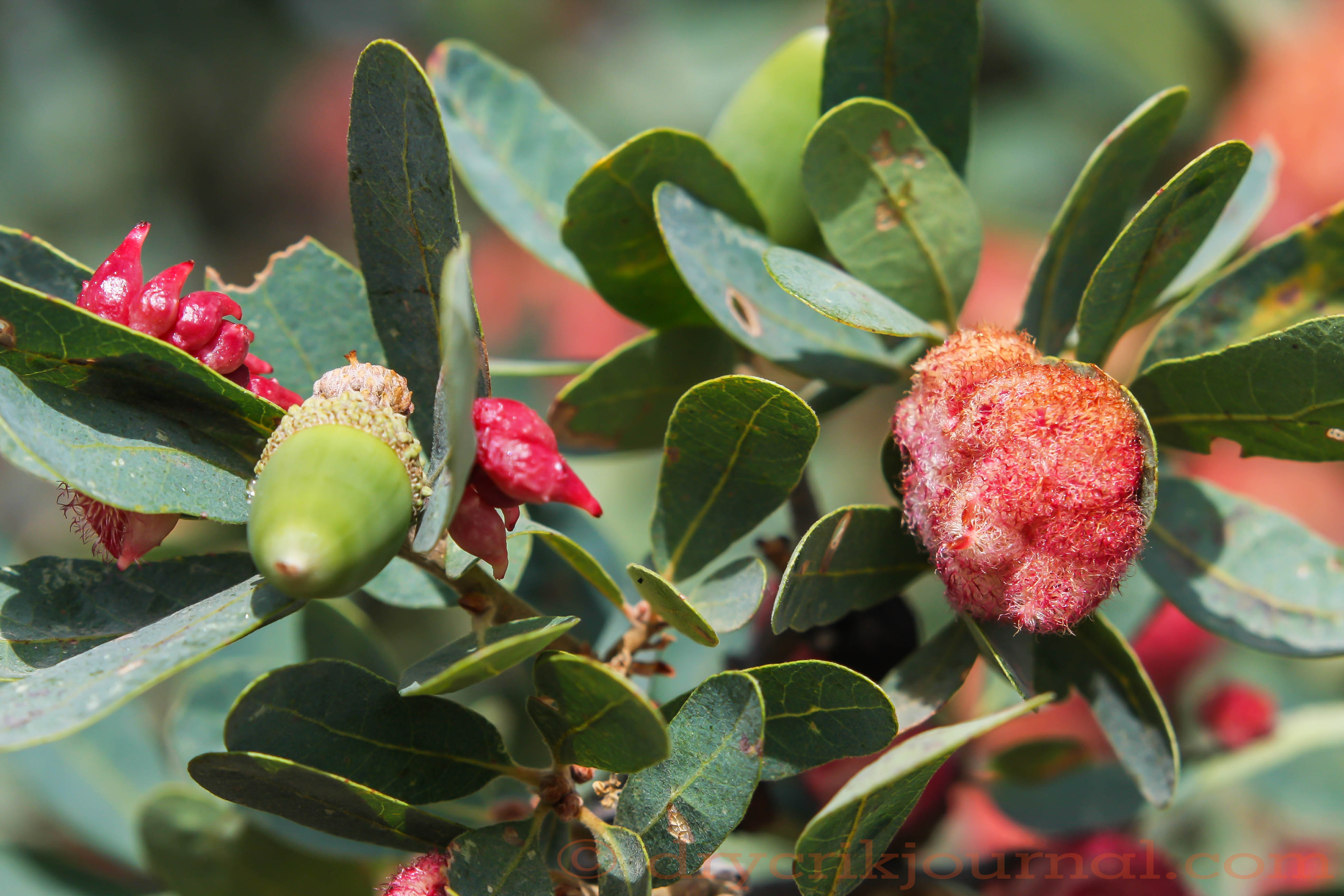
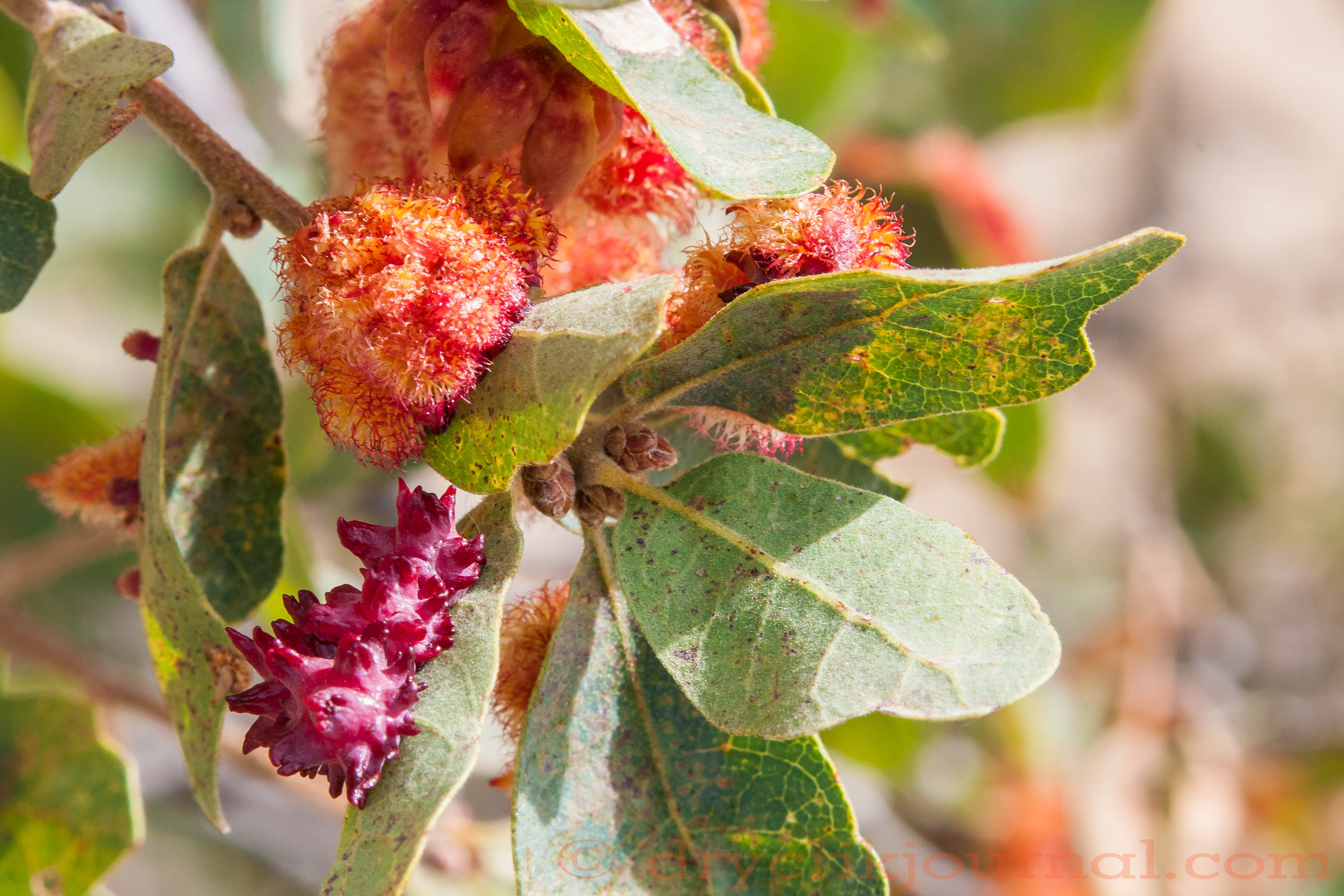
Several Blue Oaks (Quercus douglasii) at the 2,200′ elevation were covered with these galls, ranging in color from rosy red to orange. There are over a dozen different kinds of oak galls, but I’d never seen these before. After a cursory search of the Internet, I’ve identified them as Wool Sower Galls. We have been concerned about the current drought’s impact on the Live and Blue Oaks on the ranch, killing a conservative 10-15%, though we have stands of 10-20 acres that are only leafless skeletons.
Exerts from Glenn Keator’s “The Life of an Oak”, (1998 Heyday Books) is fascinating reading: Whether galls harm oaks is uncertain; their prominence on weak trees suggests that possibility, although most studies don’t implicate galls in the death of oaks. This notwithstanding, heavy infestations may further weaken trees that are already stressed.
One highly specialized group of insects–the cynipid wasps (family Cynipidae)–is responsible for the majority of oak galls. White oaks host the greatest numbers of gall species. And among the white oaks, Quercus douglasii, the California foothill species called blue oak, harbors the most lavish diversity of them all.
Life for a cynipid begins as an egg laid in the young, active meristematic tissues of twigs, buds, leaves, or flowers. Meristems, where cells actively divide to add new growth. Because the newly formed cells have not yet taken on any specialized mature form–they do that later–they are able to accept new “programming.” This is what the cynipid hosts provide.
Some researchers have even gone so far as to suggest that there be actual bits of DNA from viruses in the larvae’s saliva. Viral DNA can replace the genetic machinery of host cells, completely reprogramming them and their activities, though how and why these viruses would have entered into such a specific relationship with the larvae is not clear.
My photos below suggest the Wool Sower Gall evolves from a small red growth that explodes into a hard, wooly-looking gall. It should be noted that these blue oaks are relatively healthy, especially compared to the many around them already losing leaves. It should also be noted that we haven’t seen many acorns for the past three years with the exception of these trees this year. I’ll try to keep track of these oaks and galls going forward, but any more info would be appreciated.

Weekly Photo Challenge (3): “Inspiration”
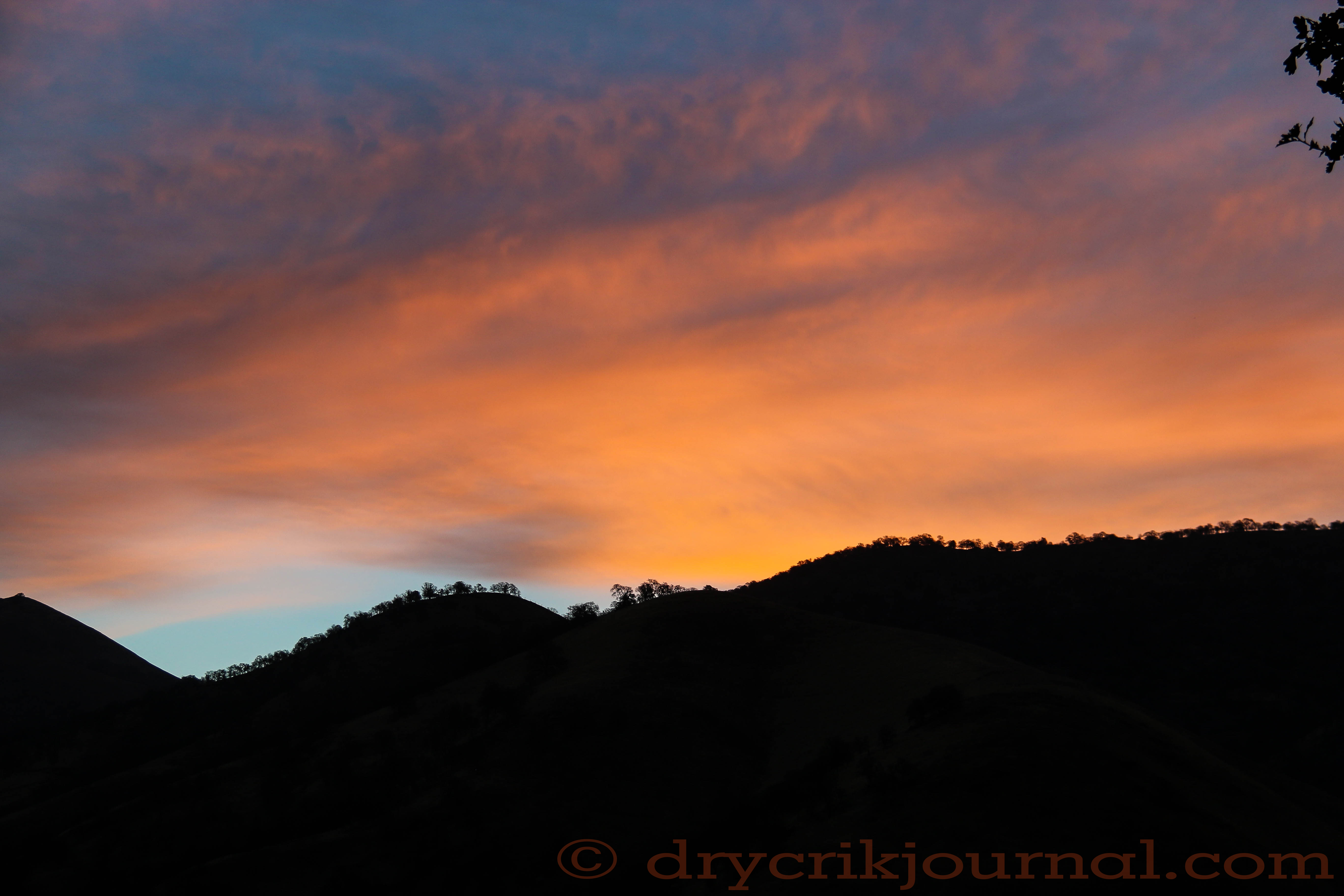
Some readers of this blog know that August is our weather indicator month for the following three months, 30-day cycles that presumably will intensify into winter when another ninety-day cycle sets up. We track our indicators and wait for confirmation in September, and hopefully storms in October.
Check out the link for current details for weather and fires in California, and a weekend forecast for Northern California.

Hens of summer
from under cover
grazing irrigated green—
man,
bird,
and beast
making ample livings
at first light—
no need for greed.
Posted in Photographs, Poems 2015, Ranch Journal
Tagged irrigated pasture, making a living, turkeys
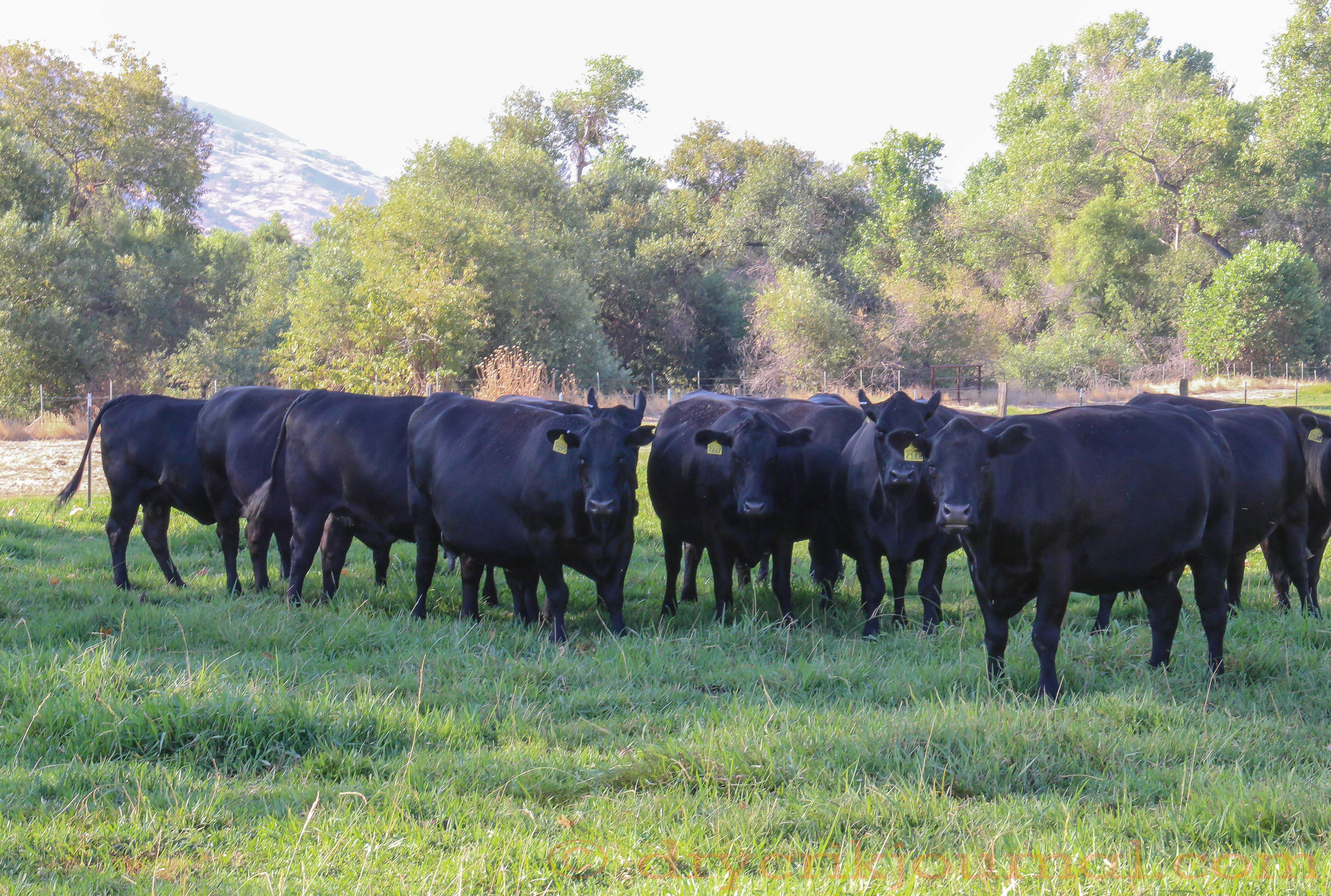
Thirty days away from their third calf, these girls gathered in the shade are watching me change the irrigation water on the pasture. Bred to Vintage Angus bulls, we’re excited about their calves, though a bit dismayed that it’s that time of year again. On a normal year, they would be on dry feed in the hills, but with little water at the higher elevations, we’ve kept them closer to home.
Posted in Photographs, Ranch Journal

On August 18, 2013, unusual high winds left this tree in a tangle of fallen limbs. DCJ file A landmark and reference point as we gather cattle, we sadly wrote it off as a permanent casualty of the weather, but despite the drought and its hopeless state, it perseveres and remains alive.
Weekly Photo Challenge (2): “Inspiration”

My shy fisherman
craves his place in time and space
just for reflection.


I got out early this a.m. to feed the bulls and change my irrigation water, bringing my camera along to take advantage of the early fall light. A few good photographs to draw upon this coming week for the blog. The Sparrow Hawks were busy this morning, but tricky photographing. Automatic focus is a must as I tried to capture this one in hover mode with my 400 mm lens. I couldn’t help but think of our constant commenter and falconer, Richard, as I was photographing, and include these enlarged (and slightly fuzzy) photos for him.

Weekly Photo Challenge (1): “Inspiration”
Posted in Photographs, Ranch Journal
Tagged Kestrel, Sparrow Hawk, weekly-photo-challenge

Under monsoonal cloud cover and smoke from a fire on the North Fork of the Kaweah yesterday, the girls and I picked wild blackberries this morning after we got our chores done.
Posted in Photographs, Ranch Journal

One hundred ten degrees,
a kestrel lights where water sprays
the onion bed and bathes—
then soon its mate,
or so it seems at a distance
in the fuzzy heat.
Now in the morning black
my desk lamp brings
gnats to the window glass,
and tree frogs on a slick,
perpendicular hunt, vying
for positioning, carefully
lifting one foot at a time.
I imagine now the herd
of tree frogs seeking cover
at the kestrels’ landing,
great hops into the thick
onion stems and berry vines
dripping with wonder:
new habits on a timer
every summer evening at six.