Category Archives: Ranch Journal

GIRLS ON GREEN


20160821-a40a1673


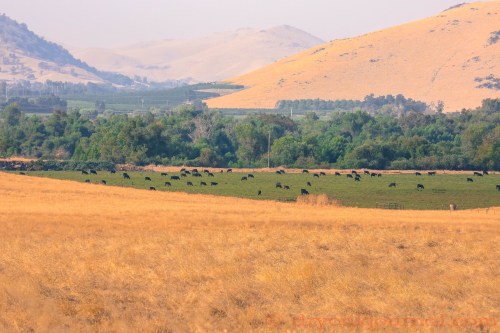
Heads down, our future grazes green
on the edge of time, on ground
the river met with Dry Creek—

all the round cobbles mined
to build the county seat gone wild
with willows and cottonwoods,

natives claiming space we named
between the Kaweah and Wutchumna
Hill. Nothing is the same for us

or them as they mature to become cows.
Heads down, it is easy to forget
to look up at where we’ve come from.


Weekly Photo Challenge: ‘Edge’


New Year


20160904-a40a1824


Try as we might to push our calving date back two weeks to avoid the first of September heat, the bulls would hear nothing of it, repeatedly visiting our neighbor’s virgin heifers intended for Wagyu bulls. Also, we were under the influence of Big El Niño prognostications, wet weather for the first half of December that could hamper hauling the bulls up the hill to our older cows. With the stars and daylight hours aligned with our bulls’ internal clocks, we opted to let them go to work rather than having to bring them home and fixing fence everyday.

Nine months later, our own internal calendars click to new beginnings as the calves come, a new season and new year as we begin to leave summer behind and wait for the first rains to start the green feed, that unpredictable time of year when we harvest grass with cows to raise another crop of calves. Welcoming the shorter days, we’re saddled-up and ready, looking forward to another wild ride.


20160904-a40a1834


Another Ibis


20160903-A40A1812


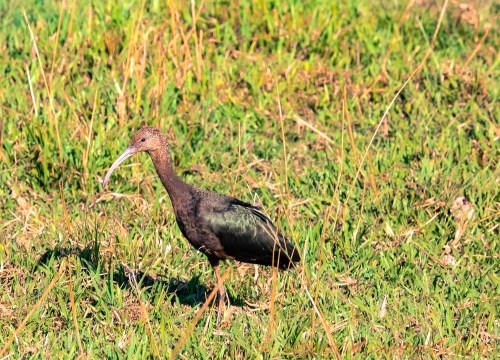
While checking the replacement heifers on the irrigated pasture yesterday morning, I almost ran over this Ibis in the Kubota, looking at cattle instead of where I was going. In July 2015, I photographed a Glossy Ibis on the shore of our irrigation pond.

Fairly tame birds, we must be on their migration route.


First Calf


20160831-IMG_0026


Age and source verification:
August 31, 2016. Bull calf.
Cow tag: 1104. Sire: Mrnak 119.


Water Leaks


20160828-A40A1749


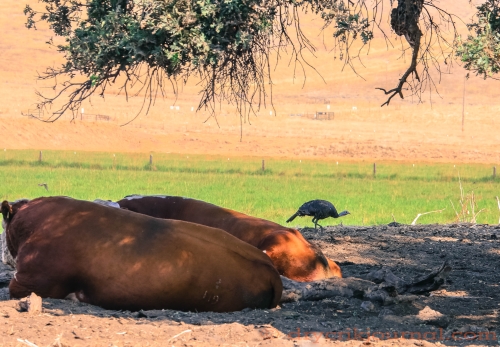
It’s difficult to find a ranch without a water leak somewhere, usually around a trough. In the instance above, our 5,000-gallon tank has settled since we last repaired and changed the PVC fittings a number of years ago while the tank was empty. Anticipating settling when full, 40,000 pounds, we installed a compression fitting or dayton on our water line to allow the PVC pipe ends to slide closer together. Additionally, our conduit for the wire between the solar control panel and the float in the tank was in the same trench as our water fill and discharge line. The settling cracked the conduit and subsequently carried water from the leaky tank plumbing to the base of our solar panels creating another nasty bog.

This summer, our little rafter of turkeys have included the two leaks in their daily travels, drinking and finding bugs and grubs that wouldn’t otherwise be available. Because of the leaks, I’ve had to augment the solar pump with a generator and submersible pump to fill the tank once a day.

I’ve long rationalized that little leaks are not a waste of water, creating some green grass and making puddles for birds, rabbits and other small wildlife that often end up drowned and floating in our water troughs. Fishing the carcasses out can be an unpleasant chore.

Unable to responsibly procrastinate any longer, we set out early Tuesday morning knowing we had some muddy shovel work ahead. After several hours, we uncovered and loosened the dayton, fixed the conduit, repairing what was no little leak. If we’ve done our job well, the turkeys will have to drink elsewhere without the appetizers.


Clean Water


20160828-A40A1764


A dry year, ‘1947’ is etched in the concrete next to my father’s name—one of two round water troughs, hand-mixed and poured into forms that were borrowed from Jim Pogue’s Rocky Hill cattle operation. Dry Creek quit running on June 3rd this year and won’t begin again until the rains come. With about fifty troughs on this ranch, most spring fed, every living thing, wild or domestic, knows where at least one of them is located.


First Light


20160828-A40A1698


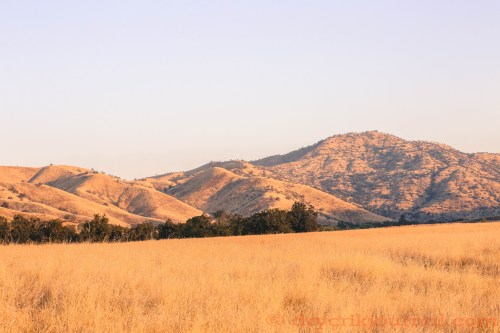
Our rainfall fared better than the Coast Range and Southern California last season (October through April), breaking a four-year drought for the Southern Sierra Nevada foothills with some good spring rains that have left us a legacy of ample dry feed as we approach the fall. The sun was just breaking the ridge (to the right of the photo) this morning, the base of Davis Mountain and Dry Creek still in shadow.

Followers of this blog know that August is our indicator month, a thirty-day cycle yet to be confirmed in September, as a layman’s forecast of our weather in October and November, the beginning of our rainy season. As the Emperor Grape season often went well into October, my father depended on this approach for getting his grapes picked before the rains.

From the Solstice to August 25th, we’ve had only three days here with highs below 100°— warmer than average, though I suspect our morning lows have been cooler than average. Discounting monsoonal flows that were nearly nonexistent this summer, we are now experiencing our first indication of a weather change. A cursory look at our weather journal, yet to be confirmed in September, indicates a fairly stable pattern with little rain. The Old Farmer’s Almanac and other early prognostications call for a drier than normal fall and winter that may translate into a trend towards more dry times.

Climate Change has become a political argument stretched to unreasonable extremes, but from our vantage point, hot and dry are the current reality, regardless of causes, that we must live with and adapt to in this business. The much-ballyhooed El Niño failed to relieve much of California, defying all weather models. Assuming the extreme weather conditions all over the planet, that have impacted more than just agricultural interests, have also defied most patterns, I’m guessing a whole new set of computer models are being developed.

We are engaged in a weather-dependent way of life we call a business, and console ourselves by conferring a feminine gender to our weather, repeating our mantra, often in awe, by saying “she can do whatever she wants, whenever she wants.” With the bulk of summer behind us, we have enjoyed pleasant evenings and mornings for most of August.


SHARING SHADE


20160813-A40A1533


Too much in the sun
by early morning, tiptoe—
don’t wake the big boys!


Cooling Down


20160814-A40A1605


Though warm temperatures persist, the days are noticeably shorter as the sun slides south down the ridge before it rises a little later each morning. We’re a couple of weeks to 30 days away from calving, depending on when we put the bulls out, trying last winter to keep our newborns out of September 1st heat by turning the bulls out two weeks later.

But to tweak our program slightly requires more than agreement between Robbin and I. The bulls have their own calendar, and we only wire fences to enforce our management decisions. Around Thanksgiving of last year, the bulls were ready to go to work. We were retrieving bulls and fixing fences daily, so we had to put a few out around the first of December to keep them away from the neighbor’s heifers that were to be bred to Wagyu bulls.

At 8:00 a.m., this Mark Beck bull cools down before retreating to oak tree shade.


DOYLES SPRINGS, 1951


20160807-IMG_5661


Outside, the Maytag
wringer-washer chugged with diapers
to be hung on a rope line

from cedar to pine.
Inside, you could see out
through bat and board cracks

after the war and Relocation Camps
your family had come from,
you but a child holding my hand

afraid to let go
when the buzzing began
coiled on a rock.

You ran as fast as you could drag me
down a trail you don’t quite remember
sixty-five years later.

* * *

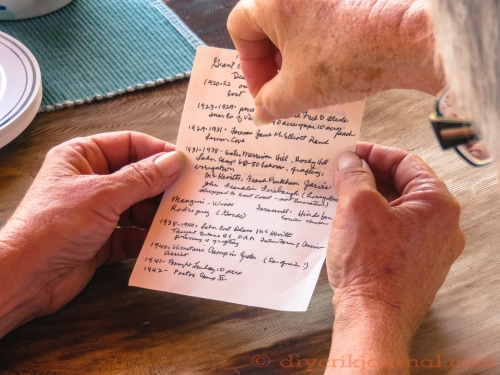
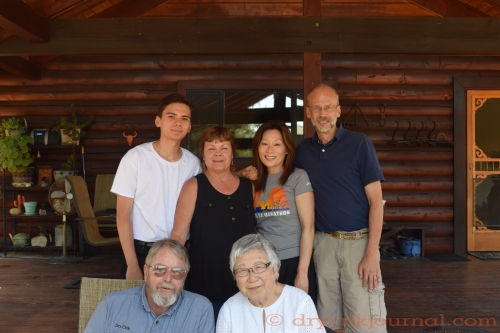
Robbin and I had the pleasure of coffee Sunday morning with Evelynne Watanabe Matsumoto and family. Evelynne babysat my sister and I, and initiated contact from Southern California a couple of years ago. Her letters have been delightful rememberances of her time in Exeter before heading off to UCLA to become a teacher, marry and raise a family. She told me that the $250 she saved from babysitting paid two years tuition in those days.


Matthew Ormseth Photo

Matthew Ormseth Photo