Category Archives: Ranch Journal

THE SONG


20161104-a40a2315


Rare harmony, the grays and greens
spill off the hills like stringed music
in the gloaming, naked oaks in granite,

cows and calves bent to new grass
step slowly mowing earth and rain
at work in the bright of day and night.

Like sea tides rising, each blade eager
twists towards the moon in cool darkness,
drawn to listen to heaven’s basic chords.

A wild sound is playing now outside
while waiting for a cloud, for the strum
of winter storms to prolong the song.


UNTAMED SILENCE


20161105-a40a2342


Heading into winter, black cows yet fat
sucking calves—damp, thick-piled green after rain—
everyone is clean and shiny off the hill, parading
to water early to laze in the shade. Pages

of poetry shuffle across a desk messy with business,
an untitled collection scattered and spread,
collected and clipped faraway in my head
from our family of cows, from short remarks:

our song of words and phrases overflowing
with the water troughs at Windmill Spring,
spilling too spontaneously to require editing.
We needed to collaborate, to escape the loud

and demanding devils too close to home.
In this place, we are blessed with native eyes
and forgotten tongues—where we can relate
long poems in the luxury of untamed silence.


Turning Green


20161105-a40a2383


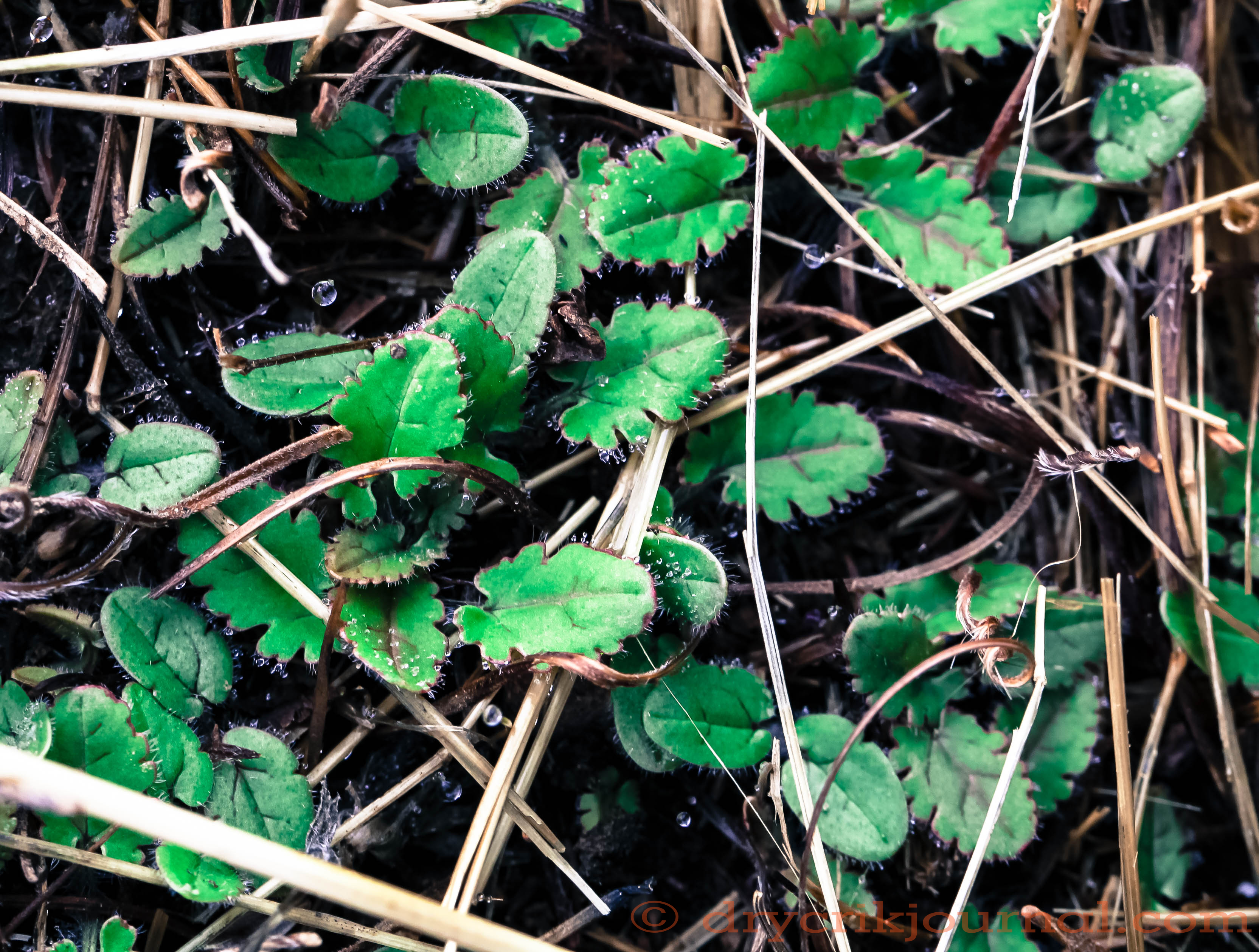
As recollections fade, I’m careful not to claim the recent as the biggest or the best of anything, but this past week’s germination of grass is as thick as any I can recall. How well it will endure the above-average temperatures predicted to push 80 degrees for the next ten days remains to be seen—no rain in sight.

Yesterday, Robbin and I made the Kubota trip to the Paregien Ranch with salt, mineral and the last protein lick until next summer while checking the cows, calves, and the rain gauge: 1.44”. More like spring than fall, our new green grass, even at a higher elevation of 2,200 feet, has begun to usurp our ample old feed. Cow numbers light due to the heavy culling during the drought, we haven’t had to supplement these cows with alfalfa yet this year—a good thing. It will take two or three ‘normal’ seasons before we get our cow numbers close to a sustainable capacity again, unwilling to buy non-native cows that take at least two years to finally acclimate to this ranch and cycle regularly.

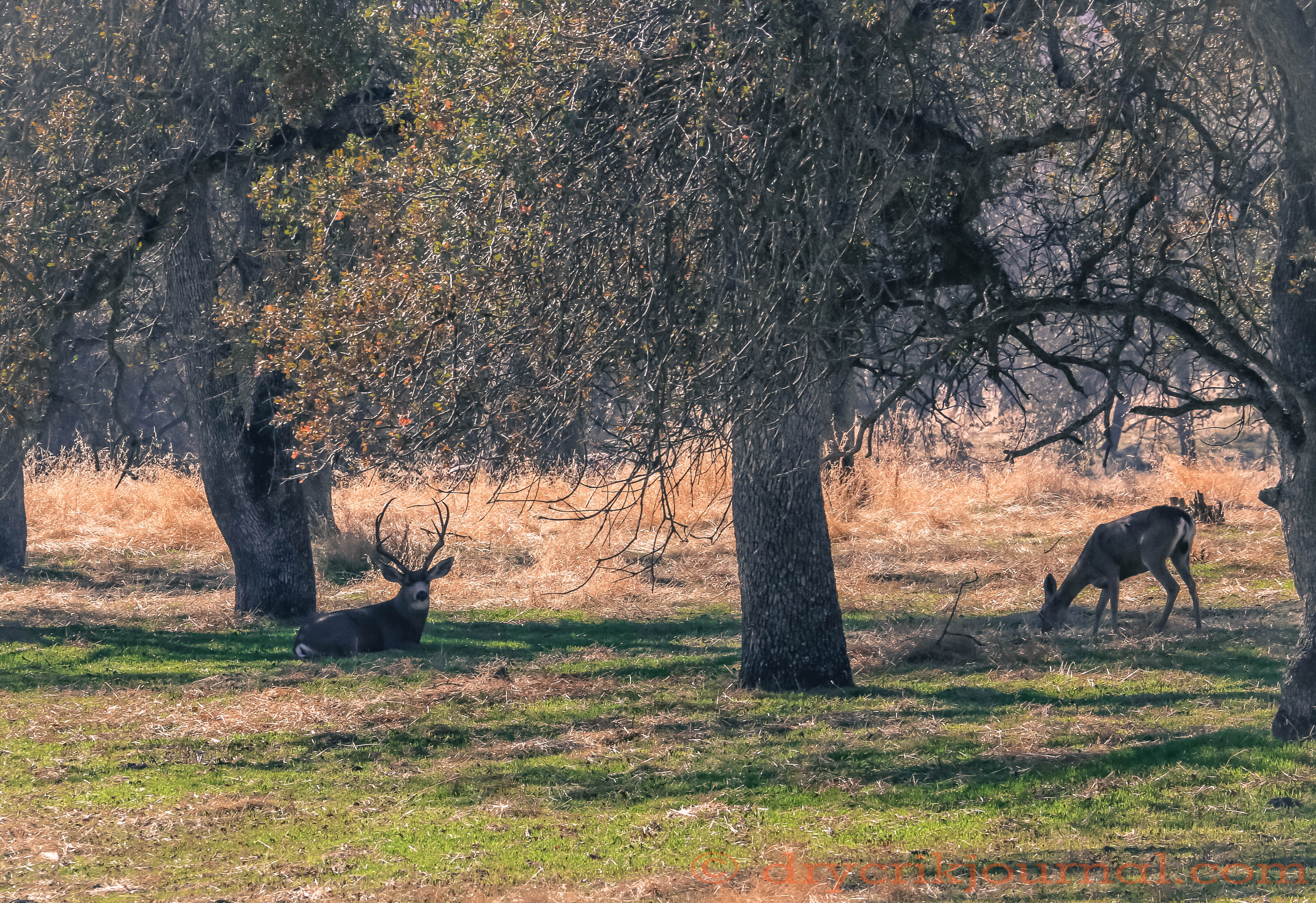
Checking cattle once a week, the Kubota has become so familiar on the Paregien Ranch that wildlife are seldom startled. With tall feed and cover, we haven’t seen many deer in the past six months. It was reassuring to see that the Blacktail buck above had survived hunting season, now in rut and somewhat oblivious to our presence. With a doe and fawn grazing acorns, he was more content to rest in the shade than leave.

Early mornings cool and talking firewood earlier in the week, we came off the hill with a load of dry Manzanita.


GRASS


20161104-a40a2311


Within a week of late October rains, a forest
of green blades twisting, chasing warm
golden light between canyon horizons,

reaching while we sleep to a waxing moon
sailing south across black starlit seas—
a germination thick as hair on a dog’s back.

Hard clay turned soft underfoot, under cloven
hooves, out of the bleached and brittle rubble
of last year’s feed, a spreading miracle of green

as the earth stirs with another birth of grass.
And we are tied to it, mentally shackled
and physically restrained to work within her

moody generosity, daring not with word
or thought to piss her off—we have our gods
and goddesses we adore, stealing glimpses

every chance we get outside to pause
and praise them. All our totems, the bird
and animal people of the Yokuts know

our names, know our habits, show us the way
this canyon was designed to support life,
here and beyond us, with a crop of grass.


  Weekly Photo Challenge: “Chaos”


Ranch Journal: November 1, 2016


20161101-a40a2302-2


A dark day after over an inch of rain, Terri and Lee feed the replacement heifers before the Wagyu bulls arrive next month. Already dated, this photograph doesn’t show the green that has spread across the damp ground in the past three days. Temperatures forecast for the next ten days are in the mid-to-high-70s—perfect growing weather for our native grasses. Already, our first-calf heifers are leaving our flatter feeding grounds for the hillsides in search of green grass tall enough to bite, steep ground softer now to climb and graze a little dry feed with the new.

Shorter days stuck in the low-50s, chilly mornings linger as both man and beast seem slower to get started, much of the pressure off after four days of rain and a thick germination of seed. Robbin and I are already talking firewood after we check the cows and calves on the Paregien Ranch, a Kubota load to augment the leftovers of last year’s stack, kept short to discourage rattlesnakes around the house. We’re ready, I think, to face whatever weather we get this winter, hoping always for well-timed rains.


PROPAGATING GREEN


20161031-img_6783


The seed beneath the dry, dead grasses
waits, as we have waited to begin again
with rain, to plant themselves, screw and twist

into damp dirt, to swell and burst—first
hands open to feed the living, applaud life,
millions of ovations standing on their own.

Each a miracle rising from hollow, blond
and brittle stems, from the dust of bare
red clay and sandy ground—alive and green.

Our private holiday, hope and relief let go
to breathe freely, to work fully within
this new beginning for one more poem.


Welcome Rain


20161030-a40a2299


A delightful four days of rain, the ground accumulating nearly an inch and a half of warm moisture here on Dry Creek, enough to start the grass and get our season under way. We fill our lungs, exhale and sigh, satisfied. Despite the dry winter forecast from multiple sources, we trust the excess old feed will help hold the moisture on the hillsides between rains, adding cover for the new grass to grow within.

“Mountains, Mules and Memories” by Bill DeCarteret


mountains-mules-memories-pdf


Few of us know what it’s like to fall in love with the mountains, the backcountry of the High Sierras, and fewer yet who can put that feeling into words, but Bill DeCarteret has humbly woven a lifetime’s love of its rivers and rugged terrain with the mules, horses and the ‘kids’ who worked for him at Wolverton and Mineral King Pack Stations from 1958 through 1982. Over fifty years ago, I was lucky enough to be one of those kids.

Bill became acquainted with the High Sierras as a Boy Scout in 1941 as he wrangled his way to his first job as a packer for Vaud Cunningham in 1945 near Huntington Lake. In 1947, he packed out of Mineral King for Ray Buckman from whom he later bought the pack station in 1958 with a $12,000 loan from Adolph Gill. As the author unwinds his stories in chronological order, it becomes apparent from the outset that they could never happen again, that his experiences were limited to a slice of time that will never be repeated. In this regard, “Mountains, Mules and Memories” becomes a part of our local history.

The author’s voice on the page is consistent with the man I know, replete with his understated humor as he relates his stories, especially his observations and compassion for his horses and his mules—a must read for animal rights advocates, DeCarteret was light years ahead of most. Like so many outfits in the business of packing people on horses and mules, anything can happen anytime and usually did. It’s from the stories that we not only learn about the man, and his wife Marilyn, but what it took to keep their summer enterprise afloat for twenty-five years.

Perhaps the most important thing I took away from this book was the impact that Bill and Marilyn’s business had on so many lives, affording many their first glimpse of the Sierras, cooking on a wood fire, catching fish in mountain streams and lakes in the middle of miles of untarnished landscapes, and all the degrees of awe that must have inspired them. The 83 ‘kids’, mostly teenagers at the time who worked for him in those twenty-five years, had to know how to work, often long hours, and to take responsibility because he couldn’t be with them on the pack trips—his business depended on it. Many are involved in the stories he tells as they became packers ‘his way’, safety first, learning to observe and read horses and mules—and most of all, how to reach inside for something more they didn’t know they had. Thank you, Bill.


BOOK SIGNING

Saturday, October 29th
Noon to 4 p.m.
Courthouse Gallery and Museum
125 S. ‘B’ St.
Exeter, CA

ORDER:
% Bill DeCarteret
758 Sherwood St.
Exeter, CA 93221
(559) 592-2878
 
349 pp. $21.95

CONTENT WITH CHANCE


20161027-a40a2261


Desk light inside, tree frogs hang on the screen door
stroked by the gentle damp breathing of a downcanyon
breeze, deep dark mouth clear to the mountain pines.

No stars, all black, we wait—anticipate cloudy daylight
together, a red sky dawn and rain, slow at first
approaching, its tiny footsteps soft upon dry leaves.

No new amazement, this cleansing of dust, this erasing
memories and tracks that leaves the ground fresh,
that may swell the seed to burst into green cotyledons,

open-handed to receive sky blessings, small miracles-
in-waiting—a chance, we dream. Wishing is not praying
yet among the bone-dry years, broken skeletons

of old oak trees flailing across hillsides in herds
just before Halloween, Buckeyes drip with bloody
leaves while goblins claim what we cannot see.


THE DREAM


October 27, 2014

October 27, 2014


A slice of time incised from ranch
routines, an Indian poet-in-residence
for a week, Jack Kerouac on the wind

escaping Montana’s sub-zero to write
about dreams. He thinks in Crow,
undulating hands stroke the grace

between them, never touching speak,
pleasant sounds of rushing water gush
from his lips I almost understand.

I envy this bear of a man
who brings brightly painted ponies
and the Little Big Horn with him,

the feathered glory of reenactments
and contact with the old chiefs
that breathe past and present here

upon my skin. What a way to go out
to become one with time, turn the soul
loose and gather ‘round the fire

of mountain men, all the old cowboys
and pioneers, all the natives done with
trying to make a living on this ground.

                                                 for Henry Real Bird