Category Archives: Photographs

Journal: 2017 Heifers


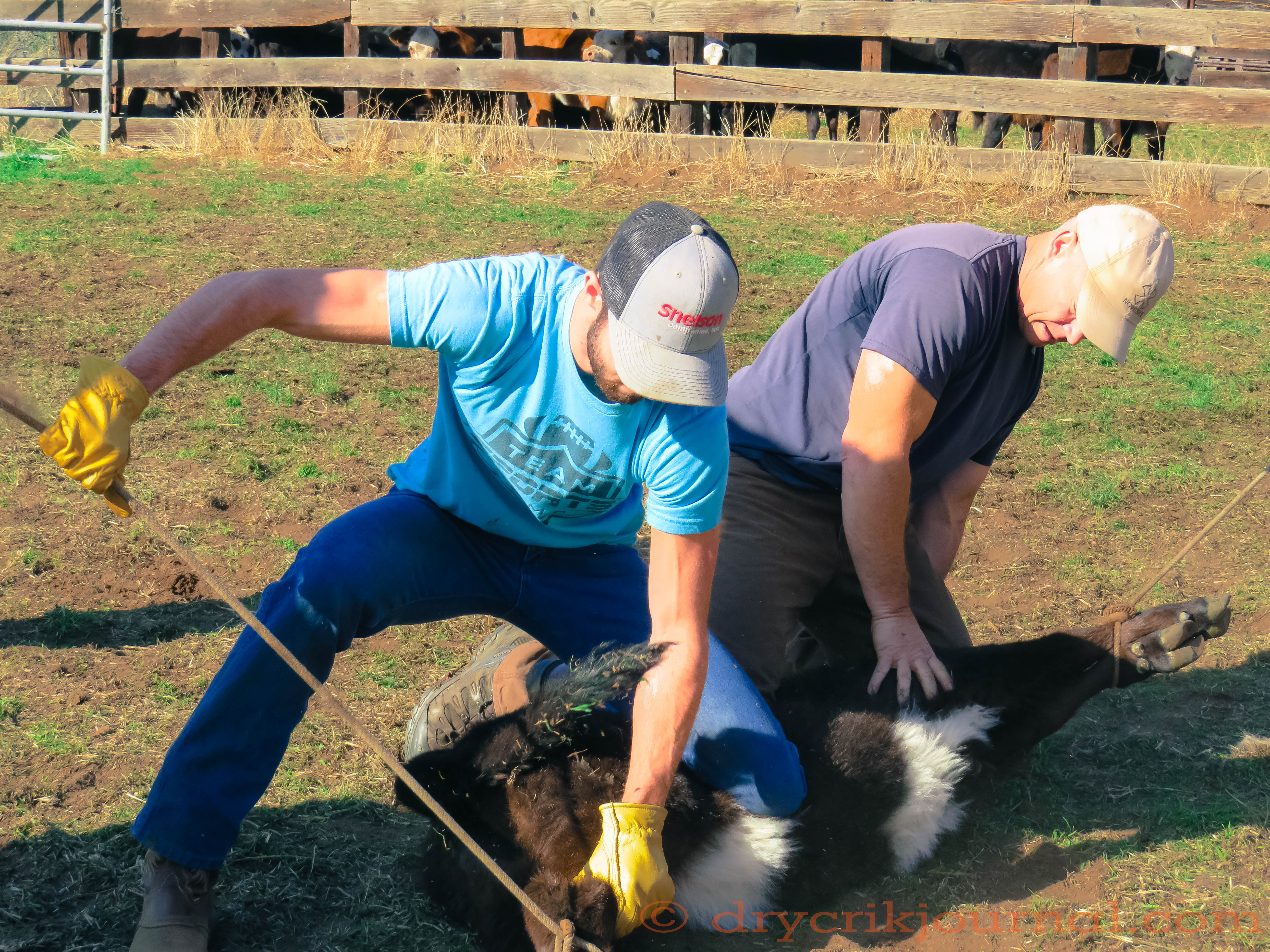
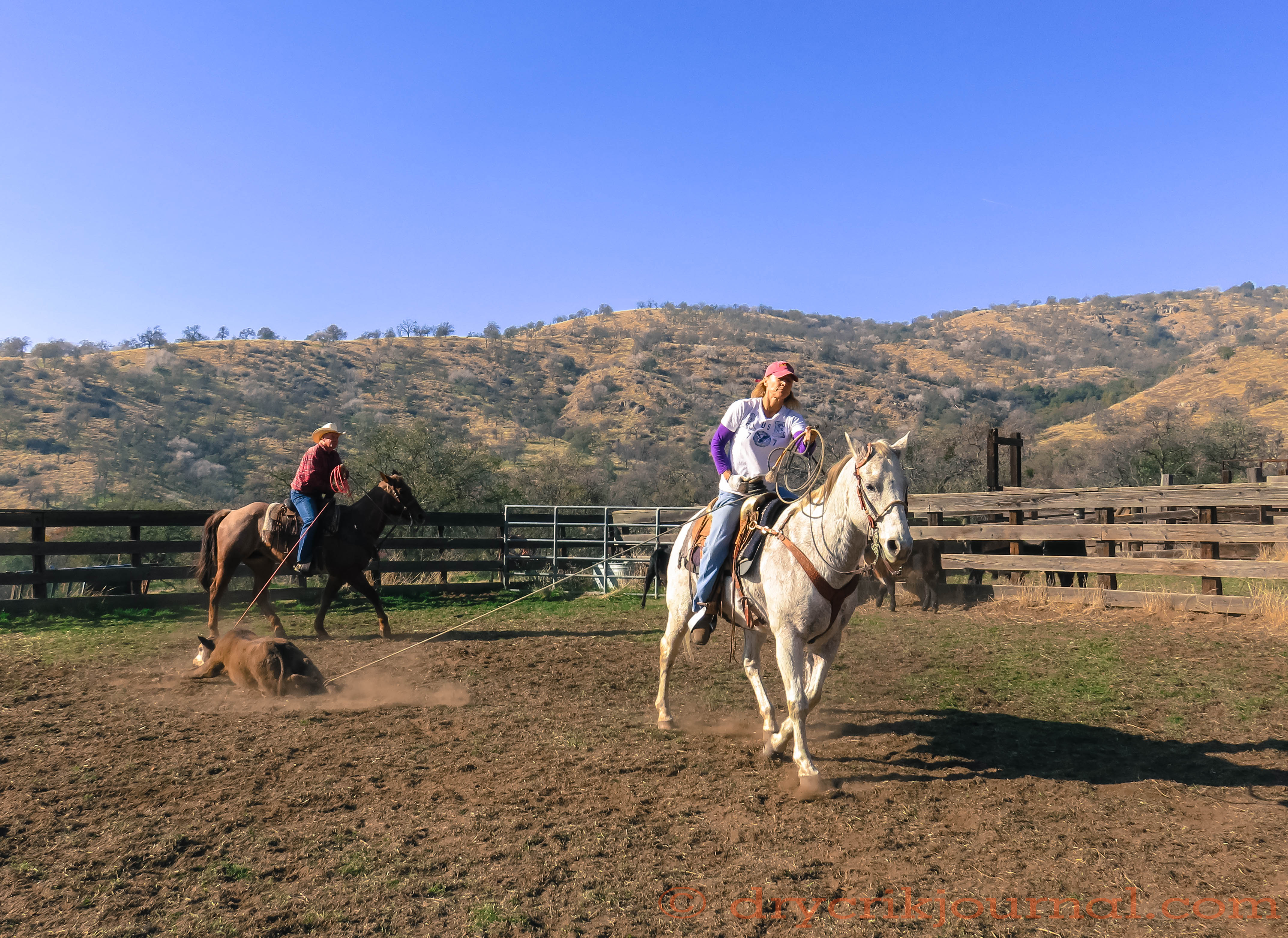
We finally got these heifers branded yesterday with another round of shots, vaccinations, dewormer and multi-min, before they meet the Wagyu bulls in 45 days. As you may remember, we took their counterparts to town as bulls last spring when we weaned, unable to brand and vaccinate them because of last winter’s wet conditions. The girls were polite, familiar with processing since their first round of shots and vaccinations for Brucellosis at the end of June.

Building a fire to heat the irons this time of year is problematic with fire danger still high. Our propane pot is an inefficient and noisy alternative we’d like to avoid if possible. Electric irons have been around for years, though I’ve never considered using one as electricity to our corrals is a recent convenience. And consistent with the ‘cowboy way’, my underlying prejudices against such citified methods of marking cattle, an electric iron has never been part of our operation—until yesterday.

With the tangle of extension cords, etc., they will never replace hot irons in the branding pen, but they have their place. Furthermore, the brand goes on quicker and cleaner with consistent heat and quick recovery. All going to prove that old dogs can learn new tricks.


BLACK PHOEBE


Neither trust nor fear
of us inhibits a hawk’s
delight on the lawn.

 ~

The Sharp Shinned Hawk has been making a living around the house for over two months and become our coffee and cocktail entertainment. We do all but applaud its low flap and glide aerobatics in pursuit of startled quail. Though probably only a temporary guest, we’ve become comfortable with one another’s tastes and habits. Not too persnickety, the Sharp Shinned Hawk taunts us with ground squirrels (dead or alive) quail and ringnecked dove. Last night, a Black Phoebe was the casualty.


TRICK OR TREAT


Not quite cold enough for bright colors yet,
for frost and flies’ retreat, for the drift
of chimney smoke and horses’ breath

on the slow drawl of dawn. The grumbling
bulls begin to bellow, announce their prowess,
trumpet their intentions thirty days away

from being family men, their primal duties
rippling beneath their dusty hides. Not quite
old enough to forget, it’s almost Halloween.


THE INNOCENT


Already drawn to the trough,
to the prospect of being cared for,
choosing peace and domesticity,

we are startled with the interruption
of the news—as it happens—
and we become the audience

on stage, interviewed and counted
for ‘something’ by invisible pollsters
just to keep the plot alive:

a chicken in every pot,
better jobs and lower taxes
as wealth wicks up

between catastrophes,
the graft and scandals
we’ve become addicted to.


Cattleman of the Year


At the Fall Banquet of the Tulare County Cattlemen’s Association last night, our dear neighbor Jody Fuller (2nd from the right) was awarded Cattleman of the Year. Usually a poorly kept secret, she was totally surprised. In an insightful and humorous presentation, Craig Ainley (far right) highlighted Jody’s history and accomplishments on Dry Creek. In addition to a beautiful belt buckle, she received commendations from County Supervisor Mike Ennis and Clarissa Henderson (far left), representing Congressman Devin Nunes.

Our “Thank You” for a wonderful dinner and evening provided by all the usual suspects, both in front and behind the scenes.


While Waiting for a Rain


Temperatures are forecast to rise next week as our first cold front brings light precipitation to the 200,000 acres of fire-stricken Northern California that was fanned by 70 mph “Diablo Winds”. Southern California will approach 100 degrees. Our forecast is closer to 90 as we wait for our first rain, like always, this time of year. Longer range, no rain in sight for the remainder of the month.

We keep our first-calf heifers close to the house and the hay barn. Only 35 days into calving, the transition from heifer to mother is almost magical, driven by a selfless instinct to care for a newborn calf, multiplied many times over—they all suddenly become a pasture of cows. Bred to Wagyu bulls, the calves come small, but they are growing and demanding more from their young mothers, so we augment the cows’ dry grazing with enough alfalfa hay to keep the them in shape while raising a calf.

We began feeding a moderate amount six weeks ago with the Kubota, but graduated to the feed truck last week as we’ve slowly increased their hay. In recent years, we’ve tried to keep our feeding down to twice a week instead of every other day, though we feed the same amount, thinking that cows are more apt to leave the flat ground to graze the hillsides between feedings. And they do, but as they come to water in the morning, they wait hopefully, and bawl every time the Kubota or pickup is started, on both sides of the canyon—a deafening pleading that’s hard to ignore, but tame compared to the drought years.

Nothing out of the ordinary, we will feed until the green grass comes.


AUGUST COLOR


Bumper crop of damn-near everything
thriving since last season’s rain
that bogged us to a standstill.

Red oak galls on the Valley Oak,
Tarweed yellow on open slopes.
Earth alive with frogs and rodents,

she moves with grace beneath
a new summer dress I haven’t seen
before—or perhaps I have forgotten

or ignored. A man must be careful
with hackneyed compliments
like ‘wild’ and ‘beautiful’.


ALWAYS


                              Perhaps it’s only those
                              who pay attention
                              that survive.

                                   – Linda M. Hasselstrom (“Coyote Song”)

“He looks, but just don’t see,”
Tom Homer’d tell of a part-time cowboy
when my father learned the mantra
of established cowmen after brandings,
when the work was done.
I heard it often.

Out here, one can lollygag himself
to death, early on—before he sees
the snake in the trail, before he sees
the coyote watching him.

Deaf to the gun but only once,
we improve the breed,
fine tune scent and sight
into long lives of good teachers—
always a coyote’s song.

                                             for Linda


Babysitter


We’re pleased that over half of our first-calf heifers bred to Wagyu bulls have calved in the first thirty days, and relieved that they have instinctually set up nurseries early-on. I’m hoping that last spring’s bumper crop of ground squirrels will keep the coyotes occupied with easier prey, but nonetheless these new mothers seem especially vigilant after calving this year.

Typically a cow or two will stay with a group calves while the other mothers graze to be later relieved of duty after an hour or two. Just how these new mothers communicate and delegate duties is a mystery, but they do. My own unscientific and unproven theory is that the newest mothers whose fresh calves need more constant attention are usually selected to babysit the bunch. After being raised in nurseries, the calves learn the security of the herd and remain quiet and well-behaved until their mothers return. However, back and forth to the water trough in the mornings and early evenings with their mothers, the calves become untrained, running in all directions as they find their legs.


The Three Stooges


Getting used to their new digs, Larry, Moe and Curly are getting a little TLC before going to work on December 1st. Three nice bulls from Mrnak Herefords West will add a little more heterosis to our predominantly Angus cowherd.

Fifty-five years ago, our cowherd was mostly Hereford when my Dad began breeding our first-calf heifers to Angus bulls because the Angus calves came smaller, and thus made calving easier on our heifers. But the resultant hybrid vigor, or heterosis, of the cross is what caught his eye. Bottomline: the black white-faced calves were heavier on sale day.

Much has happened since here on the ranch and in the cow-calf business in general. Today’s market prefers black-hided cattle that can bring as much as a $10/cwt premium in the sale ring, though that spread has decreased in recent years. With technology and DNA testing, bull selection for all breeds has become data driven, a scientific and complicated formula that purports to project the performance of progeny all the way to the consumer’s plate. It includes a bull’s birth weight, weaning weight, yearling weight, rib eye measurement and marbling among a dozen more factors to consider, right down to how much more money a bull’s calves will bring than the average for the breed.

I remember buying bulls for $400-500 each based on what I saw in a bull, his structure, movement and temperament, on my subjective eye. Starting price to today begins at ten times that to where a $7,500 bull is commonplace. In the end, I depend on my eye. But with intensive breeding and feeding for the numbers, to create attractive data, a bull’s ability to acclimate to a new environment, to work and hold up, is often lost along the way.

Our cattle harvest grass that they convert to protein that we sell as calves. Perhaps the most important factor of all is that we are raising cattle that can thrive on this uneven, and often unforgiving, ground. In that respect, each bull breeder has a reputation for performance and longevity. Mrnak Herefords West has been at the top of our list for over a dozen years.