Author Archives: John

BIRDHOUSE


I have cut myself away

from the entangled coils

of ship and state


drawn more to songs

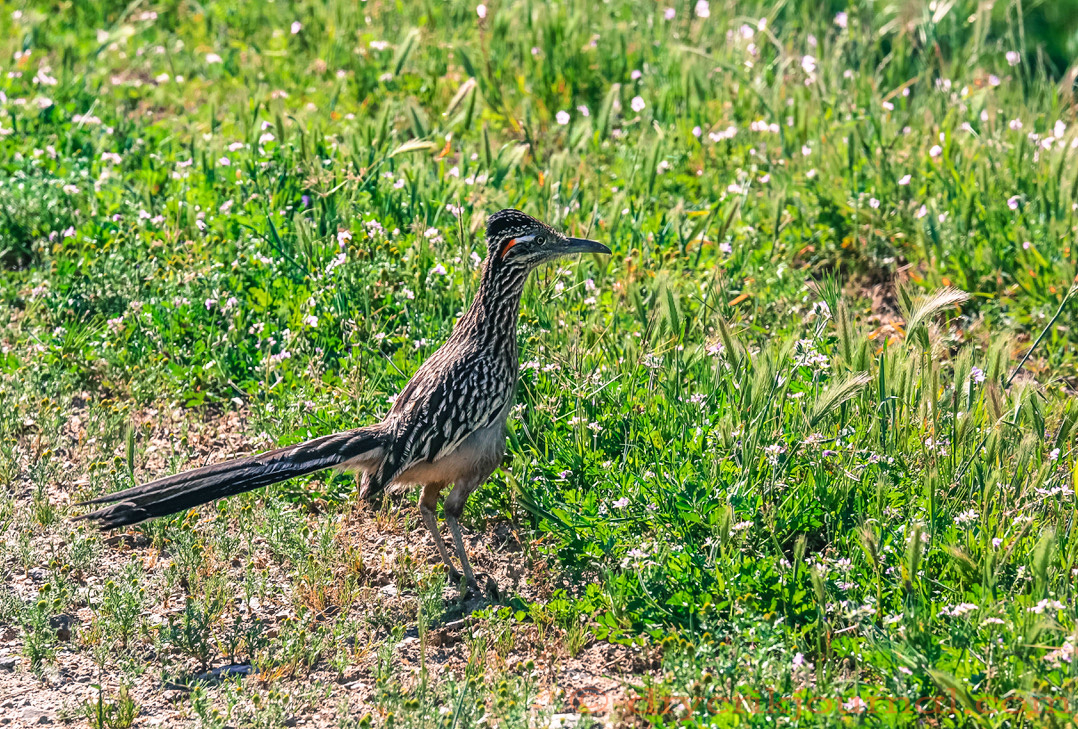
among the cactus cuckoos

at first light of dawn—


tossed across the pasture

deep-throated news

I can depend on


while a lone quail hollers

to awaken coveys

like children for school.


But I still don’t trust

the cry-baby whines

of our arrogant Ring Neck’s.


Arson

It sounds like MASH as helicopters fly over the house, back and forth to Lake Kaweah, to address 8 fires set this a.m. between 6:30 and 6:45.  All but a couple of fires in rough terrain are contained.  Three weeks ago we had 4 sets.  Every year we blade about 3 miles of firebreak between us and the road with our skid steers. Additionally fixed wing aircraft and a DC 10 jet, 2 dozers, and about 50 engines and water tenders are on the job as I write.

The spring rains brought good feed and fuel for fire that has attracted our society’s deranged, whether gang initiations or other odd and complex maladies.  Needless to say, we’ll keep our eyes peeled.

LOOKING BACK


April calves load easy here

for unknown destinations

looking back to say goodbye


to someone lost

in the muddled moment’s

brain fog.


Old between brothers,

we remember stories

the other’s forgot—


a thrill on spry legs

to dance through time

as if young all over again.


PERSEVERANCE


Called too soon, persistence rooted

where peaceful dreams beneath their leaves

spilled downhill at dawn—a slow awakening


like death in reverse, never thinking

of other ways to pass the time. Weathered

skeletons of young Blue Oaks cling


to where their acorns fell to rest

before the wet and stormy springs

kept a chance of an idyllic life alive.


Truth is: no right or wrong of it—

no philosophy to make fit

what we’ll not need to understand.


CLASS OF 2023


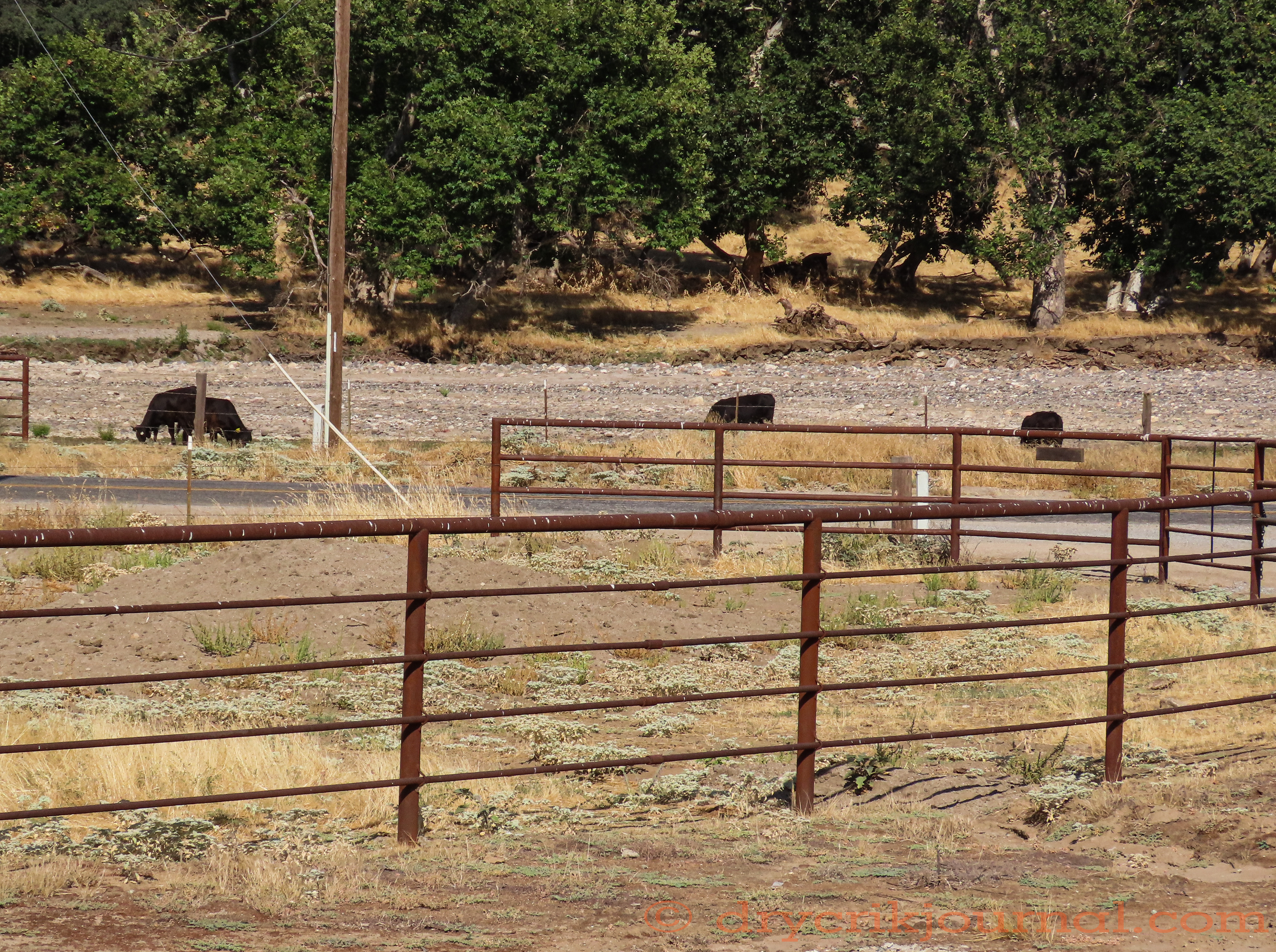
Black backs

through summer light

across the road beside the creek


grazing green

upon a highwater sand bank

deposited by atmospheric rivers.


Black backs

of virgin children, our future

breathes in 105 heat.


GETTING SHORTER


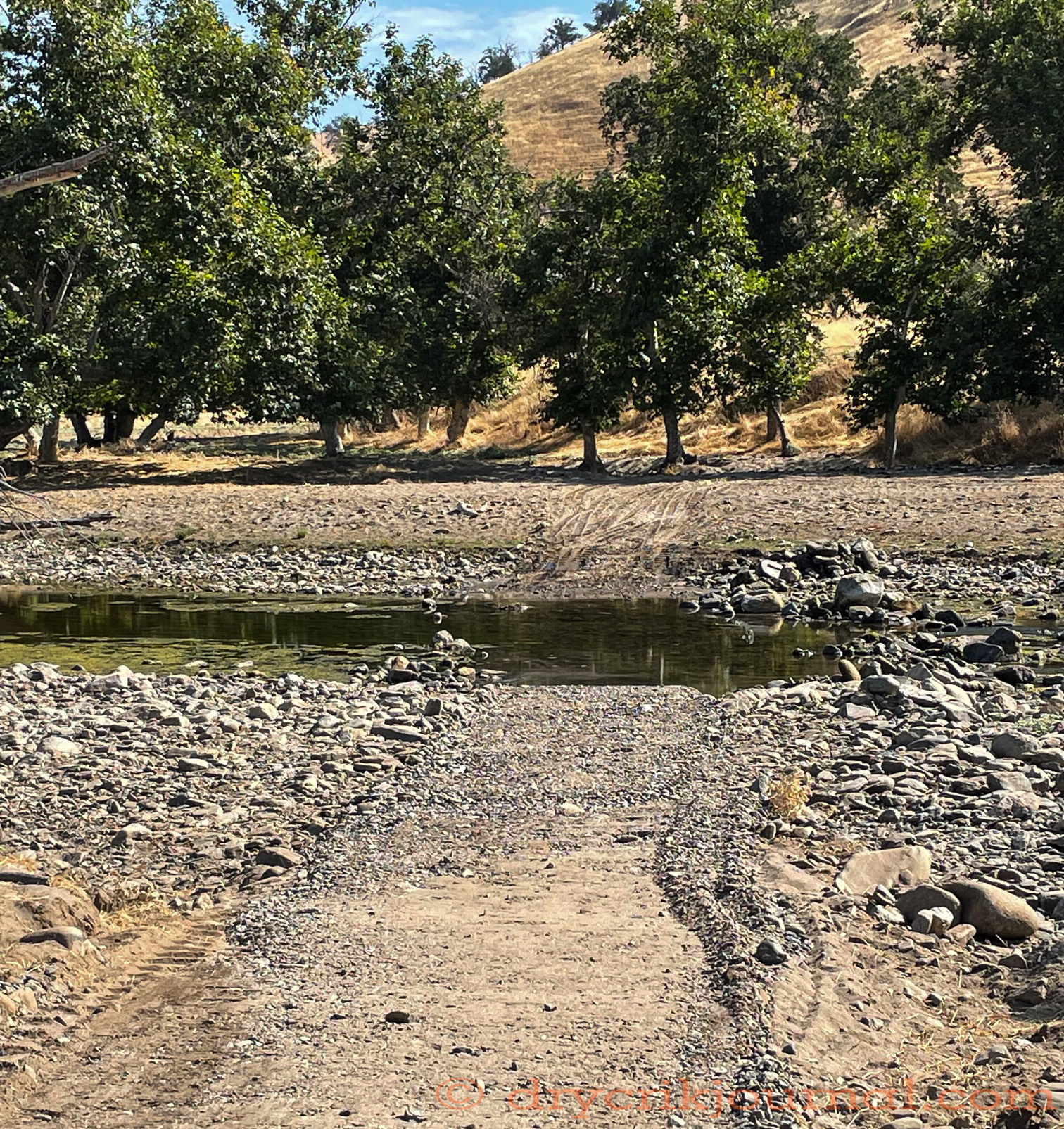
I don’t recall Dry Creek ever flowing into August, as springs continue to feed this morning’s 9 cfs (cubic feet/second).  March’s atmospheric river estimated 8,000 cfs, that scoured the channel and undermined the gauging station, left few places to cross the resultant boulder fields and cutbanks. Only now, as our cattle work winds down, do we have time to address some of the impacts of last spring’s rains.

Both for vehicles and cattle, I had to move our crossing downstream.  Moving the big rocks was rough work for the skid steer, but I had all the materials I needed in the high water drifts of sand and gravel to smooth the crossing this morning—less than a three hour job.  On the way to the corrals, hoof action of our replacement heifers will smooth it a little more.

We’re looking forward to September when the cows begin to calve, another month of a hundred degree weather that often extends into October, but the hot summer days are getting shorter.

IN THE COMPANY OF COWS


It’s a dirty trick

not to bring ‘hello hay’

by flake or bale,


to show empty-handed

with a cluttered mind

from another world.


If I had the time

I’d stay the day among them,

forget myself


and lie down and learn

to chew my cud

without thinking.


ON THE MARCH

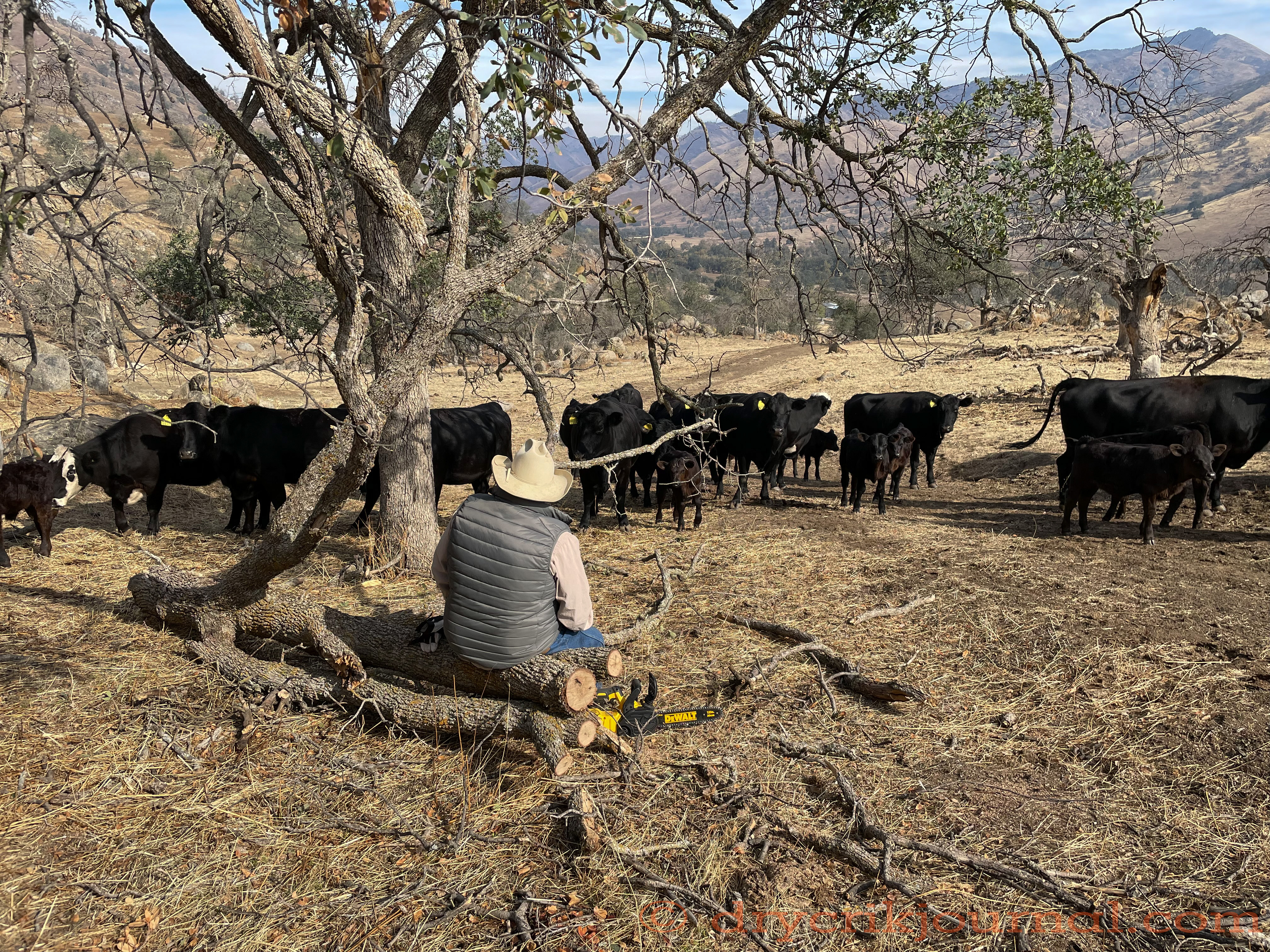
We train our young replacement heifers to be gentle and to follow the Kubota or feed truck when we feed so when they go up the hill in the next year or two, we can gather them and their calves easily.  Having been through the same process, their mothers and grandmothers have imprinted this same calmness on their calves.

Due to the atmospheric rivers, we were unable to see our cattle for 3 months, but the calves gentled down quickly in the weaning pen on alfalfa hay.  Now weaned about 30 days, they’ve been turned out along the creek on native feed and a little extra green due to the spring rains.  We’ve been supplementing them once-a -week. While I was photographing the floods’ ensuing boulder fields and patches of cockleburs, they heard the Kubota and followed me, on the march, towards the feed ground, hoping it was the right day.

ACORNS


            One by one off trucks,

            hooked or boomed into the barn

            banked for the unknown.


Sweaty, sleeveless shirt, Dusty

Bohannon, until he died, unloaded

thousands of bob-tailed trucks


before the booms pitched bales inside,

before the squeezes stacked dumps up

for unknown winter times


like grounded vermin store

in tunneled chambers, or cackling birds

in fenceposts pecked with holes.


AFTER ATMOSPHERIC RIVERS


The magic remains along the creek

spread wide with naked cobbles pressed

together, exposed by flooding sheets


that ripped its sandy banks before

leaving the channel changed—

a landscape rearranged for the moment!


A summer gurgle, herons and egrets come

to wade abandoned pools of pollywogs

shrinking into moss-covered gravel.


Green cockleburs rise-up from ribbons

of sand, high-water veins bleached white

until colored or carried away with the burrs.


The truth is endless here—it will keep

saying the same thing in different ways

well after we are gone.