Tag Archives: weekly-photo-challenge

POT OF GOLD


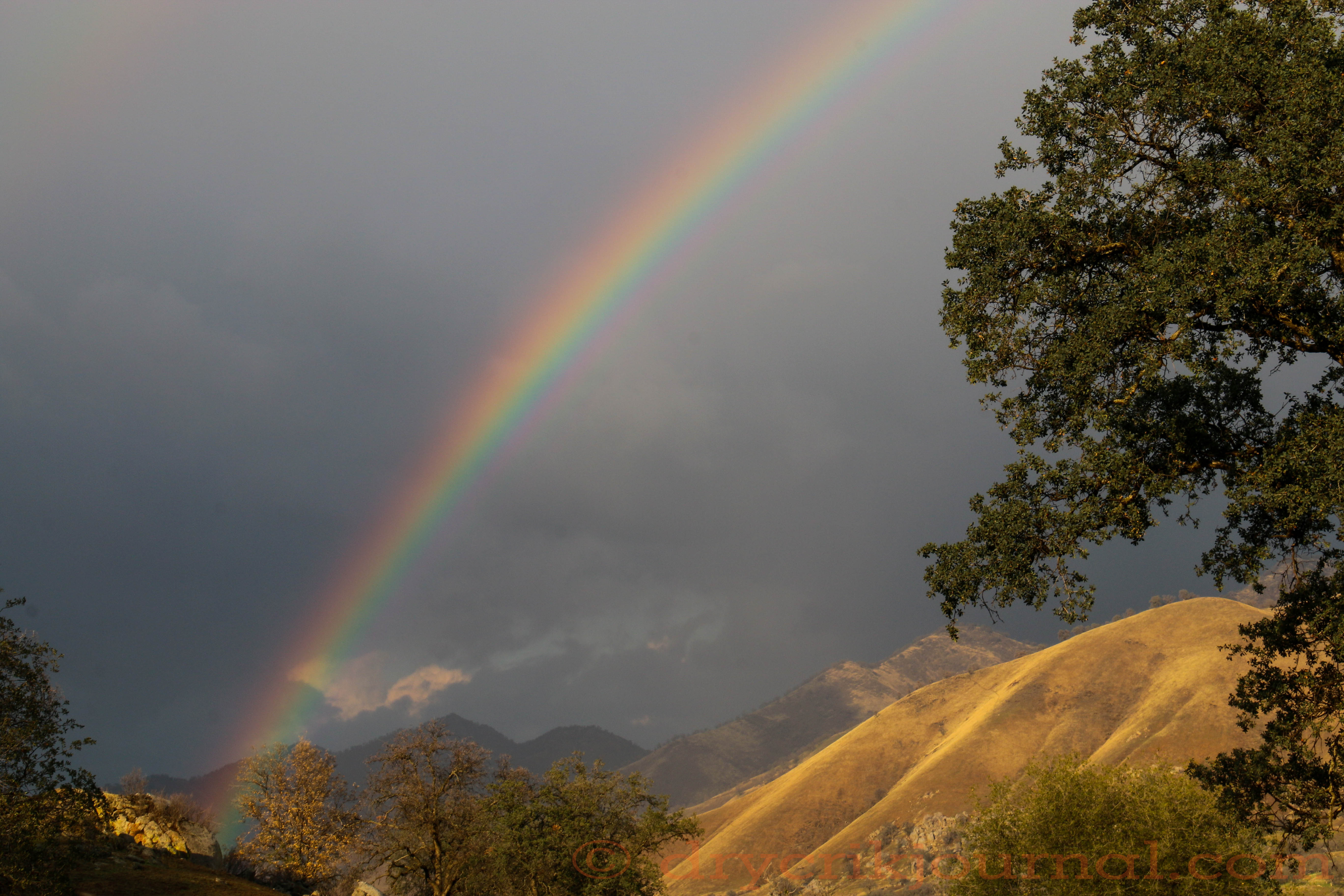
20151104-IMG_0609


No longer children
chasing rainbows,
we want to believe

the drought is over—
look to the mountains
to shield our souls

from insistent cities
and a world at war.
Like native Yokuts

we want to believe
the ground can hold us
before we leave.

               ~


A trace of rain up-canyon yesterday afternoon as I looked up from my desk, inside after an 1.5” of rain, sorting poetry for another collection—working title: “The Best of the Dry Years”, 2013, 2014, 2015. A formidable task, like sorting 90 head from 900, it will take many more rainy days to complete.

The photo has that postcard-look of not quite real, a reminder of what a little rain can bring. Yet, I harbor some skepticism, not ready to say the drought is over, to set ourselves up for disappointment. But it sure feels good, nonetheless.


Weekly Photo Challenge(3): “Treat”


Present and Accounted For


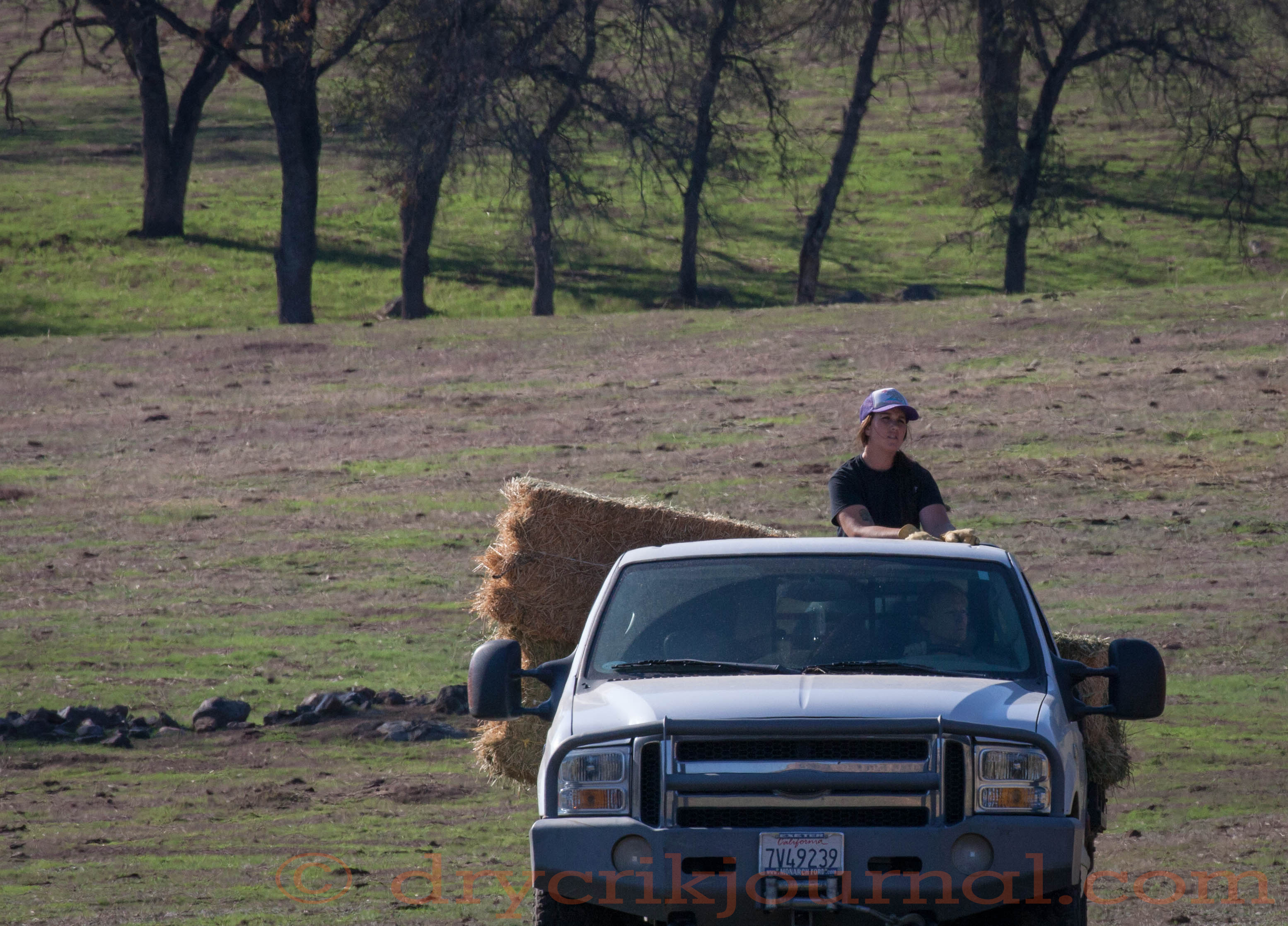
20151029-IMG_5162


It’s been hard for me to accept that I’ve worn my body out, always able to do any job on the ranch, feeling secure with the strength of my arms, back and legs. I’ve been lucky, but my knees, among other things, are gone. In the past 45 years, I’ve probably handled, loaded and fed, 15,000 tons of hay with Robbin’s help, but looking back, it was the 500 tons in 2013 that did the real damage.

It’s been a blessing having Lee Loverin and Terri Blanke feed for the past two seasons, as well as fix and build fence, help gather and work our cattle. They know the ranch and our routine and take it seriously.

Cropped and shot with a Canon 100-400mm zoom, I should have known the girls were separately counting cows and calves to make sure everyone was present and accounted for—it’s part of our job when we feed. But at 300 yards away, I took the photo for a different aesthetic. With the photo enlarged, imagine my pride, and my relief, knowing the girls are getting the job done right, and that the ranch can get along fine without me being a part of every single thing. Now that’s a treat.


Weekly Photo Challenge (2): “Treat”


A Real Treat


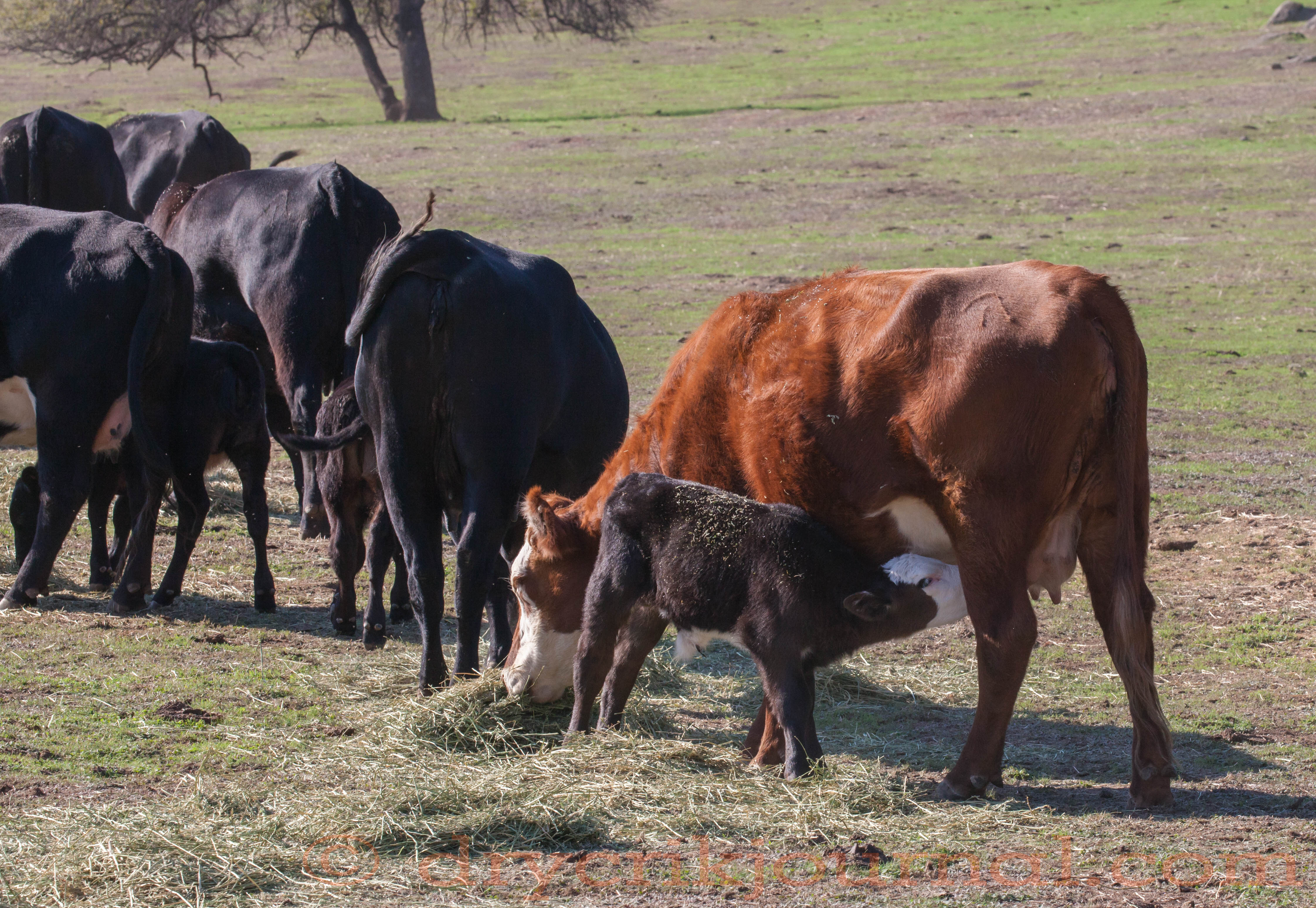
20151029-IMG_5180


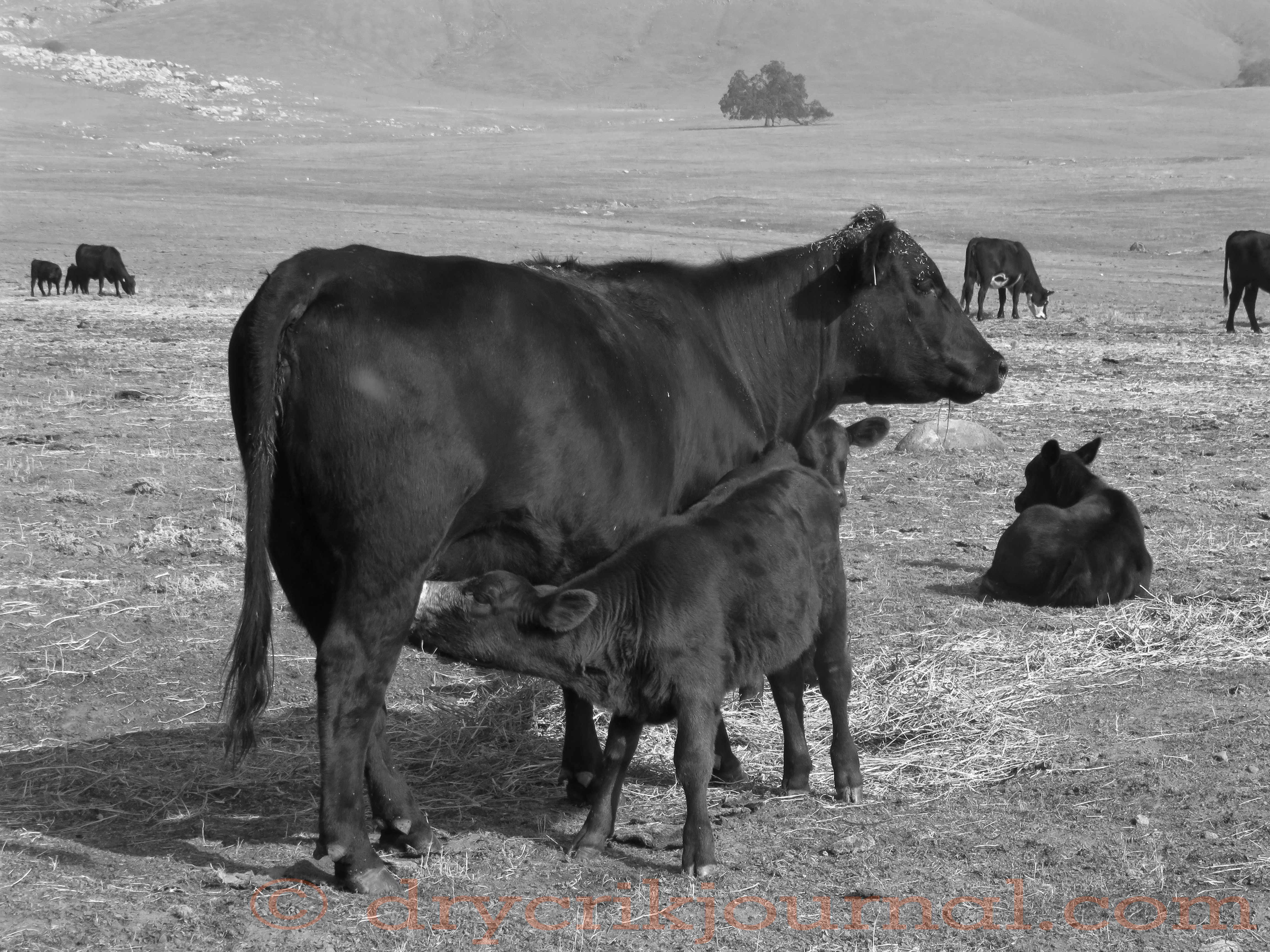
Enough rain to give the grass a good start in most places, we’re still feeding hay, a treat for these second calvers close to the house. We were especially glad to see this calf on the ground, its mother spending most of the month of August uncomfortably in pain, having difficulty walking with slow, short strides to hay and the water trough. A week or two before it was born, the calf must have shifted within her, as she began getting around again as if nothing was ever wrong.

Ambushed by her calf while on the alfalfa yesterday, this mottled-face Hereford is becoming a little rough-haired, showing the effects of raising a calf. If the calf were thin, we might be concerned and increase the hay, but right now she’s giving all to her calf, taking better care of it than herself—the kind of mothers we want.

The bare south and west slopes struggle as they have dried out since our first good rain on the 18th, but all the weathermen promise another good storm for Monday and Tuesday. With a little luck, we’re near the end of feeding hay as the cows move up into the hills for fresh green grass—a real treat for everyone.


Weekly Photo Challenge (1): “Treat”


BLACKTAIL BUCK


20151021-IMG_5125


Too tame to survive
the last day of the season
but with careful luck.

                        ~


Weekly Photo Challenge (2): “Careful”


OUTSIDE MUSIC


20131109-IMG_6775


                                                                                       “listen to that music.
                                               The self we hold so dear will soon be gone.”

                                                       – Gary Snyder (“Anger, Cattle and Achilles”)

I’ve packed a rifle since I was ten
following cow trails in these hills
listening to music: the Red Tail’s cry,

its feathers rush overhead,
plummeting for fun—a calling
to another life without accouterments.

In time, we collect clear moments
of ourselves, fresh glimpses stamped
and saved that weigh nothing, cost

nothing, yet live behind our eyes.
No word for the first murmur
of a cow to its wobbly, wet calf

forever branded in our brains—
no word for the outside music
played with poetry and song.

                                               ~


Weekly Photo Challenge (1): “Careful” / “Full of Care”


DAWN ON THE MOUNTAIN


20151015-IMG_5073


October slips away from the sun
sliding south down the ridgeline
after a quick rain clears
               the air,
settles summer’s dust,
erases tracks
               for a day:

                              another beginning
                              to another adventure—
                              nearly 25,000 now.

No calls from beyond
Sulphur Peak:
                              old friend
to generations waking
from dreams and restless sleep.

On top in the brush
a 2” x 2” surveyor’s pole,
a Challenge Butter buck
               not quite in rut.
Spring poppy overlay of gold
winter cap of snow—
               never naked,
always changing clothes.

                                        ~


Weekly Photo Challenge: “(Extra)ordinary”


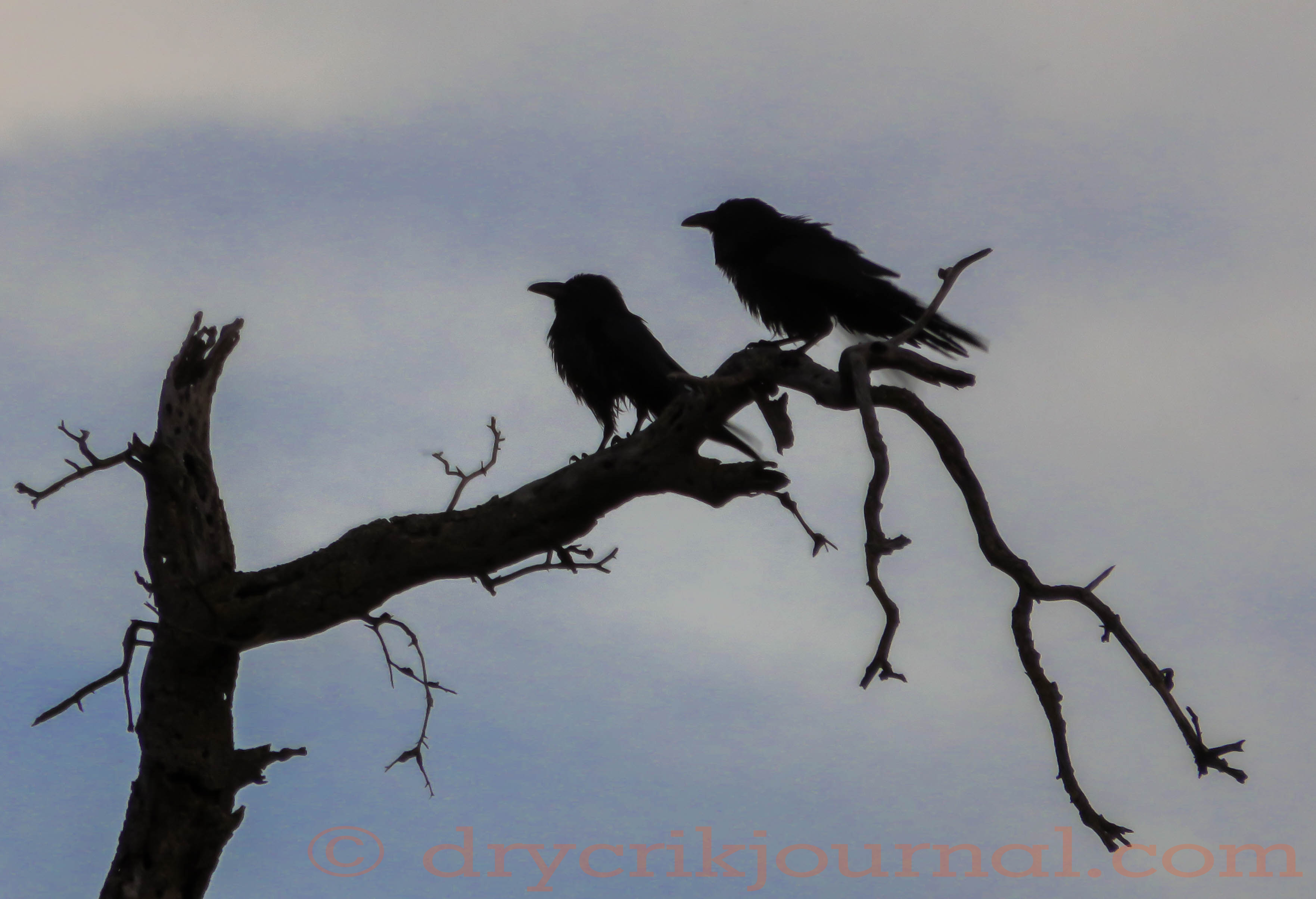
SPRING CROWS


20150314-IMG_3292


They shiver after
making love on a dead branch
facing the future.


Weekly Photo Challenge: ‘Happy Place’

Weekly Photo Challenge: CONNECTED


IMG_0916


To the earth, to us
all awakened with the warm
milk of motherhood.


Good Day @ Ragle Springs


20150819-IMG_4214

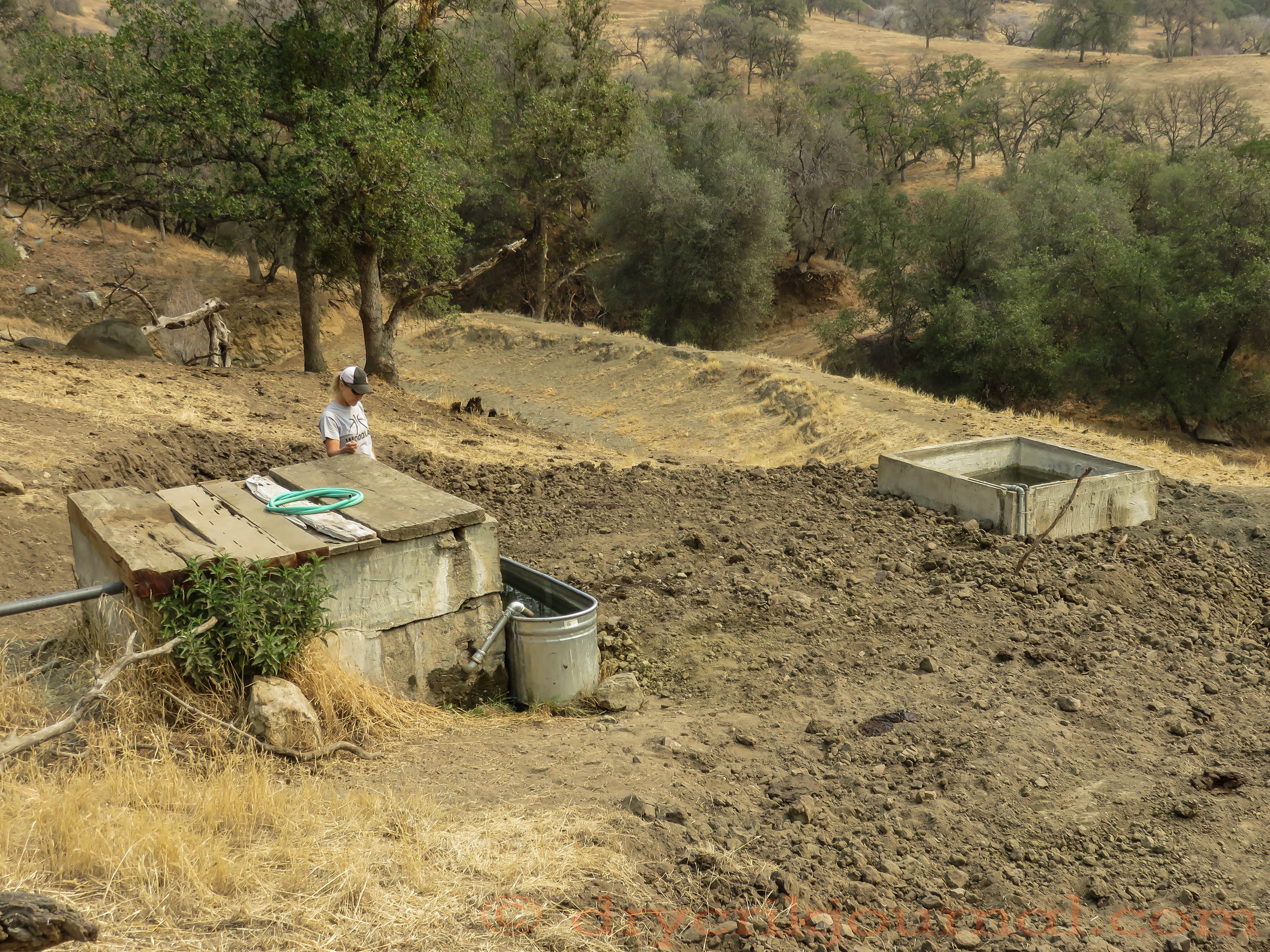
To complete our documentation of last week’s efforts to improve the availability of water for cattle, Terri Blanke stands beside the upper concrete box last Wednesday, one of many constructed by Earl McKee, Sr. and Lee Maloy in the 1930s when they packed cement and sand on mules from the Kaweah River, five miles and 2,500 feet in elevation away.

From the bottom, the upper box was plumbed to the lower box with 1½“ steel pipe too rusty and leaky to repair, rendering the lower box useless. In the 1990s, Earl McKee, Jr. and Chuck Fry constructed the pond below with dozers to collect all the leaks plus seasonal runoff. Dirt tank dry by the end of June for past two years, I installed the little galvanized trough last year to provide clean water by utilizing a hole in the side of the upper box.

While David Langton was mucking out the pond at Grapevine last Saturday, I plumbed the second concrete tank to the overflow of the little galvanized trough with 1 ¼“ PVC and galvanized riser. On Monday, while David was covering the PVC, he bumped the rock beside the galvanized trough with his backhoe’s outrigger, which moved the empty trough and snapped my PVC fill pipe. We plugged the flow from the upper box with a plastic bag and I went for hose at the corrals a mile below to syphon water into the galvanized trough rather than lose it, giving me time (2½ hours) to get to town for galvanized pipe replacements.

There wasn’t enough water stored in the little galvanized trough for the fourteen head of cows living at Ragle Springs, yet the little trough filled and overflowed at night. Assuming the lower box doesn’t leak as it fills, we will have enough water stored for the fourteen cows—a good day for all.


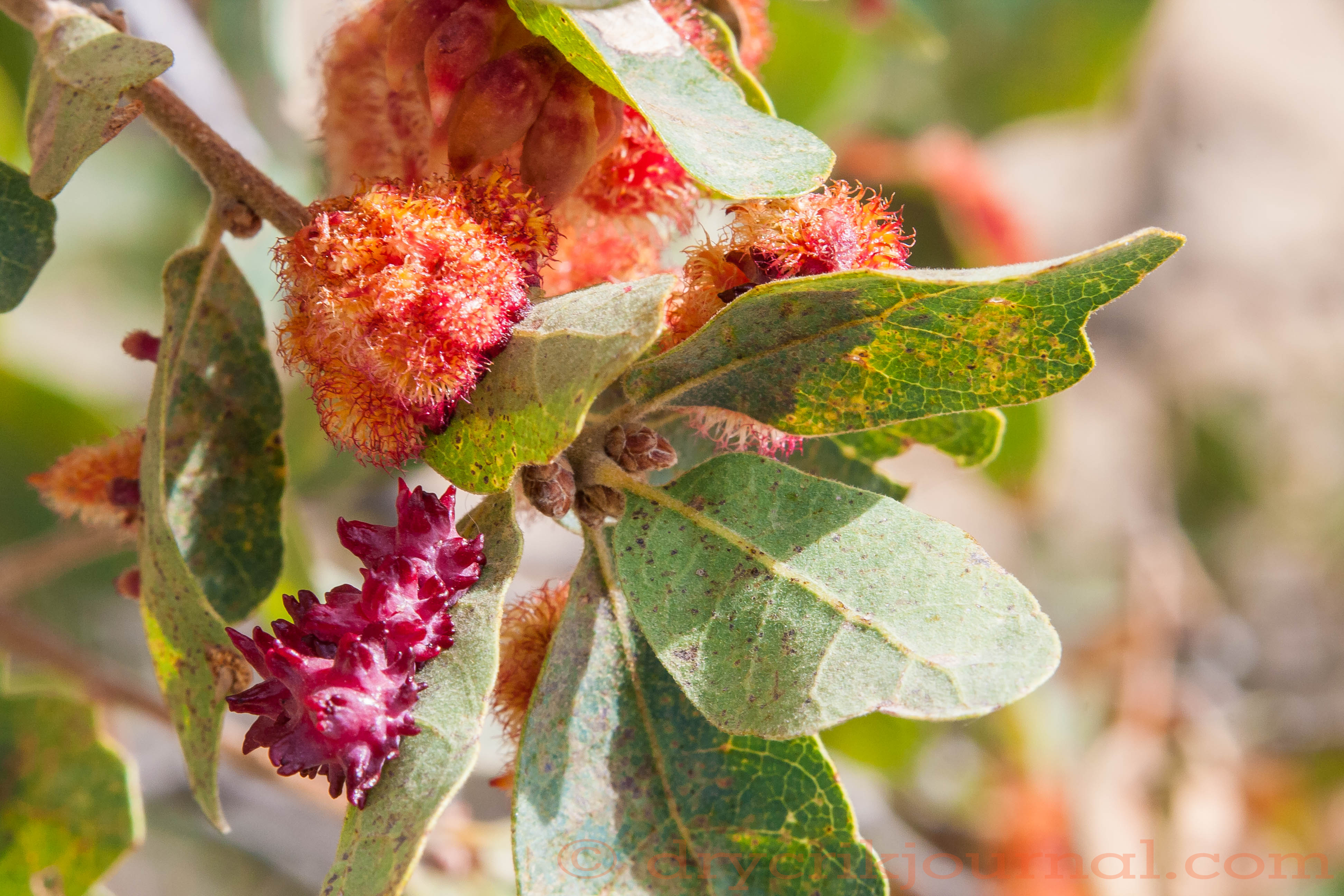
Wool Sower Oak Galls


20150805-IMG_3315


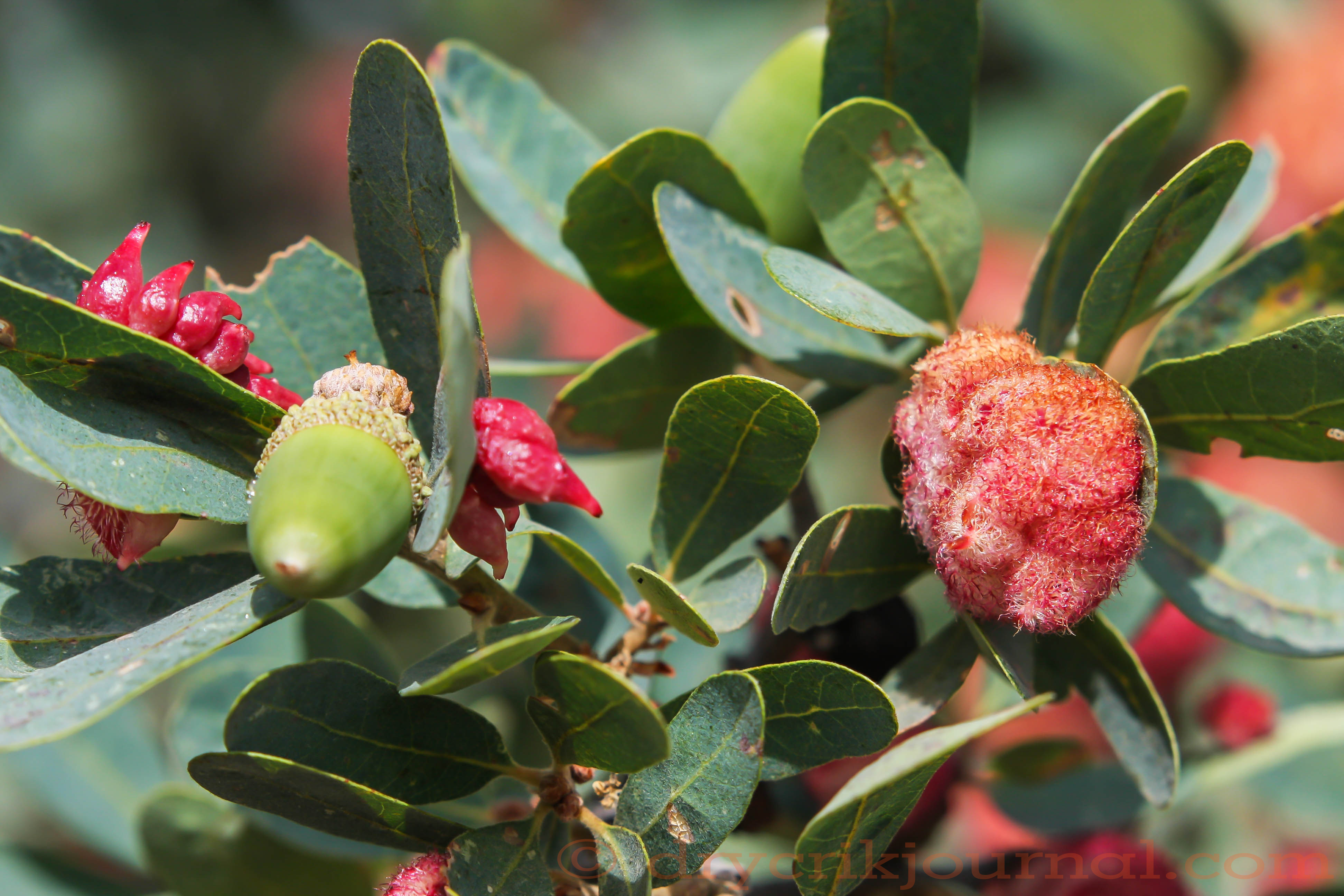
Several Blue Oaks (Quercus douglasii) at the 2,200′ elevation were covered with these galls, ranging in color from rosy red to orange. There are over a dozen different kinds of oak galls, but I’d never seen these before. After a cursory search of the Internet, I’ve identified them as Wool Sower Galls. We have been concerned about the current drought’s impact on the Live and Blue Oaks on the ranch, killing a conservative 10-15%, though we have stands of 10-20 acres that are only leafless skeletons.

Exerts from Glenn Keator’s “The Life of an Oak”, (1998 Heyday Books) is fascinating reading: Whether galls harm oaks is uncertain; their prominence on weak trees suggests that possibility, although most studies don’t implicate galls in the death of oaks. This notwithstanding, heavy infestations may further weaken trees that are already stressed.

One highly specialized group of insects–the cynipid wasps (family Cynipidae)–is responsible for the majority of oak galls. White oaks host the greatest numbers of gall species. And among the white oaks, Quercus douglasii, the California foothill species called blue oak, harbors the most lavish diversity of them all.

Life for a cynipid begins as an egg laid in the young, active meristematic tissues of twigs, buds, leaves, or flowers. Meristems, where cells actively divide to add new growth. Because the newly formed cells have not yet taken on any specialized mature form–they do that later–they are able to accept new “programming.” This is what the cynipid hosts provide.

Some researchers have even gone so far as to suggest that there be actual bits of DNA from viruses in the larvae’s saliva. Viral DNA can replace the genetic machinery of host cells, completely reprogramming them and their activities, though how and why these viruses would have entered into such a specific relationship with the larvae is not clear.

My photos below suggest the Wool Sower Gall evolves from a small red growth that explodes into a hard, wooly-looking gall. It should be noted that these blue oaks are relatively healthy, especially compared to the many around them already losing leaves. It should also be noted that we haven’t seen many acorns for the past three years with the exception of these trees this year. I’ll try to keep track of these oaks and galls going forward, but any more info would be appreciated.


20150805-IMG_3292


20150805-IMG_3320


20150805-IMG_3311


Weekly Photo Challenge (3): “Inspiration”