
When all that follows
begins with a kiss
that only lasts a moment.

When all that follows
begins with a kiss
that only lasts a moment.
Posted in Photographs, Poems 2014
Tagged haiku, Jess and Jaro, Kauai, photographs, poetry, weekly-photo-challenge
Posted in Photographs, Poems 2014
Tagged Dry Creek, haiku, photographs, poetry, weather, weekly-photo-challenge
Paramount on our minds these past two weeks has been the installation of three solar pumps to help keep our water troughs full. Each well is different, and subsequently each pump and solar panel is a little different, though the principle of utilizing the sun’s ultra violet rays to pump water is the same.

The old well at the Red Corrals was severely impacted by a rock and gravel operation upstream about 12 years ago. Only 26 feet deep, we have pumped 30 gpm with a gas driven centrifugal pump since I was a boy. As a shallow well, it has been supported by the Dry Creek acquifer where bedrock ranges between 10 and 30 feet. However, Dry Creek never got that far downstream this year while a pit in the abandoned rock and gravel operation collects most of the underground flow. We had to install a low volume solar pump and small panel to produce about 1.5 gpm or 90 gallons/hour or about 1,000 gallons/day. On a normal year, we ought to produce 3 gpm.

An inholding we lease near the Paregien Ranch already had a solar setup, though the pump had gone bad. When the hard rock well was drilled, the static water level stood at 55 feet in 400’ hole. When we pulled the pump, the static water level was about 90 feet and the pump set at around 125 feet. In the past, it produced 6 gpm, more than we necessary to keep the trough full, the excess went into a pond. With no tank to fill or float to shut the solar power off, it ran every daylight hour that probably contributed to the pump’s short life. Until a tank and float can be installed, I’ve reduced the voltage to where it is only producing about 2 gpm.

The abandoned hard rock well on the Top of the Paregien Ranch is 220 feet deep and when drilled ran 6 gpm over the wellhead. The tenant who preceded us over-pumped the well for his horticultural activities to the extent it no longer produced. In recent years, it has begun to artesian again, but only drops. We set the first pump at 30 feet, but could not maintain 3 gpm for more than 30 minutes. The second, low volume pump we set at 110 feet. Yesterday morning the pump had shut off when it ran out of water at 3 gpm. According to our calculations, it would take 5 hours to pump the volume of water in the well above the pump if nothing came into the well. Allowing 24 hour recovery time, I’m going back this morning to reduce the voltage to produce 2 gpm to see if the pump can maintain the storage tank and trough. Failing that, we’ll add more pipe, as the pump is designed for low volume at a greater depth.

With the extra water we have produced, the troughs at the Windmill Spring were all full at midday. To revisit past posts about the Windmill Spring see: June 29, 2014 and July 5, 2014
Posted in Photographs
Tagged Drought, Paregien Ranch, photographs, solar panels, Solar pump, water, weather, weekly-photo-challenge
Posted in Photographs, Poems 2014
Tagged corrals, Gooseneck, Greasy Creek, haiku, photographs, poetry, Sulphur Ridge, weekly-photo-challenge
Posted in Photographs, Poems 2014
Tagged Drought, Dry Creek, haiku, Hay, photographs, poetry, rain, weather, weekly-photo-challenge
Posted in Photographs, Poems 2014
Tagged Drought, Greasy Creek, haiku, photographs, poetry, rain, water, weather, weekly-photo-challenge
Posted in Photographs, Poems 2014
Tagged Dry Creek, haiku, Homer Barn, photographs, poetry, weekly-photo-challenge
Posted in Photographs, Poems 2014
Tagged Dry Creek, haiku, photographs, poetry, red sky, Venus, weekly-photo-challenge
Posted in Photographs, Poems 2014
Tagged cows, haiku, photographs, poetry, weekly-photo-challenge
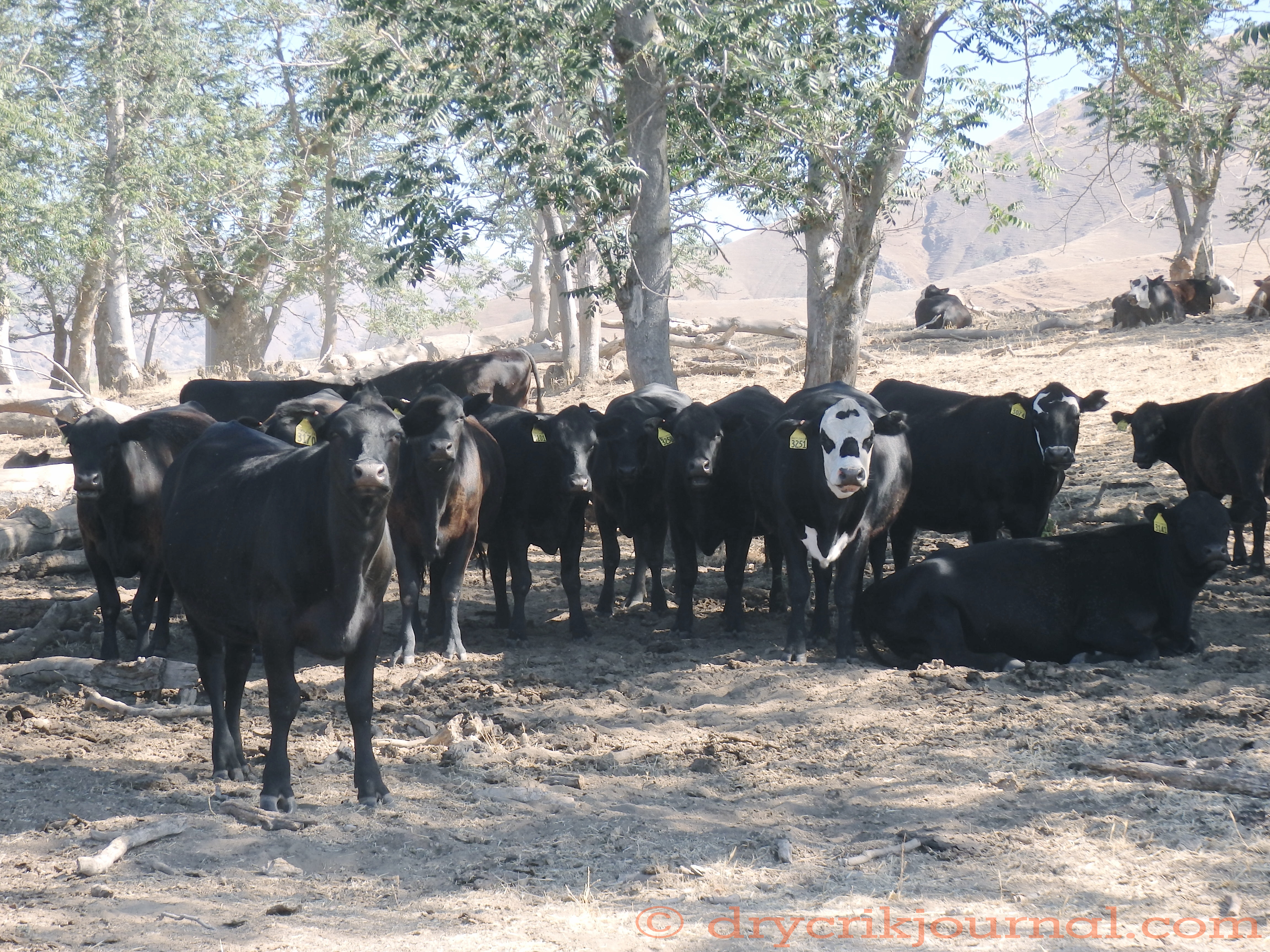
These girls, bred to Wagyu bulls from Snake River Farms in Idaho, will be two years old this fall and are, on average, 60-90 days away from having their first calf. Feeling full, they have retired to the shade by early morning. No longer big calves, they are becoming cows, aware of something inside them, and will continue to be slightly restless and uncomfortable until the calf is born. Each first-calf heifer handles this new state of being a little differently as instinct overcomes confusion to varying degrees.
Because of the drought, they have access to the irrigated pasture where we normally run our weaned heifer calves, but we kept no replacement heifer calves this year due our shortage of feed and the time required—nine month gestation and another nine before a calf is weaned—to generate any income. We are looking forward to these girls becoming exceptional mothers.
Posted in Photographs
Tagged Drought, photographs, Replacement Heifers, Snake River Farms, Wagyu, Wagyu X, water, weather, weekly-photo-challenge








 drycrikjournal