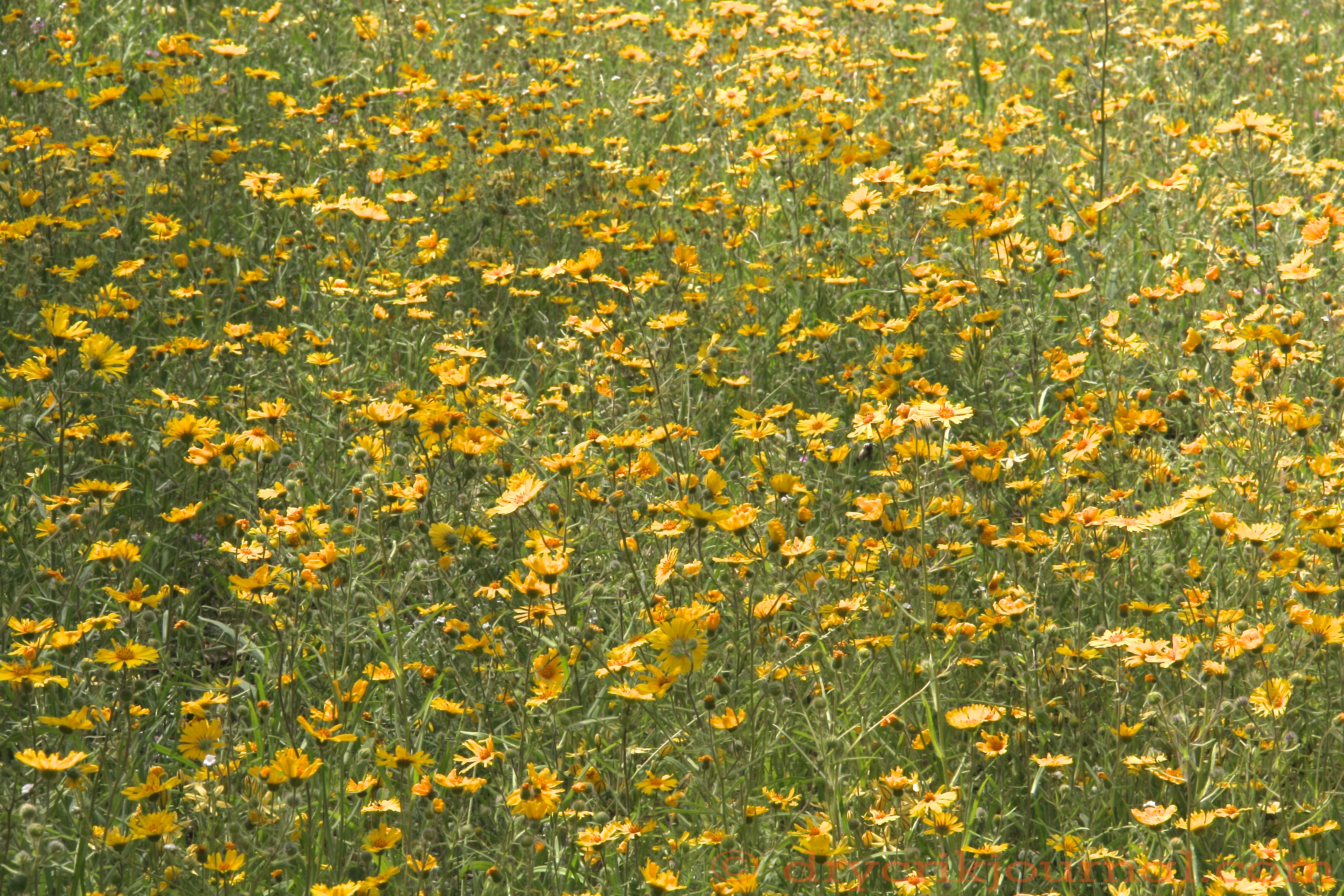
On the dark side,
colorful glimpses of spring
that we just can’t believe.

On the dark side,
colorful glimpses of spring
that we just can’t believe.
Posted in Photographs, Poems 2014
Tagged Drought, Greasy Creek, haiku, photographs, poetry, Pretty Face, Sierra Tidy Tips, Sulphur Peak, weather, wildflowers

The earth like a clean sheet waits
for dawn through cold, gray cumulous
stacked atop hillsides of bare, dark clay
after a thunderstorm’s harsh scouring—
each thin blade stimulated, invigorated
to meet tomorrow with alacrity,
reckless grins upon every face
and we, foolishly, have no choice
but to imitate the mob’s delight
and forget the dry for a moment
to consider the range of this miracle—
of our goddess-come-home-late
and gone-so-long we have forgotten
what she looks like—what we
have taken for granted, and why.
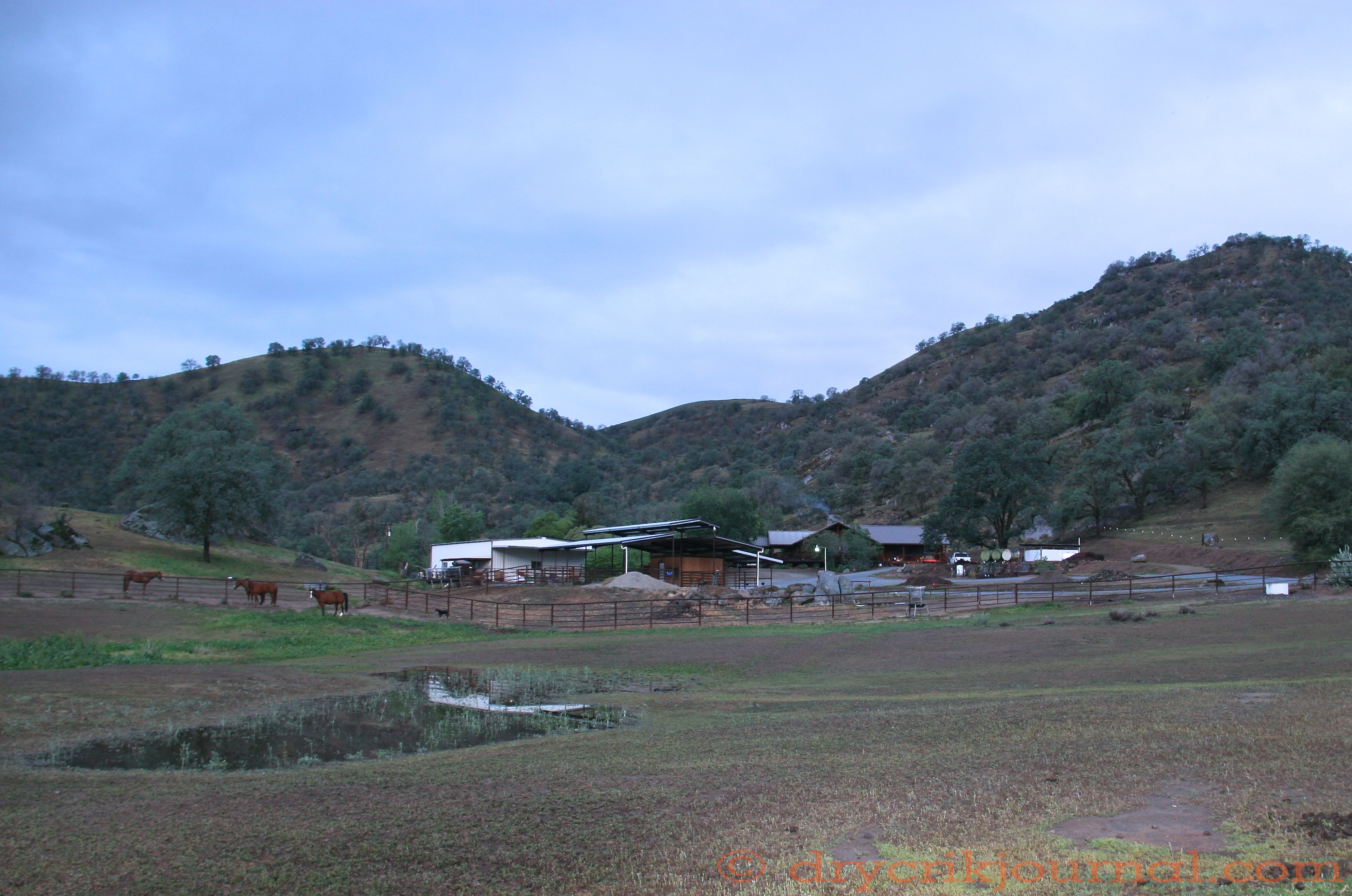
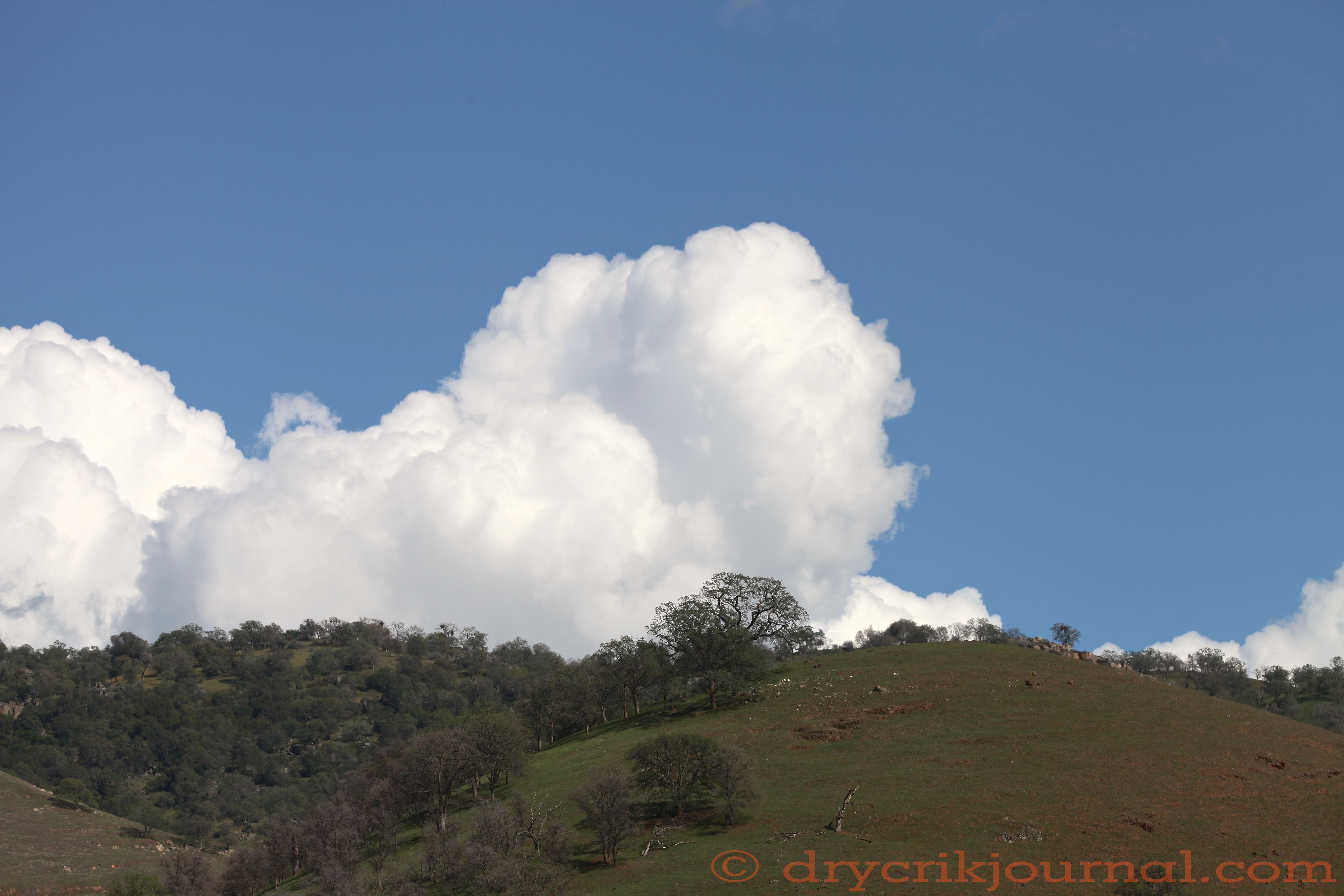
One measure of yesterday’s rain event, the largest all season long, are the puddles in the horse pasture the Wood Ducks have yet to find early this morning, many of which have left Dry Creek without nesting. Two related thunderstorms poured through the afternoon and into the night to leave 1.91″ in the gauge, roughly 25% of our season’s total. This will prolong our feed in the granite above 2,000 feet for two or three more weeks and add life to our stock water ponds. I don’t expect much impact to what’s left of the feed on our clay slopes at the lower elevations, but anything that may be still green will appreciate the moisture.
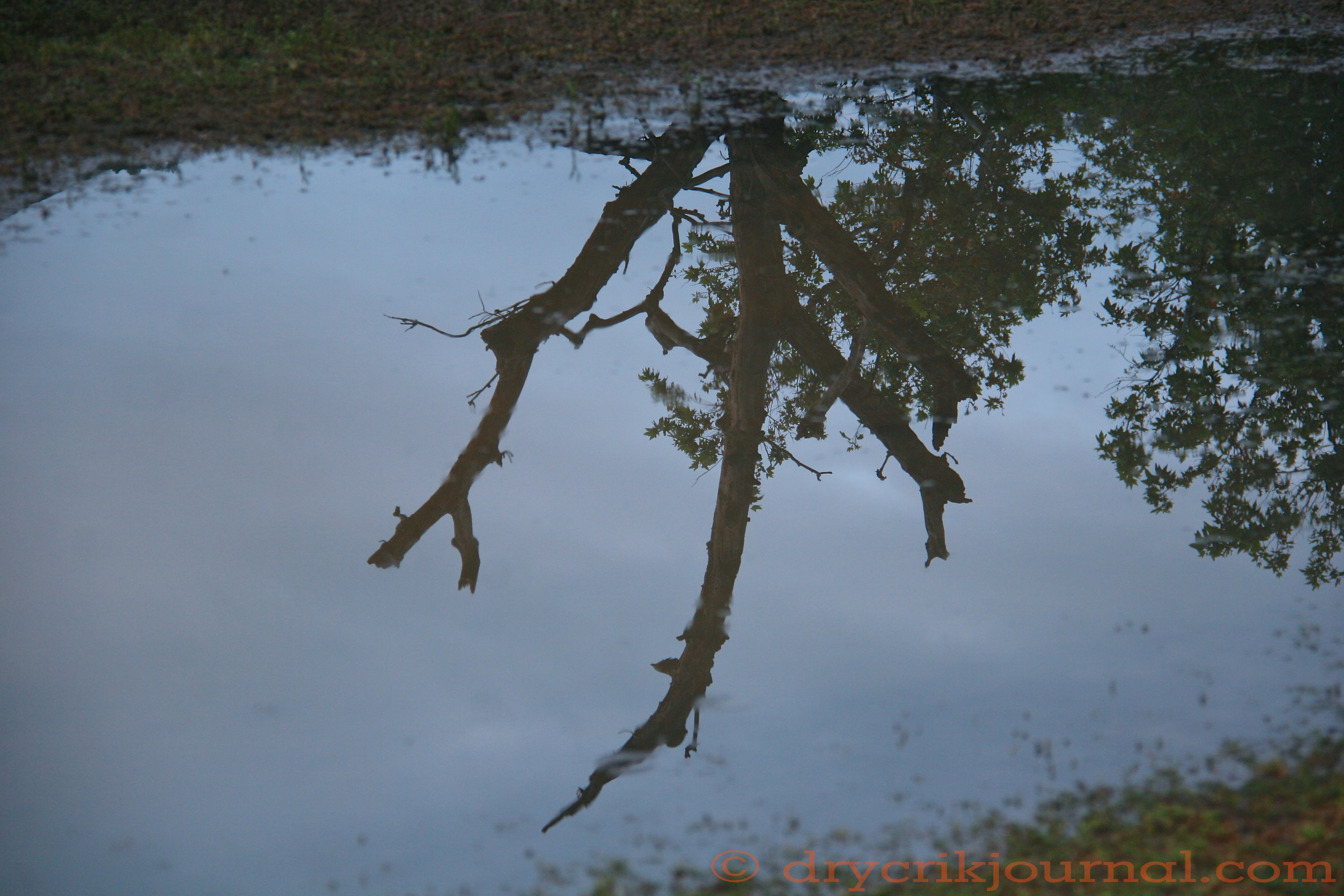

The past two dry years have been tough on the Great Blue Herons here, resorting to year-round rodent hunting to sustain themselves. With a measureable flow for only 18 days this year, absorbed before it made it to the Kaweah River, Dry Creek peaked at 9 cfs on April 3rd, compared to the 2010-11 season when Dry Creek ran until September 4, 2011. It’s too late for the chance of showers (and thunderstorms) today and tonight to help our feed or the herons much other than settle the dust and temporarily change the smell of things with only 5.67” of rain since October 2013. Those are the numbers, but one look at our April feed conditions says it all.
An image branded in my brain during the devastating Drought of 1977 is that of a Great Blue Heron fishing from the concrete bank of the Friant-Kern Canal near Exeter that gave me hope, that demonstrated their adaptability to me. No wonder they have become our totems—now if we can just take their lead.
Posted in Photographs
Tagged adaptability, Drought, Dry Creek flow, Friant-Kern Canal, Great Blue Heron, Kaweah River, photographs, water, weather
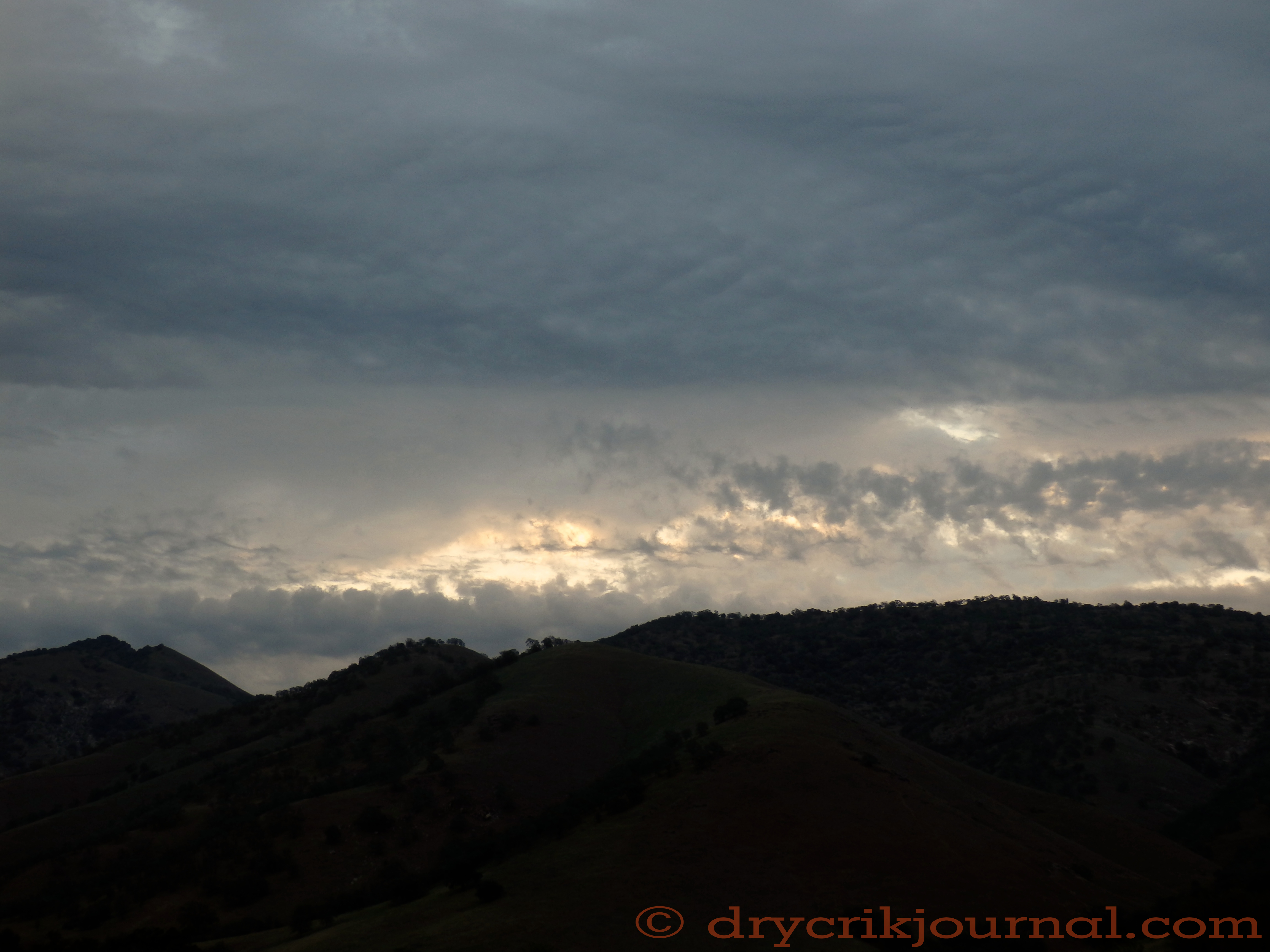
Most days, they can’t see
outside the fort, foothills full
of native ghosts in wild skins
and fine feathers, or the clouds
that boil, fume and sometimes
storm for the fun of it.
Busy with new rules to keep
the stockade safe, they can’t hear
the coyote’s wail in the street—
we live outside its walls
by the same laws
the bird and animal people left us.
Posted in Photographs, Poems 2014
Tagged Fort Visalia, Frank Latta, Nathaniel Vise, photographs, poetry, rain, red sky, Tulare County History, weather, Yokuts
Certain privileges, prerogatives
to come and go as she pleases,
she’s more like a cat than a cow,
sometimes leaving reasons to return
now, like ex-lovers can, dancing
at safe distances out of reach
and out of touch. I don’t begrudge
her company, her gossamer veil
or frivolous wet kisses—she does
what she wants. We don’t have to be
in love, but his ground needs more—
and repeated thunderstorms of lust.
Clear and crisp yesterday afternoon, I took a short walk down the driveway with the big lens towards the Prickly Pear cactus where the Roadrunners are nesting, wanting also to show you how the Filaree has come back in a week’s time after 1.38″ of rain. Growing again, it’s amazing feed! (Click to enlarge the thumbnails below.)
March 25, 2014

April 1, 2014
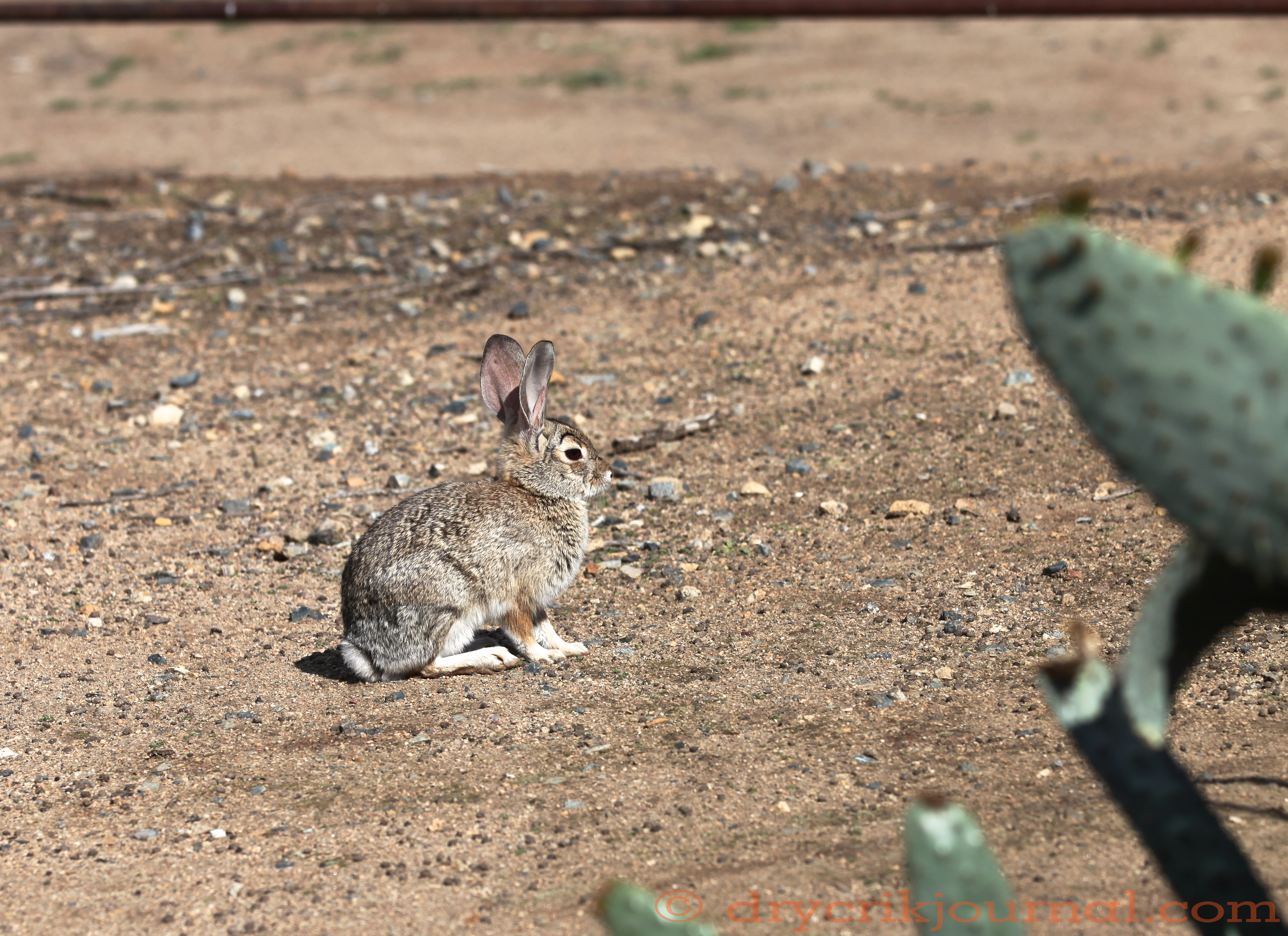
The Roadrunners share their Prickly Pear home with about a dozen Cottontail rabbits who delight in waiting until the last moment before moving to avoid a vehicle coming or leaving the house. They’re fairly tame, but it’s a rare Bobcat or Coyote that can catch one.
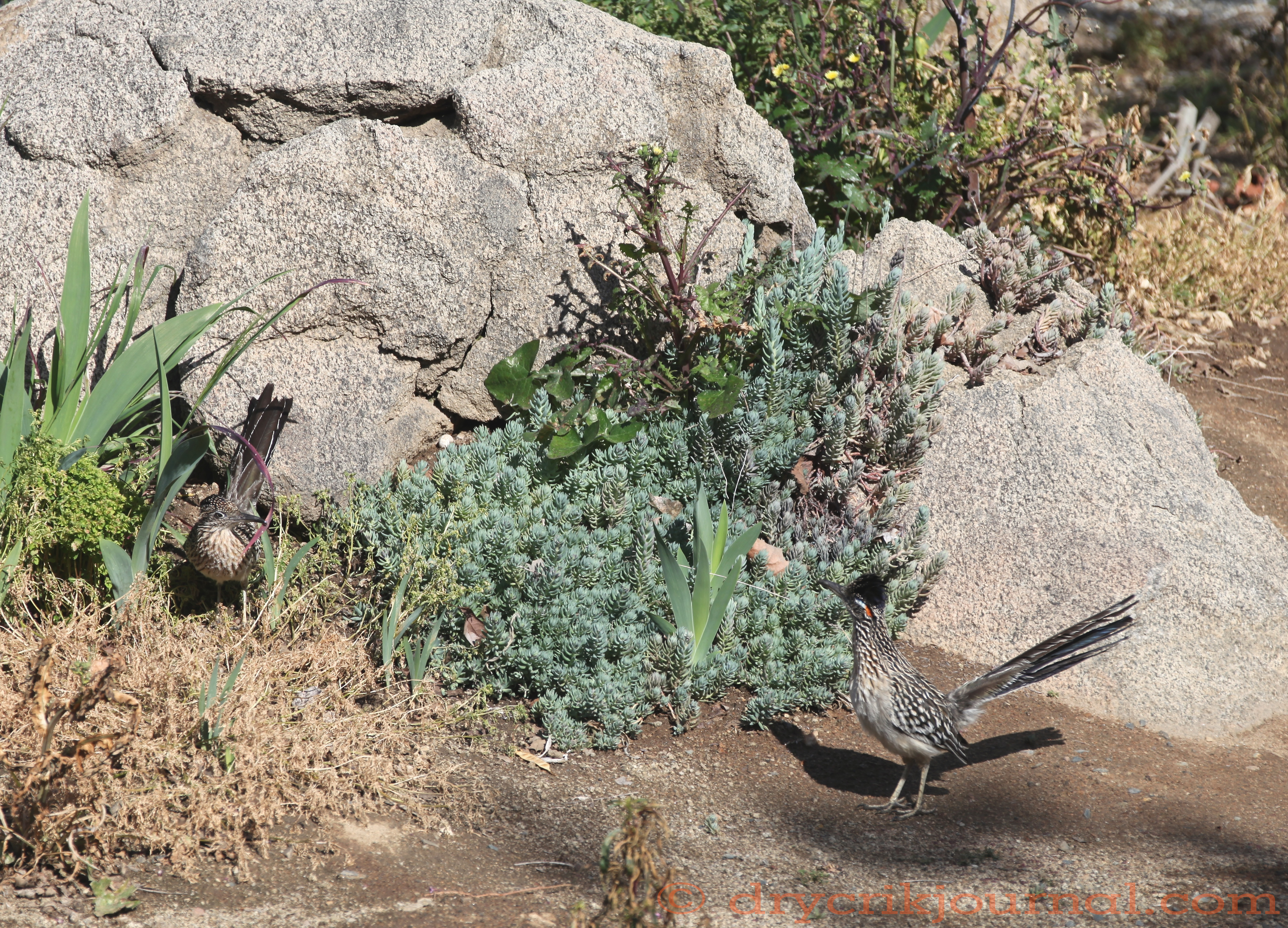
Back at the house, the pair of Roadrunners were hunting snails in Robbin’s Irises.

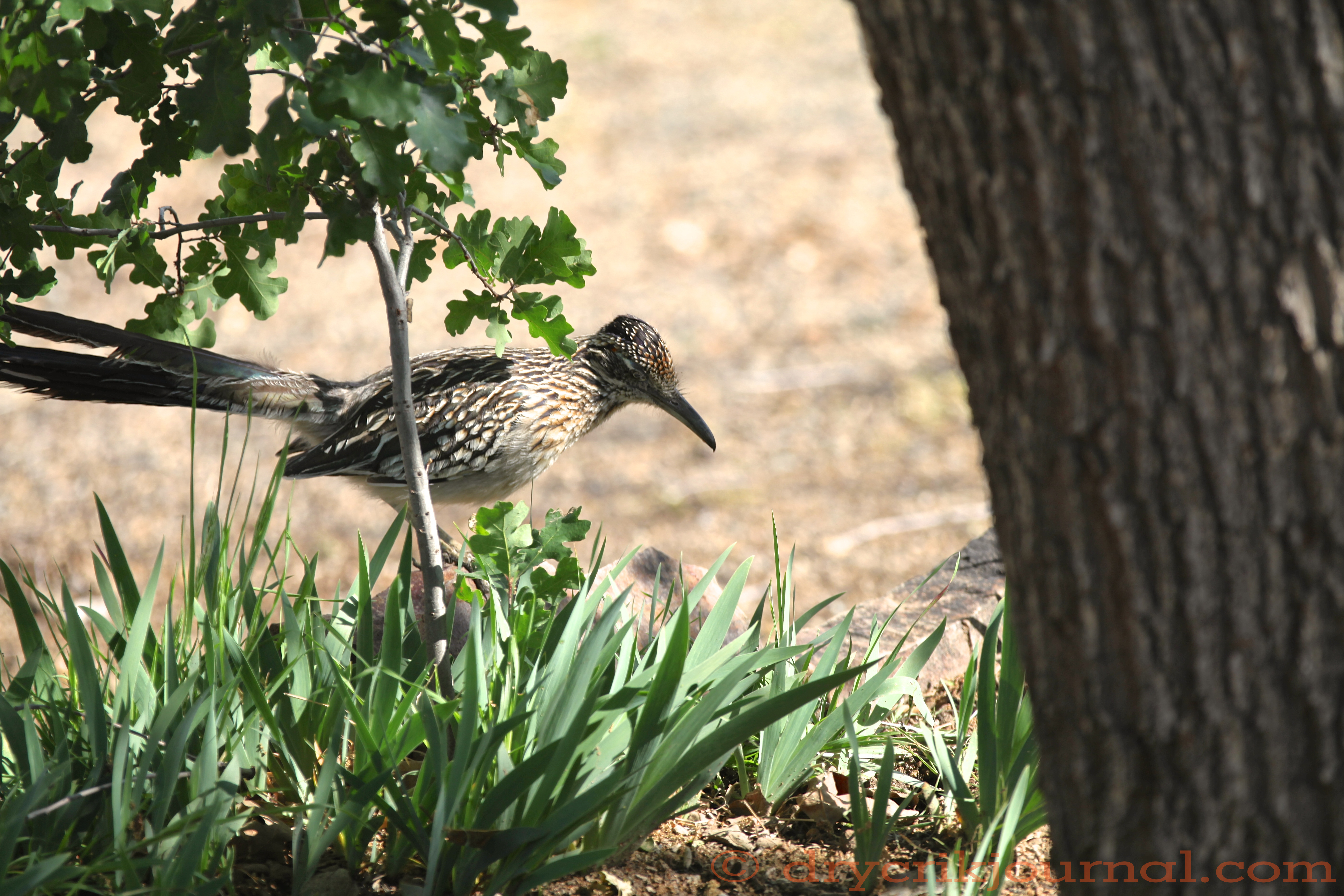
A beautiful day for fools, we never left home with plenty to see and do between rains.

With native grass
we cling like clouds of steam
to hillsides after a rain.
I stumble on Bukowski early in the dark
morning, pleased to hear him voice
basic town stuff from the other side
of the page, but glad he’s not been
riding shotgun through this drought,
cussing everyone including God.
We hung a little hope on the gray
rolling in, gathering on the ridges—
on gusts stirring up, then down canyon
and grinned like foolish children
who still believed in weathermen
and Santa Claus. We dreamed
of how much rain it would take
to fill all the new cracks in clay
where the thin grass fades—
of an errant thunderstorm
that could fill the dirt tanks
and let the creek run
enough to meander and pool
under canopies of sycamores and oaks
for the Wood Ducks, cattle and us.
Through the black screen door,
wind under my skin,
I hear it begin to rain.

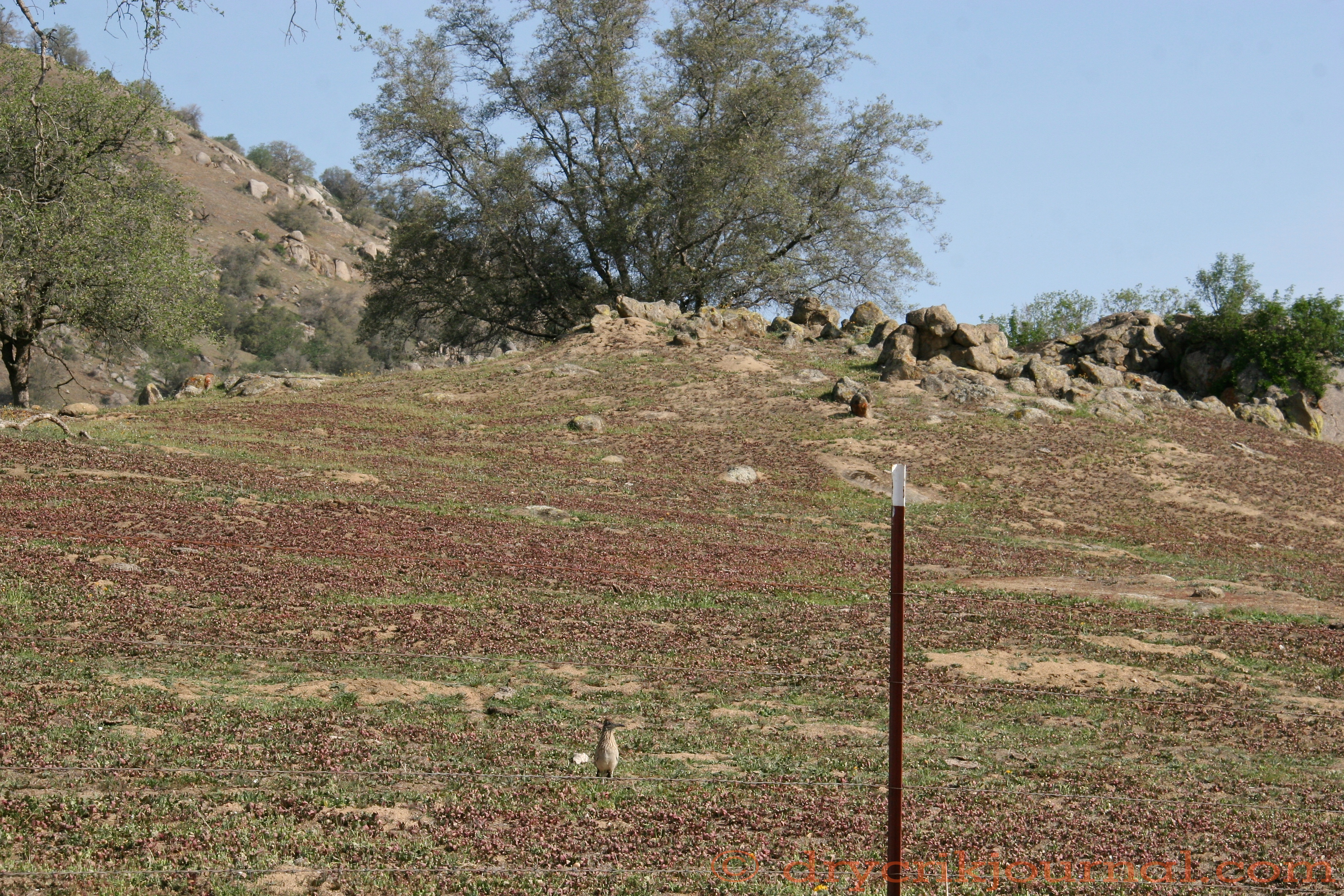
Ever-hopeful and in anticipation of tomorrow’s rain, I took a few photos of today’s feed conditions, intending to concentrate on the filaree, having turned red a week or so ago in places, then purple and brown. A miraculous and extremely strong non-native cattle feed, it is the predominant species in dry years. With good moisture, it can come back to life and turn green again. With less than 4” of rain and only about 30 days left in our rainy season that averages about 16” annually, the grasses never really germinated completely, resulting in a mosaic pattern almost everywhere today.

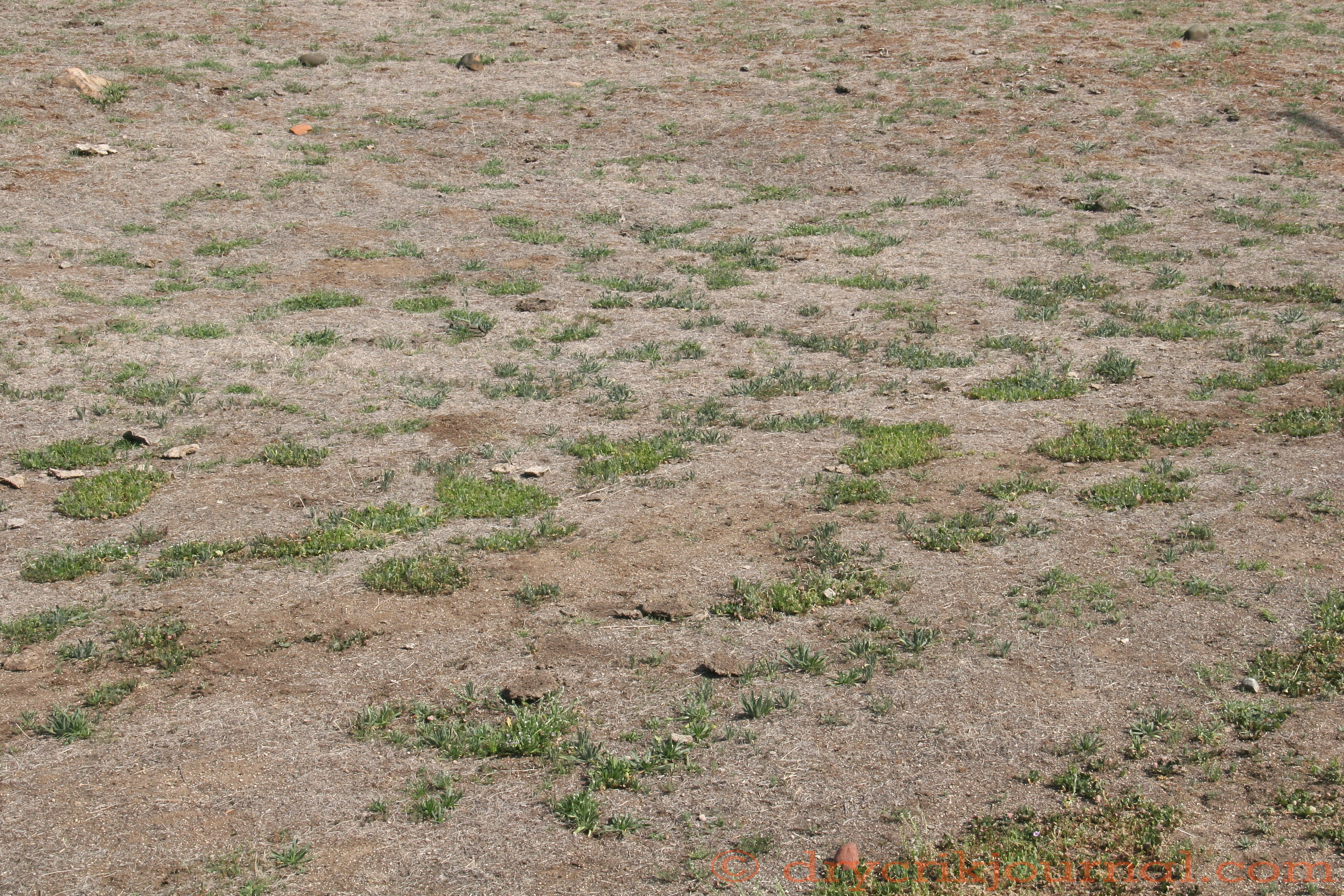

Just through the fence that separates our driveway from the pasture, I wanted a good shot of where the filaree had turned a purplish brown, only to draw one of the Roadrunners nesting in some nearby Prickly Pear cactus, closer.




 drycrikjournal