Tag Archives: weather

THIRD CALF


20160904-a40a1837


She knows now,
how to be a mother—
shield innocence

with shadow
and sharp eye,
give meaning

to the soft talk
that reverberates
with familiarity

upon each breath,
the language of cows:
the umbilical stretched

from the warm womb
to grow and graze
a dry and brittle world.

Born in a drought,
she can be a mother
in any kind of weather.


First Light


20160828-A40A1698


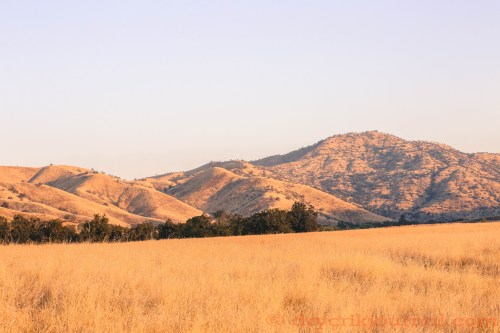
Our rainfall fared better than the Coast Range and Southern California last season (October through April), breaking a four-year drought for the Southern Sierra Nevada foothills with some good spring rains that have left us a legacy of ample dry feed as we approach the fall. The sun was just breaking the ridge (to the right of the photo) this morning, the base of Davis Mountain and Dry Creek still in shadow.

Followers of this blog know that August is our indicator month, a thirty-day cycle yet to be confirmed in September, as a layman’s forecast of our weather in October and November, the beginning of our rainy season. As the Emperor Grape season often went well into October, my father depended on this approach for getting his grapes picked before the rains.

From the Solstice to August 25th, we’ve had only three days here with highs below 100°— warmer than average, though I suspect our morning lows have been cooler than average. Discounting monsoonal flows that were nearly nonexistent this summer, we are now experiencing our first indication of a weather change. A cursory look at our weather journal, yet to be confirmed in September, indicates a fairly stable pattern with little rain. The Old Farmer’s Almanac and other early prognostications call for a drier than normal fall and winter that may translate into a trend towards more dry times.

Climate Change has become a political argument stretched to unreasonable extremes, but from our vantage point, hot and dry are the current reality, regardless of causes, that we must live with and adapt to in this business. The much-ballyhooed El Niño failed to relieve much of California, defying all weather models. Assuming the extreme weather conditions all over the planet, that have impacted more than just agricultural interests, have also defied most patterns, I’m guessing a whole new set of computer models are being developed.

We are engaged in a weather-dependent way of life we call a business, and console ourselves by conferring a feminine gender to our weather, repeating our mantra, often in awe, by saying “she can do whatever she wants, whenever she wants.” With the bulk of summer behind us, we have enjoyed pleasant evenings and mornings for most of August.


Sunday Breakfast


20160807-IMG_5655


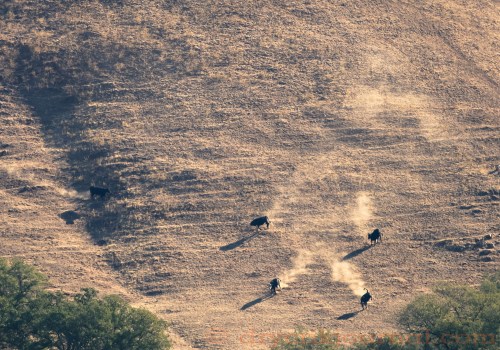
Temperatures have eased off in the past few days, mornings in the low 60s, allowing our cattle a little more time to graze. The replacement heifers were undeterred by the Kubota or my presence this morning while the pump was filling their stockwater tank, intent on breakfast before heading to shade.

Though the highs have been just over 100 here, a good part of the day feels like fall, though we know summer is a long ways from being over, but a welcome relief from the highs of 113 at the end of July. Forecasts for the next ten days appear to be relatively mild, more of the same.


From Alta Peak to Sawtooth


April 2, 2016

April 2, 2016


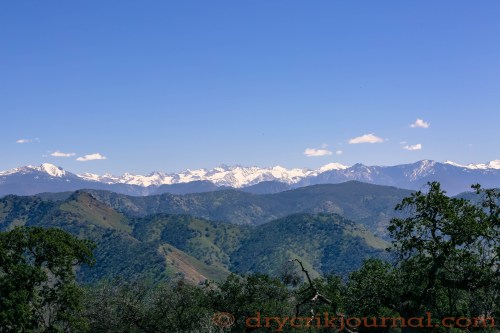
Despite hopes that El Niño conditions would erase the impact of four years drought in California, the Sierra snowpack fell short of normal for April 1st. Even though this winter’s storm track targeted the northern Sierra Nevada, the region still measured only 97% of normal, while the southern Sierra measured only 72% of normal water content.

If rainfall amounts on the ranch are indicative of the southern Sierra Nevada foothills, we are currently above average for the season with the month of April yet to contribute, 18-20 inches thus far as opposed to our 14-15 inch average. However, the San Joaquin Valley floor didn’t fare as well, the town of Hanford still an inch below normal. Typically this year’s northern storm track stacked against the Sierras, bleeding south with rain, but missed much of the Valley floor.

Here on the ranch, it’s been a great grass year where most springs and stockwater resources have recovered. The south and west slopes have already turned as spring temperatures have been running well-above average. Still green in the flats and on the north slopes, we’ll be weaning some fat calves in 30 days.


more California weather info


AT ONCE


20160306-IMG_1692


Canyon gray,
light warm rain,
glass of wine at dusk,

and we enjoy the sound
of small drops
on a metal roof,

tinkling ricochets
in stereo downspouts
that insulate

our momentary sighs,
escaped breath rising
on words overheard

only by the gods
and fickle goddesses
somewhere overhead.

Not the storm predicted,
not the flood
to erase the drought

that won’t release its grip
for years, if ever,
talons sunk in our flesh—

this crease of earth and rock
that’s heard it all before
from generations of oaks

and sycamores, cattle
people and natives,
all sighing at once.


HERE


jddc1


There might have been another way,
other people, places, things—more or less
obstacles to overcome, rest upon—

but no straight line, no short cuts
across the board to get to this spot
along the creek waiting for a rain.

I believe the weatherman, refresh
my contact with the goddess,
send my love in letters, words

rearranged to attract her
attention, but I’m no lackey
to scrape and bow, grovel at her

pretty feet. It’s not the same as before
she left without a sign or warning.
There might have been another way:

studied harder, charged more
for a shorter trip across the board—
but how could HERE ever be the same.


‘Spry’


20160224-IMG_5158


JEG:

Despite January rains and El Nino prognostications, we’ve hit a typical winter dry stretch. Instead of 2 weeks warm and 2 weeks cold sometime in February,
the month has been warm, half the days thus far over 70 degrees. Relative perhaps, the trend is dry with expectations of an early and short spring. Stock water resources have nearly recovered, with more grass than cattle after four years dry, we should survive the coming summer and fall well, a familiar concern more normal than not for spring. Our country looks good, wildflowers spreading like wildfire upon the green, snow in the Sierras 1,000-1,500’ higher than we’d like to see. It will change quickly if the mid-70s, without rain for the next ten days, come to pass.

Garnered from branding photos, my ‘looking spry’ has connotations reserved for the old, the aging and antique that startle me, yet somewhat gratified that I can
still rope and ride. I was the old man in the branding pen yesterday with Brent Huntington’s uniformly big calves. Once untracked, I roped well, probably better than when I was younger worrying about how my horse and I would perform in the corral. Nowadays, the challenge is to be some help. On the way off the hill looking down on Three Rivers, Robbin and Terri compared my ‘style’ to that of the old timers, the generation before me, a compliment. To have an effective ‘style’ is beyond any expectations of the last forty-five years of branding calves, what has become more of a mindset apart from just catching that favors first the horse and calf.

Now sorted-off with the elders in this business, what did I have to impart over steak sandwiches and beer instead of politics yesterday? Be grateful that you don’t have to punch someone’s time clock in town, or commute to work, or have to listen to the noise of human neighbors, sirens, traffic. How much of the politics of the world actually touch us here in these hills, change how we have lived and worked over the years? This is another world, a forgotten world we adapt to, and no matter what the majority decides, what laws it passes, it has to eat.

So yes, I have been granted a little luck, to ‘look pretty spry whether tossing a loop or wielding an iron’.

J


Dry Creek Running Red


20160218-IMG_1518


Somewhere upstream it rained hard on clay ground early Thursday morning, rainfall amounts varied drastically. We received 0.44” at the house. Two miles downstream received only 0.22”. Rain and hail three miles upstream amounted to 1.2” in this latest storm event. When the photo was taken around noon yesterday, Dry Creek was flowing at 28 cfs, a far cry from 542 cfs on January 31, 2016. No rain in the forecast until the end of this month.

According to El Niño experts, all the elements for a wet spring are still in place despite our dry and warmer than average February. Parts of California have fallen behind average rainfall amounts as the state hasn’t quite shaken the pattern set by four years of drought. Most of the Sierra snow below 7,000 feet that came at the end of January is gone with temperatures ranging in the mid-to-upper 70s this month.

What March and April will bring is anyone’s guess, but the current trend is dry. For those of us in the business of harvesting grass with cattle, it’s not so much about how much it rains, but when—timing is everything. Any accumulation of snow for Valley agricultural surface water users diminishes as we go forward with little or no significant increase in groundwater recharge.

At this point in time, El Niño has kept us alive, but hasn’t erased the impacts of four years of drought.


BACK TO LIFE


October 5, 2013

October 5, 2013


The ground swells with the storm,
penetrates to granite rock
leaking rivulets in predictable places

and I want more to flood memory
of the dry years, smooth their track
chiseled in the walls of my skull, yet

outside myself: a perfect miracle
as the earth takes slow swallows first.
I am this place despite my selfishness,

my impatience and vengeful desire
to forever purge this drought
as my flesh comes slowly back to life.


Back to Work


20151229-IMG_5532


Though the impacts of our four-year drought are fresh in everyone’s mind, and far from mitigated by recent rains, our approach to work has changed. With most stockwater ponds less than half-full and Dry Creek just beginning to run, no one dares suggest that the drought is over.

But instead of gathering and branding calves in the dust this year, we are watching weather forecasts trying to get our calves marked between storms. But so are our neighbors with whom we trade labor. It’s tricky business, though a welcome change.

Trying to get anything done between Christmas and New Year’s Day is usually futile, but with a promise of over an inch of rain early next week, we’re branding another bunch this morning. We gathered Tuesday and Wednesday, cut wood for the branding and cook fires, planned a meal, and even had to weed-eat the grass in the corrals so we could rope today. The pace has been tough, but with an eye towards the coming El Niño, no one is complaining (too much).

Eight inches to date on Dry Creek, more than the 2013-14 season.