It sounds like MASH as helicopters fly over the house, back and forth to Lake Kaweah, to address 8 fires set this a.m. between 6:30 and 6:45. All but a couple of fires in rough terrain are contained. Three weeks ago we had 4 sets. Every year we blade about 3 miles of firebreak between us and the road with our skid steers. Additionally fixed wing aircraft and a DC 10 jet, 2 dozers, and about 50 engines and water tenders are on the job as I write.
The spring rains brought good feed and fuel for fire that has attracted our society’s deranged, whether gang initiations or other odd and complex maladies. Needless to say, we’ll keep our eyes peeled.
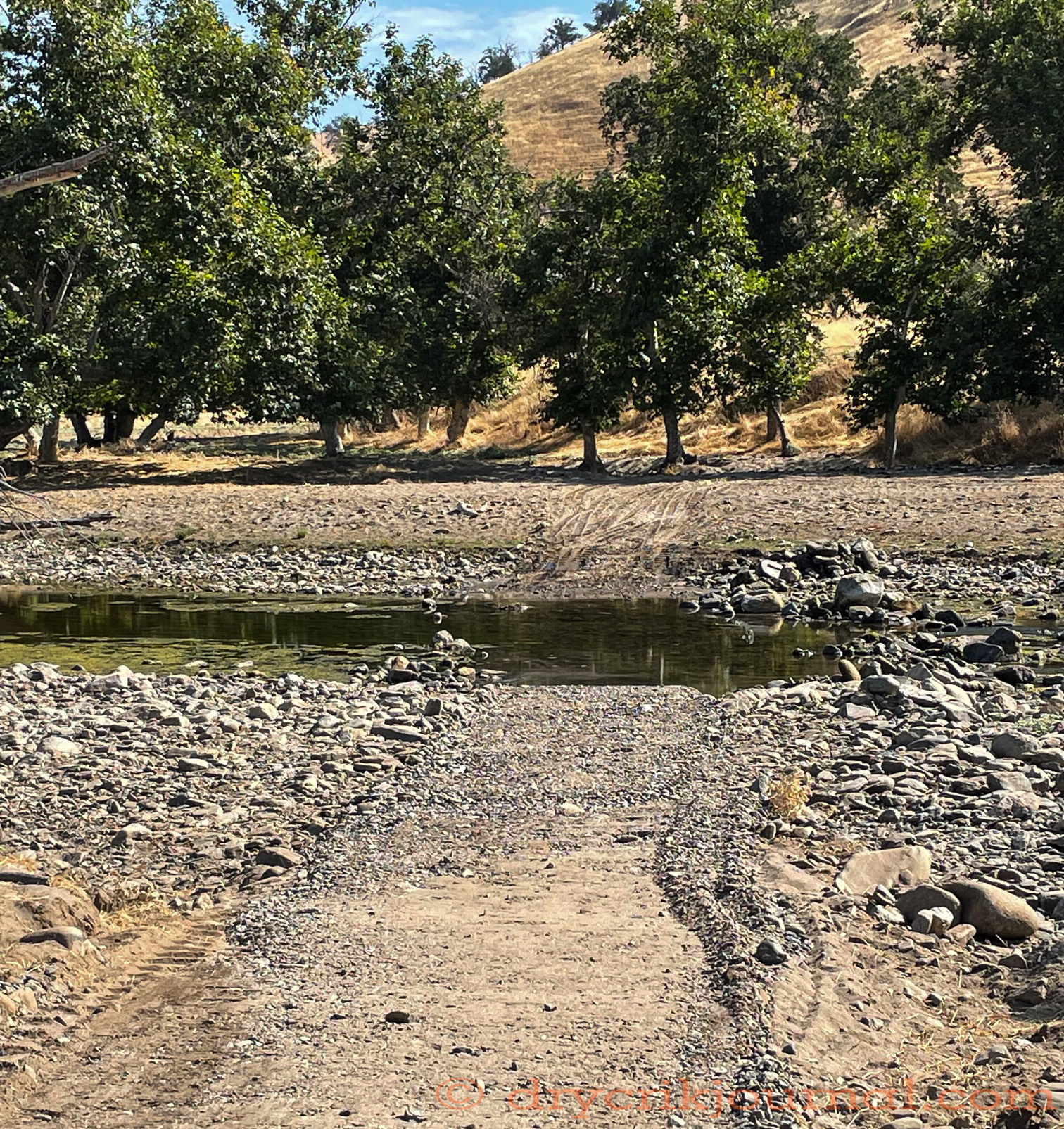
I don’t recall Dry Creek ever flowing into August, as springs continue to feed this morning’s 9 cfs (cubic feet/second). March’s atmospheric river estimated 8,000 cfs, that scoured the channel and undermined the gauging station, left few places to cross the resultant boulder fields and cutbanks. Only now, as our cattle work winds down, do we have time to address some of the impacts of last spring’s rains.
Both for vehicles and cattle, I had to move our crossing downstream. Moving the big rocks was rough work for the skid steer, but I had all the materials I needed in the high water drifts of sand and gravel to smooth the crossing this morning—less than a three hour job. On the way to the corrals, hoof action of our replacement heifers will smooth it a little more.
We’re looking forward to September when the cows begin to calve, another month of a hundred degree weather that often extends into October, but the hot summer days are getting shorter.
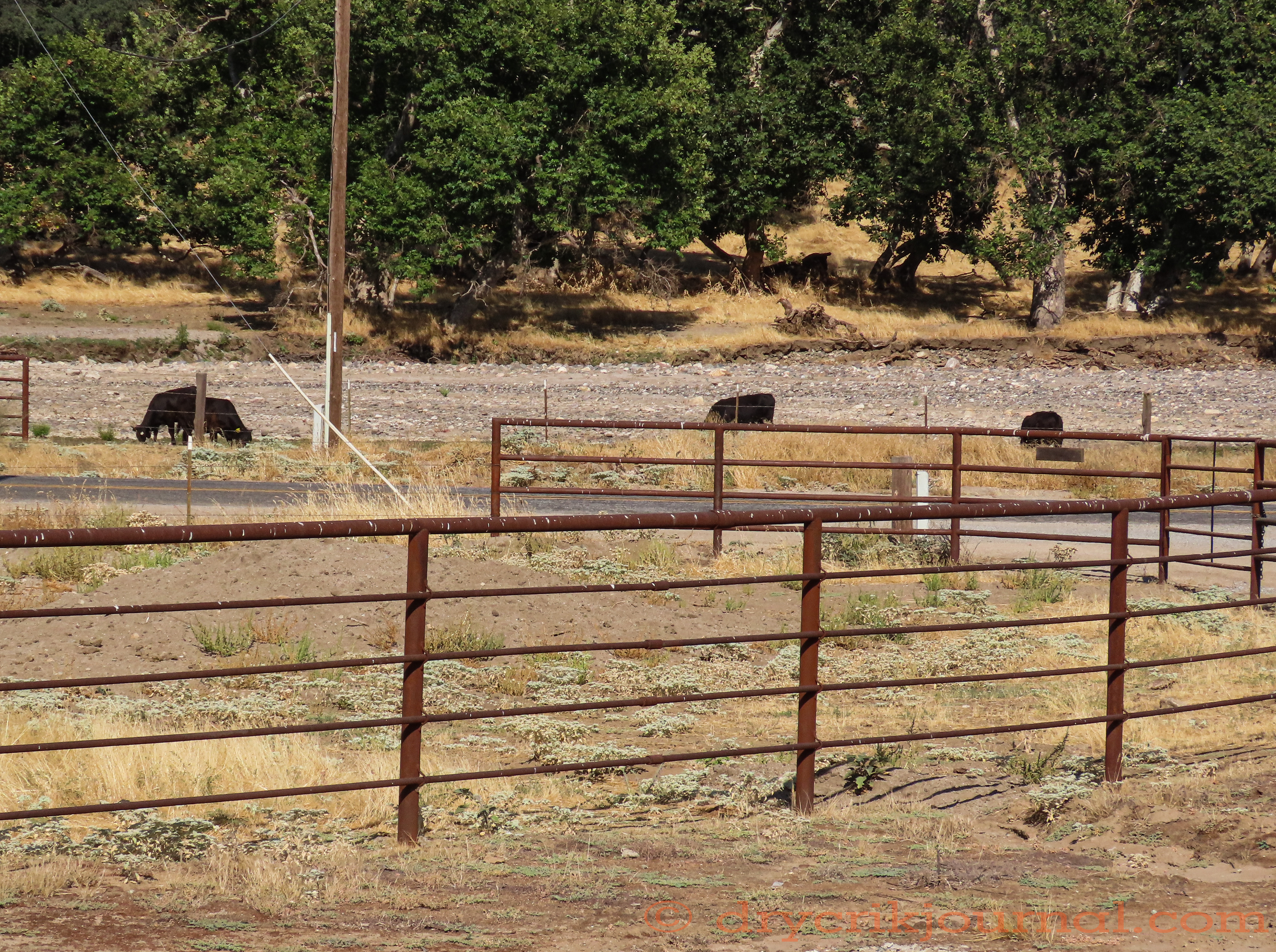
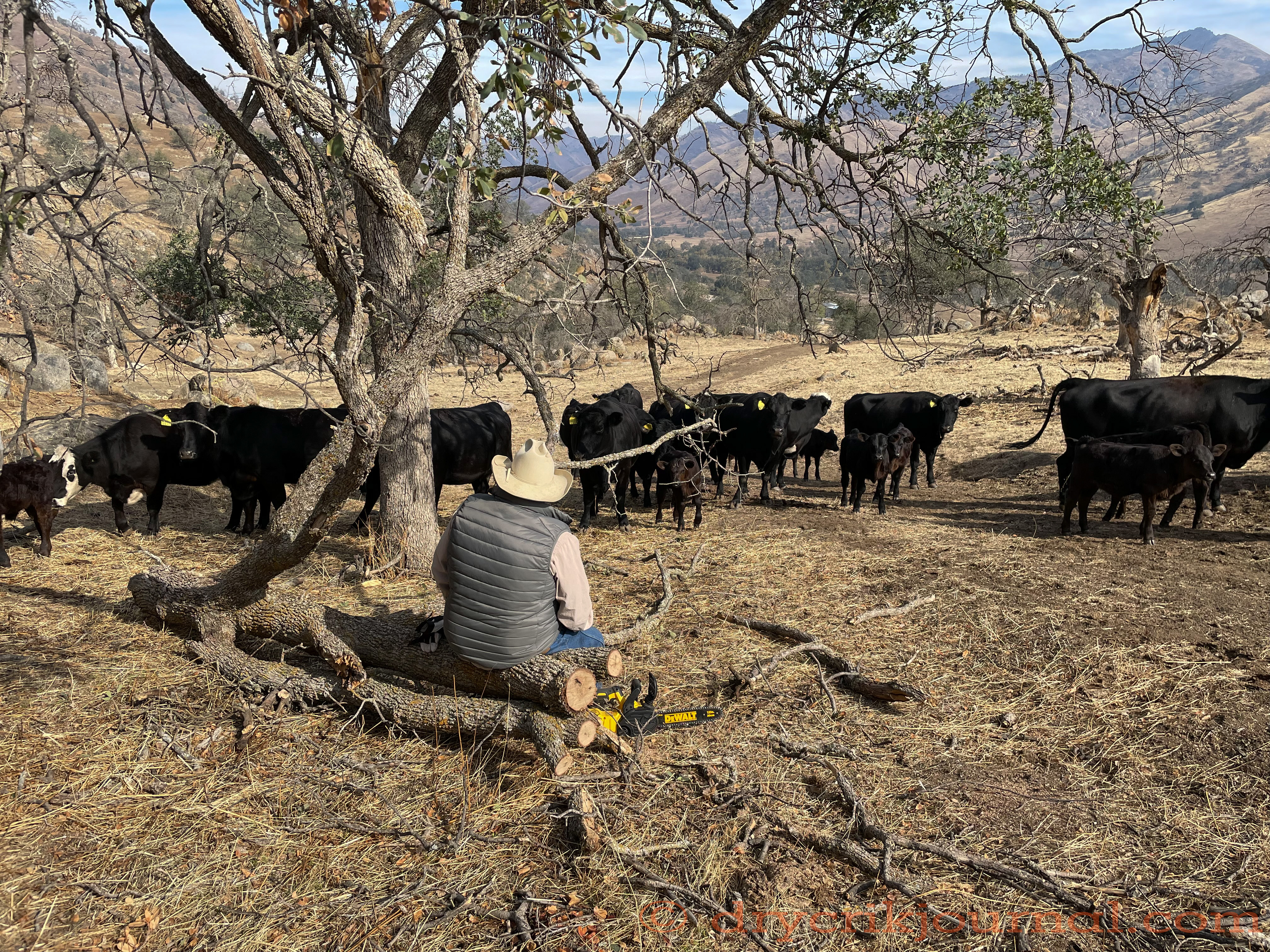
We train our young replacement heifers to be gentle and to follow the Kubota or feed truck when we feed so when they go up the hill in the next year or two, we can gather them and their calves easily. Having been through the same process, their mothers and grandmothers have imprinted this same calmness on their calves.
Due to the atmospheric rivers, we were unable to see our cattle for 3 months, but the calves gentled down quickly in the weaning pen on alfalfa hay. Now weaned about 30 days, they’ve been turned out along the creek on native feed and a little extra green due to the spring rains. We’ve been supplementing them once-a -week. While I was photographing the floods’ ensuing boulder fields and patches of cockleburs, they heard the Kubota and followed me, on the march, towards the feed ground, hoping it was the right day.







 drycrikjournal