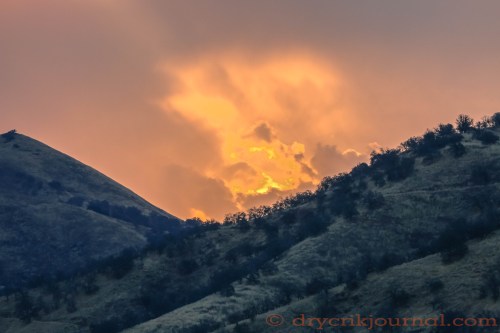
She does not know
we plugged the leak
for cattle, does not care
we watch her drink
when the tank is full
and the generator’s purr
has quit to draw her
clean water at noon—
a tune she can dance to.

She does not know
we plugged the leak
for cattle, does not care
we watch her drink
when the tank is full
and the generator’s purr
has quit to draw her
clean water at noon—
a tune she can dance to.
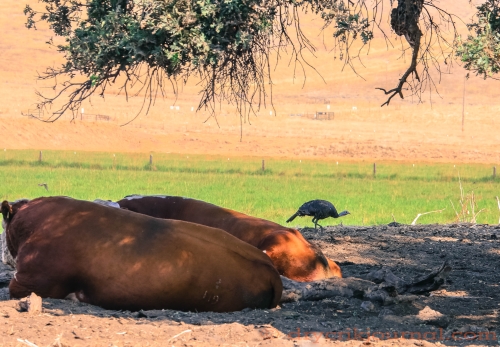
Too much in the sun
by early morning, tiptoe—
don’t wake the big boys!

Though warm temperatures persist, the days are noticeably shorter as the sun slides south down the ridge before it rises a little later each morning. We’re a couple of weeks to 30 days away from calving, depending on when we put the bulls out, trying last winter to keep our newborns out of September 1st heat by turning the bulls out two weeks later.
But to tweak our program slightly requires more than agreement between Robbin and I. The bulls have their own calendar, and we only wire fences to enforce our management decisions. Around Thanksgiving of last year, the bulls were ready to go to work. We were retrieving bulls and fixing fences daily, so we had to put a few out around the first of December to keep them away from the neighbor’s heifers that were to be bred to Wagyu bulls.
At 8:00 a.m., this Mark Beck bull cools down before retreating to oak tree shade.
Posted in Photographs, Poems 2016, Ranch Journal
Tagged bulls, photography, Ranch Journal
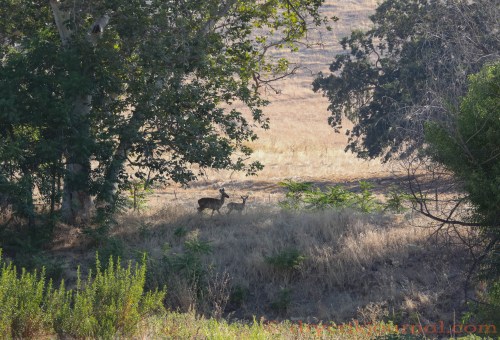
You ask why I’ve settled in these emerald mountains:
I smile, mind of itself perfectly idle, and say nothing.
Peach blossoms drift streamwater away deep in mystery
here, another heaven and earth, nowhere people know.
– Li Po (“Mountain Dialogue”)
To and from their peach tree roost
the quail trail in at dawn and dusk
like heavy heifers on parade
from shade to water trough
before they graze the waves of dry,
blond hillsides bent to a breeze.
An evening tree frog leaves a centerpiece
of succulents at six o’clock, short hops
to table’s edge and leaps for misters
on timers, scales the green swords of iris
for the wet scent of lavender and more—
crawls back at dawn like a drunk home.
We meet the mystery of nowhere
in a slow dance of seasonal cycles
returning new over and over again.

The weeks take wing and flutter
like coveys of quail to safety,
seasons spin into one another
as the dawn rides up and down,
north and south, upon the ridgeline,
never resting in the same place twice
no matter the year—this moment
unique. And these old eyes
still sharp at a distance, see more
than they used to—know the details
to look for. I am learning how
to talk with my eyes, conversations
accompanied with words:
reverberating murmurs in my chest
from a gentle land we understand.
Outside, the Maytag
wringer-washer chugged with diapers
to be hung on a rope line
from cedar to pine.
Inside, you could see out
through bat and board cracks
after the war and Relocation Camps
your family had come from,
you but a child holding my hand
afraid to let go
when the buzzing began
coiled on a rock.
You ran as fast as you could drag me
down a trail you don’t quite remember
sixty-five years later.
* * *
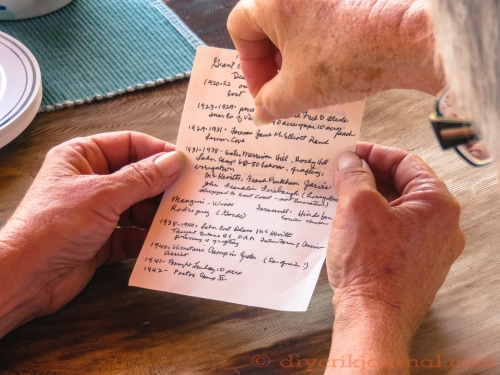
Robbin and I had the pleasure of coffee Sunday morning with Evelynne Watanabe Matsumoto and family. Evelynne babysat my sister and I, and initiated contact from Southern California a couple of years ago. Her letters have been delightful rememberances of her time in Exeter before heading off to UCLA to become a teacher, marry and raise a family. She told me that the $250 she saved from babysitting paid two years tuition in those days.
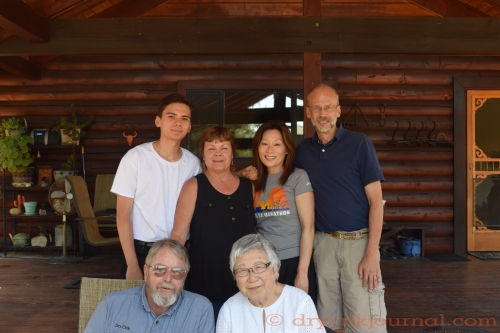
Matthew Ormseth Photo
Posted in Photographs, Poems 2016, Ranch Journal
Tagged Evelynne Watanabe Matsumoto, local history, photography, poetry

Temperatures have eased off in the past few days, mornings in the low 60s, allowing our cattle a little more time to graze. The replacement heifers were undeterred by the Kubota or my presence this morning while the pump was filling their stockwater tank, intent on breakfast before heading to shade.
Though the highs have been just over 100 here, a good part of the day feels like fall, though we know summer is a long ways from being over, but a welcome relief from the highs of 113 at the end of July. Forecasts for the next ten days appear to be relatively mild, more of the same.
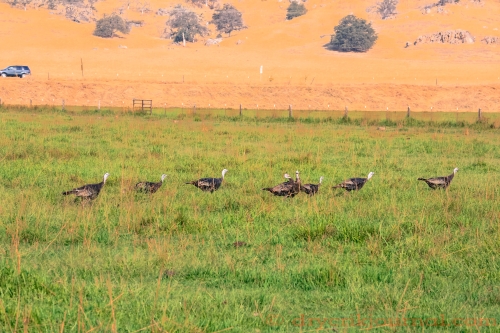
It could be anytime past
that you brought back
and left to us
incubating hundreds
of turkey eggs,
illegally eliminating
as many predators
to keep a few alive
to become ‘street smart—’
at home in the wild.
You made the rules
you lived by
surviving yet beyond
your fences, ever
since you’ve been gone.
for Gary Davis
Posted in Photographs, Poems 2016, Ranch Journal
Tagged photography, poetry, wild turkeys

Even the oaks that are still alive are pruning themselves. This Valley Oak lost its top Saturday night into the Holdbrooks’ driveway, either side of their electric gate, missing the solar panel and keypad pedestal. As a direct result of the four-year drought, trees and limbs of trees are falling on fences and into access roads everywhere. We’ll be packing chainsaws as we go.