Tag Archives: feeding

Still in Velvet


20150811-IMG_0482


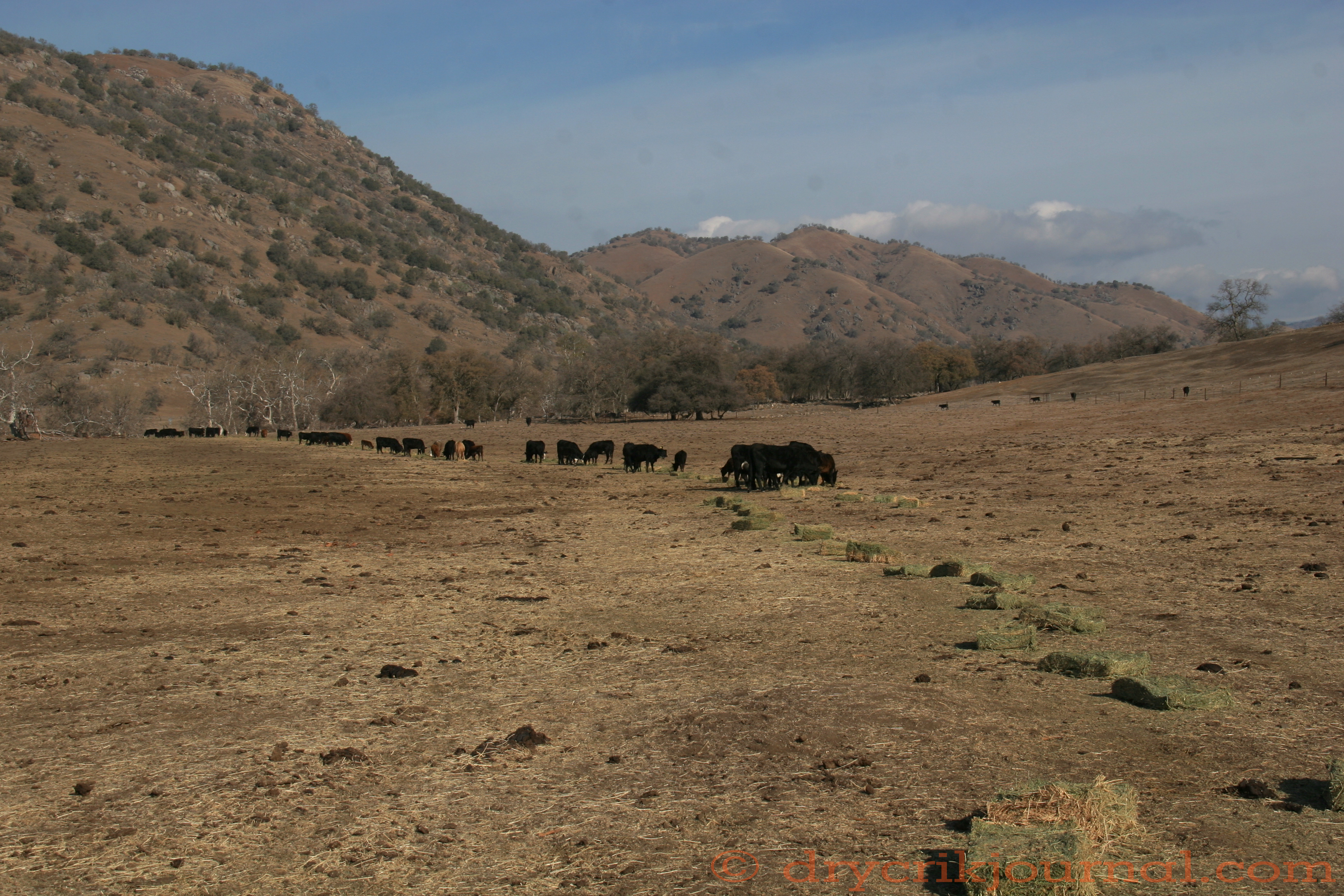
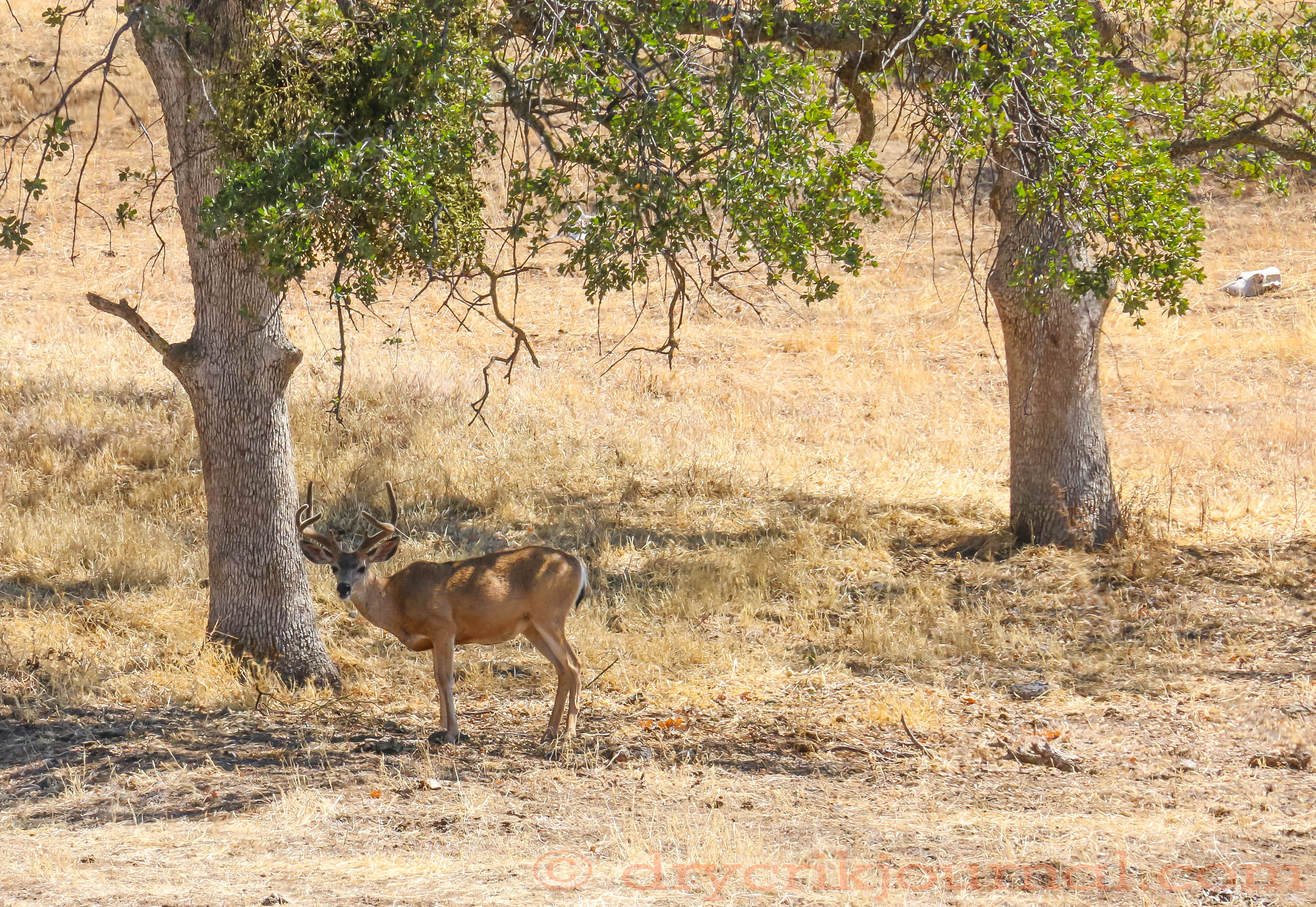
While checking our stock water, we’re also feeding hay to our cows at the higher elevations, now three weeks away from beginning to calve. We culled heavy in May when we weaned our last year’s calves knowing that our stock water would be limited, especially on Top. We’ve opened those cows into two other pastures with springs that are struggling to maintain a flow into troughs. While feeding yesterday, we ran into this young buck, still with a little velvet, at the salt, reminding us that deer season opens soon, bringing us a little closer to the end of summer, shorter days and a chance of rain. We closed the ranch to deer hunting last year because of drought, feed conditions and lack of cover, and will again this year, allowing this buck a better chance to grow up.
 

RANCH JOURNAL: JANUARY 9, 2015


1.
In the shallow ground and clay,
mats of filaree cling like crimson moss
after frost as if holding their breath for rain.
Yet warm enough for mustard bloom
in ungrazed traps for cattle, bits of yellow
at the tender tips of leafy greens—
all of the same seed that natives came
from Badger to gather when I was young.
White heads of Shepherd’s Purse nod
in bloom above the short-cropped blades
of lusher grass as if already spring.
Steep south slopes struggle, more mottled
brown than green—we beg and wait for rain:
busy fixing fences, branding calves, feeding hay
to bloating cows after years of drought
as high-pressure herds a warm jet stream north
to feed Alberta Clippers East with unwanted snow.

2.
We crave some sort of normal
that has become a hazy dream:
of cattle fat and happy, of time
to idly wile and waste
that old men will never see again.
Yet full of trust, trailing tidbits
from the gods, we chase it
like the feed truck still believing—
and that is normal despite extremes.


PROMISE

IMG_1633


We waited through dry and dusty years
and prayed the only way we knew—
like tithing, throwing hard-bought hay

to the gods on the ground everyday.
Our muttered mantra clunked along
like an old machine, inhaling pauses,

exhaling groans until it came to turn
the earth around with a covering
of iridescent green, teasing the dead

and dying oak trees—like us or like
the cows we raised and had to sell—
with rain and one more promise.

New life lands on the open beam
that holds the roof and sings
in the sudden rain—a black and gold

Oriole on the edge of its Southwest
range—a happy song delivered quickly.
A sign in this downpour, an omen

I am to remember when season’s over
and the grass turns blond and brittle—or
just a promise of weather never normal.


XXOOXXOO

IMG_0929


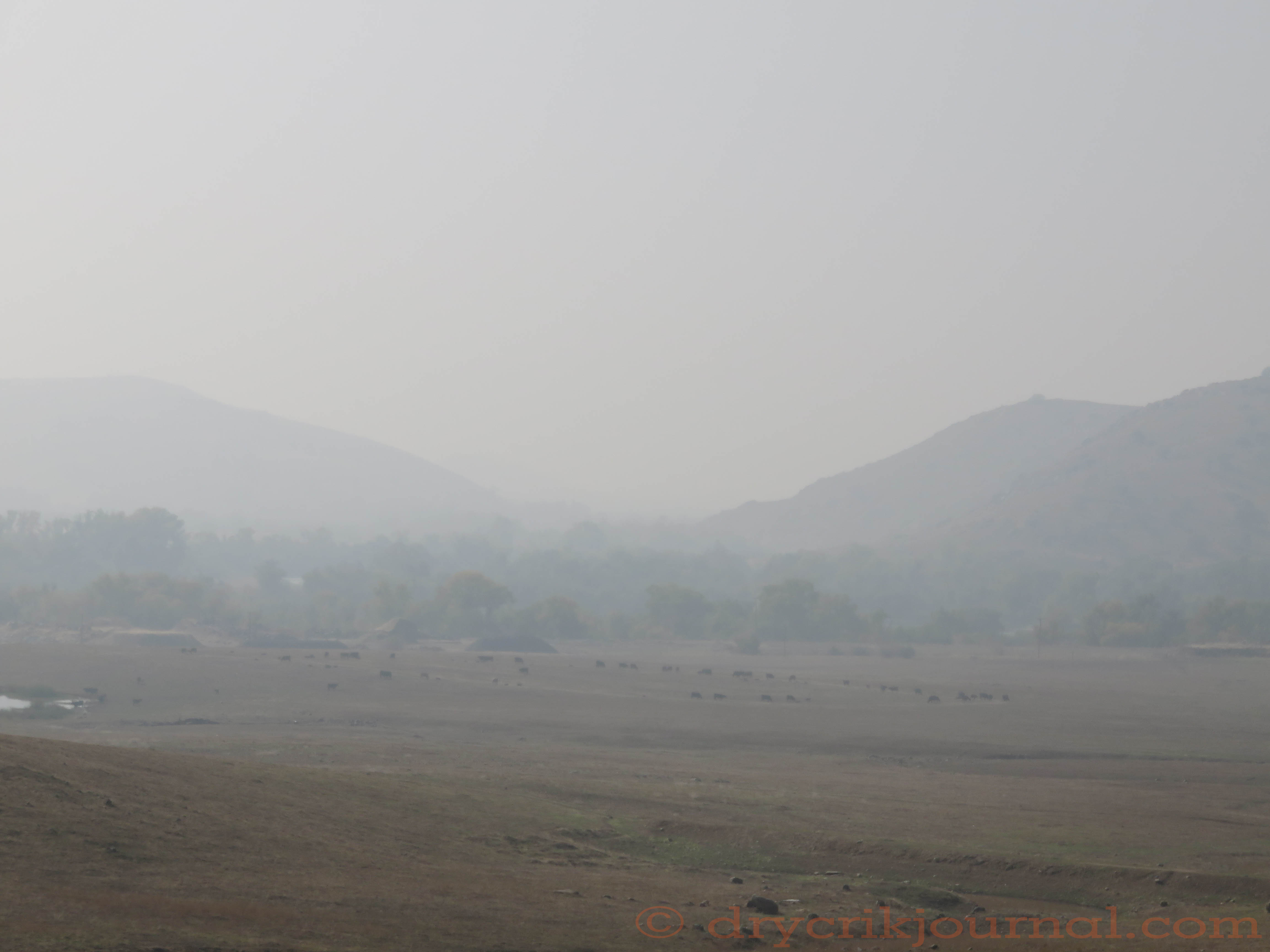
Dear Dawn, I await you in a cavern
of wet blackness, upstate exhaust hangs
between me and the suns and stars

of my reward, (or as far as I have seen
of infinity), as the dew from the last rain
clings to each unhealthy particulate,

camouflaged to look and feel like fog.
I have missed your smile, bright eyes,
and warm touch across the landscape

of my face, but we inhale this wet veil
holding clay slopes damp, moistening
each cotyledon struggling to break free

from the earth’s grip to make grass,
turn hills green with the circumambulation
of black dots—cows and calves grazing.

Another ugly day without you, feeding
hay in gray, but it ain’t all bad—
I’ll see you when I can. xxooxxoo, J.


Surprise Feeding

IMG_0866


It’s a waiting game now for our bare hills to take on a shade of green as the first cotyledons of our grass seed break the crust left after Friday and Saturday’s remarkable rain. It’s not typical to begin our rainy season with 1.76” on Dry Creek, or 2.62” in Greasy Creek. Usually, we hope to get a half-inch to start the grass, but more often than not fail after our first storm event.

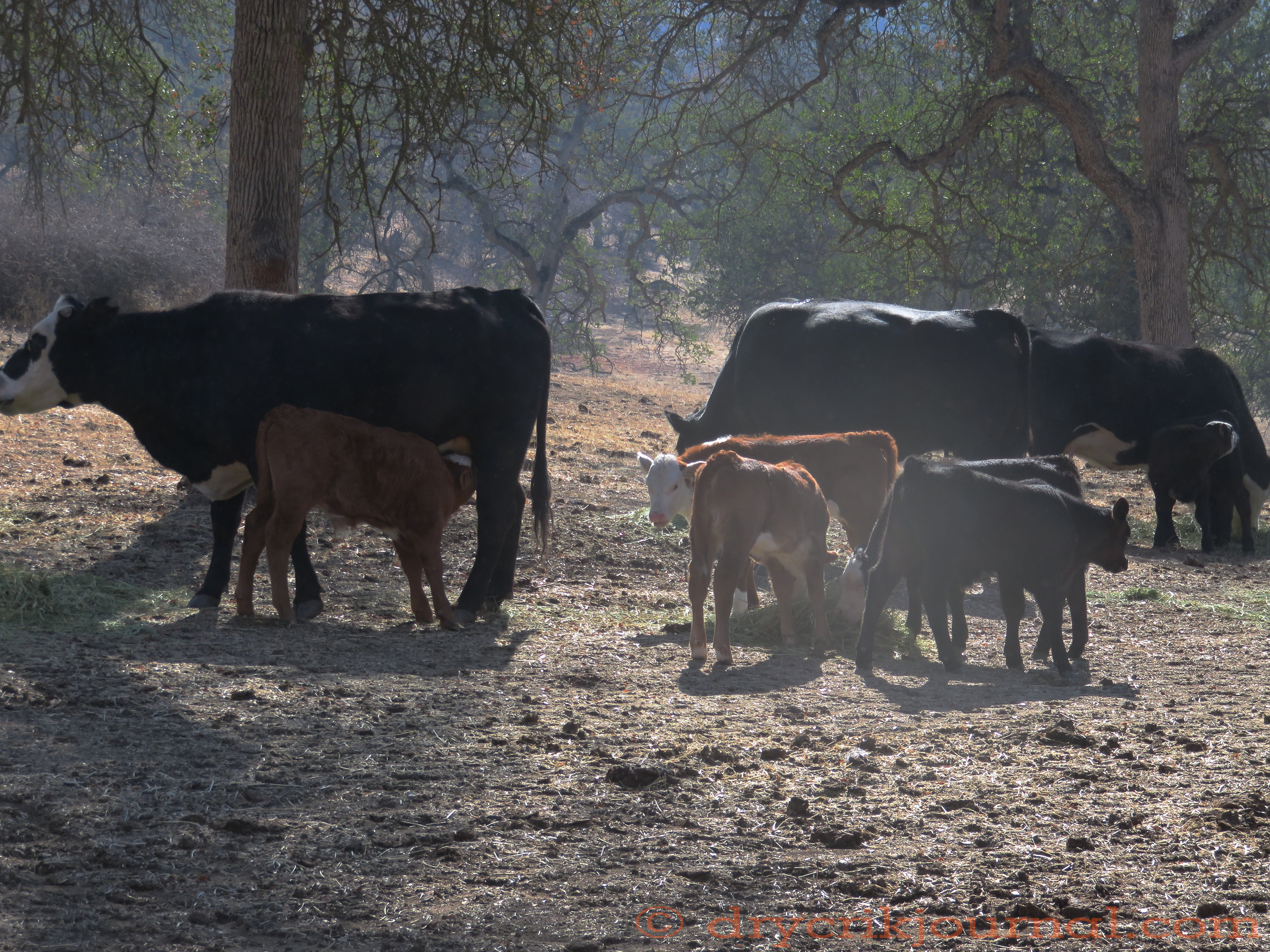
Everybody’s hungry and there’s really not much to eat, actually less immediately after a rain, other than what we are feeding our cows. With some calves two months old and growing, demanding more from their mothers, it’s starting to show on the cows, less fleshy now than a month ago. We’ve been increasing the amount we’re feeding right along trying to keep everyone in shape, hoping that when the grass comes that the calves will keep right on growing, and that our cows will be in good enough shape to cycle and breed back when we put the bulls out next month.

All very subjective. Working around slick roads elsewhere, we fed the girls above a day early yesterday as we drug our road up into Greasy Creek to fill in some of the gullies and ruts accumulated after the past two years of not enough moisture to effectively smooth them out. And good that we brought a little extra hay, as the calves were as glad to see us as the cows.


CREDENTIALS

A downcanyon mile,
the hay barn yawns at dusk,
an empty hole,
its hungry mouth
in the middle of the stack.

Breaking down the bales
by steps is an old man’s game,
an engineering feat to keep
lifts to a minimum
loading a feed truck—

one proposed prerequisite
before any academic degree:
to fill and empty a hay barn—
the other, spend a summer
running water down a furrow.


February 2014

IMG_7081

Dust becoming unsettled again, we are still feeding despite last week’s half-inch rain, season totals less than 2 inches at all locations on the ranch. Though I haven’t gotten on my knees to search for cotyledons, there is no noticeable germination of new grass, our high temperatures in the low-60s. Our top layer of dust and dirt is deep due to the drought and appears to have absorbed the last rain quickly, perhaps leaving seeds without sufficient moisture to complete germination. I don’t know, I’ve never seen our grass wait until February to germinate.

IMG_7084

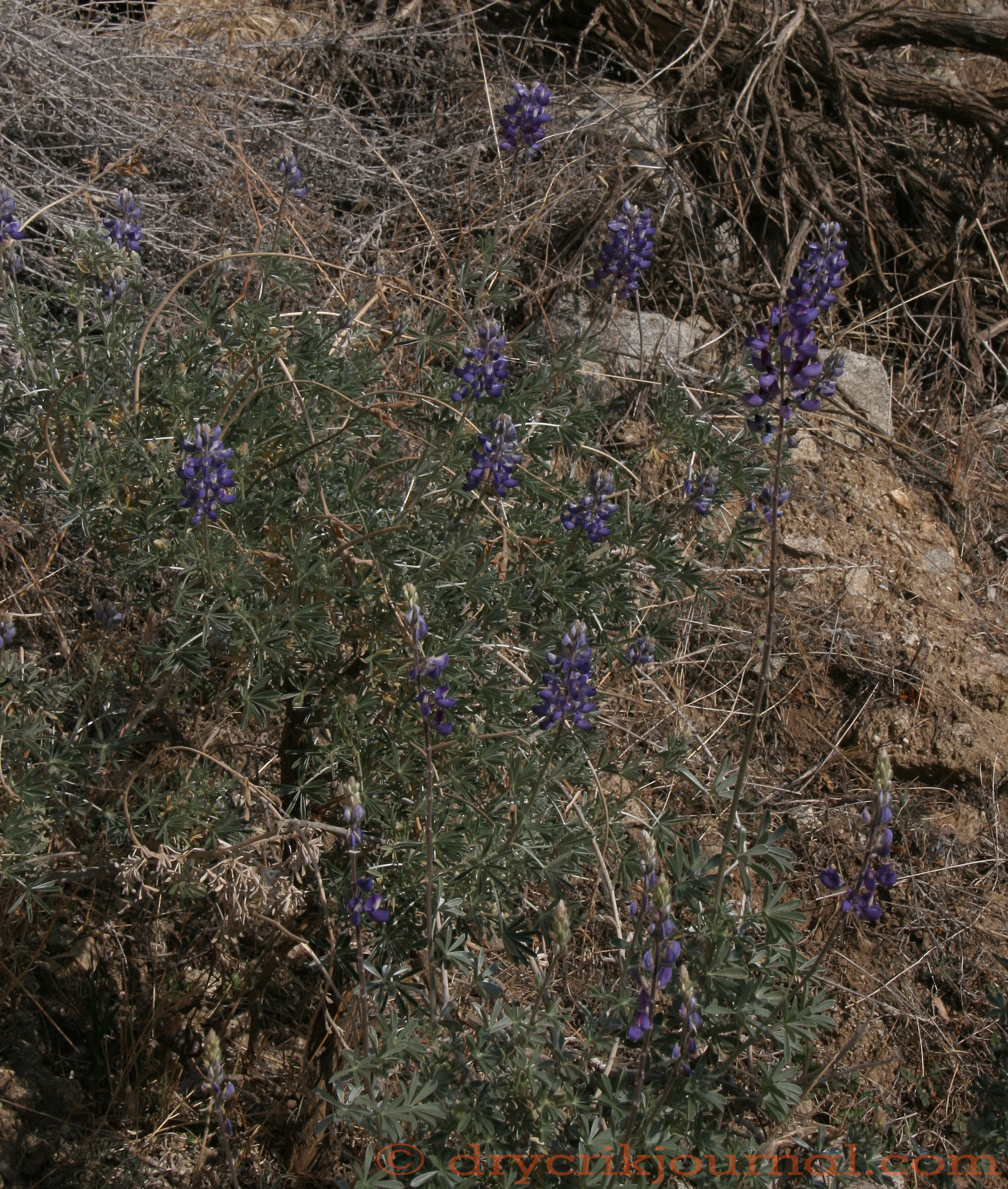
Up and down the mountain with hay a week before the rain, we noticed Blue Lupine blooming weakly in the bluffs above Lake Kaweah. At the same location, Phacelia or Scorpionweed below. It seems some wildflowers have already given-up on spring. Not a good sign. BBC coming today, chance of rain tomorrow, this is a roller coaster ride.

IMG_7086

Addendum: ‘November Feeding’

Yesterday’s poem is both current and fresh and seemed to resonate as we cut into our replacement heifers, sending 20% to town to pay the hay bill, and processing the balance with vaccinations, wormer and vitamins in preparation for the Wagyu bulls next month. Thankfully the poem seemed to lift my spirits once on paper.

The poem, on one level, is about the basics of dirt and flesh, but may be tame compared to a reoccurring image we refresh as we approach Carlin and US 80, each trip to Elko, Nevada at the end of January for the Gathering.

It’s usually mid-morning where NV 278 approaches the Humbolt River, some of the better grazing ground in Nevada under varying amounts of ice and snow. A rancher’s or ranch hand’s wife is at the wheel of a tractor we meet on the road, pulling a loaded or unloaded trailer, good-looking Angus cattle strung either side waiting or bent to flakes of hay. Her flaps are down around her ears behind the fogged windshield and we are cold and thankful we aren’t trying to raise cattle in Nevada. Nevadans are a different breed altogether.

One of many observations I attribute to my father is that lots of California ranchers move to Nevada with big ideas and dreams, only to return home after about three winters—that Nevada ranchers, like their horses, must be of tougher stock.

Image

Hay on the Ground

IMG_6360