Tag Archives: Dry Creek

Calving

IMG_0618


Newborn calves are vulnerable to a variety of predators, so cows instinctively consume the afterbirth after cleaning up the calf as it struggles to stand and nurse. After resting briefly, the calf above (middle) is finding its wobbly legs to nurse again as its concerned mother (2110) looks on. This second-calf mother finds little privacy near our irrigated pasture, as two other curious calves become part of the drama in the Valley Oak shade.

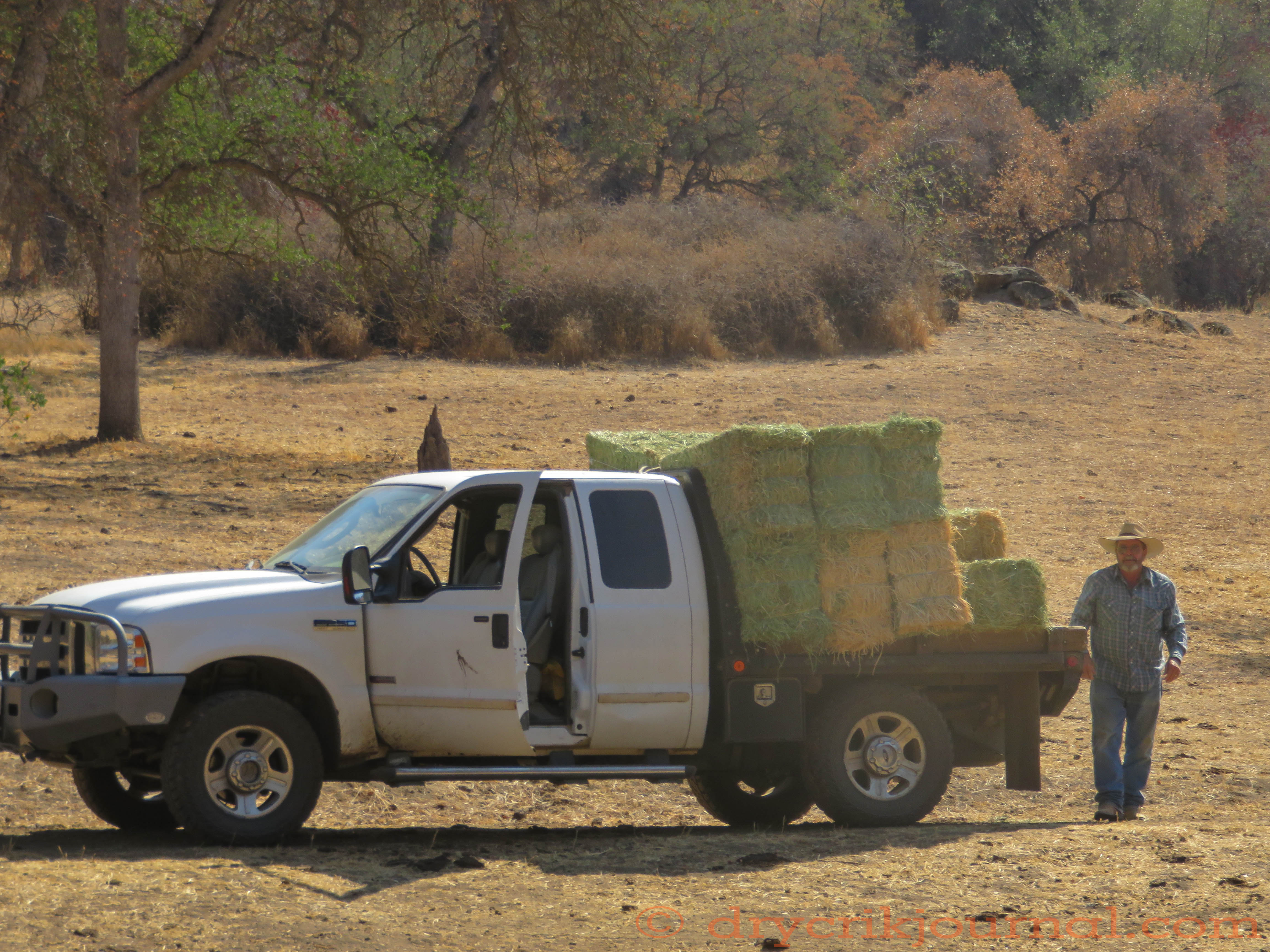
We are extremely pleased with so many early calves on the ground after two dry years of little feed. Calving forty days now, about 60% of our younger cows and 50% of our older cows have calves at their sides. The calves seem bigger and healthier this year that we attribute to all the loads of hay, fed last August through April, while the cows raised last year’s calf. Additionally, when we weaned those calves last May, we sent the marginal and late calving cows to town, reducing our cowherd substantially. In this respect, our cowherd as a whole has benefitted from the drought. Whether or not we can make the reduced numbers work economically remains to be seen, dependent mostly on the weather and our coming grass year.

Clouds and a slight chance of rain are predicted for the middle of next week, but probably not enough to start the grass. Our own thirty-day forecast indicates that we have a fair chance of rain on the 19th and a better chance of rain on the 28th.

Meanwhile, we’re still feeding somewhere everyday, trying to keep the cows in shape to raise their calves and cycle when we put the bulls out in December, hopefully on some green grass that we can’t quite imagine anymore.


Babysitter

iPhone photo: Teri Drewry

iPhone photo: Terri Drewry

Calving since the 1st of September, we’re always pleased, and relieved, to see our first-calf heifers forming nurseries rather than hiding their calves singly as easier prey to coyotes. I find the babysitter selection process interesting. Oftentimes it seems that the cow with the youngest calf gets the duty because her calf needs the most attention, so while she’s at it, she just as well take care of the other calves at the same time while the other mothers graze. Yesterday, while feeding the heifers with Wagyu X calves, 1038 was under a sycamore tree with a few calves while the others were lined-out on the alfalfa. For whatever reason, she was off her feed and subsequently got the call. Sympathetically, her calf is licking her head.


SLOW BURN

7:40 p.m. PST, September 23, 2014

7:40 p.m. PDT, September 23, 2014


A little hair here and there
burns across the canyon,
a darkening charred shadow

rising in a wake of even light,
summer days and nights
behind us, behind the ridge

that stands between us
and Antelope Valley, Wuknaw
spilling into the fringed

and frayed urgency beyond.
We have a glass, of course,
discussing cattle—instead of

people—measure likelihoods
for feed and water ready
with another plan, if need be.

Light a cigarette, fill another
glass reflecting decades
of canyons worn upon our faces.


Tarantula in the Shower

IMG_0532

Our weather has been delightful this past week since it tried to rain, three days of clouds stacked against the Sierras, some thick and dark shrouding our bare foothills but bringing little moisture. For two months we’ve been discussing signs of an early fall, though not convinced that the sycamores may be turning early due to the drought or that Dry Creek ran only 30 days last season, peaking a 12 cfs on April 27th, not enough to contribute to the Kaweah River three miles downstream.

Moods have lifted with the change in temperature as we look for signs of encouragement. The Rock Wrens are back, debugging the window screens. The first Pin Tails and Mallards have arrived on our irrigation ponds. Quail and Bobcats move closer to the house. It’s a perfect time of year for the outdoor shower as the sun dips behind the ridge leaving a wild assortment of yellows between the long shadows of our fruit trees.

And the Tarantulas are moving, beginning to dodge traffic on Dry Creek Road. They have become totems of sorts to most ranchers, precursors to rain. Short of reverence, we reserve a special place for them on our list of wild things, swerve around them on the road. Even shower with them, if need be, rather than disturb them.

Naked before her, I found it interesting with my eyes closed, rinsing the shampoo lather from my hair, that I worried more about stepping on her than any other contact, as if she could leave her perch beneath the soap dish and get underfoot in just a few seconds of my not-seeing. Thinking, I suspect, she was hidden, she didn’t budge, and after the stress of two dry years, none of us is looking for trouble these days.

October 1, 2014 — Ranch Journal

IMG_0435

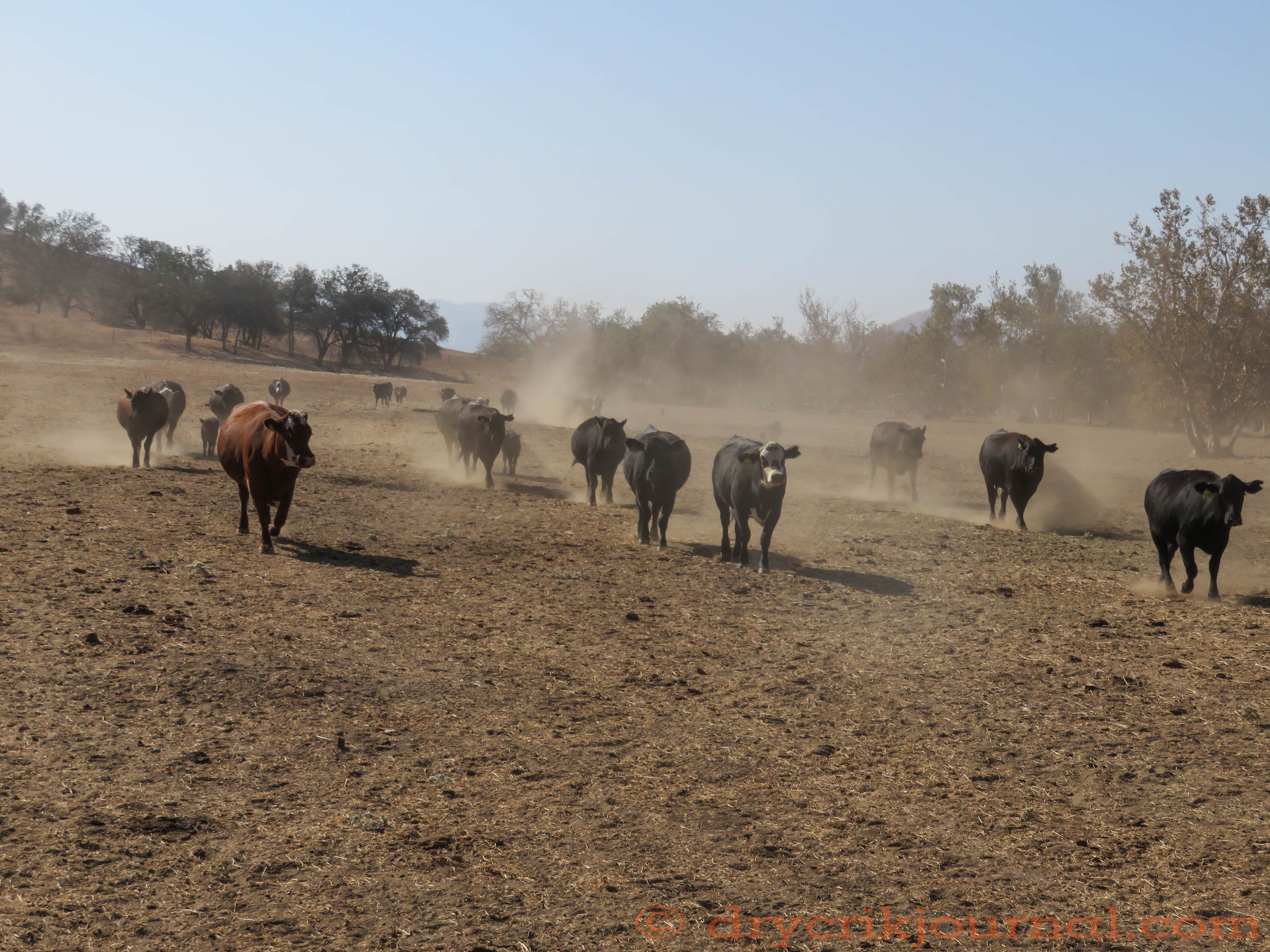
Robbin and I made the rounds with hay yesterday, photographically documenting feed and water conditions as we went—both in short supply from Dry Creek to Greasy Creek. Fed three times a week, the first calf heifers plodding through the dust above is a common sight.

IMG_0455

Miraculously, the stock water pond at Spanish Flats is holding.

IMG_0457

With reduced numbers in Greasy, we’ve been feeding about 20 lbs./cow once a week for past six weeks.

IMG_0459

The cows have been calving for the past thirty days on bare ground everywhere.

IMG_0485

In the past, I’ve critically referred to the pond at Railroad Spring as my one extravagance because of its size, but much smaller, it would be dry this year. Full, it looks like this.

IMG_0499

The cows look good, calves healthy, but we could use a rain anytime.


IT SMELLS LIKE RAIN

Dark-thirty black under clouds,
it smells like rain—summer’s dust
settled, each particle swelling to stick

to the thirsty redwood rail,
to one another, to unite us
with each breath of hope

after years of drought, though
not a drop, not a sign of wet—
it’s there in the dark, damp air.


NIGHT SONGS

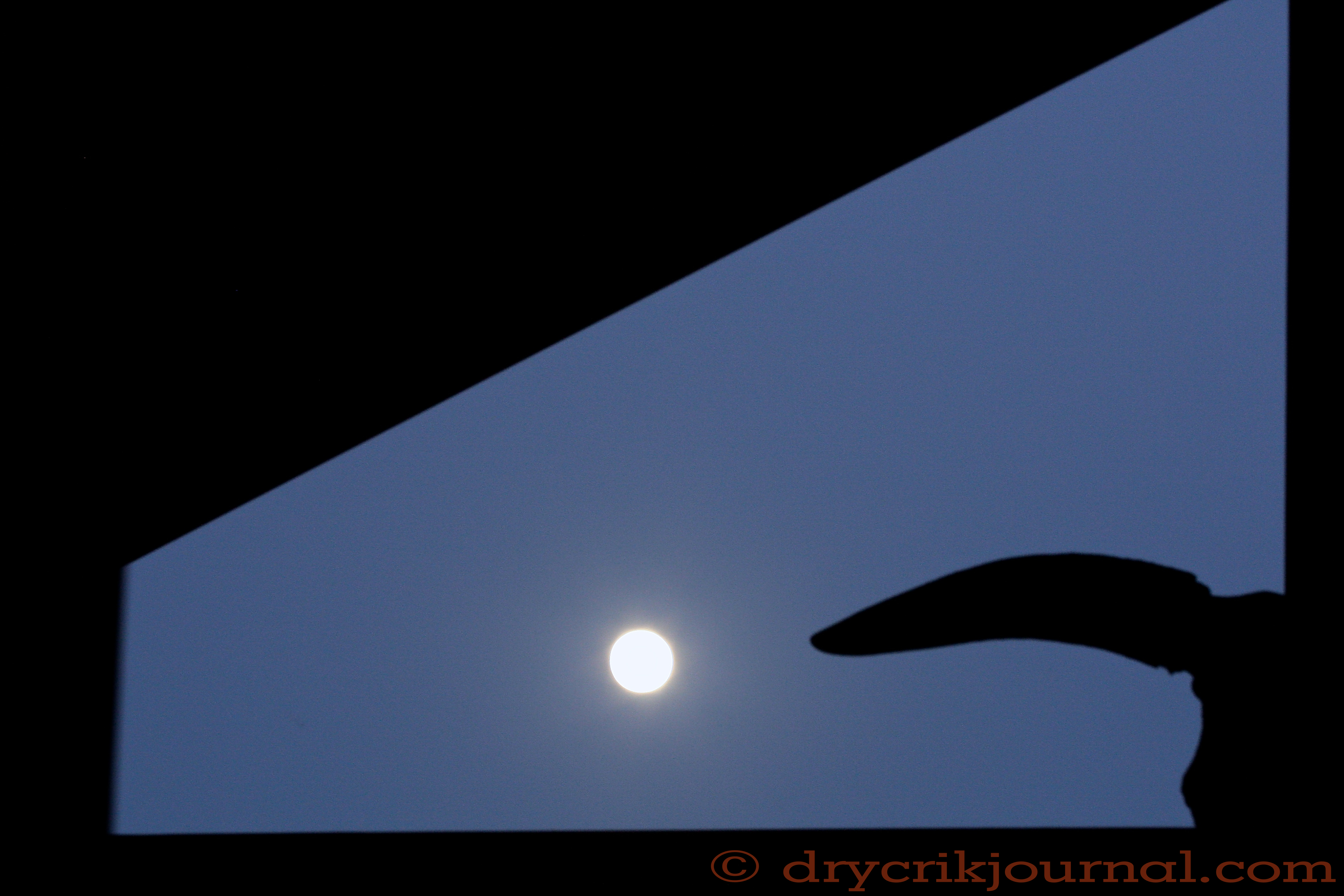
IMG_0179


Come songs of nightfall,
we are drawn outside to see
how to frame the world.


WPC — “Nighttime”


SEPTEMBER GLOAMING

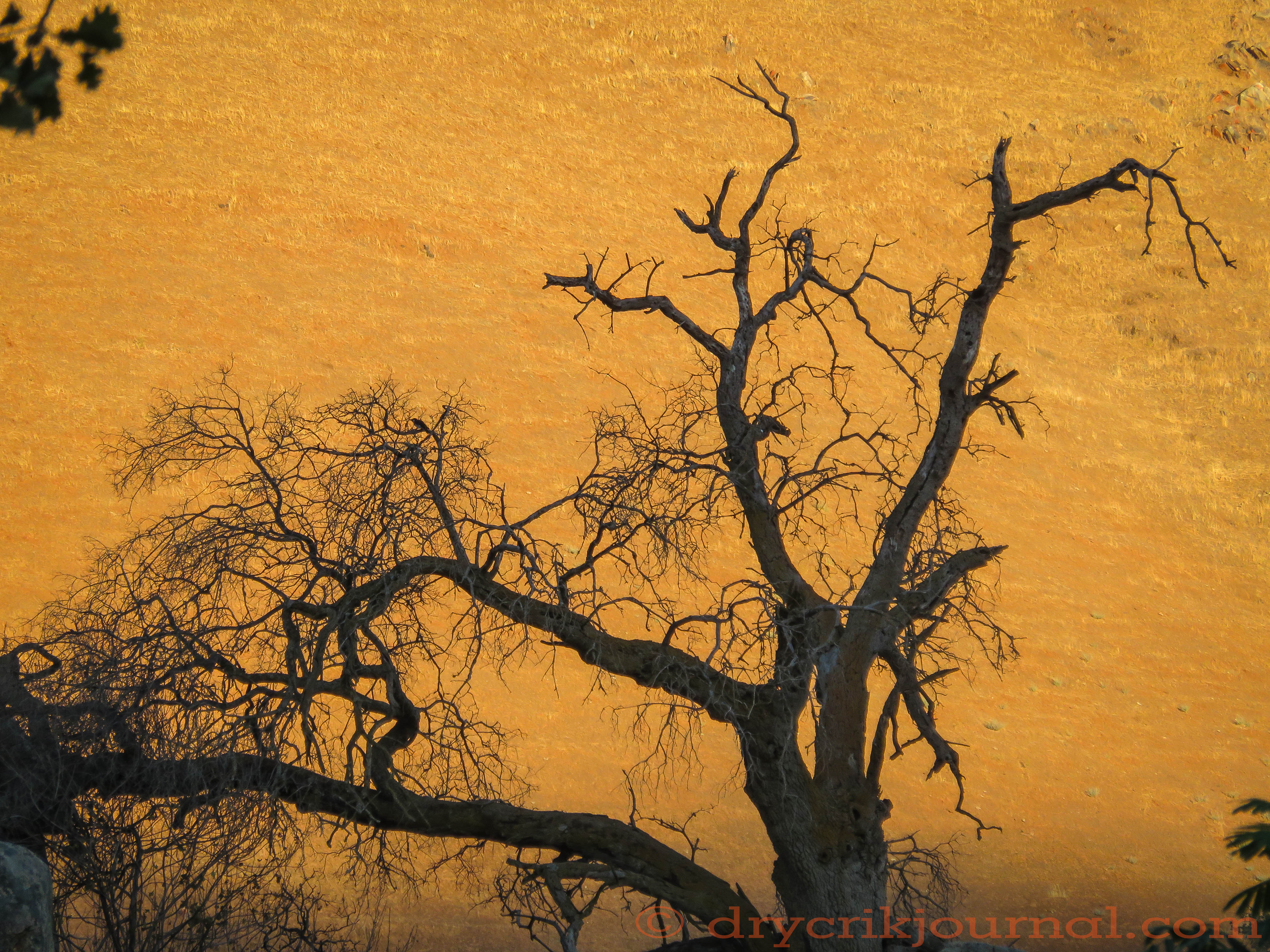
IMG_0286


Last light rising
on a bare yellow hillside
forsakes the dead Live Oak

shading the gossip rocks
where women talked
long before we came here.


KIND EYE

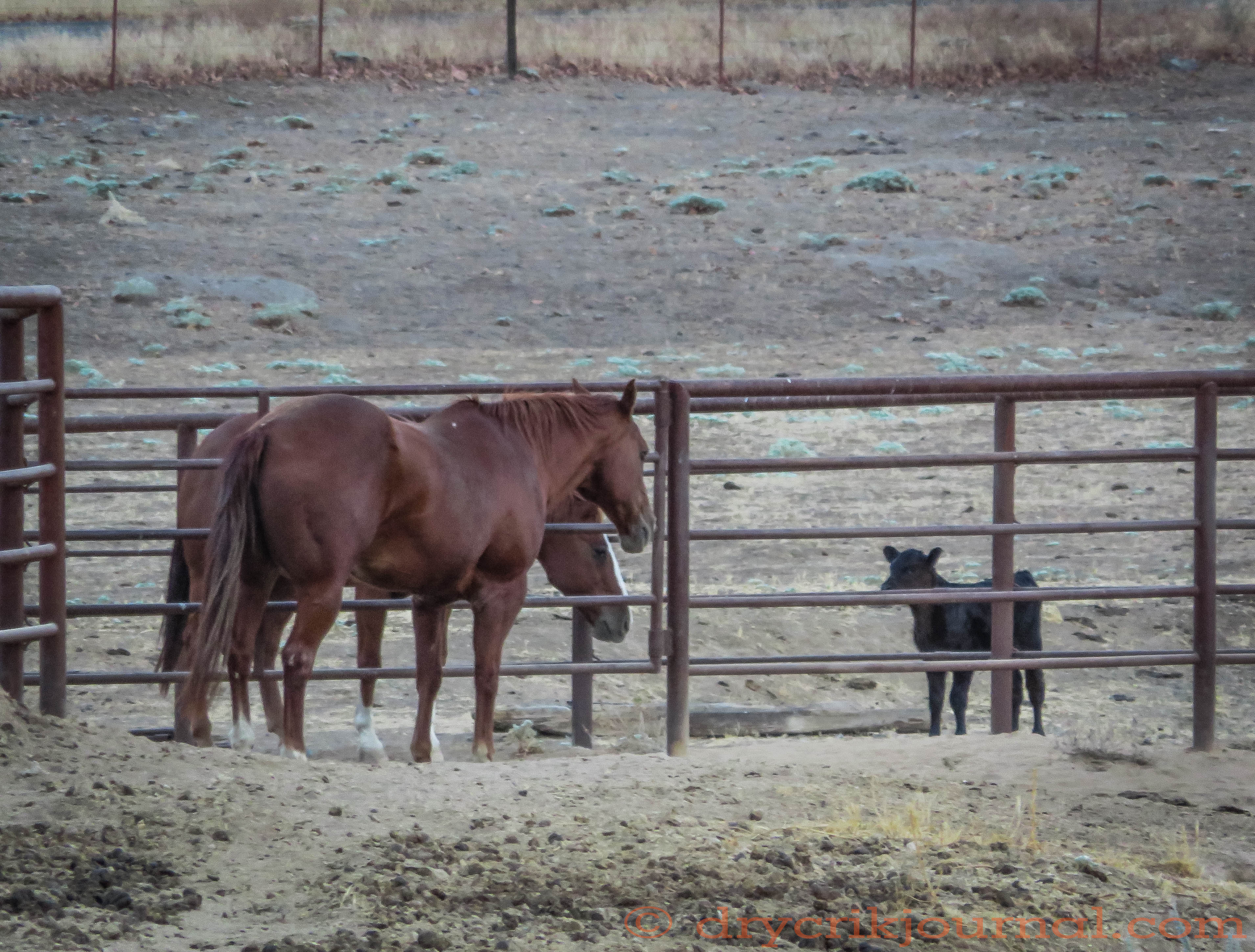
IMG_0349


Looking into the bigger picture,
who are these beasts
with a kind eye?


IN THE CLOUDS

img_4683


Down the Sierra’s spine,
they sneak-in and loom,
cumulus over the ridgeline.

No storm clouds, but friendly.
We know now we’ll never be
the same, never assume

green feed and water
always. We will pray
in our own way, kneel

before the cotyledons
breaking through the clay,
stare rain in the eyes.

And when the chant of pagans
sing, we will make love within
soft petals of wildflowers.