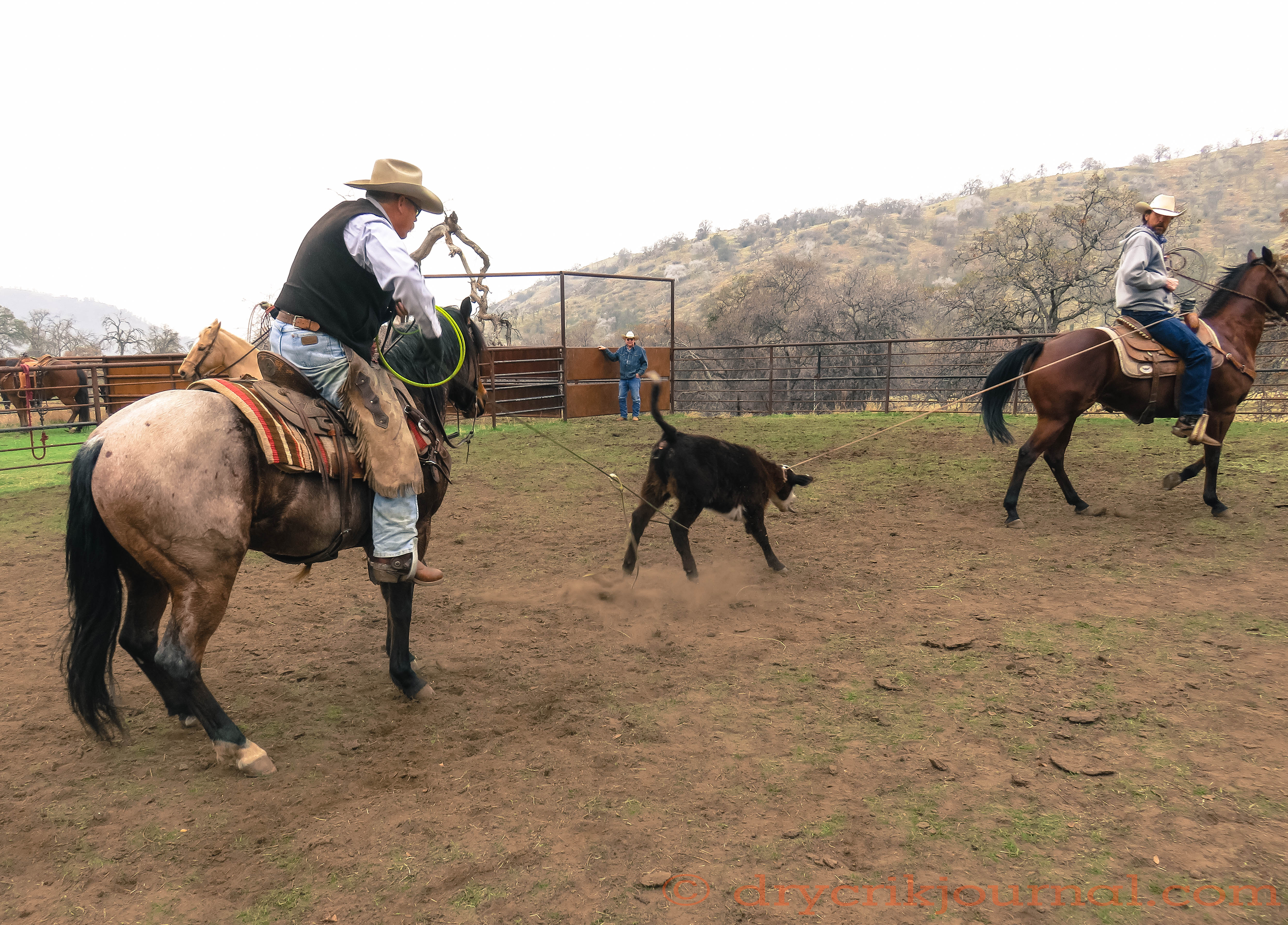
The high clouds had given way to sunshine by the time we finished branding a little bunch of calves in Greasy yesterday. Well off the road, it’s a luxury to be among good friends and neighbors who are exceptional help, folks who know how to make the work fun.
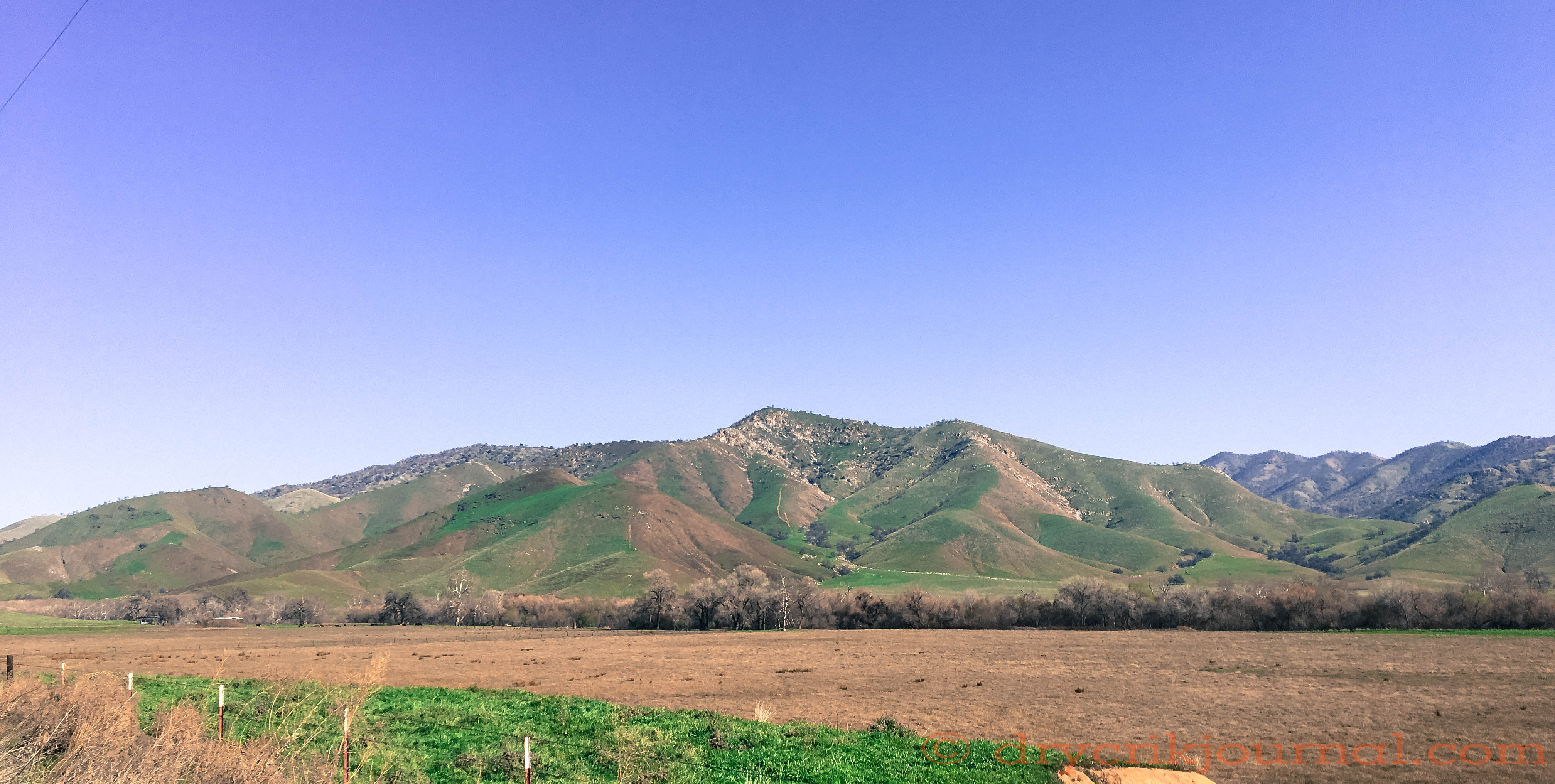
Though dusty, there’s a little more green showing at this elevation (2,200’) where we have received 1.72” of rain thus far this season, much like the beginning of the 2013-14 drought year where we had less than 1.5” of rain in Greasy through the month of January. Our 10-day forecast is dry.
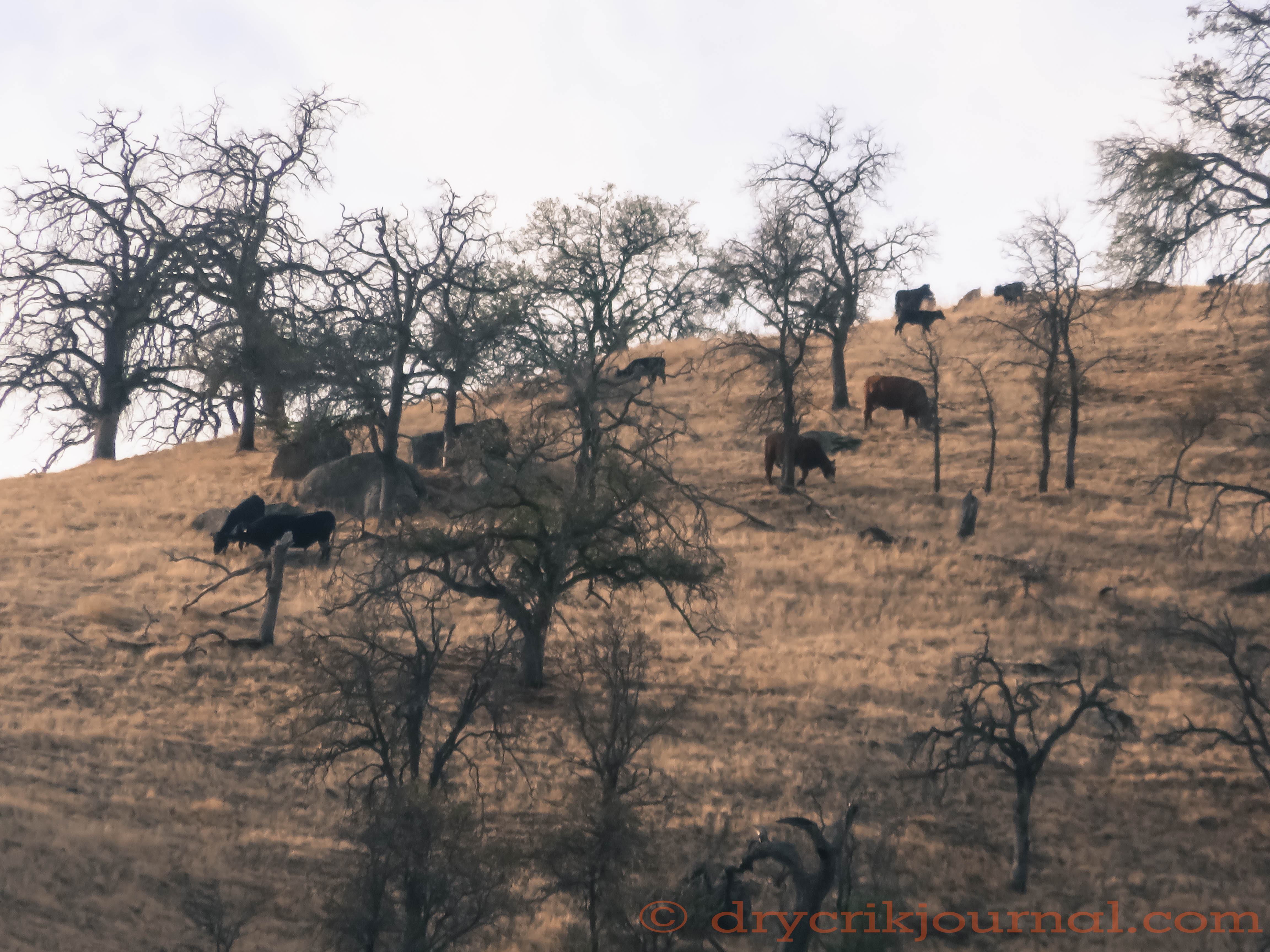
Leaving the feed grounds
for the ridge tops
with their first calves,

native cows know
where the green comes first
after a little rain

softens the clay
for cloven hooves
and the climb up.

These are not dumb
welfare cows
that we have raised

and fed for months—
but smart survivors
to make us proud.
How could we know
the plans of goddesses and gods
with so much going on, busy

saving and taking lives,
sorting souls
amid this Covid,

while tilting the West
out of range
of the good storms—

bare acres everywhere you go.
If even a shower
could bring some green,

cattle market’s gone to hell.
With everybody begging
for change, the pipeline may be

plugged with prayer overload,
or perhaps our deities
are just teaching a lesson.
Small promise in the dawn’s empty clouds,
more spiritual than stormy or wet,
forecast moisture shrinks the closer we get
to one more year of praying through a drought—

another season of small marvels and miracles
where epiphanies and wonders rise
from this thirsty earth before our eyes
to ease each day’s concerns for survival.

We are so blessed with these wild diversions
from ample grass and fat cattle
that we begin to think that dry is normal
and greet the New Year with resolution.
After a lifetime in the cattle business, 52 full-time years by my reckoning, I’ve maintained that there are three variables that determine our economic equilibrium: the market, the weather and politics. When only one of these variables is unfavorable, we can usually get by for another season. But when all three are unfavorable, we’re in dire straights.
To make matters worse, 2020 has introduced another variable I never considered: an international pandemic that has bludgeoned the global economy, and here at home closed restaurants for all grades of beef. We are not the only business impacted, further impacting us all.
At the moment, any realistic hopes of corralling Covid-19 to some sort of normalcy are six to nine months away. But those hopes may encourage better beef markets at the end of spring 2021. How the political impacts, stimulus packages and reduction of tariffs, etc., will ultimately shake out is anyone’s guess.
Now two months into our rainy season with less than a half-inch of rain to date and no green grass, we are keenly focused on the weather while feeding lots of hay. The Wagyu bulls have arrived and we must have our cows in shape to breed.
Here on Dry Creek on Saturday, we only measured 0.16”, but our hopes hang on the latest forecast of 0.3” today and tonight and another 0.45” Wednesday and Thursday. Always optimistic, the combination may be enough to get our grass seed germinated. But like always, much can change in the next four days.
No rare, sixteen-ounce
Chile Verde Rib Eye
leftovers to box for home,

no Iceberg Old School
wedge with Blue Cheese
crumbles, no red wine

bottle at twice the price
to finish before leaving
town—no spoiling us
these Covid days,

though we tire
of our own cooking,
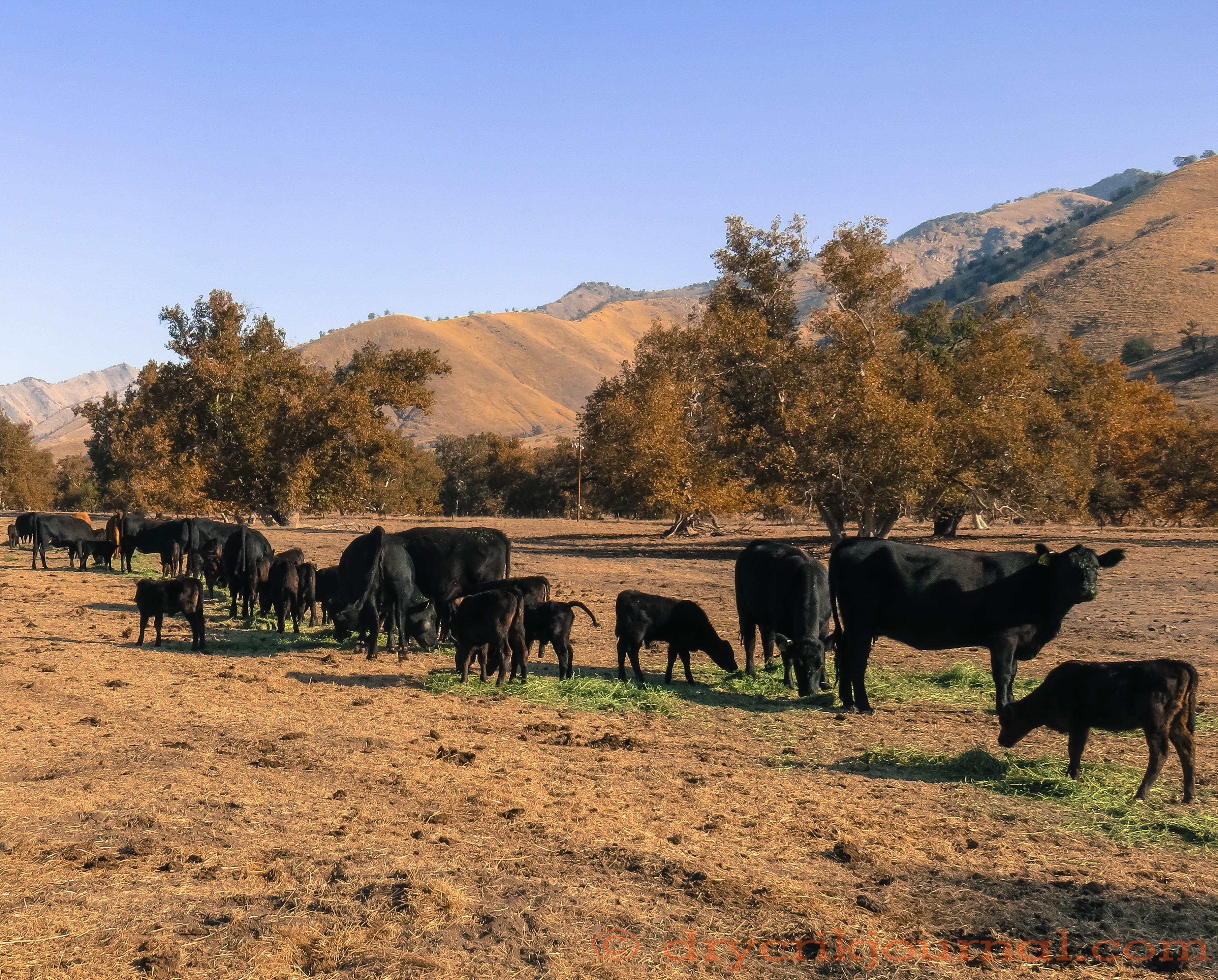
of feeding hay without rain.

Bare acres, not a spear
of feed half-way
up the mountain,

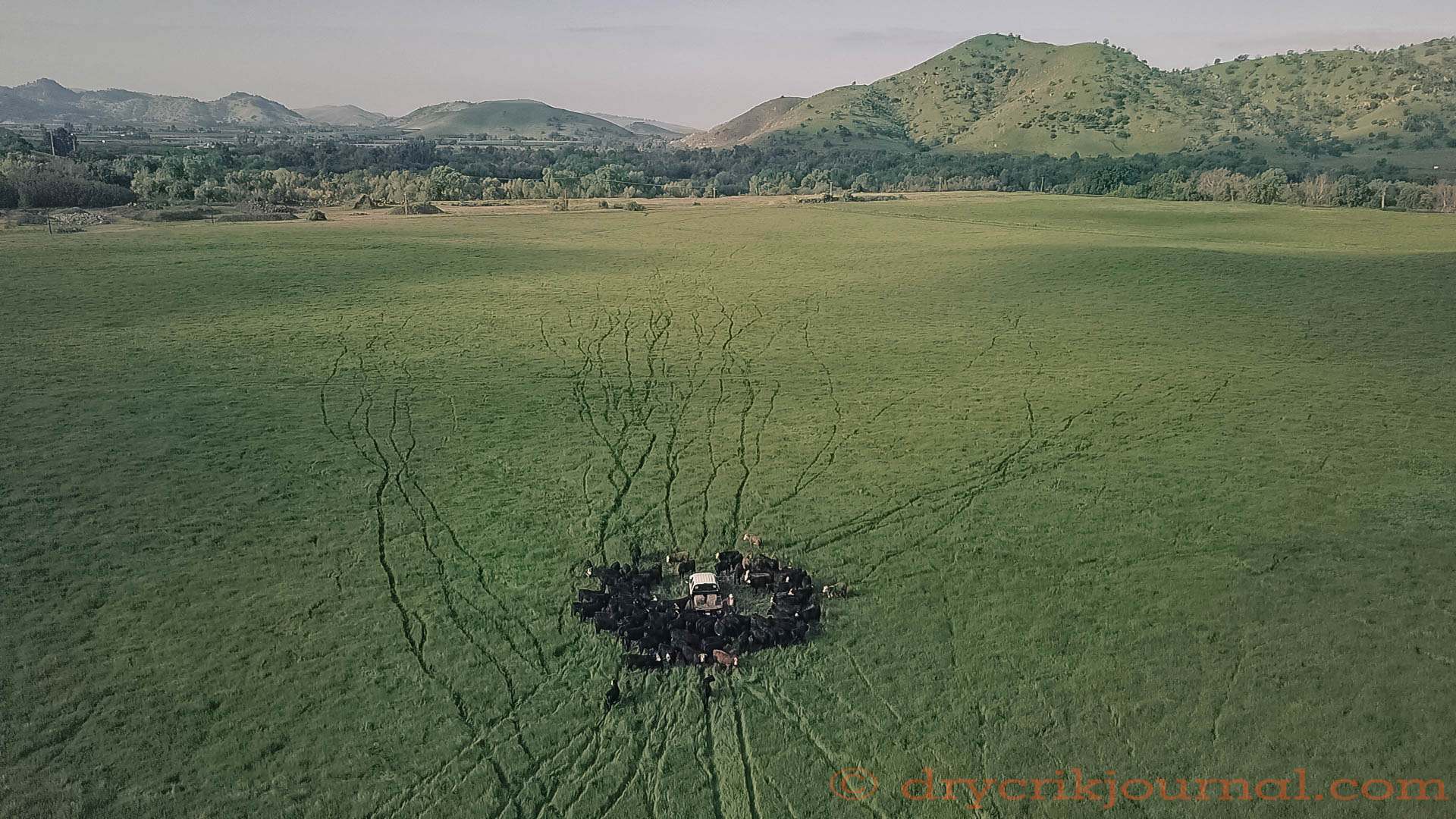
these good cows wait
with their calves
at the gate for dinner.
To date, we have 3.17″ of precipitation since September 21, 2017.
We’ve been watching the 10-day weather developments for today’s forecast rain that seems to have intensified slightly in both probability and amount, temporarily opening the storm door for a larger event by late week. For those interested, a more comprehensive assessment of North America’s weather is available at Daniel Swain’s weather blog. We’ll be dancing tonight.
Determined, the creek runs steady yet without rain,
last season leaking through cracks of granite joined,
braided currents turning small bellies up to flash and flare
in the mottled sunlight—passing clouds, dry storms.
It streams a canyon of skeletons, barkless half-trunks
corralled by windrows of fallen limbs, oak trees
crumbling, to deliver its addled chants, mumbled news
to thirsty orchard rows of certain death upstream.
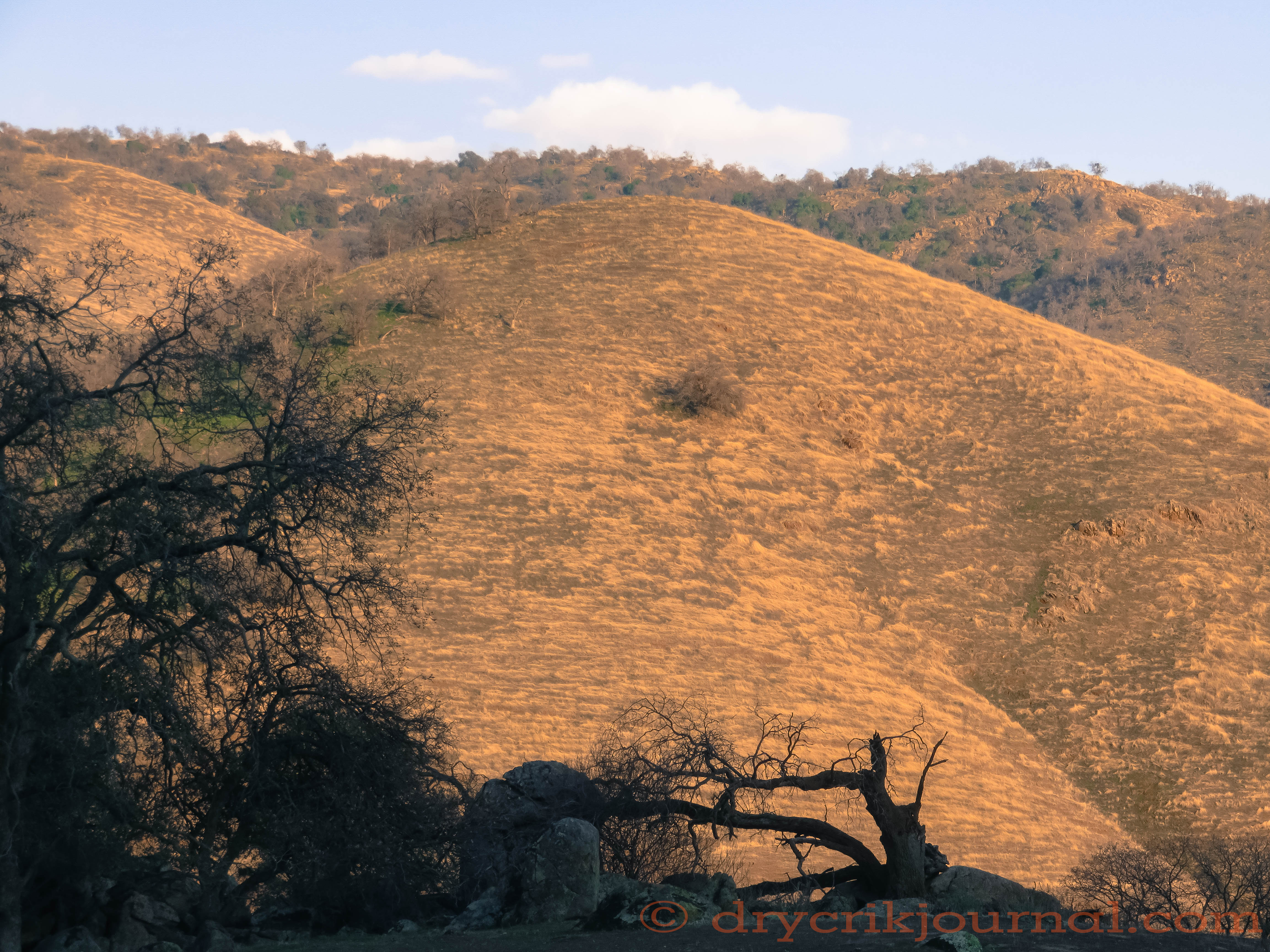
West slopes wear last year’s feed, palomino tufts
dappled with strongminded green graying daily,
deep-rooted seed of filaree, its crimson leaves
turn purple before baring the crisp color of dirt.
Like the trees and grasses, we may melt down
to dust, be blown away to stick in wetter places.
But like good dogs sure, we pray for a change
in the weather—if it hasn’t already, for the worse.










 drycrikjournal