Tag Archives: Drought

Resilience

IMG_0082

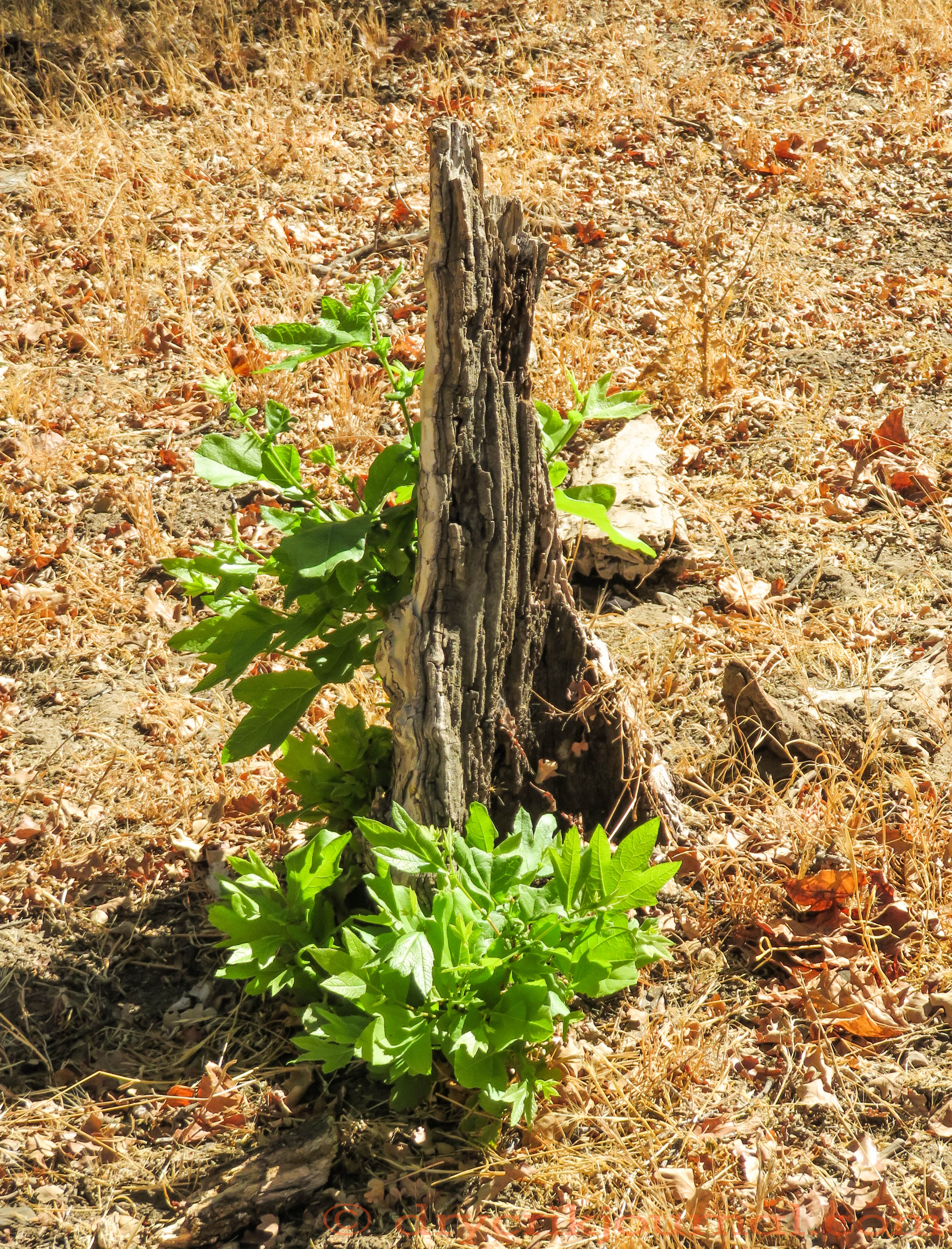
The Sycamore Alluvial Woodland (Platanus racemosa) on Dry Creek is one of 17 stands over 10 acres remaining in the world and the largest in the Sierra Nevada ecoregion despite the downstream impacts due to gravel mining. Other impacts from reservoirs, recreation and stream channelization have substantially reduced the population of this plant community statewide. Despite a century of grazing and the current drought, new growth from the remains of an old sycamore stump in this photo demonstrates the amazing resilience of this species. Photo: August 31, 2014

WITHOUT WATER

I had to tell her
about the gardeners
out of work, looking
for roses to prune,
green lawns to mow—

the fallow fields of dust
without crops to pick,
pack and haul to town
by truck, about how lean
the San Joaquin’s become.

Moonlighting, someone’s
hooking-up to hydrants
in Lemoore—a new market
for semi short-hauls
anywhere you want to go.

In the deep powder, shotgun
barrels at each trough
waiting for dove, all
signs of the hunt erased
by the wild at dawn.

I had to tell her
we’re OK, better off
than most—just to have
her think of more
than herself for a change.


AUGUST 2014

IMG_0004


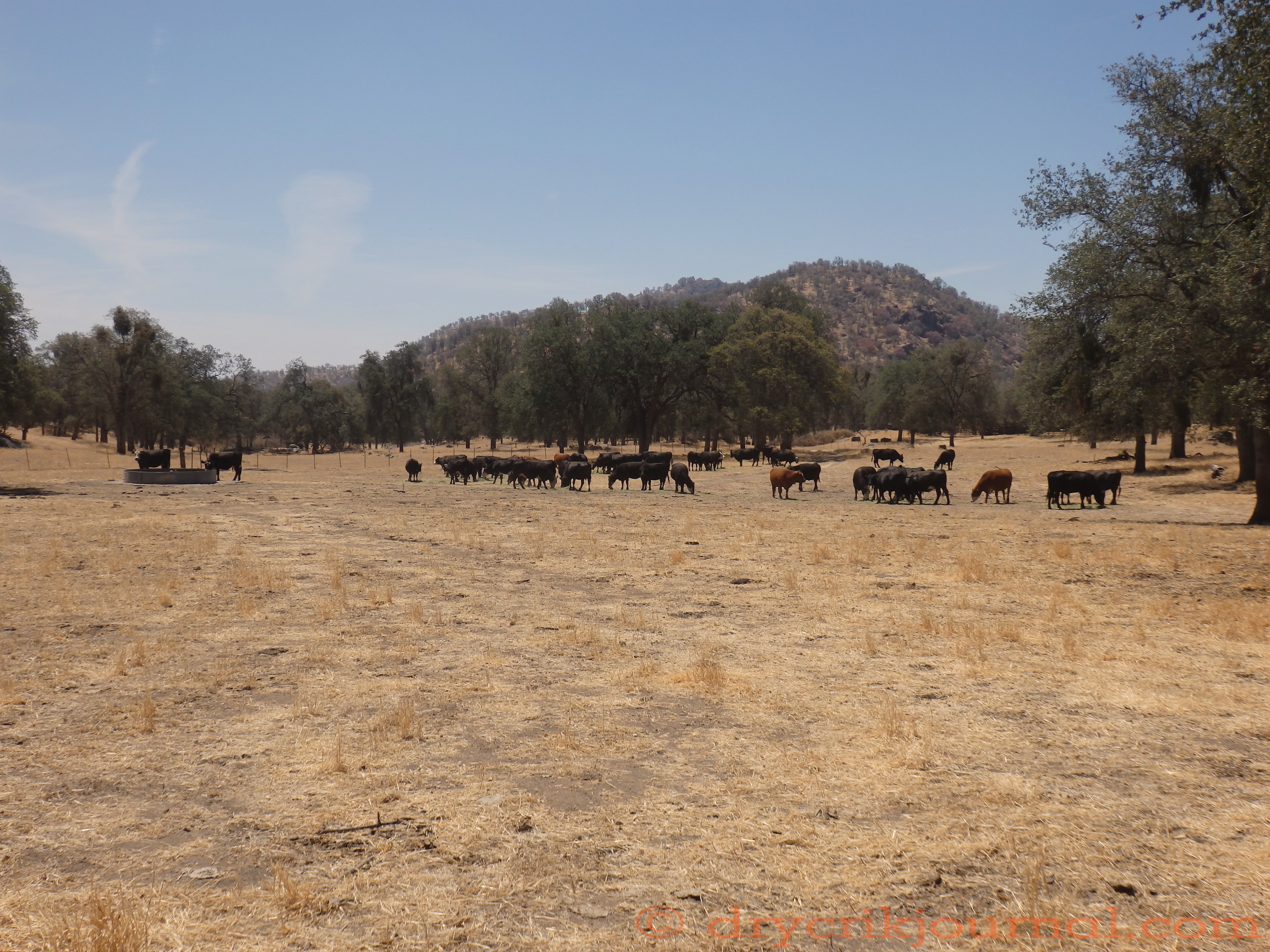
Stepping back from our routines of irrigating, checking stockwater and increased feeding, August has been a delightful month, cooler overall than average. It feels like an early fall. Our cows are bred to start calving next month, and more than ever we’re excited to get on with the next phase of this business, another beginning of a new cycle as we approach our rainy season, described by an early California historian as that time when it might rain.

Two years of drought has forced us to reduce our cowherd by 40%, leaving less cows to supplement with hay, less four-wheel drive excursions into our upper country with expensive alfalfa. As a result, we have reduced the average age of our cows, focusing on the maternal traits of our most recent genetics as the core of our herd. We’re excited to get started and see the calves.

As always, we head into calving blind, not knowing what circumstances the weather will create, and not even knowing whether our reduced calf crop will generate enough to cover our future expenses—a true gamble, daily investing ourselves and all we have for an unknown payday—not exactly what I was taught in business school!

But it’s what we do, it seems, year in and year out, trying to make ranch improvements as we go just to make life easier as we get older. We’re ready for the calves and ready for some October rain to put this drought behind us.


RECENT HISTORY

At the gate the dust is deep.
A feral hog at dawn returning
to his lair along the creek

atop a raccoon aiming
for the water trough, powder
soft between their toes

atop several head of cows
upon my own boot track
fading with yesterday’s breeze.

The time is now
to think about
the sign we leave.

IN SIGHT

P7050094


The day unfolds in the black:

another circle of hay and water,
cows and bulls, a dusty track
on worn terrain now dreaming

on a cool, downcanyon draft
of bluster and damp—of drinking
dark clouds until the dust is mud.

Out of the shadows, the wild steps
lightly, all sharing the same dream
rising from the dry, dry earth.


EVENING

First-calf heifers, tired from the drive
over hill and dale across the creek
to the corrals, sorted and fly sprayed

before their new home plied with alfalfa,
maternity wards bare as human baby’s derrière
in the flats, but with hair yet on the hillsides—

and a few old girls to show them how-in-hell
to get there. Out from under sycamores,
they work the shadow of the ridge in bunches,

stop and look, a few paces at a time,
inspecting distances, not knowing yet
how far they’ll have to go to stay here.


Ides of August

P7120018

These girls are two weeks away from calving as we begin a new season with little feed and less water, but we’re optimistic nonetheless, looking forward to a little rain and green grass.

INTO FALL

IMG_6961


…and maybe, just maybe she
comes by a different route,
out of the south with moisture

early. I have felt her breath
in the shade of evening
on my face, harbingers

that teeter on imagination
long enough to become
themselves, develop within

the fading light. All this
imagining excites the flesh
and hair. As shadows stretch

between half-naked oaks
on these sepia hillsides—
we start to color dreams.


Collisions in Place

IMG_3862


Though we don’t leave the canyon often, it’s always fun to speculate about moving to another place, like Victoria where summer temperatures are 25°F cooler than the San Joaquin Valley, where the urban pace is not as urgent as California, where the air is clean and clear. It’s been over a year since we’ve left the ranch on Dry Creek, the dust and drought, the cattle, but in Victoria our daydreams broke free enough to take on details, like trying on new clothes for a decent fit.

Concurrently, I was reading Wendell Berry’s “Imagination in Place”, a collection of essays that exemplify the concept of how belonging to a place can offer a more sustainable vision for it, our community, and ourselves. Reading from Victoria, it was clear that I had not exhausted what was possible on Dry Creek, despite a lifetime of observations, improvements and reams of poetry.

Unbeknownst to us, my daughter Jessica For the Archives who lives on the island of Kauai, was visiting Galiano Island with her husband and son. We’re lucky to see them once a year, so to have them near as the band rehearsed for their show on Salt Spring Island, to pick up where we last left off so effortlessly in a place that was not home to either of us (though Jessica had spent a year on Salt Spring Island) was an interesting mix of exhilarating emotions. We loved it.

Arriving home to the Islands just ahead of hurricanes Iselle and Julio, they were thrown into hurricane prep mode, boarding windows and stowing stuff. But living on a Noni farm with access to well water and a solar pump increased their sense of security, the whole experience enhancing their confidence to ride out most disasters—part of learning to live in a place.

She emails: “Curious how it’s been for you coming home. Sometimes it’s hard to return, other times it feels so good. Sometimes, it’s a little of both.”

It has not been an effort to fall back into the mundane routine of feeding and irrigating, checking stockwater and cows that will begin calving in a couple of weeks. The long shadows of August promise change, the monsoonal thunderheads in the high mountains and the gusts they bring to the canyon excite us to feel young and alive as summer begins its retreat into what we hope will be a normal year of grass and rain. We start over again in a place we know and trust.

AUGUST REVERIES

IMG_3798


My brown-skinned girl,
each dusty draw
seems softer, shadows

linger longer at the dawn
as the sun moves south
down ridgelines.

I begin to hear
the faint sound
of a light rain, early

on the roof—the musty
smell of it awakening
a primal surge of new life

for old veins on guard
for the slightest sign
telegraphed ahead

of a train in my mind
mesmerized by rivulets
finding their own way

to the creek running
into spring. Cottonwoods’
first yellow leaves

gathered by rolling gusts
up and down canyon—
you say you feel it too.