Tag Archives: cows

EARLY MORNING SHADE

P7260007


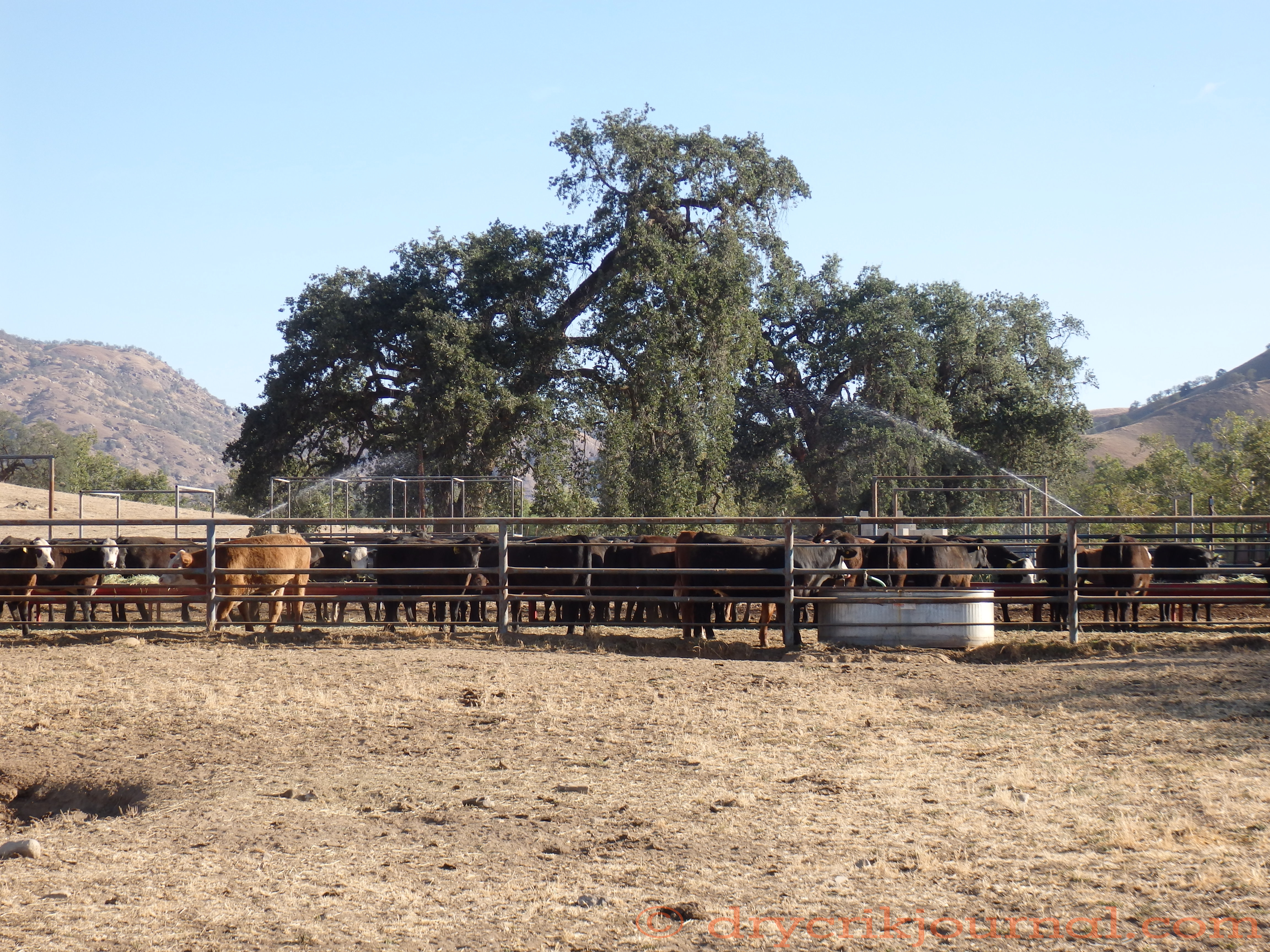
Mid-San Joaquin summer,
you can set your watch
by cows coming off the pasture

to Valley Oaks at seven-thirty—
back out into the blazing sun
by noon, breezes off the green.

Not one gossipy complaint
among them, chewing cuds,
relishing the timeless shade.


TO WHAT LISTENS

P7060031

                                   I sing—to what listens—again.
                                        – Wendell Berry (“To What Listens”)


I cannot match the Canyon Wren’s sheer cascade
of octaves through brittle Manzanita, spilling over
granite boulders, each note searching for a home

or the strike, light and crack of a cold summer
thunderstorm in tall pines and damp cedar duff
beyond the fire—middle-of-nowhere—beyond

narrow roads and ‘lectric lights, the burnt scent
of moments mixed off to join the world in a gust.
I yearn for the source, map each in my mind

and like calling cattle to me: sing, awaken
canyons with old vocal chords turned free
and loose, a crackly a cappella of my own.

And they come out of chemise, off mountains
of oak trees, to the familiar, like good friends.
I sing—to what listens—again.


PORTRAIT OF A COW

P7050048


Full in the shade,
no hurry to abandon
wonder for alfalfa.


WPC (4) — “Contrasts”

Windmill Spring

P6280017

I was doing some preliminary work for the installation of a solar pump in an abandoned well yesterday, after which I checked the water at Windmill Spring. No windmill anymore, it still carries the name and the only reliable water we have at the Paregien Ranch this year. It’s fed from a spring box and fills a series of troughs.

P6280045

These girls had just watered before I arrived, having seen them earlier in the day about a mile away as I was putting out protein supplement tubs.

P6280016

When I got to the spring, this girl was watering at the last trough, constructed of redwood well-before my time.

P6280033

P6280039

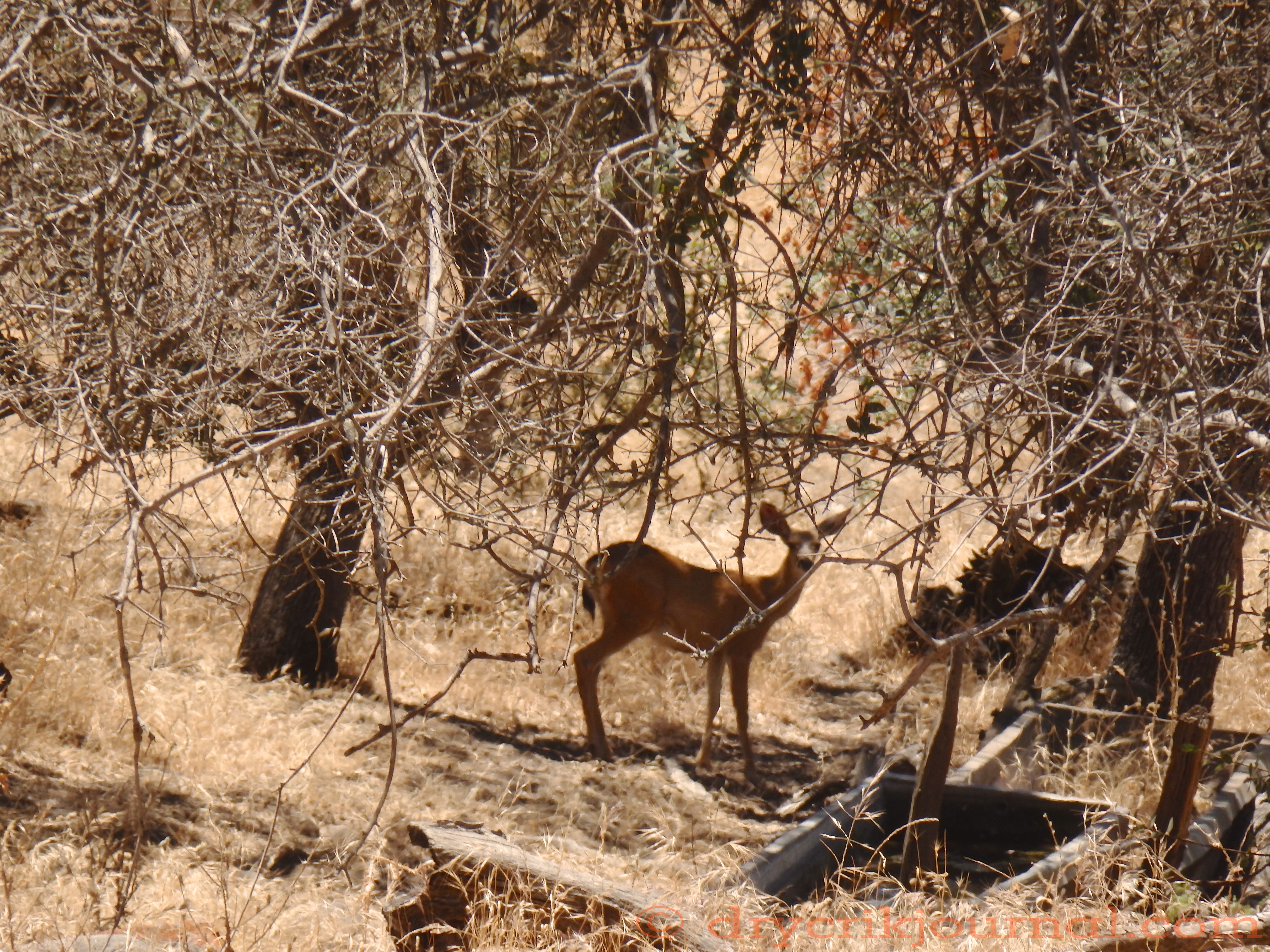
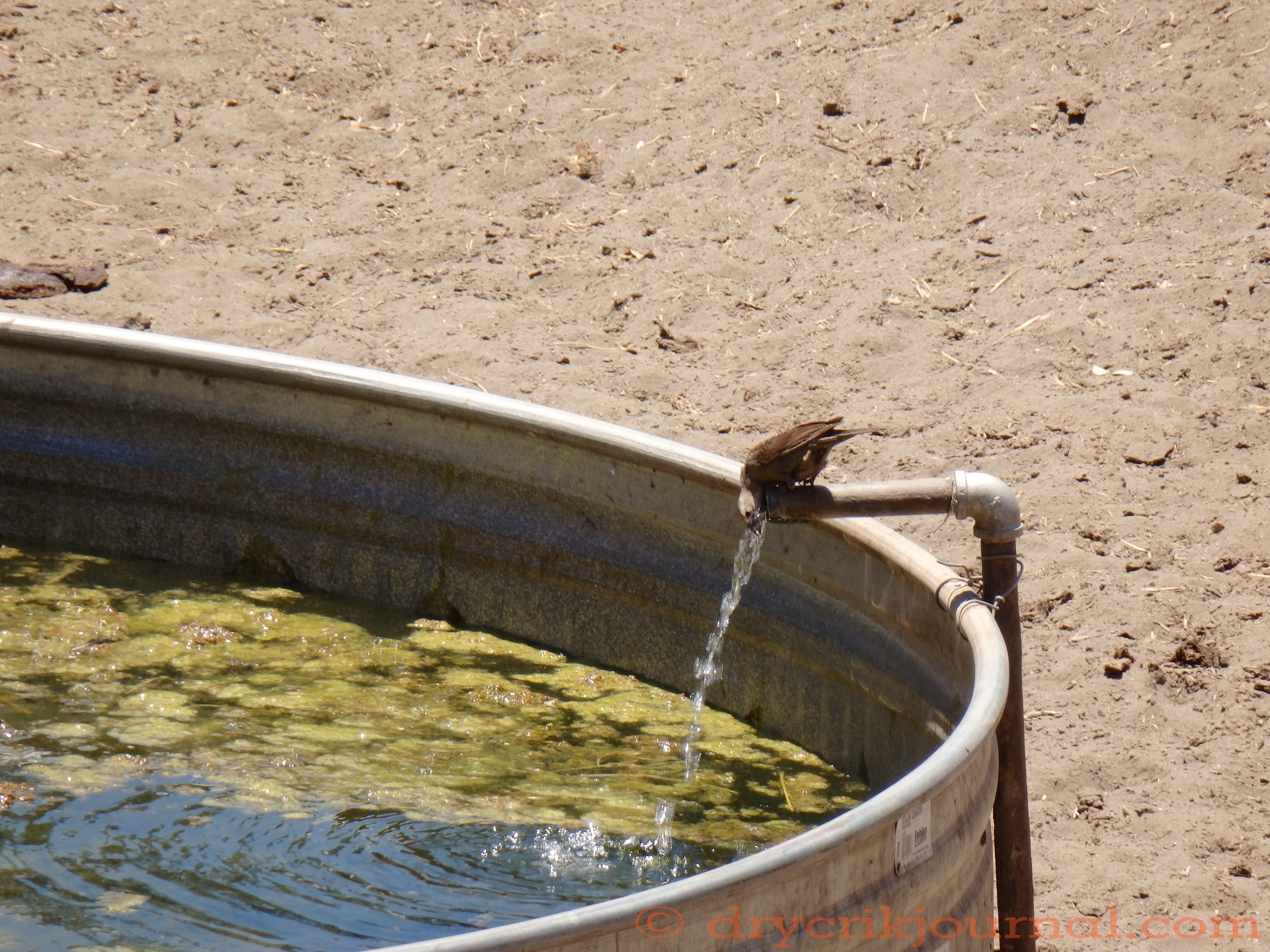
Water is scarce and everyone knows where it is. I could have taken wildlife photos all afternoon.

Riding Drag

P6260006 - Version 2


WPC (1) — “Contrasts”


Last Bunch 2014

P6230024


It’s been a long, dry year, but we’ve begun to breathe easier now that our last bunch of calves is in the weaning pen and headed to town tomorrow morning. Born last fall, they are averaging about 100 lbs. lighter than normal due to the drought, but current prices more than make up the difference.

The country we graze is cross-fenced into pastures. We gather each twice a year to brand and wean while culling the cows that don’t fit our program either due to age or late calving dates. It takes about six weeks for us to wean all our calves, but longer to brand when it rains and while we’re helping our neighbors. We try to keep our cows in the same pasture their entire lives here, familiar ground where they can make homes and the gather becomes routine. Because of our terrain, rotational grazing is impracticable—so we understock to meet most feed conditions instead.

This second year of drought, however, has reduced our cowherd by 40% while feeding 500 tons of alfalfa since last fall. Because of the time and feed required for a heifer to have her first calf, we kept no replacement heifers this year. It’s disappointing for Robbin and I to see them go and the efforts of the past twenty years reduced so drastically, but we hope to take advantage of this heavy culling by improving the genetics of our cows into the future. We are encouraged with a good base to work with, as our cowherd now is fairly young, a third of which are first and second-calf cows.

Near term, we concentrate on improving stockwater until it might rain again this fall.


Ode to Motherhood

IMG_8159

For most people, a cow is a cow, but the grace of this native pair despite their good flesh, a seven year-old Hereford cow and her heifer calf, approaches the perfection of motherhood for me, reminding of an ode included in “Poems from Dry Creek” and published by Starhaven in 2008.


IO

On the horns of an infant moon,
the creek shrinks and pools
between sycamores and live oaks

as babies come to first-time mothers
bringing the bear tracks downcanyon
on the scent of spent placentas.

Black progeny of the river nymph –
white heifer driven madly by Hera’s
gadfly Oestrus to cross continents

and populate Asia – find maternity
perplexing at first. Yet, lick and nuzzle
the stumbling wet struggle to stand,

suckle and rest that enflames instinct
in all flesh. Worthy timeless worship,
no better mother ever than a cow.

SILVER LININGS

IMG_0071.JPG

Robbin and I are trying to pace ourselves and grin our way through these dry times begun last grass season with less than ten inches of rain, about 60% of average. With only dry fuzz for forage, our cows are holding-up remarkably well as they calve, due in large part to the truckloads of hay we’ve provided since the middle of August.

We may be luckier than most, like the cattlemen on the Coast Range who’ve had to liquidate their cowherds after additional tough years for forage. In the next couple of weeks we’ll begin reducing our number of replacement heifers when we get them in for their round of shots before we put the Wagyu bulls out December 1st. Then onto the cow pastures to send the late-calvers to town.

It takes years to build a nice herd of young cows and only a couple of dry ones to undo decades of work. But trying to find a silver lining, we hope this culling process will ultimately improve the genetics of our cows into the future. Fortunately the market’s fairly strong and Congress has left Washington for home.