Yesterday, Robbin and I were checking the cows and calves on the Paregien Ranch while putting salt and mineral out when we ran into these two bucks and some does. Because they don’t get much hunting pressure and familiar with our comings and goings, the deer are fairly tame. Add the bucks’ tunnel-vision this time of year and it’s as if we weren’t even there. Robbin took the video from her cell phone.
We didn’t see many deer this summer due to the tall feed as a result of last year’s abnormal rainfall, so it was encouraging to know that their basic breeding routine has not been interrupted by all the drama and tragedies around the world—something solid to depend on.
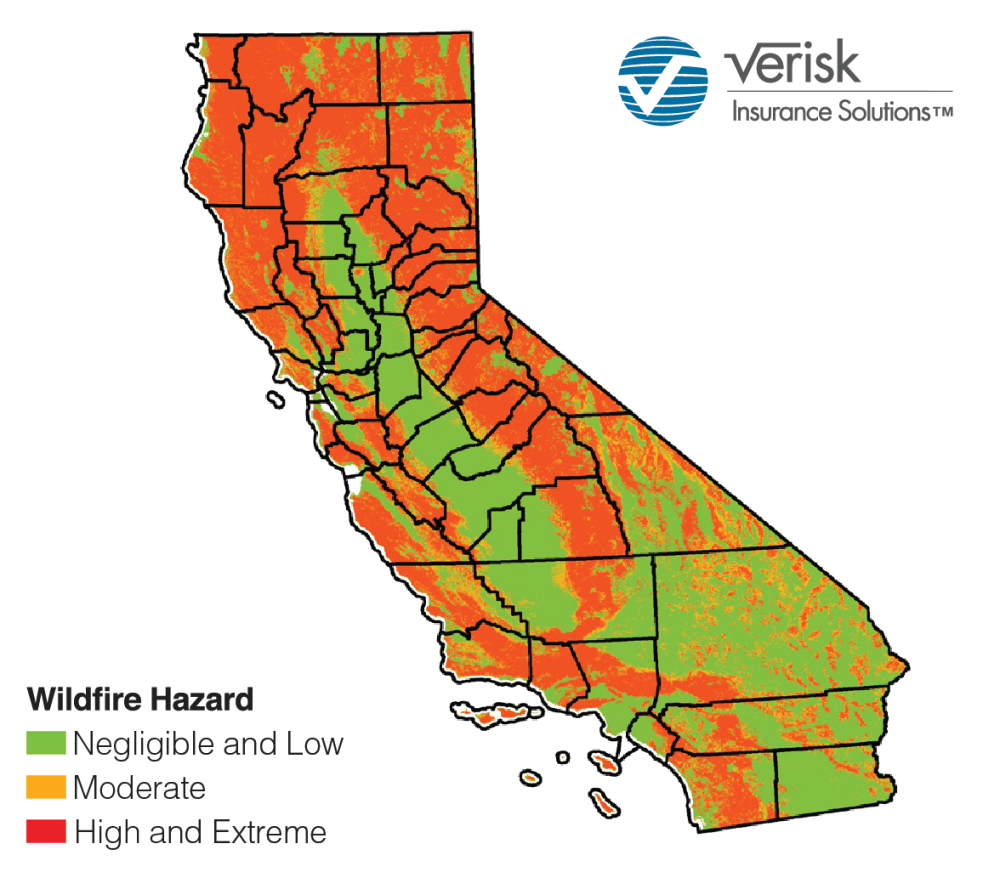
We are among the many home and ranch owners whose insurance policies have been canceled because they were located in the revised California’s High Risk Fire Area that includes almost half of the state.
Drought conditions in 2017, 2018, 2020 and 2021 combined with poorly maintained PGE transmission lines in Northern California charred over 8 million acres that left insurance companies holding the bag for losses and fire suppression costs. After a month-long process, we found one other carrier with less coverage at twice the cost.
A decade or so ago, Tulare County used to spray the weeds on the shoulders of Dry Creek Road to reduce fire danger from catalytic converters, hot brakes and dragging safety chains. Currently, 4-foot tall dry weeds encroach on the eroding asphalt adding to our risk of fire.
An independent onsite inspection was necessary to establish baseline conditions for home, barns, tack room and shop. I waited at the end of the driveway for the inspector from the Bay Area who had become lost. Up the drive in a cloud of dust she parked in the shade of a redbud as I followed in the Kubota. As she stepped out of her 2017 Chevy Volt, it began to roll down the slope, as she grabbed the door trying both to hold it and to get back in, towards our 500 gallon fire-fighting water wagon to veer at the last moment into the skid steer. She could have been seriously injured.
Though the hybrid rocked the skid steer upon impact, it survived unscathed. After assessing the damages to her car, we tied the plastic together with duct tape and hay string and tested the brake and turn signal lights. Drivable and legal, she went about her business of asking questions and photographing the structures while I showed her our firebreaks, plumbing for filling fire trucks and water wagon from our wells, while explaining that I had even stopped one fire myself with the skid steer.
Having made it home safely, she conducted the remainder of her inspection with questions over the phone and texts over the next two days. I repeated many of the photographs she had taken because of the glare from her cell phone, plus additional pictures of electrical service boxes and their manufacturers with interiors of all structures. In order not to have to dedicate another afternoon for another inspection, I essentially accomplished the onsite portion of her inspection.
I recount this calamitous and ill-advised process from a 75 year-old’s perspective, dumbfounded by the inefficient technological progress in that span of years. Frankly, she had no more business navigating and assessing rural California than we would be navigating and judging San Francisco, the ironic culture clash between us resounding loudly.
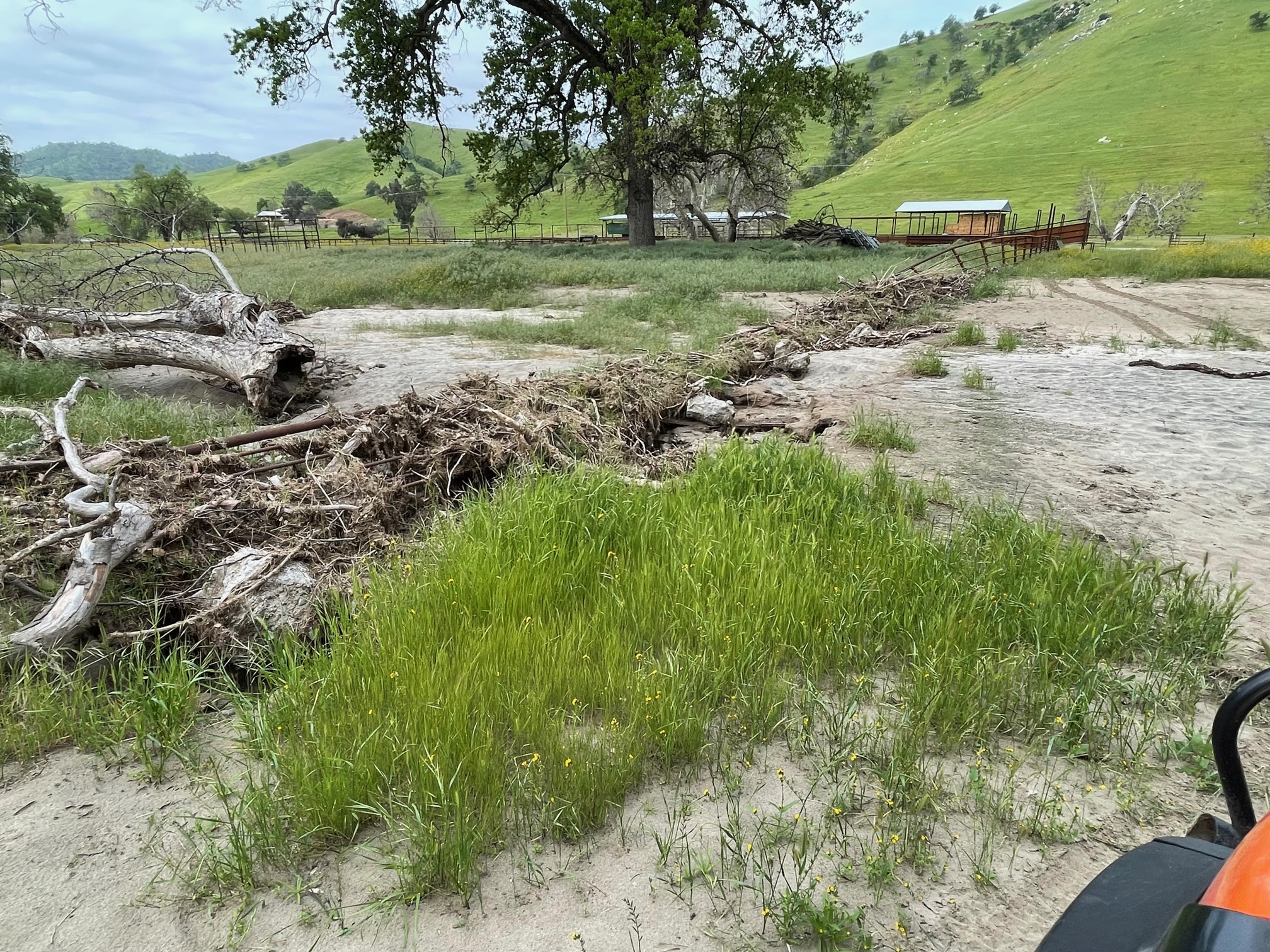
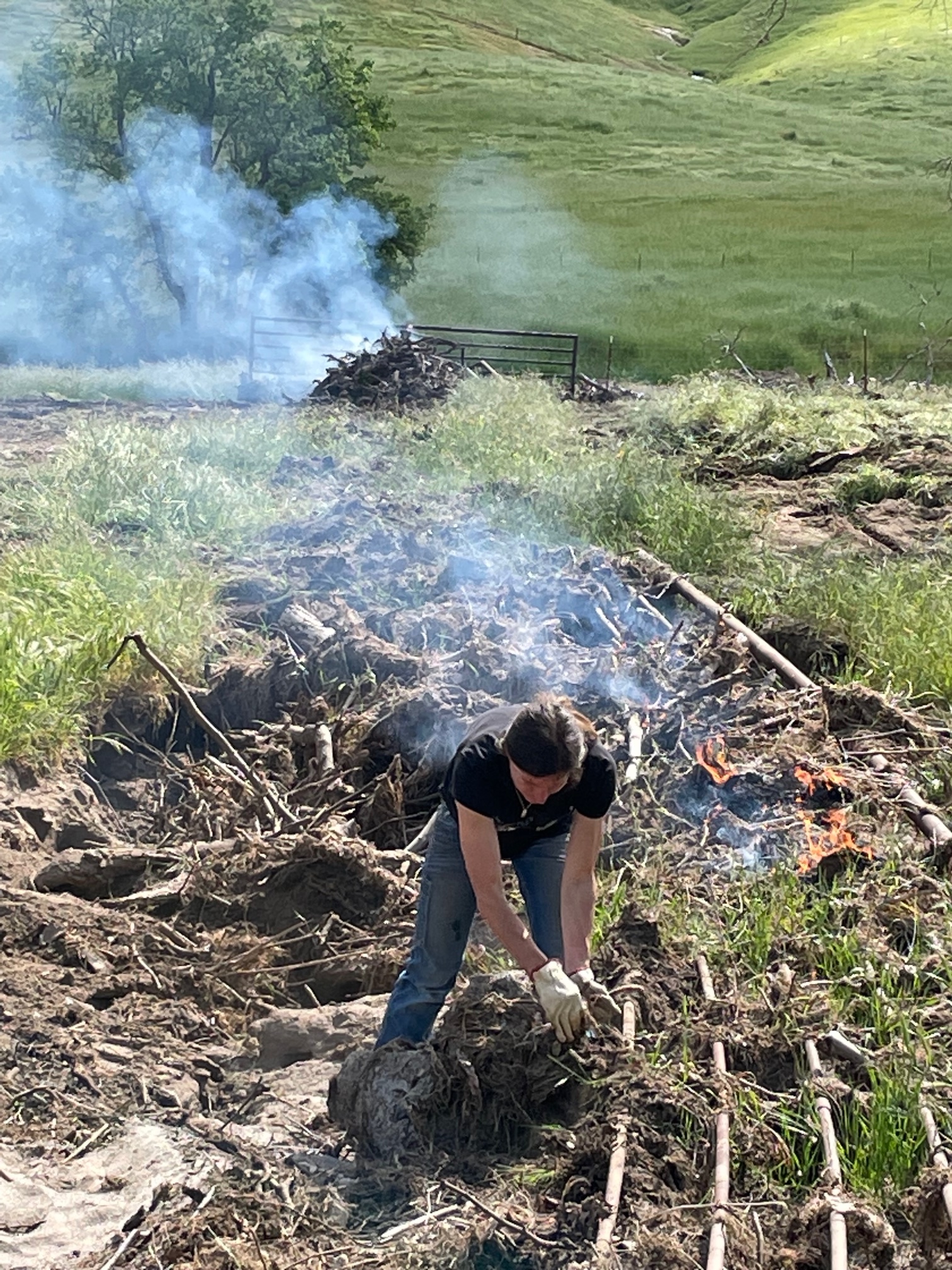
The grass has turned while we’ve been busy repairing our fences in order to sort and ship our calves to town. Because the brush catchers upstream failed to hold all the debris, our pipe fence across the high water channels when the creek was flowing 8,000 cfs (cubic feet/second) collected what leaked by until it was overwhelmed.
It’s been a slow process, but neighbors and friends brought their hydraulic muscle to stand it upright Sunday morning in a couple of hours. We had to cut it in sections and finished welding them together yesterday.
We haven’t been able to cross Dry Creek for three months due to the series of Atmospheric Rivers that began last December. Subsequently, Robbin and I haven’t seen the cattle for three months.
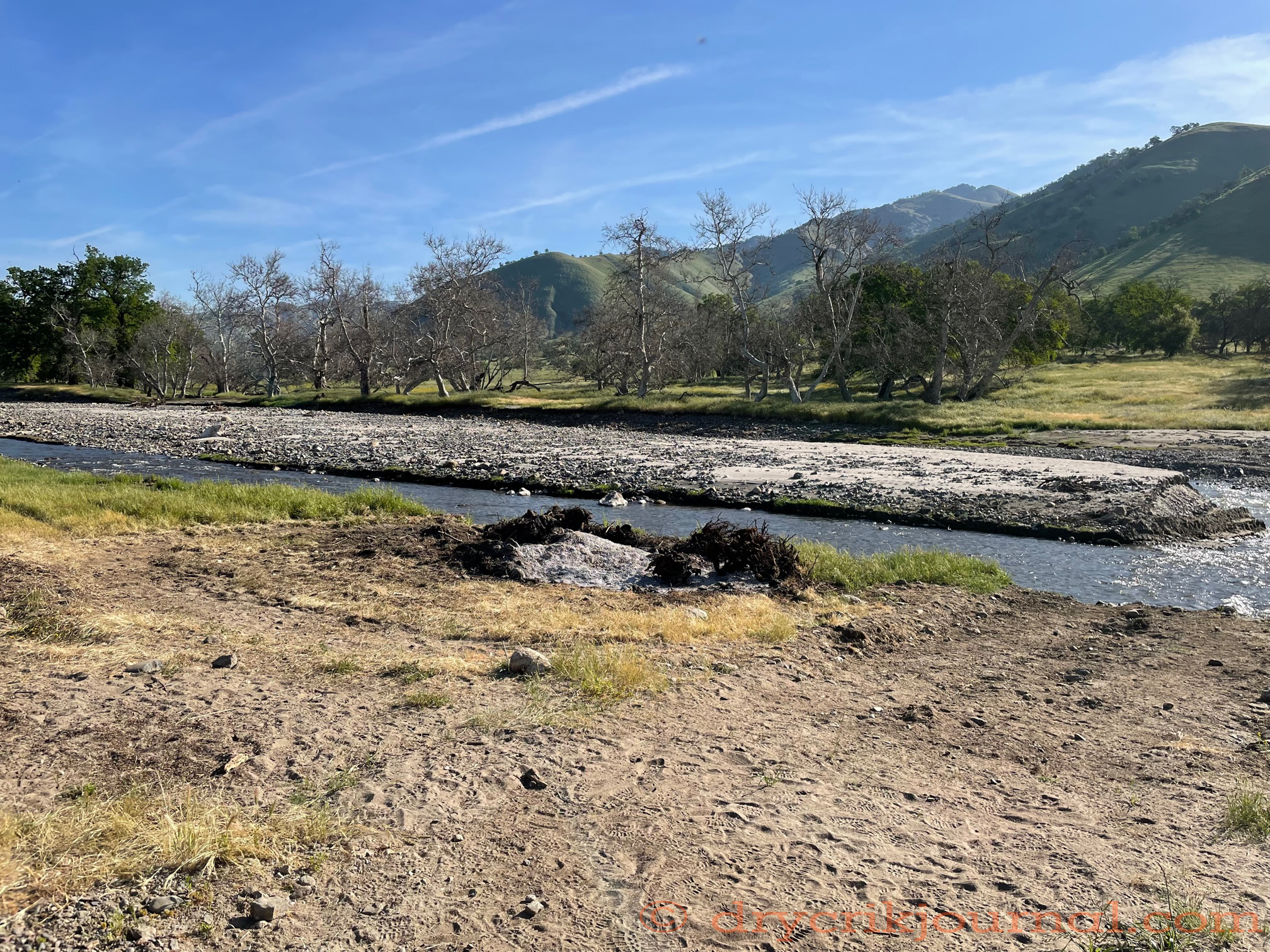
Fortunately, we had a dozer nearby to spread the cobble and sand bar evenly across the channel.
Salt hungry, they’ve been doing fine without us. We were quite pleased with both cows and calves.
Farmers and ranchers across the country are dealing with increasing urbanization of rural America. With that urbanization brings challenges and opportunities. Hear from five Angus farm and ranch families, including: Lovin family, Lexington, Georgia; Marsh family, Huntley, Illinois, Stabler family, Brookeville, Maryland; and the Cropp family, Damascus, Maryland, about how urban sprawl has impacted them and American Farmland Trust CEO John Piotti about the issue as a whole. The American Angus Association® is proud to present the first film to expose the impact of urban sprawl on American Agriculture – “Losing Ground”—an I Am Angus production.
-Rachel Robinson
Bob and I left Elko Monday at 5:00 in the dark and drove straight through, stopping only for fuel, to Dry Creek ahead of last night’s storm that threatened to close Tehachapi Pass. Montgomery Pass was 4 x 4, touch and go, but we made it home by 4:30 p.m. 2.74″ total rain while we were gone.
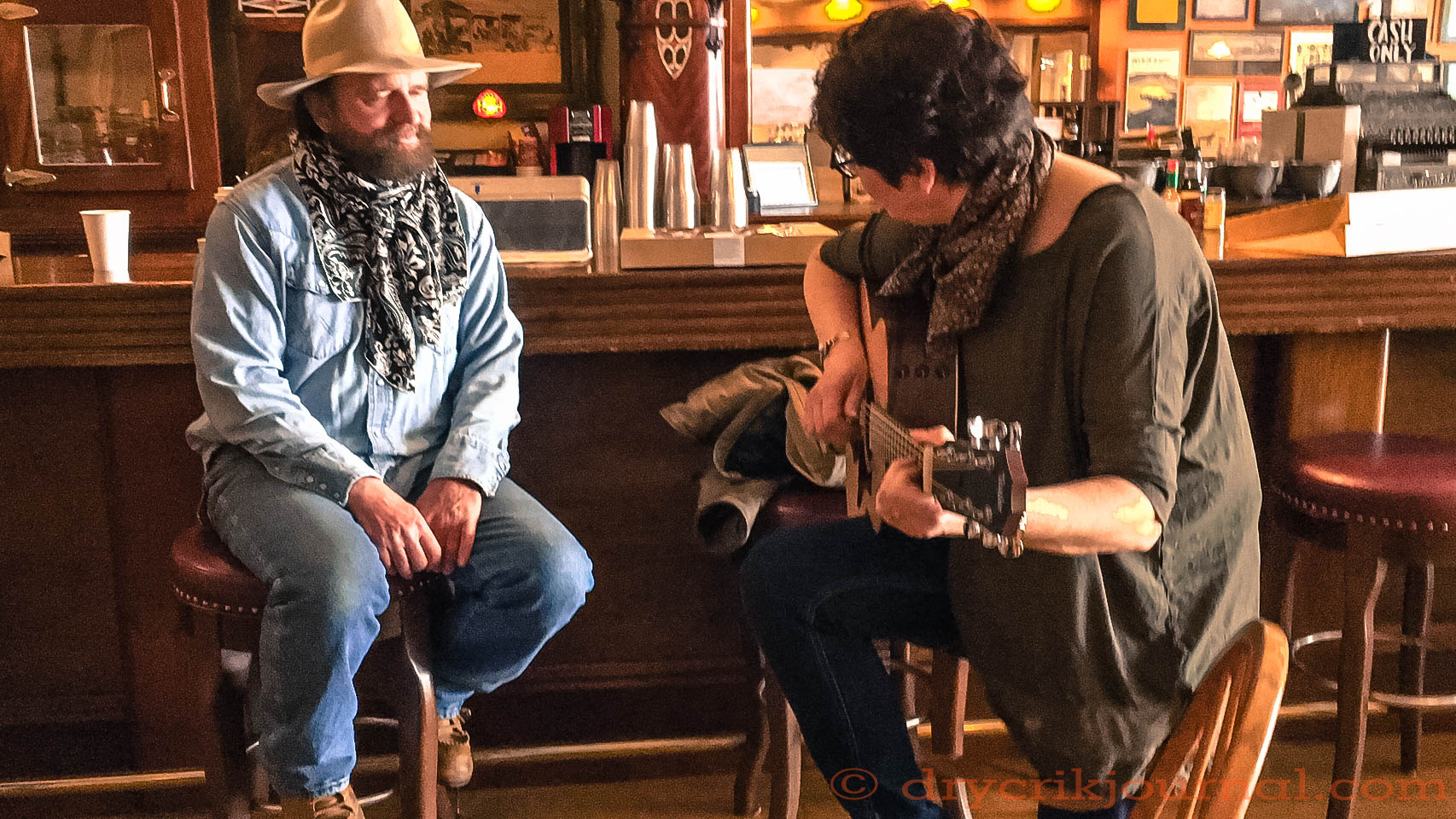
Sunday a.m. at the Pioneer was a special treat listening to Mike Beck and Denise Withnell make Robbin’s guitar sing above the goodbyes of poets and performers leaving for home. We brought the guitar to Elko so Denise would not have to wrestle her own on the airplane. She and Dave Wilke were backing-up several Sid Marty performances. (Oh what a fine singer, songwriter and poet he is!) The Canadians were a well-represented bunch that included Ian Tyson and a spectacular new voice to Elko, Colter Wall.
I made a couple of videos of us working cattle in the new corrals in Greasy to send to my sister who owns the ground and financed their completion. Our cattle handling has evolved since the use of the Kubotas, finding it much easier to lead cattle than to drive them while gathering this steep and brushy ground. Over the years, the cows have become gentler and more cooperative, and having good facilities insures they remain that way. I thought some followers of the blog might be interested.
The first video shows the improvements to our loading facilities and the second demonstrates how we worm our cows for potential parasites—not the kind of action one might find in wild cow poetry, but the way we like it.








 drycrikjournal