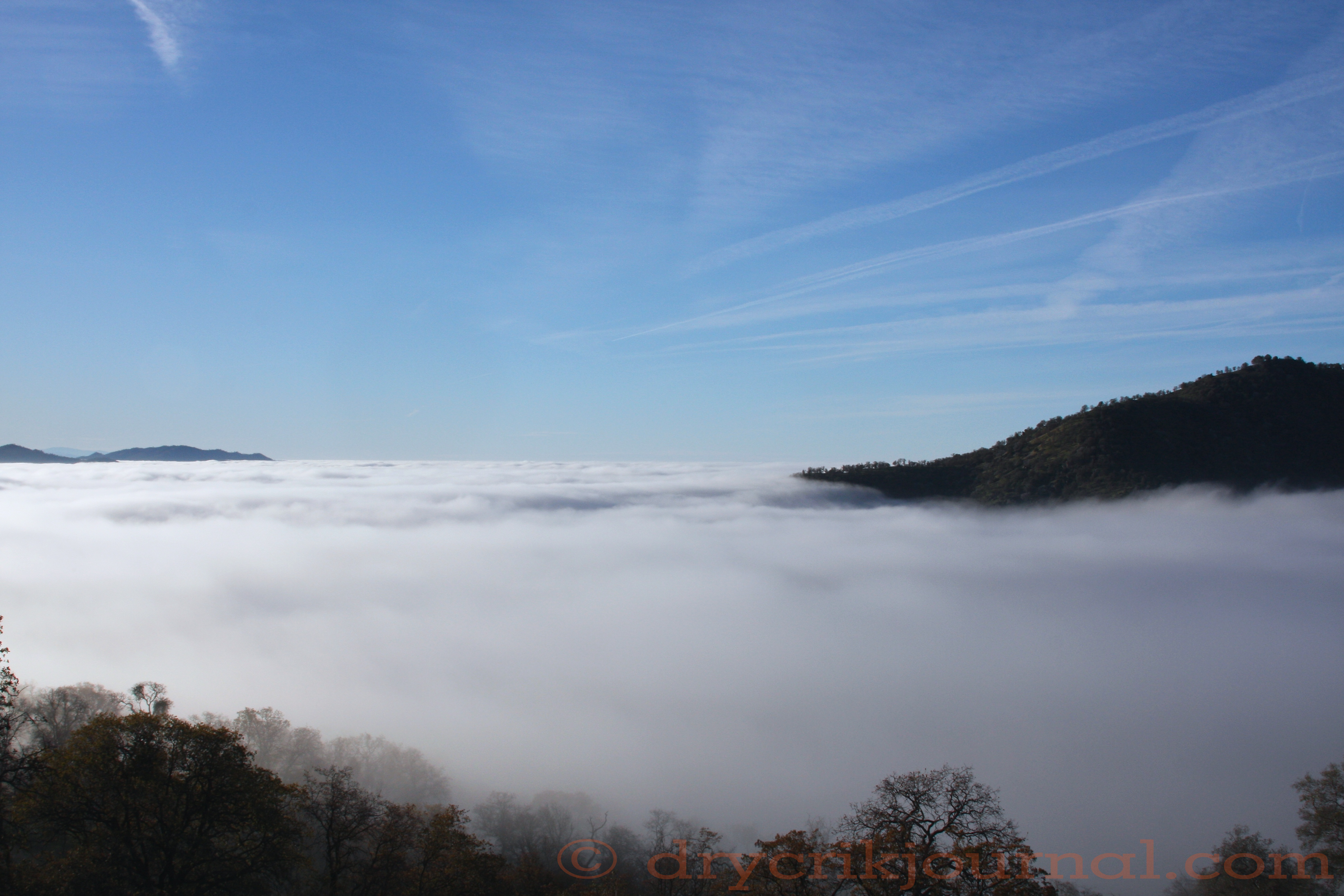
No day to gather
cattle in a sea of fog—
just wait by the fire.

Gray overcast in May at dawn,
stillness separated from a slow
awakening downcanyon, not a breath
to shape the thin white cloud
hanging this side of Sulphur Peak
frozen in my mind. Time has stopped
to hold the finches and sparrows
closer to their nests, coyotes linger
curling in their dens as we drink
another cup in silence, inhaling
this fresh dampness with a cigarette.
Softened hillsides begin to breathe
and sigh refreshed—even the barn
comes clean and alive. Pleasantly
dumbfounded, we add occasional
adjectives, fail to complete
a thought out loud, but nothing
interrupts what our old eyes see.
April in May
busy with cattle,
calves and auction yards—
visiting with solid souls
beneath faces worn outdoors
that follow the stuttering
monotone of auctioneers,
all-day waiting
for bulls too late to brand
in March to sell,
the garden blooms
without me:
peppers and squash,
tendrils of cucumbers
reach for support,
onions bow,
eggplants open arms
as the tomatoes wait
for heat to color
hard green globes.
Eight hundred pounds
without the red iron,
rope or vaccinations—
growing without me.
Posted in Poems 2015, Ranch Journal
Tagged auction yard, auctioneers, bull calves, garden, organic

It’s all about the girls
on this ranch, mothers
and grand, grandmothers
grazing a life away.
We’ve found our pace
despite the drought
trusting one another’s
competence and will.
Gentle strumming
in the background,
dark to light
and black again,
no day the same,
each moment full
of contrasting details,
lyrics raining down.
Posted in Photographs, Poems 2015, Ranch Journal
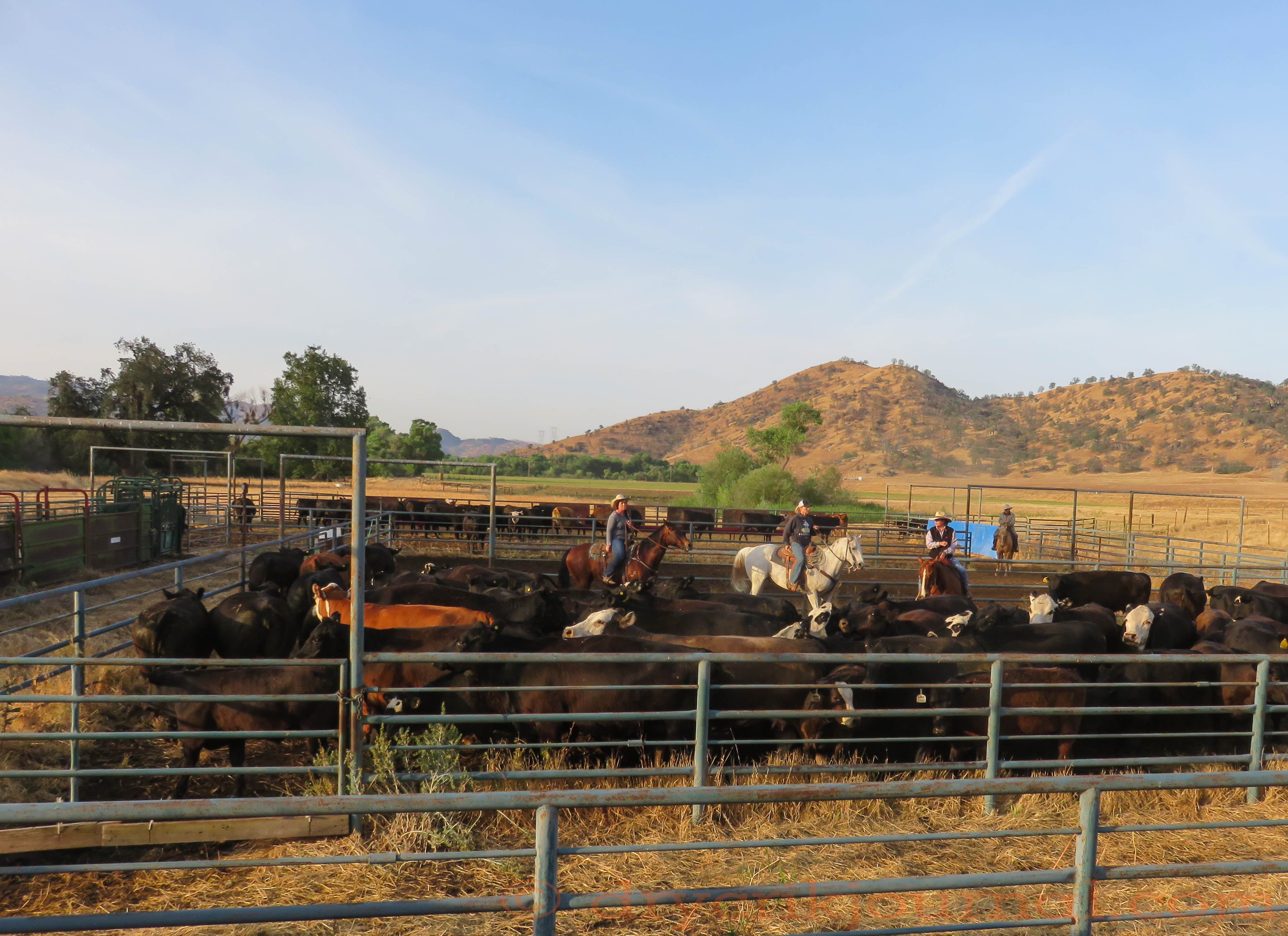
Yesterday morning, we shipped our Wagyu X calves from our first-calf heifers to Snake River Farms in American Falls, Idaho where they will be fed
until offered as American Kobe Beef. We began our program with Snake River Farms several years ago looking for smaller calves for our first-calf heifers while trying to avoid the genetic hangover of low birth weight Angus bulls. We rent the Wagyu bulls from Snake River Farms and contract to sell all our calves to them for a ten cent/lb. premium over market price.
Born small, our Wagyu X calves ship about 100/lbs. lighter than our English calves. This year, the steer calves averaged 568 lbs., our heaviest Wagyu X steer calves to date. In the photo above, Robbin, Clarence and the girls are parting cows from calves to be weighed before loading them on the truck.
Good bug year:
Daddy Longlegs
on a wet paint wall,
Crane Fly waiting
for me to dry
and hang my towel
back, herds of Earwigs
hiding between the leaves
of artichokes, and bitter
gnats drowning
in my uncovered wine.
Most don’t bite
but feed the Phoebes
and one another
in the springtime,
summer, fall.
Hatch upon hatch,
I dream of casting
to eddies, riding riffles,
the splash and set
of hook, playing
and landing trout
if there were
any rivers running.

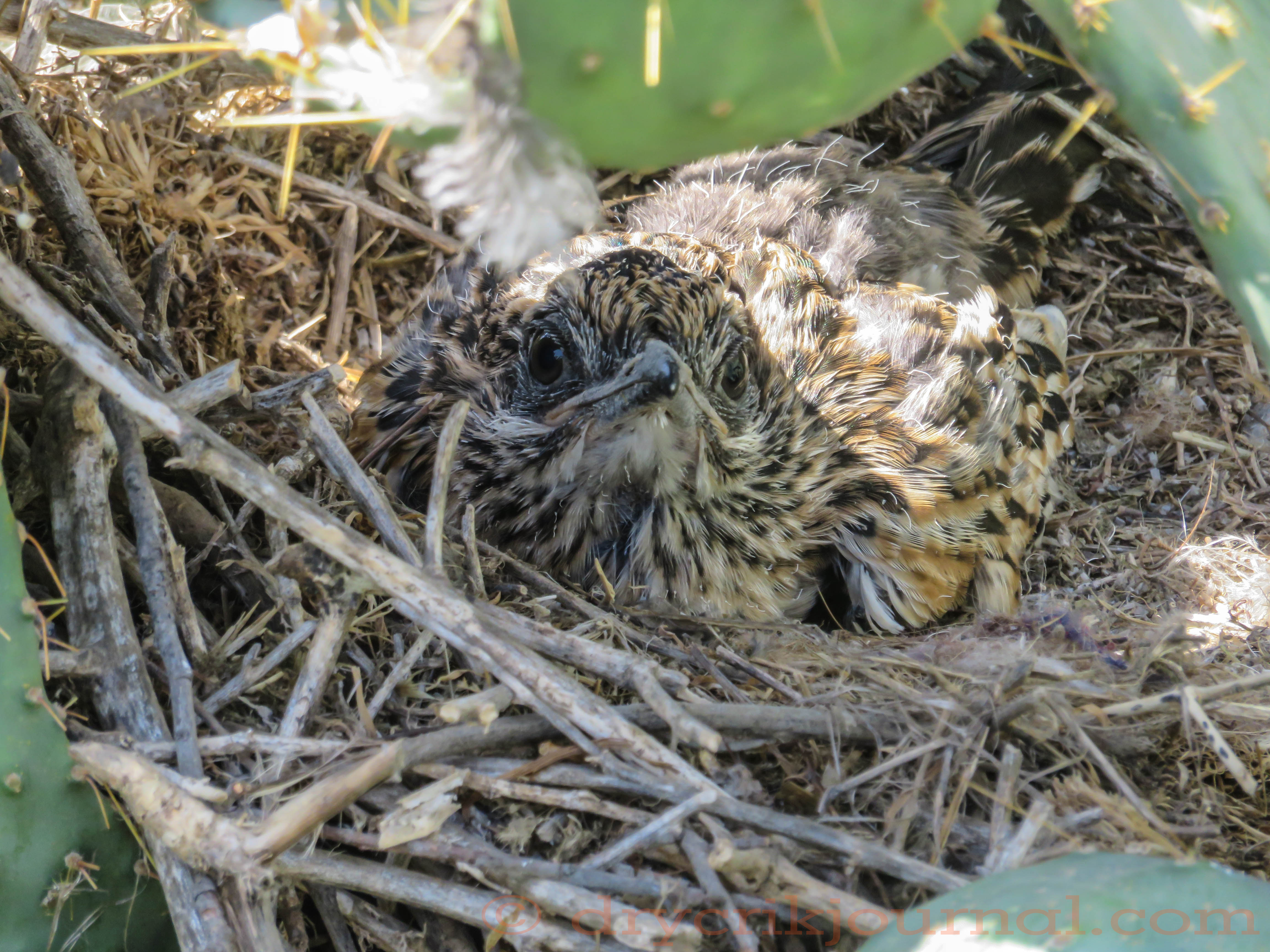
Begging your indulgence for yet another photograph of the Roadrunners, an adult and juvenile, hanging around the cactus nest where one fledging remained yesterday afternoon as I came in the driveway.
We started in the dark to gather and preg-check our third-calf cows, make the sort of who stays where and who goes to town, keeping in mind our scarce stockwater resources. We shipped one bunch of calves Tuesday that sold well yesterday—we’ve been busy. Too busy to sit by the nest for photographs, so whatever shows up here is only by chance, nothing scientific about it.
We know the babies fledge and grow rapidly, and are as mobile as the adults when they leave the nest. Having an adult and juvenile together in a photo, it’s obvious the juvenile is smaller with a shorter tail. Notice also the differences in the eye of each. In a previous post, I assumed four babies in the nest, but revisiting the photo after comments, one of the eyes is that of an adult judging by its tail and the eye of this adult—so only three.
Yesterday evening one of our crow pair, who have been harassing and raiding the bird nests in the yard for several weeks, was at the cactus patch where the one fledgling remained. As the crow left with apparently nothing, an adult and juvenile went to the nest as if to rescue and encourage the last one to leave.
If there’s nothing in the nest this morning, I’ll have to count young beaks to see if it survived, an impossible task unless the three start running together.
No one to visit me
but this familiar stranger
with nothing to eat.
Posted in Haiku 2015, Photographs, Poems 2015, Ranch Journal
Tagged Dry Creek, roadrunner, roadrunner nest

No reason to leave
the comfort of Prickly Pear
to make our fortunes.
Posted in Haiku 2015, Photographs, Poems 2015, Ranch Journal
Tagged Dry Creek, roadrunner

We began weaning our first bunch of calves last week, three weeks earlier than normal, due to the lack of rain in March and April. From second-calf heifers sired by Vintage Angus bills, all of these calves are headed to Visalia Livestock Market on Tuesday. The whole bunch averages 600 lbs.
Though lighter than normal, there are some heifers we would have liked to keep for replacements, but our continuing drought conditions and uncertain feed and water resources make that option impractical. Whether Climate Change or other weather phenomenon, we have come to consider our circumstances to be the new normal for Sierra Nevada foothill ranches in California where cow numbers have been reduced by 40%.
After three years of drought, our springs which are dependent on the Sierra snowpack, and our stockwater ponds which are dependent on rain, are severely impacted, some dry already before summer’s begun. Each operation continues to adapt to diminishing resources as we try to hold our cow herds intact, having already culled deeply in 2013 and 2014.
As we head into our fourth year of drought, we’ve had to change our perspective, hoping to offset our smaller numbers with a good cattle market.
Posted in Photographs, Ranch Journal
Tagged Drought, Vintage Angus, Visalia Livestock Market, water, weaning, weather