Category Archives: Ranch Journal

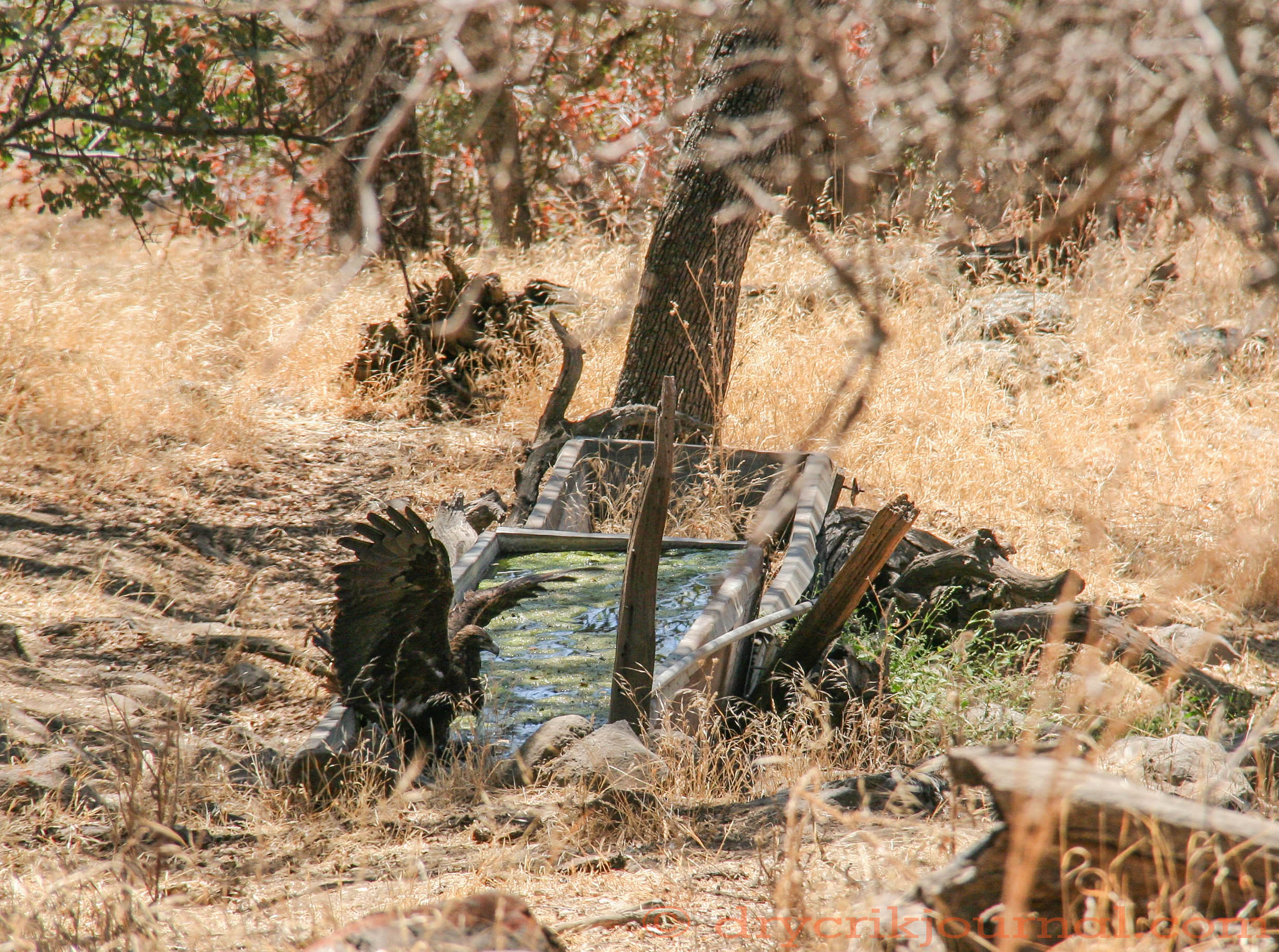
EAGLE EYE


IMG_8916


Cultivating a native life,
we pause for totems,
let them tell us
what they think—
who they are.

Some count on us
to stir the grass
and follow,
and some to listen
when we drink
coffee or wine
outside.

Claiming the roost
of loving crow mates,
a Golden Eagle lights
for a closer look at us—
and we are blessed.

Finding his feather
left ahead,
we believe
in something
more common
of the wild,

of talismans
from moments
we never forget
and hope to leave
as much.


RACISTS


Photo: Terri Blanke

Photo: Terri Drewry


In a world tall with grasses,
wild oats and rosy thatches
of dry filaree, we seldom see

our feet upon the earth.
In frequented places
like water troughs and barns,

like vegetable gardens
saving trips to town,
we are prejudiced—

react without a thought
against a race of snakes
that want no trouble

to claim the space
in which we travel
with a shovel.

                                    for Terri

GRAPES IN BLOOM


20160504-IMG_5504


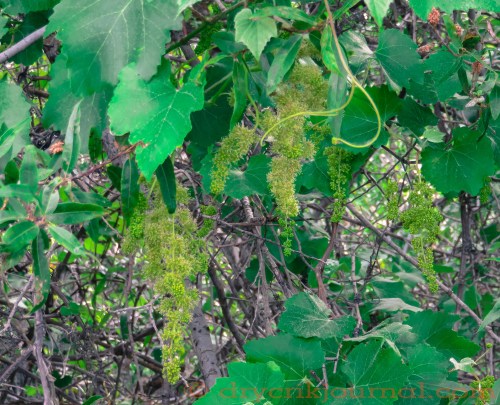
Muggy morning beneath a raft of clouds
docked against the Sierras steals molecules
of oxygen beside the last hole dug for granddad’s

gravel that now traps tailwater from the pasture
in the summer, its dark, stagnant pool teams
with amoeba and paramecium, a fermenting

stench swum only by cormorants and mud hens.
Sweet fragrance on a gust startles my senses
to search the dry grass for color, tree limbs

for blossoms from willow to sycamore,
blackberry to cottonwood, but none in flower
before the forecast Mother’s Day thunderstorms.

Perfumed tendrils cling like Christmas lights
from branches and I am drenched, taste damp
sweetness as I become wild grapes in bloom.


All’s Well on Dry Crik


20160416-A40A0729


Apparently I’m taking a break from daily blogging, and frankly, it feels good. We’re in maintenance mode, getting our equipment serviced and repaired before we begin weaning some nice calves this year. The market is off by a third from last year, nearly a dollar/pound, and we won’t have as many as calves to sell as before the drought, our cow herd down by 40%. We’ll see some red ink this season.

The good news is that we have lots of grass that ought to carry us through until fall. We also have some awfully nice replacement heifers that pre-checked well, bred to Wagyu bulls, as we begin our rebuilding process. At 18 months they averaged 1100 pounds, due to calve in mid-September.

More than likely posts will be sporadic for awhile.


OBITUARY


20160402-A40A0483


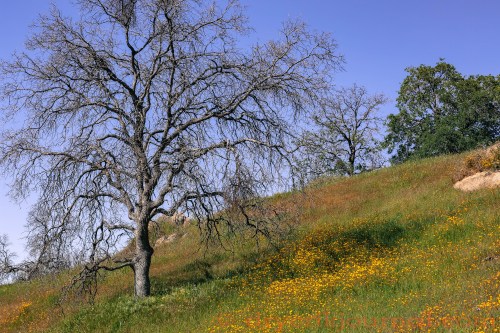
Bright color in the thin shade
of dry casualties: proud skeletons
of fathers and grandfathers,

generations of Blue Oaks standing
stoically against the sky, against
time as the earth comes alive.

Each silent prayer is a short nod
in passing—too many decomposing
monuments for long eulogies

no one will remember—
we dance past death
as the last obstacle to life.


ECHINOPSIS EVOLVED


20160423-IMG_6593


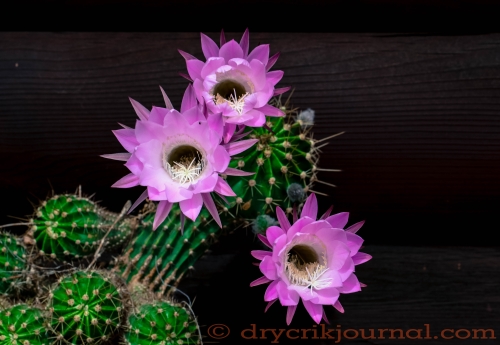
Flash of tender bloom
on thorny spines for one day
each year: from hard times.


210


20160416-A40A0808


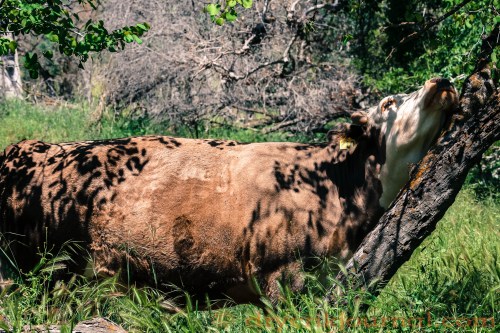
We have our homes
and scratching posts
near at hand, grass
beds and running water
when it rains, we have
almost everything
that matters.


FAREWELL SPRING


20160320-A40A0114


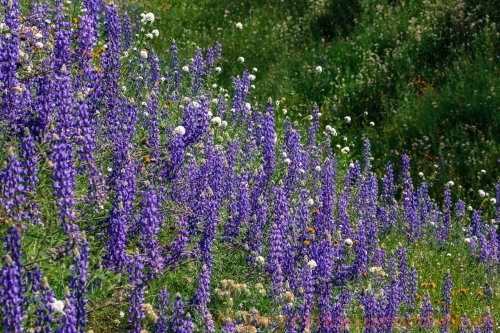
Funny how I can’t remember
just how the Lupine looked
like a brand-new town,

the crowded Gilia, white heads
bowed without a photograph
for proof. All the pretty faces

gone, I have a crush on spring—
as my mother, her coffee cup
beside me, would often say

of my impetuousness—I fall hard,
all ill feelings squeezed
from the inside out, swept away.

But etched in my skin, in the walls
of my brain, I can’t forget the dust,
every particle I inhaled of drought.


Wild Lavender


20160416-A40A0830


On our tour of Greasy last Saturday, Robbin and I noticed that the Golden Poppies on Sulphur Ridge had been replaced by a sizeable patch something purple. I emailed a photo to Earl McKee, who grew up, ran cattle and owned the Greasy Creek Ranch before selling it to our family. Legs too old and Sulphur too steep for a look closer than a telephoto lens, I asked to see if he knew what the light purple flowers were.

Looks like the wild lavender has taken over the beautiful poppies, as planned. As Carlyle Homer used to say “I like them pretty l’il purple flowers that come out towards the end of the grass season!”

When ever I see that “Ol Laurel Patch” up there on the side of Sulphur Mountain, it brings back many of my younger days buck huntin’ with my Dad all over the face of Sulphur. It was right in those Laurels that my Dad and I and Joe Chinowith were leading our horses (in about 1946). Joe was following behind a young bronc my Dad was leading, and slipped in the wild oats and fell too close, and that bronc kicked Ol’ Joe and broke his leg!

As I recall, Joe was ridin’ “Ol Lep” who was real gentle, and we carefully loaded Joe on him and led him off of that mountain. I remember Joe’s face being white with pain all the way to the Exeter Hospital.

Thanks John for making my day with familiar scenes from the past.

Players & Places:

Joe Chinowith—Indian cowboy who worked for my grandfather.
Carlyle Homer—Dry Creek cattleman
Sulphur Ridge—elevation over 3,000 feet and 3 hours from Exeter in 1946
Earl McKee—best damned storyteller I’ve ever known.

Naturally, I looked ‘wild lavender’ up on Calflora with no luck, but like so many wildflowers, the botanists forgot to check with the old timers before they gave them latin names. I then tried the family Lamiaceae, and by process of elimination it appears that these wildflowers are known as Horse Mint or Nettle Leaf Giant Hyssop, Agastache urticifolia . It’s such a pleasure learning something new everyday.


RENDEZVOUS


20160416-IMG_6321


Thousands of friendly faces,
family reunions camped
on grassy slopes and swales
waiting in the wild
since the rains came.

The guests of honor pause
in calm disbelief, dismount
and crawl among them
to take a good long look
at spring.