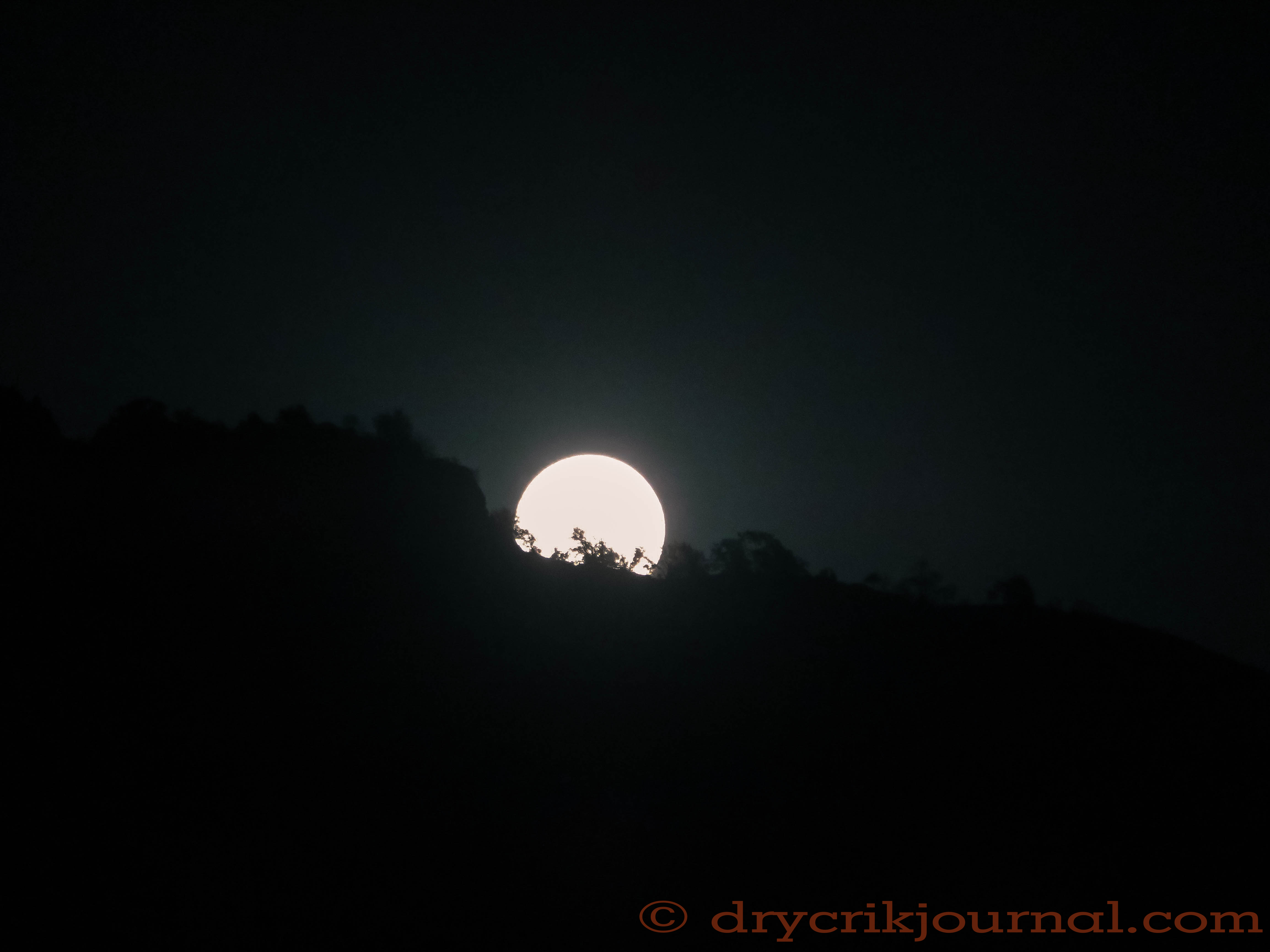
Blueberry moonrise
never in the same place twice—
acorns ripe in oak trees.

Blueberry moonrise
never in the same place twice—
acorns ripe in oak trees.

Four-point buck, horns
dull just out of velvet
five weeks before season opens—
quick hoof thump
of my old heart
upon the hard ground,
I smell venison marinade
over an open flame,
taste the back-strap melt
upon my tongue,
wild cunning juices
surging in my veins.
I become young again
and shoot
through a camera lens.
Posted in Photographs, Poems 2019, Ranch Journal

Had we fish to stupefy
with turkey mullein seeds
the late rains have left
in turquoise waves
above the knees—
we could be native.
Instead we feed
the squirrels beneath
these fuzzy canopies
where shotgun hunters
will wait for mourning dove
to light and leave.
Croton setigerus: a native of the western United States, and found commonly from southern California north to Washington, particularly in the more arid locations away from the coast.
I don’t ever remember Turkey Mullein, or Dove Weed, so tall and thick and claiming such large tracts of dry summer pasture, or its color quite so blue—worth journaling, I think.
Posted in Photographs, Poems 2019, Ranch Journal
Tagged Dove Weed, photography, poetry, Turkey Mullein, wildflowers

They have begun to circumambulate new slopes to graze
around the house
learning to make their circles between troughs and ponds,
forty-five days away
for the first new mothers to lick a calf up to suck
for the next nine months.
A week off the irrigated green, they’ve overcome the shock
of dry hollow stems
to make a home where we can watch and worry,
as is our custom—
we get know them. About a third will make the herd
for ten years.
With so much time together, we operate by instinct,
you and I,
triggered by well-worn habits, the angle of the sun
and the length of shadows
these young girls already know—a second nature
we had to learn.

© Joel Pickford
A comprehensive read from Mark Arax, author of “The King of California” and “The Dreamt Land”, from the latest California Sunday Magazine about events surrounding the catastrophic Paradise Fire that took 85 lives and 19,000 structures.

After the recent wildfires in 2017 and 2018, PG&E, the utility company that has been found responsible for 17 of the blazes and facing liability for as much as $30 billion is likely to file Chapter 11. Since 2017, Southern California Edison, SCE, one of the other California electrical utility companies, has been extremely busy replacing poles, transformers and placing spacers between their high voltage transmission lines so as not to spark a fire during high wind conditions. Furthermore, SCE has placed a weather station on Dry Creek to report temperature, humidity and wind conditions. Though it seems unclear what the guidelines are if these conditions prove too risky, SCE has the power (no pun intended) to shut the transmission lines down.
Our practice over the years has been to blade a two-mile firebreak between our dry feed, barns and houses and Dry Creek Road. Most arson fires are ignited from the road and the SCE transmission lines that serve our pumps and houses follow the same road. Also, our barns and houses are inspected annually by Calfire prior to each fire season. About half of the fire incidents over the past 50 years have been subdued or contained by our ranching neighbors, but without electricity we are unable to pump water, hence our effectiveness to fight fire would be substantially reduced.
My neighbor a mile up the road just had the insurance policy on his house canceled because he lives in a ‘high-risk’ fire area based of a draft of the new maps that have painted about half of the State of California in red. Rumors that insurance companies are using the fire maps to cancel homeowners’ insurance taste a little like a conspiracy when other insurance companies assume the risk with increased premiums of 200-300%—all of this, it’s assumed, to partially offset their losses and legal costs of the 2018 fire season in Northern California. More to come, I’m sure.

Add to the wildfire risk recent California legislation, AB 711, a total ban on hunting with lead ammunition that went into effect on July 1, 2019. Recent tests indicate that copper jacketed lead core bullets have the lowest probability of igniting fires (almost nil). Bullet substitutes like solid copper, steel core and steel jacked, lead core and steel jacketed and steel core copper jacketed have a much higher probability of starting fires. The stage is now set for hunting season.
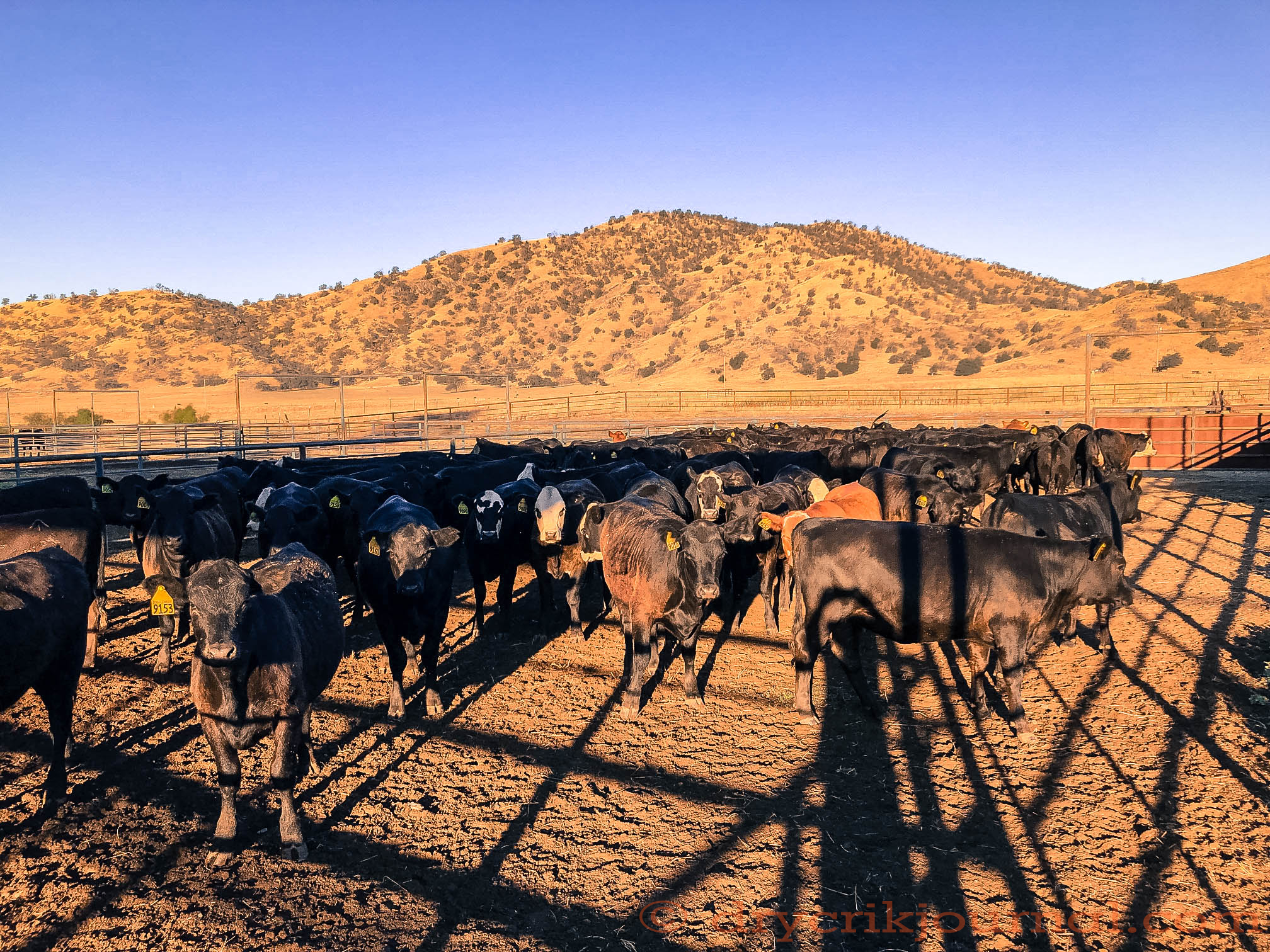
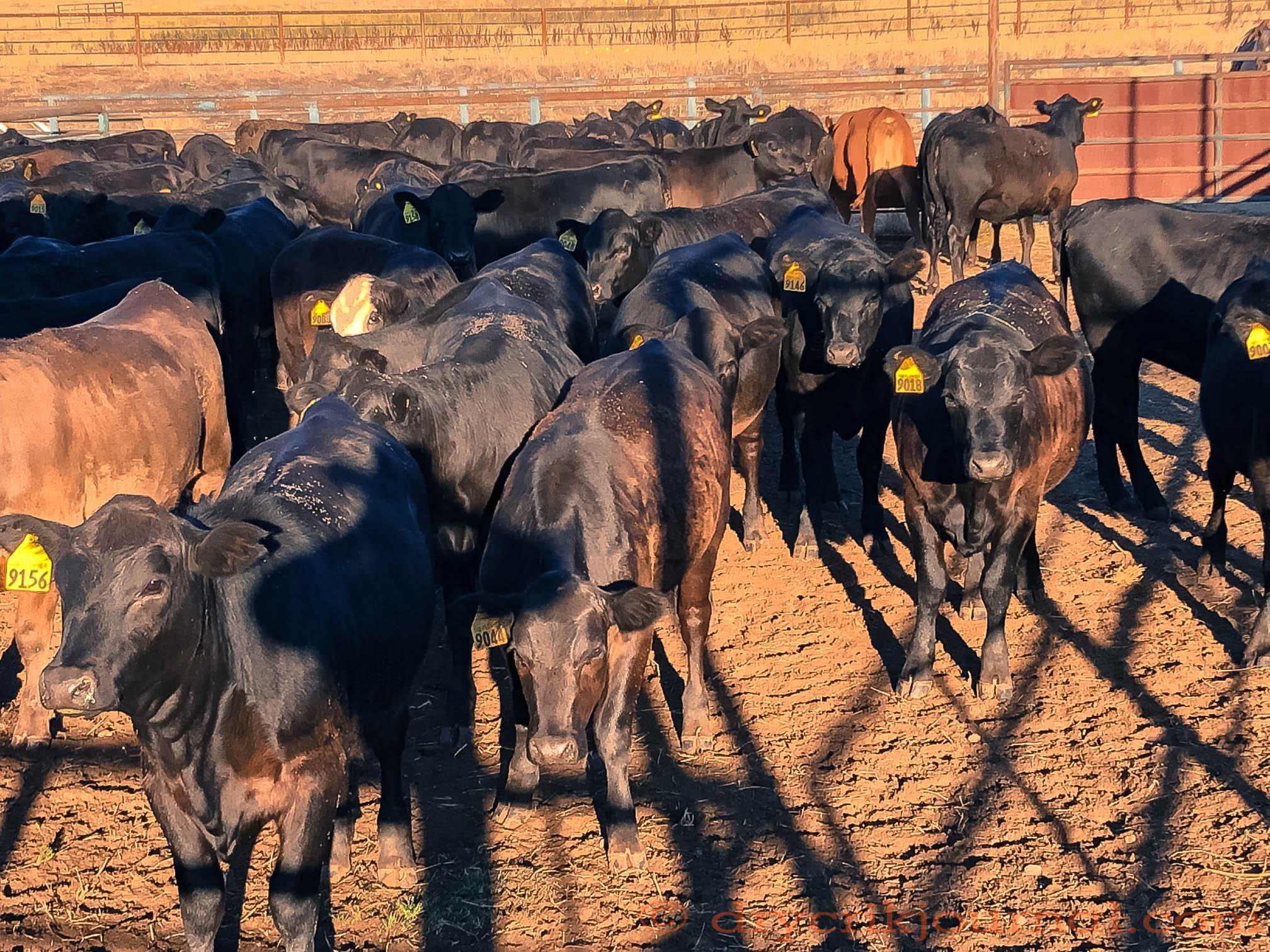
It was an easy gather this morning. Bob’s presence on this part of the ranch while irrigating and feeding with his Kubota has made these gentle heifer calves even more trusting and curious. I arrived by Kubota headlights with a couple of bales of hay ahead of the cowboys, Robbin, Terri, Allie and Bob, and had the bunch mostly gathered when the horses arrived to escort them to the corrals.
© Terri Blanke
© Terri Blanke

© Terri Blanke
Currently, female cattle can not leave California unless they have been vaccinated for Brucellosis, also known as Bang’s Disease. As a matter of course, we vaccinate our heifer calves to enhance the health of our cattle and the herds of our community and State. Hence, vaccinated cattle are more salable and presumably more valuable.
The presence of brucellosis in free-ranging bison and elk in the Greater Yellowstone Area (GYA), Yellowstone National Parkland, Grand Teton National Park and the area around those parks, threatens the brucellosis status of the surrounding States and the health of their cattle and domestic bison herds, which are free of the disease. (Brucellosis link above)
The calves must be vaccinated by an accredited veterinarian who also places a tattoo inside the calf’s right ear and an individual metal ID tag in the same ear. Because we want to limit the stress of cattle-handling on the calves, we use this procedure to revaccinate, a booster to help protect against respiratory and clostridial problems. And while in the squeeze chute they also get a dewormer and a shot of minerals.
© Terri Blanke

© Terri Blanke
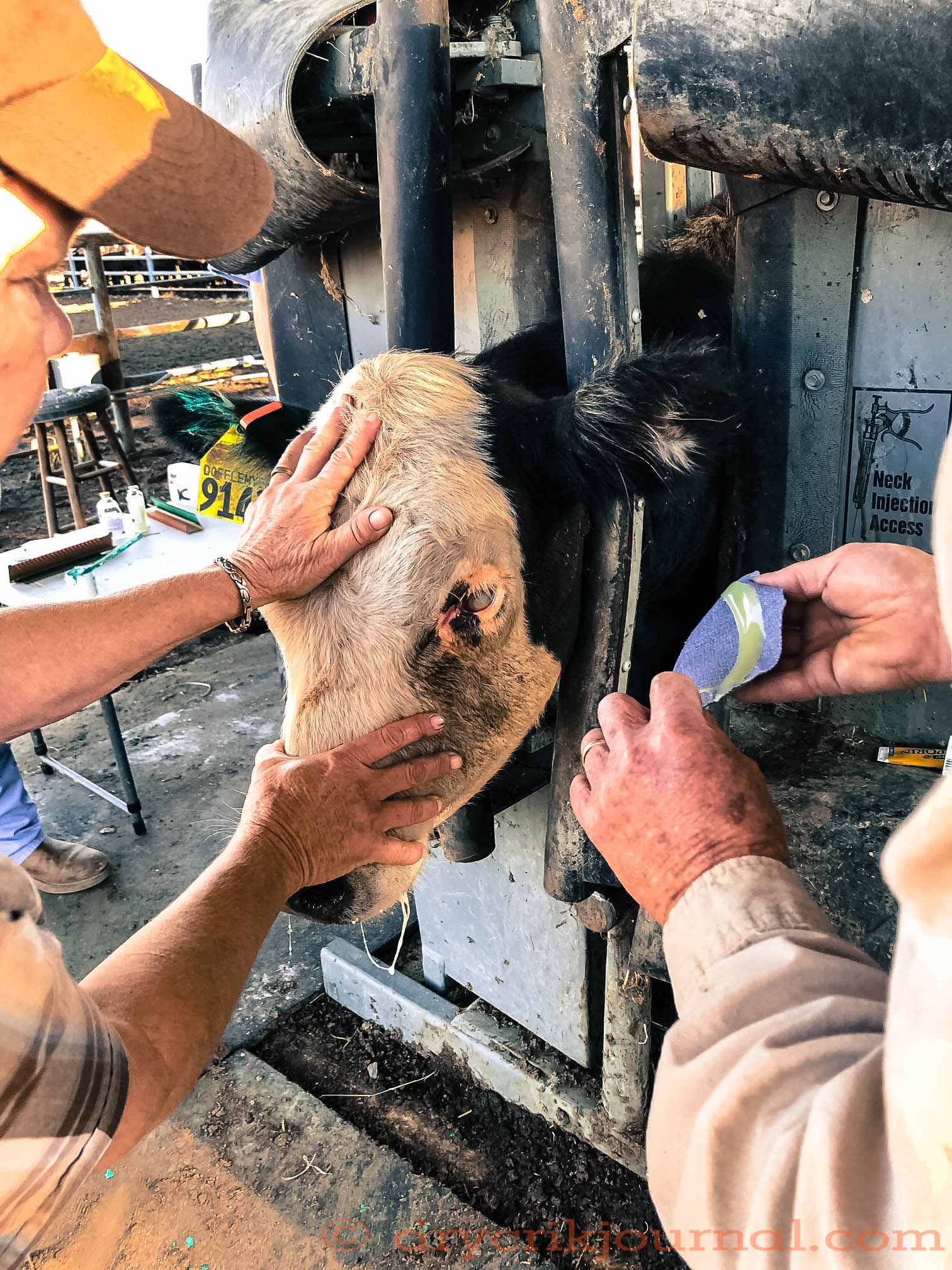
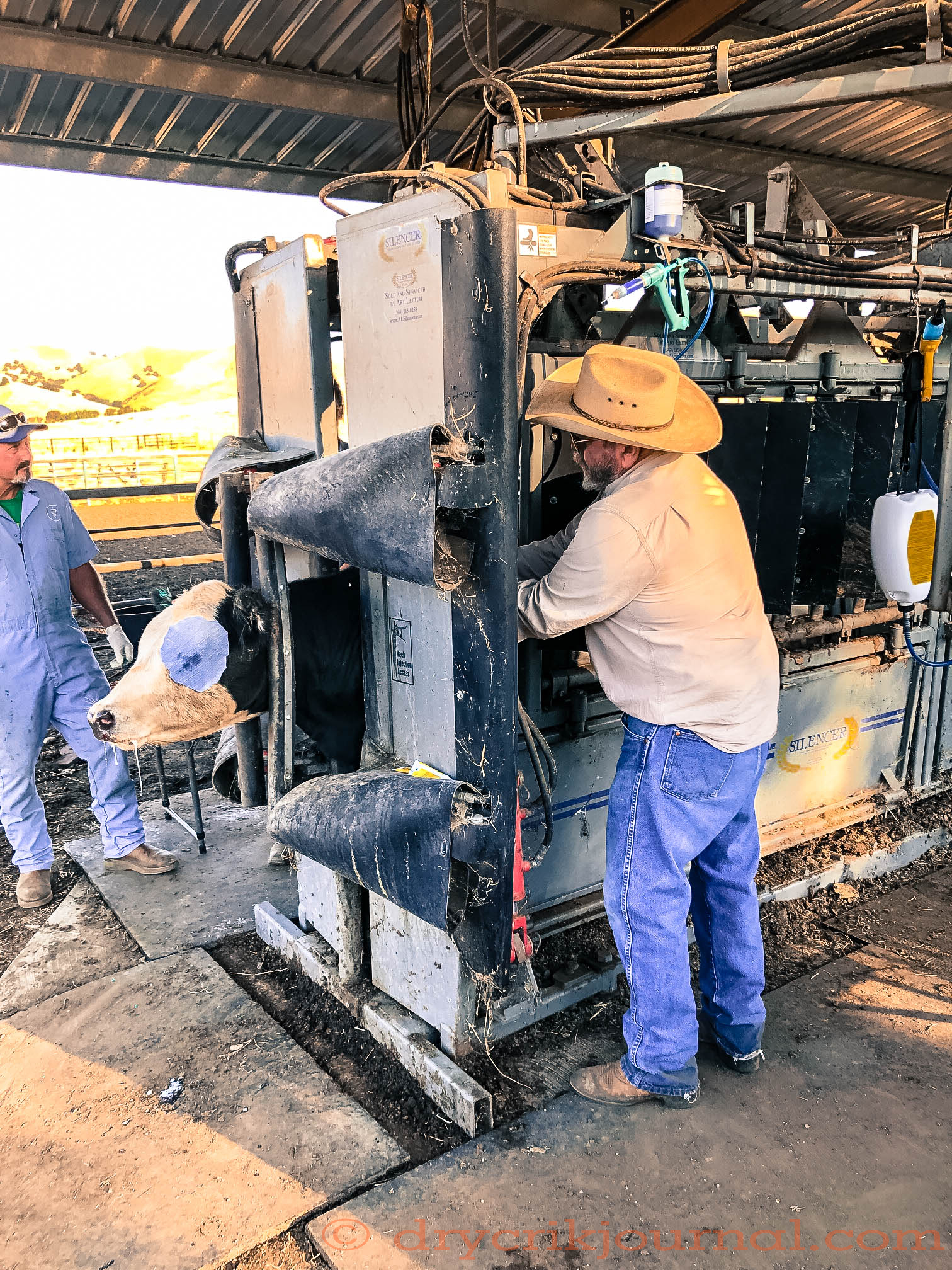
Robbin and I are placing a patch over an eye to keep the sunlight out to reduce the pain and to help it heal with a little Neosporin.
© Terri Blanke
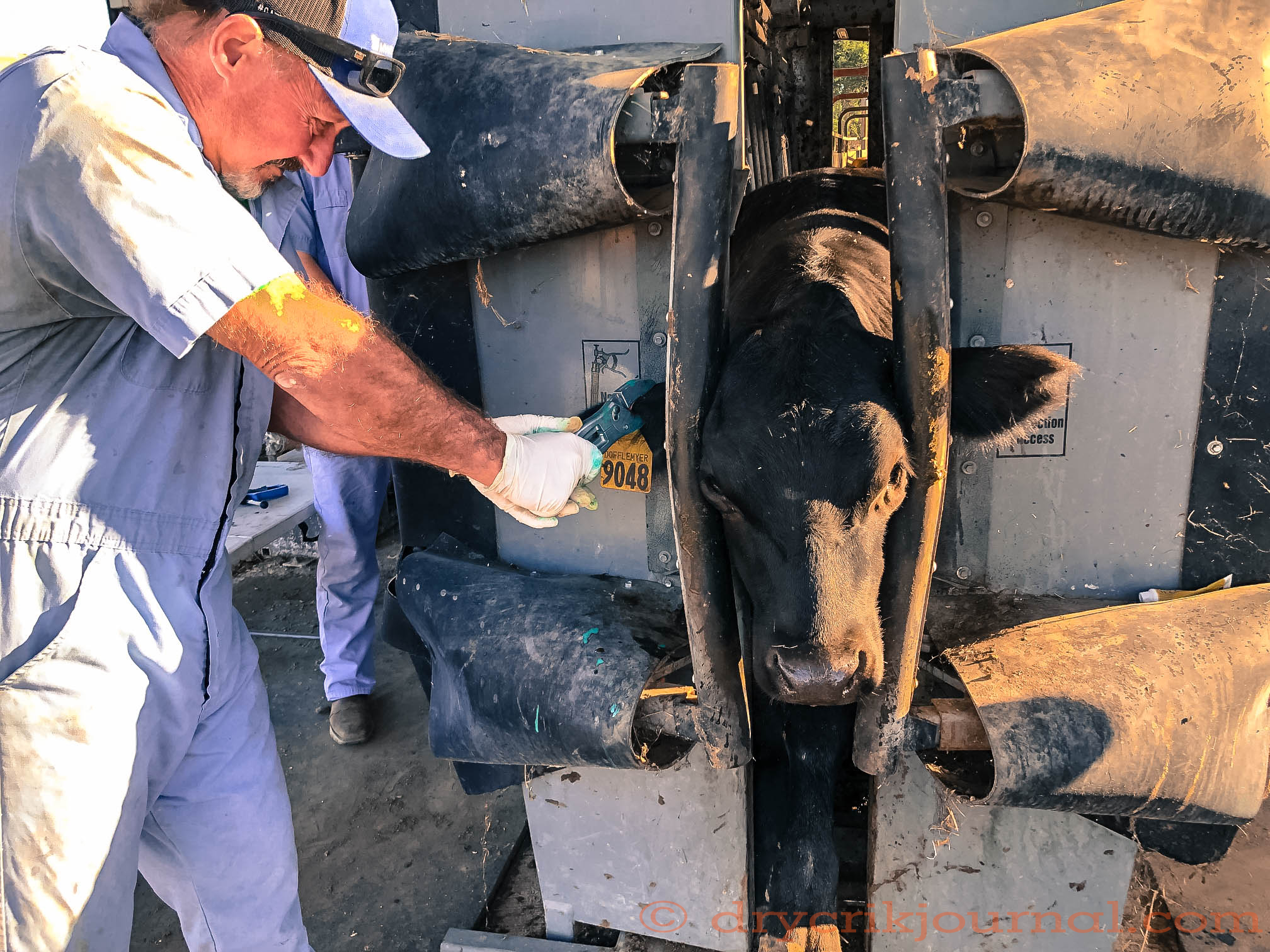
And in this instance, the calf got a shot of antibiotics to speed the eye’s recovery.
© Terri Blanke
Dr. Ken Fiser applying the individual metal ID tag.
© Terri Blanke

© Terri Blanke
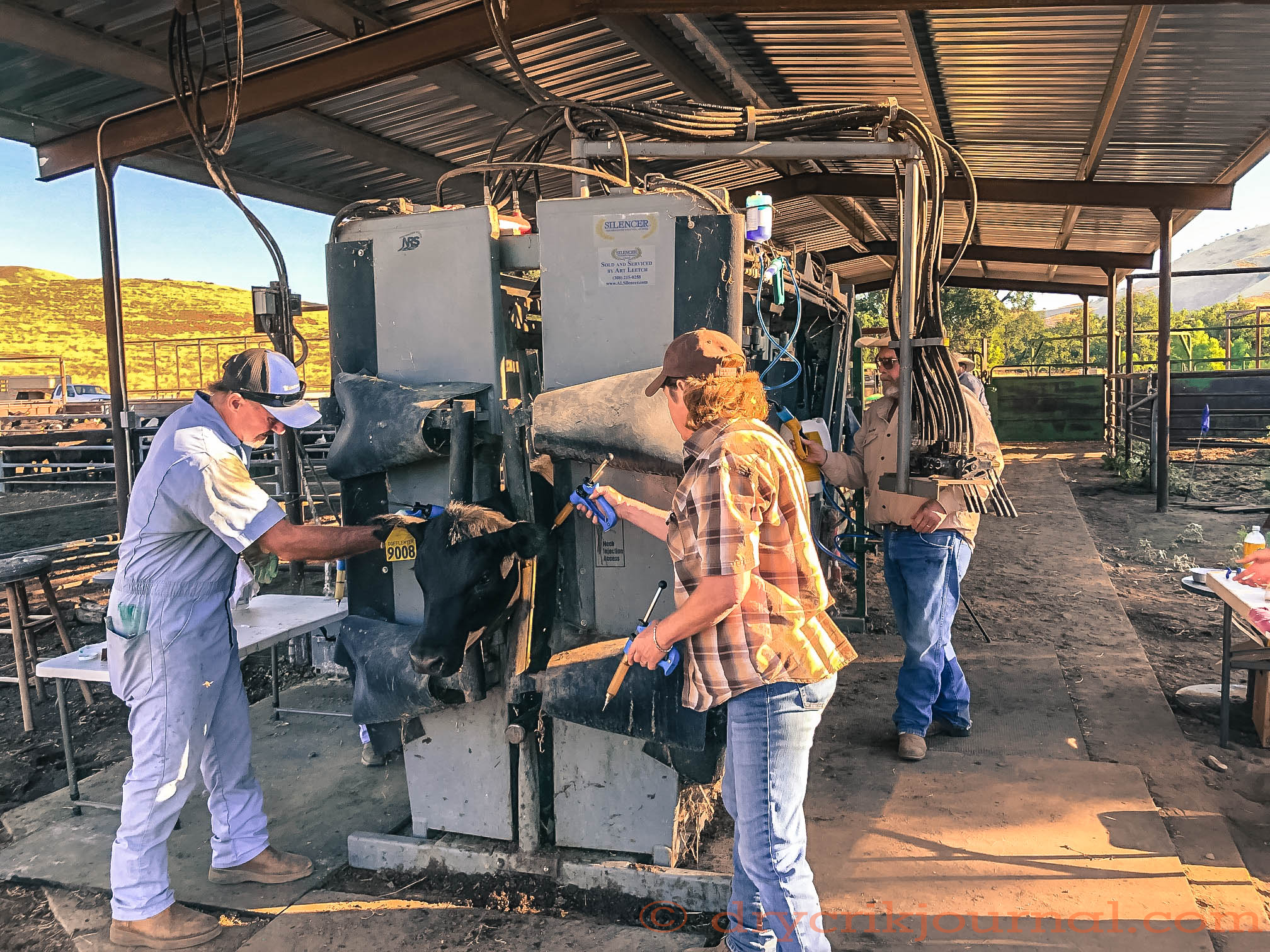
Lots of hands and lots of syringes and applicators with less than a minute in the Silencer hydraulic chute.
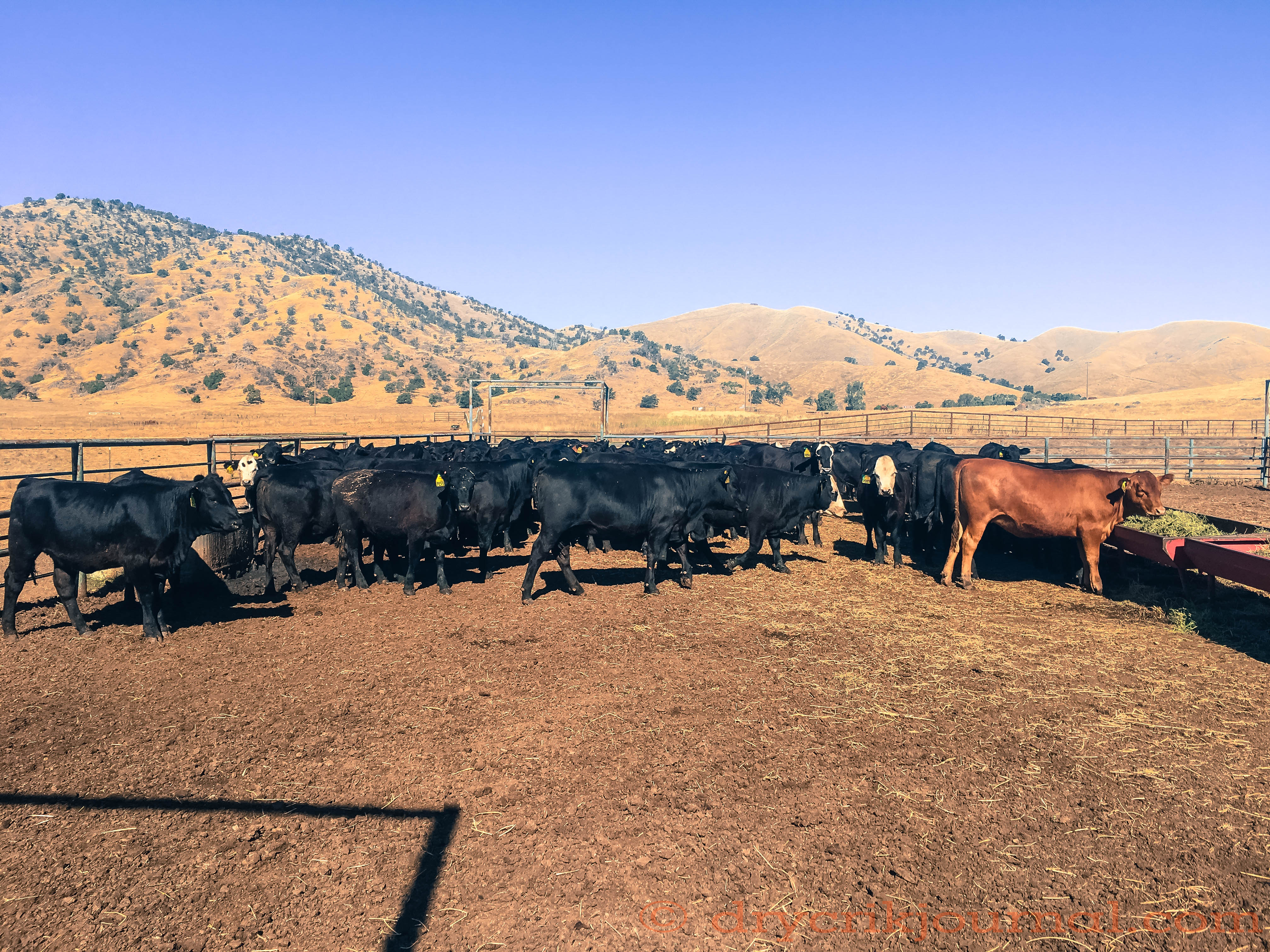
All went smoothly, the processed heifer calves on hay and no worse for wear. What a crew–what a day!
Posted in Photographs, Ranch Journal
Tagged Bangs, Brucellosis, Calves, heifers, processing, Silencer Hydraulic Squeeze
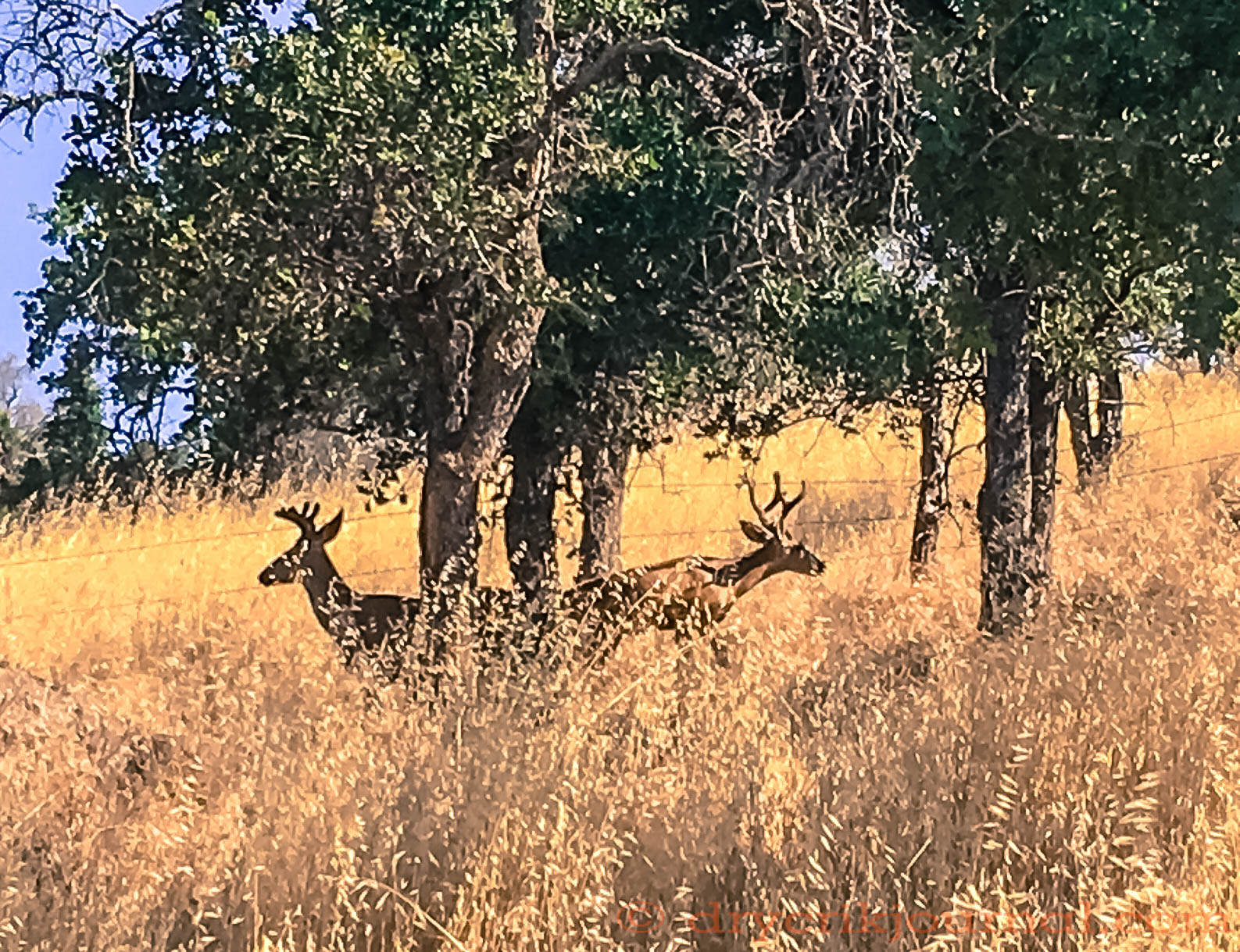
Good to see a couple of bucks in velvet this morning, especially close enough to photograph with a cell phone while we were hauling some young cows up the hill to replace the old ones we took to town last week.

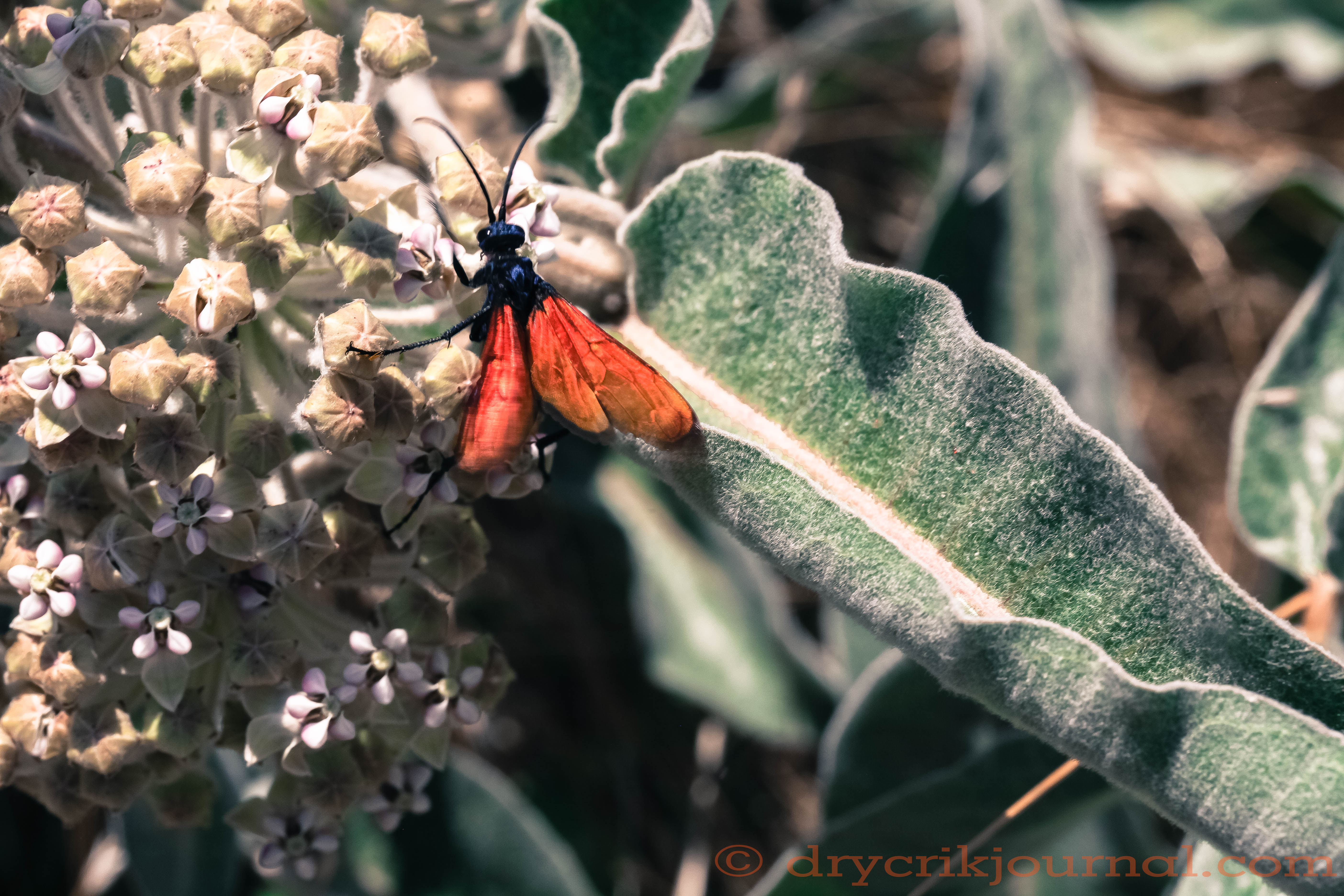
Families of milkweed make stands
in a mountain pasture of long-blond feed
where last year’s pods burst with seed
spun within the floss of silky filaments,
scattered outposts of native settlements
I have avoided except for nods of respect.
Host to bugs and beetles, wild bees
and butterflies, they get-along
together well, without and despite us.
Posted in Photographs, Poems 2019, Ranch Journal
Tagged milkweed, photography, poetry, tarantula hawk
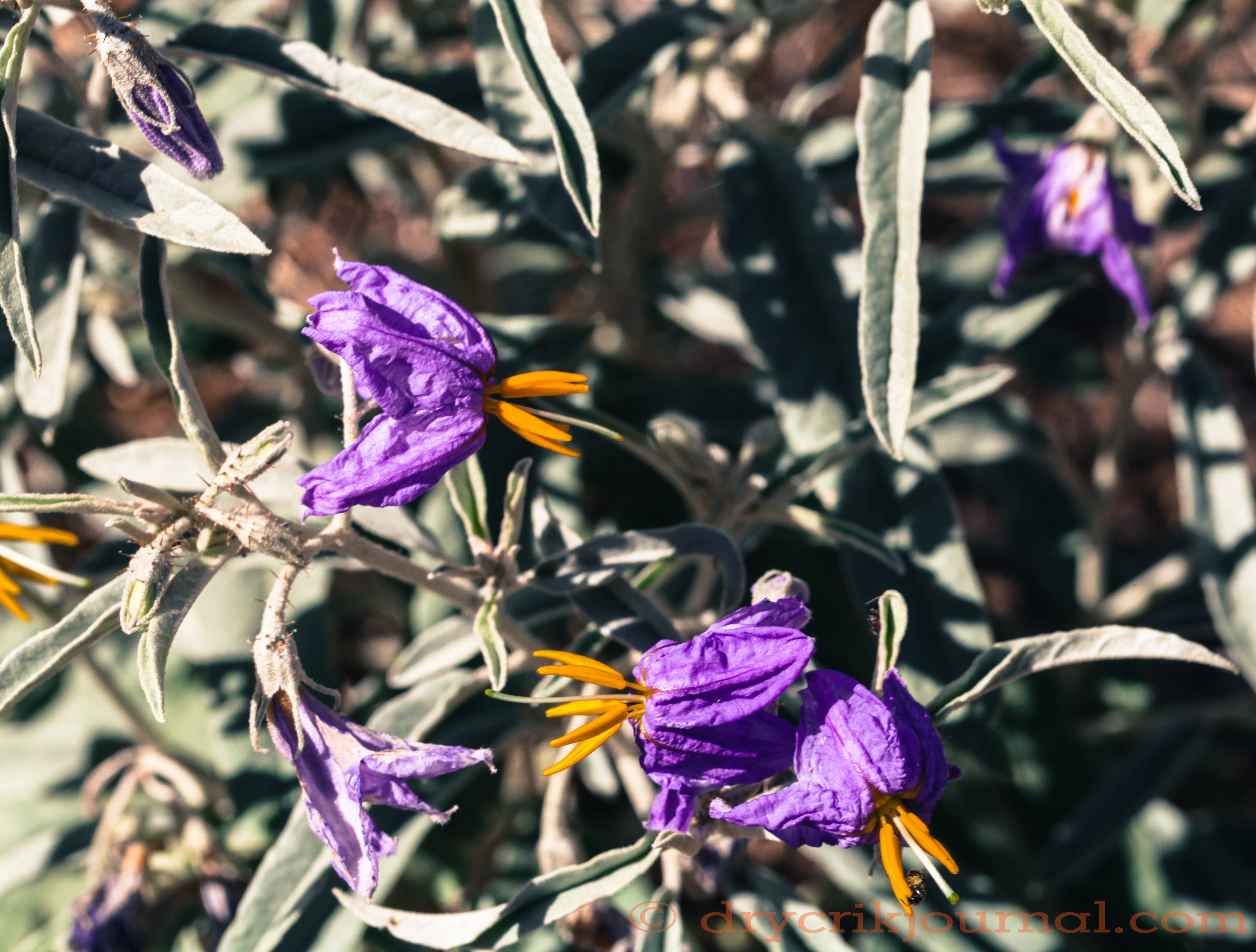
Ran across this striking perennial earlier this week after loading some dry cows to go to town. Apparently common, I have never seen Silverleaf Nightshade, so I went back this morning to photograph it. Related to the tomato, potato and many other garden vegetables, it is poisonous with narcotic properties. And like many nightshades, natives prepared concoctions with the fruit to address headaches, sore throats, etc. Also the root was chewed before sucking rattlesnake venom from a bite. I continue to wonder how the natives knew when to pick the berries and how much of their preparations to ingest. All in the realm of the medicine keepers, I suspect it was not just trial and error.

Posted in Photographs, Ranch Journal
Tagged Bullnettle, Horsenettle, photography, Silverleaf Nightshade, Solanum elaeagnifolium, wildflowers