White sky,
purple frigates crash
into foothill silhouettes—
some slip behind,
compass heading east
trailing a damp cold front.
Headlights crawl
up the road, spotlight
searches sycamores
to a heavy bass beat
for something to kill,
something to eat.

White sky,
purple frigates crash
into foothill silhouettes—
some slip behind,
compass heading east
trailing a damp cold front.
Headlights crawl
up the road, spotlight
searches sycamores
to a heavy bass beat
for something to kill,
something to eat.

Another round of Blue Oak
from the limb droughts have cured
to fall with a crash in the yard—
after the calves were marked
and friends were fed and gone,
you and I and a bottle of wine
before the fire we cooked upon
waiting for the pillowed clouds
to collect and turn dark gray—
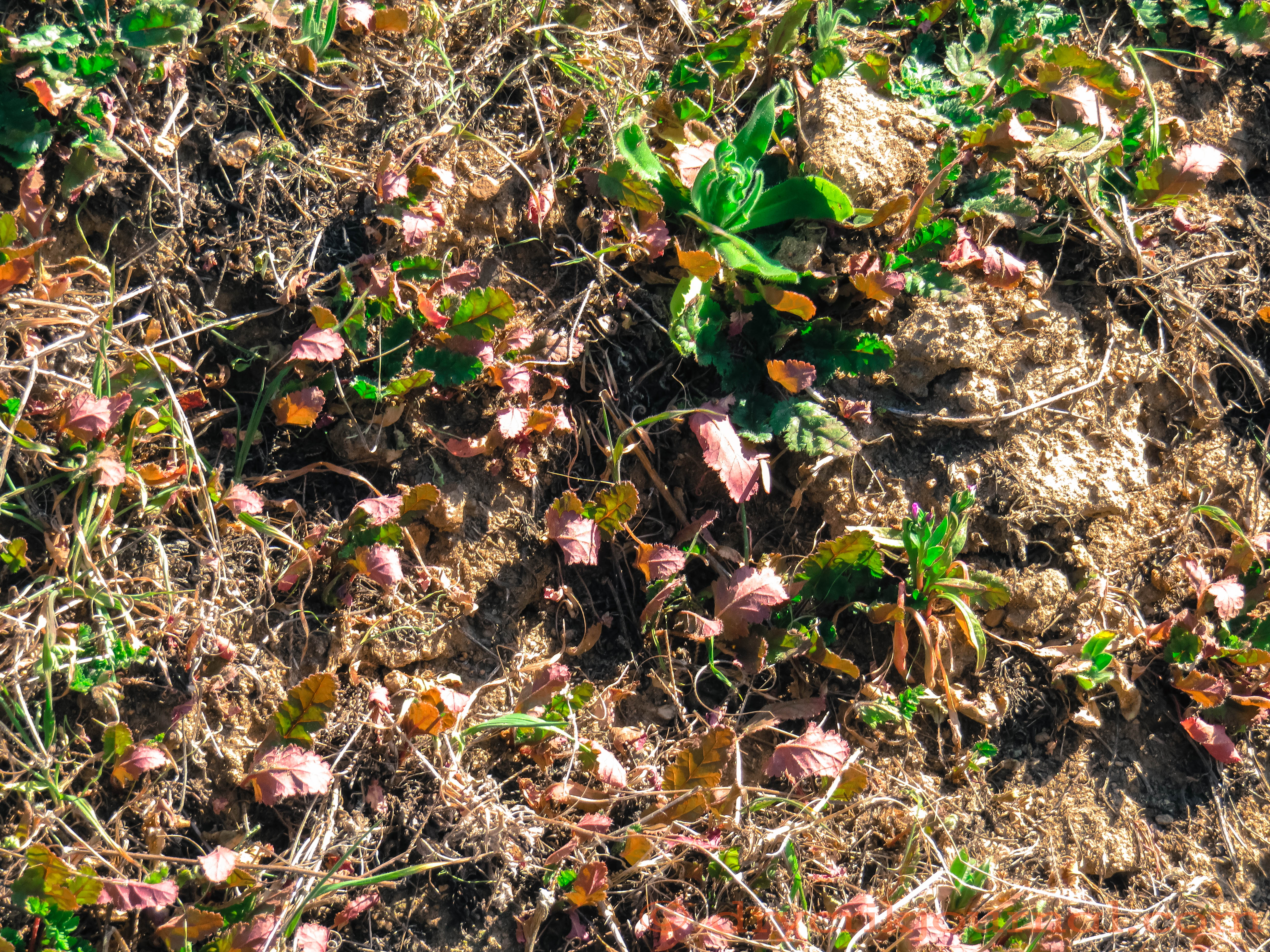
our forecast rain. Tough filaree
looks like the dirt it’s hanging on,
leaves red and brown and in between—
last chance for feed this spring.
One wonders why we do this
to become the grass we need.
The deer in that beautiful place lay down their bones:
I must wear mine.
– Robinson Jeffers (“The Deer Lay Down Their Bones”)
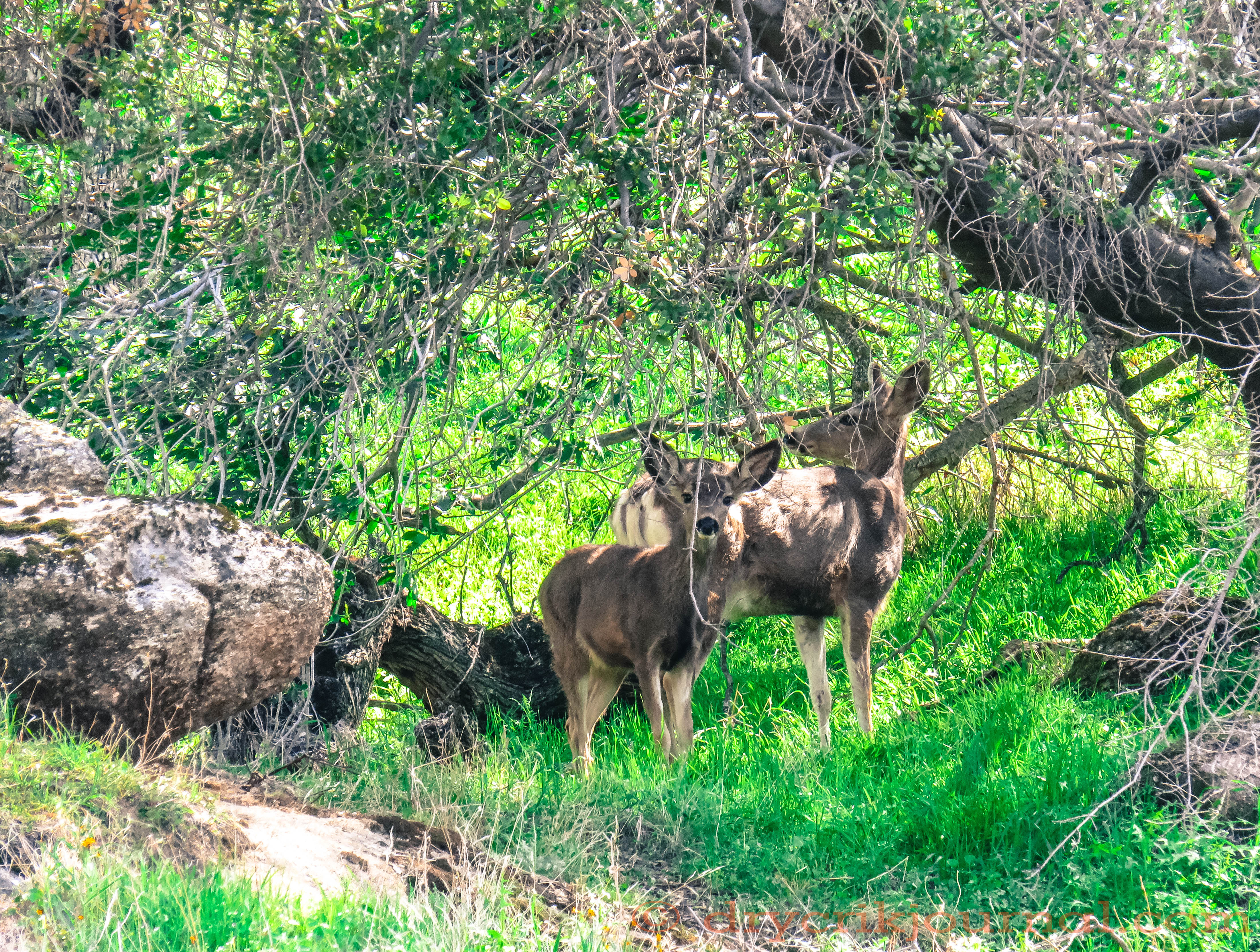
Secreted within steep brush and granite
to browse the fresh and tender Buckeye leaves,
the fragile innocence of deer seems tame—
safety but a bounding leap away.
Were we so unengaged to see ourselves
as novelties, we might pause more often
to look out upon the urgencies of men
and women inventing new shenanigans
to keep us shackled to our egos
as redundant and unnecessary weight—
were we so rational. How we envy deer
their shrouded bowers where they can feed
themselves. Nearly as free as deer
in the rocky cliffs above, the doe can see
the calves we have been looking for.

This morning’s circle with salt and mineral for the first-calf heifers in the hills behind the house was not encouraging for the first of March. The south slopes are short and turning fast and the heifers want, and need, hay, though the calves look OK.
The forecasters have taken Saturday’s rain away, but next week still appears to be wet. We know that this ground is resilient, but with only March and April left as our only chance for real grass, this season’s future looks bleak and will probably require early weaning and a heavy culling of our cow herd, as there will be little old feed leftover to sustain these cows through summer and fall.
From an economic perspective, it costs around $500+ to keep our first and second calf heifers for a year, then add $400 for hay plus labor since August, an $850 calf won’t pencil out. Furthermore, with minimal snowpack and only four inches of rain this season, irrigation water will be expensive and the price for summer alfalfa high. Whether one believes in Climate Change or not, the trend for the last decade has been drought, (all across the West), the worst I’ve seen in my lifetime here, where losing money takes all the romance out of raising cattle. Nevertheless, we’re in it for the long haul and hope for the better days.
Posted in Photographs, Ranch Journal
Tagged climate change, Drought, economics, south slopes

When I was young I wished
for longer springs and hillsides
painted with wildflowers,

grass belly-high and every canyon
running water—livestock grazing
pastoral notions, heavenly eternal.

I may have to stand in line
on the trail to mountain pastures
when I shed this human coil,

but hope to hell that the majority
of souls will be waiting
at the Pearly Gates instead.
Posted in Photographs, Poems 2021, Ranch Journal
Tagged choices and proclivities, grass, heaven, pearly gates, souls
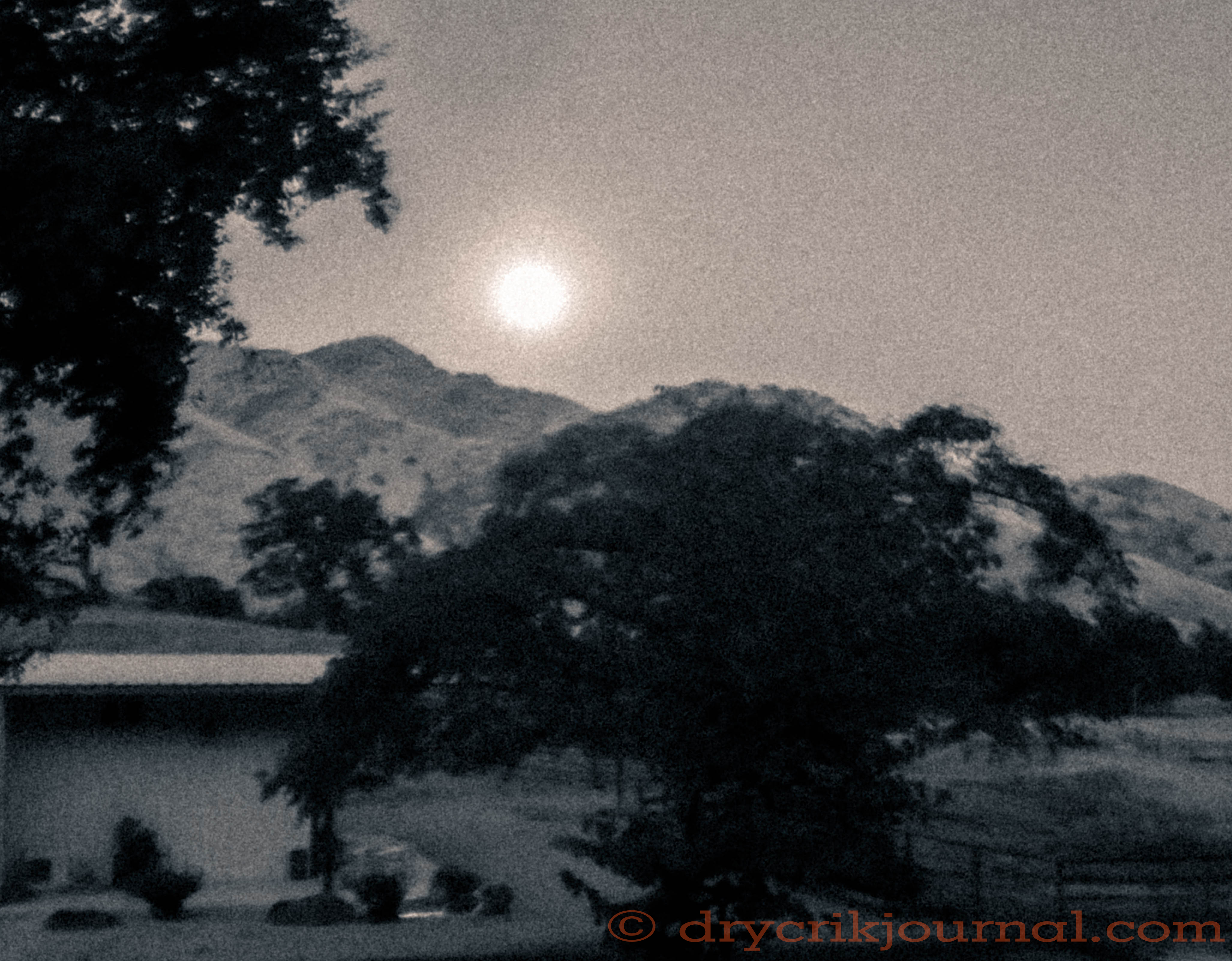
The mountains 'round here look like a woman lying naked on a bed - Dave Alvin (“Out in California”) Little wonder, the earth is female— the moon, a golden amulet rising from her breast, her feet at rest with the slope of Sulphur peak as her long dark hair forever streams into the creek. Apart from men, native women gathered here beneath her supine silhouette made sacred by the moon to be a healing place each time she took a breath. She shares her dreams: comfort and lasting peace beyond the ever-escalating chaos and confusion that rattles impatient minds like a gourd full of seeds. https://video.search.yahoo.com/yhs/search?fr=yhs-dcola-009&ei=UTF-8&hsimp=yhs-009&hspart=dcola¶m1=1¶m2=cat%3Dweb%26sesid%3Dc0a144b9197534bca38d88e99fdadb2b%26ip%3D174.222.3.117%26b%3DChrome%26bv%3D88.0.4324.182%26os%3DOS-X-10.11-El-Capitan%26os_ver%3D10.11%26pa%3Dgencoll09%26sid%3Dd49c3e6373dbf6716978c523512bcd6d%26abid%3D%26abg%3D%26a%3Dgsp_imdownloaderb_20_02_ssg10%26sdk_ver%3D%26cd%3D%26cr%3D%26uid%3D%26uref%3D&p=Out+in+California+Dave+Alvin&type=gsp_imdownloaderb_20_02_ssg10#id=1&vid=29c273bede5b45160a875054fb5122a0&action=click
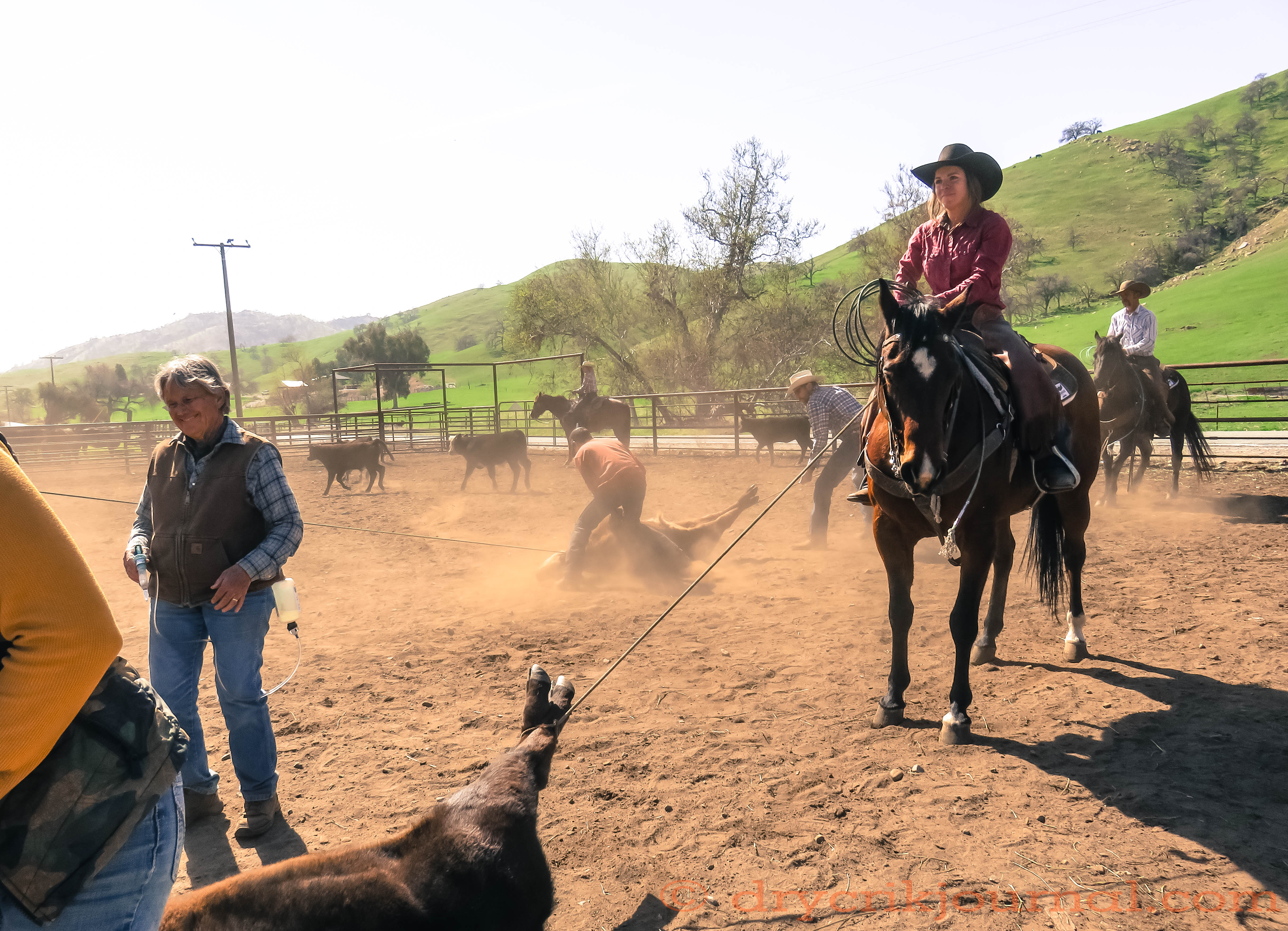
We are extremely fortunate to have an excellent crew of neighbors to help us mark our calves. Yesterday was a beautiful day to brand our second bunch of Wagyu X calves, though pretty dusty near the end of the work. Even though the hills are green, the grass is terribly short with only 4.31” of rain on Dry Creek thus far this year with only two months left of our rainy season. Furthermore, the spring forecast https://weatherwest.com/archives/8382 is quite disturbing.
Feeding hay since August, some neighbors have already begun to sell their cows into this down market. Ideally, the cull cows will attain their heaviest weights by mid-April, however most everyone’s cows are now stressed as short feed and growing calves have kept them thin. With little rain and a minimal snowpack, summer irrigation water will be in short supply, which translates to higher water prices in the San Joaquin Valley. Likewise, one can be assured that with fewer cuttings, the price of hay will also be high.
The south slopes have already dried up, offering only a month of green this year. Without any moisture in the next week, the west slopes will follow suit. Not necessarily the amount of rain, but the timing is always the crucial variable for native feed. We carry on as if by some miracle we can keep our cows together, but time is running out for the Southern Sierra foothills.
Posted in Photographs, Ranch Journal
Tagged branding calves, climate change, Drought, dust, Wagyu X Calves
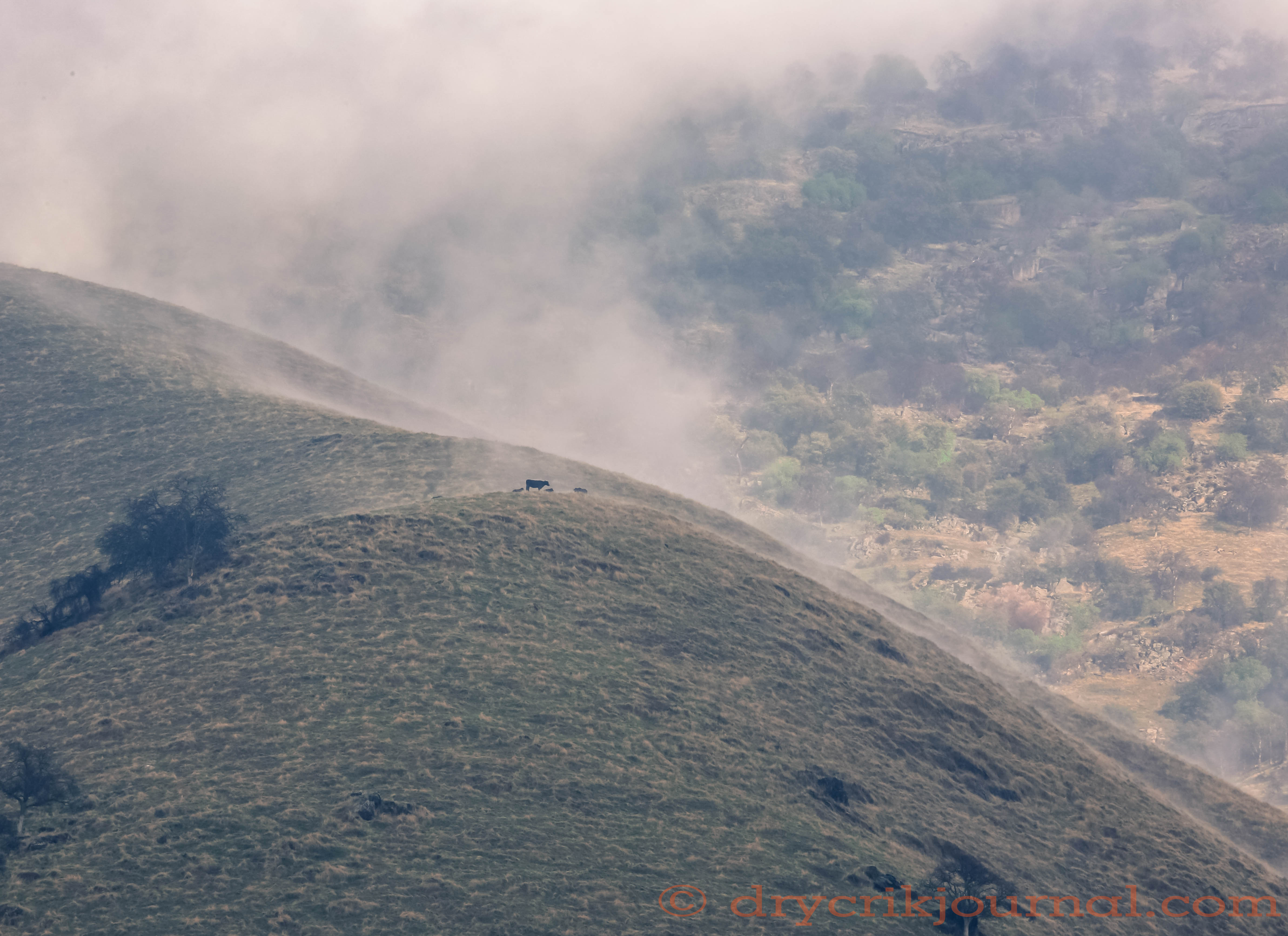
I know where the grass grows first,
fresh and tender where raindrops linger
above the road and creek below.

I can feel wild spirits talk,
dewless tracks where they walk,
stepping lightly to lay beside me

and my calf.  From here we shed
the claustrophobe of fence and gate,
far away from the human race.
Posted in Photographs, Poems 2021, Ranch Journal
Tagged after rain, first grass, ridgetops, space and distance

Dark rain in waves,
an oscillation of applause upon the roof
that soothes and insulates the senses

from the distant discord of mankind,
the lucid transparency of public figures
that saddens the soul—

this narrow canyon lit across in gold,
blind flashes of humility,
the roll of thunder close.

The short-cropped green hangs on
to naked clay hoping for heaven’s basket
of spilt miracles to soften hillsides

for roots—and cloven hooves
reaching for the ridgetops ripe
for more level grazing.

Dark rain in waves
punctuated by the light—
relief for what we know.
Posted in Photographs, Poems 2021, Ranch Journal
Tagged Allie & Audrey, cattle, Drought, girls, grass, hillsides, rain, ridgetops, Wagyu X branding

Some believe that even skeletons
communicate with one another
through entangled fiber optic roots,

the drought’s dead-standing oaks
shedding dry limbs and bark
in random piles at their feet.

Sometimes I hear them screaming
in the evening of day and night
as gravity pulls at sagging arms

of decomposing silhouettes
frozen with fright—a slow agony
I am too old to ignore.