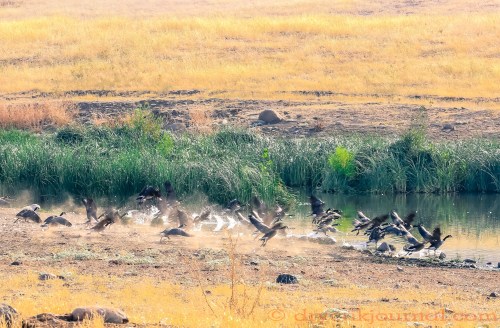
With temperatures breaking into the teens, most all of us have routines that begin early. The Canadian Geese above have been spending the night on the irrigation pond, more nervous than most honkers that visit us from northern golf courses. They take flight with an urgent, splashing and flapping commotion at their first sight of us, raining feathers across the pond.
We have moved the second bunch of our first-calf heifers to the pasture across the creek across from the house, due to calve in 45 days. It will be their home until next May when we wean and ship their Wagyu calves. They are just getting acquainted with their new pasture of dry feed and developing their grazing routines that also begin early, but in the sycamore shade by 9:00 a.m. until they graze out at dusk.
Our new replacement heifers, now weaned for 60-75 days, are utilizing part of the irrigated pasture, with a pasture in between them and our bulls that we trust will act as a buffer zone, as they await the Wagyu bulls coming in December. These heifers graze out into dry feed in the evening, spend the night and graze back to the irrigated green by 7:00 a.m. before leaving for shade around 8:30 in the morning.
Our routine includes feeding these replacement heifers, currently once a week at a rate of 18 lbs. of good alfalfa to supplement our ample dry grass. We spoil them, actually, with 21% protein licks available plus dry mineral and salt. We will gradually increase the amount of hay we feed hoping to get the girls in shape and cycling before the Wagyu bulls arrive.
Our morning routine is centered around irrigating and pumping stockwater for the replacement heifers who have chosen to drink well water this year rather than drink from the irrigation pond filled from Lake Kaweah, more water than our solar pump can provide alone. It takes about 45 minutes for the 2 hp submersible pump driven by a gas generator to replace the 2,500-3,000 gallons each day. In that 45 minutes we check the bulls and fences and go through the replacement heifers to be sure the neighbor’s Corriente bulls haven’t caught wind of the girls and upset our breeding program.
Robbin is out early in the garden, checking her irrigation lines that are timed to run at night, augmenting where need be, then tending and picking fruit and vegetables before nine—currently the Elberta peach tree, tomatoes, peppers, eggplant, cucumbers, and squash. With a great tomato crop this year for a change, she’s made both green and red salsa as well as dill and bread and butter pickles from her striped Armenian cucumbers. Our garden is producing more than we need, giving us the opportunity to share and swap vegetables with our friends and neighbors.
By noon we’re normally done with outside activities, 102 at eleven this morning.
Share this: Dry Crik Journal