With rain upon the loose debris
of last year’s feed,
come first leaves of grass.

With rain upon the loose debris
of last year’s feed,
come first leaves of grass.
Posted in Photographs, Poems 2014
Tagged Dry Creek, feed, grass, haiku, photographs, poetry, rain, red-stem filaree, Walt Whitman, water, weather
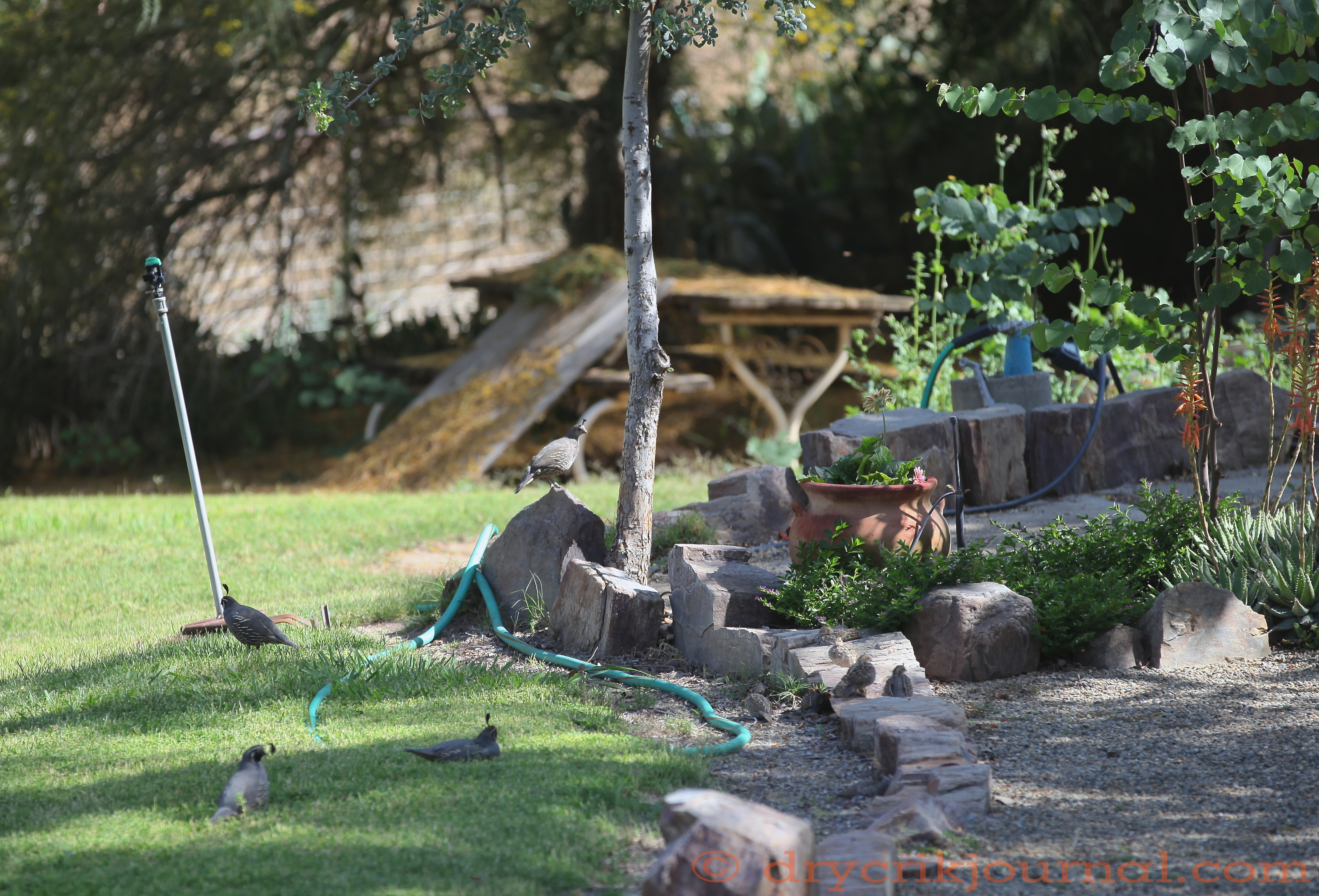
When the earth can be worked, they come
to investigate. Horses peer over fences,
cattle stare through barbed wire, but
the Roadrunners come in pairs like cops
on patrol inspecting changes to the ground
they claim, including us, without fear.
The quail fall out of the Live Oaks
well after dawn, tittering like children
late for school, gray coveys rolling
off the hill to graze new ways
to the water trough, and we claim them
all like family, one that gets along—
a sense of belonging greater
than ownership, taken root and proven
to be more than enough to feel secure.
Posted in Photographs, Poems 2014
Tagged birds, Dry Creek, garden, Home, photographs, poetry, quail, water, wildlife
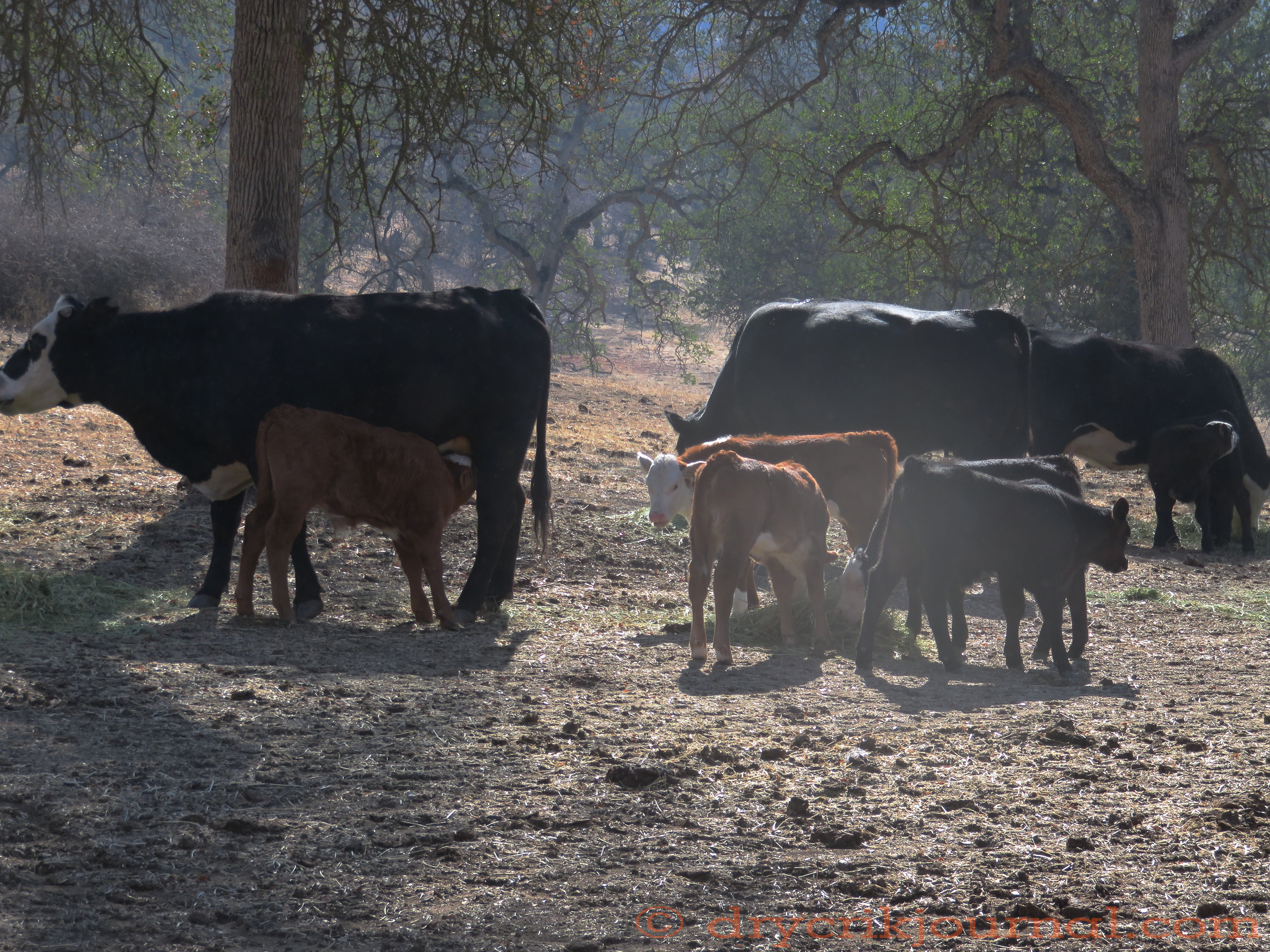
It’s a waiting game now for our bare hills to take on a shade of green as the first cotyledons of our grass seed break the crust left after Friday and Saturday’s remarkable rain. It’s not typical to begin our rainy season with 1.76” on Dry Creek, or 2.62” in Greasy Creek. Usually, we hope to get a half-inch to start the grass, but more often than not fail after our first storm event.
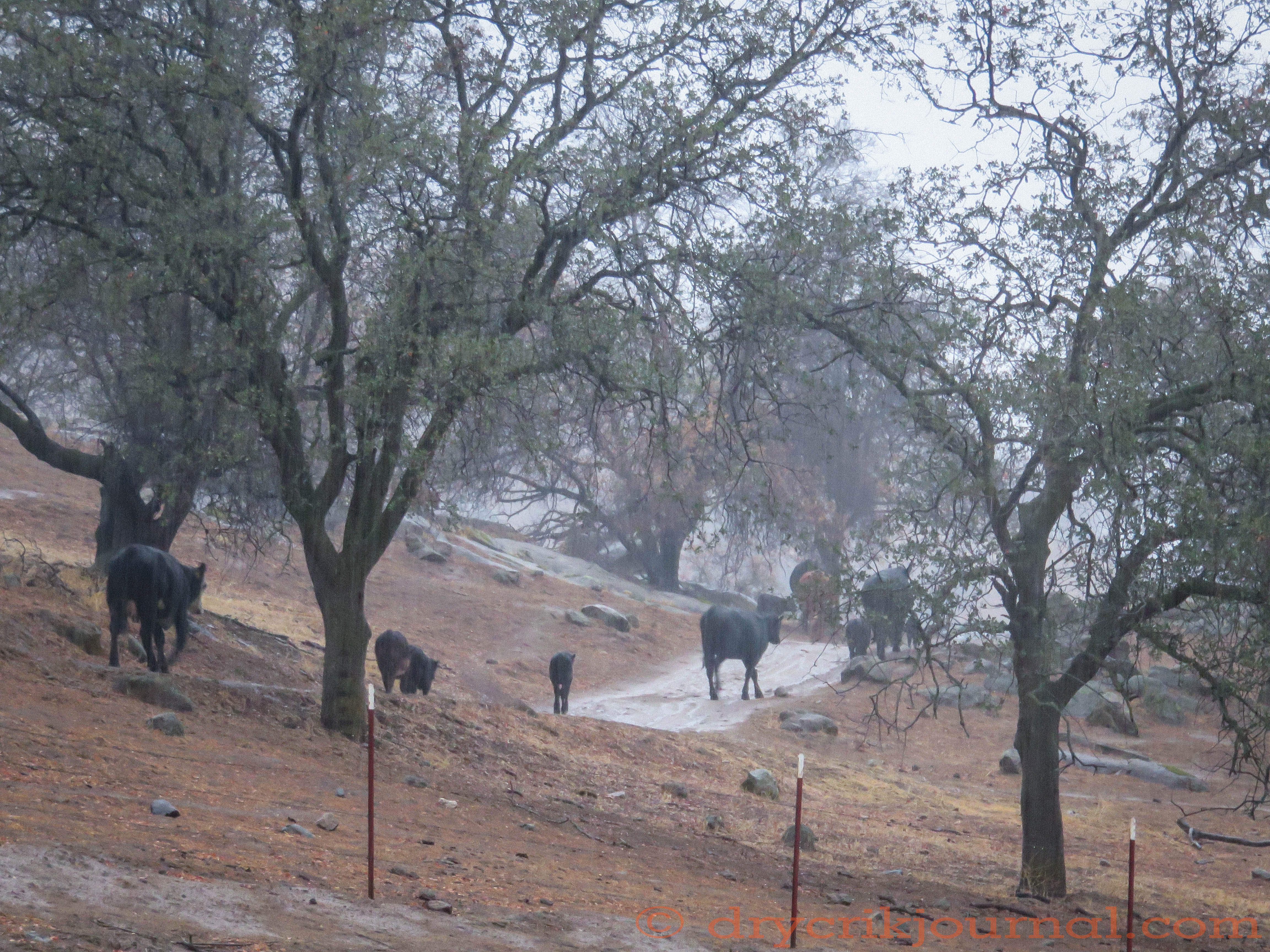
Everybody’s hungry and there’s really not much to eat, actually less immediately after a rain, other than what we are feeding our cows. With some calves two months old and growing, demanding more from their mothers, it’s starting to show on the cows, less fleshy now than a month ago. We’ve been increasing the amount we’re feeding right along trying to keep everyone in shape, hoping that when the grass comes that the calves will keep right on growing, and that our cows will be in good enough shape to cycle and breed back when we put the bulls out next month.
All very subjective. Working around slick roads elsewhere, we fed the girls above a day early yesterday as we drug our road up into Greasy Creek to fill in some of the gullies and ruts accumulated after the past two years of not enough moisture to effectively smooth them out. And good that we brought a little extra hay, as the calves were as glad to see us as the cows.
Posted in Photographs, Ranch Journal
Tagged Calves, cows, Drought, feeding, Greasy Creek, photographs, rain, weather
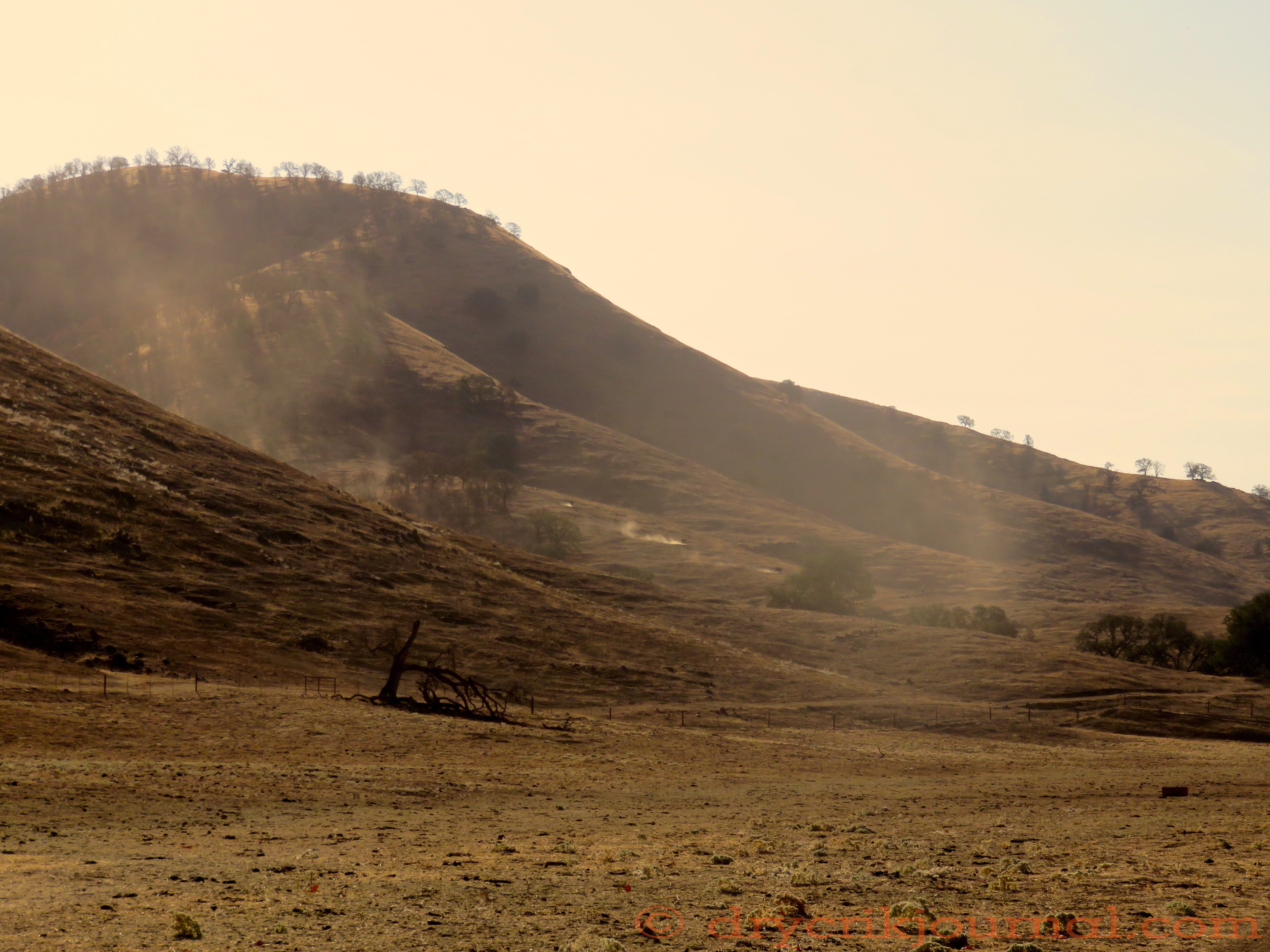
Now soft in places, red clay slick
feeding cows in the brown
bare flats beneath naked hills
loose piles of last year’s alfalfa,
each dry flake spaced to fall
into small green haystacks
where cows camp in an undulating
line within a cloudy chill
until this promise of grass
changes the color of everything
we have known for too long.
Looking down, plodding still,
eyes occupied with searching for
the first cotyledons to break free
from the crust, glad hands open
to the elements believing in more
good rains. Vote for those who know
growth without water won’t work.
Posted in Photographs, Poems 2014
Tagged cows, Drought, Dry Creek, photographs, poetry, politics, rain, water, weather
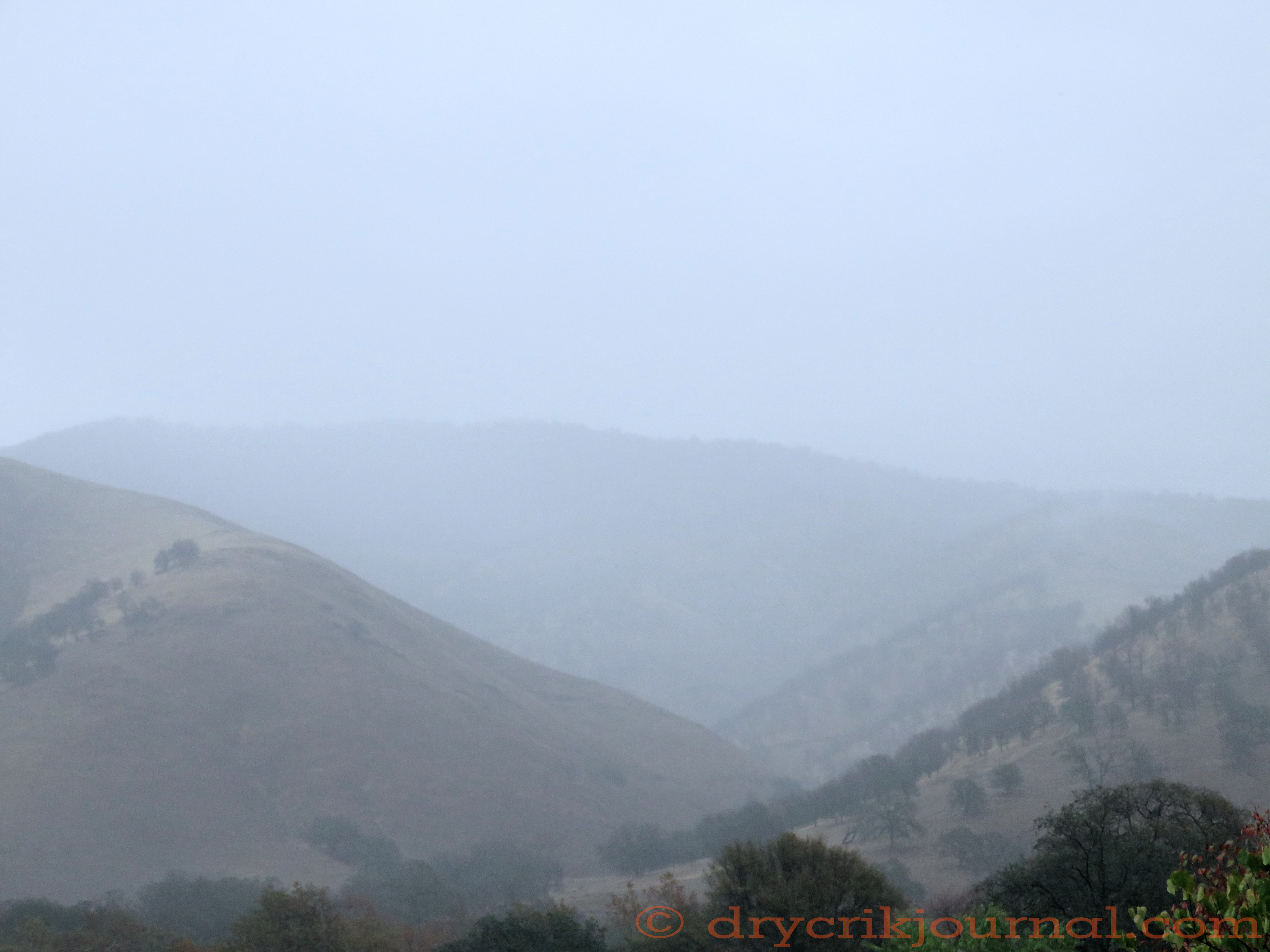
Dark brown and naked after rain,
these hills have held together
despite their deep dust and our fears
after years of drought. Impossibly,
we even see a tinge of green
before the clouds clear the ridges.
Come alive and breathing, ready
to raise lush leaf and grass, they will
never be the same again in our eyes!
Nor we, forever worn by lack of moisture
on this earth and all across our minds—
growing closer and more grateful.
Posted in Photographs, Poems 2014, Ranch Journal
Tagged Drought, Dry Creek, photographs, poetry, rain, water, weather
Day and night comes much the same
as an evening of time—not ticked,
but slurred one word into the next
like a soloist might his octaves
into prolonged song. Soft and low
at first, a rumbling from a dusty
cave of lungs, a subtle clearing
of the passageways for all things
since the common miracle of rain.
Well-short of whole, she learns
to breathe again, her heartbeat sure
awakens color deep within her flesh
for the moment, and then the next
until she’s fit for more natural activities,
more normal rules for mortals to abide
in her simple service and generosity.
It’s an old tune we have forgotten,
a harkening of high notes for sopranos
and baritones to blaze before us
as she awakens. Dark or light, her each
new breath is ours come back to life.
Posted in Photographs, Poems 2014
Tagged Drought, Dry Creek, Paregien Ranch, photographs, poetry, rain, water, weather, wildlife
We’ve been getting ready for a week—
cleaned the gutters and the woodstove,
stacked and corded oak and Manzanita,
brazed a soup bone with plenty meat
and vegetables, just in case the neighbors
drop by to watch it rain—some more.
Inch and a half overnight, we take
and release a deep, moist breath.
For all ingredients, just add water.
Posted in Photographs, Poems 2014, Ranch Journal
Tagged Calves, cows, Drought, Dry Creek, photographs, poetry, rain, Vegetable Soup, water
Posted in Photographs, Poems 2014
Tagged Greasy Creek, haiku, photographs, poetry, Tarantula, Tarantula Nest, weekly-photo-challenge, wildlife

memory
speaking to knowledge,
finally, in my bones.
– Wendell Berry (“The Gathering”)
On the staircase, generations stepped,
fathers above sons, as if a portrait
of success in stern, reoccurring dreams
that have no place for me
in the old house—a dark fortress now
with high ceilings and glass chandeliers,
Oriental carpets preserved in stale air.
Yet from my mouth they speak,
reverberations in my skull come true,
time and again, phrases on landmarks
in the wilderness of circumstance
for me to find with my own tongue.
The space between my bones
pops and cracks like knotty pine
bleeding into a high-country fire, bright
cloud of embers rising to the stars
above us all. I grow more deliberate,
measuring with my eye, tasting sweet
words that with plodding come
deliciously useful, beautiful notions
that with love have borne fruit.
Last night, the only two I knew
came back to me grinning, gray
outside eyes asquint and pleased—
but without praise, as always.
We have found our simple way
near to this earth and all its beasts,
learning a common dialect
that speaks, ultimately, in our bones.
Posted in Photographs, Poems 2014
Tagged 6/6/2011, Dry Creek, photographs, poetry, Wendell Berry

Blazing summer between calves,
grazing our world
with clean water to drink.
Posted in Poems 2014, Ranch Journal
Tagged cows, Drought, haiku, Paregien Ranch, photographs, poetry, water, weather