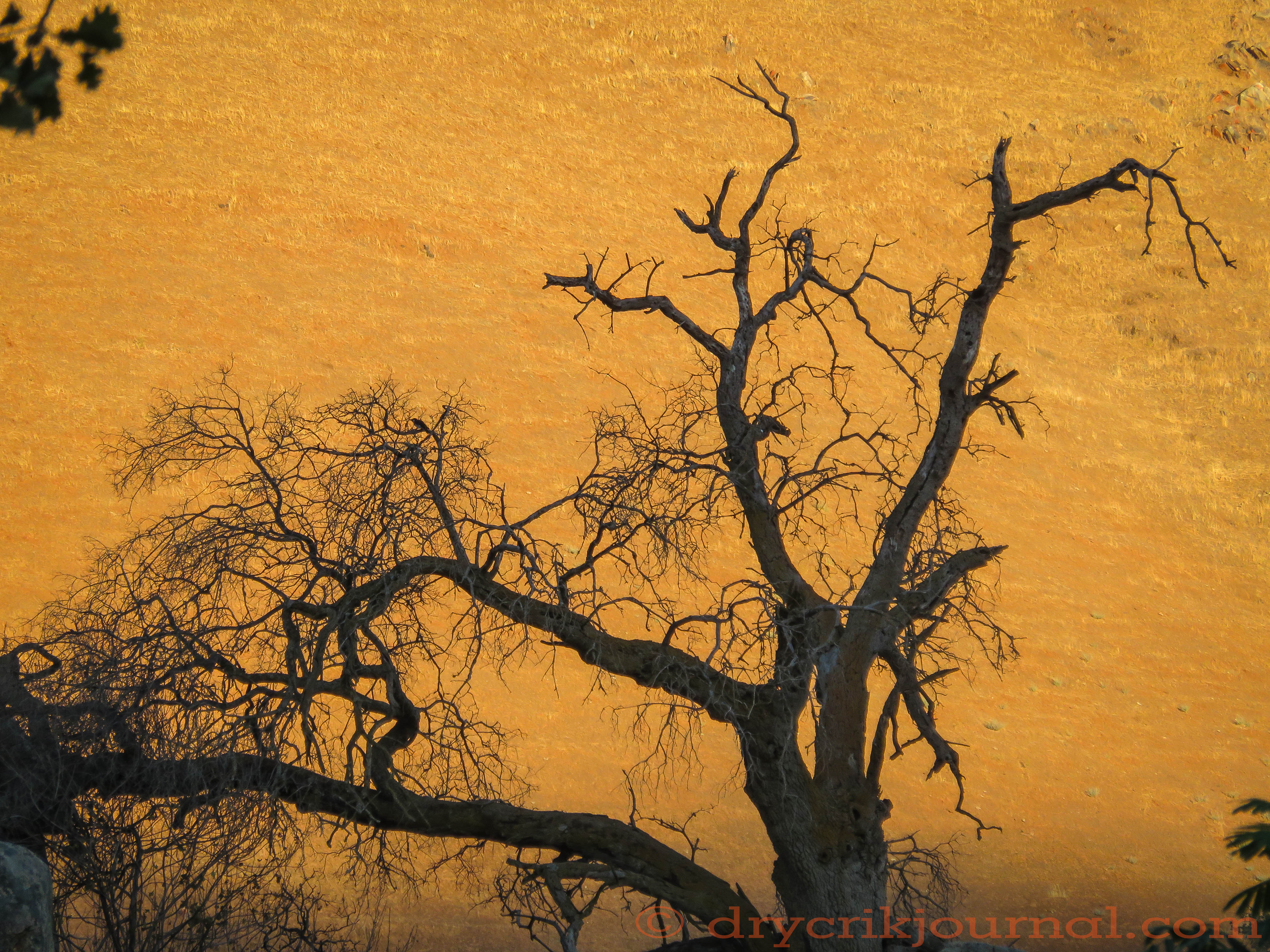
Last light rising
on a bare yellow hillside
forsakes the dead Live Oak
shading the gossip rocks
where women talked
long before we came here.

Last light rising
on a bare yellow hillside
forsakes the dead Live Oak
shading the gossip rocks
where women talked
long before we came here.

Native generations rise
at water, hoof and pad,
inhaled at dawn.
Posted in Photographs, Poems 2014
Tagged Drought, dust, Greasy Creek, haiku, Indian Ground, Natives, photographs, poetry, water, Yokuts
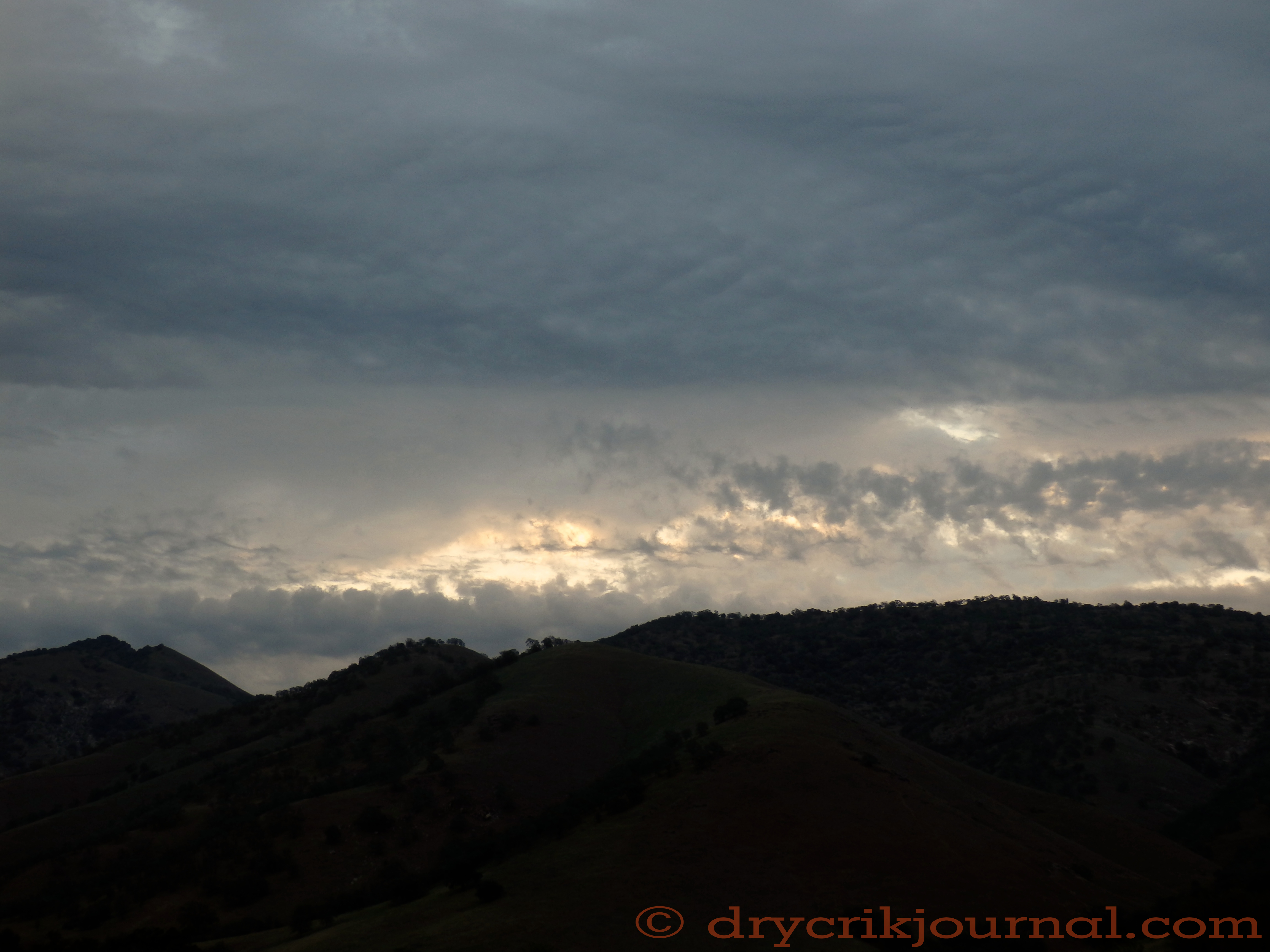
Most days, they can’t see
outside the fort, foothills full
of native ghosts in wild skins
and fine feathers, or the clouds
that boil, fume and sometimes
storm for the fun of it.
Busy with new rules to keep
the stockade safe, they can’t hear
the coyote’s wail in the street—
we live outside its walls
by the same laws
the bird and animal people left us.
Posted in Photographs, Poems 2014
Tagged Fort Visalia, Frank Latta, Nathaniel Vise, photographs, poetry, rain, red sky, Tulare County History, weather, Yokuts

Once upon a time
everyone of a long-gone people
knew its name.
Posted in Photographs, Poems 2014
Tagged haiku, photographs, poetry, weekly-photo-challenge, Yokuts
This is the story of the last assembly of the old-time bird and animal people. After the meeting at Wuknaw, they went to live as we see them today.
When the bird and animal people had all gone to their new places, Tro’-khud, the Eagle, and Wee-hay’-sit, the Mountain Lion, went in a Tule house to talk about Mi’-eh, the new kind of people they were ready to make.
“How are we going to make these new people?” asked Wee-hay’-sit.
“I have a plan. I believe I can do it,” answered Tro’-khud.
Then Tro’-khud began. He took some dirt from the floor of the house and made a shape like the Indians are today, except that he made paws like Ki’-yoo’s, the Coyote, for hands and feet.
When Tro’-khud had finished making the dirt man it was almost night. He said, “Now we must set fire to the house.” Wee-hay’-sit took a brand from the fireplace in the house and set fire to the tules.
The house blazed high and made a dark smoke. As this smoke rose to the sky it began to rain. Tro’-khud and Wee-hay’-sit sought shelter under an overhanging rock.
Before morning the fire had burned out. The baked dirt man lay in cold wet ashes. “Now,” said Tro’-khud, “it is time to give this man a heart.”
“I can do that,” said Wee-hay’-sit.
“All right,” said Tro’-khud.
Wee-hay’-sit breathed on the man’s face and said, “Heh-deh.” The clay figure arose. It walked about and became the first Indian.
“Now,” said Tro’khud, “we must have a mate for the man.” They took a piece of the man and put it in a basket. They covered the basket with a Ki-o’-to, flat tray, and set it by the spring at Sho-no’-yoo. In the morning, as Tow-ahn’-itch, the Morning Star, was beginning to fade, Tro’-khud and Wee-hay’-sit looked in the basket. There they saw the first woman.
The first child of the man and his mate became the Wuk-chum’-nee tribe of Indians. They stayed around Ti-up’-in-ish and Sho-no’-yoo and along the Kaweah River in Lemon Cove Valley. They are our people.
The second child became the Pahd-wih’-she tribe. They went up the Kaweah River and lived in what is now Sequoia National Park around Pah’din, the Hospital Rock, and at Camp Potwishi. Their old village at Pah’-din was called Pahd-wih’-she. In the summer they went to Giant Forest to live among the many Toos-pung’-ish, the Big Trees.
The third child went North to live and became the Wuk-sah’-she tribe of Indians.
The fourth child went down the Kaweah River and became the Ta’-dum-nee tribe of Indians. Their old beginning village of Ta’-dum-nee was where the city of Visalia is now.
The fifth child went South to Tule River and became Ko-yet’-ee tribe of Indians. Their old beginning village of Cho-ko-wee’ was above Porterville where the Monache Golf Links are now.
The rest of the children of Mi-eh, the first man and woman, went out into the world and became the other tribes of Indians. In that way all the tribes of Indians came into the world.
Soon after the first child was born to the first man and woman and became the Wuk-chum’-nee tribe of Indians, Tro’-khud and Wee-hay’-sit saw that there was going to be trouble. The new Indians had paws like Ki’-yoo and began digging in the side of Ti-up’-in-ish, the mountain at Lemon Cove.
They dug a big hole. They dug another hole at Colvin Point.
“This will never do,” said Wee-hay’-sit. “They will eat up the world. We must change that.”
So Tro’-khud decided that after all, hands like Kah’-cha Choo’-wuh, Small Gray Lizard, would be best. He changed their paws to hands and the Indians have had hands ever since.
Tro’-khud said, “We must keep all these people alive. We must not have them die.”
“How are you going to do that?” said Wee-hay’-sit.
“Well, when they die we will take them up to Awp-maw’-new, the old-time spring at Mankins Flats. We will dip them in the water and turn them over and over. Then they will all be young people again.”
“That will not be very good. We ought to have a Do-nee’-wish dance for the dead people once a year. If there are no dead people we have no chance for Do-nee’-wish. If somebody dies we can bring up our friends, Hoosh-min’-in, Northerners, Home-tin’-in, Southerners, Dahts-wun’-in, Westerners and Dum-tin’-in, Mountaineers.
“They can stay one week. We can kill plenty of meat and have a big meeting. We can have two Ah-ha’nitch singers and everyone can bring Cha’-wik, Indian money. That is the best way. Let them die and have Do-nee’wish dance for the dead people.”
Now Ki’-yoo had finished eating Po’-hut, the Squirrel, and he came over to where Tro’-khud and Wee-hay’-sit were talking. He said, “What are you talking about?”
“We were talking about Mi’-eh, the new people. Wee-hay’sit says to let them die and I want them to live.”
Ki’-yoo was pretty smart. He said, “No, it is not good to have them all live! They would fill this whole valley. Then what would we do when there is no place for us to go. They would kill Hoey’, the Deer, Po’-hut, kill me. Then, no more Ki’-yoo. How are you going to feed that many people?”
Tro’-khud, the Eagle, said, “We will fix that. They won’t need much to eat. We will give them a little piece of acorn bread and they must only eat a little bite. They can put it away and when they want another bite it will be big again. It will never get any smaller.
“We will give them a basket of acorn mush and when they eat some, it will get full again. We can fix that. It will work all right.”
“No, no,” said Ki’-yoo. “You let them die, then they can feed themselves.”
So Tro’-khud, the Eagle, and Wee-hay’-sit, the Mountain Lion, decided to let the new people die when they got old. That is why the Indians must die now and can’t live always.
– F.F. Latta (“California Indian Folklore”)
Posted in Photographs
Tagged Creation Myth of the Yokuts, Frank Latta, Kaweah River, Lemon Cove, Tule River, Wukchnumne, Wuknaw, Yokuts
Out of respect, the spirits of the Yokuts
were revisited by Quail, invited to Wuknaw
to wait for Wild Pigeons in search of acorns
to return. Lion was concerned for his deer,
Coyote, Bobcat and Red Tail for their squirrels
as Woodpeckers gathered in nearby naked
oak trees crying: We’ll die, we’ll die, we’ll die.
Feral hogs were not invited. Only a few
spirits could remember how to survive.
The earth sinks at the middle spring,
at the fairly flat and brushy head
of Ridenhour Canyon, huge Blue Oaks
and gooseberries covering forgotten
gossip rocks. I think of Effie riding
her white horse, string of ‘wolves’
beside her cattle following at a walk—
me on the Kubota, salt and mineral,
backtracking for my lost hay hook hung
on the flatbed rail to disengage Spencer’s
trailer backed beneath the pickup hitch
to transfer bales he borrowed for
his daughter’s party—lighter trailer rising
as the loaded feed truck bears down.
Gulf War veteran, he’s had a key since
he was sixteen, goes where he wants,
grins with canine teeth as he talks coyotes,
calls them in for instant death. A silhouette
at rest in the shade of gray chemise,
the bunch behind me, rises in my scope.
Mangy old dog down, forever relieved.
As they regard him crossways in their track,
a tall Brangus turns to search the manzanita,
ears flicking, another leaving I never see
though I comb hillsides clear to the corrals.
Ahead, bawling cows tuck two more tails, chase
chuckling tongues over year-old shoulders.
One down, but one slips off before I head to
Effie’s cabin, cows and calves come to salt,
hope for hay, survey and study another
nosing leaves beneath an oak on Wuknaw ridge,
animals’ rock circle—Yokuts Creation Place.
Three for three, cow dogs living with cattle,
waiting for the mother of the latest calf
to go to water. Haven’t found my hay hook, yet.
I am here to gather cattle, ride the ridges,
see – light step on the morning, rising
higher before the sun shatters atop Broke-Up
to search out darkness in the draws.
Soft dirt under hoof, cowtrails cut in grass
on grade travel easy to the same places,
speak no tracks yet today. The Coyote Tree
is dying, lost the limbs they hung them on
in the old days, my young days when
this was the way – old road the CCCs
with wheelbarrows, pick and shovel,
mule-drawn Fresno scraper in the hands
of many men carved upwards out of Greasy
where it met the Kaweah before the lake,
the dam, before the lowland changed.
Wide sand beach with tules, cattail-hemmed
Wukchumne camp, five hundred souls
before me. I was afraid, dark within
Chiishe’s den in Belle Point’s flank.
Hear my father say, ‘Keep your eyes peeled!’
I am here to gather cattle, ride the day
down – cows, calves and a century and a half
spread before me – the buck and run of years
that haven’t changed, still shaping me.
for Hank
Posted in Poems 2011
Tagged CCC, Dry Crik Review, Greasy Creek, Henry Real Bird, HORSE TRACKS, Kaweah, Wukchumne, Yokuts

Good gather yesterday, branding calves this morning at the Paregien Ranch before the forecast rain.
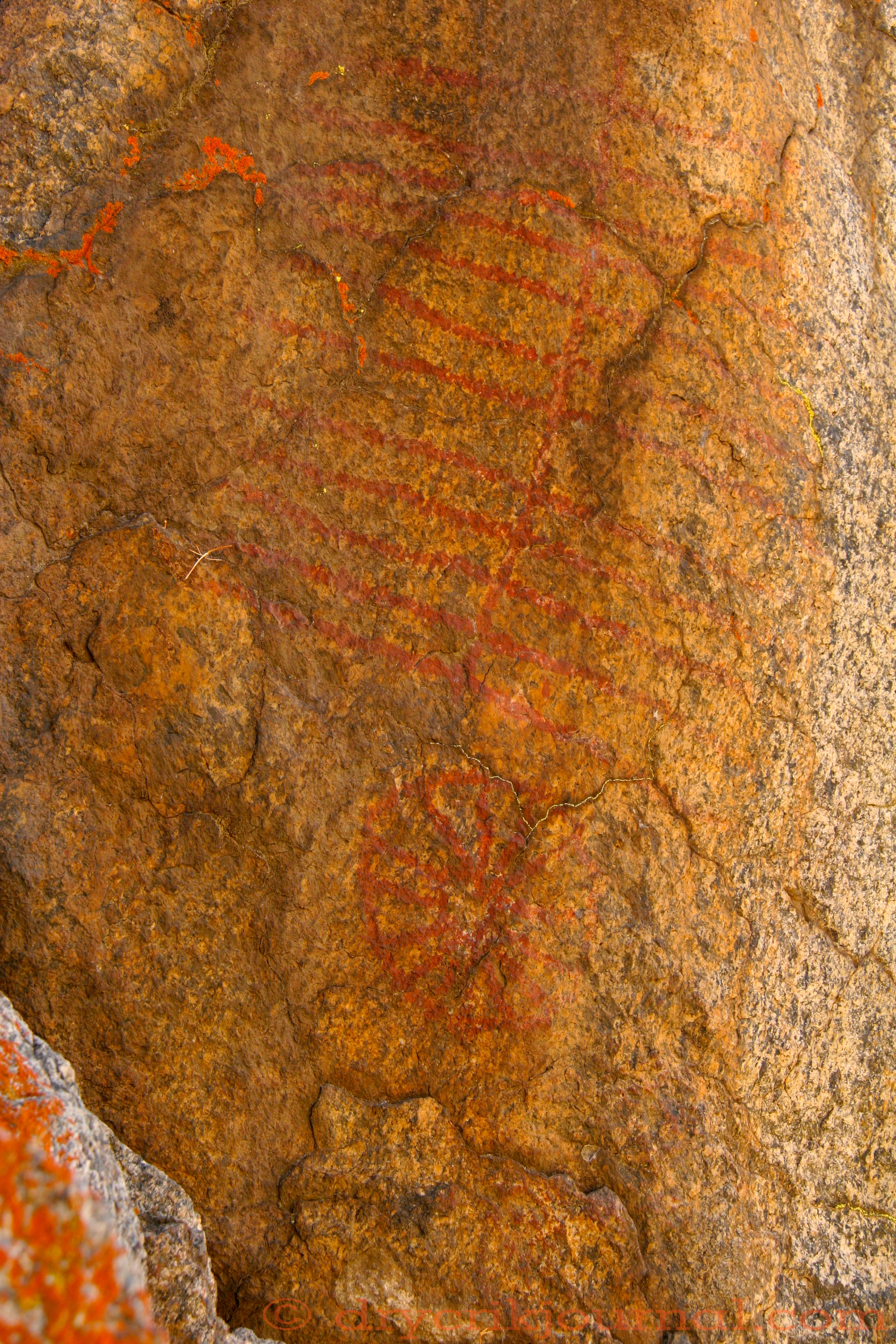
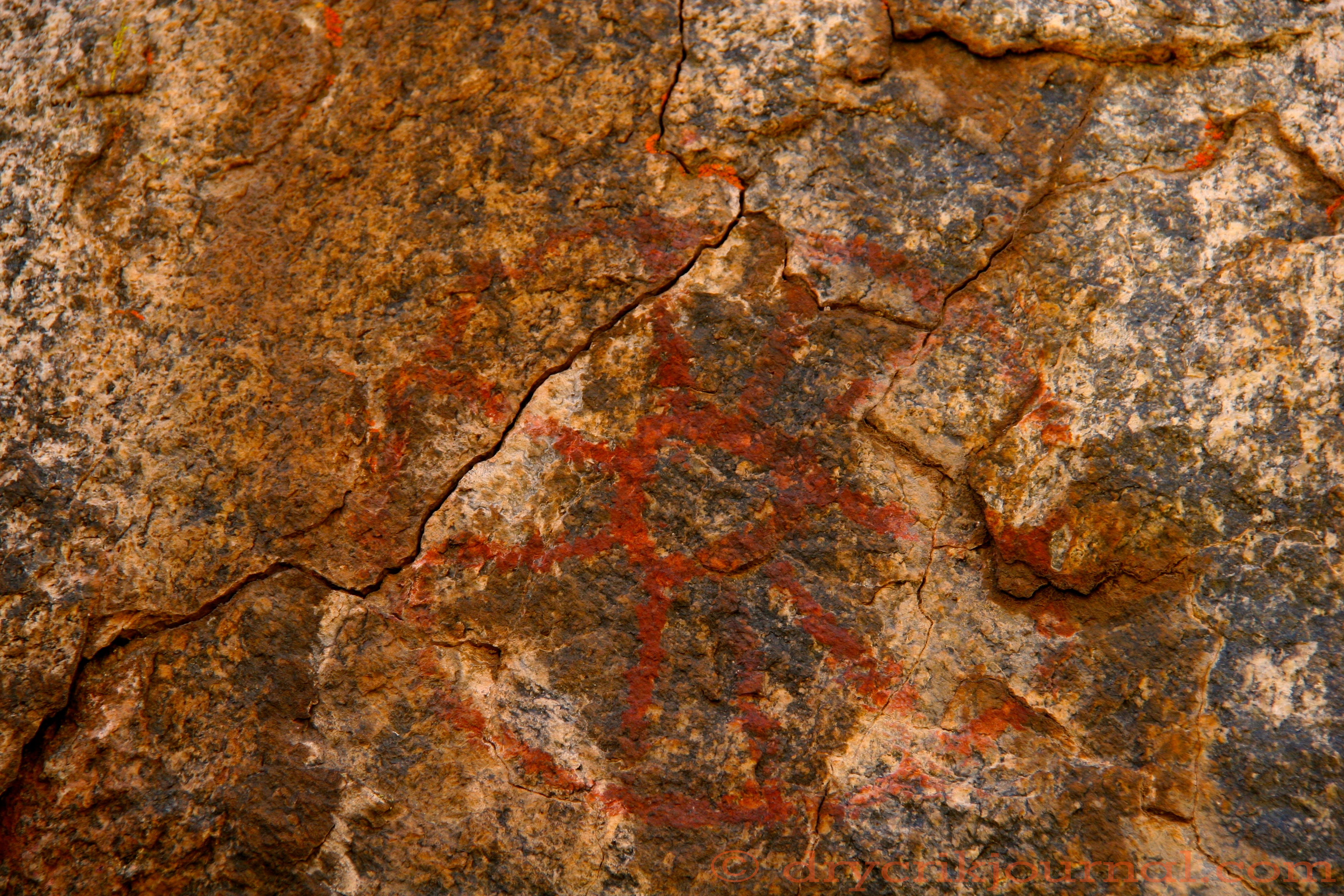
While making a last circle in the Kubota, I had to stop to photograph the red lichen here at Windmill Spring, headwaters of Ridenhour Creek that contributes to Dry Creek, a mile and 1,500 feet down the canyon. There used to be a hand-dug well and windmill here, the latter disassembled and sold down the hill by a previous lessee, the former filled-in to keep cattle out. Good, dependable water, nevertheless.
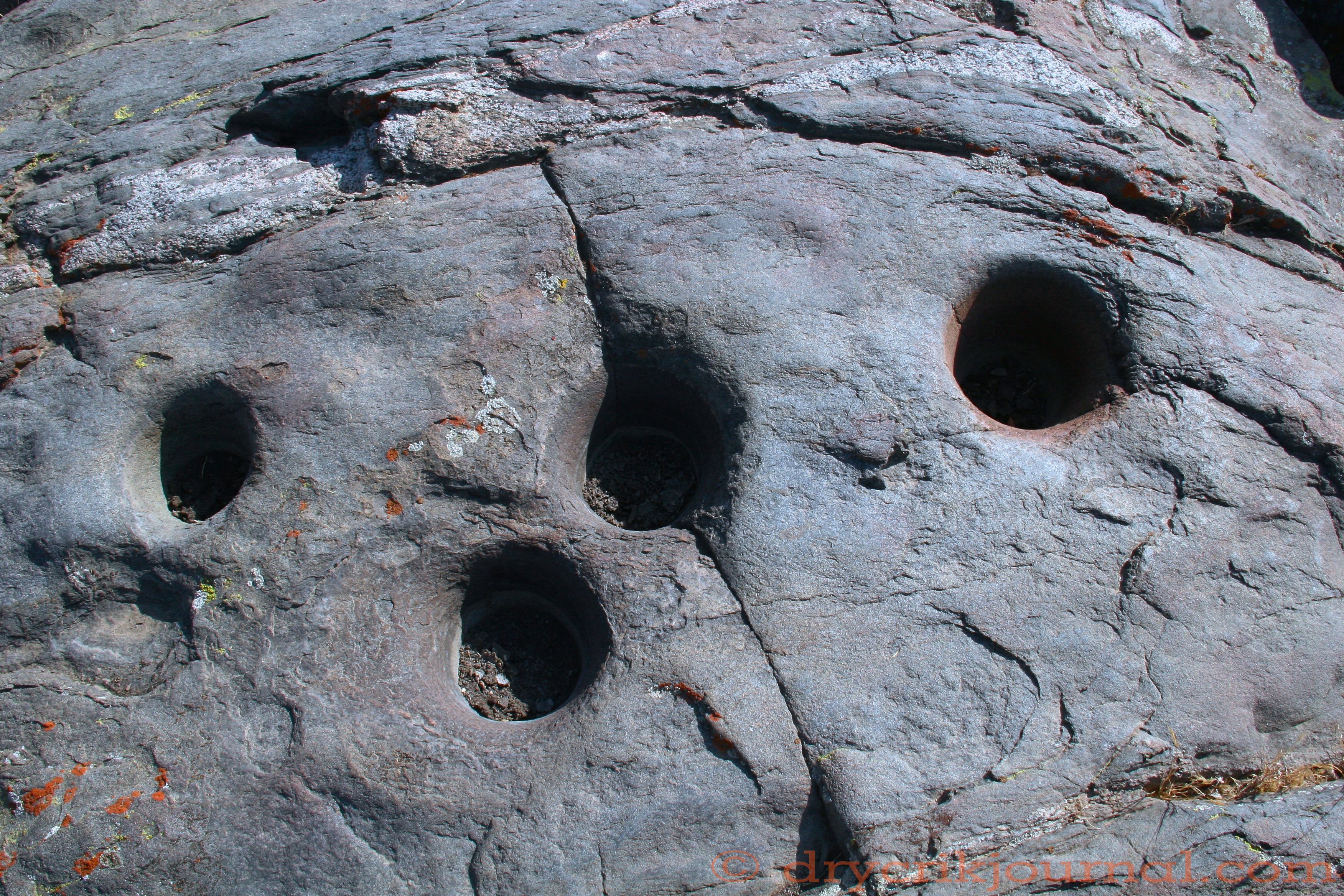
Though I have no explanation, scientific or otherwise – lichen this red is rare around here – worth observing, occurring only one other place that I’m aware of at Effie’s (Hilliard) Spring on the Antelope Valley side of the Paregien Ranch, a stone’s throw from Wuknaw, the Creation Place for the Yokuts according to Frank Latta. And like any place with good water, there are native grinding holes atop these rocks.
With ample wonder and speculation, the stories come easily.
Posted in Photographs
Tagged Effie Hilliard, Frank Latta, Paregien, red lichen, Wuknaw, Yokuts
A silhouette, coiled and buzzing
between the hand I held and the roaring
river as my babysitter screamed,
when we first met on the Tule.
And since so many times I lost count
by seventeen, your rattles in a bowl
little bugs turned to dust. Yet
you knew how to spy on dreams,
face-to-face, long after. You have
the hay barn and the loading chute,
count our bales and cattle weighing
good and bad boiled down to numbers
before your annual report to Tihpiknit
still living in the bottom of a rock pile.
Please give the Underworld our best
and think about an alliance if you can
overlook my ignorance. I’ll chant
and sing, I’ll even try to dance.
Posted in Poems 2011
Tagged Frank Latta, Native Myths, Rattlesnake Dance, Tihpiknit, Trahundun, Trudum, Wukchumni, Yokuts




 drycrikjournal