Tag Archives: water

San Joaquin Valley Quail


20151108-IMG_5400


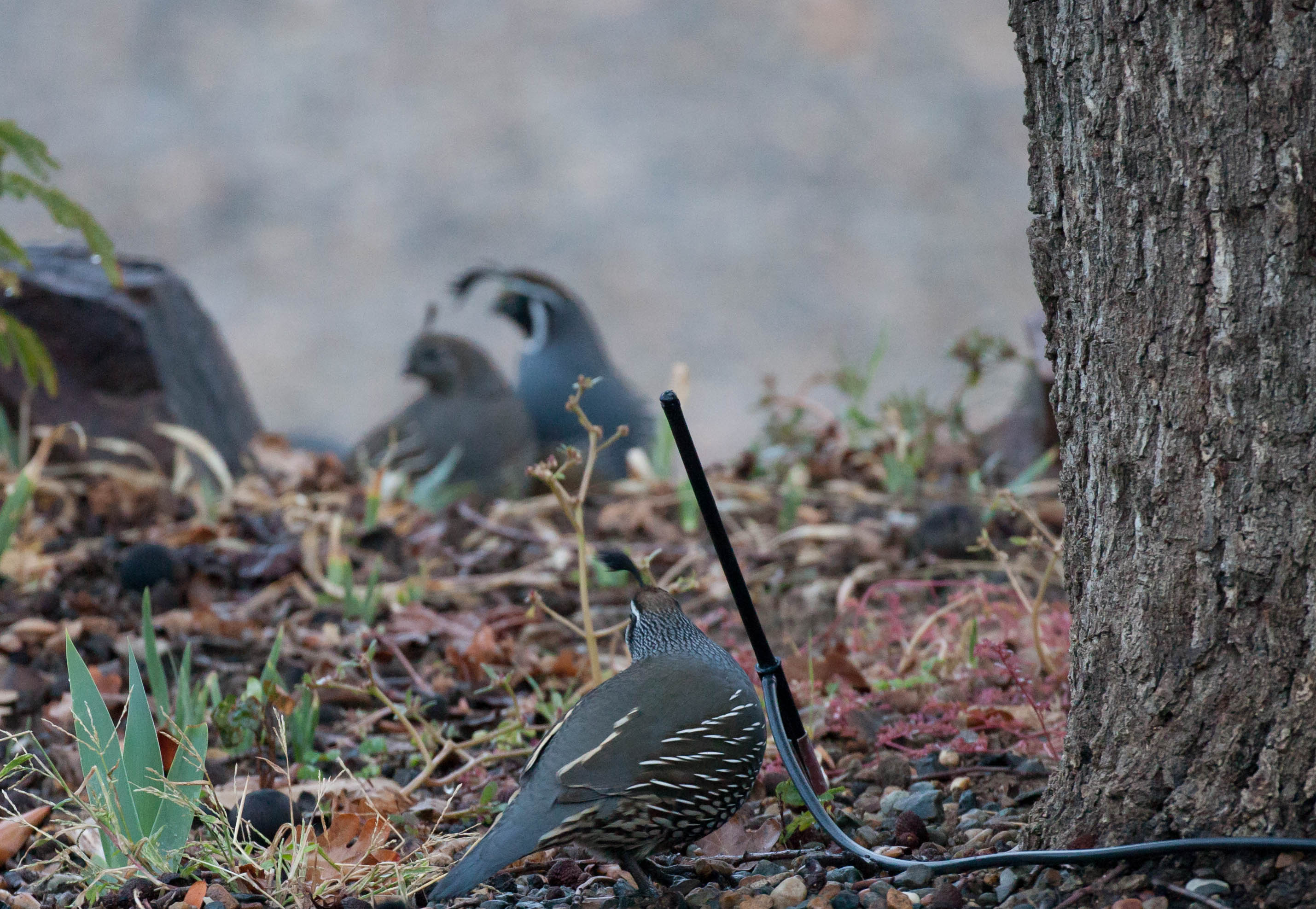
Four years of drought have reduced the quail population on the ranch by at least half, but the covey around the house has fared much better than most. There’s ample cover here from bobcats and Cooper’s Hawks, and they don’t seem concerned with our strain of half-feral cats. But it’s been the regular irrigation of the garden that holds them here most summers.

The Valley Oak that we planted years ago and a resident Blue Oak have also benefited from the regular irrigation, both with good crops of acorns, most of which have fallen to the ground now. Whether crushed underfoot or decayed and rotting, they attract the quail, much to the displeasure of the woodpeckers who dive and try to drive them away from the Valley Oak, their tree of choice.

For the past month or so, the morning routine of the covey is to leave the Palo Verde tree where they spent the night, to go through the garden and stop beneath the Blue Oak for a snack, then parade across the yard to the Valley Oak, their tree of choice, for their main course. They seem to be coming to breakfast earlier, or perhaps the woodpeckers are sleeping in, but they haven’t been harassed lately as our temperatures drop to around 40°.

A little cold now for coffee outside, I finally went for the camera yesterday, having chastised myself for weeks for too many missed opportunities. Overcast after a light rain overnight, photographing quail and maintaining any depth of field was a challenge. Constantly moving and pecking, manual focus was out of the question and auto focus limited me to a single bird or two. My philosophy is to shoot lots of photos, especially with a digital camera, to sort out later. The photo above has survived some severe cropping yet maintained its unique feeling thanks to a good lens.

Trivia: Quail were among the messengers in native Yokuts folklore.


Ranch Journal: November 8, 2015


20151107-IMG_5275

A crisp and beautiful Sunday ahead of a storm, Robbin and I checked the cows and calves in Greasy, as well as the condition of our grass and water after the 1.5” of rain last week. We hauled a Kubota-load of extra hay up the hill for the cows in Section 17, most all with early calves.


20151107-IMG_5252

Not all came in to hay: 6 cows choosing to stay atop the ridge, telling us what we came to find out. A few cows with larger calves show normal stress, but it’s a great start to a new season.

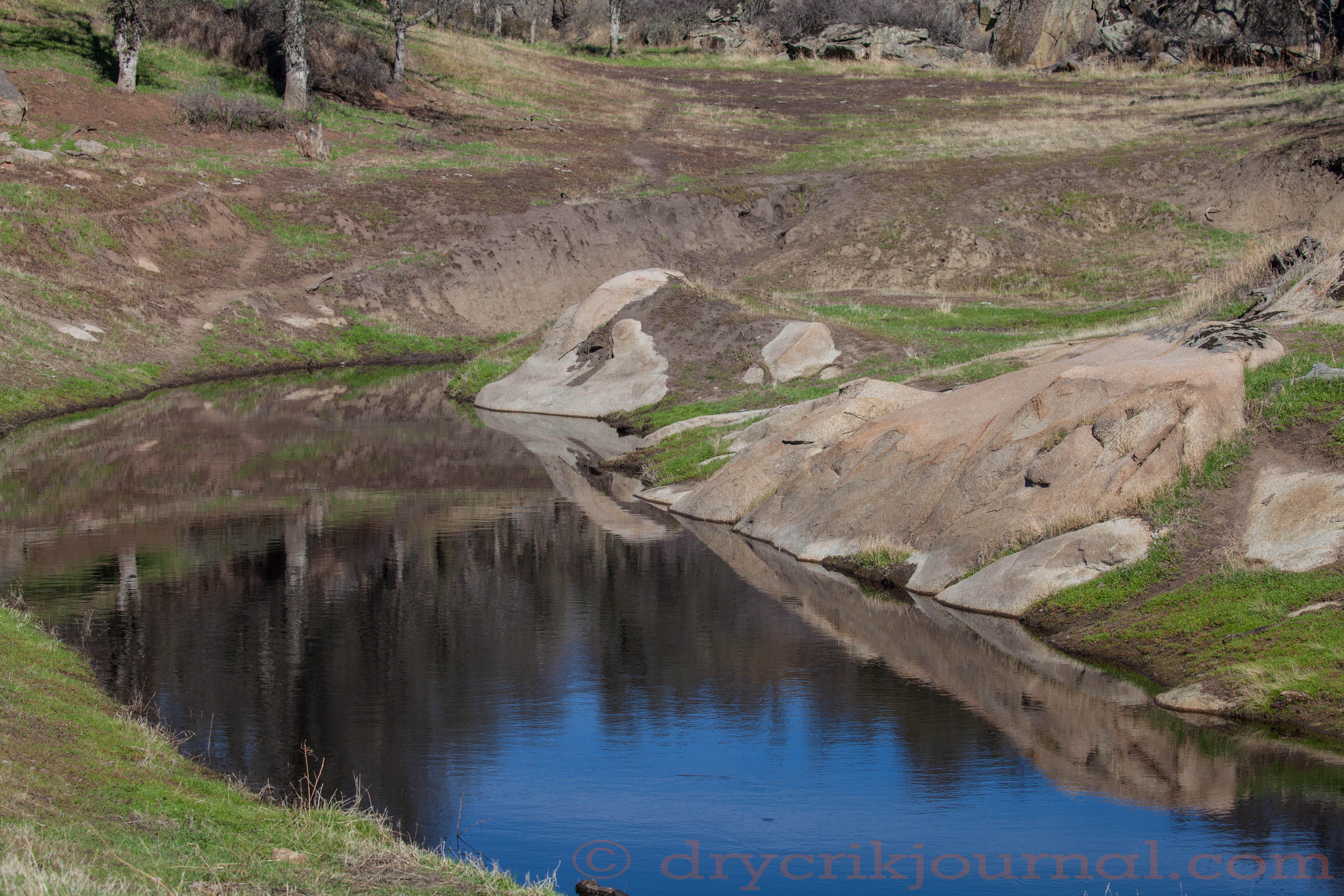
Though numbers are down substantially, cows were scattered everywhere we went, our stockwater ponds all holding some water now. With over 4 inches of rain to date, almost half of the rainfall we got during the whole of the 2013-14 season, and over a third of last season by the first week in November, we’re in disbelief, happy and relived.


20151108-IMG_5279


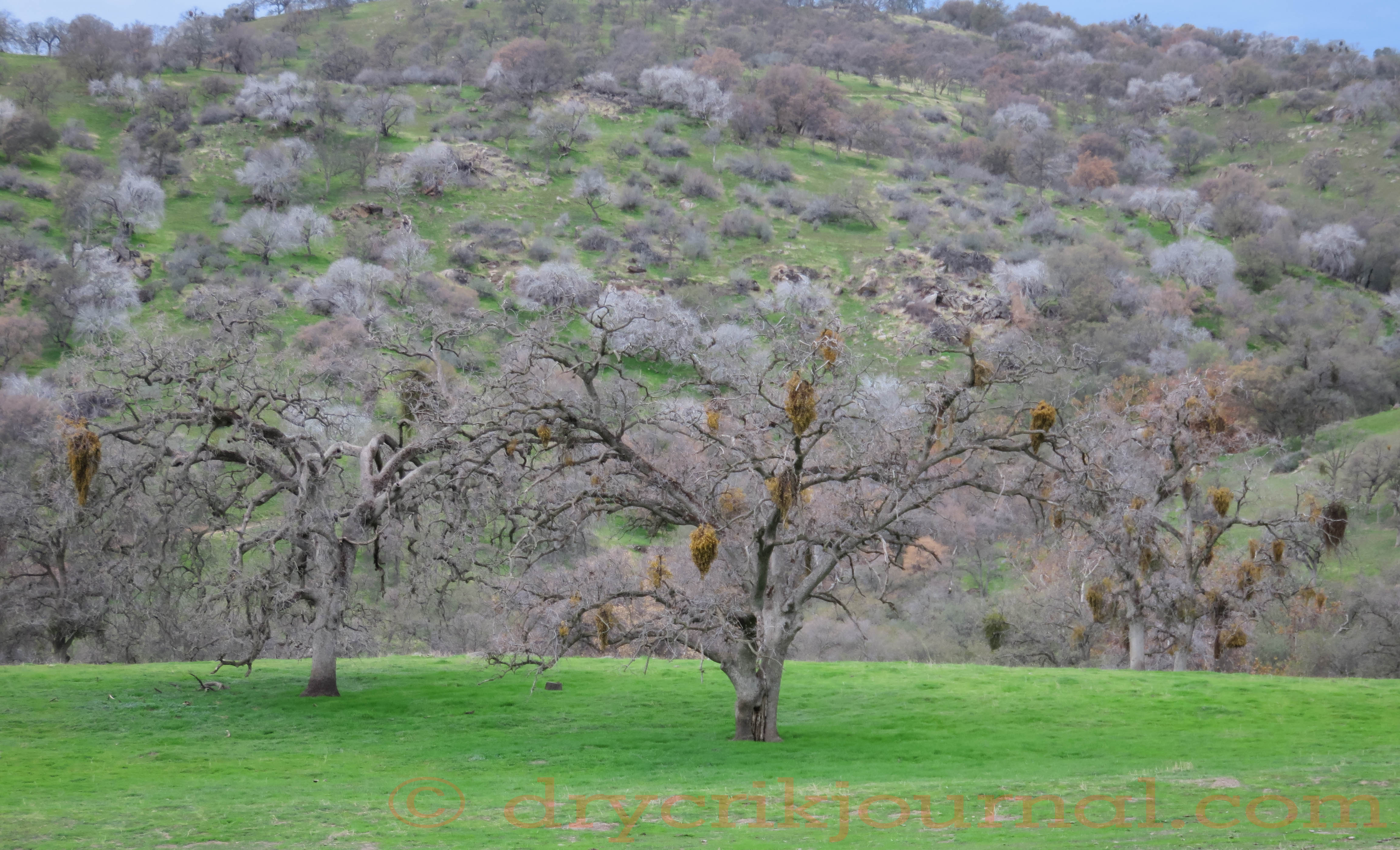
REQUIEM FOR THE BLUE OAKS, 2015


December 2014

December 2014


Skeletons and broken limbs, old friends
of two or three centuries passing seasons
in one another’s shade, listening

to fathers telling sons how to survive.
Clumps of brown and yellow mistletoe
hang from arms like grapes becoming raisins,

all giving-in and giving-up their ghosts,
their loosening bark in lieu of acorns
to this bear invasion as the canyons

and draws crawl with shaggy scavengers
after the war is over—as the slowly fading
wounded watch, brittle roots without water.

This old girl will never be the same,
not reclaim her lush good looks
for generations that will never know

the difference nor her endless bounty.
Nothing stays the same beyond the void
of emptiness—everlasting, ever changing.


October 14, 2015 - Greasy, Horse Lot

October 14, 2015 – Greasy, Horse Lot


ATTAGIRLS!


20150929-IMG_4348


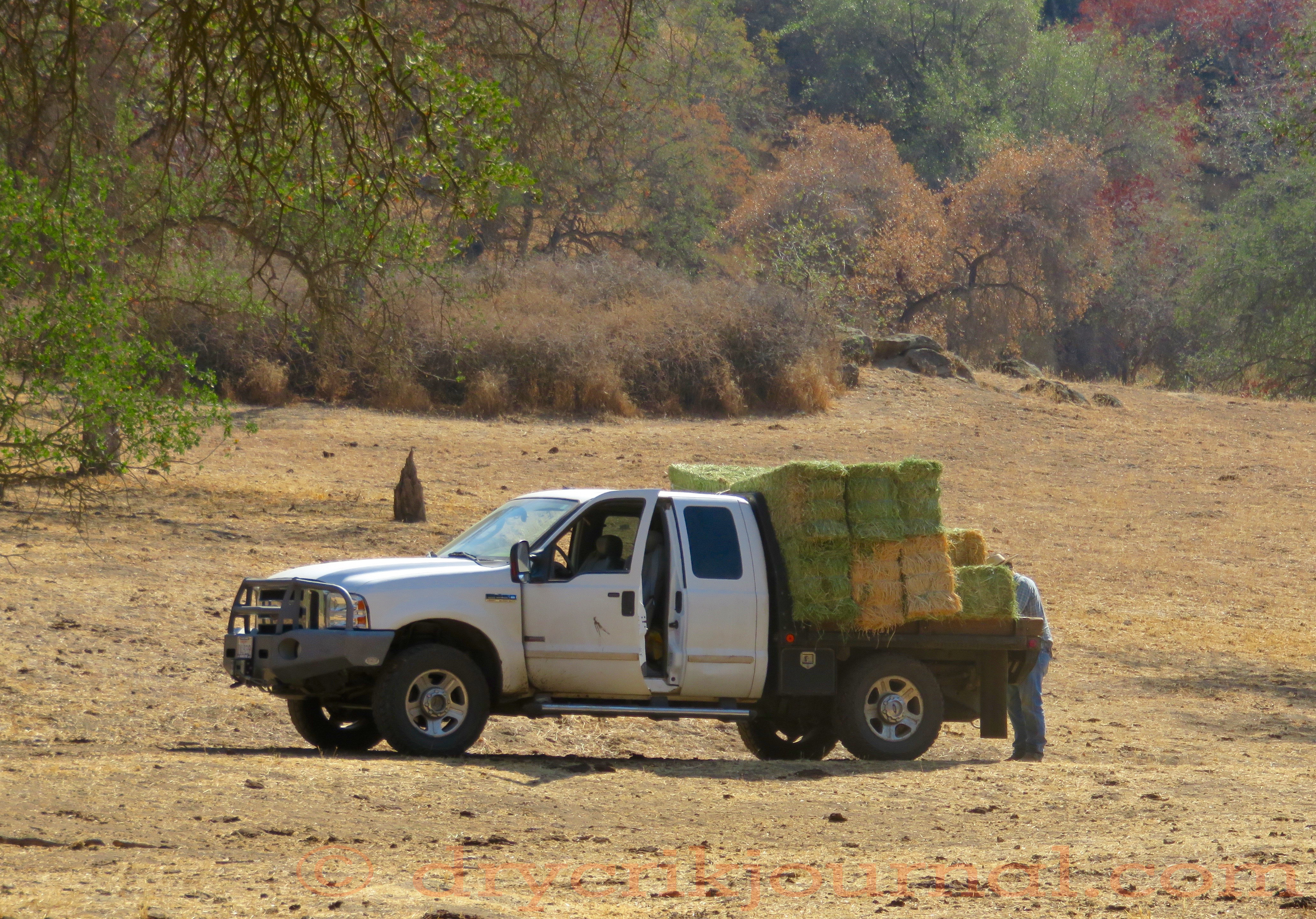
It looks like Terri and Lee were having too much fun yesterday loading the hay truck before heading up into Greasy to check the cattle and stockwater. We’re feeding somewhere everyday as the calves come, giving the cows a little extra as they raise new calves, while also trying to keep the cows in shape so they’ll cycle and breed back in December. Hopefully we’ll get some rain and green grass before then.

Rather than let the cows get thin before starting to feed, we feel it’s easier to keep the flesh on and more economic to start feeding early. While making our circles to monitor our stockwater, we began taking hay in early August, gradually increasing the amount to where we’re feeding full time now until the grass comes.

With more dry feed and less cows in our upper country, we make the 4-wheel drive trek to Greasy and the Paregien Ranch once a week, while feeding our younger cows down low three times a week. Stockwater in our upper country is more tentative and needs to be checked regularly.

Robbin and I were waiting to load the Kubota to feed another bunch as the girls were tossing 130 pound bales around. We followed behind them later and managed to see all the cows, calves and replacement heifers on the east side of Dry Creek, very pleased with all we saw.


Dawn on the Pasture


20150925-IMG_4854

When I arrived yesterday to change my irrigation water, a coyote was nonchalantly studying these cows and calves from just outside the fence. The cow beneath the Valley Oak was lying close to her calf, hours old. The cows, of course, knew he was there well before I did. Taking an indirect approach, coyotes will gradually work their way among the cattle acting preoccupied and harmless until they become familiar to a bunch, all the while looking for any weakness among the calves—hence the Trickster moniker.

We have completed our first month of calving and pleased with 50% of our calves on the ground, a bright spot in the middle of this drought, though our total cow numbers have been reduced by half these past four years. This is the third calf for this particular bunch of cows bred by Vintage Angus bulls.


20150925-IMG_4837

As the light turns softer and shadows longer, early mornings can be rewarding with lots of wildlife this time of year, especially where there is water. About twenty Canadian Geese are stripping the ripe seed of the water grass elsewhere in the pasture and our little bunch of wild turkeys, that are becoming used to me and the Kubota, are rummaging for bugs where I’ve completed my irrigation.

I take my camera, never knowing what I’ll see.


Greasy Water Update – First Calf

Less than two weeks ago, we began efforts to find more water in the Greasy watershed utilizing David Langton’s backhoe, the first time a backhoe has ever been to this part of the ranch. Terri and I made the loop with hay yesterday to monitor our water and feed the girls getting ready to calve.


20150826-IMG_4266

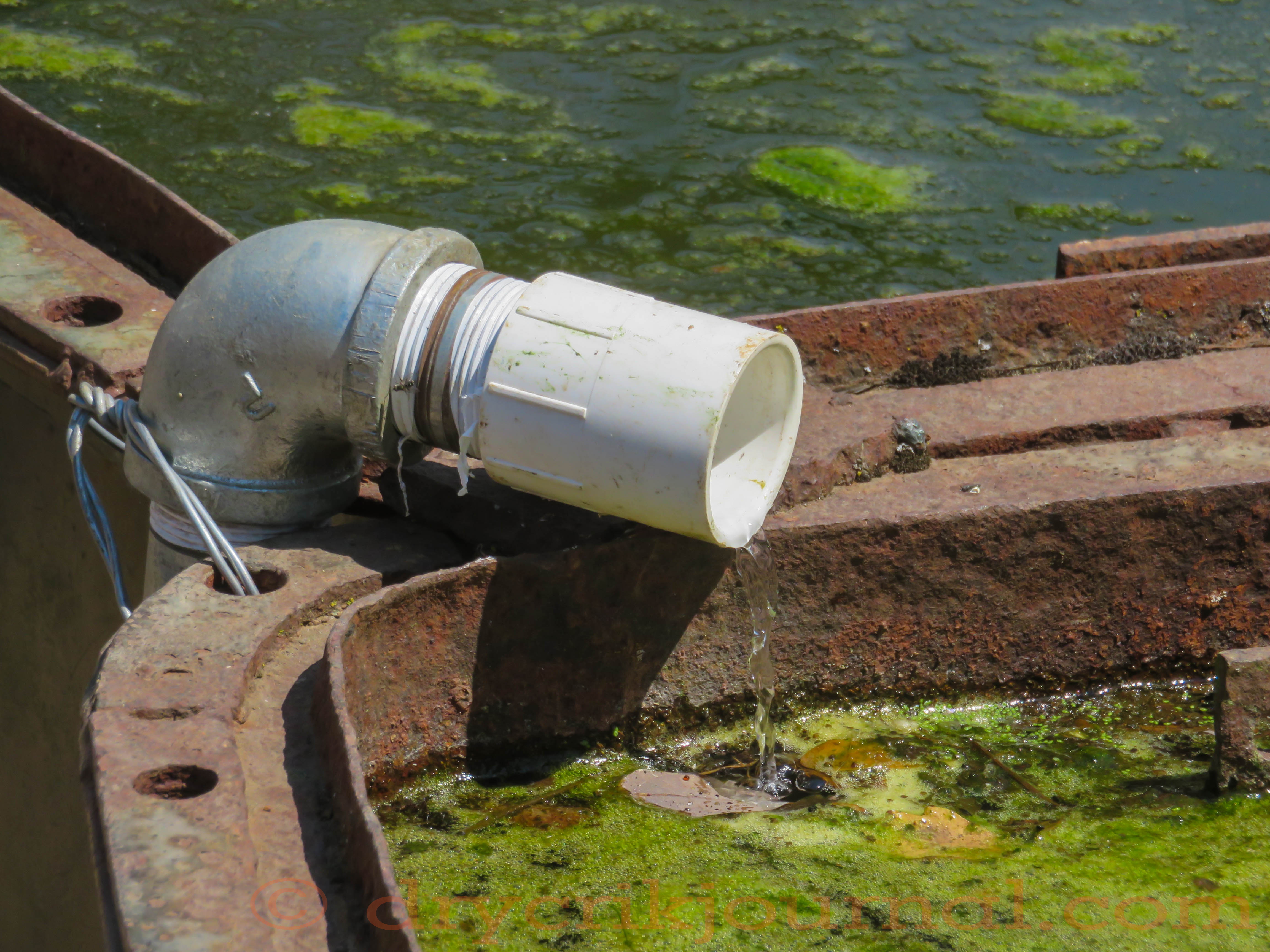
The second trough at Ragle Springs is now full and overflowing. When time allows, we’ll have to plumb an overflow at the low end away from the dirt fill placed around the trough that will probably entail chipping a saddle in the concrete in order to cement a pipe that will have to be anchored to a post beside the trough to keep the cows from breaking the concrete when they rub on the pipe. Any kind of construction for cattle is a challenge. But for the moment, we have plenty of water storage available for the cows, giving us two good springs in our Sulphur pasture. Ragle Springs


20150826-IMG_4274

The troughs are full and the new spring box is running steady @ about 1/3 gpm. Railroad


20150826-IMG_4289

Water continues to accumulate at Grapevine at two locations. Grapevine
 

The cows were scattered and harder to locate yesterday, grazing farther from water now, secure and satisfied that water will be available tomorrow.

20150826-IMG_4283

For Source and Age Verification, we document our first calf born for the season, so buyers and consumers will know the age of our oldest calf. (First only if we don’t include the four calves born a month early after a bull jumped the gun at the end of last October.) Surprise


CIRCLES IN AUGUST


IMG_0456


We track circles on the same ground
through brush and granite rock,
over mountains and down canyons

patched with spooky skeletons
of trees, broken limbs at their feet.
Last year’s blond and brittle feed

folds into dust under foot, under wheel
into decent firebreaks swirling around us
as we check springs and clean water troughs

measured with our eye. We carry hay,
fat cows come running six to the bale
once a week, fresh calves knocking

at the door of a new and wobbly world—
waiting to inhale one hundred degree heat.
Too soon to rain, we plod like cows

in dusty circles, all soft trails
lead to water and shade, or to the hum
of solar pumps in abandoned wells.


TWO POEMS


20150817-IMG_4202


RAISING HELL

We don’t talk about
the drought, anymore:
four years dry,

we have adapted
and survived our fears—
scratched for water,

sold half our cows—
but ready for storms
to raise some more.


WIND SONG

Perhaps we are cursed
to stay busy, put our shoulders
to the rock, embrace it—

move the planet
with small accomplishments,
little marks never permanent

that become our joy:
like new fence
guitar string tight

keeps neighbors strong,
picked by the wind
to play its song.


Water @ Railroad


20150817-IMG_4176

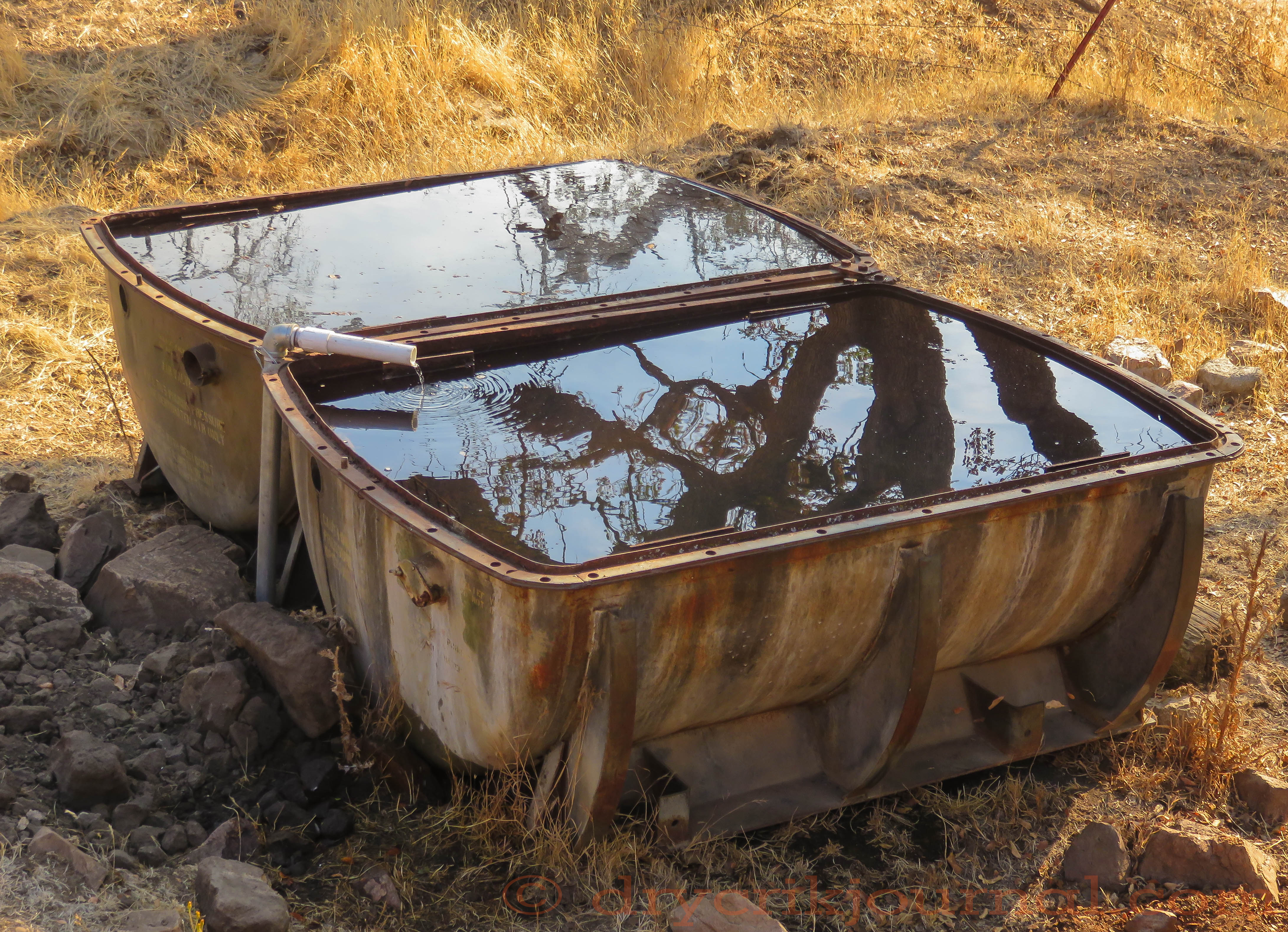
Hauled by four-wheel drive to Railroad Spring in the early 70s, before we built a road there, I am gratified to see they are still level and don’t leak, but more that we were able to redevelop enough water on Friday and Saturday to fill them. US Army Surplus tank transmission cases, these serve us well as water troughs with a combined capacity of about 750 gallons.


20150817-IMG_4180

Lid for the spring box I fashioned from scraps on Sunday with three coats of Superdeck Heart Redwood stain, leftover from a another project, for added life.


GODZILLA HAIKUS


20150807-IMG_0428-2


Any day now—soon,
any day, the pundits say
we might wash away.

We dig for water,
bring David and the backhoe’s
hydraulic muscle:

big jaws and steel teeth—
hope and pray to break some loose
to water cattle.

California’s map
in flames, burning inside out
to greet El Niño.