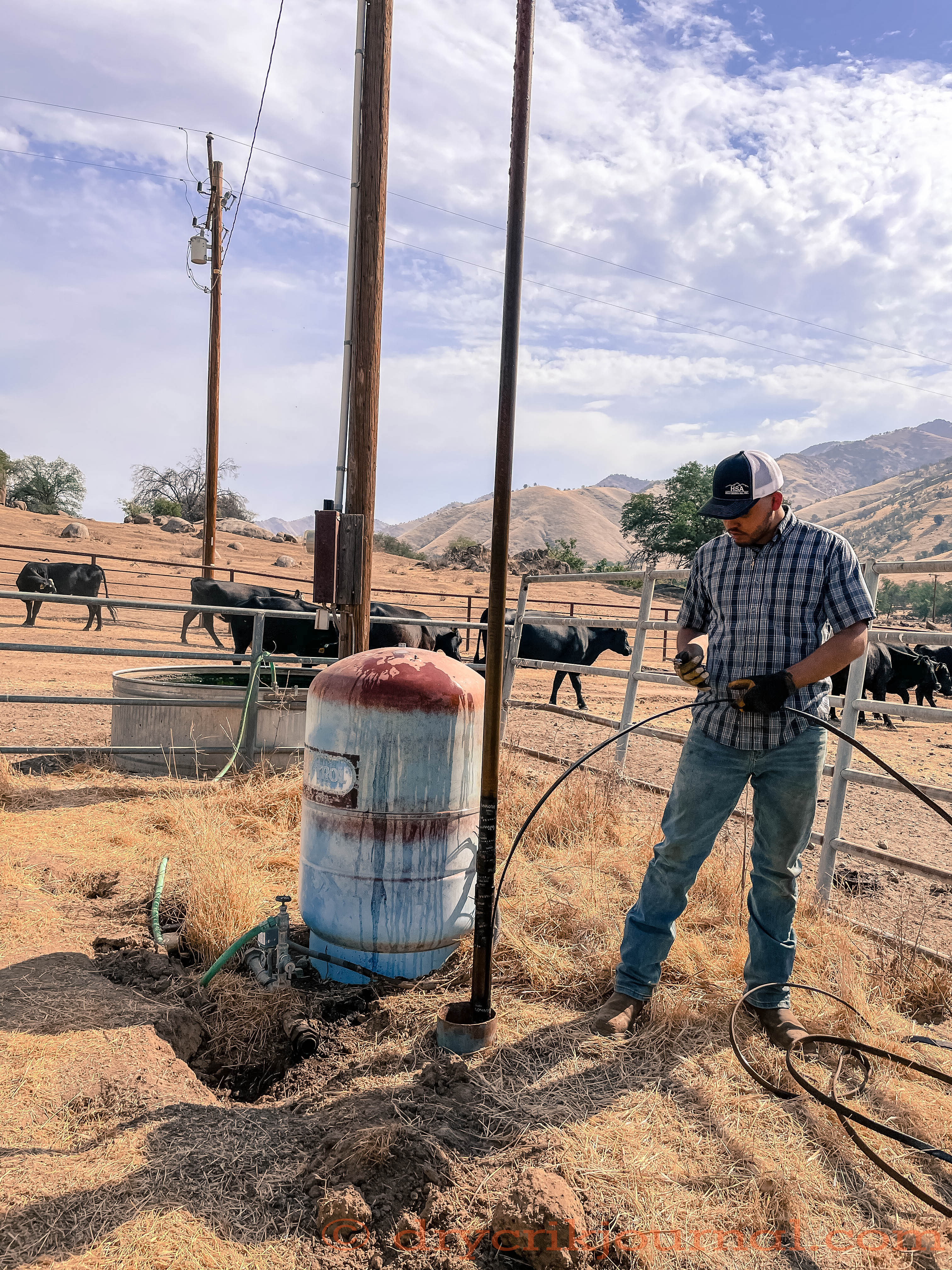
Pulling the first of 12 joints of 20’ pipe plus the pump this morning after losing water last evening. We weaned our last bunch of calves Thursday when we hauled them out of Greasy, and were celebrating our good fortune until the pump quit. Fortunately, Willits Equipment had time and personnel to replace the pump and control box by 1:00 this afternoon. This well also serves our house.
Just one of the joys of rural living, but we wouldn’t trade it for the alternative.
Even though I haven’t been in the mood to post anything, I would be remiss not to journal one of the worst drought years in my lifetime, less rainfall (6.19”) than we received in 2013-14 (7.78”) during our 4-year drought of 2012-2016. After feeding hay all summer long into the fall in 2013, we finally had to sell half of our cowherd in 2015.
Currently, all that our steep hillsides have to offer is a short blond fuzz of dry grass that will soon be dust. I remember the drought of ’77 when the cows licked the grass seed to augment what hay we fed them. Knowing what’s ahead, we’ve begun gathering to wean early and have already sent a bunch of good cows to the kill plant, many of which had calves in their bellies. Due to the lack of snow in the Sierras, there’s little irrigation water to grow hay and the price is high, while cows aren’t bringing much money. Furthermore, stockwater from our natural springs in the upper country will be in short supply by fall——a perfect storm.
As we cull our cowherd, we’re focusing on a young nucleus as we realize that we’ll not get the money we’ll spend on hay this year with next year’s calf crop. Nevertheless, we’re plodding ahead: leaning forward as we take another step and praying for early rains this fall.
This old ground is on the move
and we have changed it
with our dreams of improvement
that humanity demands

to level mountains, harness rivers,
pump valleys to collapse
with efficiency and startling success—
then we foul our surgeries.

Beyond the road and fences,
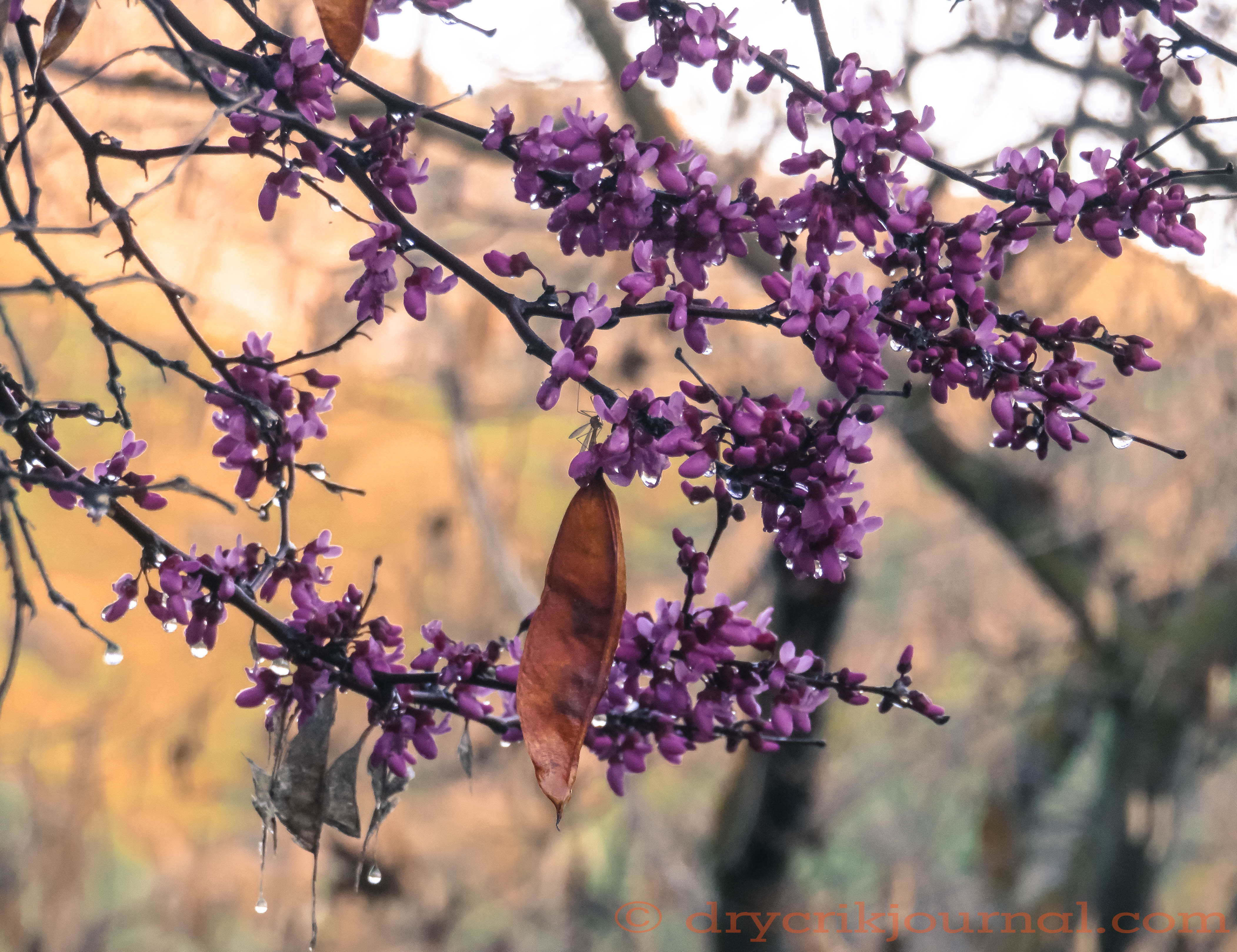
these bare hillsides have begun to breathe
since she spent the night, whispering
upon dry leaves clinging to the last of life.

I am awakened, as if she never left,
wrapped in the soft applause of her arrival
bringing the gentle miracle of moisture
as this old ground comes back to life.
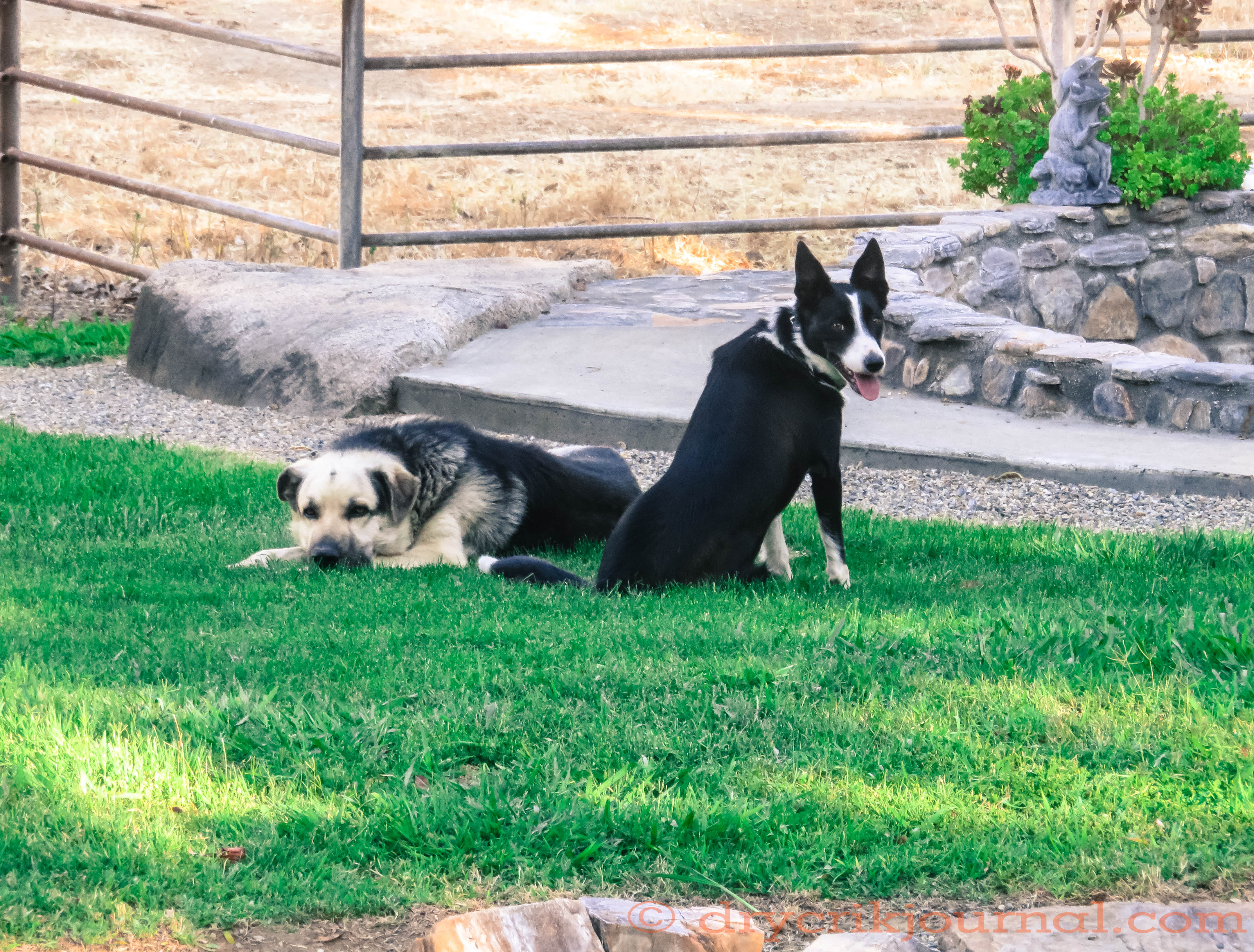
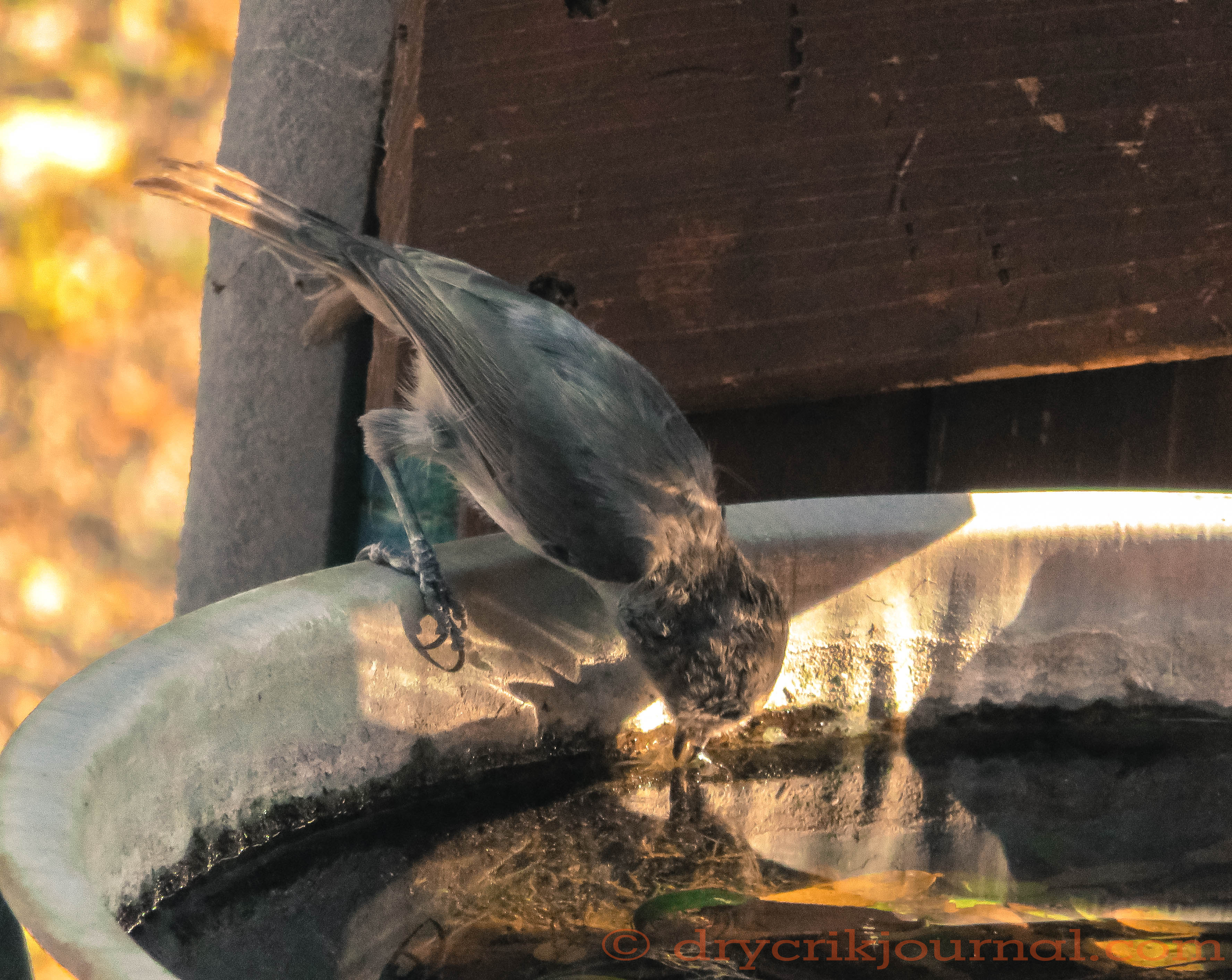
A pair of precocious little gray birds I’ve never noticed before have spent the summer with Robbin and me, drinking several times a day at the dog’s water on the deck. Smaller than our Western Flycatcher and with a slight crown like a Kingbird, we assumed they were juveniles. At 111 degrees they water more frequently now, arriving open beaked, the female seems shier and more bedraggled than the male. The best ID I can come up with is that they are Wood Pewees, but I defer to others more qualified.
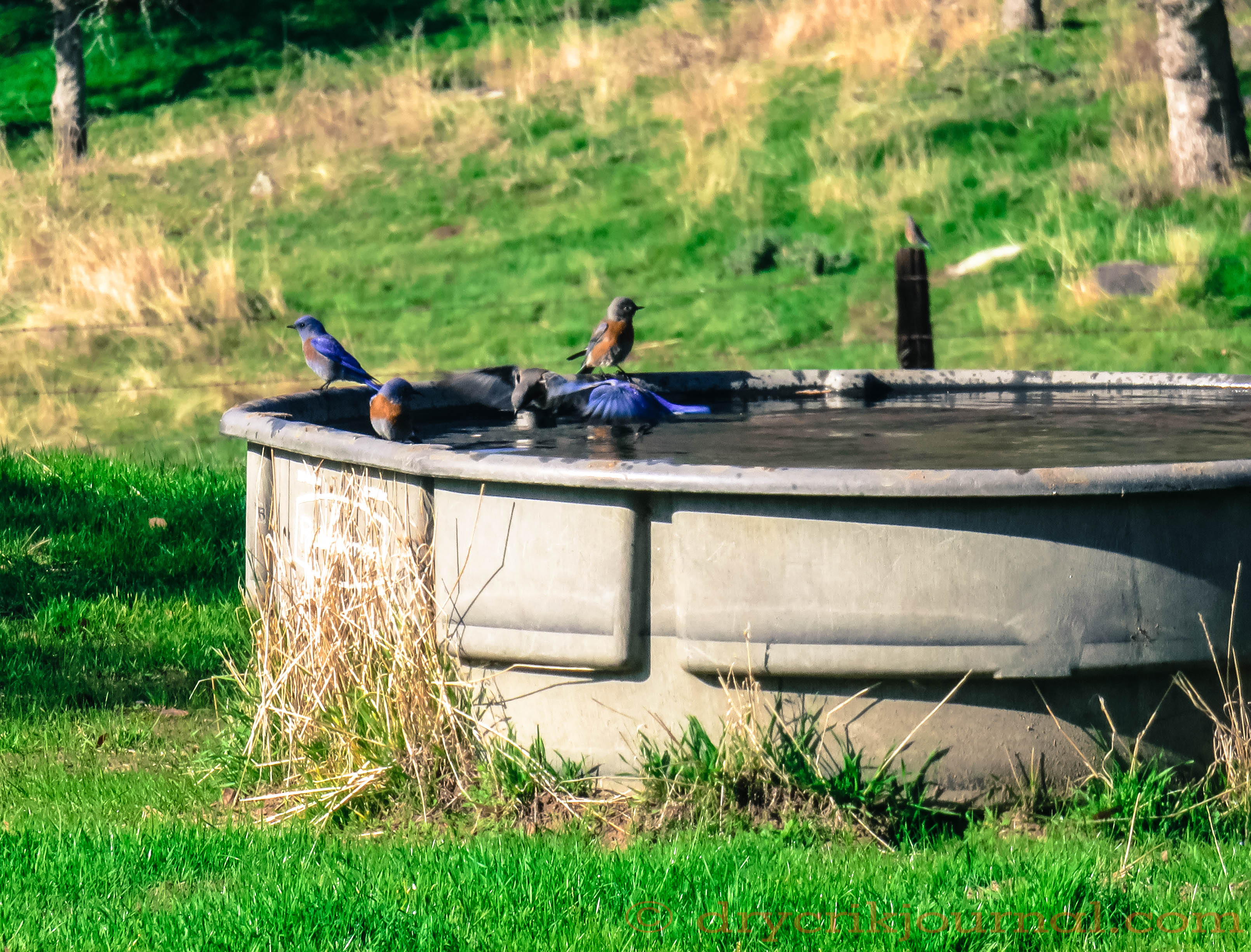
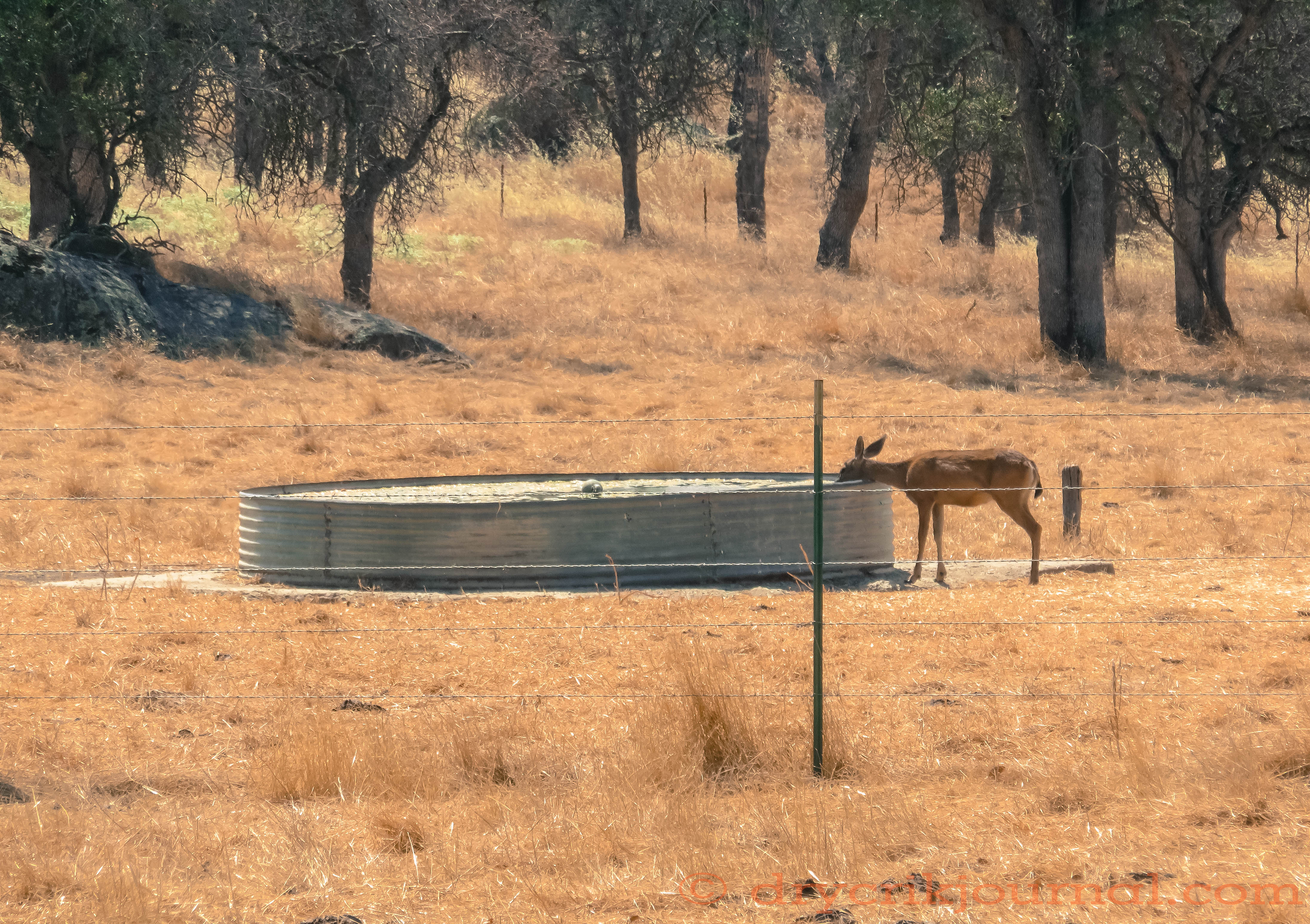
Besides the livestock water troughs that are difficult for many birds to drink from, our inadvertent plumbing leaks draw a wide variety of birds from all around. Now that the spring Bird Wars are over, a territorial drama where the eggs and babies of one nest feed the babies of a larger species, they seem to have found peace in the shade of our yard. Woodpeckers cling to sprinkler heads to get a drop at a time, coveys of quail include a pipeline leak on their daily rounds and Towhees cool beneath the mist of our garden irrigation. It’s quite a show if you can stand to be outside.
Before we traded ranches,
your mother witched a well
that artesianed into a trough
to water cattle, that overflowed
to fill a pond twenty-four seven
without turning a wheel.
Before we traded ranches
you had tenants
that wanted more
to irrigate cannabis
with a pump and gas generator—
pulled granite sand and pebbles
to dam the crack
where water ran underground
from Sierra peaks
to the wellhead freely.
Married now to a generator,
storage tank and pump,
I pack gas and oil,
carry electrical testers,
tools and spare capacitors,
for a second well we drilled
too deep for solar
to water cattle in a trough
that never overflows.









 drycrikjournal