One hundred degree cows
come close, feed on one side,
lawn on the other.

One hundred degree cows
come close, feed on one side,
lawn on the other.
Posted in Photographs, Poems 2014
Tagged Drought, Dry Creek, feed, garden, haiku, photographs, poetry, Wagyu X mothers, water, weather, weeds

Black and brazen, the crows light close
to harvest nests in this speck of green
upon miles of dry and dusty brown as if
they own it—as if they labored here.
After last year’s cherry crop, Golden
Orioles homestead the Palo Verde tree.
In a patch of yellow monkeyflowers,
cottontails and quail cue up at the leaky
water trough, not a drop goes to waste.
Posted in Photographs, Poems 2014
Tagged Drought, photographs, poetry, water, wet seep monkeyflower, wildflowers

The past two dry years have been tough on the Great Blue Herons here, resorting to year-round rodent hunting to sustain themselves. With a measureable flow for only 18 days this year, absorbed before it made it to the Kaweah River, Dry Creek peaked at 9 cfs on April 3rd, compared to the 2010-11 season when Dry Creek ran until September 4, 2011. It’s too late for the chance of showers (and thunderstorms) today and tonight to help our feed or the herons much other than settle the dust and temporarily change the smell of things with only 5.67” of rain since October 2013. Those are the numbers, but one look at our April feed conditions says it all.
An image branded in my brain during the devastating Drought of 1977 is that of a Great Blue Heron fishing from the concrete bank of the Friant-Kern Canal near Exeter that gave me hope, that demonstrated their adaptability to me. No wonder they have become our totems—now if we can just take their lead.
Posted in Photographs
Tagged adaptability, Drought, Dry Creek flow, Friant-Kern Canal, Great Blue Heron, Kaweah River, photographs, water, weather
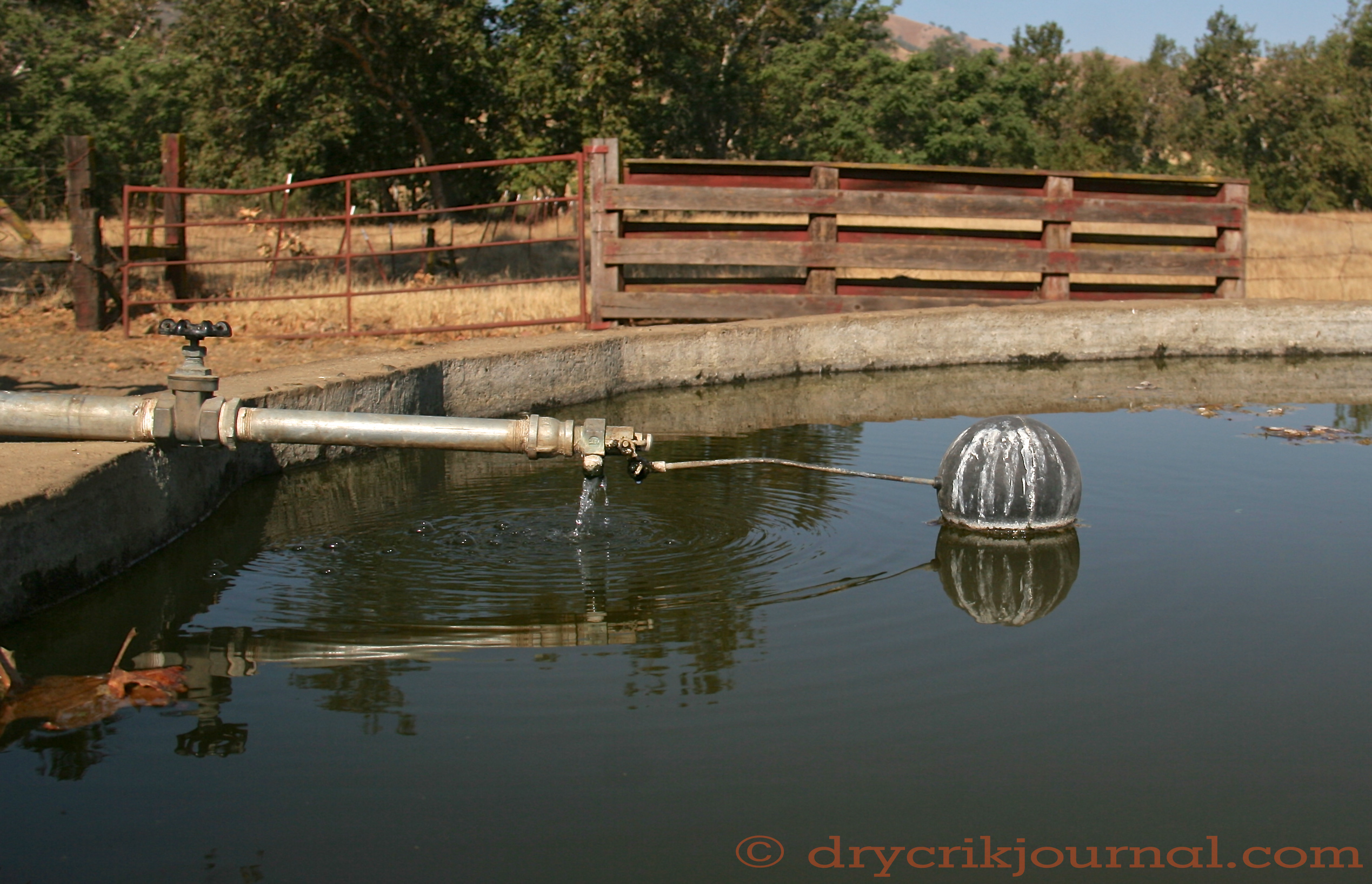
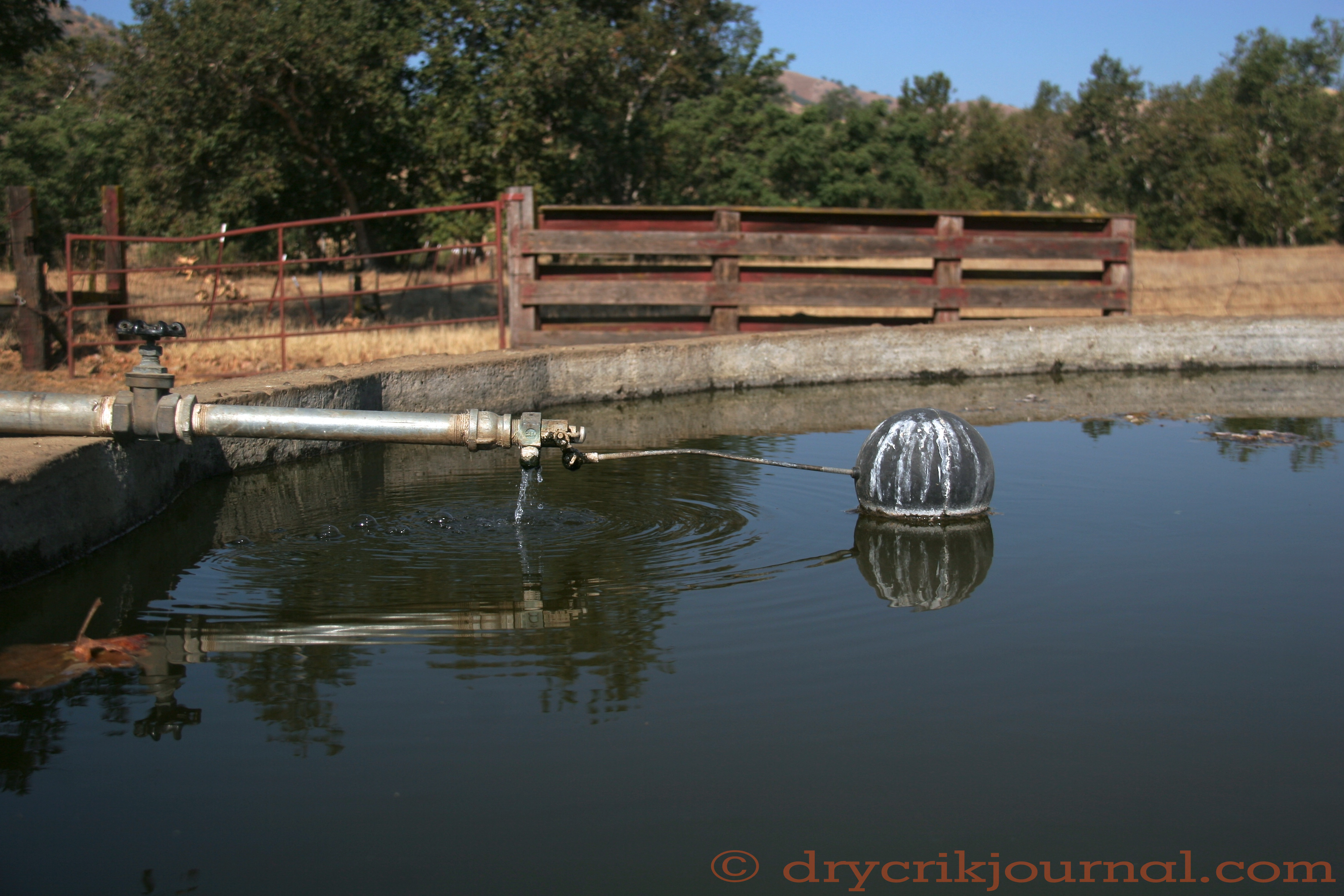
Probably nothing more important in the month of August than water, especially in a dry year when native springs are the least productive, if producing water at all. With no water in Dry Creek for eight miles upstream, we have to pump water for livestock at several locations. The concrete trough above was poured by my father during the drought of 1947 and has become a mecca for native birds and ground squirrels.
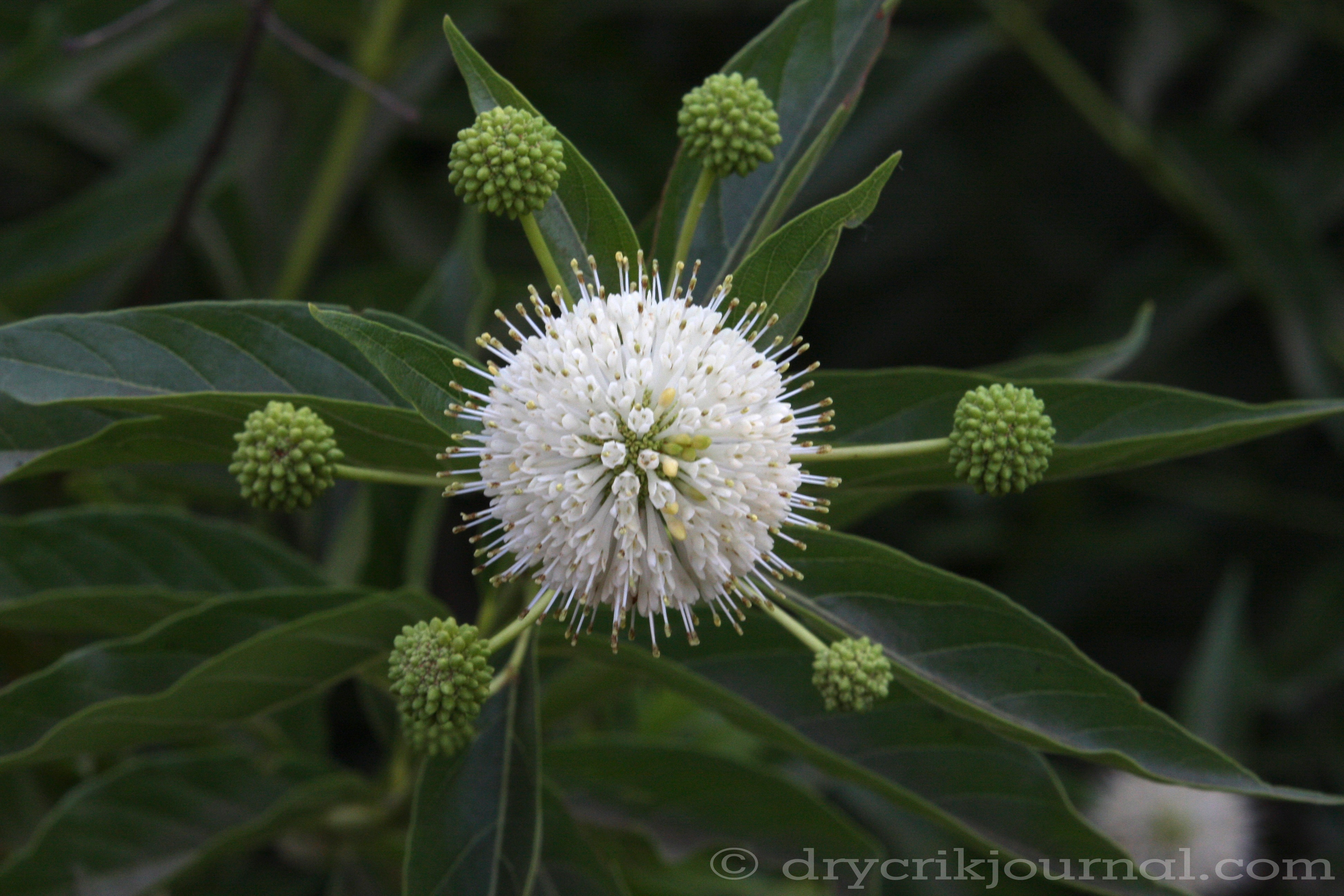
Cephalanthus occidentalis californica

Cephalanthus occidentalis californica
Aaron ‘Slick’ Sweeney spent a lifetime in this country before I came along fresh from college with only a few years of packing mules under my belt. He took me buck hunting for the first time when I was about eleven. He carried a broomstick and I my heavy British Enfield .303. We saw deer, but my eye wasn’t sophisticated enough to distinguish does from bucks on the run at a distance. I never shot.
‘Button willow’ is descriptive enough to know one when you see one, and when he asked me one day in the early ’70s about the ‘button willow spring’ in a certain pasture, I knew exactly where he was talking about. He explained to me at that time that there’s almost always water enough to develop for cattle where there is a button willow tree.
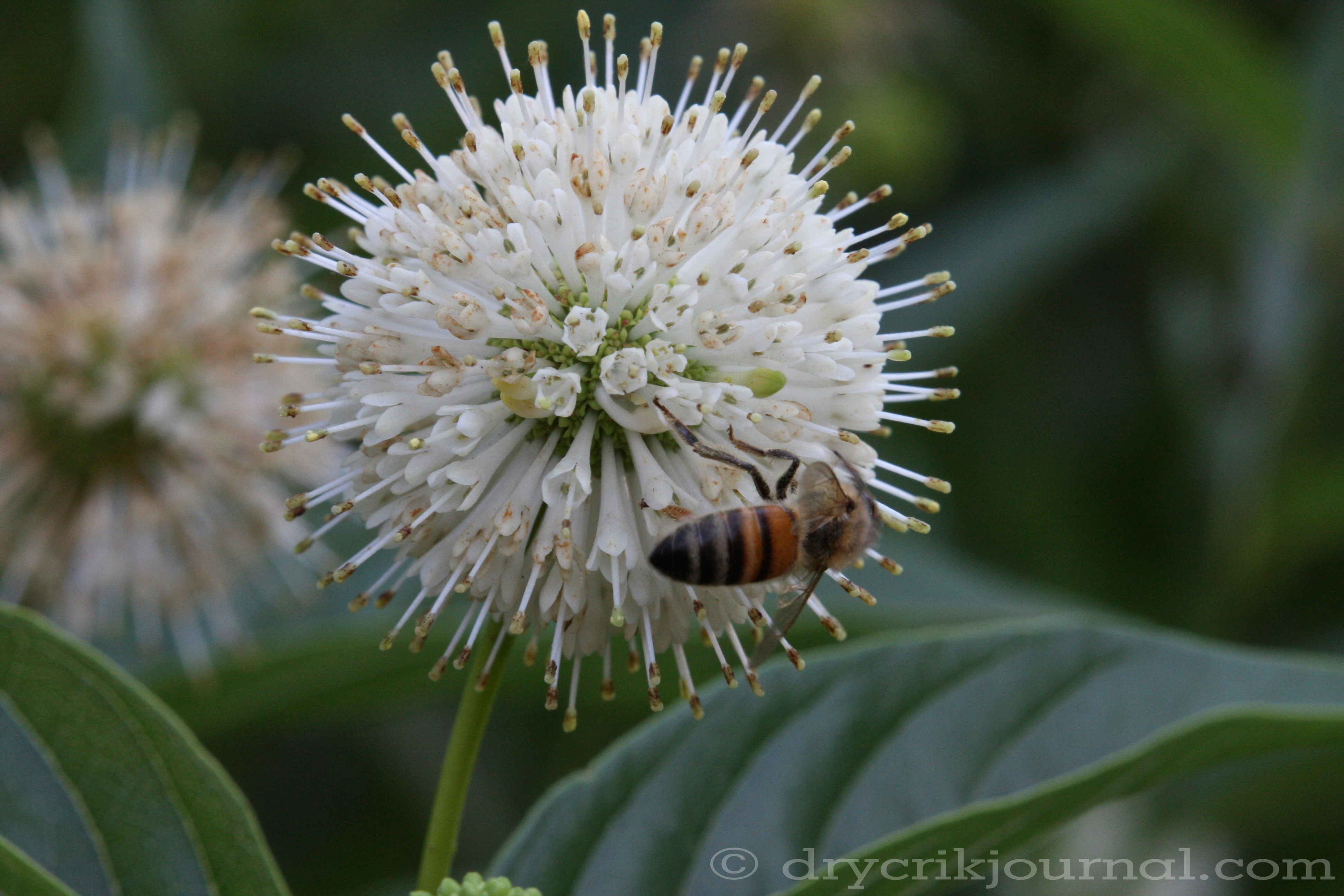
Cephalanthus occidentalis californica
Chorus:
It’s home to your home, wherever you may be,
It’s home to your home, to your own country,
Where the oak and the ash and the button willow tree
And the lark sings gaily in his own country.
– Glenn Ohrlin (“The Button Willow Tree”, 1989)
courtesy: The Mudcat Café
Posted in Photographs
Tagged Button Willow Tree, Glenn Ohrlin, Hellbound Train, Mudcat Cafe, Slick Sweeney, springs, water
No telling how the Sierras leak
along the granite cracks and fissures
over ranges and across canyons
to make a seep and fill a trough
for all nearby – button willow, buckeye.
Along as many imperfections as
cracked glass, cobwebbed beneath
this thin coat of clay cut by seams
of shale. Old timers claimed it took
a year for snow to recharge springs
gone dry, a slowing leak downhill
in droughts. Some move around,
pool up or down canyon with the shifting
of the fractured while others become camp
sites, wild tracks in mud, gossip rocks
carved with stone, places with names
for centuries, stories come and gone
where cattle drink, make their homes.