We could blame last spring’s atmospheric rivers, double our average rainfall for the season that kept us from branding our calves on the Paregien Ranch. Our heifer calves were exposed to our slick bull calves until we weaned in May, possibly bred that would miss our calving target date of October. A February calf instead would jeopardize the heifer and eliminate her from our replacement bunch.
When we vaccinated the heifers for clostridial, respiratory and Brucellosis diseases in June, we also injected them with Lutalyse to abort any short-term fetuses. Lutalyse is commonly used to synchronize heat cycles, especially when groups of cattle are to be artificially inseminated.
We’ve had an abundance of strong feed this summer, helping to keep our heifers in shape and cycling when we turn our low-birth weight bulls out in the middle of December. And as expected, they have been cycling, bulling, practicing all at once—a bovine orgy, a virtual humpfest.
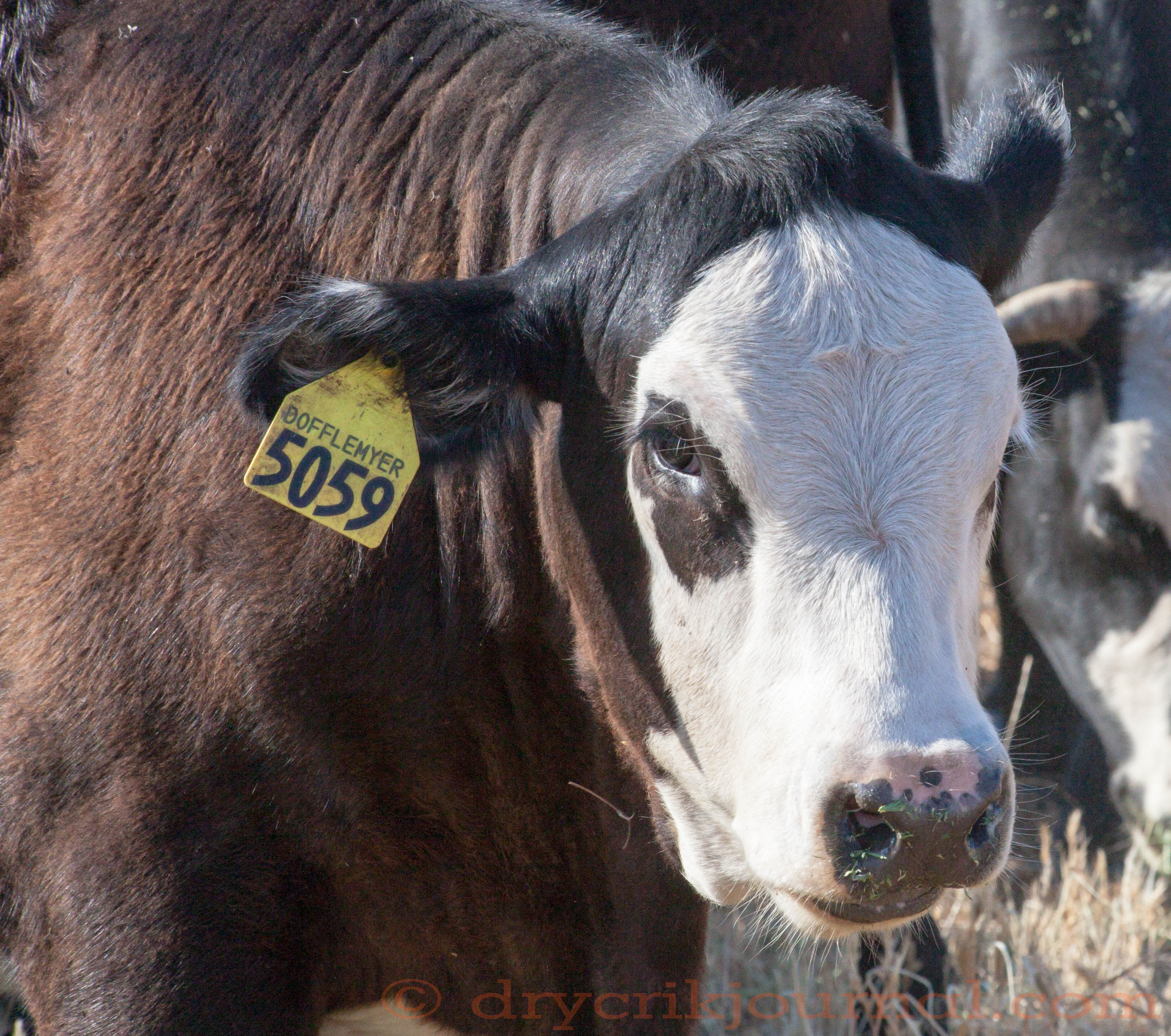
Unfortunately, one heifer was crippled in the raucous activity, unable to put any weight on her right hind leg. We hauled water and hay to her for three days before walking her into the pen by the house. Shortly thereafter, she (Thelma) attracted a friend (Louise) who spent days and nights for week with her on the other side of the fence while the rest of the heifers were off grazing.
After two weeks, Thelma is much better now, and taking full strides. Louise was back again last evening to check on her friend. The bond is obvious. They may be twins, as we had several sets, but more than likely they were just raised together. Whether or not Thelma recovers well enough to make the replacement bunch remains to be seen. But either way, blame it on climate change and too much rain.
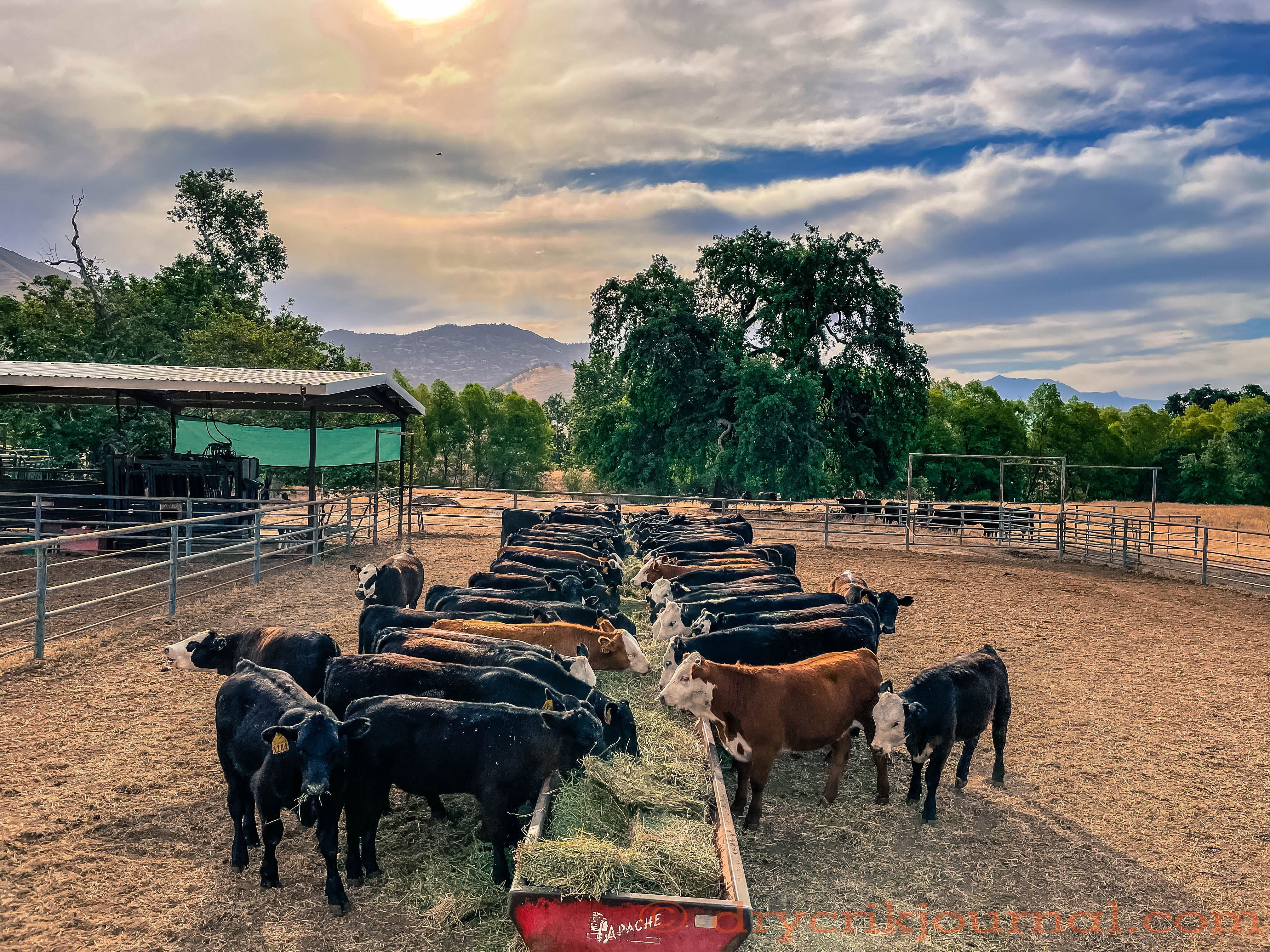
We train our young replacement heifers to be gentle and to follow the Kubota or feed truck when we feed so when they go up the hill in the next year or two, we can gather them and their calves easily. Having been through the same process, their mothers and grandmothers have imprinted this same calmness on their calves.
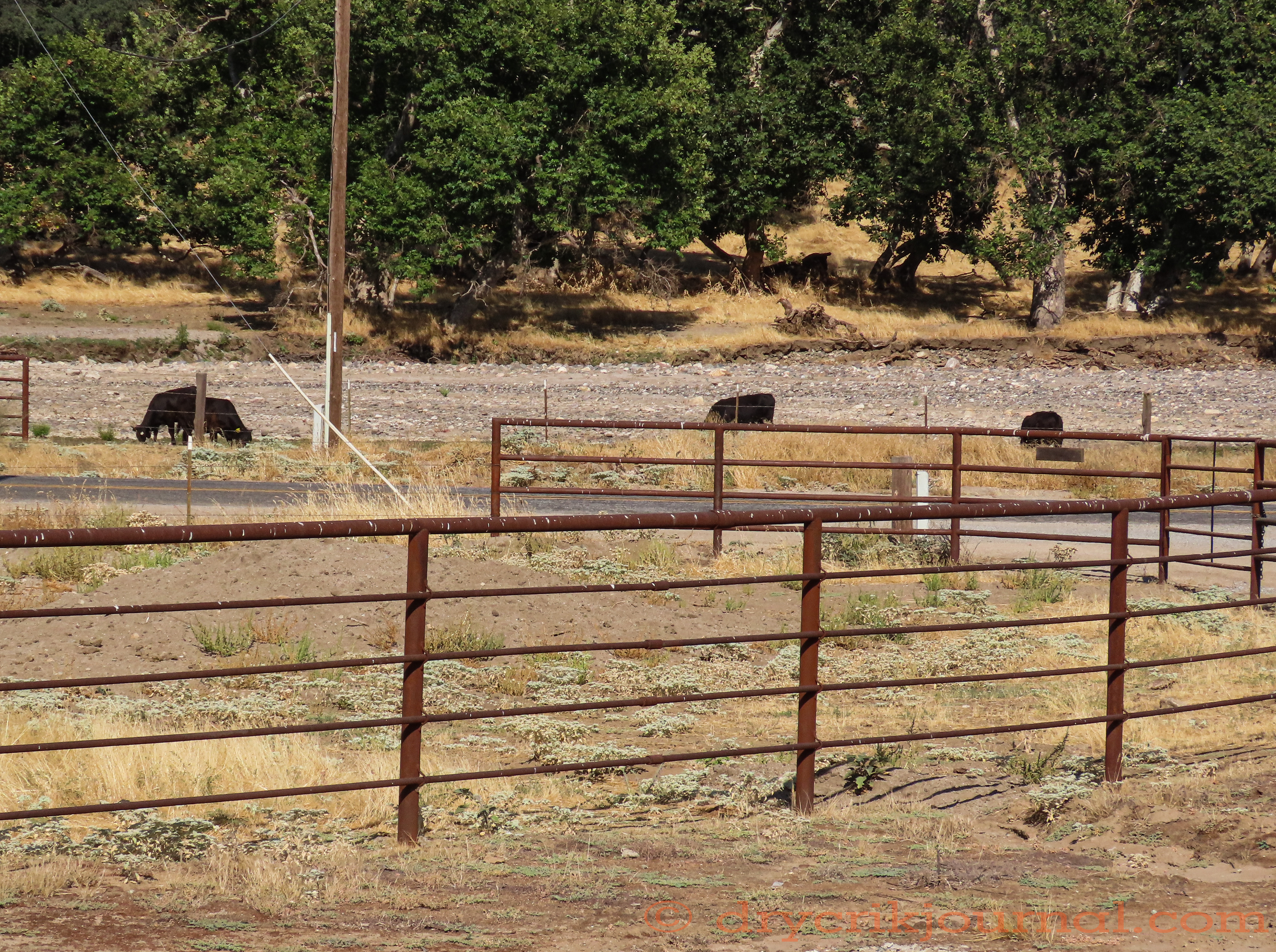
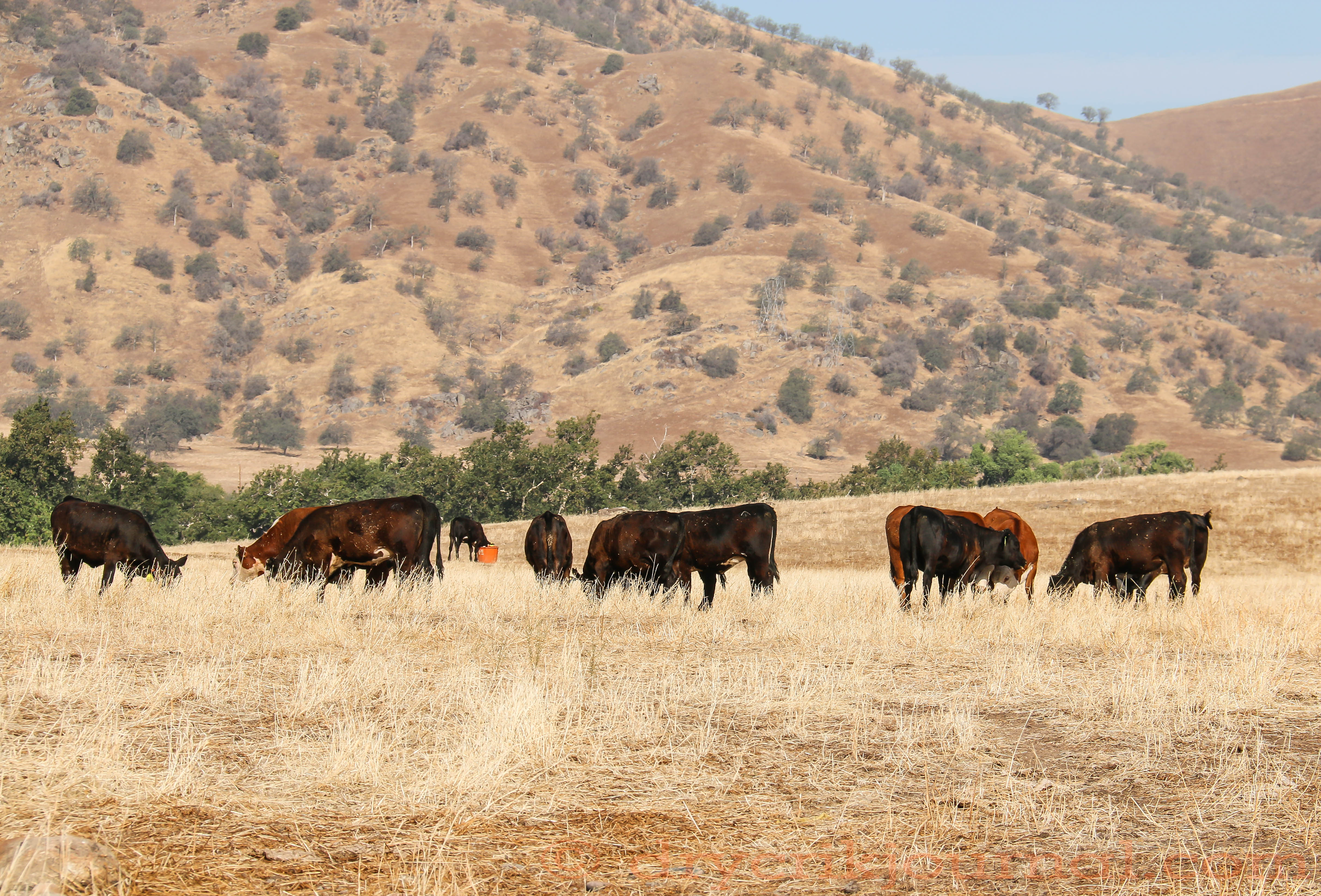
Due to the atmospheric rivers, we were unable to see our cattle for 3 months, but the calves gentled down quickly in the weaning pen on alfalfa hay. Now weaned about 30 days, they’ve been turned out along the creek on native feed and a little extra green due to the spring rains. We’ve been supplementing them once-a -week. While I was photographing the floods’ ensuing boulder fields and patches of cockleburs, they heard the Kubota and followed me, on the march, towards the feed ground, hoping it was the right day.
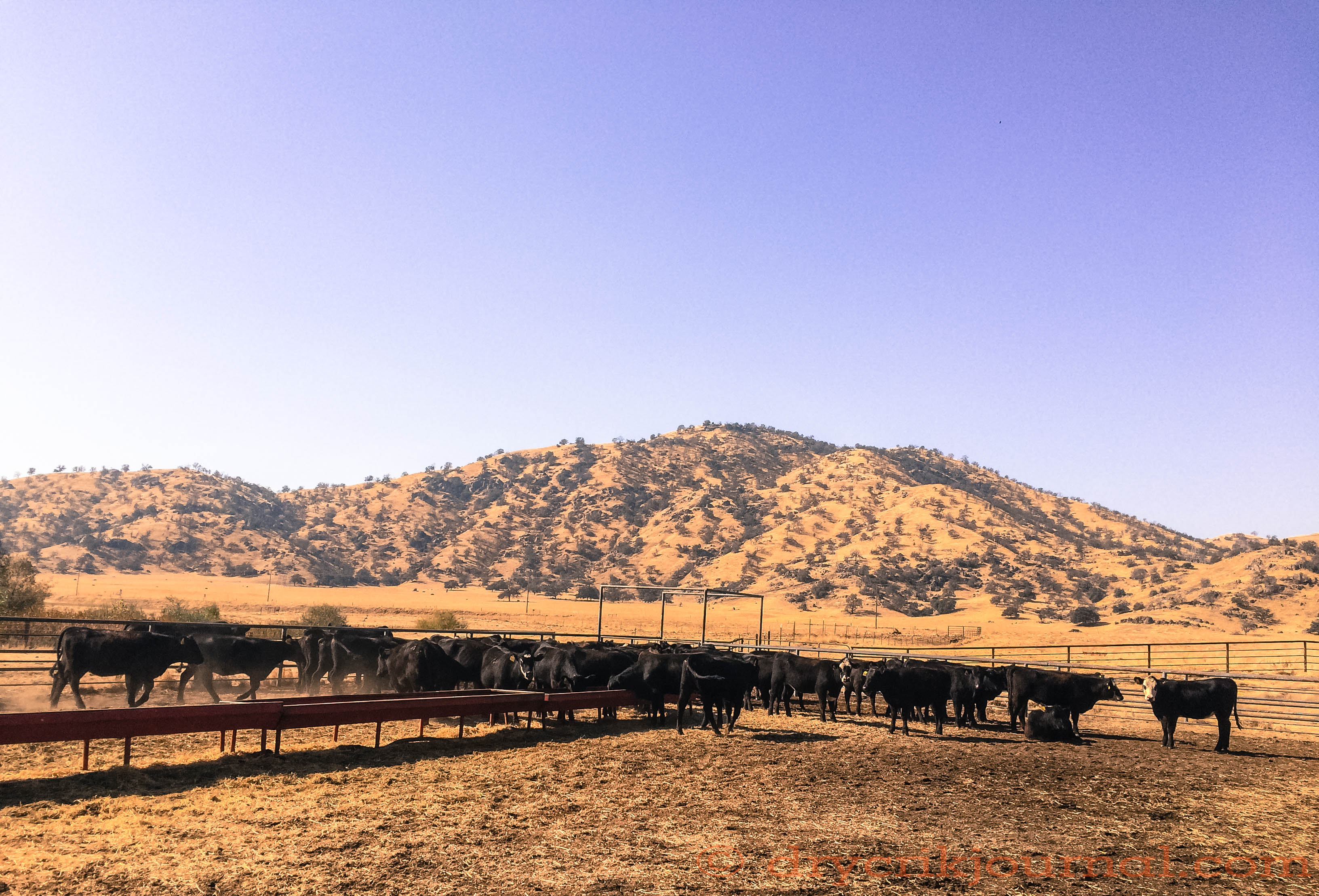
The calves will have spent a week here while getting over being separated from their mothers. This second bunch to be weaned will head to town on Wednesday, both steers and heifers, as we haven’t enough feed to hold on to any replacements. We’ve already begun cutting deeply into our cowherd, as the summer looks grim.
We finally got these heifers branded yesterday with another round of shots, vaccinations, dewormer and multi-min, before they meet the Wagyu bulls in 45 days. As you may remember, we took their counterparts to town as bulls last spring when we weaned, unable to brand and vaccinate them because of last winter’s wet conditions. The girls were polite, familiar with processing since their first round of shots and vaccinations for Brucellosis at the end of June.
Building a fire to heat the irons this time of year is problematic with fire danger still high. Our propane pot is an inefficient and noisy alternative we’d like to avoid if possible. Electric irons have been around for years, though I’ve never considered using one as electricity to our corrals is a recent convenience. And consistent with the ‘cowboy way’, my underlying prejudices against such citified methods of marking cattle, an electric iron has never been part of our operation—until yesterday.
With the tangle of extension cords, etc., they will never replace hot irons in the branding pen, but they have their place. Furthermore, the brand goes on quicker and cleaner with consistent heat and quick recovery. All going to prove that old dogs can learn new tricks.
Last Friday evening while congratulating ourselves with a cocktail, having finished gathering, weaning, shipping our calves and processing our replacement heifers, Robbin tactfully reminded me that one of the primary purposes of this blog is to keep track of what we do on this ranch–hence this Ranch Journal entry for July 2015.
Looking back to July 2014, we had no replacement heifers to process with so little feed, so we have to go back to July 20, 2013 to see if we are ahead or behind schedule. Less calves and replacement heifers to process after a dry spring this year combined with the late spring rains in 2013 probably account for the difference. But reading the entry for 2013, little else has changed with the drought. We’re now in maintenance mode: irrigating, light feeding, and regularly checking our dwindling stock water at the higher elevations.
Though all received a second round of vaccinations, including Bangs vaccine for Brucellosis, not all of the 75 heifers will make the team. We will cull 5-10 head before turning the Wagyu bulls out in mid-December, depending on how they look. We have moved our calving date back two weeks aiming for mid-September calves, hoping for a little cooler weather. Currently, our 7-weight steers bring the same money as 600 pounders, but with weak demand to turn out on mid-West grass. A later calving date would make them a little lighter and more attractive when we sell them. And we may wait until the 1st of January 2017 to turn our bulls out, as that would also allow our cows an extra month off without a calf, as we would still wean at the end of May. Time will tell, but that’s what we’re thinking now.
So it’s out early in the morning, shade up during the day when we can.
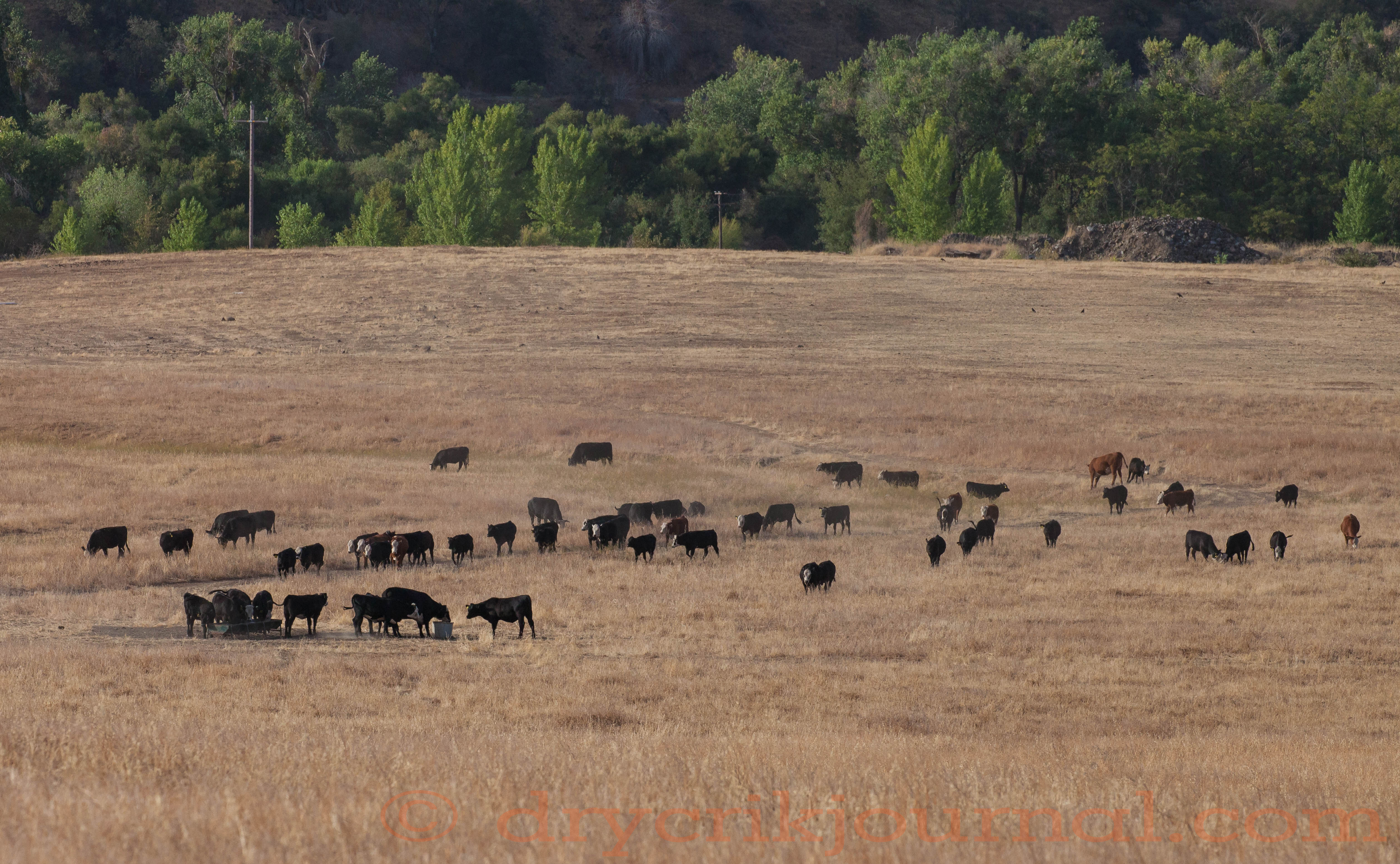
With an eye towards weaning our calves, last week’s tour of the Greasy watershed to check cattle and feed conditions was a pleasant surprise. Typically we begin weaning in mid-May when the grass turns. With less than 0.75” of rain in the last forty-five days, my expectations were minimal. But our upper country above 1,500 feet has fared substantially better than our lower foothills where only patches of green remain high on the north slopes.
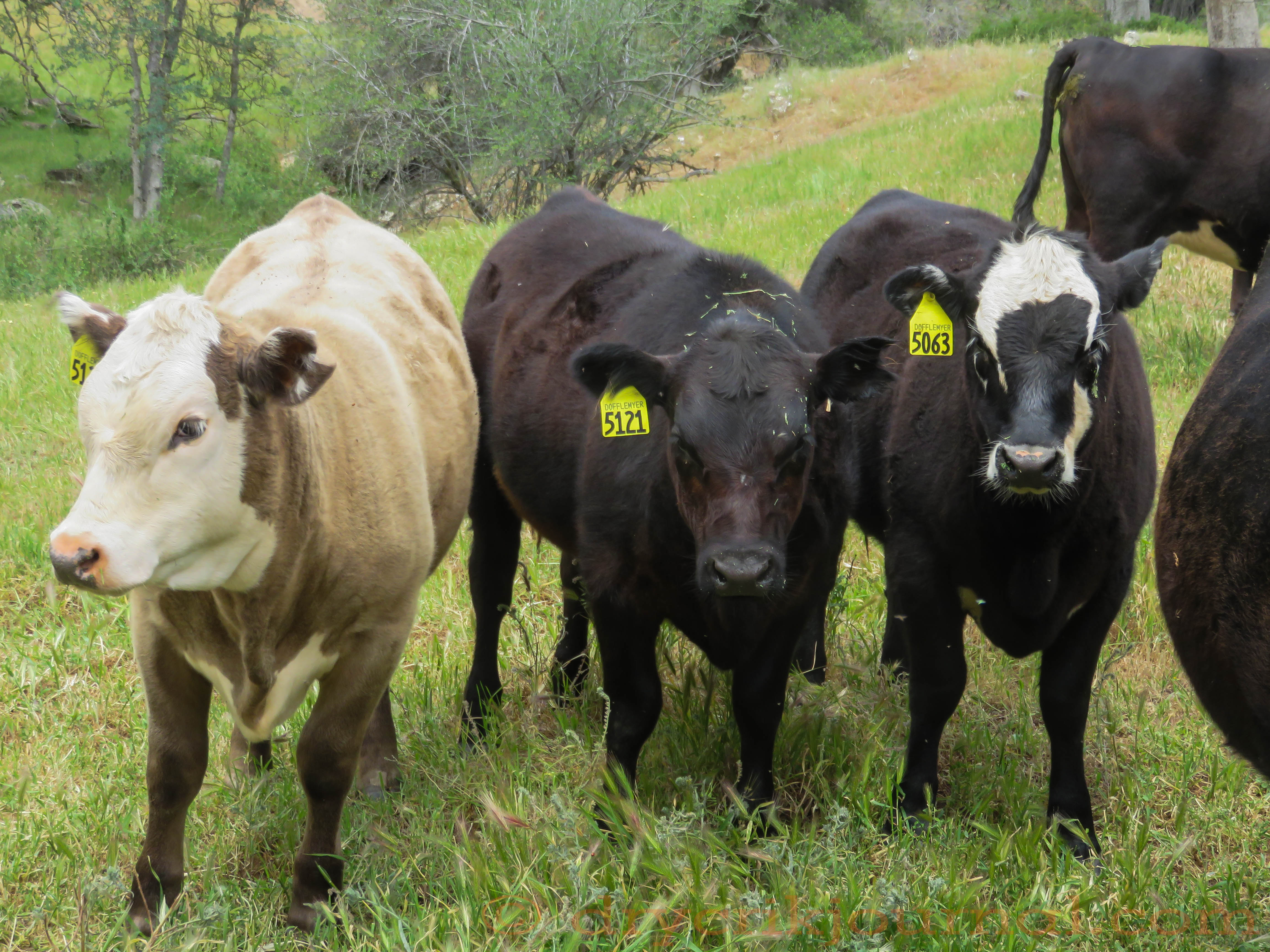
Having reduced our cow numbers by 40% due to the ongoing drought, we have found a temporary equilibrium between grass and cattle without having to feed much hay last winter. But due to feed limitations, we were unable to keep any calves last season for replacement heifers. Assuming a return to more normal weather conditions, we will need to replace our older cows while also trying to add numbers to our cowherd. However many heifer calves we’re able to keep, won’t produce a calf to wean for two more years. Rebuilding a cowherd is a slow process. Certainly the three girls above will be candidates, but how many we’re able to keep remains to be seen.







 drycrikjournal