Tag Archives: rain

THELMA AND LOUISE


We could blame last spring’s atmospheric rivers, double our average rainfall for the season that kept us from branding our calves on the Paregien Ranch. Our heifer calves were exposed to our slick bull calves until we weaned in May, possibly bred that would miss our calving target date of October.  A February calf instead would jeopardize the heifer and eliminate her from our replacement bunch.

When we vaccinated the heifers for clostridial, respiratory and Brucellosis diseases in June, we also injected them with Lutalyse to abort any short-term fetuses.  Lutalyse is commonly used to synchronize heat cycles, especially when groups of cattle are to be artificially inseminated.  

We’ve had an abundance of strong feed this summer, helping to keep our heifers in shape and cycling when we turn our low-birth weight bulls out in the middle of December.  And as expected, they have been cycling, bulling, practicing all at once—a bovine orgy, a virtual humpfest. 

Unfortunately, one heifer was crippled in the raucous activity, unable to put any weight on her right hind leg.  We hauled water and hay to her for three days before walking her into the pen by the house.  Shortly thereafter, she (Thelma) attracted a friend (Louise) who spent days and nights for week with her on the other side of the fence while the rest of the heifers were off grazing.

After two weeks, Thelma is much better now, and taking full strides.  Louise was back again last evening to check on her friend.  The bond is obvious.  They may be twins, as we had several sets, but more than likely they were just raised together.  Whether or not Thelma recovers well enough to make the replacement bunch remains to be seen.  But either way, blame it on climate change and too much rain.

WAITING ON HILARY


                         … (I) don’t think hurricanes

                        like to follow predicted paths.

                                    –Brian Grant


The prognosticators have claimed

the climate spotlight—used science

to explain why we read poetry


when our dehydrated atmosphere

rains rivers and spawns hurricanes

while the earth is spinning faster than it should—


its fractious friction warming waters

to forge the passion of whales and otters

to object and retaliate.


Watching the weather map of Baja California,

new science is driving out a percentage

of the old that we believed was true.


PERSEVERANCE


Called too soon, persistence rooted

where peaceful dreams beneath their leaves

spilled downhill at dawn—a slow awakening


like death in reverse, never thinking

of other ways to pass the time. Weathered

skeletons of young Blue Oaks cling


to where their acorns fell to rest

before the wet and stormy springs

kept a chance of an idyllic life alive.


Truth is: no right or wrong of it—

no philosophy to make fit

what we’ll not need to understand.


CLASS OF 2023


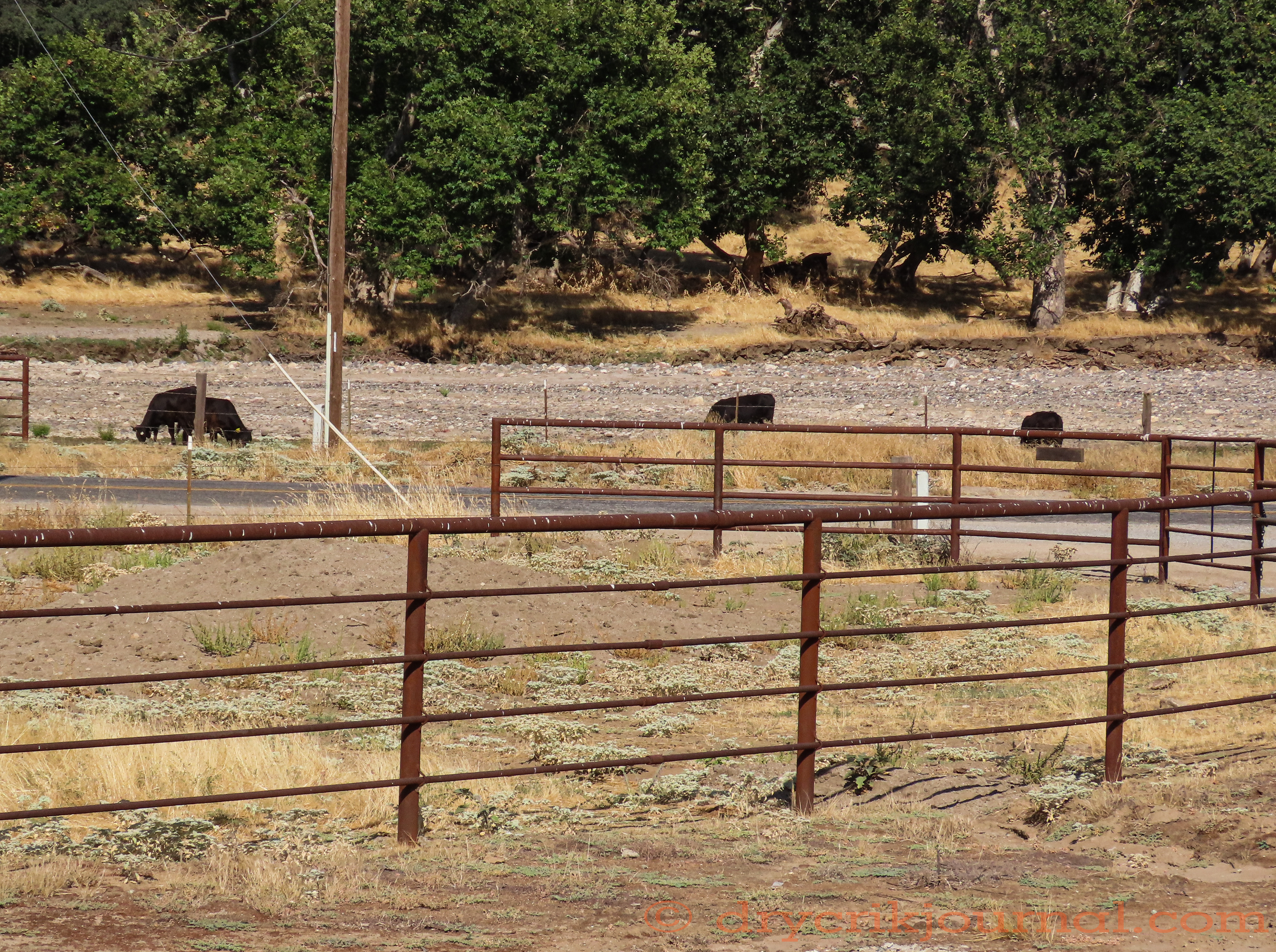
Black backs

through summer light

across the road beside the creek


grazing green

upon a highwater sand bank

deposited by atmospheric rivers.


Black backs

of virgin children, our future

breathes in 105 heat.


GETTING SHORTER


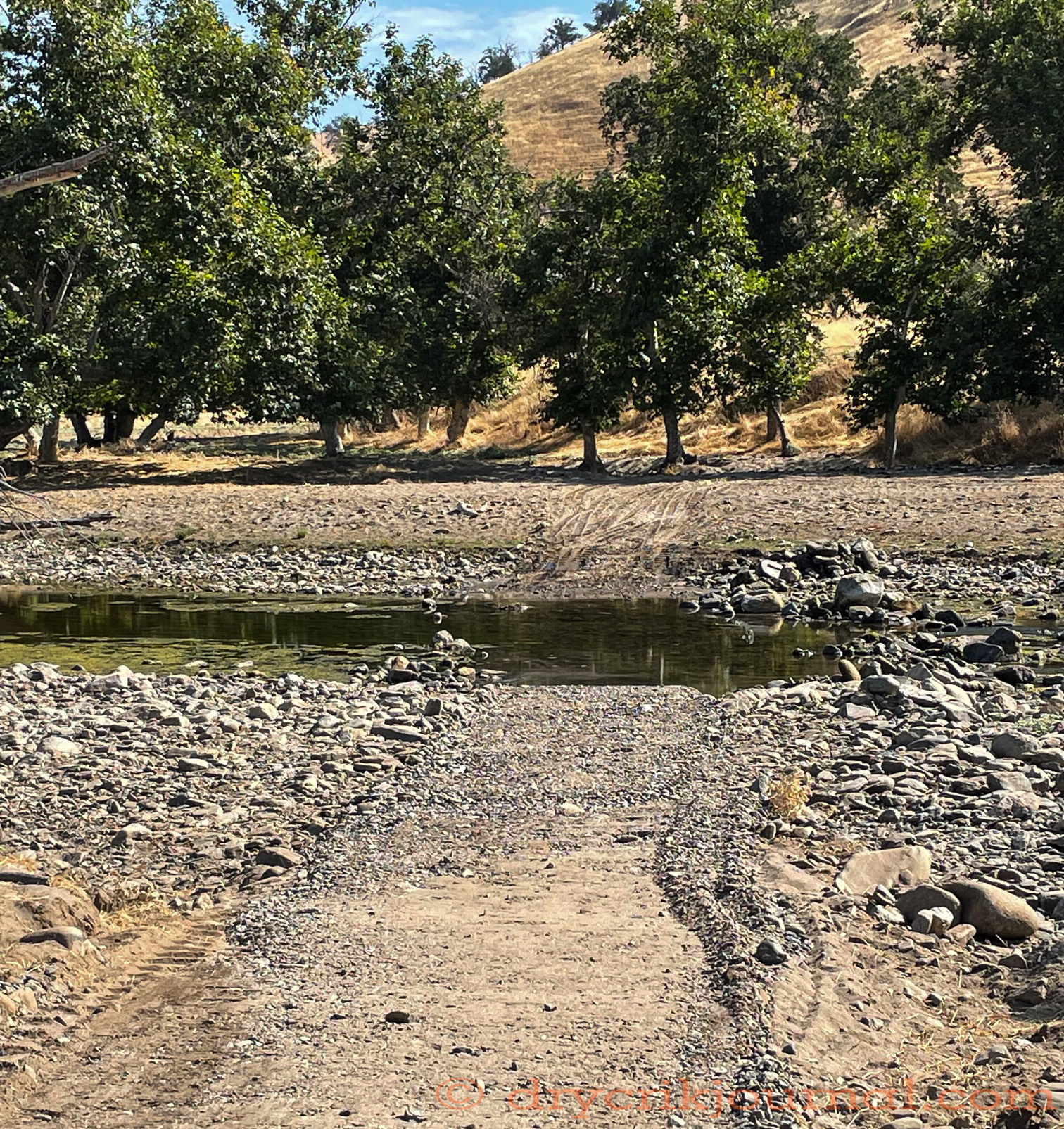
I don’t recall Dry Creek ever flowing into August, as springs continue to feed this morning’s 9 cfs (cubic feet/second).  March’s atmospheric river estimated 8,000 cfs, that scoured the channel and undermined the gauging station, left few places to cross the resultant boulder fields and cutbanks. Only now, as our cattle work winds down, do we have time to address some of the impacts of last spring’s rains.

Both for vehicles and cattle, I had to move our crossing downstream.  Moving the big rocks was rough work for the skid steer, but I had all the materials I needed in the high water drifts of sand and gravel to smooth the crossing this morning—less than a three hour job.  On the way to the corrals, hoof action of our replacement heifers will smooth it a little more.

We’re looking forward to September when the cows begin to calve, another month of a hundred degree weather that often extends into October, but the hot summer days are getting shorter.

ON THE MARCH

We train our young replacement heifers to be gentle and to follow the Kubota or feed truck when we feed so when they go up the hill in the next year or two, we can gather them and their calves easily.  Having been through the same process, their mothers and grandmothers have imprinted this same calmness on their calves.

Due to the atmospheric rivers, we were unable to see our cattle for 3 months, but the calves gentled down quickly in the weaning pen on alfalfa hay.  Now weaned about 30 days, they’ve been turned out along the creek on native feed and a little extra green due to the spring rains.  We’ve been supplementing them once-a -week. While I was photographing the floods’ ensuing boulder fields and patches of cockleburs, they heard the Kubota and followed me, on the march, towards the feed ground, hoping it was the right day.

ACORNS


            One by one off trucks,

            hooked or boomed into the barn

            banked for the unknown.


Sweaty, sleeveless shirt, Dusty

Bohannon, until he died, unloaded

thousands of bob-tailed trucks


before the booms pitched bales inside,

before the squeezes stacked dumps up

for unknown winter times


like grounded vermin store

in tunneled chambers, or cackling birds

in fenceposts pecked with holes.


AFTER ATMOSPHERIC RIVERS


The magic remains along the creek

spread wide with naked cobbles pressed

together, exposed by flooding sheets


that ripped its sandy banks before

leaving the channel changed—

a landscape rearranged for the moment!


A summer gurgle, herons and egrets come

to wade abandoned pools of pollywogs

shrinking into moss-covered gravel.


Green cockleburs rise-up from ribbons

of sand, high-water veins bleached white

until colored or carried away with the burrs.


The truth is endless here—it will keep

saying the same thing in different ways

well after we are gone.


Weaning Steers


I think we’ve finally caught up and close to being on time with our ranch work since the last Atmospheric River at the end of March.  We got across the creek towards the end of April when flow was down to 90 cfs to see our cows while trying to get our fences up to hold them when we gathered and weaned.  Since the ARs, Dry Creek is spider-webbed with streams of sand in new high-water channels requiring some leveling with the skid steer to replace fencing and to approach the creek.  Meanwhile on this side of the road and creek, we’ve had a crew building fence to better accommodate the acreage changes since Robbin and I have scaled down our activities.


But on time, our first bunch of calves will be weaned and ready for Visalia Livestock Market’s “Off the Grass Sale” on Wednesday, May 17th.  They are 7-weight Vintage-sired steers.  The market has been strong, though slightly weaker  lately.  With our cow numbers down due to acreage changes and past years of drought, we will need whatever extra money the market will offer us.


After seven days a week for nearly two months, it’s a relief to feel caught up.


Atmospheric River Repairs

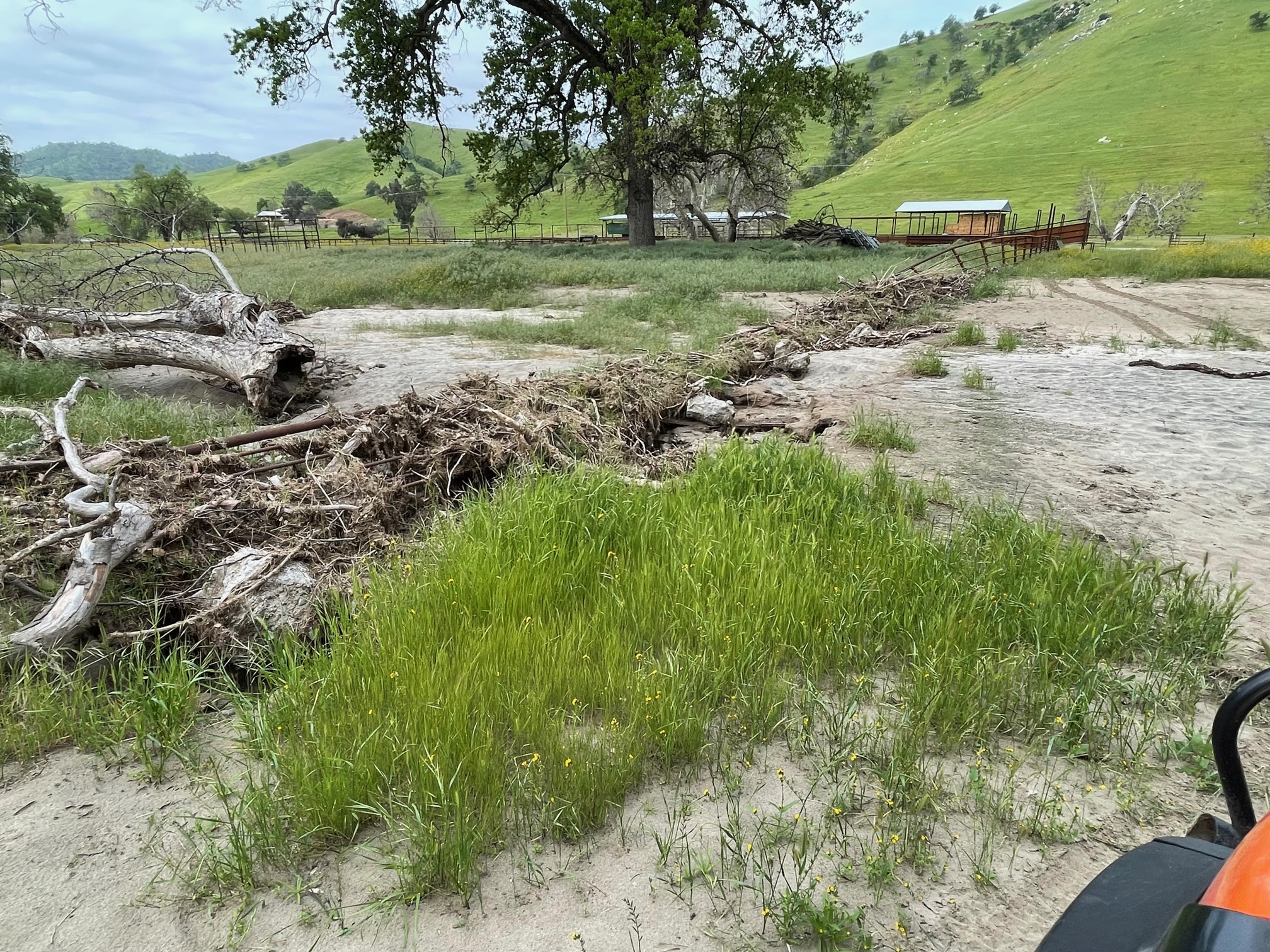
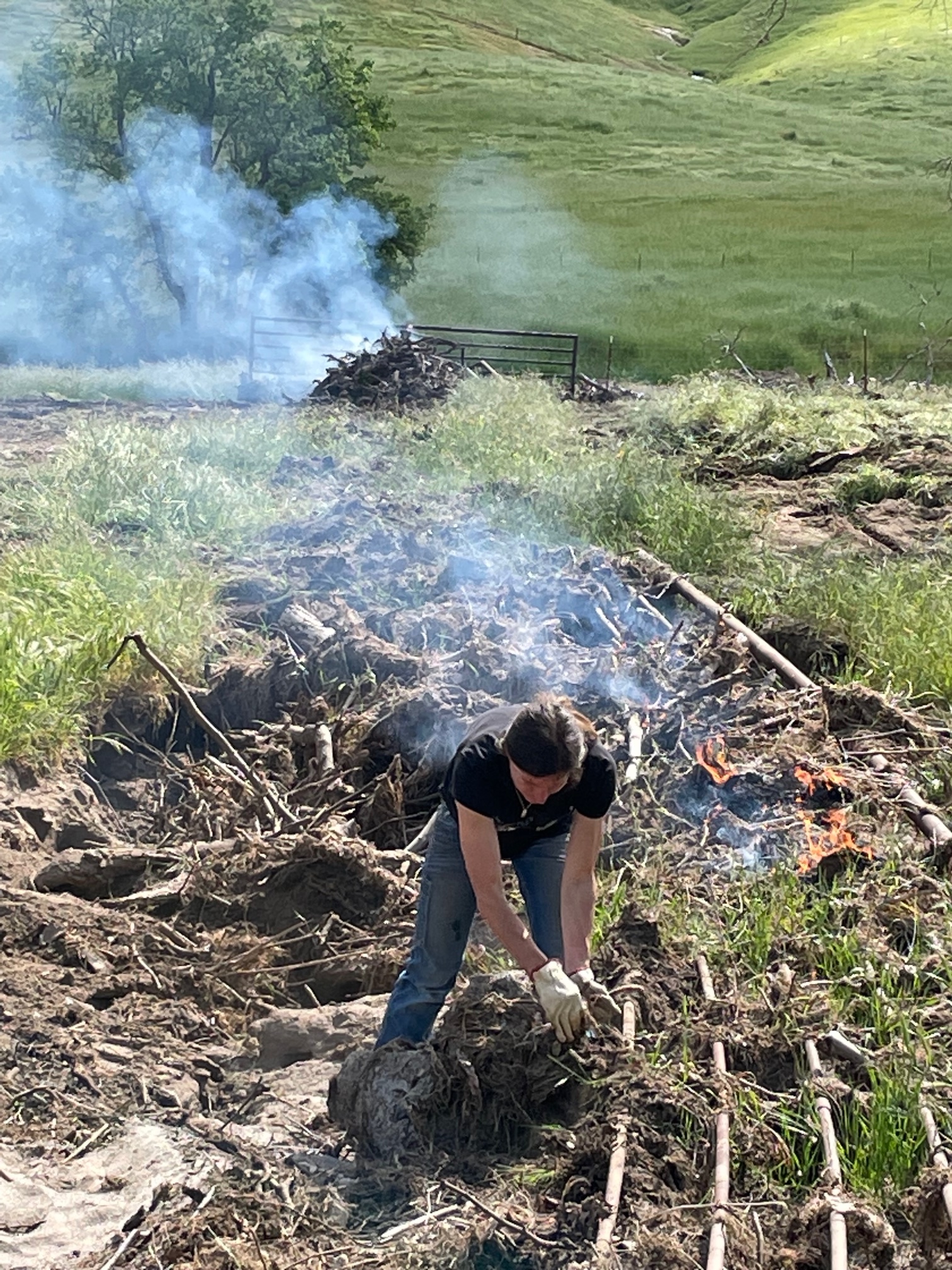
The grass has turned while we’ve been busy repairing our fences in order to sort and ship our calves to town. Because the brush catchers upstream failed to hold all the debris, our pipe fence across the high water channels when the creek was flowing 8,000 cfs (cubic feet/second) collected what leaked by until it was overwhelmed.

It’s been a slow process, but neighbors and friends brought their hydraulic muscle to stand it upright Sunday morning in a couple of hours.  We had to cut it in sections and finished welding them together yesterday.  

Thanks to all concerned.