Click photos to enlarge.

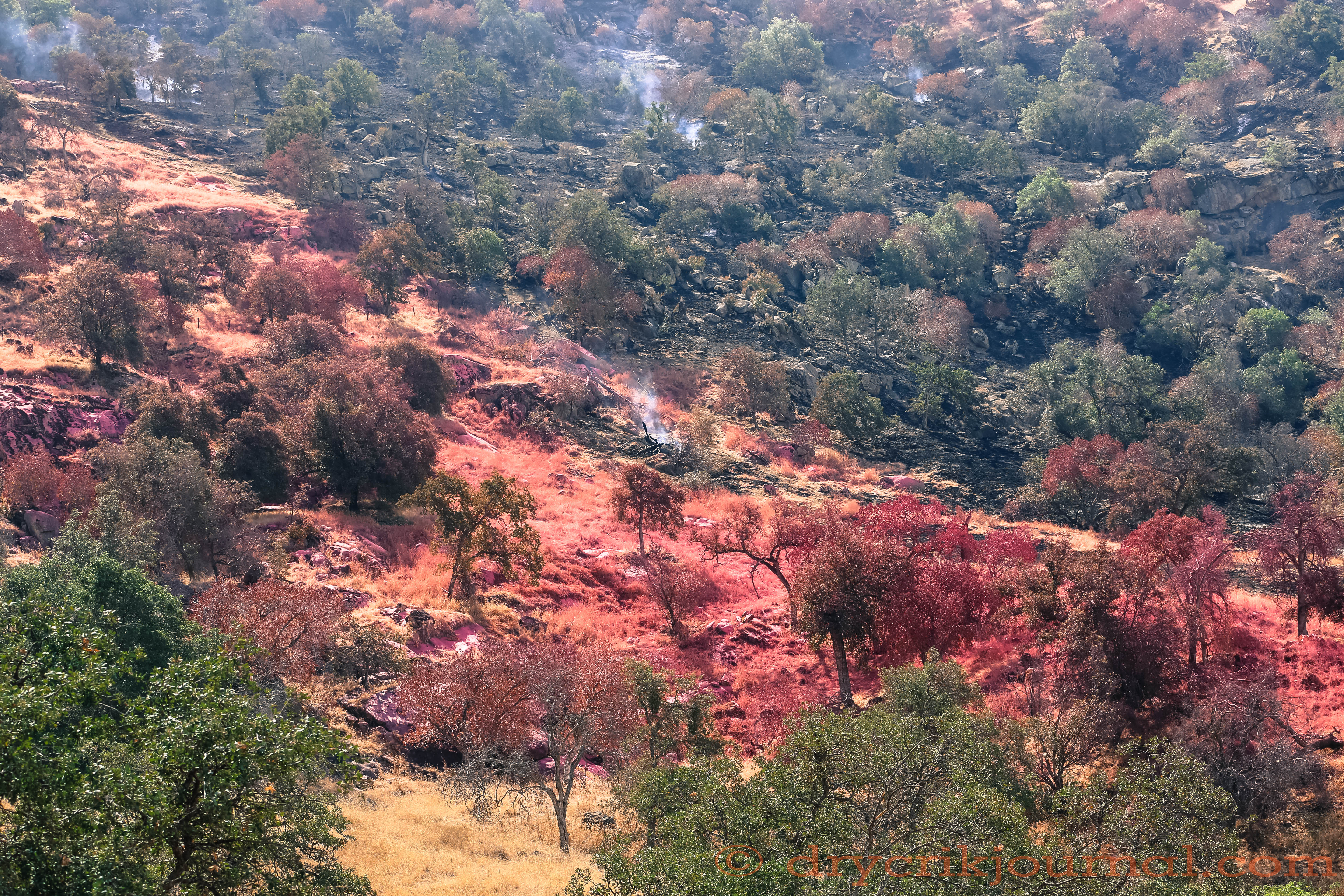
Double click to see CalFire personnel in upper left hand corner. 1 mile hose lay.
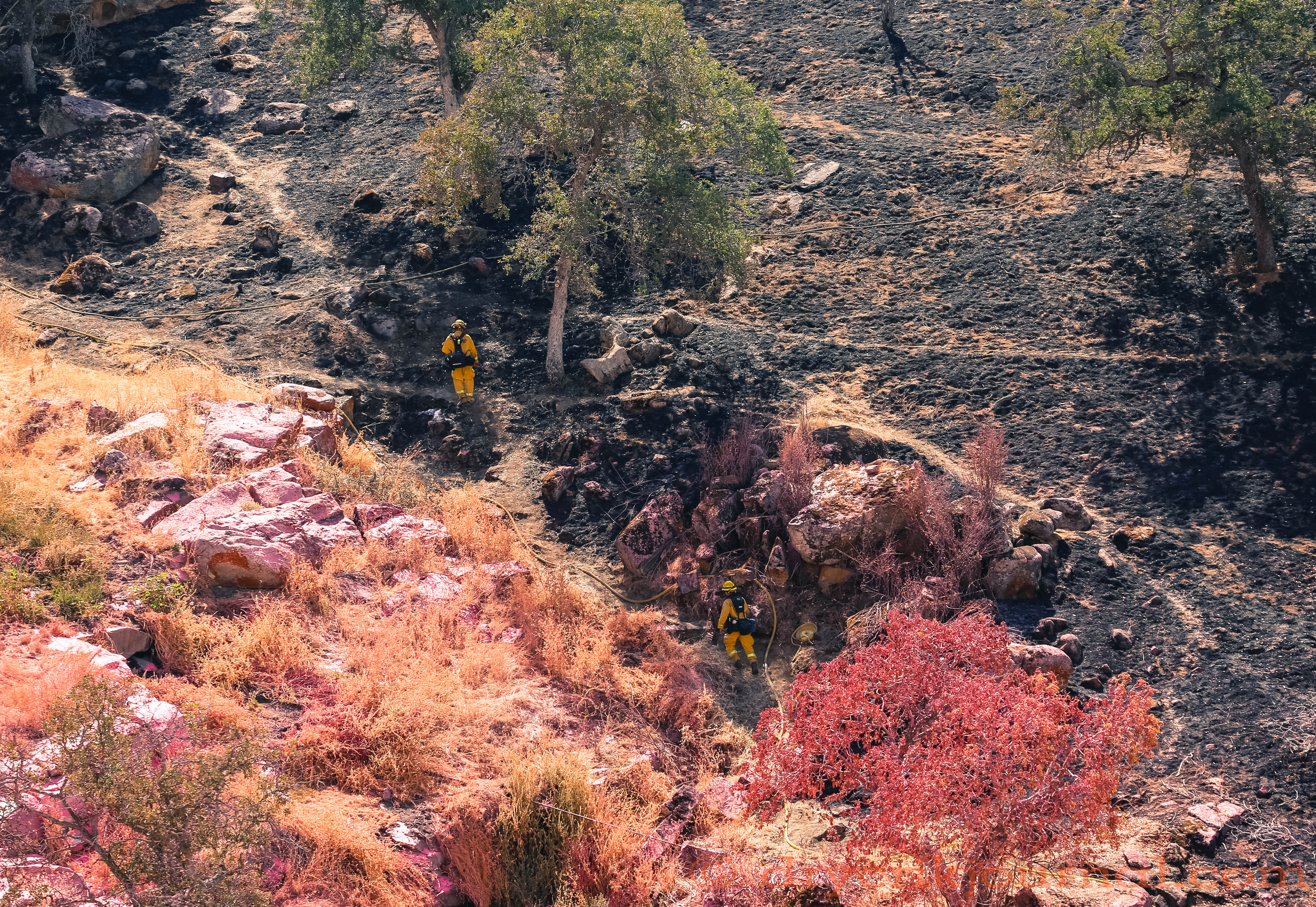
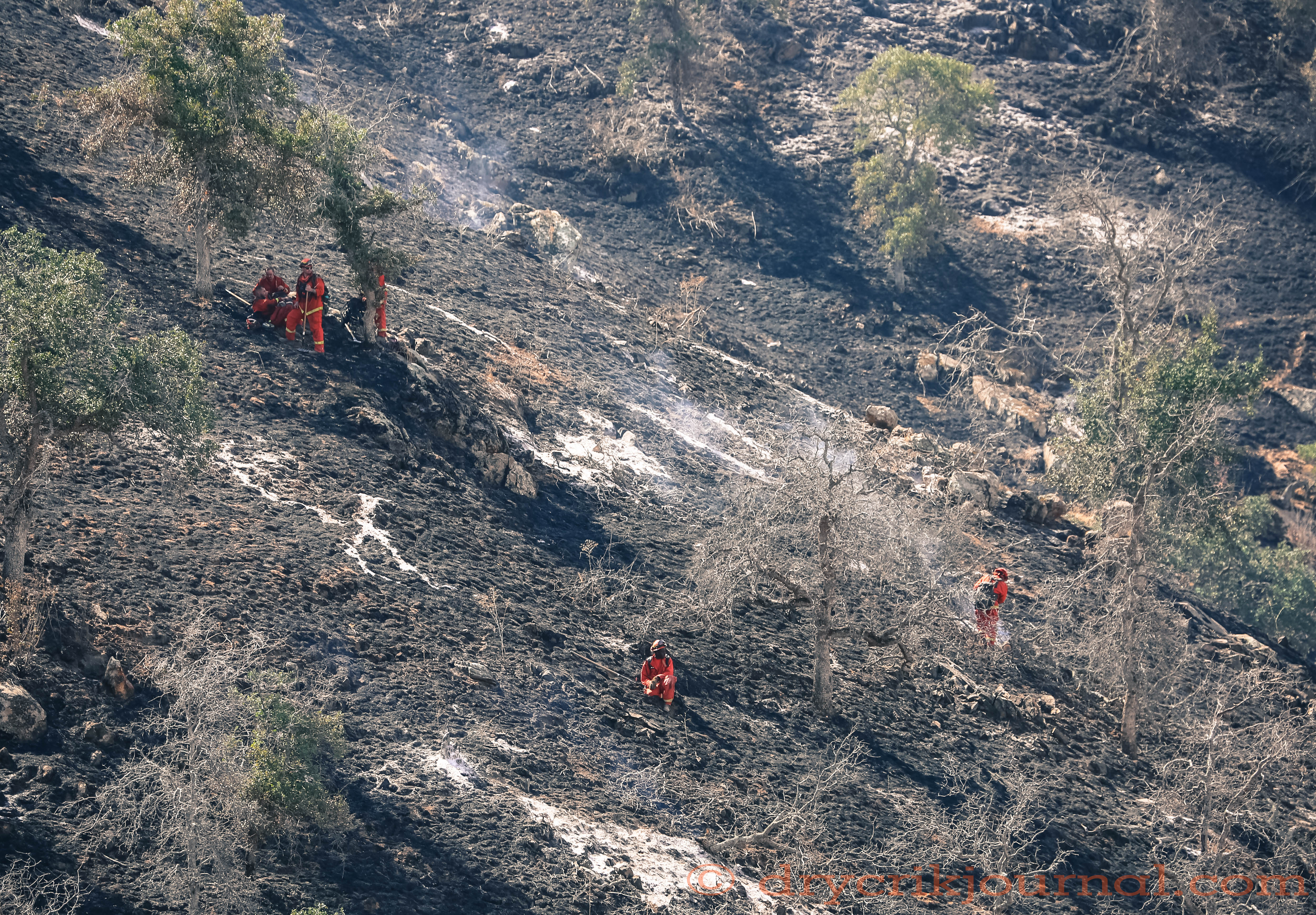
7:00 p.m.: 756 acres, 80% contained

Click photos to enlarge.
Double click to see CalFire personnel in upper left hand corner. 1 mile hose lay.
7:00 p.m.: 756 acres, 80% contained

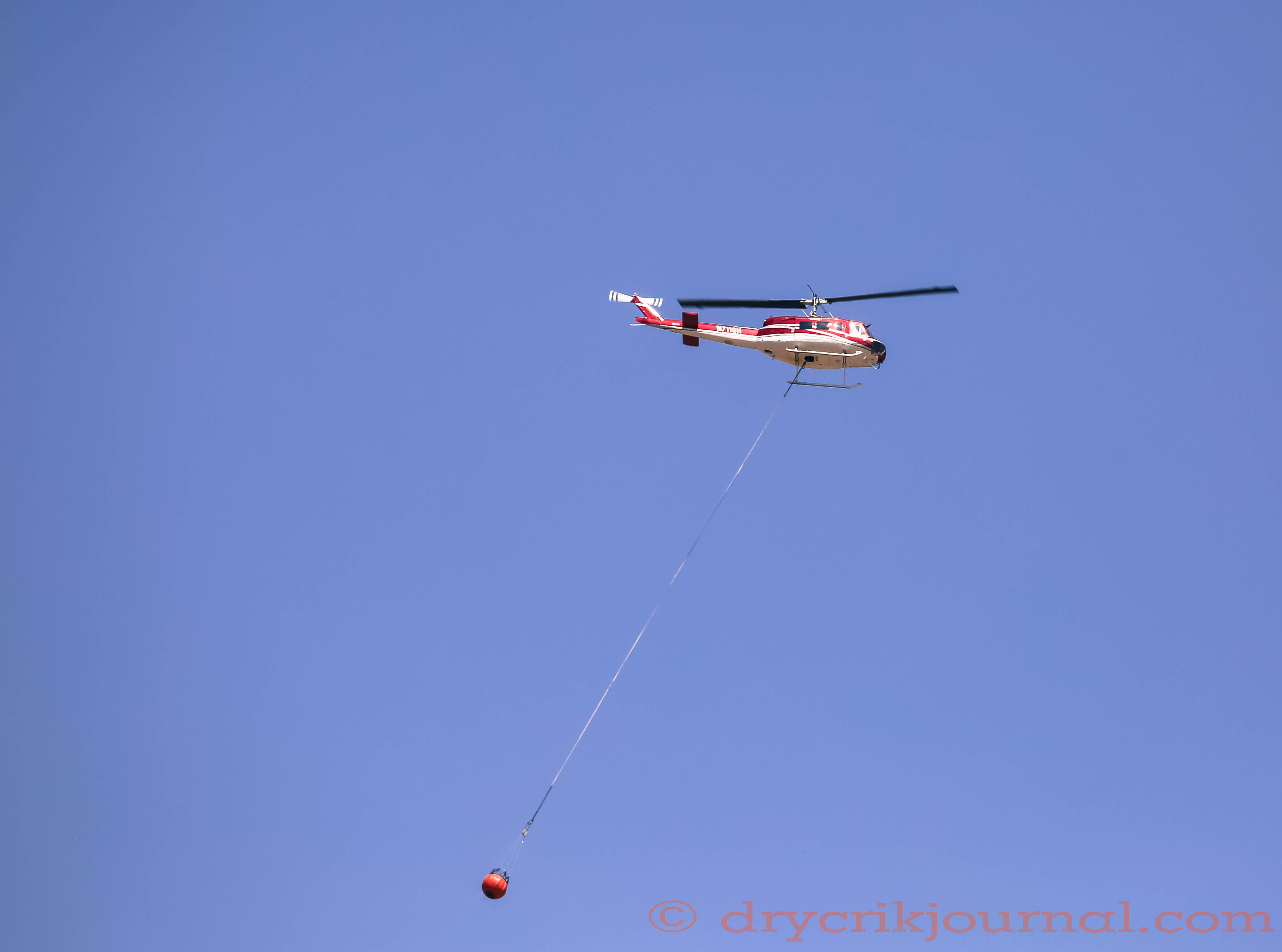
Air support concentrating in the canyon across from the house, in the form of a turbo-prop tanker and helicopter, returned mid-day as winds picked up. Obvious concern was burning parts of Blue Oaks rolling down the north slope to the bottom of the canyon and igniting dry feed on the opposing south slope. More paint was laid at the bottom of the south slope while the helicopter dumped water on dead Blue Oaks that remained burning.
The real heroes are the many hand crews who have encompassed the burn with a 4-6 foot space cleared manually. Though there are 3 dozers still on the scene, they are limited to existing roads due to our mostly inaccessible terrain.
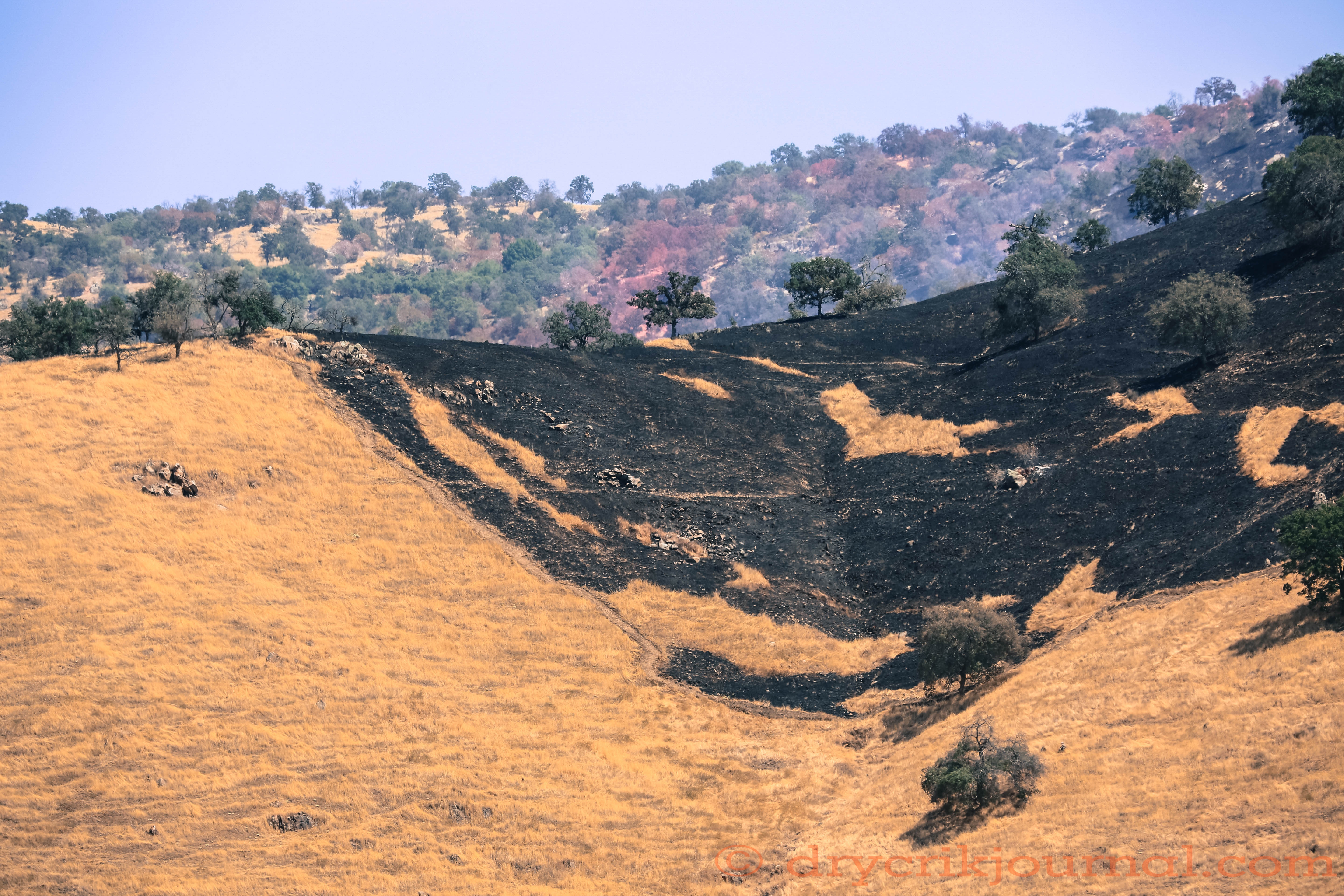
Meanwhile, we’re staying out of their way.
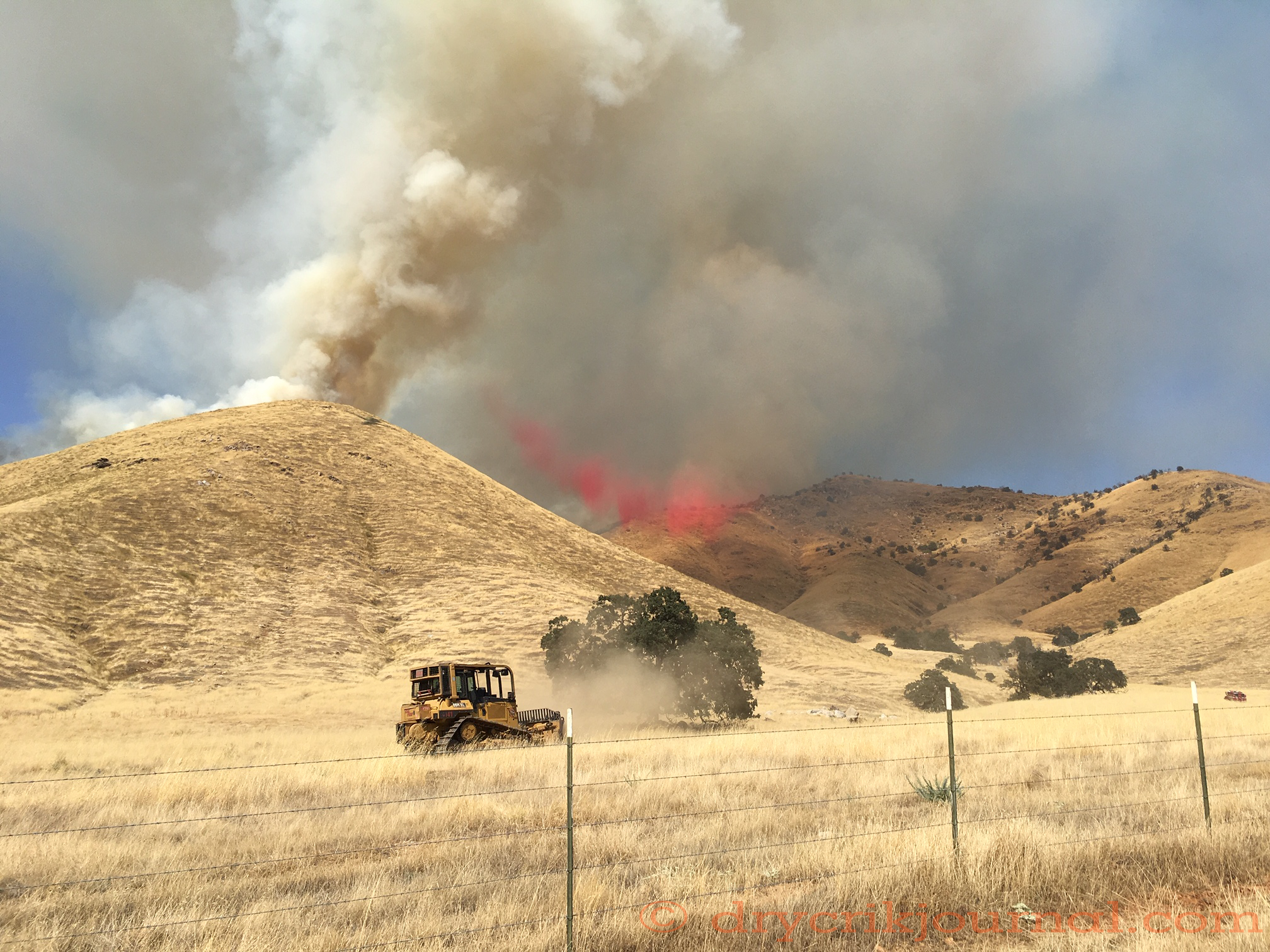
The fire started on the neighbor’s about 2:00 p.m.

Blading a road for 4×4 engines on the west flank at 7:10 p.m..

Last phos-chek dropped at 8:00 p.m. on our place. Hand crews and air support, planes and helicopters, kept the fire contained.
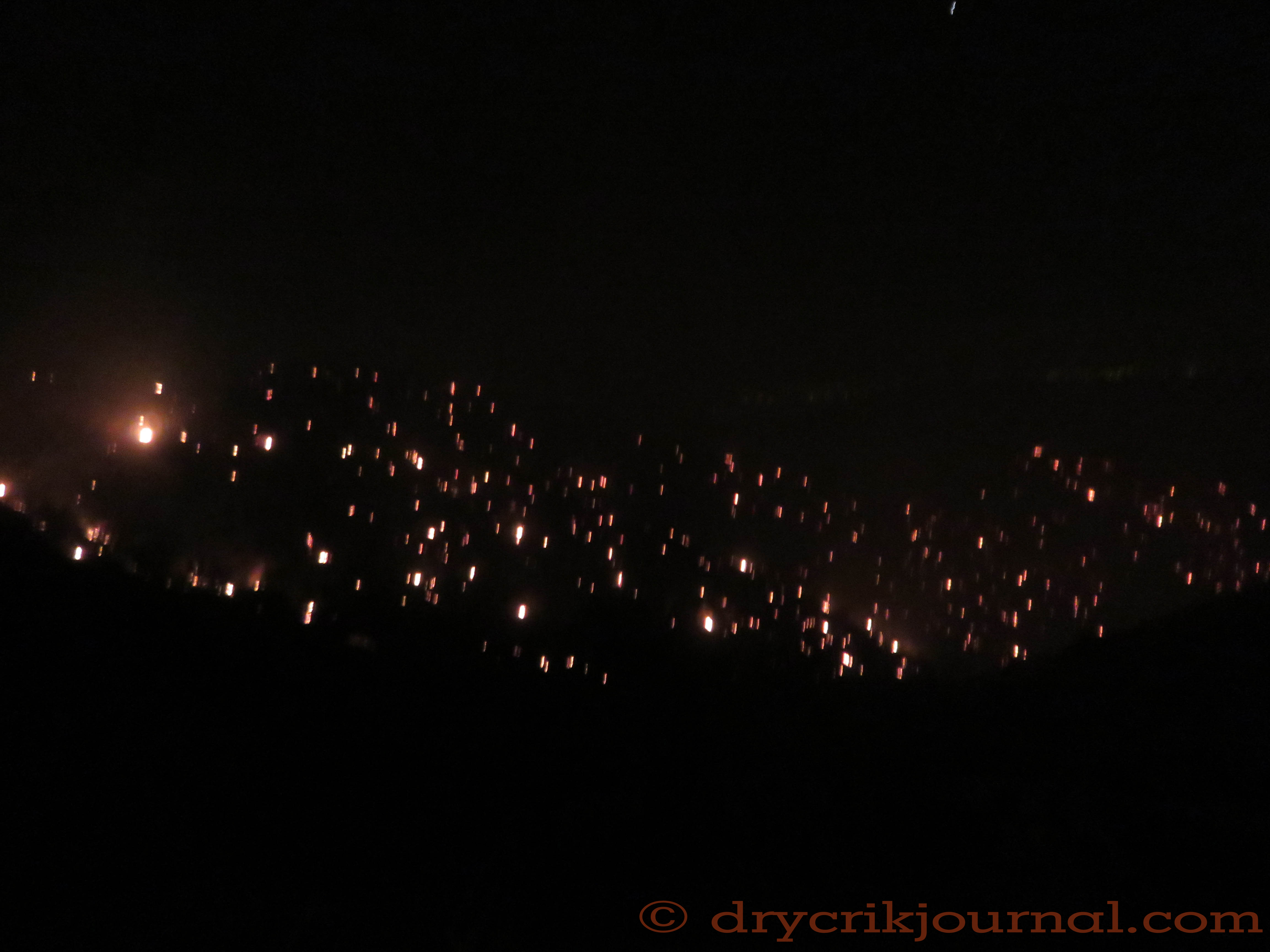
Coming off the mountain at 10:00 p.m. Dead Blue Oaks, as a result of the four-year drought, burning.
CalFire Incident: “Creek Fire”, 600 acres.
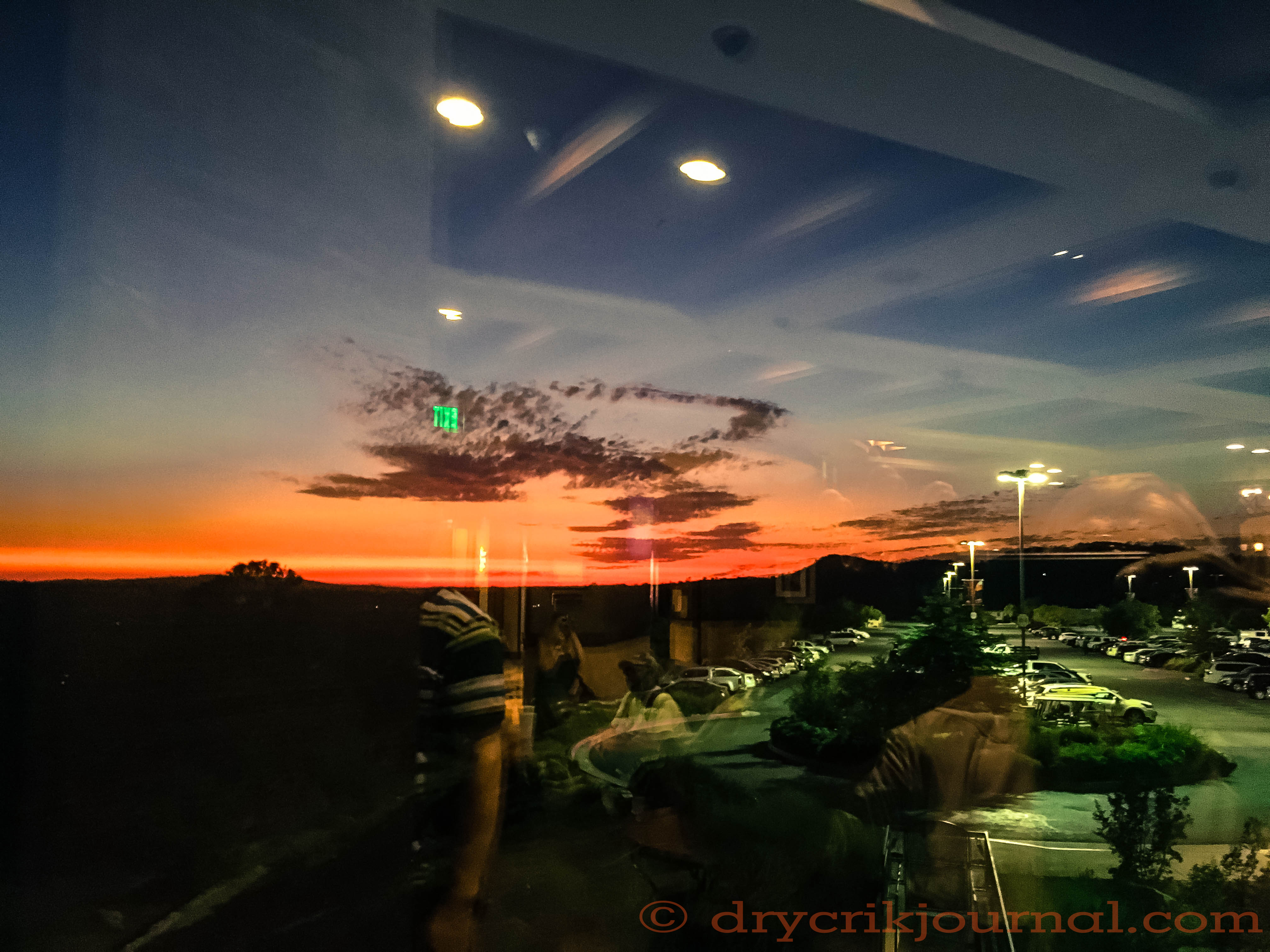
Night stalks the day,
tracks the last light
over the edge
of our horizons
a slice in time away
from calvy cows
that graze the gloaming
before bedtime,
rest upon the hard
clay ground of home.
Among the gray hairs,
walkers and wheelchairs,
our game of chance:
the heartbeat’s thrill
with wild circumstance.
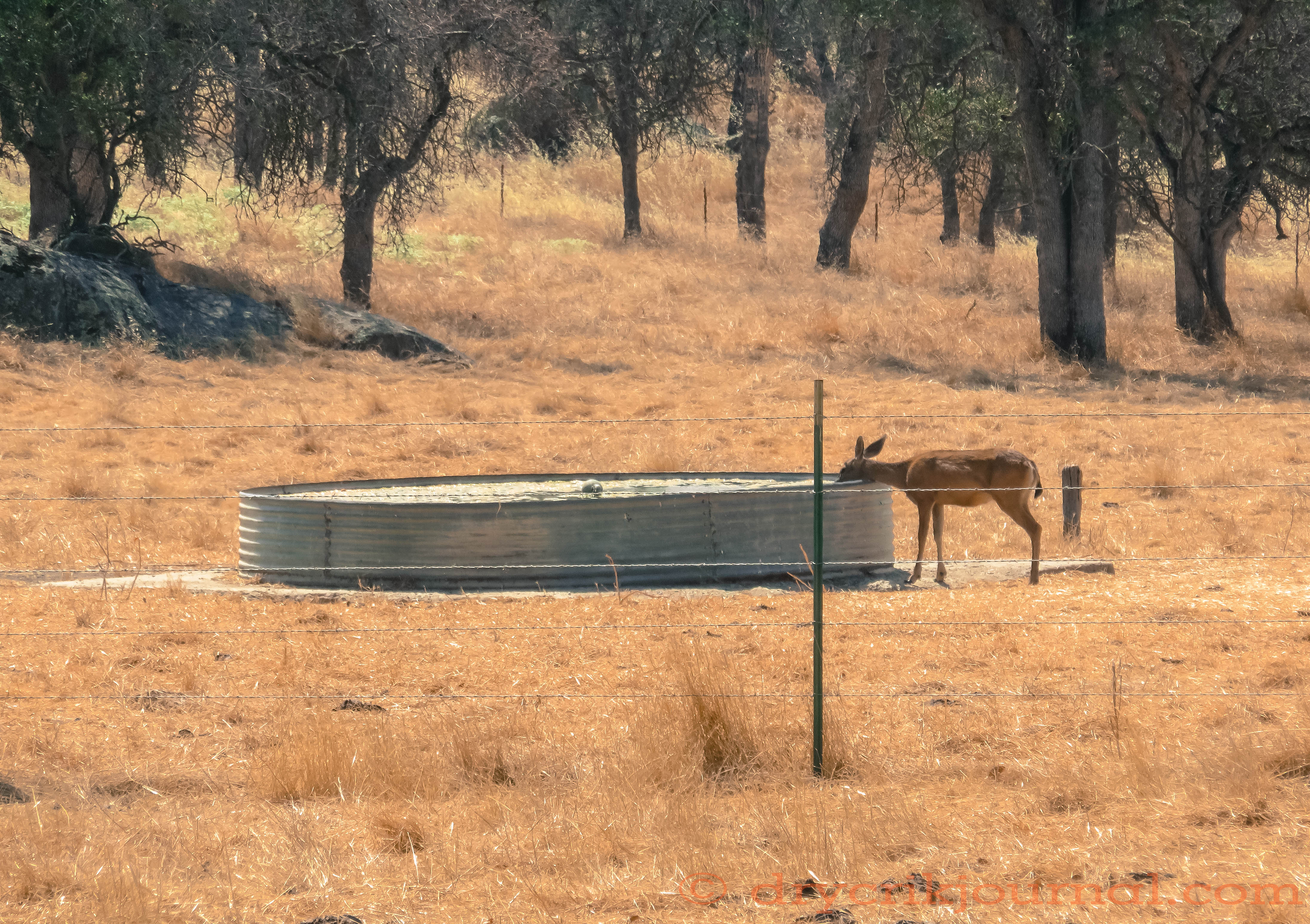
Before we traded ranches,
your mother witched a well
that artesianed into a trough
to water cattle, that overflowed
to fill a pond twenty-four seven
without turning a wheel.
Before we traded ranches
you had tenants
that wanted more
to irrigate cannabis
with a pump and gas generator—
pulled granite sand and pebbles
to dam the crack
where water ran underground
from Sierra peaks
to the wellhead freely.
Married now to a generator,
storage tank and pump,
I pack gas and oil,
carry electrical testers,
tools and spare capacitors,
for a second well we drilled
too deep for solar
to water cattle in a trough
that never overflows.

Much like cattle,
the sounds we make
speak more than words
that often skirt the truth—
that cannot release
the real stress like
the intonations of
a moan or groan.
Between us
another language
animals comprehend,
and when surprised
or truly overjoyed,
a melody of accents—
sweet poetry that will
never grace a page.
reblogged from December 24, 2017
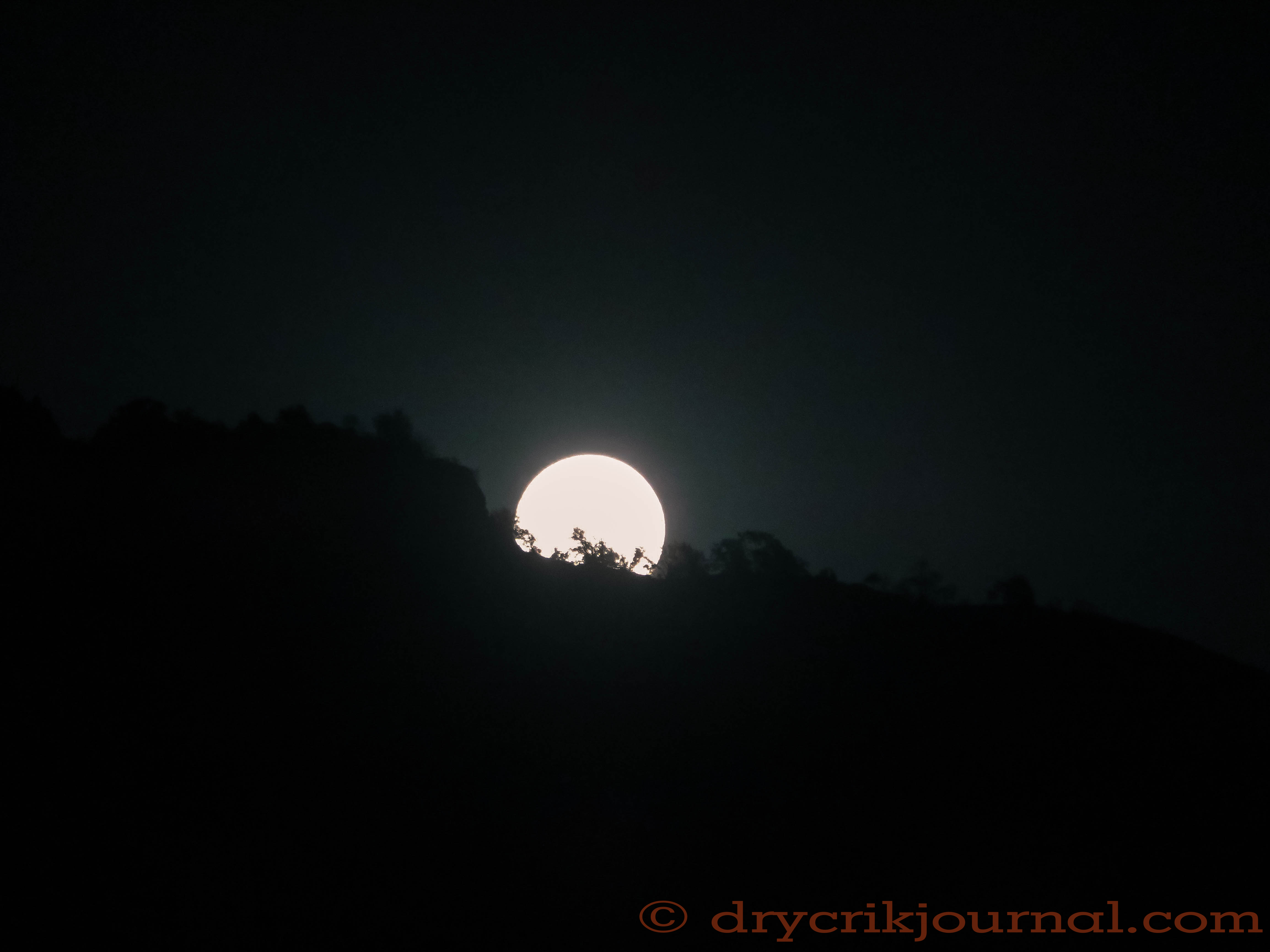
Blueberry moonrise
never in the same place twice—
acorns ripe in oak trees.

Had we fish to stupefy
with turkey mullein seeds
the late rains have left
in turquoise waves
above the knees—
we could be native.
Instead we feed
the squirrels beneath
these fuzzy canopies
where shotgun hunters
will wait for mourning dove
to light and leave.
Croton setigerus: a native of the western United States, and found commonly from southern California north to Washington, particularly in the more arid locations away from the coast.
I don’t ever remember Turkey Mullein, or Dove Weed, so tall and thick and claiming such large tracts of dry summer pasture, or its color quite so blue—worth journaling, I think.
Posted in Photographs, Poems 2019, Ranch Journal
Tagged Dove Weed, photography, poetry, Turkey Mullein, wildflowers

When we were children,
we played among the wrecks
of old cars and horse-drawn
wagons with wooden spokes
that hemmed the orchards
that sustained us—families
scattered round distant towns
we could visit
with ripe imaginations.
Bigger now, cities spreading
like amoeba ingesting farms
and one another, like wildfires burning
closer as convenient conflagrations
that have erased the landmarks
where we hung our memories.
It could be creeping senility
that I embrace, a watercolor wash
across pastoral landscapes
rather than the spinning pace
of progress—perpetual motion
like the galaxies of space.

They have begun to circumambulate new slopes to graze
around the house
learning to make their circles between troughs and ponds,
forty-five days away
for the first new mothers to lick a calf up to suck
for the next nine months.
A week off the irrigated green, they’ve overcome the shock
of dry hollow stems
to make a home where we can watch and worry,
as is our custom—
we get know them. About a third will make the herd
for ten years.
With so much time together, we operate by instinct,
you and I,
triggered by well-worn habits, the angle of the sun
and the length of shadows
these young girls already know—a second nature
we had to learn.




 drycrikjournal