Tag Archives: grass

Ranch Journal: November 1, 2016


20161101-a40a2302-2


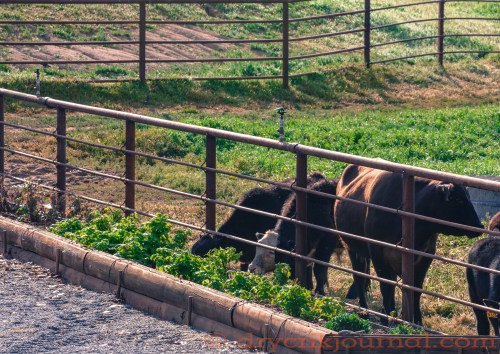
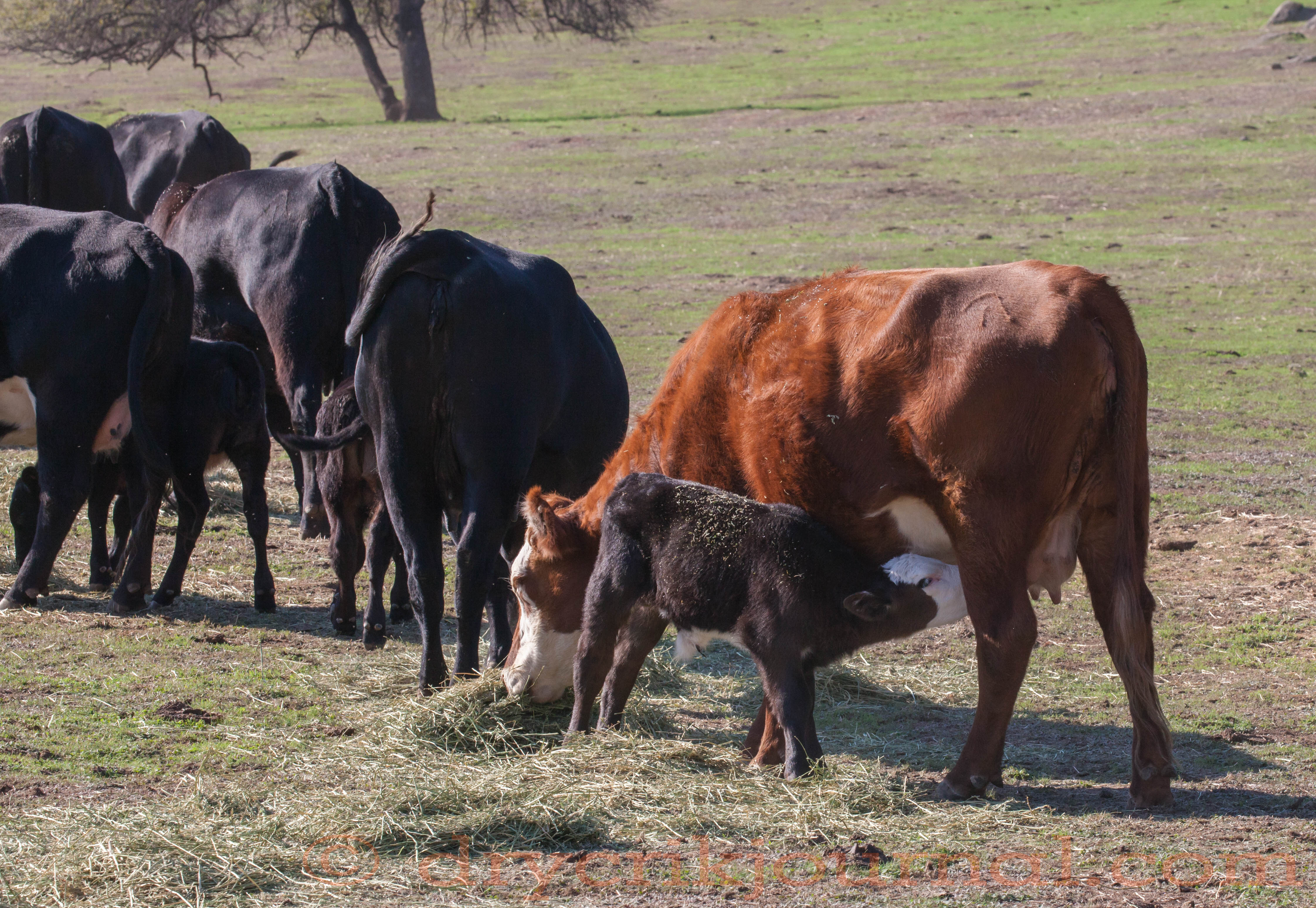
A dark day after over an inch of rain, Terri and Lee feed the replacement heifers before the Wagyu bulls arrive next month. Already dated, this photograph doesn’t show the green that has spread across the damp ground in the past three days. Temperatures forecast for the next ten days are in the mid-to-high-70s—perfect growing weather for our native grasses. Already, our first-calf heifers are leaving our flatter feeding grounds for the hillsides in search of green grass tall enough to bite, steep ground softer now to climb and graze a little dry feed with the new.

Shorter days stuck in the low-50s, chilly mornings linger as both man and beast seem slower to get started, much of the pressure off after four days of rain and a thick germination of seed. Robbin and I are already talking firewood after we check the cows and calves on the Paregien Ranch, a Kubota load to augment the leftovers of last year’s stack, kept short to discourage rattlesnakes around the house. We’re ready, I think, to face whatever weather we get this winter, hoping always for well-timed rains.
 

PROPAGATING GREEN


20161031-img_6783


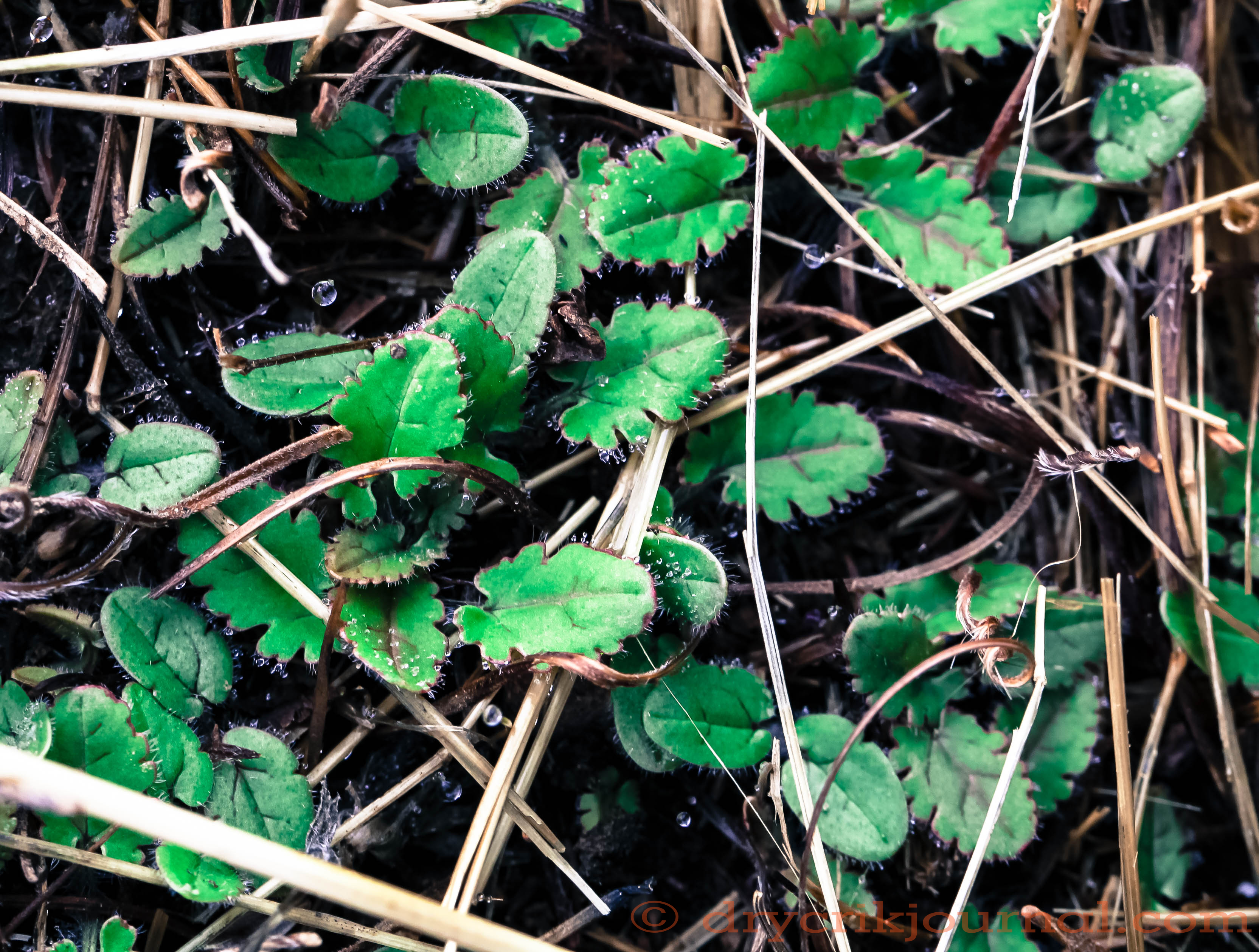
The seed beneath the dry, dead grasses
waits, as we have waited to begin again
with rain, to plant themselves, screw and twist

into damp dirt, to swell and burst—first
hands open to feed the living, applaud life,
millions of ovations standing on their own.

Each a miracle rising from hollow, blond
and brittle stems, from the dust of bare
red clay and sandy ground—alive and green.

Our private holiday, hope and relief let go
to breathe freely, to work fully within
this new beginning for one more poem.


Hilltop


20161002-a40a2149-2


Wordless Wednesday


A Chance for Spring


20160308-IMG_5249


Ten days ago, I was bemoaning a warm and dry February and the prospect of weaning calves two months early. But within that time we have received over two inches of rain that has rescued our spring grass. Already our south slopes have recovered. To vacillate between the anxiety and dread of another tough year and our current relaxed gratefulness, in such a short time, might be alarming if this canyon didn’t look so good—it’s that overwhelming. And it’s not that we haven’t gotten rain this season, we’re above average, but with over half of the days in February above 70 degrees, the ground was dry and the grass was heading out.

Yesterday we went up to the Paregien Ranch to check the rain gauge, (2.27”), check the cattle and put out salt and mineral supplement, also taking a shovel and chain saw just in case. Cows looking great, it’s hard to believe that these same calves have grown so much since we branded three months ago. The time has flown. With more forecast for the end of the week, it seems El Niño is back on track and we have a chance for spring.


Conundrums


20160301-IMG_5729


Our springtime activities can seem confusing. Around the house, barns, corrals, and gates we use frequently, we spray weeds. Though the grass species are essentially the same on either side of the barbed wire, the fence arbitrarily determines what are weeds and what is feed for cattle. It seems a bit sacrilegious, even to me, to be spraying weeds in a business dependent on grass.

Routine for so many years, I have become obsessed with the distasteful job of clearing the grasses that can hide rattlesnakes where we work and live, or make the difference of losing a barn full of hay to a fire. I am relieved when the job is done—and confess to enjoying watching the weeds die along clear lines of green and blond.

The grass was high in the small pasture in front of our house, so we let our second-calf heifers in to mow it down. Robbin and I enjoy having the cattle close, watching the calves grow and play. At first, they’re nervous, but after a couple of days they come into the pasture, morning and night, as part of their grazing routine. Checking-in, they seem to enjoy our company.

Readers may remember the planter we built last year to start our bare root raspberries. It looked a lot like a feeder for cattle. With so much grass, I didn’t think that our thorny raspberries would interest cattle, but the calves have become addicted, bucking straight through the gate for the raspberries’ new growth. But we seem to have hurt their feelings, bunched at the gates last night, confused with why the gates were closed.


THE GOOD SIGNS


20160109-IMG_5547


Sunday evening, pickup loads of snow
file down the road to town: snowmen
for Visalia, Exeter, Farmersville front yards

to melt and soak into drought-brown lawns
no one’s mowed in years—a hurried
shortcut from mountains to Valley

upon a crumbling blacktop channel—
water that these oaks and sycamores
see only as lumps of white passing at fifty.

The west and south slopes fill-in
with green, purple patches of frost-bitten
filaree that looked like bare dirt,

softly embrace us now as if we were cattle.
Too wet for work that waits outside,
we slowly release winters of urgency

camped at the door and ease into the
vaguely familiar—reacquaint ourselves
with mud and rain, with one another.


Ranch Journal: November 8, 2015


20151107-IMG_5275

A crisp and beautiful Sunday ahead of a storm, Robbin and I checked the cows and calves in Greasy, as well as the condition of our grass and water after the 1.5” of rain last week. We hauled a Kubota-load of extra hay up the hill for the cows in Section 17, most all with early calves.


20151107-IMG_5252

Not all came in to hay: 6 cows choosing to stay atop the ridge, telling us what we came to find out. A few cows with larger calves show normal stress, but it’s a great start to a new season.

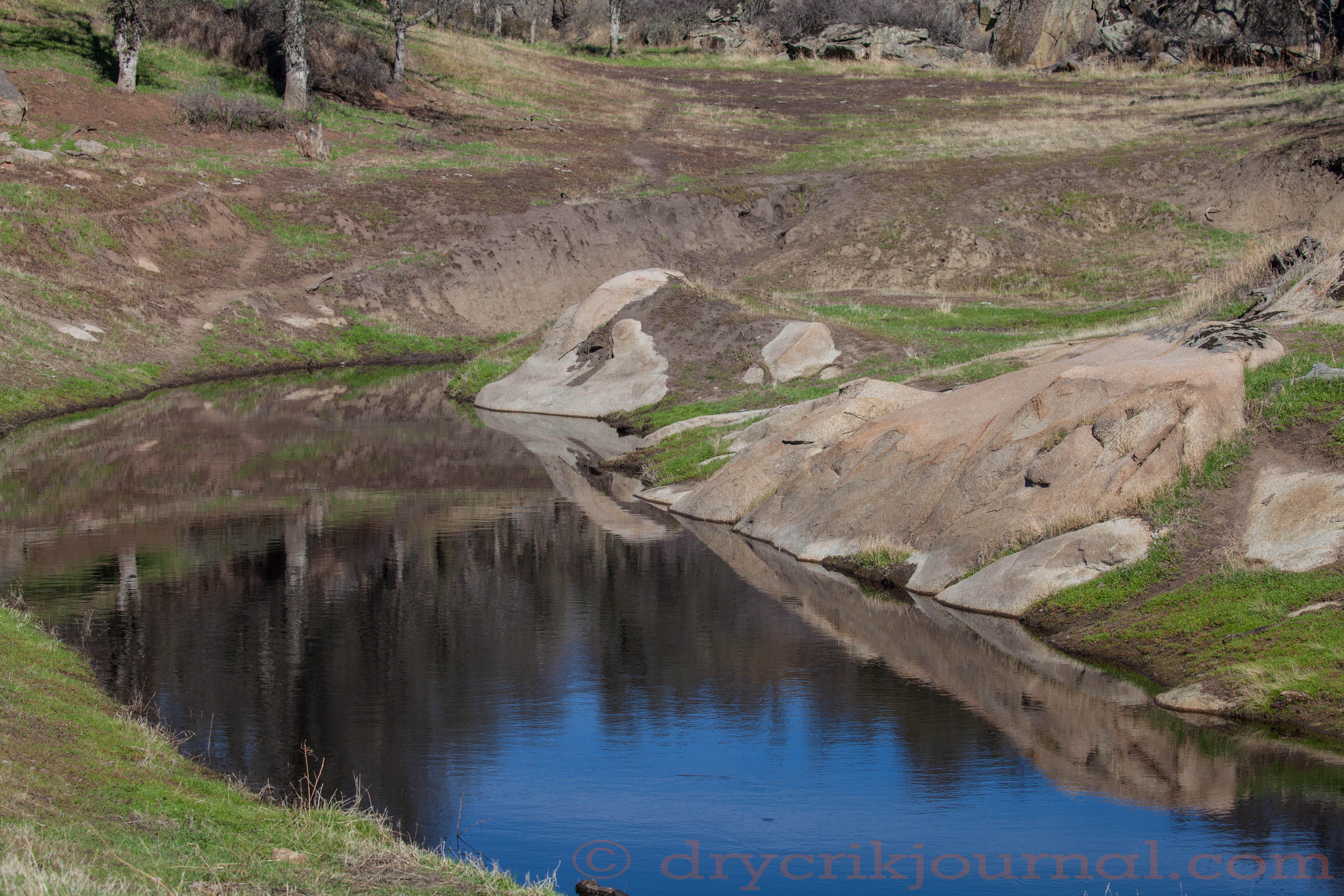
Though numbers are down substantially, cows were scattered everywhere we went, our stockwater ponds all holding some water now. With over 4 inches of rain to date, almost half of the rainfall we got during the whole of the 2013-14 season, and over a third of last season by the first week in November, we’re in disbelief, happy and relived.


20151108-IMG_5279


A Real Treat


20151029-IMG_5180


Enough rain to give the grass a good start in most places, we’re still feeding hay, a treat for these second calvers close to the house. We were especially glad to see this calf on the ground, its mother spending most of the month of August uncomfortably in pain, having difficulty walking with slow, short strides to hay and the water trough. A week or two before it was born, the calf must have shifted within her, as she began getting around again as if nothing was ever wrong.

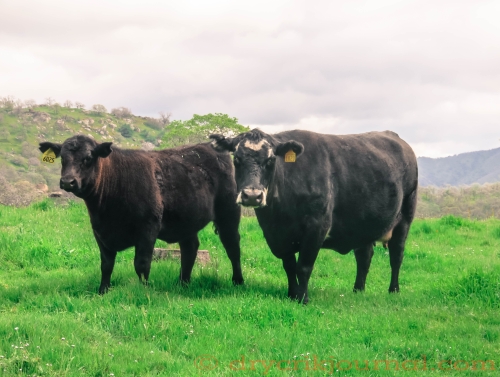
Ambushed by her calf while on the alfalfa yesterday, this mottled-face Hereford is becoming a little rough-haired, showing the effects of raising a calf. If the calf were thin, we might be concerned and increase the hay, but right now she’s giving all to her calf, taking better care of it than herself—the kind of mothers we want.

The bare south and west slopes struggle as they have dried out since our first good rain on the 18th, but all the weathermen promise another good storm for Monday and Tuesday. With a little luck, we’re near the end of feeding hay as the cows move up into the hills for fresh green grass—a real treat for everyone.


Weekly Photo Challenge (1): “Treat”


Changes


20151025-IMG_5139
 

We are savoring the seasonal changes since the spectacular light show and rain on the 18th. The grass grows quickly in places with temperatures in the low 80s during the day and 50s at night. With softer ground and cooler weather, the cows have moved up the hill and to the ridges for fresh green grass, leaving their calves behind in the flats where we’ve been feeding hay since they were born.

Expecting dinner, there was quite a bit of confusion among the calves Sunday evening when the cows weren’t home on time, still high on the hill filling up before dark. Despite their instinctual training to stay where they last sucked, the calves went looking for their mothers in the only geography they knew. Robbin and I couldn’t contain our laughter as the chorus of plaintive bawls on either side of the house became overly urgent and dramatic—and just as humorous when the worried cows returned to finally find and chastise their offspring in strident tones.

Now a month or so old and growing, the calves have become more independent, running and bucking ahead of the plodding cows to the water trough at dawn, butting heads as they emulate their mothers, some of whom have begun to cycle. A sign of good health, it will be six weeks yet before we put the bulls out.

After four years of drought and a long hot summer, we welcome the changes, and as always this time of year, we wait for a little moisture to freshen-up the new grass on our bare west and south slopes as the clay dries out without the protection of old feed. I had to cut a load of dead Manzanita yesterday to celebrate all these welcome changes.


AFTER THE STORM


20151020-IMG_3371


The birds sleep later now,
new guests in boughs without nests,
overwintering—coyotes and bobcats

hunt late in the morning chill
as we wait for sun
to break the ridge line,

eager and easy into the day
now that it’s rained
enough to start the grass,

settle four years’ dust—
cotyledons claim puddle mud,
arms open to new light.